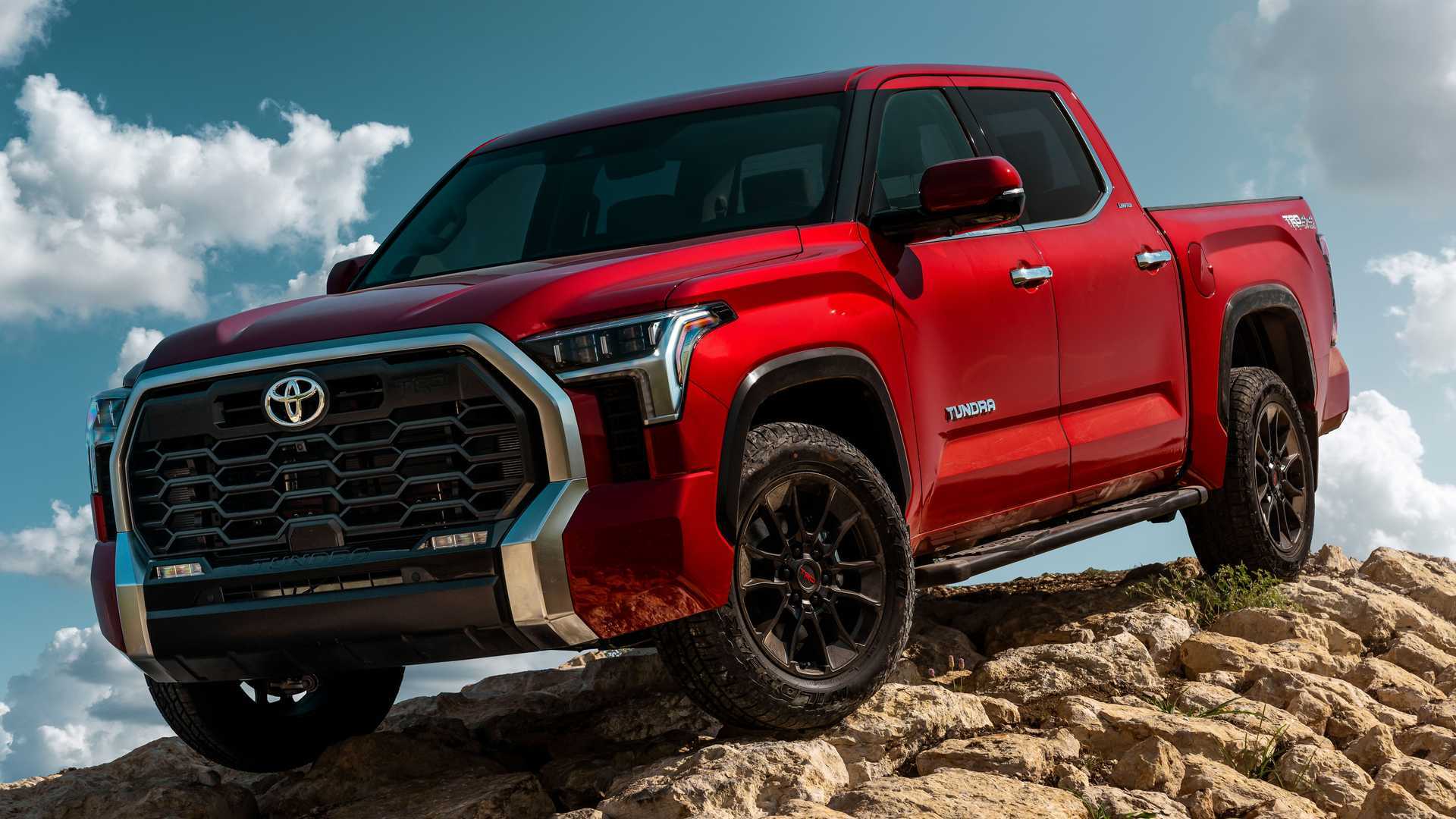
Pickup trucks are often promoted as symbols of American manufacturing, toughness, and hard work, but not every truck carrying a patriotic image is built the same way. While some models are assembled in the United States with a high percentage of locally sourced parts, others rely heavily on global supply chains despite their strong American branding.
Final assembly location, domestic content, and sourcing practices all influence how “American-made” a truck really is. In this comparison, we examine four trucks genuinely assembled in the United States alongside four popular models that project an American identity while depending more heavily on international production.
4 Trucks Assembled in the US (High U.S. Parts Content)
1. Toyota Tundra
The Toyota Tundra is one of the most American-made pickup trucks on the market despite being produced by the Japanese automaker Toyota. It is assembled at Toyota Motor Manufacturing in San Antonio, Texas, where production began in 2006.
The truck consistently ranks highly in American-made vehicle studies because around 60 percent of its components are sourced from the United States and Canada. Toyota also designs and engineers the Tundra specifically for North American consumers through engineering centers in Michigan and California, making it highly suited to local preferences and driving demands.
Toyota manufactures the Tundra in the United States for several strategic reasons. One major reason is to avoid the 25 percent “chicken tax,” a tariff imposed on imported light-duty trucks, which would significantly increase production costs if the vehicle were imported.
Local production also enables Toyota to tailor the truck to American expectations, including towing strength, hauling performance, interior comfort, and reliability. The Texas plant’s history even inspired the Tundra’s premium “1794 Edition,” named after the ranchland where the factory now stands.
In terms of performance, the Toyota Tundra is powered by a twin-turbocharged 3.4-liter V6 engine paired with a 10-speed automatic transmission. Depending on the trim level, the engine produces between 348 and 389 horsepower, while a more powerful hybrid version is also available. Drivers can choose rear-wheel drive or four-wheel drive, and the truck’s coil-spring rear suspension provides a smoother and more comfortable ride than traditional suspension systems commonly found in pickup trucks.
The Tundra also delivers practical capability for work and everyday use. When properly equipped, it can tow up to 12,000 pounds and carry a payload of 1,940 pounds, though some competitors, such as the Ford F-150 and Chevrolet Silverado, offer higher capacities. Fuel economy ranges from approximately 17 to 23 miles per gallon, depending on drivetrain and configuration, making it competitive within the full-size pickup segment.
A spacious and practical cabin defines the interior, blending utility with modern technology for everyday driving needs. It includes touchscreen-based infotainment systems with wireless smartphone connectivity, optional premium audio setups, and thoughtfully placed storage areas throughout the cabin.
Safety comes standard through Toyota Safety Sense 2.5, which provides features such as adaptive cruise control, lane-keeping assistance, and forward collision warning. Ownership is also supported by competitive warranty coverage along with complimentary maintenance for the first two years or 25,000 miles.
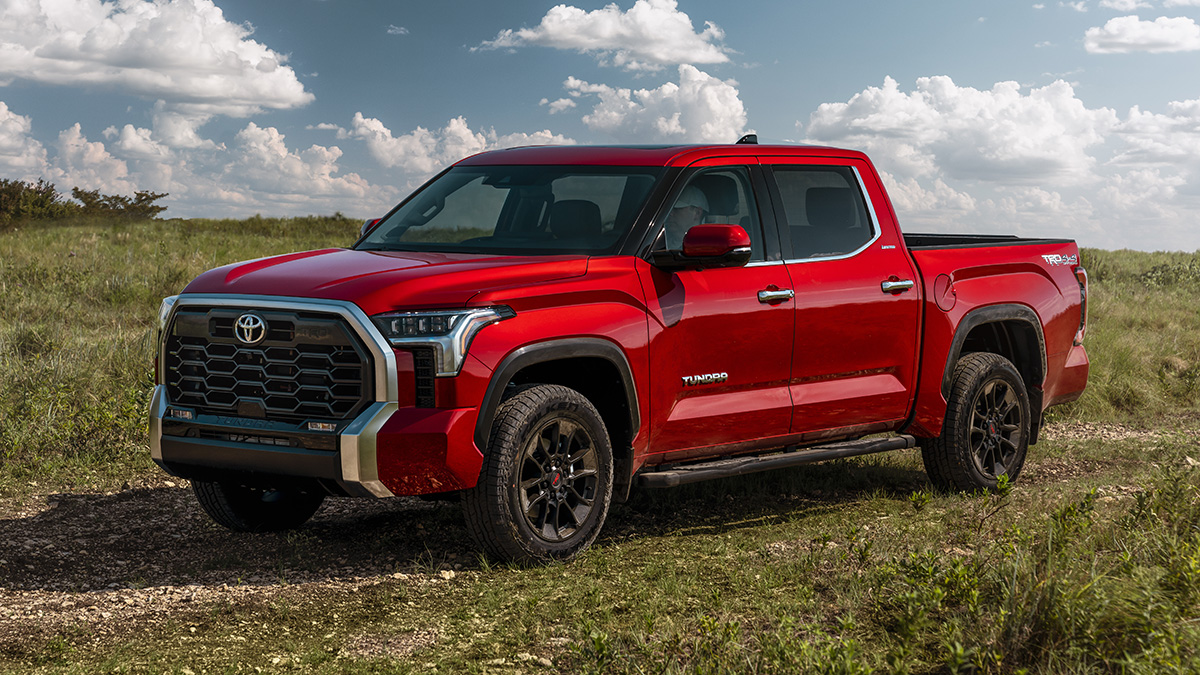
- Engine: 3.4L twin-turbo V6 (i-FORCE) / 3.4L twin-turbo hybrid V6 (i-FORCE MAX)
- Horsepower: 358–389 hp (i-FORCE) / 437 hp (i-FORCE MAX hybrid)
- Torque: 406–479 lb-ft (i-FORCE) / 583 lb-ft (i-FORCE MAX hybrid)
- Length: 233.6 in (5.93 m)
- Width: 80.2 in (2.04 m)
2. Honda Ridgeline
The Honda Ridgeline is a midsize pickup truck that demonstrates a strong commitment to American manufacturing despite carrying a Japanese brand name. It is built exclusively at Honda’s manufacturing facility in Lincoln, Alabama, where it has been assembled since its introduction.
The Ridgeline consistently ranks among the highest vehicles in domestic sourcing evaluations because over 65 percent of its components come from the United States and Canada. In addition, Honda’s research and development teams in Ohio and California handled the truck’s design and engineering, ensuring it was specifically created for North American consumers and driving conditions.
Honda strategically manufactures the Ridgeline in the United States to meet the preferences of the North American market while strengthening local production networks. The vehicle’s engine, transmission, and advanced all-wheel-drive system are produced domestically, contributing to its strong American production profile.
This regional manufacturing approach allows Honda to avoid excessive import costs and tailor the truck to customer expectations for reliability, comfort, and everyday practicality. As a result, the Ridgeline often outperforms traditional Detroit-made competitors in independent domestic-content rankings.
Under the hood, the Honda Ridgeline is powered by a 280-horsepower 3.5-liter V6 engine paired with a nine-speed automatic transmission and standard all-wheel drive. The truck offers smooth power delivery and comfortable road manners that resemble a family crossover more than a traditional pickup. Its independent rear suspension with coil springs provides a quieter, more carlike ride compared to competitors that rely on leaf-spring solid axles. In performance testing, the Ridgeline reached 60 miles per hour in approximately six seconds, showing respectable acceleration for its class.
The Ridgeline offers practical but moderate work capability, including a maximum towing capacity of 5,000 pounds and a payload rating of 1,583 pounds. Although these numbers are lower than some midsize rivals, the truck stands out for efficiency and versatility. Fuel economy ranges around 18 miles per gallon in the city and up to 24 on the highway, while highway testing has shown even better results. Its cargo bed also includes a lockable in-bed trunk, a two-way tailgate, and space for large materials.
The interior focuses on comfort and everyday practicality, supported by modern technology and a well-designed layout. It offers a roomy cabin with particularly generous rear-seat space, along with a touchscreen infotainment system that supports wireless smartphone connectivity. Standard driver-assistance features such as adaptive cruise control, lane-keeping assist, and blind-spot monitoring add an extra layer of safety and convenience during daily driving.
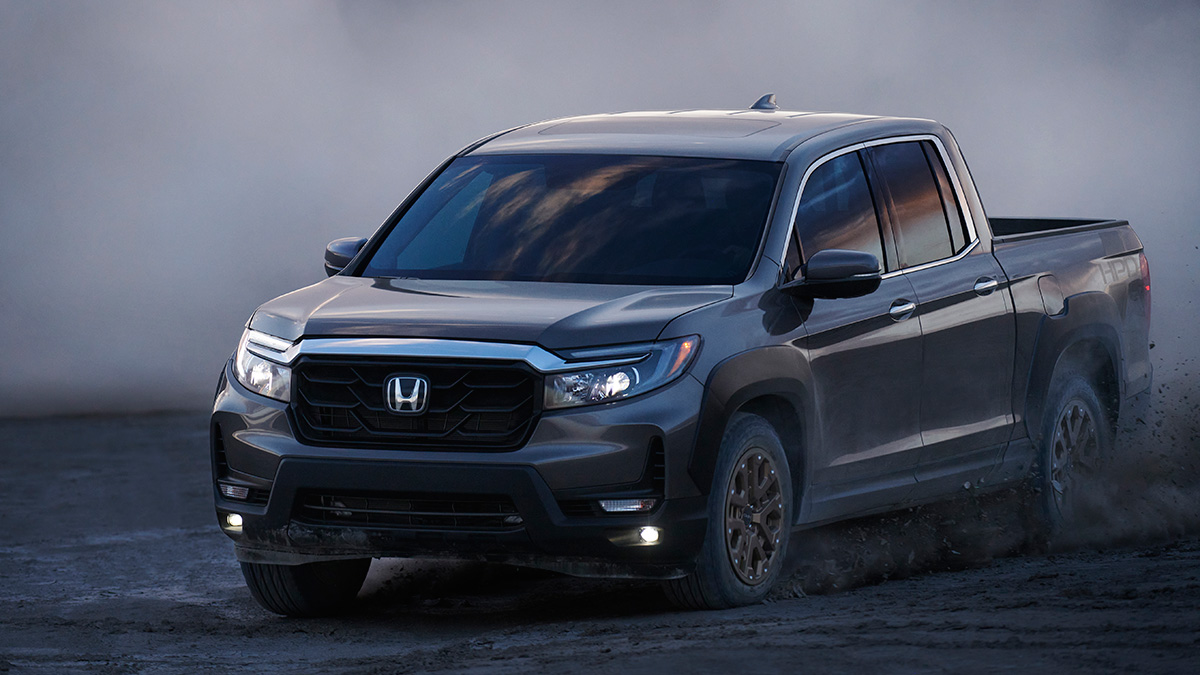
- Engine: 3.5L V6 (24-valve SOHC i-VTEC)
- Horsepower: 280 hp @ 6,000 rpm
- Torque: 262 lb-ft @ 4,700 rpm
- Length: 210.2 in (5.34 m)
- Width: 78.6 in (2.00 m)
3. Jeep Gladiator
The Jeep Gladiator is a midsize pickup truck that highlights American automotive heritage and domestic production. It is assembled at the Toledo Assembly Complex in Ohio, a historic Jeep manufacturing site that has been in operation since 1941. More than 65 percent of its parts come from the United States and Canada, including major components like the frame and exterior body panels. Although Jeep is owned by Stellantis, a global automotive group, the Gladiator remains one of the more domestically sourced trucks in its class.
Manufacturing in Toledo helps preserve Jeep’s long-standing identity and connection to American vehicle production. The same facility also builds the Jeep Wrangler, and both vehicles share similar engineering foundations, such as body-on-frame construction and related mechanical systems. This shared platform improves production efficiency while maintaining strong durability and off-road capability.
The Gladiator’s American manufacturing identity continues with its engine, the Pentastar V6, which is produced at the Trenton Engine Complex in Michigan. This powertrain delivers reliable performance for towing, hauling, off-road driving, and everyday commuting. The truck blends traditional pickup utility with Jeep features such as removable doors, an open-air driving experience, and strong trail-focused capability.
Practicality is a key strength of the Gladiator. Its durable structure supports work-related tasks like towing and cargo hauling while also appealing to outdoor enthusiasts. Shared engineering with the Wrangler also provides strong aftermarket support and customization potential.
Inside, the cabin focuses on durability and function while incorporating modern technology. It offers infotainment systems with smartphone connectivity, along with available safety and driver assistance features. Comfort upgrades are also available, making it suitable for both work and recreation while maintaining its rugged identity.
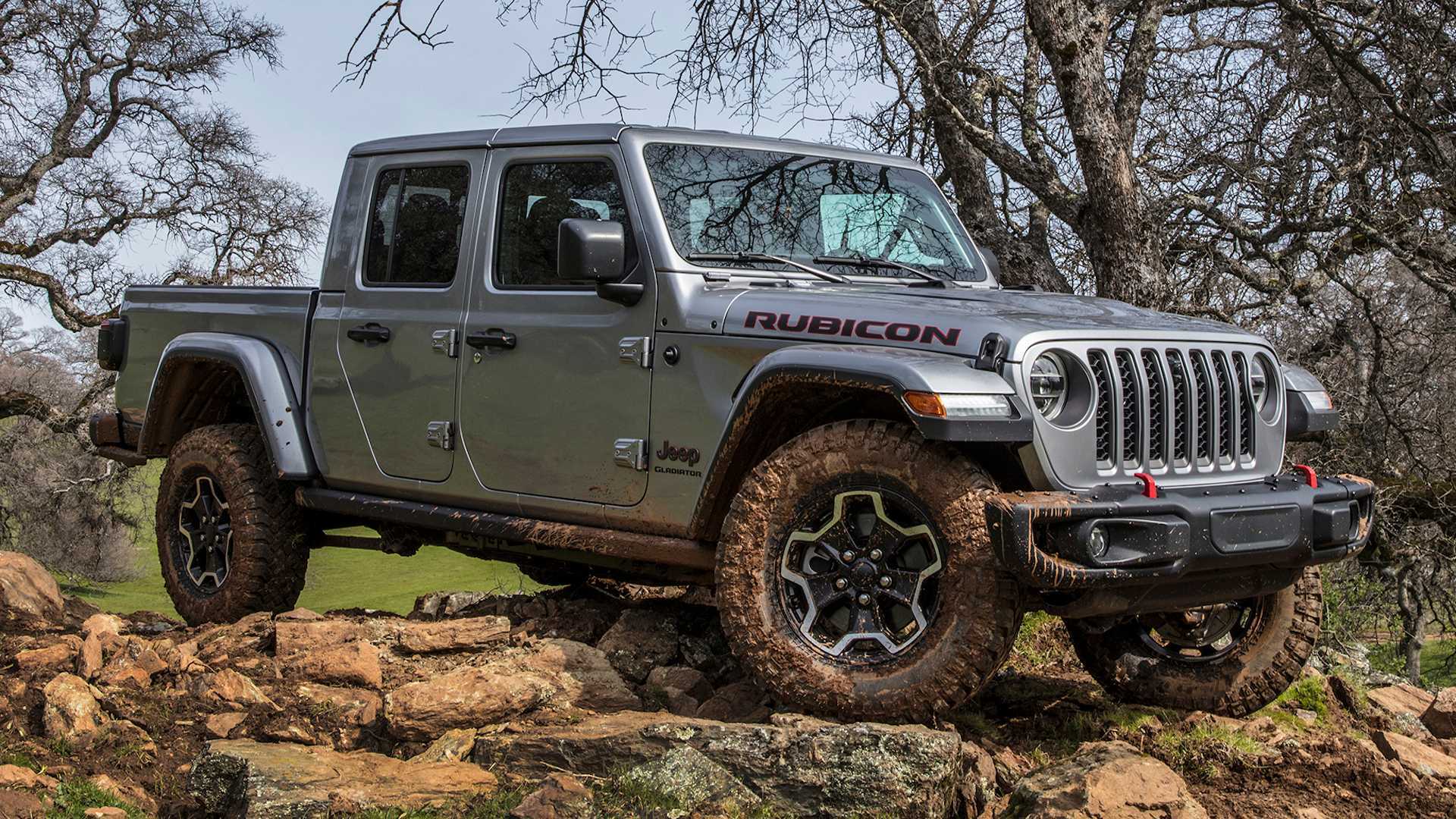
- Engine: 3.6L Pentastar V6 / 3.0L EcoDiesel V6 (2021–2023)
- Horsepower: 285 hp (3.6L V6) / 260 hp (EcoDiesel)
- Torque: 260 lb-ft (3.6L V6) / 442 lb-ft (EcoDiesel)
- Length: 218 in (5.54 m)
- Width: 73.8 in (1.88 m)
4. Tesla Cybertruck
The Tesla Cybertruck represents a new generation of American-made pickup trucks, combining electric vehicle technology with high domestic manufacturing content. It is built exclusively at Gigafactory Texas in Austin, where Tesla produces the vehicle from the ground up for the North American market. Unlike many traditional automakers that depend heavily on global supply chains, Tesla emphasizes domestic sourcing and in-house manufacturing.
More than 90 percent of the Cybertruck’s parts are produced in North America, with around 65 percent sourced directly from the United States and Canada. Its stainless-steel exoskeleton, advanced battery systems, and electric drive units are also developed and manufactured locally, strengthening its American production identity.
Tesla manufactures the Cybertruck in the United States to support domestic production efficiency, serve local demand, and avoid tariffs such as the “Chicken Tax” imposed on imported light trucks.
Through vertical integration, Tesla controls much of the design, battery production, and vehicle assembly process internally rather than outsourcing components. This strategy reduces dependence on overseas suppliers and allows the company to create a highly localized manufacturing network. As a result, the Cybertruck has become one of the most domestically integrated pickup trucks in the automotive market.
In terms of performance, the Cybertruck offers several electric powertrain configurations, ranging from a 321-horsepower rear-wheel-drive model to the high-performance tri-motor Cyberbeast producing 834 horsepower.
Dual-motor all-wheel-drive versions deliver strong acceleration, while the Cyberbeast can accelerate from zero to 60 miles per hour in only 2.6 seconds. Adjustable air suspension, rear-wheel steering, and steer-by-wire technology improve handling, maneuverability, and off-road capability, making the large truck feel more agile than expected.
The Cybertruck also provides strong towing and hauling capabilities for work and recreation. Higher trims can tow up to 11,000 pounds and carry payloads of approximately 2,500 pounds. Tesla claims a driving range between 320 and 350 miles depending on configuration, though real-world testing often reports lower numbers. Fast-charging capability allows drivers to recover over 130 miles of range in around 15 minutes at Tesla Supercharger stations.
A minimalist cabin design defines the interior, with most functions managed through large central touchscreen displays rather than physical buttons. Wireless connectivity is standard, and premium audio systems are available to enhance in-vehicle entertainment.
The driving experience is supported by advanced assistance features, including Autopilot, adaptive cruise control, and lane-centering technology that help reduce driver workload in different conditions. Warranty coverage is strong for the battery and powertrain over the long term, but there is no complimentary maintenance included with ownership.
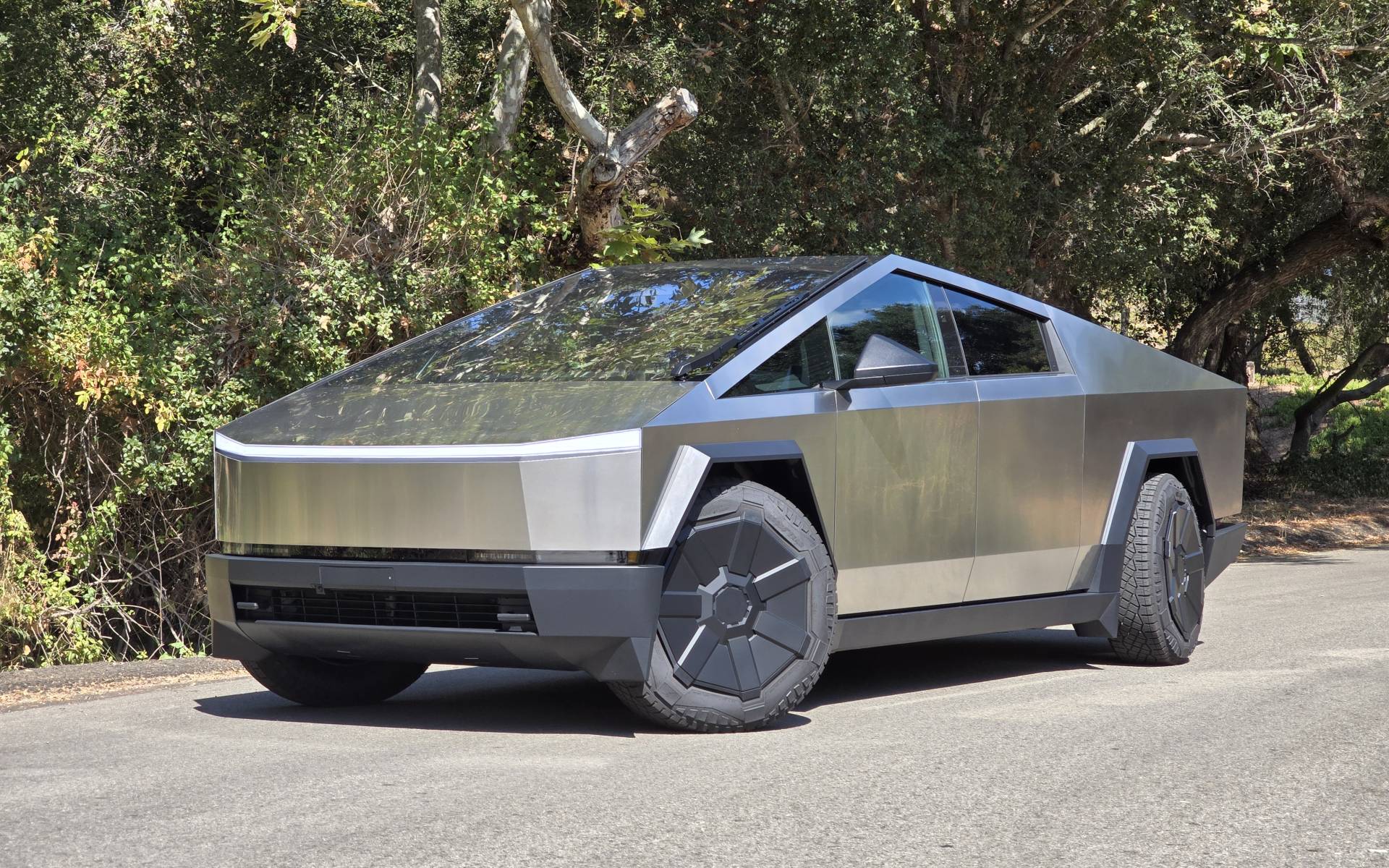
- Engine: Dual-motor or tri-motor electric drive (permanent-magnet / induction motors)
- Battery: 123 kWh pack
- Horsepower: 600 hp (Dual Motor AWD) / 845 hp (Cyberbeast tri-motor)
- Torque: 525 lb-ft (Dual Motor AWD) / 864 lb-ft (Cyberbeast tri-motor)
- Length: 223.7 in (5.68 m)
- Width: 79.98 in (2.03 m) / 95.0 in (2.41 m with mirrors)
Also read: 5 Cars Where Trade-In Beats Private Sale vs 5 Where It Doesn’t
4 Trucks That “Claim” to be American (Lower Domestic Content)
1. Chevrolet Silverado 1500
The Chevrolet Silverado 1500 is a well-known American pickup truck, but its production depends on a broad North American supply chain rather than being fully domestic. While some models are assembled in the United States at General Motors plants in Indiana and Michigan, many are also built at the Silao assembly facility in Mexico.
Because of this split production system, the truck’s U.S. and Canadian parts content often falls in the mid-range compared to competitors, with many versions below 45 percent domestic sourcing. When measured under federal labeling standards, its total North American parts content typically sits around 55 to 65 percent, reflecting a mix of U.S., Canadian, and Mexican manufacturing contributions.
This production approach is shaped by cost efficiency and access to a wide supplier network across North America. Key components such as engines, transmissions, electrical systems, and interior modules are sourced from multiple countries.
General Motors uses this structure to support a wide variety of trims and configurations while maintaining flexible production capacity. However, this global supply chain also reduces the Silverado’s fully domestic identity compared with some rivals that rely more heavily on U.S.-based assembly.
The Silverado 1500 is known for its strong performance range. It offers several engine choices, including a turbocharged four-cylinder, 5.3-liter, and 6.2-liter V8 engines, and a 3.0-liter Duramax diesel. Horsepower outputs range from 305 to 420, depending on configuration, with the 6.2-liter V8 delivering the quickest acceleration at about 5.4 seconds from zero to 60 mph in testing. The diesel engine focuses on efficiency and refinement, while off-road trims such as the Trail Boss and ZR2 add suspension upgrades and rugged equipment for tougher terrain.
Capability is another strong point for the Silverado 1500. It can tow up to 13,300 pounds when properly equipped and offers payload ratings between 1,870 and 2,280 pounds. Fuel economy varies widely across the lineup, with the diesel version delivering the best efficiency at up to 28 mpg on the highway, while V8 models prioritize power and towing strength. This variety allows the truck to serve both work-focused buyers and everyday drivers.
The interior of the Silverado varies widely depending on the trim level. Entry-level versions are designed with a simple, work-focused layout that prioritizes durability over comfort, while higher trims such as the High Country shift toward a more upscale experience.
In these premium models, features like leather seating, large digital instrument clusters, and advanced infotainment systems with smartphone connectivity create a more modern and comfortable environment. Across the entire lineup, safety and driver-assistance features come standard, and select versions also offer advanced technology such as Super Cruise, which enables hands-free driving under certain conditions.
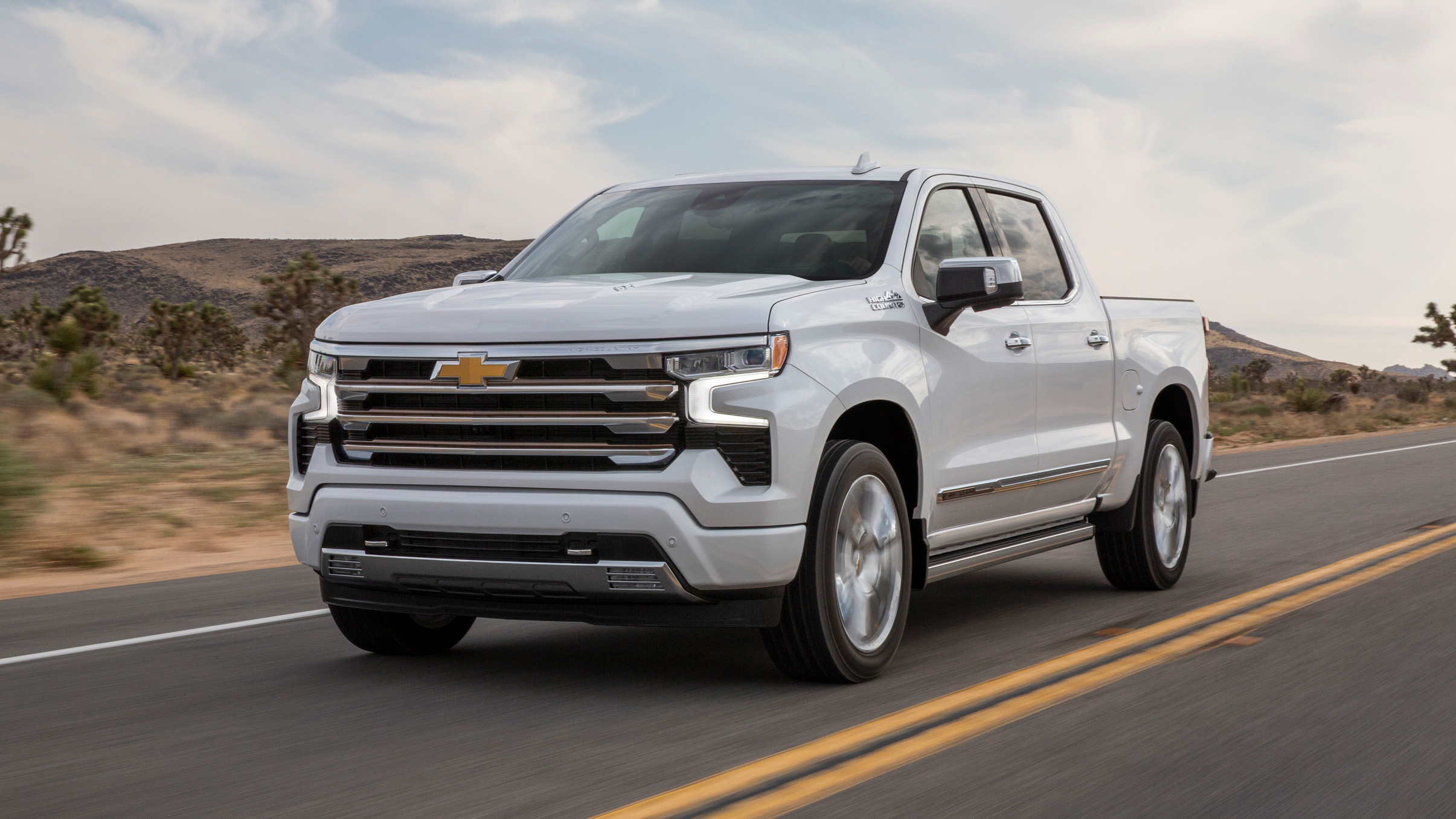
- Engine: 2.7L TurboMax I4 / 5.3L EcoTec3 V8 / 6.2L EcoTec3 V8 / 3.0L Duramax turbo-diesel I6
- Horsepower: 310 hp (2.7L) / 355 hp (5.3L) / 420 hp (6.2L) / 305 hp (3.0L diesel)
- Torque: 430 lb-ft (2.7L) / 383 lb-ft (5.3L) / 460 lb-ft (6.2L) / 495 lb-ft (3.0L diesel)
- Length: 210.9–242.4 in (5.36–6.16 m)
- Width: 81.2 in (2.06 m)
2. GMC Sierra 1500
The GMC Sierra 1500 is a premium full-size pickup built through a wide North American and global supply chain rather than being fully domestic. Assembly takes place at General Motors plants in Fort Wayne, Indiana, and Silao, Mexico, with a significant share produced in Mexico. Because of this setup, its U.S. and Canadian parts content is typically around 37 percent under federal labeling rules. This reflects GM’s approach of spreading production across regions to manage cost, supply stability, and flexibility.
General Motors relies heavily on international sourcing for major systems. Engines, transmissions, electronics, and interior components come from various facilities across North America and other regions. Depending on configuration, powertrain options such as the 5.3-liter V8, 6.2-liter V8, and 3.0-liter Duramax diesel may be built or assembled in different locations. This global sourcing supports multiple trims and capabilities but reduces the domestic parts share.
The Sierra 1500 offers several engine choices, including a turbocharged 2.7-liter four-cylinder, two V8 engines, and a 3.0-liter diesel. Output ranges from 305 to 420 horsepower, paired with eight-speed or ten-speed automatic transmissions. The 6.2-liter V8 delivers the quickest acceleration, reaching 60 mph in about 5.4 seconds. Off-road trims such as the AT4 and AT4X add lifted suspension, locking differentials, and reinforced hardware for rugged terrain.
Towing capacity reaches up to 13,300 pounds, while payload capacity is around 2,200 pounds when properly equipped. Fuel economy varies, with the diesel offering up to 28 mpg on the highway, while V8 engines prioritize strength.
The cabin design changes depending on the trim level. Base versions prioritize durability and practical use, while higher trims add premium materials, larger digital screens, and leather upholstery. Comfort features such as power-adjustable seats and optional massage functions enhance the experience. All models include standard safety systems, while select trims offer advanced technology like Super Cruise, enabling hands-free driving under certain conditions for added convenience and ease on longer journeys.
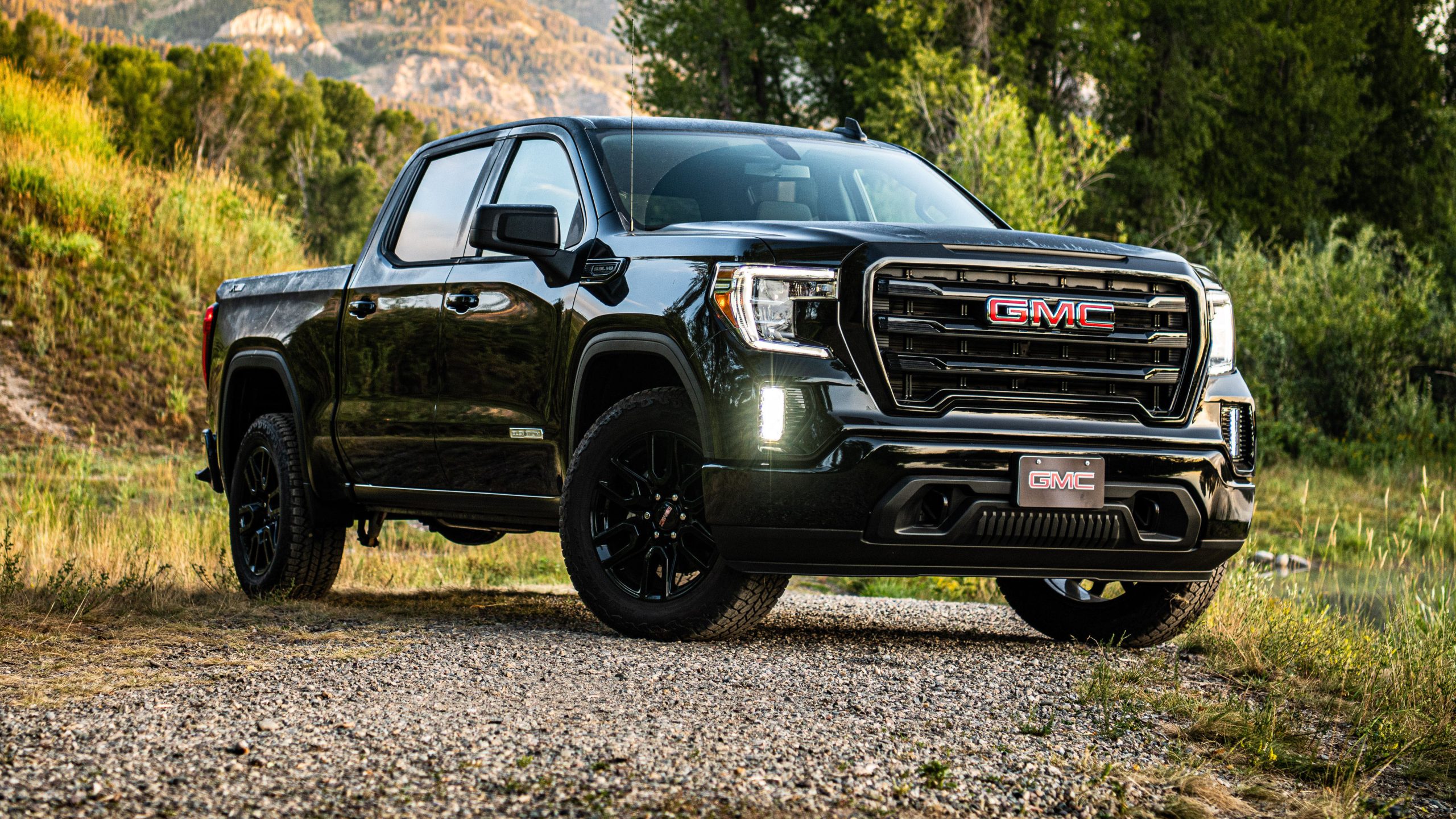
- Engine: 2.7L TurboMax I4 / 3.0L Duramax turbo-diesel I6 / 5.3L EcoTec3 V8 / 6.2L EcoTec3 V8
- Horsepower: 310 hp (2.7L) / 305 hp (3.0L diesel) / 355 hp (5.3L) / 420 hp (6.2L)
- Torque: 430 lb-ft (2.7L) / 495 lb-ft (3.0L diesel) / 383 lb-ft (5.3L) / 460 lb-ft (6.2L)
- Length: 231.9 in (Crew Cab Short/Standard Bed)
- Width: 81.2 in (2.06 m)
3. Ford F-150
The Ford F-150 is America’s best-selling truck, but its production is highly globalized rather than fully domestic. Final assembly is done in the United States at plants in Michigan and Missouri, yet its U.S. parts content is relatively low, often just above 30 percent. This is due to a supply chain that spans multiple countries, with key components such as electronics, interior systems, and powertrain parts sourced from suppliers in Europe, Asia, and Mexico.
One major factor affecting domestic content is how North American sourcing rules are calculated. The United States and Canada are grouped together, while Mexico is counted separately. Since parts frequently move across borders during production, the final U.S.-specific percentage is reduced. Modern trucks also depend heavily on global suppliers for advanced technology, sensors, and materials, making full domestic sourcing impractical.
Despite this, the F-150 is still considered highly American in terms of workforce size, engineering, and final assembly. Its cultural significance and production scale keep it near the top of “American-made” rankings, even with international sourcing.
Performance is a key strength, with engine options including turbocharged V6 units, a V8, and a hybrid system. Power output ranges from 325 to 430 horsepower, paired with a 10-speed automatic transmission. The truck offers strong acceleration, while off-road trims like the Tremor add enhanced suspension and traction features.
Capability is another highlight, with towing capacity reaching up to 13,500 pounds and payload near 2,455 pounds. The hybrid model provides improved efficiency at up to 22 mpg in the city and 24 mpg on the highway.
The F-150 interior blends everyday practicality with modern technology. It offers flexible seating arrangements, ample storage spaces, and optional upscale materials in higher trims. A 12-inch touchscreen running Sync 4 provides wireless smartphone connectivity and over-the-air updates. Safety equipment includes standard driver assistance systems, with more advanced options such as hands-free driving available on select trim levels for improved convenience and reduced driver workload during longer trips.
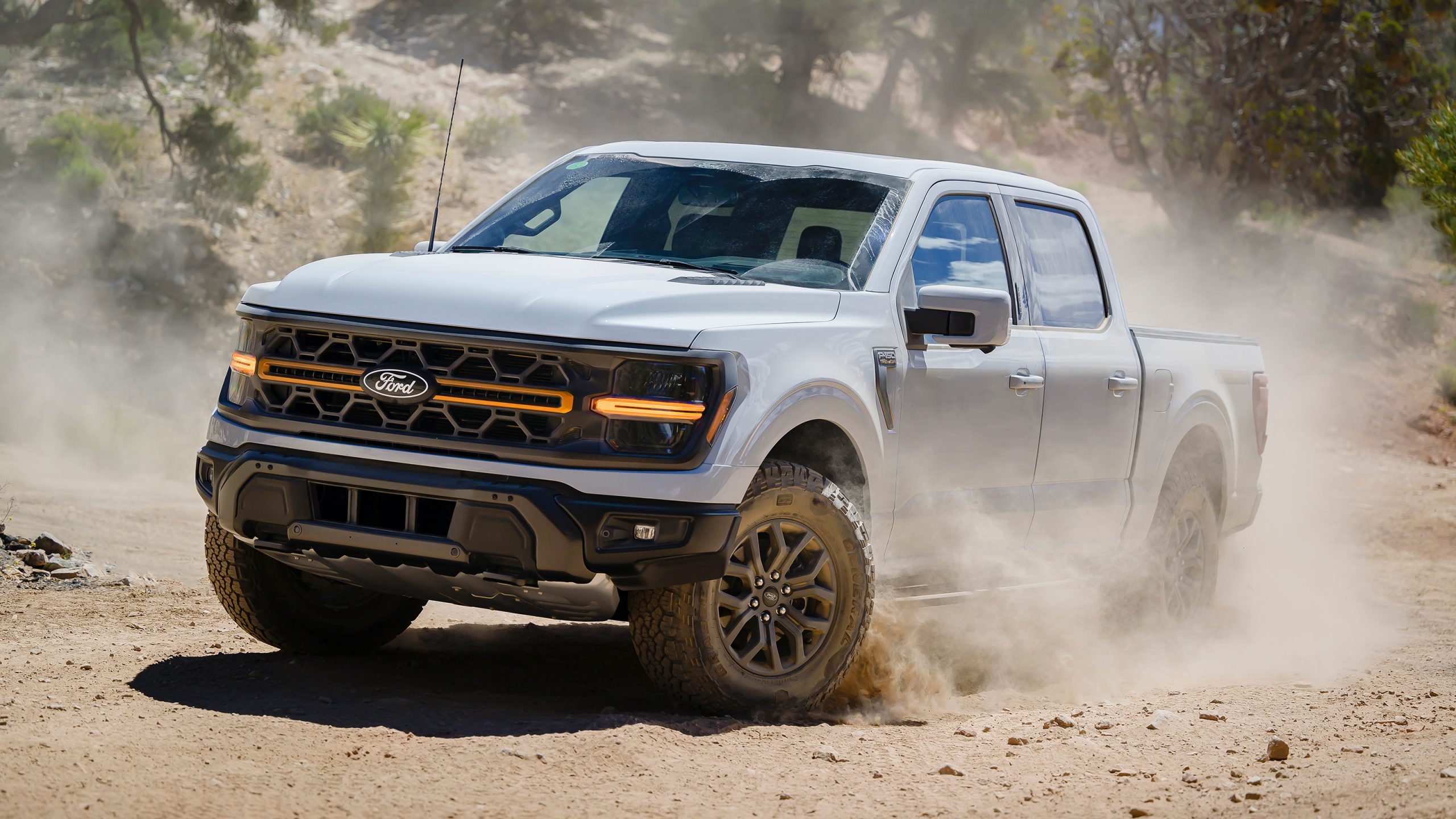
- Engine: 2.7L EcoBoost V6 / 3.5L EcoBoost V6 / 5.0L V8 / 3.5L PowerBoost hybrid V6 / 3.5L high-output EcoBoost V6 (Raptor) / 5.2L supercharged V8 (Raptor R)
- Horsepower: 325 hp (2.7L) / 382–400 hp (3.5L EcoBoost) / 400 hp (5.0L V8) / 420–430 hp (PowerBoost) / 450 hp (Raptor) / 720 hp (Raptor R)
- Torque: 400 lb-ft (2.7L) / 500 lb-ft (3.5L EcoBoost) / 410 lb-ft (5.0L V8) / 570–578 lb-ft (PowerBoost) / 510 lb-ft (Raptor) / 640 lb-ft (Raptor R)
- Length: 209.4–243.8 in (5.32–6.20 m)
- Width: 79.9 in (2.03 m) / 95.7 in (2.43 m with mirrors)
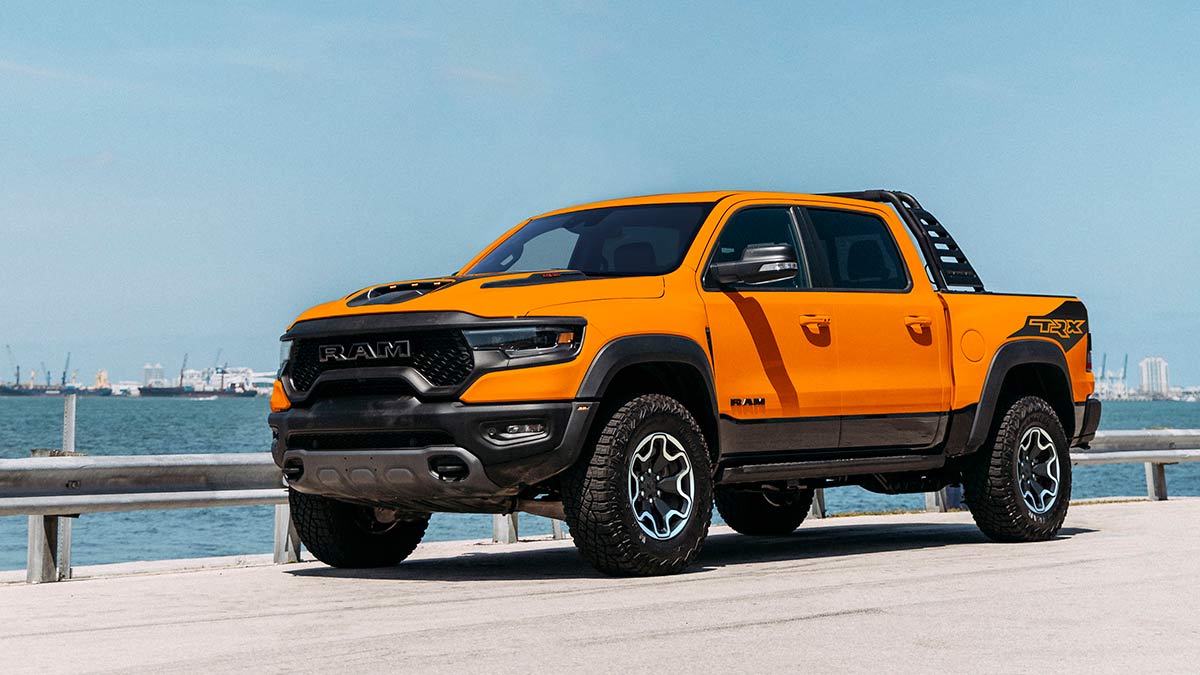
4. Ram 1500
The Ram 1500 is assembled in Sterling Heights, Michigan, but its production reflects a deeply international supply chain that lowers its U.S. and Canadian parts content to about 55 percent. While final assembly occurs in the United States, many core components such as engines, transmissions, electronics, and interior systems are sourced from Mexico, Europe, and other global suppliers.
Stellantis, the parent company formed from Fiat Chrysler and PSA Group, coordinates this global network, blending engineering and manufacturing resources across multiple regions. Some related heavy-duty Ram models are also built in Mexico, reinforcing the brand’s cross-border production strategy and further shaping its parts distribution profile.
Performance is one of the Ram 1500’s strongest traits, with a wide range of engines that includes a 3.6-liter V6, a 5.7-liter Hemi V8, and a twin-turbo inline-six available in multiple power outputs up to 540 horsepower. All engines pair with an eight-speed automatic transmission.
The truck delivers quick acceleration for its size, with tested 0 to 60 mph times as fast as 4.2 seconds in high-output configurations. A coil-spring rear suspension helps deliver a smoother ride than many competitors, while available air suspension adds adjustable ride height for improved comfort, towing stability, and off-road capability.
Capability remains competitive in the full-size segment, with a maximum towing capacity of 11,610 pounds and payload capacity reaching up to 2,360 pounds. Fuel economy varies depending on configuration, with the most efficient versions achieving up to 25 mpg on the highway according to EPA estimates. Real-world testing shows strong efficiency for the inline-six engines, while V8 models prioritize power over economy.
The Ram 1500 interior focuses heavily on comfort and refinement. Higher trim levels stand out with premium materials, large digital screens, and seating that can reach luxury levels. In the most equipped versions, the seats may even include massage functions. Space inside the cabin is generous for both passengers and cargo storage. Practical storage areas are placed throughout the interior to improve everyday usability.
Technology is built around large infotainment displays that support smartphone integration. Some variants also add extra screens for passengers to use. Safety features include standard driver assistance systems such as automatic emergency braking and blind spot monitoring. More advanced options like hands-free driving assistance are available on select trims.
- Engine: 3.6L Pentastar V6 eTorque / 3.0L Hurricane twin-turbo I6 (standard output) / 3.0L Hurricane twin-turbo I6 (high output) / 5.7L HEMI V8 eTorque
- Horsepower: 305 hp (3.6L V6) / 420 hp (Hurricane SO) / 540 hp (Hurricane HO) / 395 hp (5.7L HEMI)
- Torque: 269 lb-ft (3.6L V6) / 469 lb-ft (Hurricane SO) / 521 lb-ft (Hurricane HO) / 410 lb-ft (5.7L HEMI)
- Length: 228.9–241.8 in (5.81–6.14 m)
- Width: 82.1 in (2.09 m)
Also read: Top 10 Cars With the Shortest Turning Radius Ranked