
The United States is known for its vast and often complex legal system, with laws enacted at the federal, state, county, and city levels. Over the decades, countless regulations have been passed to address specific problems of their time.
While many of these laws have been updated or repealed, some unusual rules remain on the books long after the circumstances that inspired them disappeared. As a result, motorists can occasionally come across laws that sound more like urban legends than real regulations.
Many of these strange laws originated during the early days of the automobile when lawmakers were still trying to figure out how cars should coexist with horses, pedestrians, and rapidly growing cities.
Others were passed in response to local incidents that seemed important at the time but eventually became irrelevant as technology and society changed. Even though enforcement is rare, these laws technically remain part of the legal code in certain jurisdictions.
What makes these regulations fascinating is that they offer a view into the history of transportation in America. They reveal the concerns people once had about safety, public behavior, and the impact of automobiles on everyday life.
Some laws attempted to prevent frightening horses, while others focused on driver conduct in ways that seem almost comical today.
It is important to note that many of these laws are rarely enforced and may conflict with newer regulations. Still, they remain interesting examples of how legal systems can preserve rules long after their practical purpose has faded.
They also demonstrate that legislation often reflects a particular moment in history rather than a timeless set of instructions.
In this article, we will look at ten strange car laws that are still found in various parts of the United States. Some are amusing, some are surprisingly specific, and all of them show just how unusual automotive regulations can become when viewed through a modern lens.
Also Read: 8 Small Cars That Outperform SUVs in IIHS Tests
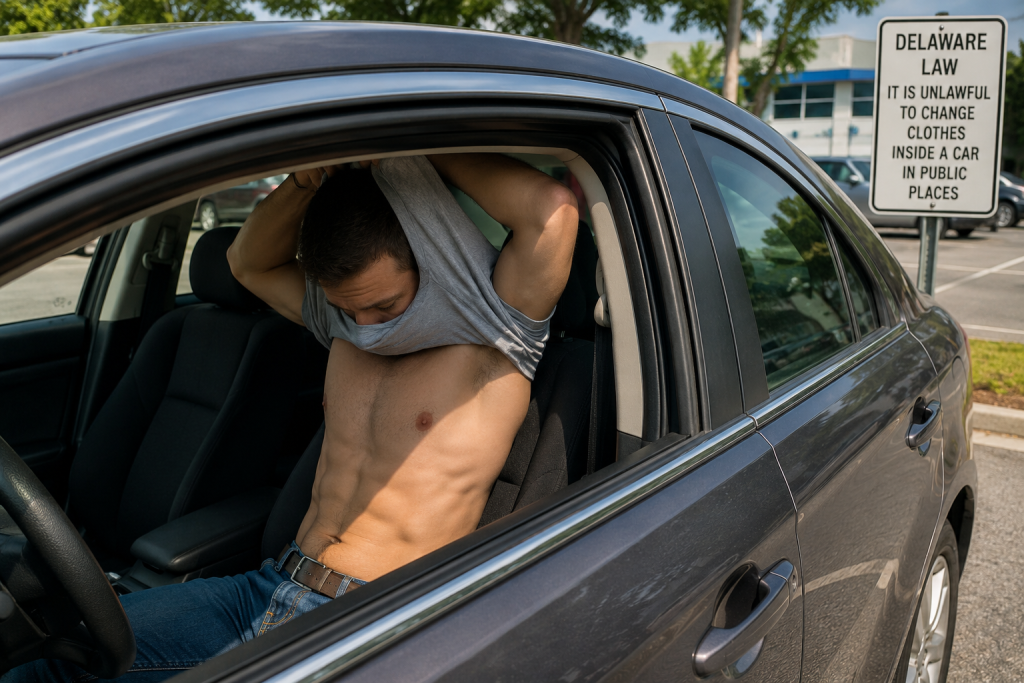
1. Drivers Must Not Change Clothes Inside a Car in Public Places (Delaware)
Most traffic laws focus on speed limits, seatbelts, or distracted driving. Delaware, however, became known for a regulation that has gained attention because it addresses something far less conventional. According to local interpretations of public decency laws, changing clothes inside a vehicle while parked in a public location can potentially lead to legal trouble.
The rule was not created specifically to target motorists. Instead, it grew out of broader public indecency concerns. Lawmakers wanted to prevent situations where people could expose themselves in places visible to the public.
Since a car parked in a public area is often visible to passersby, changing clothes inside the vehicle can technically fall under those regulations.
For beachgoers, athletes, and travelers, this can sound surprising. Many people routinely use their vehicles as temporary changing rooms after swimming or exercising.
In practice, authorities rarely pursue cases unless the behavior is particularly visible or generates complaints. Nevertheless, the law remains an unusual example of how public conduct regulations can affect drivers.
The regulation highlights how a vehicle is not always considered a completely private space under the law. Actions that might be acceptable inside a home can be treated differently when performed in a car parked in public view. This distinction has led to numerous discussions about privacy expectations inside automobiles.
Although enforcement is uncommon, the law continues to appear on lists of unusual American driving regulations because it affects something many people would never associate with traffic law.
It serves as a reminder that owning a car does not automatically create a private environment exempt from public behavior standards.
2. It Is Illegal to Drive Blindfolded (Alabama)
At first glance, a law banning blindfolded driving sounds completely unnecessary. Common sense alone would suggest that operating a vehicle without being able to see the road is extremely dangerous. Yet Alabama has long been associated with a statute specifically prohibiting motorists from driving while blindfolded.
The existence of such a law often makes people wonder what event inspired lawmakers to write it. While the exact origins are difficult to trace, many legal historians believe that highly specific regulations often emerge after unusual incidents or concerns that attract public attention.
Legislators sometimes create explicit laws to ensure there is no ambiguity about prohibited behavior.
Modern traffic codes already contain numerous provisions that would make blindfolded driving illegal. Reckless driving, endangerment, and negligent operation statutes would almost certainly apply. Nevertheless, the specific wording remains noteworthy because it addresses a scenario that most people would never seriously consider.
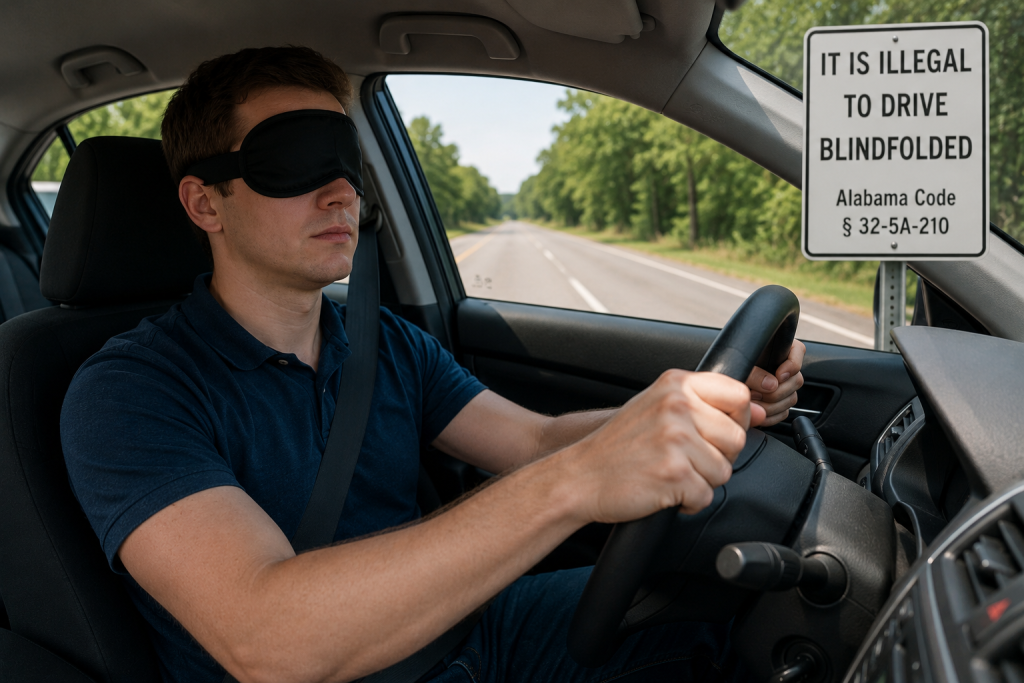
The law has become famous largely because it demonstrates how legal systems sometimes spell out obvious safety requirements. While many regulations are broad and open to interpretation, this one leaves no room for debate. A driver operating a vehicle while unable to see is clearly violating the law.
Beyond its humorous reputation, the statute reflects an important principle in road safety. Driving requires constant visual awareness of traffic, road conditions, pedestrians, and hazards. Any action that eliminates a driver’s ability to observe the surroundings creates an immediate risk to everyone nearby.
As a result, Alabama’s unusual rule continues to be cited as one of the strangest automotive laws in America. Even though it may seem redundant, it remains an interesting example of lawmakers choosing absolute clarity over general legal language.
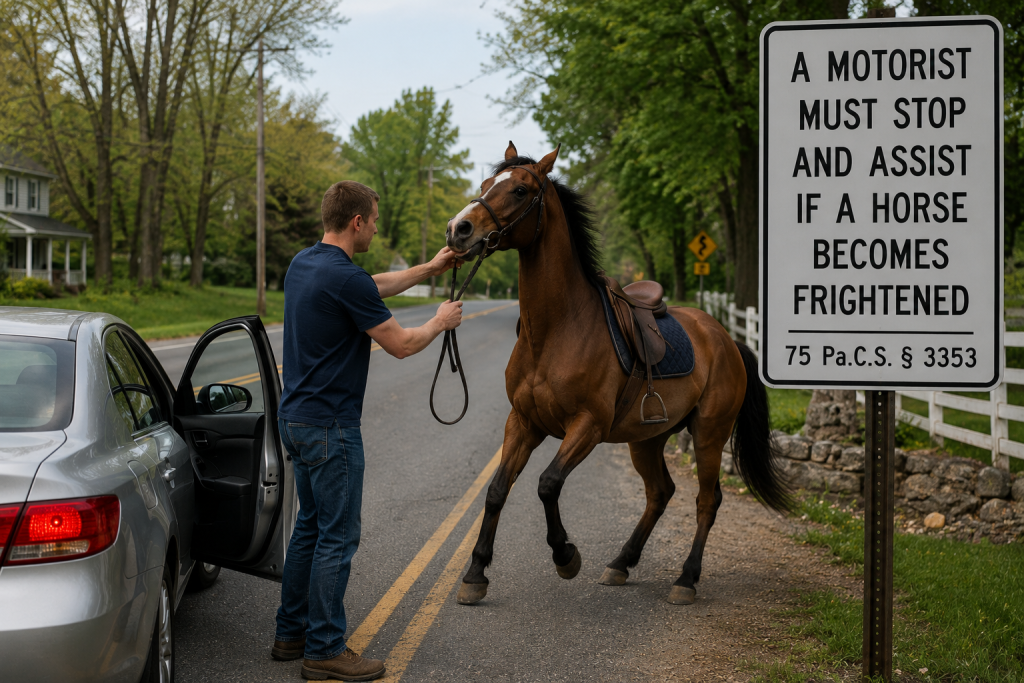
3. A Motorist Must Stop and Assist if a Horse Becomes Frightened (Pennsylvania)
The automobile transformed transportation in America, but during the early years of motoring, roads were shared with horse-drawn wagons and riders. In Pennsylvania, one of the most unusual remnants of that era is a law requiring drivers to stop if a horse appears frightened by their vehicle.
The regulation dates back to a period when automobiles were rare and often viewed as noisy machines capable of startling animals. Horses that became frightened could bolt unexpectedly, putting riders, passengers, and nearby pedestrians in danger.
Lawmakers attempted to reduce these risks by requiring motorists to take responsibility when approaching horses on the road.
Under the traditional wording associated with the law, a driver may be required to stop the vehicle and even turn off the engine if necessary. The intention was simple. A silent, stationary automobile was far less likely to agitate a nervous horse than one moving down the road with an engine running.
Today, encounters between cars and horses are much less common than they were a century ago. Urban areas rarely see horseback traffic, and modern vehicles are quieter and more refined than the early automobiles that inspired the law. Nevertheless, the regulation remains one of the most frequently cited examples of outdated automotive legislation.
The law also illustrates how rapidly transportation technology changed in the twentieth century. At one time, lawmakers considered horse-related incidents significant enough to require detailed legal guidance. What seems odd now was once viewed as an important safety measure.
Even in modern times, the principle behind the law retains some value. Drivers traveling through rural areas are often advised to slow down and use caution around horses because sudden noises or movements can still startle animals.
The statute may feel like a relic from another age, but it reflects genuine concerns that existed during the transition from horsepower travel to motorized transportation.
4. A Driver Cannot Use the Roadway for a Race Without Permission (Nevada’s Unusually Broad Racing Rule)
Many states prohibit unauthorized street racing, but Nevada became known for an especially broad interpretation that attracted attention because even informal competitions between vehicles could potentially violate the law.
The regulation was created to address the dangers associated with racing on public roads. High speeds, aggressive driving, and attempts to outperform another vehicle can create significant risks for everyone sharing the roadway.
Instead of focusing solely on organized races, lawmakers adopted language that could apply to a wide variety of competitive driving situations.
What makes the rule seem unusual is how broadly some people interpret it. In theory, even an impromptu challenge between drivers attempting to see who can accelerate faster could fall under the definition of illegal racing. The law does not require a formal event, spectators, or prize money. The act of competing on a public road may be enough.
This approach gives law enforcement flexibility when dealing with dangerous behavior. Rather than waiting for a large-scale street racing event to develop, officers can intervene when drivers begin treating public roads as competition venues.
That proactive approach has become increasingly important as vehicle performance has improved dramatically over the years.
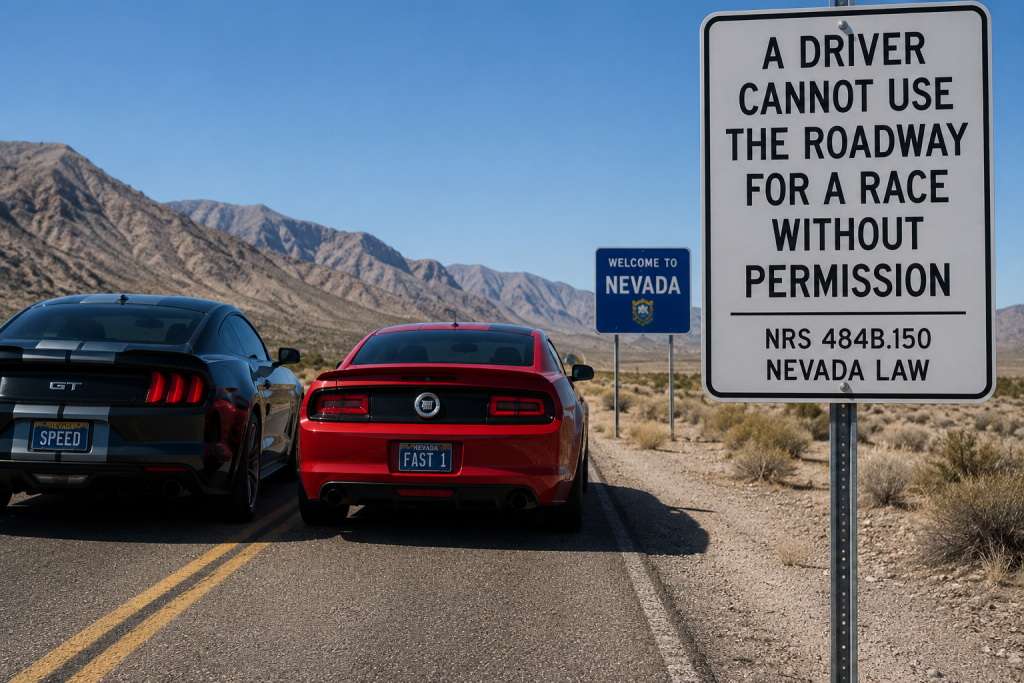
The rule also serves as a reminder that roads are designed for transportation rather than competition. While motorsports remain popular throughout the United States, races are generally expected to take place at dedicated tracks where safety measures are present.
Public streets lack the barriers, emergency crews, and controlled environments necessary for competitive driving.
Although the law is rooted in safety concerns, its broad wording has helped it earn a place on lists of strange automotive regulations. The idea that a seemingly casual challenge between drivers could technically qualify as racing often surprises people who are unfamiliar with how such statutes are written.
5. It Is Illegal to Leave a Car Unattended While Running (Multiple Jurisdictions)
Not every unusual law sounds funny at first. Some become interesting because they regulate behavior that many drivers perform without a second thought. Various cities and states across America have rules prohibiting motorists from leaving a vehicle unattended while the engine is running.
Imagine a cold winter morning. A driver starts the vehicle, leaves it warming up in the driveway, and returns indoors for a few minutes. In some jurisdictions, that simple action could technically violate local law.
The reasoning behind the regulation is practical rather than humorous. Running vehicles left unattended are easier targets for theft. A thief can simply enter the car and drive away without needing to bypass security systems. Lawmakers viewed these situations as avoidable risks and created regulations to discourage them.
There is also a safety component. An unattended vehicle can move unexpectedly if improperly secured. Mechanical failures, accidental gear engagement, or tampering by others can potentially create hazards. By requiring drivers to remain with their vehicles, authorities hoped to reduce such incidents.
What makes the law memorable is how many people unknowingly break it. Remote starters and modern convenience features have made engine warm-ups common in certain regions. Many motorists assume this behavior is perfectly legal everywhere, only to discover that some local regulations say otherwise.
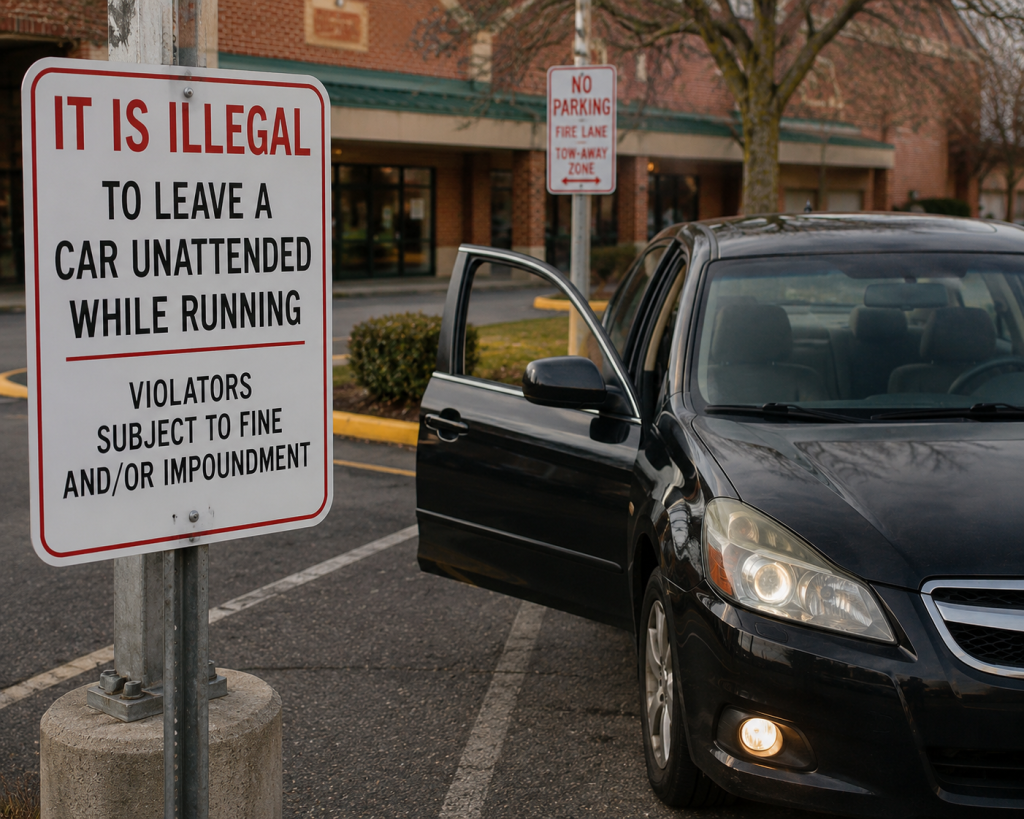
The rule demonstrates that unusual laws are not always ancient leftovers from the horse and buggy era. Some continue to address concerns that remain relevant today, including vehicle theft and public safety. Even if enforcement varies widely from place to place, the regulation remains a fascinating example of how lawmakers attempt to shape everyday driving habits.
For drivers accustomed to stepping away from a running vehicle, learning about this law can be a genuine surprise. Its existence proves that seemingly harmless routines can sometimes have unexpected legal implications.
6. Cars May Not Be Driven Through a Playground (Georgia)
Some laws gain notoriety because they prohibit actions that seem so unlikely that most people never imagined they needed to be addressed. Georgia has often been associated with regulations prohibiting vehicles from being driven through playground areas.
At first glance, the rule sounds almost absurd. Few drivers would intentionally steer a vehicle through a place designed for children to play. Yet lawmakers sometimes create highly specific regulations to remove any uncertainty regarding public safety.
The law reflects concerns about protecting children in areas where they may move unpredictably. Playgrounds are environments filled with running, climbing, and active recreation. Young children often focus on play rather than surrounding traffic, making them particularly vulnerable to vehicle-related accidents.
Instead of relying solely on broader reckless driving statutes, local authorities chose to create direct restrictions. Such laws make it easier to establish clear boundaries around places where automobiles simply do not belong. The message is straightforward and leaves little room for interpretation.
Historically, playgrounds were sometimes located near open community spaces where access controls were less developed than they are today. Regulations helped ensure that motorists understood these areas were intended exclusively for recreational use rather than vehicle passage.
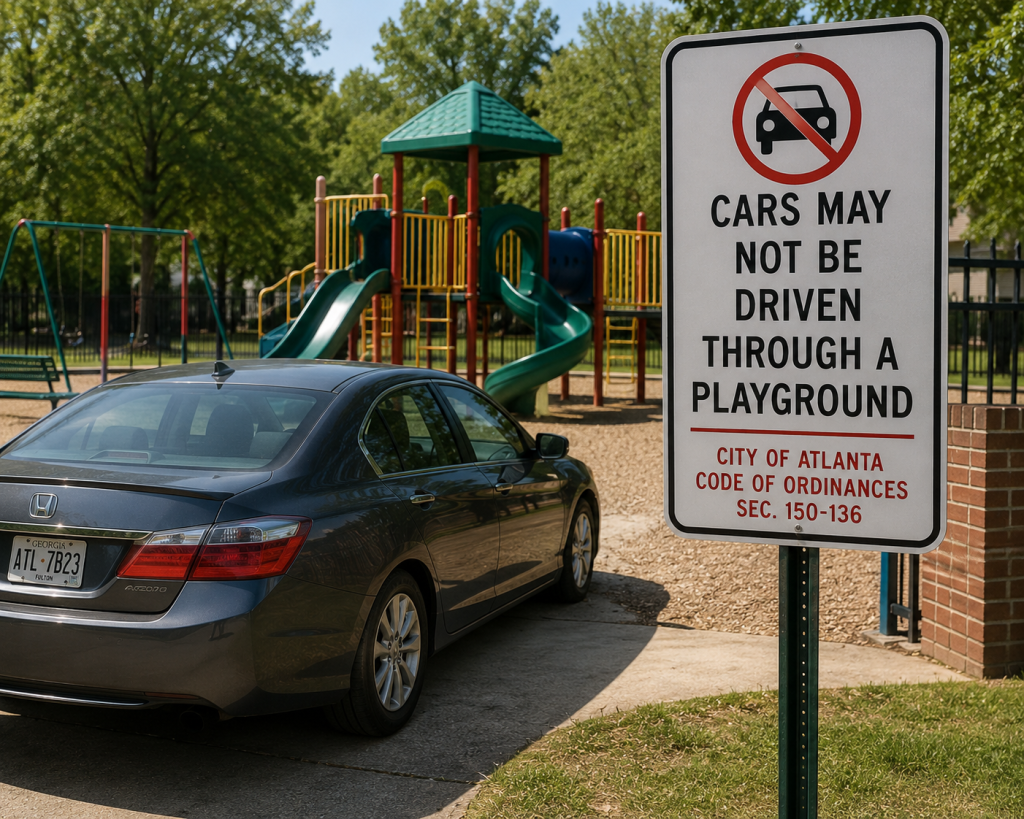
From a modern perspective, physical barriers and improved urban planning often prevent cars from entering playgrounds in the first place. Fences, curbs, landscaping, and dedicated pedestrian zones provide protection that may not have existed when some of these rules were originally adopted.
The law remains interesting because it illustrates how legislators occasionally codify behavior that most people already consider obvious. While the regulation may seem unnecessary to contemporary drivers, it underscores the importance society places on protecting children and preserving safe recreational spaces.
Its continued presence in legal codes serves as another example of how specific local concerns can produce surprisingly memorable traffic laws that endure long after the circumstances surrounding their creation have changed.
7. Drivers May Not Use Profanity While Operating a Vehicle (Maryland)
Traffic laws typically deal with speed, lane discipline, and vehicle equipment. Maryland has drawn attention over the years because certain local regulations and disorderly conduct statutes have been interpreted in ways that can affect motorists who use obscene or profane language while driving in public.
Unlike many strange vehicle laws, this one focuses on behavior rather than the automobile itself. The concern was not mechanical safety or road design. Instead, lawmakers wanted to maintain public order and prevent conduct that could disturb others sharing public spaces.
To understand the law, it helps to remember the period in which many public decency regulations were written. Communities often adopted rules intended to discourage offensive language in places where families gathered.
Streets and roadways were considered public environments, meaning motorists were not automatically exempt from those expectations simply because they were inside a vehicle.
The unusual aspect is that driving can be a frustrating experience. Congestion, unexpected delays, aggressive motorists, and confusing intersections can test anyone’s patience. As a result, the idea that a driver’s choice of words could potentially create legal consequences seems surprising to many people.
In practice, authorities rarely focus on profanity alone. Situations generally involve additional factors such as disorderly conduct, public disturbances, or behavior directed toward other individuals. Nevertheless, the connection between public language laws and motorists has earned this regulation a place among America’s strangest automotive rules.
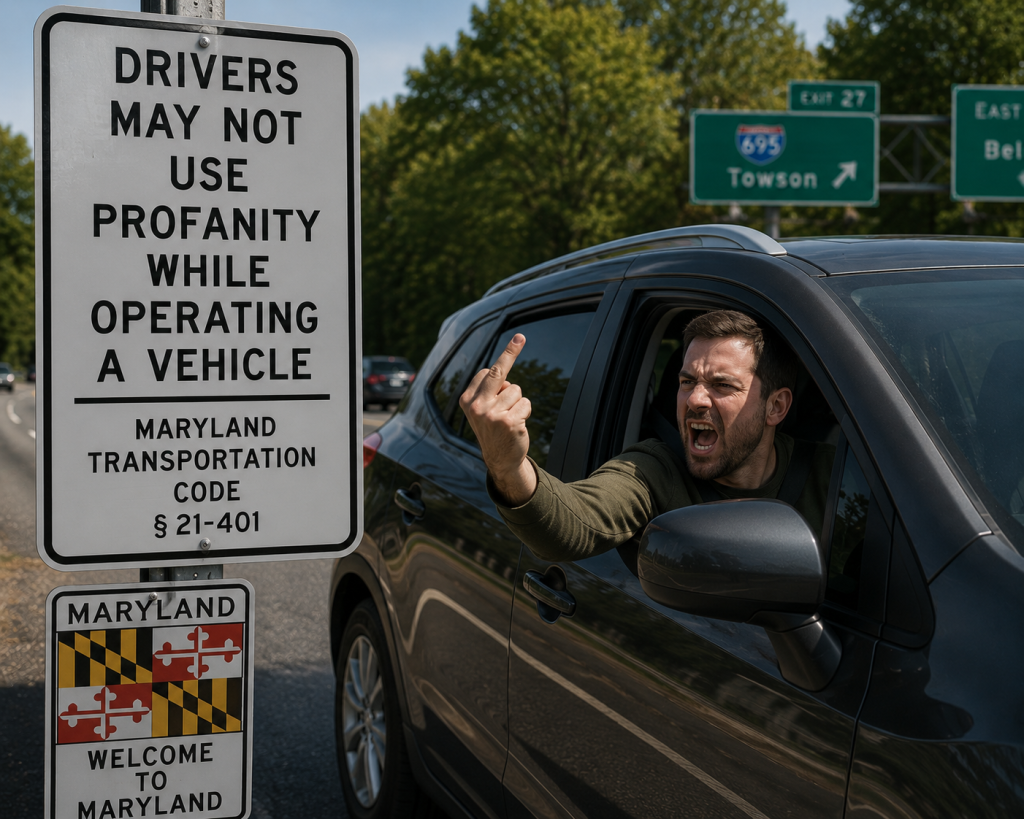
Another reason the law remains memorable is that it highlights how legal expectations can extend beyond vehicle operation. Drivers often think exclusively about traffic regulations, yet broader public conduct laws can also apply while they are behind the wheel.
The regulation may appear humorous today, but it reflects a period when lawmakers placed significant emphasis on enforcing standards of public behavior. Regardless of whether one agrees with that approach, the rule highlights how communities once sought to manage conduct in shared public spaces through formal regulation.
8. A Car Door Cannot Be Left Open Longer Than Necessary (Oregon)
Some unusual laws address activities so ordinary that most people never consider them from a legal perspective. Oregon has become known for a rule that prohibits leaving a vehicle door open for longer than necessary.
The regulation sounds trivial at first. After all, opening a car door is something drivers and passengers do countless times every day. The reason behind the law becomes clearer, however, when viewed through the lens of traffic safety and road obstruction.
An open vehicle door can create unexpected hazards. Cyclists traveling alongside parked cars face the risk of “dooring,” a situation in which a suddenly opened or unattended door blocks their path. Pedestrians and other motorists can also encounter difficulties when doors extend into travel lanes or parking areas.
Rather than addressing only collisions after they occur, lawmakers sought to reduce the possibility of such incidents by regulating how long doors may remain open. The goal was to encourage people to load, unload, enter, and exit vehicles efficiently without unnecessarily obstructing public space.
What makes this law fascinating is the level of detail involved. Many traffic regulations establish broad safety standards, leaving room for interpretation. This one focuses on a very specific action that most people would not associate with legal oversight.
The rule also reflects changing transportation priorities. As cities increasingly accommodate cyclists and pedestrians alongside automobiles, seemingly minor behaviors receive greater attention. A door left open for an extended period may not appear dangerous to the vehicle owner, yet it can create significant risks for others nearby.
Today, awareness campaigns frequently remind drivers to check for approaching cyclists before opening doors. The Oregon law can be viewed as an early attempt to address similar concerns through legislation.
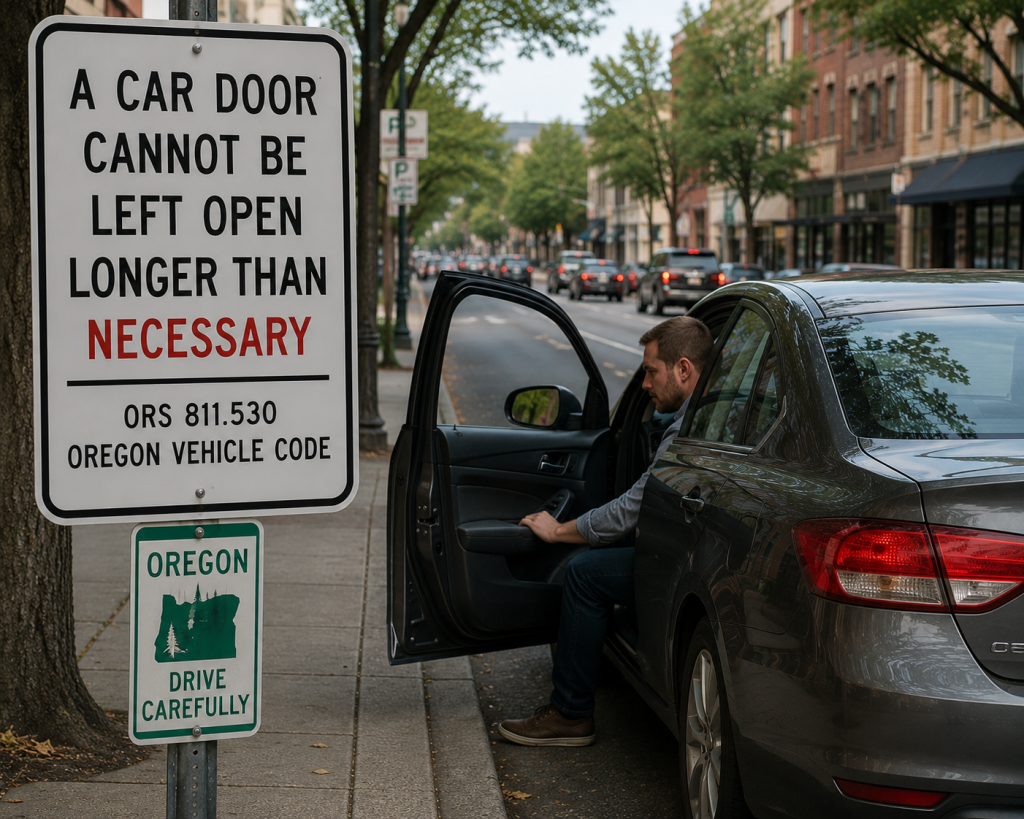
Even though most motorists will never receive a citation for such behavior, the rule remains a noteworthy example of how detailed traffic regulations can become.
Its continued existence demonstrates that lawmakers sometimes focus on small everyday actions when those actions have the potential to affect public safety.
9. Drivers Must Not Shoot Game Animals From Their Vehicles (Tennessee)
Among America’s stranger automotive laws is a regulation associated with Tennessee that prohibits people from hunting or shooting game animals from a motor vehicle. While the rule has obvious safety implications, it often appears on lists of unusual driving laws because it combines two activities that most people rarely think about together.
The origins of the regulation are rooted in wildlife conservation and responsible hunting practices. Wildlife agencies sought to ensure that hunting remained fair, ethical, and safe. Allowing hunters to pursue animals directly from vehicles would provide an advantage that many regulators considered inappropriate.
Safety concerns also played a major role. Firearms discharged from roadsides or moving vehicles can endanger nearby motorists, property owners, and pedestrians. By clearly separating hunting activities from vehicle operation, lawmakers reduced the potential for dangerous situations.
The law reflects how automobiles dramatically changed outdoor recreation. As vehicles became more capable and accessible, hunters gained the ability to reach remote areas that were once difficult to access. Regulators responded by establishing rules governing how those vehicles could be used during hunting activities.
What makes the regulation stand out is its unusual subject matter. Most vehicle laws concern transportation, while most hunting regulations concern wildlife management. This statute sits at the intersection of both fields, creating a unique legal requirement that captures public attention.
For responsible hunters, the rule is generally viewed as common sense. Ethical hunting practices emphasize skill, patience, and respect for wildlife rather than convenience. Shooting from a vehicle conflicts with many of those principles.
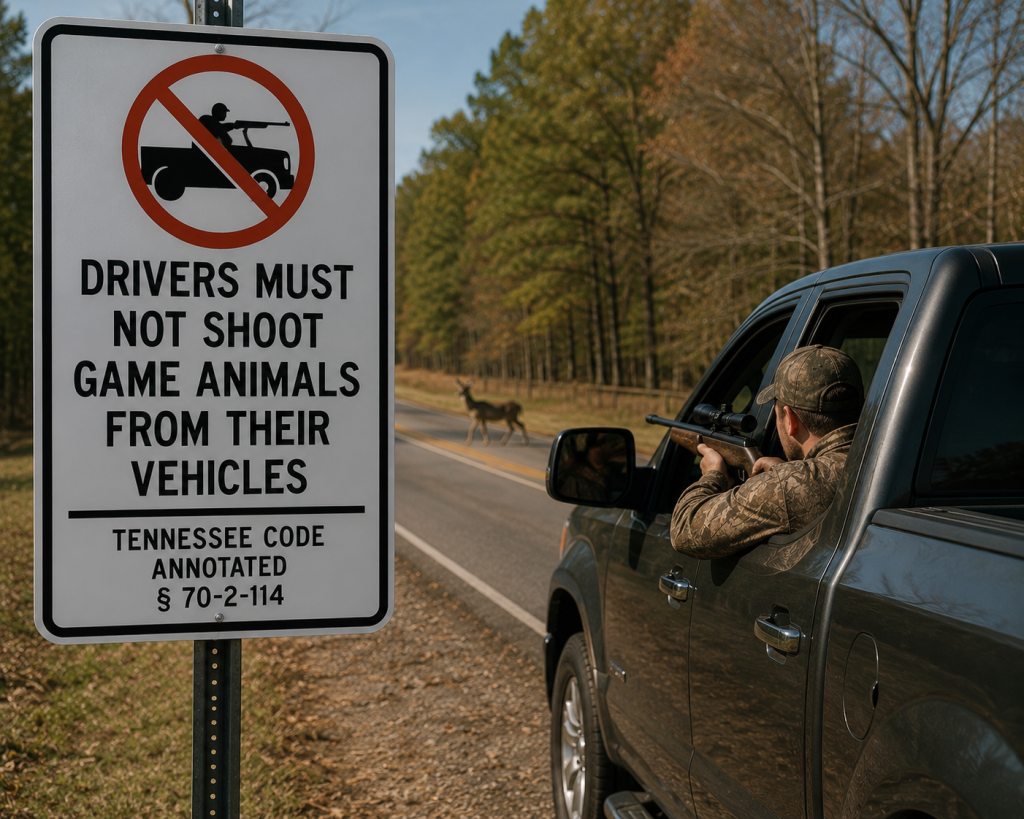
Even so, the law remains memorable because of how specifically it addresses a particular behavior. It reminds people that vehicles influence many aspects of life beyond transportation, sometimes requiring lawmakers to create regulations that connect entirely different areas of public policy.
10. Motorists Must Yield to Livestock on Certain Rural Roads (Western States and Local Jurisdictions)
The final entry on this list brings us back to the agricultural roots of many American communities. Various western states and local jurisdictions maintain rules requiring motorists to yield to livestock being moved along or across public roads.
For city residents, encountering a herd of cattle during a commute may sound highly unusual. In ranching regions, however, moving livestock between grazing areas has been a normal part of daily life for generations. Laws were created to establish clear expectations whenever animals and vehicles shared the same roadway.
The principle behind these regulations is straightforward. Large animals are unpredictable and cannot be expected to react like motor vehicles. Attempting to force a herd to move quickly or weaving aggressively through livestock can create dangerous conditions for drivers, ranchers, and the animals themselves.
Unlike many modern traffic rules, these laws acknowledge that roads serve multiple purposes in rural communities. They are transportation corridors for automobiles, but they may also function as routes for agricultural operations. Legislators recognized this reality and crafted regulations accordingly.
From a historical perspective, the laws reveal how transportation infrastructure evolved alongside farming and ranching industries. Long before highways became dominated by cars and trucks, roads regularly accommodated livestock movement. The legal protections established during that era continue to exist in many places today.
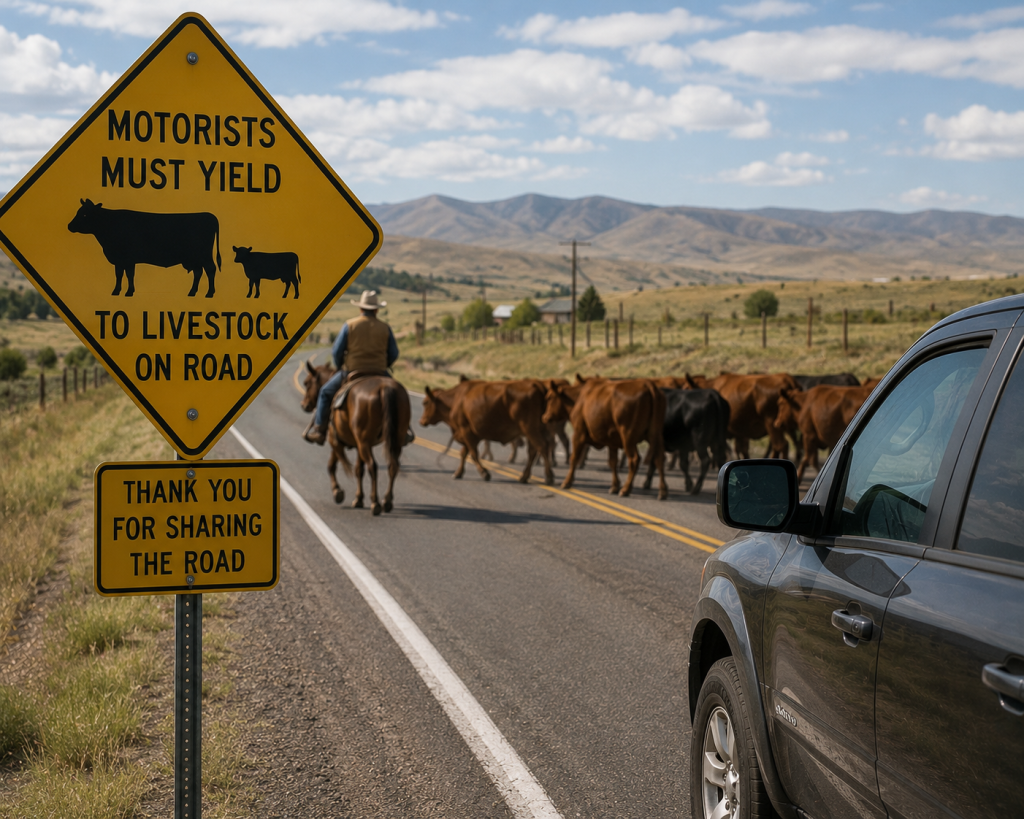
Modern motorists occasionally encounter these situations while traveling through rural regions. Patience is usually the safest response. Livestock handlers often require time to guide animals safely, and rushing the process can increase risks for everyone involved.
Although yielding to cattle may seem unusual compared with yielding to another car, the regulation remains highly practical in areas where agriculture plays a significant economic role. It serves as a reminder that not all roads are used in the same way and that local laws often reflect the unique needs of the communities they serve.
Also Read: 8 Cars With the Most Expensive Brake Jobs in America
