
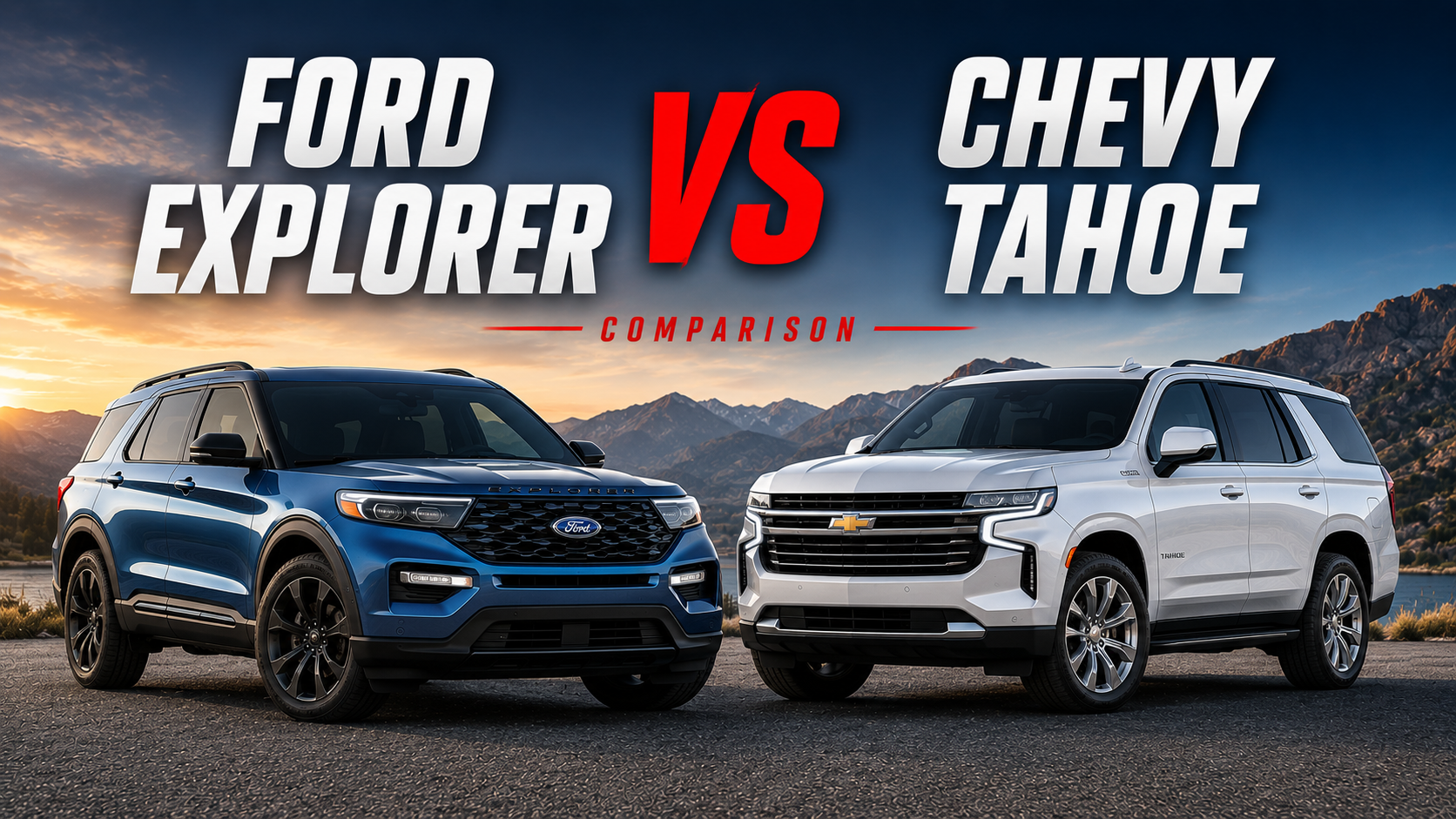
Three-row SUVs have become the default family vehicle for buyers who need passenger space, cargo capacity, towing capability, and long-distance comfort without stepping into a full-size van.
Among the most recognizable names in this segment are the Ford Explorer and Chevrolet Tahoe. Both vehicles have spent decades serving families, road-trippers, and towing enthusiasts, but they approach the mission from very different perspectives.
The Explorer occupies the midsize SUV category, where it competes against vehicles such as the Honda Pilot, Toyota Grand Highlander, and Kia Telluride. Ford designed it to balance family practicality with manageable dimensions, strong performance, and respectable towing capability.
Recent generations have emphasized technology, comfort, and driving dynamics while retaining the versatility that made the Explorer a household name.
The Tahoe sits one class above the Explorer. As a full-size SUV, it offers significantly more passenger room, cargo capacity, and towing capability. Built on a truck-based platform shared with Chevrolet’s full-size pickups, the Tahoe appeals to buyers who regularly haul large families, tow heavy trailers, or simply want maximum interior space.
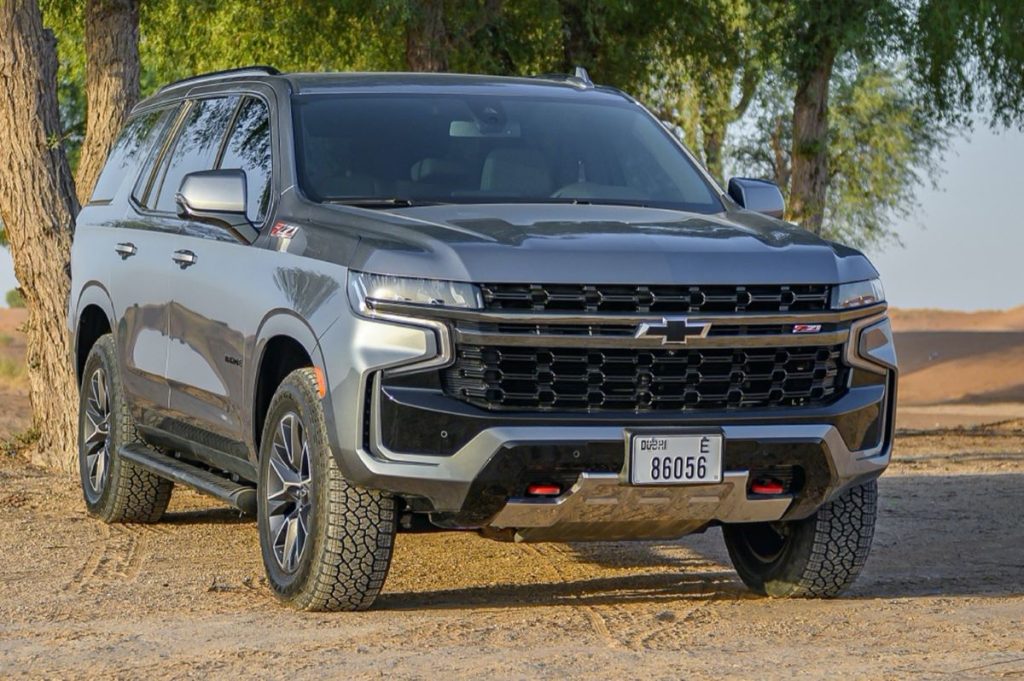
Premium trims such as the High Country push the Tahoe into luxury territory, while Z71 variants target buyers with off-road ambitions.
Comparing these SUVs isn’t entirely straightforward because they serve slightly different audiences. The Explorer prioritizes maneuverability, fuel efficiency, and affordability. The Tahoe focuses on space, capability, and long-distance comfort.
Despite those differences, many buyers find themselves choosing between the two because both can accommodate large families and handle a wide variety of tasks.
Technology, ride quality, towing capability, fuel economy, resale value, and pricing all play important roles in determining which vehicle delivers the better ownership experience. The answer often depends on how much space a buyer truly needs and whether that additional capability justifies the higher purchase price associated with a full-size SUV.
To determine which vehicle deserves a place in your driveway, we’ll compare the Ford Explorer and Chevrolet Tahoe across ten key categories before declaring a complete winner.
Also Read: Jeep Wrangler vs Ford Bronco Comparison & Which Off-Roader Is Better?
Exterior Design and Road Presence
Size alone can influence how an SUV is perceived, and the Tahoe immediately benefits from its full-size proportions.
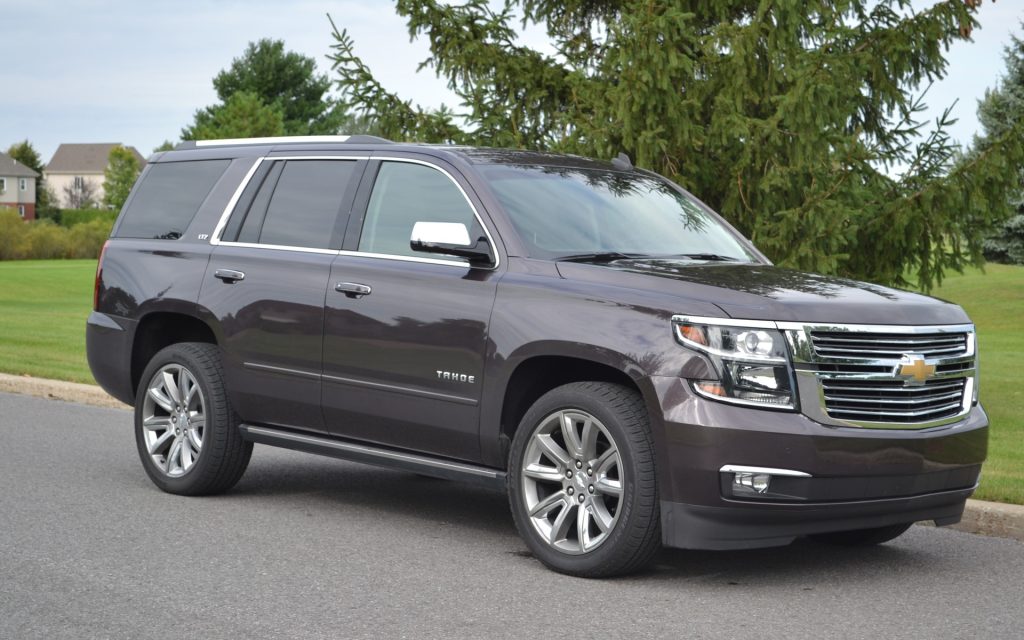
Stretching approximately 210.7 inches in length, the Tahoe commands attention wherever it goes. The broad grille, upright stance, and substantial bodywork create a sense of authority that few vehicles can match. Chevrolet’s recent styling updates have modernized the design while maintaining the rugged appearance buyers expect from a body-on-frame SUV.
Higher trims such as the RST, Z71, and High Country further enhance the visual appeal with unique wheels, grille treatments, lighting elements, and trim-specific details. Parked next to most midsize SUVs, the Tahoe simply looks more substantial.
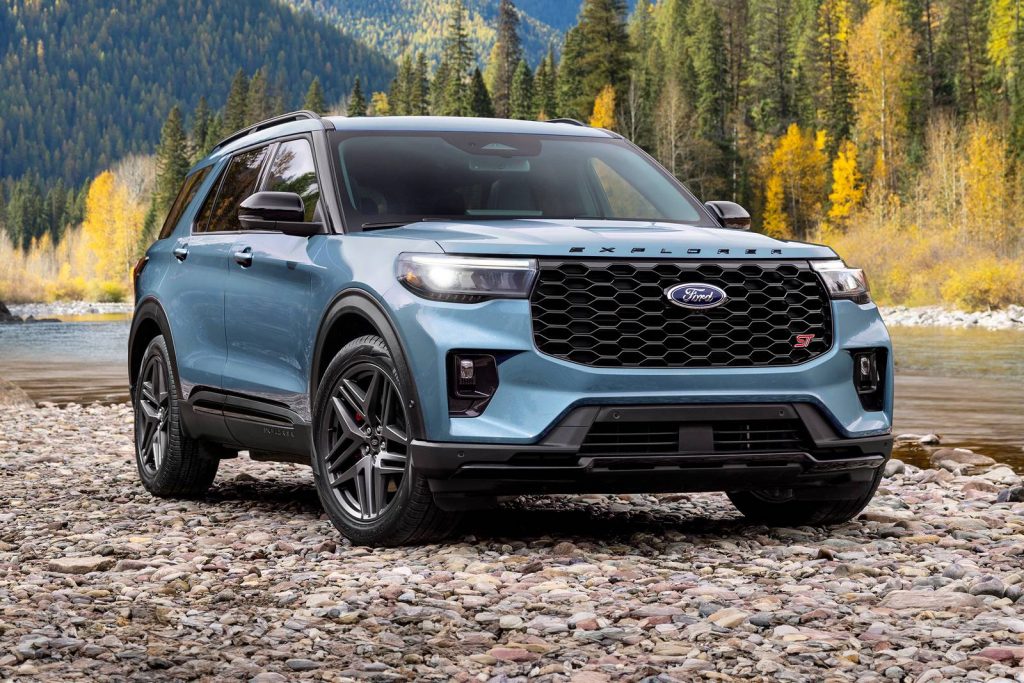
The Explorer takes a different approach. At roughly 198.8 inches long, it remains noticeably smaller than the Tahoe. The reduced size improves maneuverability while giving the SUV a sportier profile.
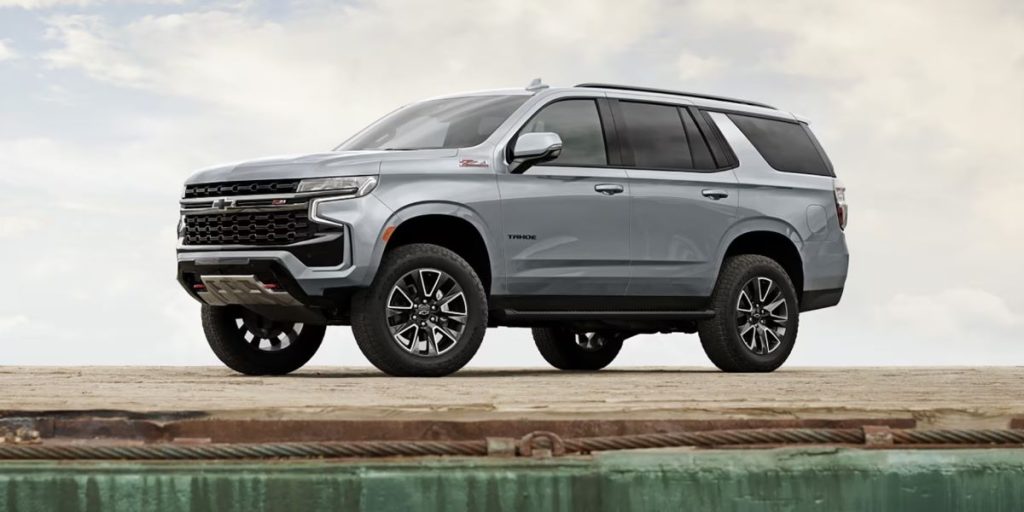
Ford’s design team incorporated a lower roofline, sculpted body sides, and sleeker proportions that help the Explorer look more athletic than many three-row competitors.
Performance-oriented ST models deserve special recognition. Black exterior accents, aggressive wheels, and sporty design cues give the Explorer ST a distinctive personality that separates it from traditional family SUVs.
Visual preference ultimately comes down to whether buyers prioritize rugged presence or modern athleticism. The Explorer looks contemporary and easy to live with. The Tahoe projects confidence and capability on a completely different scale.
Winner: Chevy Tahoe
Massive proportions and commanding road presence make the Tahoe impossible to ignore.
Interior Design and Technology
Modern three-row SUVs often serve as family command centers, making interior quality and technology more important than ever.
Ford made significant improvements to the Explorer’s cabin in recent years. Higher trims feature premium materials, soft-touch surfaces, and large digital displays that create a modern atmosphere. The available 13.2-inch touchscreen and 12.3-inch digital instrument cluster give the interior a high-tech appearance.
Ford’s SYNC infotainment system remains one of the industry’s strongest offerings. Menus are intuitive, response times are quick, and wireless smartphone integration works seamlessly. Features such as built-in navigation, wireless charging, and multiple USB ports enhance everyday usability.
Passenger comfort is impressive as well. Front seats provide excellent support during long trips, and second-row accommodations are generous. Third-row space remains acceptable for children and shorter adults, though taller passengers may find longer journeys less comfortable.
The Tahoe benefits from a major advantage: size. Chevrolet’s interior redesign transformed the Tahoe into one of the most attractive cabins in the full-size SUV segment.
A large 17.7-inch touchscreen dominates the dashboard, while premium trims feature real wood trim, high-quality leather, and sophisticated design elements that rival luxury-brand competitors.
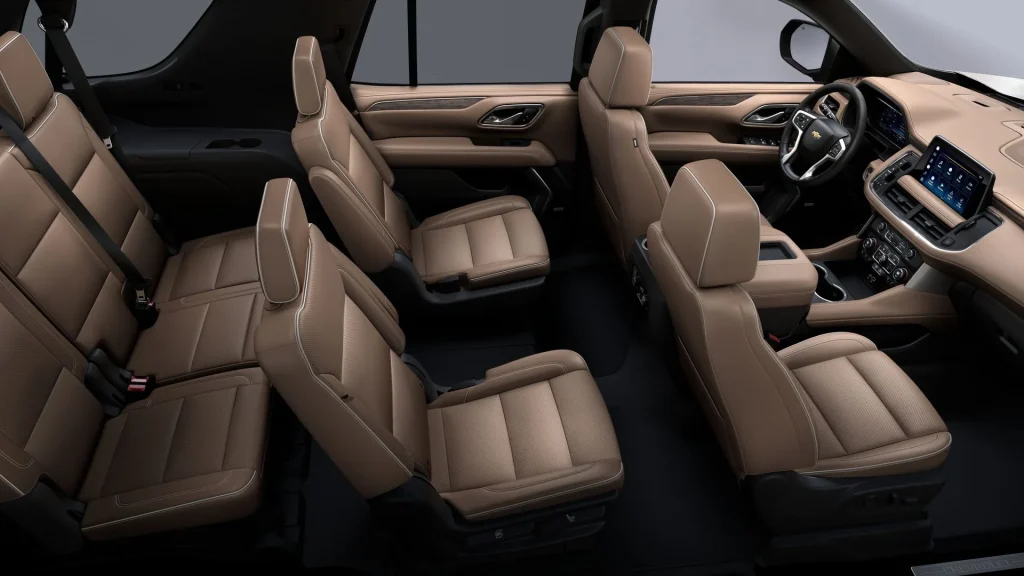
Space becomes the defining factor. Adults can comfortably occupy all three rows, something few midsize SUVs can claim. Third-row passengers enjoy meaningful legroom, and the cabin never feels cramped even when fully occupied.
Technology is excellent in both vehicles, but the Tahoe’s combination of luxury-grade materials and significantly greater passenger space creates a more impressive full environment.
Interior Comparison
| Category | Ford Explorer | Chevy Tahoe |
|---|---|---|
| Largest Touchscreen | 13.2 in | 17.7 in |
| Digital Gauge Cluster | 12.3 in | 11 in |
| Third-Row Space | Good | Excellent |
| Interior Quality | Very Good | Excellent |
Winner: Chevy Tahoe
Superior passenger space and a premium interior design help the Tahoe secure the category.
Powertrains and Performance
Performance expectations have increased dramatically in the SUV market, and both vehicles offer impressive engine choices.
Ford begins with a turbocharged 2.3-liter EcoBoost four-cylinder producing the following:
- 300 horsepower
- 310 lb-ft of torque
Most buyers will find this engine more than adequate for daily driving, highway merging, and family road-trip duties.
Performance enthusiasts can step into the Explorer ST, which uses a twin-turbocharged 3.0-liter V6 generating the following:
- 400 horsepower
- 415 lb-ft of torque
Acceleration is surprisingly quick for a three-row SUV. The Explorer ST reaches 60 mph in approximately 5.2 seconds, making it one of the fastest vehicles in its class. Chevrolet offers a broader selection.
The standard 5.3-liter V8 delivers:
- 355 horsepower
- 383 lb-ft of torque
An available 6.2-liter V8 increases output to
- 420 horsepower
- 460 lb-ft of torque

Buyers seeking efficiency can select the 3.0-liter Duramax diesel:
- 305 horsepower
- 495 lb-ft of torque
The Tahoe’s V8 engines provide effortless power delivery and strong towing performance, while the diesel’s massive torque output makes highway cruising and trailer hauling particularly enjoyable. Performance figures favor the Explorer ST, but full powertrain diversity favors Chevrolet.
Powertrain Comparison
| Engine | Horsepower | Torque |
|---|---|---|
| Explorer 2.3 EcoBoost | 300 hp | 310 lb-ft |
| Explorer ST 3.0TT V6 | 400 hp | 415 lb-ft |
| Tahoe 5.3 V8 | 355 hp | 383 lb-ft |
| Tahoe 6.2 V8 | 420 hp | 460 lb-ft |
| Tahoe Duramax Diesel | 305 hp | 495 lb-ft |
The availability of three distinct powertrains allows the Tahoe to appeal to a broader range of buyers.
Winner: Chevy Tahoe
Greater engine variety and exceptional torque figures provide a more versatile performance lineup.
Cargo Space and Practicality
Practicality often determines whether a family SUV succeeds or fails, and this category highlights one of the biggest differences between these vehicles.
The Explorer provides approximately the following:
- 18.2 cubic feet behind the third row
- 47.9 cubic feet behind the second row
- 87.8 cubic feet with all rear seats folded
Those numbers are competitive within the midsize SUV segment and sufficient for most families. The Tahoe operates in a different league.
Chevrolet’s independent rear suspension redesign dramatically improved cargo packaging, resulting in:
- 25.5 cubic feet behind the third row
- 72.6 cubic feet behind the second row
- 122.9 cubic feet with all rear seats folded
The difference becomes obvious during family vacations, airport runs, and home-improvement projects.
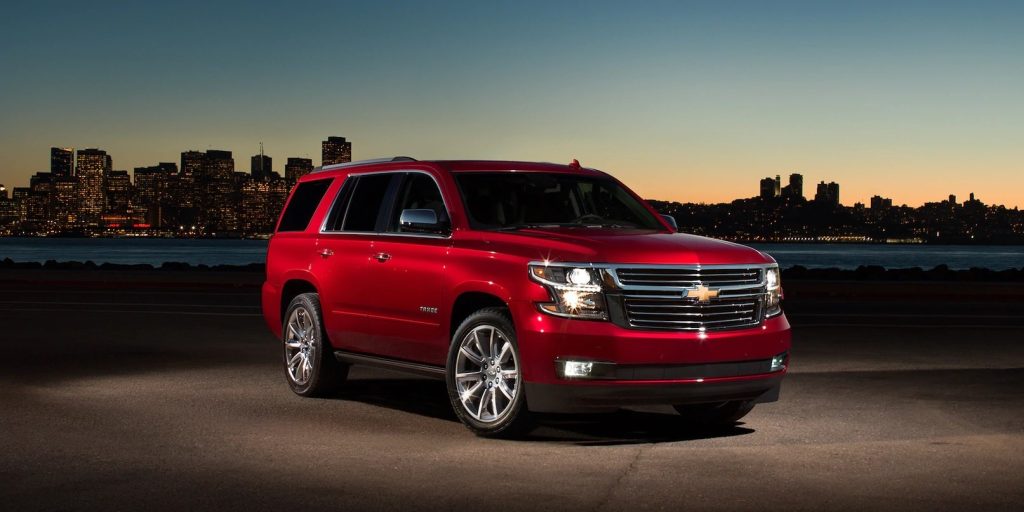
A Tahoe carrying seven passengers can still accommodate substantial luggage. Many midsize SUVs struggle in that scenario because cargo space behind the third row is limited.
Parents transporting sports equipment, camping gear, strollers, and luggage will appreciate the additional room.
Winner: Chevy Tahoe
Massive cargo capacity and exceptional passenger space make the Tahoe one of the most practical family vehicles available.
Ride Quality and Daily Driving
Hours spent behind the wheel often reveal more about an SUV than a quick test drive ever could. Families commuting to work, taking children to school, traveling on vacations, and running daily errands will spend far more time evaluating ride comfort than towing capacity.
This is where the Ford Explorer and Chevy Tahoe begin to separate themselves in meaningful ways.
Ford built the Explorer on a unibody platform, which immediately gives it an advantage in terms of agility and responsiveness. The SUV feels smaller than it actually is, making it easier to maneuver through city traffic, crowded parking lots, and narrow suburban streets.
Steering response is quick and predictable, helping drivers feel confident when changing lanes or handling tight corners. Buyers transitioning from a sedan often find the Explorer easier to adapt to because it doesn’t feel excessively large.
Ride quality is generally impressive. The suspension absorbs most road imperfections effectively, and higher trims equipped with adaptive dampers provide an even more refined experience.
Highway cruising is comfortable, and the cabin remains relatively quiet at speed. Wind and tire noise are well controlled, though rough pavement can occasionally send more vibration into the cabin than some competitors.
The Tahoe approaches comfort from a different perspective. Its longer wheelbase and larger dimensions allow it to smooth out rough roads with remarkable composure.
Chevrolet’s independent rear suspension, introduced in recent years, dramatically improved ride quality compared with older Tahoes. Expansion joints, potholes, and uneven pavement are handled with a level of refinement that rivals some luxury SUVs.
Long-distance travel strongly favors the Tahoe. Front seats are exceptionally comfortable, and passengers in all three rows benefit from generous space. The larger cabin also contributes to a quieter environment, particularly on interstate highways where road-trip comfort becomes increasingly important.
Urban driving tells a different story. Parking a Tahoe requires more attention, and maneuvering through congested areas can feel intimidating for drivers accustomed to smaller vehicles. The Explorer’s more manageable dimensions make daily commuting less stressful.
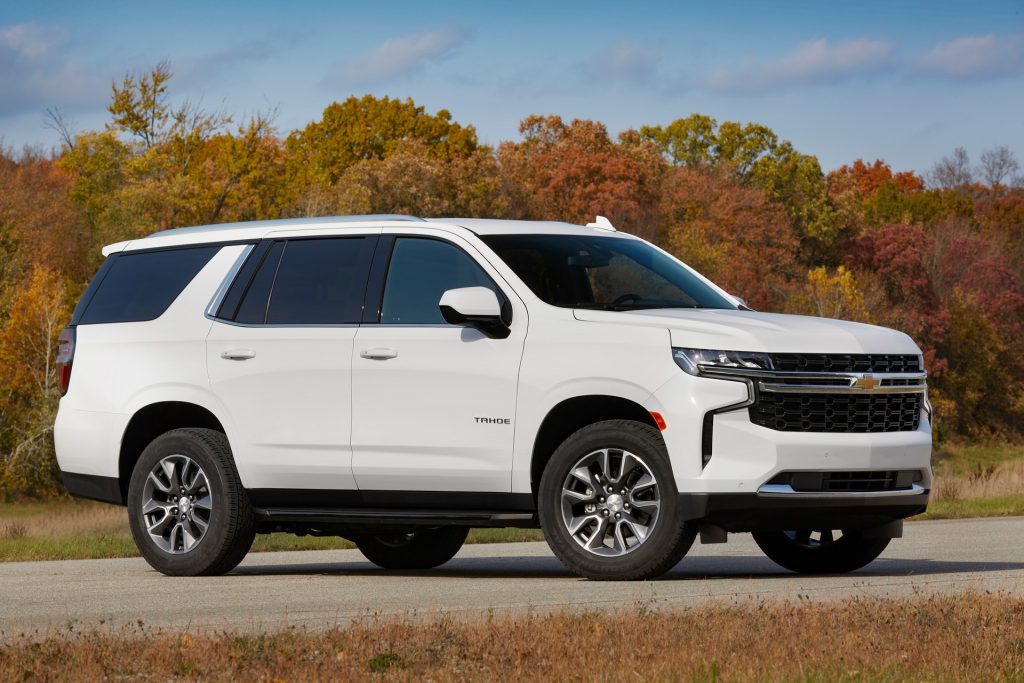
Buyers prioritizing maneuverability and city-friendly driving characteristics may prefer the Ford. Those spending significant time on highways with multiple passengers will appreciate the Tahoe’s exceptional comfort and refinement.
Winner: Chevy Tahoe
Superior highway comfort, outstanding noise isolation, and a remarkably smooth ride give the Tahoe a narrow advantage in daily driving refinement.
Fuel Economy
Fuel costs represent a significant portion of long-term ownership expenses, particularly for families who regularly accumulate thousands of miles each year. While efficiency may not be the primary reason buyers choose three-row SUVs, differences at the fuel pump can become meaningful over time.
Ford offers several powertrain choices for the Explorer, and efficiency remains one of the vehicle’s strengths.
The standard turbocharged 2.3-liter EcoBoost four-cylinder achieves approximately the following:
- 21 MPG city
- 28 MPG highway
- 24 MPG combined
Those figures are impressive for a three-row SUV capable of carrying seven passengers and towing moderate loads. The engine delivers a good balance of power and efficiency, making it a practical choice for families seeking lower operating costs.
The performance-oriented Explorer ST sacrifices some efficiency in exchange for substantially greater power.
Equipped with the twin-turbocharged 3.0-liter V6, fuel economy drops to roughly the following:
- 18 MPG city
- 25 MPG highway
- 21 MPG combined
Even these figures remain respectable considering the SUV’s strong acceleration capabilities. Chevrolet faces a greater challenge because of the Tahoe’s larger size and heavier construction.
The standard 5.3-liter V8 typically returns around:
- 15 MPG city
- 20 MPG highway
- 17 MPG combined
The available 6.2-liter V8 produces even stronger performance but generally lowers efficiency further. The standout performer in the Tahoe lineup is the available 3.0-liter Duramax diesel.
This engine dramatically changes the conversation by delivering approximately the following:
- 21 MPG city
- 28 MPG highway
- 24 MPG combined
Those numbers closely match the Explorer’s four-cylinder while providing substantially greater towing capability and highway range.
Real-world ownership often favors the diesel Tahoe during long-distance travel. A large fuel tank combined with impressive highway efficiency allows some drivers to exceed 600 miles between fill-ups.
Most buyers will choose gasoline-powered models, however. Comparing the Explorer’s standard engine against the Tahoe’s standard V8 clearly favors Ford.
A family driving 15,000 miles annually could save several hundred dollars per year by choosing the Explorer.
Fuel Economy Comparison
| Model | City MPG | Highway MPG | Combined MPG |
|---|---|---|---|
| Explorer 2.3 EcoBoost | 21 | 28 | 24 |
| Explorer ST | 18 | 25 | 21 |
| Tahoe 5.3 V8 | 15 | 20 | 17 |
| Tahoe 6.2 V8 | 14 | 20 | 16 |
| Tahoe Duramax Diesel | 21 | 28 | 24 |
Winner: Ford Explorer
Smaller dimensions and stronger efficiency across most configurations help the Explorer reduce long-term fuel expenses.
Towing Capability
Towing remains one of the primary reasons many buyers choose a three-row SUV rather than a crossover. Boats, campers, utility trailers, and recreational equipment can quickly exceed the capabilities of smaller family vehicles, making towing capacity an important consideration.
Ford’s Explorer performs admirably within the midsize SUV segment. Properly equipped models can tow up to approximately 5,600 pounds when powered by the available 3.0-liter EcoBoost V6. That figure comfortably accommodates many recreational needs, including small travel trailers, fishing boats, personal watercraft, and utility trailers.
The Explorer also benefits from modern towing technologies designed to simplify the experience. Features such as trailer sway control, blind-spot monitoring with trailer coverage, and trailer backup assistance help reduce driver stress.
Families who tow occasionally will find the Explorer more than capable for weekend adventures. The Tahoe operates in a completely different category.
Certain Tahoe configurations can tow up to approximately 8,400 pounds, creating a substantial advantage over the Ford. That additional capacity expands the range of trailers owners can safely pull. Larger travel trailers, substantial boats, horse trailers, and enclosed equipment haulers all fall comfortably within the Tahoe’s capabilities.
Wheelbase length also matters during towing. The Tahoe’s larger footprint contributes to greater stability at highway speeds, particularly when encountering crosswinds or uneven road surfaces. Drivers often report feeling more confident towing heavy loads with a full-size SUV because the vehicle feels less affected by trailer movement.
Chevrolet further strengthens its position through advanced trailering technologies. Available features include multiple camera views, trailer tire-pressure monitoring, integrated trailer brake controls, and detailed towing information displayed through the infotainment system.
A family towing a lightweight camper several times each year may never need more capability than the Explorer provides. Buyers regularly hauling heavier loads will immediately appreciate the Tahoe’s superior capacity and stability.
Towing Comparison
| Vehicle | Maximum Towing Capacity |
|---|---|
| Ford Explorer | 5,600 lbs |
| Chevy Tahoe | 8,400 lbs |
Winner: Chevy Tahoe
Substantially higher towing capacity and superior stability make the Tahoe the clear choice for towing enthusiasts.
Reliability and Resale Value
A vehicle’s value extends far beyond its purchase price. Reliability, maintenance costs, resale value, and dealer support all contribute to the full ownership experience and can significantly influence long-term satisfaction.
Ford’s Explorer has been a staple of the SUV market for decades. Recent generations have benefited from improved build quality, modern safety systems, and advanced powertrains. Owners generally report positive experiences, particularly with routine maintenance and everyday usability.
Maintenance costs remain reasonable, and Ford’s extensive dealership network ensures service availability across most regions. Parts are widely available, helping keep repair expenses manageable compared with certain luxury SUVs.
The Tahoe benefits from Chevrolet’s long-standing reputation in the full-size SUV segment. Many mechanical components are shared with GM’s full-size pickup trucks, creating advantages in parts availability, service familiarity, and long-term durability.
Resale value provides one of the strongest arguments in favor of the Tahoe. Industry studies frequently place Tahoe’s five-year value retention between 60 and 70 percent, depending on trim level and market conditions. High-demand versions such as the Z71 and High Country often perform especially well because of strong demand in the used market.
The Explorer remains competitive but generally trails the Chevrolet. Five-year retention commonly falls within the 50 to 60 percent range, depending on equipment and mileage.
The financial impact can be substantial. A $60,000 SUV retaining 65 percent of its value would still be worth approximately $39,000 after five years. A similar vehicle retaining 55 percent would be worth about $33,000. That difference can influence total ownership costs more than many buyers realize.
Insurance costs tend to be similar between the two vehicles, although trim level and location can affect premiums significantly.
The Tahoe’s strong resale value helps offset its higher initial purchase price and contributes to an appealing long-term ownership proposition.
Resale Value Comparison
| Category | Ford Explorer | Chevy Tahoe |
|---|---|---|
| Estimated 5-Year Value Retention | 50-60% | 60-70% |
| Dealer Network | Extensive | Extensive |
| Parts Availability | Excellent | Excellent |
| Long-Term Value | Strong | Excellent |
Winner: Chevy Tahoe
Outstanding resale performance and proven full-size SUV durability provide a meaningful ownership advantage.
Pricing and Value
Pricing often determines whether buyers remain within the midsize SUV segment or move into larger vehicles. The Explorer and Tahoe occupy different price brackets, making value an especially interesting category.
The Explorer begins at approximately $40,000, depending on trim and equipment. Even well-equipped models often remain below the price of a similarly equipped Tahoe. Buyers gain access to modern technology, strong performance, three rows of seating, and respectable towing capability without entering luxury-SUV pricing territory.
Higher trims such as the Platinum and ST push pricing into the mid-$50,000 range, but they still undercut many Tahoe configurations.
Chevrolet’s Tahoe starts closer to $60,000 and can easily exceed $80,000 in premium trims such as the High Country. Fully loaded examples often approach luxury-brand territory in terms of pricing. Sticker price alone doesn’t tell the full story.
The Tahoe provides substantially more passenger space, greater cargo capacity, stronger towing capability, and superior long-term resale value. Families regularly using all three rows or towing heavy loads may find the additional cost worthwhile because the vehicle performs tasks that would challenge the Explorer.
The Explorer counters with lower operating costs. Better fuel economy, a lower purchase price, and easier maneuverability create meaningful advantages for buyers who primarily use their SUV as daily transportation.
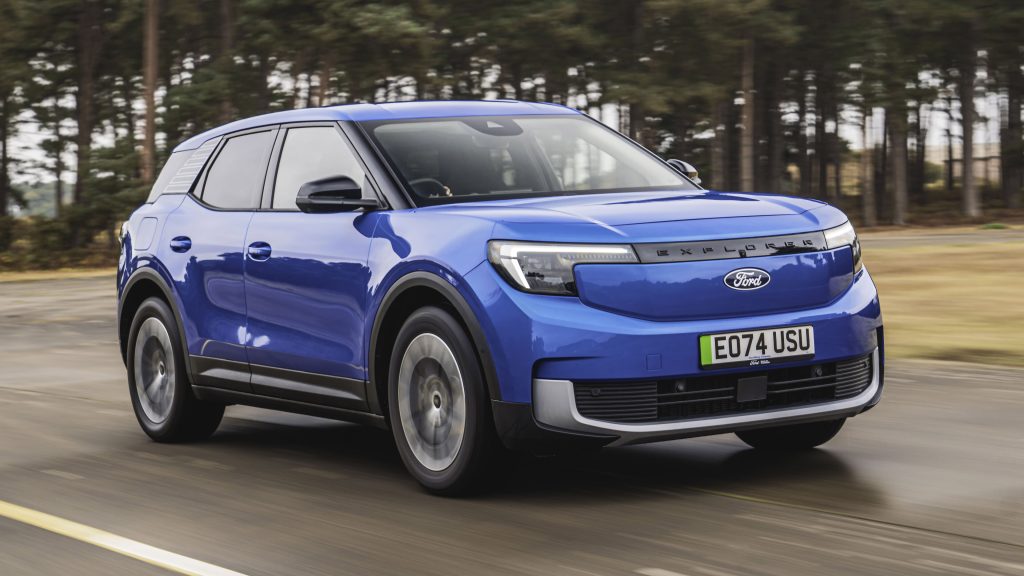
Value often depends on how much capability an owner genuinely needs. Paying thousands of dollars extra for a larger SUV makes little sense if that additional space remains unused.
Families seeking maximum versatility may justify the Tahoe’s higher price. Buyers prioritizing affordability and efficiency will likely find the Explorer more compelling.
Pricing Comparison
| Model | Approximate Starting MSRP |
|---|---|
| Ford Explorer | $40,000 |
| Explorer ST | $55,000+ |
| Chevy Tahoe | $60,000 |
| Tahoe High Country | $80,000+ |
Winner: Ford Explorer
A substantially lower purchase price combined with strong capability creates excellent value for most families.
Final Verdict
The Ford Explorer and Chevy Tahoe succeed because they serve different types of buyers exceptionally well.
The Explorer remains one of the strongest choices in the midsize SUV segment. It offers solid performance, good fuel economy, modern technology, comfortable seating, and respectable towing capability at a price that remains accessible to a wide range of buyers.
Families who spend most of their time commuting, taking road trips, and transporting passengers will appreciate its manageable size and lower operating costs.
The Tahoe targets buyers who simply need more. More passenger space, more cargo room, more towing capacity, and greater long-distance comfort define the ownership experience. Adults can comfortably occupy all three rows, luggage space remains generous even when fully loaded, and towing capability approaches levels once reserved for pickup trucks.
Several categories highlight the Tahoe’s strengths. Interior space, towing capability, resale value, ride quality, and full practicality all favor Chevrolet’s full-size SUV. Those advantages become increasingly important as family size grows or towing needs become more demanding.
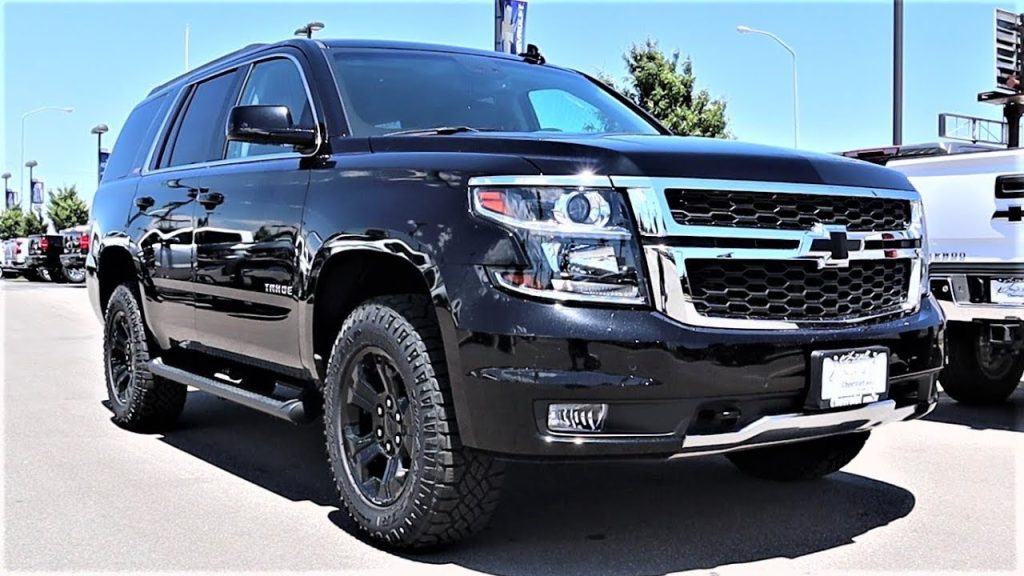
Ford responds with stronger fuel economy and significantly better value. Not every buyer needs an 8,400-pound towing capacity or more than 120 cubic feet of cargo room. For many households, the Explorer delivers everything required while costing tens of thousands less. The category score reveals the outcome.
Winner: Chevy Tahoe
Greater passenger space, class-leading practicality, stronger towing capability, excellent resale value, and impressive long-distance comfort help the Tahoe earn the victory.
Ford Explorer vs Chevy Tahoe Winner Comparison Table
| Category | Winner | The Edge |
|---|---|---|
| Exterior Design and Road Presence | Chevy Tahoe | A larger size creates a stronger presence and visual authority |
| Interior Design and Technology | Chevy Tahoe | More space and a premium cabin experience |
| Powertrains and Performance | Chevy Tahoe | Greater engine variety and stronger torque output |
| Cargo Space and Practicality | Chevy Tahoe | Massive cargo area and adult-friendly third row |
| Ride Quality and Daily Driving | Chevy Tahoe | Superior comfort and highway refinement |
| Fuel Economy | Ford Explorer | Better efficiency in most configurations |
| Towing Capability | Chevy Tahoe | Up to 8,400 pounds of towing capacity |
| Reliability and Resale Value | Chevy Tahoe | Stronger resale performance and a durability reputation |
| Pricing and Value | Ford Explorer | Lower cost and excellent capability for the money |
| Final Verdict | Chevy Tahoe | Better capability, space, and long-term ownership appeal |
The Explorer remains an excellent family SUV and offers stronger value for buyers who don’t require maximum capability. The Tahoe’s advantages in passenger space, cargo capacity, towing performance, ride comfort, and resale value make it the more complete vehicle for families seeking a full-size SUV.
Also Read: Toyota RAV4 vs Honda CR-V Comparison & Which Compact SUV Is Better?
