
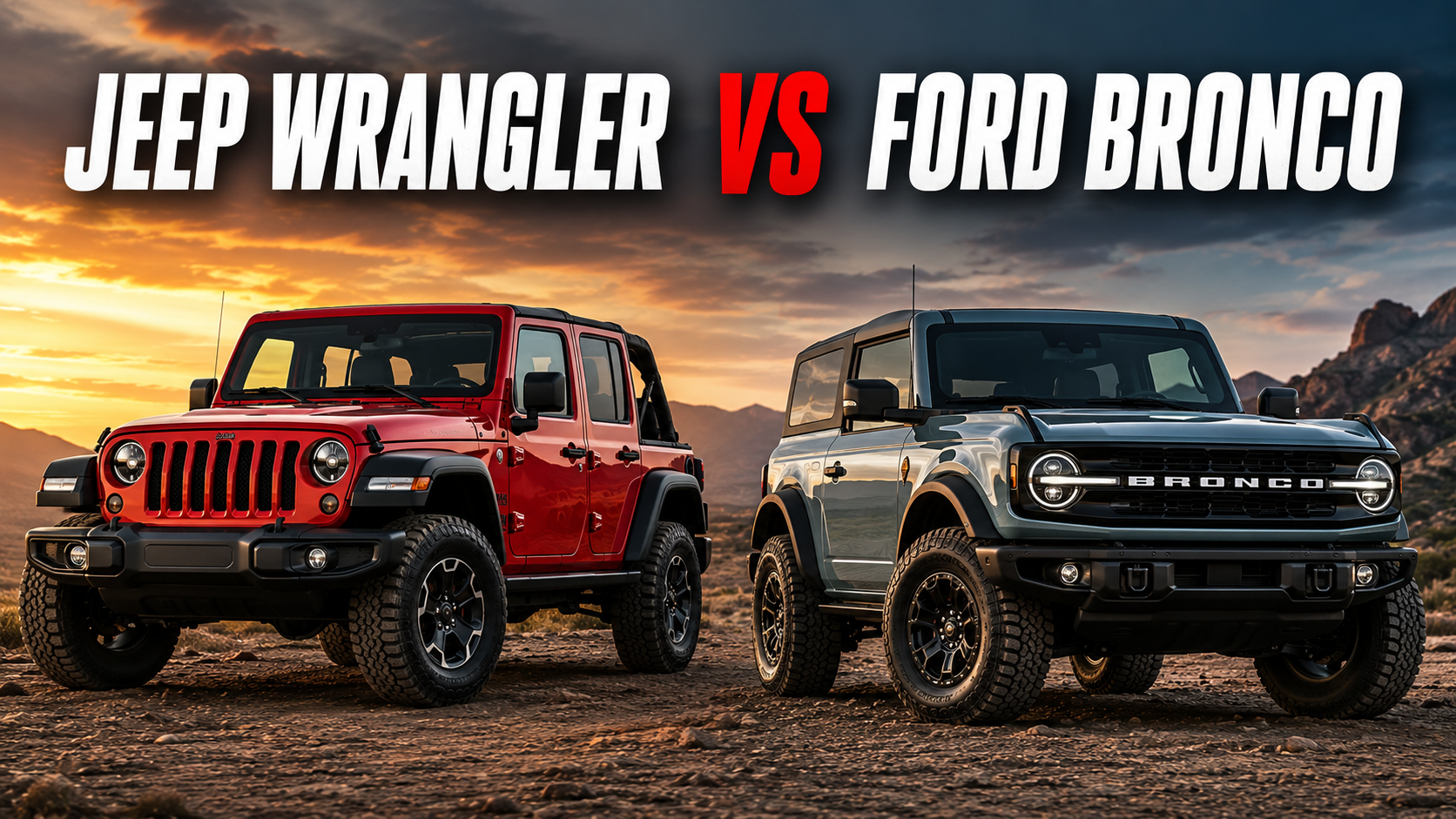
The battle between the Jeep Wrangler and Ford Bronco is one of the most interesting rivalries in today’s SUV market. Both vehicles are purpose-built off-road machines that prioritize adventure, capability, and customization over traditional crossover comfort.
Unlike many SUVs that merely adopt rugged styling cues, the Wrangler and Bronco are engineered from the ground up to tackle difficult terrain while still serving as practical daily drivers.
For decades, the Jeep Wrangler has been the undisputed king of factory-built off-road vehicles. Its roots trace back to the original military Jeep, and generations of enthusiasts have trusted it to conquer trails, rock formations, deserts, forests, and mud pits across the world.
The Wrangler’s reputation is built on proven mechanical components, impressive articulation, removable doors and roof panels, and one of the largest aftermarket support networks in the automotive industry.
Ford re-entered the segment in 2021 with the reborn Bronco, and rather than creating a soft-road SUV, the company developed a genuine Wrangler competitor.
The Bronco arrived with body-on-frame construction, advanced four-wheel-drive systems, removable body panels, locking differentials, and technology specifically designed for off-road enthusiasts. Ford’s goal was simple: challenge Jeep on its own turf.
The result is a matchup where both vehicles excel in different areas. The Wrangler remains the benchmark for hardcore trail use and customization.
The Bronco counters with superior technology, better on-road refinement, and a modern approach to adventure driving. Choosing between them requires looking beyond brand loyalty and examining the strengths and weaknesses of each model in detail.
In this comparison, we’ll evaluate these off-road icons across key categories including design, interior quality, performance, towing capability, trail performance, ownership costs, fuel economy, and value.
Each section will conclude with a clear winner based on measurable advantages and real-world usability. Let’s begin with the category that creates the first impression for every buyer.
Also Read: 5 Land Rover Models Worth the Risk VS 5 To Avoid
Exterior Design and Road Presence
The Jeep Wrangler and Ford Bronco share a similar mission, but they approach styling from very different perspectives.
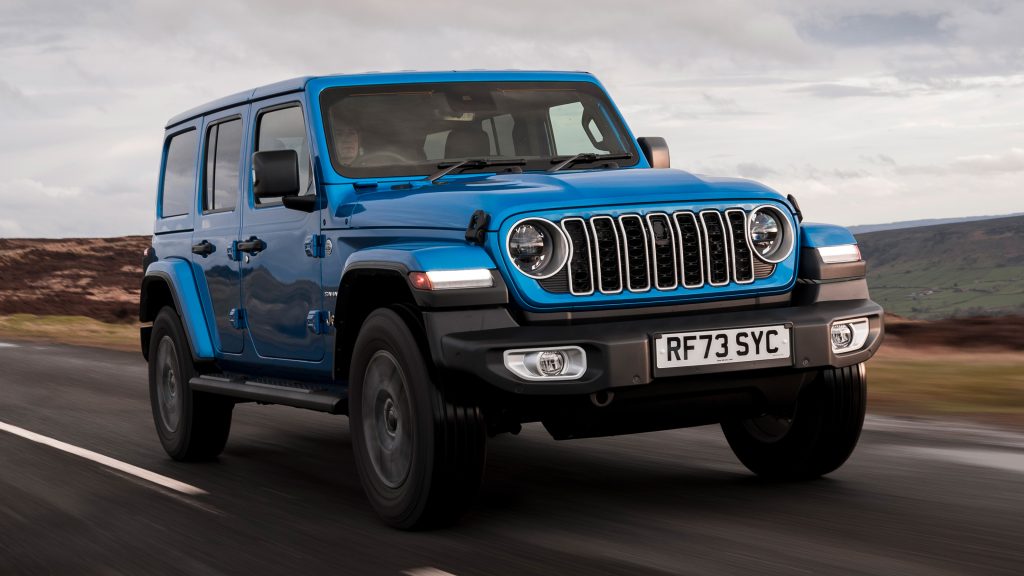
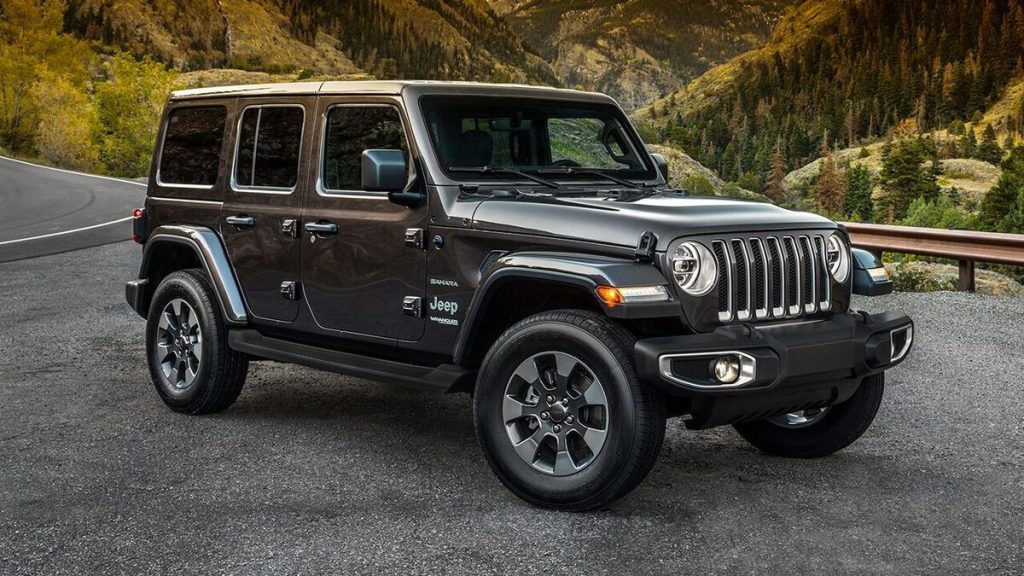
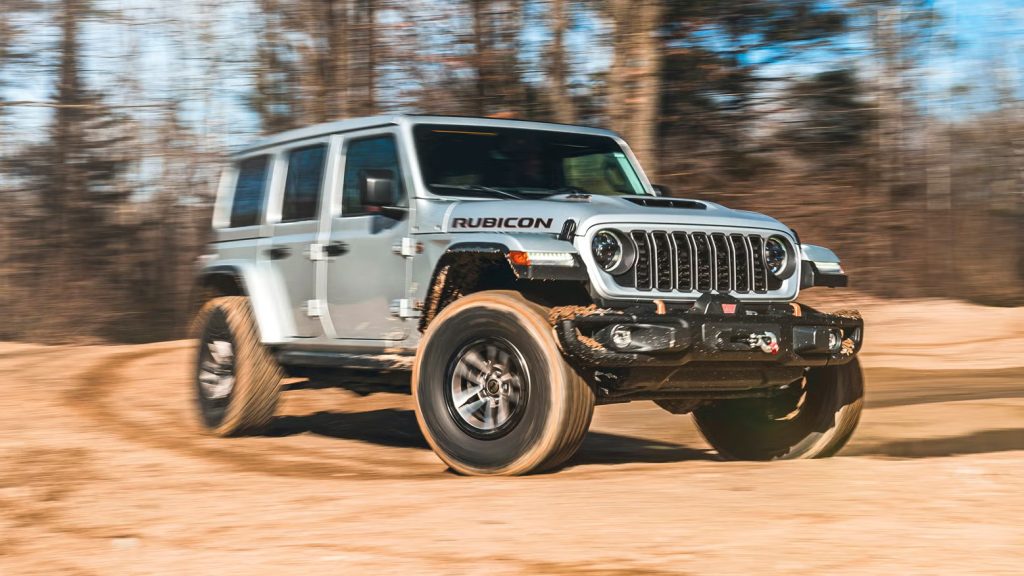
The Wrangler has one of the most recognizable silhouettes in automotive history. Its boxy shape, upright windshield, round headlights, exposed door hinges, and seven-slot grille have remained remarkably consistent through multiple generations.
Jeep understands that buyers value heritage, so every modern Wrangler still looks closely related to the original models that established the brand’s reputation.
The current Wrangler lineup ranges from the base Sport trim to specialized models such as the Rubicon and Rubicon 392.
Depending on trim, buyers can choose wheel sizes ranging from 17 to 20 inches, numerous roof configurations, and factory-installed off-road equipment. Even a standard Wrangler projects a rugged personality that immediately communicates its purpose.
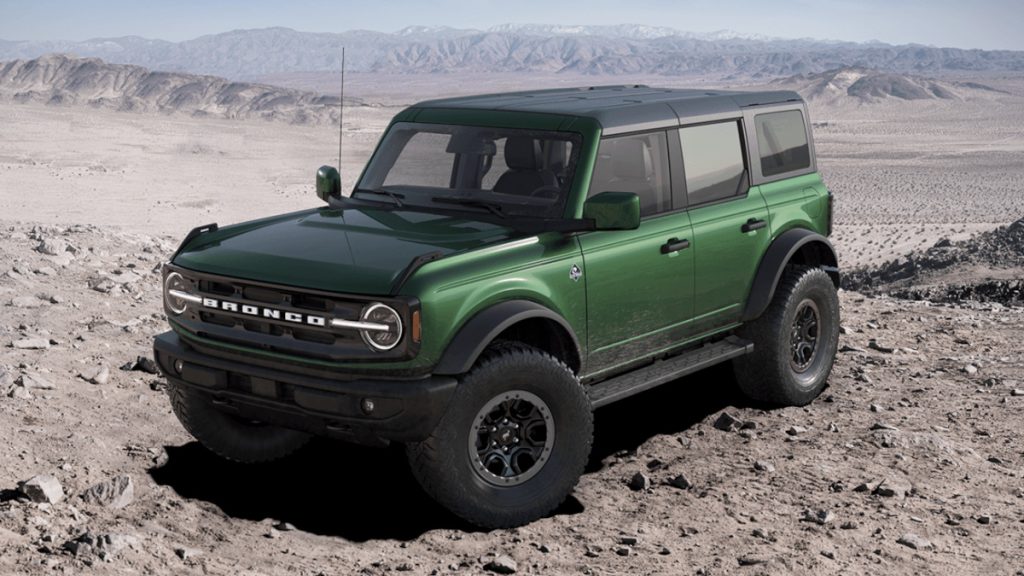
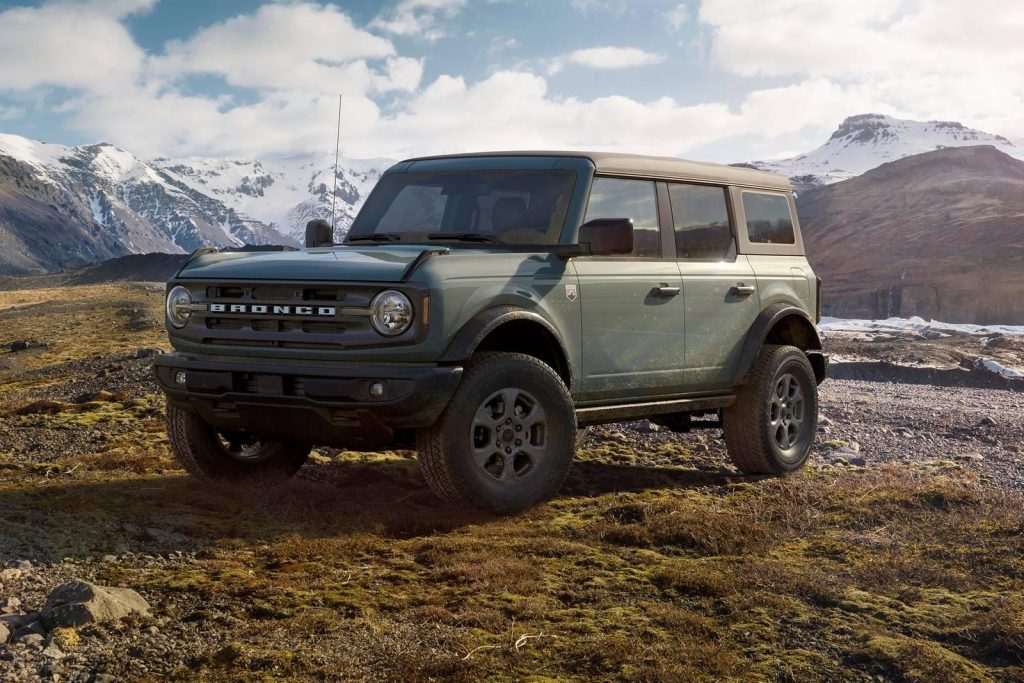
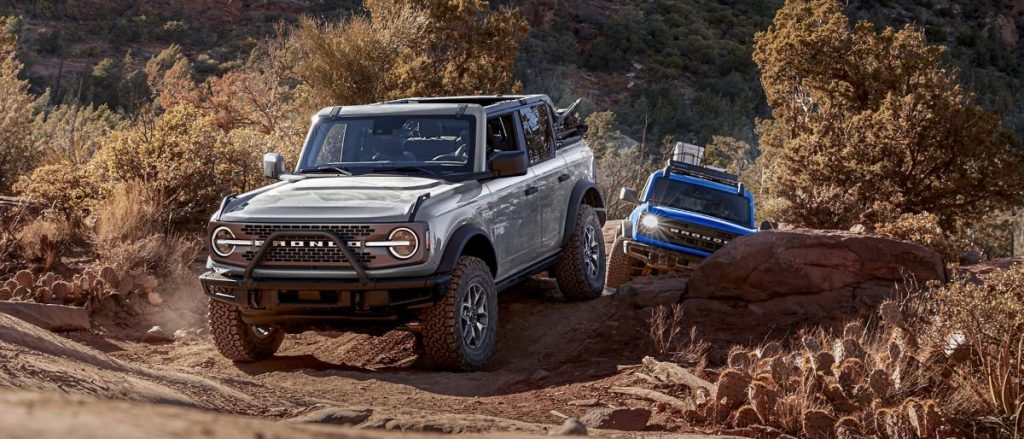
The Ford Bronco takes a more modern approach while still honoring its history. Ford revived styling cues from the first-generation Bronco, including the rectangular grille shape and simple body lines, but wrapped them in a wider, more muscular package.
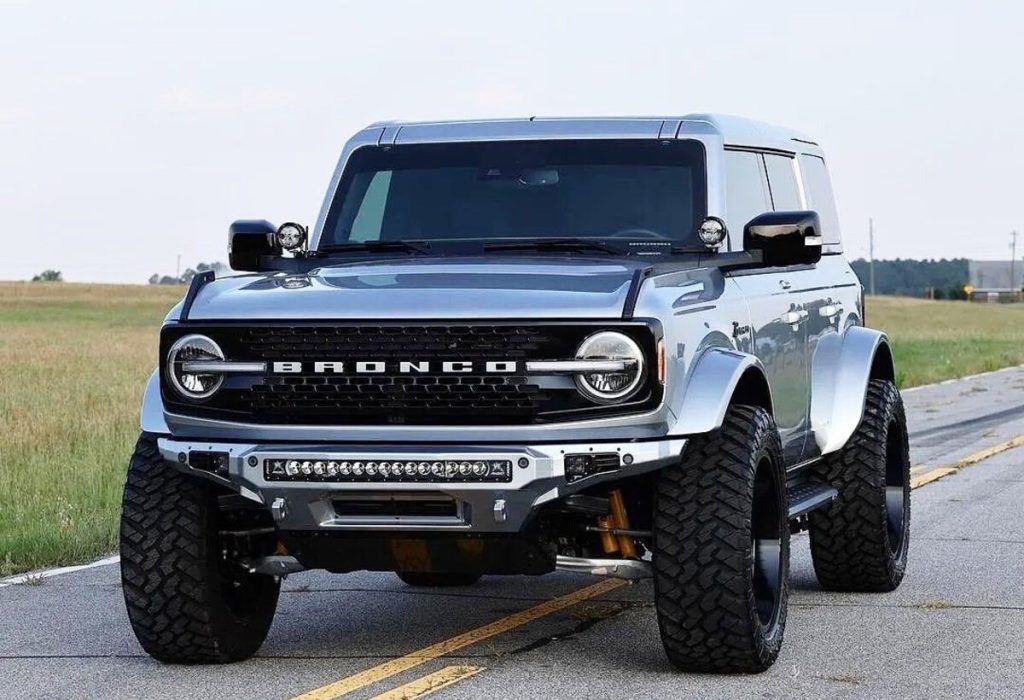
The Bronco appears significantly broader than the Wrangler, particularly when equipped with the Sasquatch Package.
Dimensionally, the Bronco enjoys a width advantage. A four-door Bronco measures approximately 86.2 inches wide with mirrors, compared to roughly 73.9 inches for a four-door Wrangler. This wider stance gives the Bronco a planted appearance and contributes to a stronger road presence.
Ford also paid attention to practical design elements. The Bronco’s frameless doors can be removed and stored inside the vehicle, something Wrangler owners cannot do without external storage solutions.
Trail sights integrated into the front fenders help drivers place the vehicle accurately on narrow trails while doubling as tie-down points for gear.
The Wrangler counters with unmatched customization opportunities. Thousands of aftermarket parts allow owners to completely transform the vehicle’s appearance. Lift kits, bumpers, wheel packages, lighting systems, and body accessories are available from countless manufacturers.
From a pure styling perspective, the Bronco feels more contemporary and aggressive. The Wrangler remains iconic, but its design changes have been evolutionary rather than revolutionary.
Buyers looking for timeless character may prefer the Jeep. Those wanting a stronger visual impact and modern styling will likely gravitate toward the Ford.
Winner: Ford Bronco
The Bronco’s wider stance, muscular proportions, and innovative removable-door design give it the advantage in exterior appeal and road presence.
Interior Design and Technology
Historically, interior quality has never been a Wrangler strength. Capability and durability always took priority over comfort and technology. Jeep has improved the cabin significantly in recent years, but the Bronco still enters this category with several advantages.
The Wrangler’s interior is intentionally rugged. Large controls, durable surfaces, weather-resistant materials, and practical switchgear make it suitable for outdoor adventures. Drivers wearing gloves can easily operate most functions, and the cabin is designed to withstand exposure to dirt, mud, and moisture.
The latest Wrangler benefits from a 12.3-inch Uconnect 5 touchscreen on many trims. The system is responsive, easy to navigate, and supports wireless Apple CarPlay and Android Auto. Jeep’s infotainment software remains among the best available in any SUV.
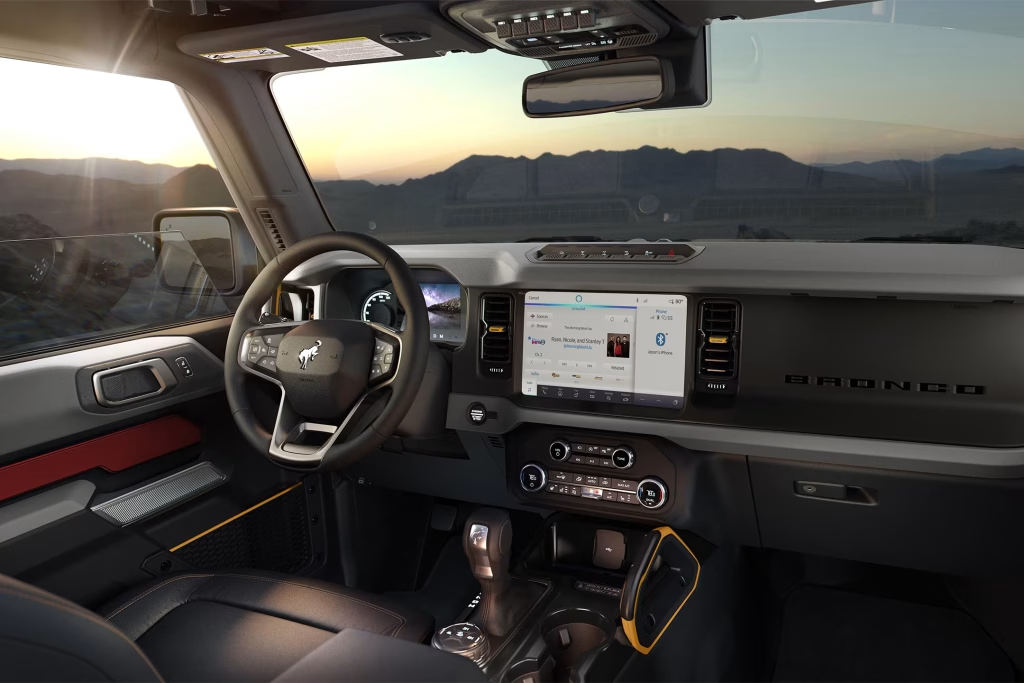
However, the Bronco’s cabin feels more modern and thoughtfully designed. The dashboard layout is cleaner, visibility is excellent, and materials generally feel more upscale. Rubberized surfaces and grab handles maintain the rugged theme while creating a more refined environment.
Technology is another Bronco strength. Ford’s SYNC 4 system is available with a massive 12-inch touchscreen and offers over-the-air updates, wireless smartphone integration, cloud-based navigation, and trail-focused features. The interface is intuitive and visually appealing.
Passenger space also favors the Bronco. Four-door models provide approximately 43.1 inches of front legroom and 36.3 inches of rear legroom. The Wrangler Unlimited offers 41.2 inches of front legroom and 38.3 inches of rear legroom. While rear passengers enjoy slightly more room in the Jeep, front occupants generally feel less confined in the Bronco.
Cargo capacity represents another Bronco advantage. The four-door Bronco offers up to 83 cubic feet of cargo space behind the front seats. The four-door Wrangler Unlimited provides approximately 72.4 cubic feet.
The Bronco’s superior storage solutions, larger cargo area, modern dashboard layout, and advanced technology package make it easier to live with every day.
The Wrangler remains functional and durable, but Ford has done a better job blending ruggedness with modern convenience.
Winner: Ford Bronco
A better-designed cabin, larger cargo area, and more advanced technology package help the Bronco claim this category.
Powertrains and Performance
Powertrain diversity is one of the Wrangler’s biggest strengths. Jeep offers four distinct engine choices. The standard 3.6-liter Pentastar V6 produces 285 horsepower and 260 lb-ft of torque. Buyers can also select a 2.0-liter turbocharged four-cylinder generating 270 horsepower and 295 lb-ft of torque.
The Wrangler 4xe plug-in hybrid combines a turbocharged engine with electric motors to produce 375 horsepower and 470 lb-ft of torque. This setup makes the 4xe one of the quickest Wranglers ever produced while also delivering excellent efficiency.
At the top of the range sits the Rubicon 392. Its naturally aspirated 6.4-liter V8 produces 470 horsepower and 470 lb-ft of torque, allowing 0-60 mph acceleration in approximately 4.5 seconds. No other mainstream off-road SUV offers a factory V8 with this level of performance.
Ford counters with a simpler lineup. The standard Bronco engine is a 2.3-liter EcoBoost turbocharged four-cylinder producing 300 horsepower and 325 lb-ft of torque when running premium fuel. This engine can be paired with either a seven-speed manual transmission or a ten-speed automatic.
The optional 2.7-liter twin-turbocharged V6 generates 330 horsepower and 415 lb-ft of torque. It delivers strong acceleration and excellent low-end response.
At the top sits the Bronco Raptor’s 3.0-liter twin-turbocharged V6. Output reaches 418 horsepower and 440 lb-ft of torque, making it one of the most capable high-speed off-road SUVs available.
Performance figures remain competitive between the two brands.
| Model | Horsepower | Torque |
|---|---|---|
| Wrangler 3.6 V6 | 285 hp | 260 lb-ft |
| Wrangler 2.0 Turbo | 270 hp | 295 lb-ft |
| Wrangler 4xe | 375 hp | 470 lb-ft |
| Wrangler Rubicon 392 | 470 hp | 470 lb-ft |
| Bronco 2.3 EcoBoost | 300 hp | 325 lb-ft |
| Bronco 2.7 EcoBoost | 330 hp | 415 lb-ft |
| Bronco Raptor | 418 hp | 440 lb-ft |
The Bronco lineup offers excellent performance, but Jeep provides greater variety. Buyers can choose a traditional V6, turbocharged power, a plug-in hybrid, or a V8, depending on their priorities. That flexibility is difficult to match.
Winner: Jeep Wrangler
The availability of a plug-in hybrid and a 470-horsepower V8 gives the Wrangler a broader performance range than the Bronco.
Towing and Payload Capability
While neither the Jeep Wrangler nor the Ford Bronco is designed to replace a full-size pickup truck, towing and payload ratings remain important considerations for buyers who haul small campers, utility trailers, motorcycles, boats, or overlanding equipment.
The Ford Bronco enters this category with a slight advantage. Most four-door Bronco models are rated to tow up to 3,500 pounds when properly equipped. This includes popular trims such as the Big Bend, Black Diamond, Outer Banks, Badlands, and Wildtrak. The Bronco Raptor raises capability even further with a maximum towing capacity of 4,500 pounds.
The Wrangler’s towing capability varies more significantly depending on body style. Two-door Wranglers are generally limited to 2,000 pounds, while four-door Wrangler Unlimited models can tow up to 3,500 pounds. Certain Rubicon and Sahara trims also reach the 3,500-pound mark when equipped correctly.
Payload ratings show a similar story. Depending on configuration, the Bronco can carry between approximately 1,250 and 1,600 pounds. Wrangler models typically range from around 900 to 1,350 pounds.
While the difference may not appear substantial on paper, it becomes noticeable when loading camping gear, recovery equipment, roof racks, and passengers simultaneously.
Ford’s wider track width also contributes to better towing stability. The Bronco feels more composed when pulling a trailer at highway speeds, particularly in windy conditions. Steering inputs require fewer corrections, and the vehicle generally inspires more confidence during long-distance towing.
Jeep’s shorter wheelbase on two-door models can make towing more sensitive to trailer weight distribution. Owners who regularly tow near maximum capacity often prefer the longer Wrangler Unlimited for this reason.
That said, both vehicles remain limited by their off-road-focused design. Buyers who frequently tow heavy travel trailers will be better served by midsize pickups such as the Ford Ranger or Jeep Gladiator.
For recreational towing duties, the Bronco simply provides a little more flexibility and confidence.
Towing and Payload Comparison
| Specification | Jeep Wrangler Unlimited | Ford Bronco |
|---|---|---|
| Maximum Towing Capacity | 3,500 lbs | 3,500 lbs |
| Bronco Raptor Towing | N/A | 4,500 lbs |
| Payload Capacity | Up to 1,350 lbs | Up to 1,600 lbs |
| Trailer Stability | Good | Excellent |
Winner: Ford Bronco
Higher payload ratings and better towing stability give the Bronco a measurable advantage.
Off-Road Capability
This category defines the entire purpose of both vehicles. The Jeep Wrangler has long been regarded as the benchmark for factory-built off-road capability. Ford knew that if the Bronco was going to succeed, it had to challenge Jeep where it mattered most. The result is one of the closest off-road battles ever seen.
The Wrangler Rubicon comes equipped with Dana 44 axles, front and rear locking differentials, an electronically disconnecting front sway bar, heavy-duty transfer cases, skid plates, and aggressive all-terrain tires.
These components allow the Wrangler to maintain traction on extremely uneven terrain where wheel articulation becomes critical.
A four-door Wrangler Rubicon offers approximately:
- 10.8 inches of ground clearance
- 43.9-degree approach angle
- 37-degree departure angle
- 22.6-degree breakover angle
The Bronco Badlands Sasquatch counters with:
- 11.6 inches of ground clearance
- 43.2-degree approach angle
- 37-degree departure angle
- 26.3-degree breakover angle
On paper, the Bronco actually exceeds the Wrangler in several measurements. Ford also introduced advanced trail technology through its GOAT (Goes Over Any Terrain) Modes system. Drivers can select settings tailored for mud, sand, rock crawling, slippery surfaces, and Baja-style high-speed driving.
The available 360-degree camera system includes trail views that allow drivers to see obstacles hidden by the hood. This technology can be extremely useful for less experienced off-road enthusiasts.
Despite these advantages, the Wrangler maintains a crucial weapon: its solid front axle. Independent front suspension allows the Bronco to ride better on pavement, but the Wrangler’s solid axle delivers superior wheel articulation during extreme rock crawling.
When moving over large boulders and uneven terrain, keeping all four wheels in contact with the ground can make a significant difference.
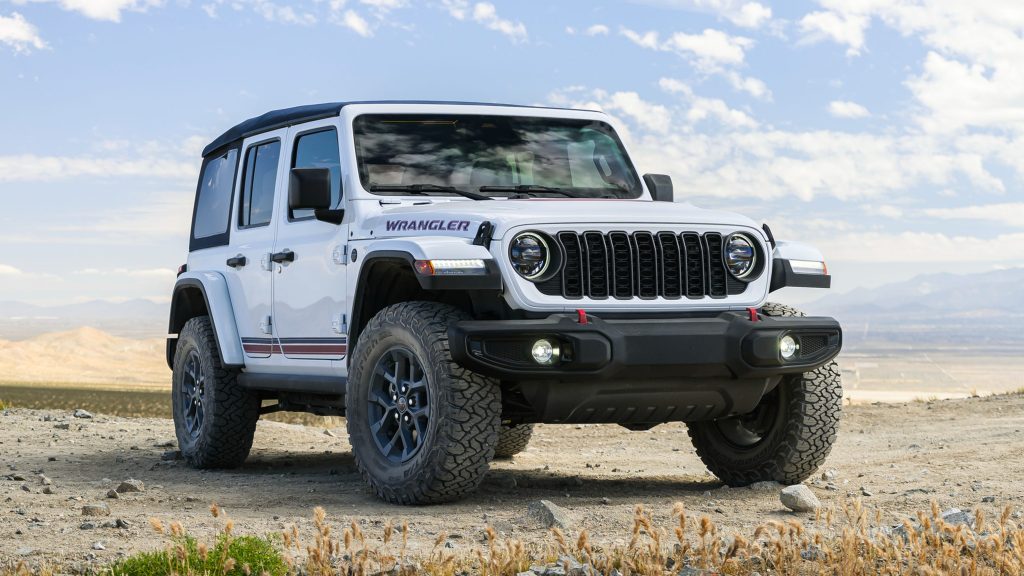
Another factor is aftermarket support. Jeep owners have access to thousands of specialized upgrades, including axles, lift kits, suspension systems, gears, armor, bumpers, and recovery equipment. No off-road vehicle has a stronger aftermarket backing.
The Bronco is incredibly capable and, in many situations, equals or surpasses the Wrangler. Yet when conditions become exceptionally technical, the Jeep still maintains a slight edge.
Off-Road Specifications
| Specification | Wrangler Rubicon | Bronco Badlands Sasquatch |
|---|---|---|
| Ground Clearance | 10.8 in | 11.6 in |
| Approach Angle | 43.9° | 43.2° |
| Departure Angle | 37.0° | 37.0° |
| Breakover Angle | 22.6° | 26.3° |
| Front Sway Bar Disconnect | Yes | No |
| Front Axle Type | Solid Axle | Independent Suspension |
Winner: Jeep Wrangler
Exceptional articulation, trail-proven hardware, and unmatched aftermarket support keep the Wrangler on top.
Ride Quality and Daily Driving
Off-road capability often comes at the expense of everyday comfort, but Ford focused heavily on making the Bronco easier to live with during daily use.
The most important difference is the front suspension design. The Bronco uses an independent front suspension system. This setup allows each wheel to react independently to road imperfections, producing a smoother and more controlled ride. Potholes, expansion joints, and rough pavement are absorbed more effectively than in the Wrangler.
The Jeep Wrangler relies on a solid front axle. This design benefits from off-road articulation but introduces compromises on paved roads. Impacts felt by one front wheel can influence the opposite side, creating a less refined driving experience.
Highway driving highlights the differences even more. The Bronco tracks straighter at higher speeds and requires fewer steering corrections. Wind gusts and road grooves have less influence on vehicle behavior, helping reduce driver fatigue during long trips.
Noise levels also favor the Ford. Both SUVs generate noticeable wind noise because of their removable roof designs and upright profiles, but the Bronco generally feels quieter at highway speeds.
Seat comfort is another Bronco advantage. The front seats provide better long-distance support, while cabin ergonomics feel more modern and intuitive.
The Wrangler’s ride quality has improved substantially compared to previous generations, especially in four-door Unlimited form. However, buyers coming from crossovers or traditional SUVs may still find it less refined than the Bronco.
The difference becomes especially apparent when these vehicles are used primarily for commuting rather than trail adventures.
For buyers spending 90 percent of their time on pavement, the Bronco offers a noticeably more comfortable ownership experience.
Winner: Ford Bronco
Better ride quality, quieter highway manners, and improved steering behavior make the Bronco a stronger daily driver.
Fuel Economy
Fuel economy is rarely the top priority for buyers shopping for rugged off-road SUVs, but fuel costs can add up quickly, particularly for owners who use these vehicles as daily transportation.
The Bronco’s turbocharged engines deliver respectable efficiency considering the vehicle’s size and capability.
The standard 2.3-liter EcoBoost four-cylinder is EPA-rated at approximately:
- 20 MPG city
- 22 MPG highway
- 21 MPG combined
The optional 2.7-liter twin-turbo V6 returns approximately:
- 19 MPG city
- 21 MPG highway
- 20 MPG combined
Bronco Raptor models sacrifice efficiency for performance, achieving roughly:
- 15 MPG city
- 16 MPG highway
- 15 MPG combined
The Wrangler’s gasoline-powered models produce similar numbers.
The 3.6-liter V6 Wrangler is rated around:
- 17 MPG city
- 23 MPG highway
- 19 MPG combined
The 2.0-liter turbocharged four-cylinder improves efficiency slightly, delivering approximately:
- 20 MPG city
- 22 MPG highway
- 21 MPG combined
The biggest difference comes from the Wrangler 4xe plug-in hybrid.
The 4xe delivers:
- 49 MPGe
- About 21 miles of all-electric range
- Combined output of 375 horsepower and 470 lb-ft of torque
For owners who can recharge at home or work, many daily commutes can be completed with minimal gasoline usage. This dramatically reduces fuel costs compared with any Bronco currently available.
Fuel Economy Comparison
| Model | City MPG | Highway MPG | Combined MPG |
|---|---|---|---|
| Wrangler 3.6 V6 | 17 | 23 | 19 |
| Wrangler 2.0 Turbo | 20 | 22 | 21 |
| Wrangler 4xe | 49 MPGe | 49 MPGe | 49 MPGe |
| Bronco 2.3 EcoBoost | 20 | 22 | 21 |
| Bronco 2.7 EcoBoost | 19 | 21 | 20 |
| Bronco Raptor | 15 | 16 | 15 |
Without the 4xe, this category would be nearly tied. The plug-in hybrid changes the equation significantly.
Winner: Jeep Wrangler
The Wrangler 4xe’s 49 MPGe rating and electric driving capability provide a fuel-efficiency advantage that the Bronco cannot currently match.
Reliability, Resale Value, and Ownership Experience
Reliability and ownership costs often become more important after the excitement of a new vehicle purchase wears off. Buyers planning to keep their SUV for years need to consider maintenance costs, repair frequency, resale value, aftermarket support, and community involvement.
Both the Jeep Wrangler and Ford Bronco are body-on-frame vehicles designed to handle demanding conditions, but they arrive at this category from different positions.
The Wrangler benefits from decades of continuous development. Jeep has refined the platform over multiple generations, and many independent repair shops are familiar with its mechanical systems. Parts availability is excellent, whether owners are looking for factory replacements or aftermarket upgrades.
The Bronco, while still relatively new compared to the Wrangler, has performed reasonably well since its return.
Early production models experienced some quality-control issues, including hard-top concerns and minor electronic glitches, but Ford has addressed many of these problems through updates and warranty work.
Where the Wrangler separates itself is in resale value. According to several automotive depreciation studies, the Wrangler consistently ranks among the best vehicles in America for retained value.
Many analyses show the Wrangler retaining between 60 and 70 percent of its original value after five years. Some studies have placed five-year depreciation at approximately 30 to 35 percent.
The Bronco performs well compared with most SUVs, but it typically trails the Wrangler in long-term value retention. Estimates generally place Bronco resale values in the 53 to 60 percent range after five years, depending on trim level and market conditions.
To put that into perspective, a $50,000 Wrangler retaining 65 percent of its value would still be worth approximately $32,500 after five years. A similarly priced Bronco retaining 55 percent would be worth roughly $27,500. That difference can represent thousands of dollars when selling or trading in the vehicle.
Ownership experience also favors Jeep because of its massive enthusiast network. Jeep clubs, off-road events, forums, trail rides, aftermarket suppliers, and specialized service providers exist almost everywhere in North America.
The Bronco community continues to grow rapidly, but Jeep’s decades-long head start remains difficult to match.
Resale Value Comparison
| Category | Jeep Wrangler | Ford Bronco |
|---|---|---|
| Estimated 5-Year Value Retention | 60-70% | 53-60% |
| Estimated 5-Year Depreciation | 30-40% | 40-47% |
| Aftermarket Support | Extensive | Growing Rapidly |
| Enthusiast Community | Industry-Leading | Strong |
Winner: Jeep Wrangler
Exceptional resale value, widespread aftermarket support, and a well-established enthusiast community give the Wrangler a meaningful advantage.
Pricing and Value
Pricing can dramatically influence buying decisions, especially when two vehicles compete in the same segment.
The Jeep Wrangler starts at a lower entry point than the Ford Bronco. A base Wrangler Sport generally begins around $33,000 before options and destination charges. Moving into popular trims such as the Sahara and Rubicon pushes pricing into the mid-$40,000 to mid-$50,000 range.
The Ford Bronco starts closer to $39,000, depending on trim and destination charges. Higher trims such as the Badlands, Wildtrak, and Heritage Edition can quickly climb above $50,000.
At first glance, Jeep appears to offer better value because of its lower starting price. However, the situation becomes more complicated when equipment levels are compared.
Ford includes a larger amount of technology and convenience features at comparable trim levels. Many Bronco models feature larger infotainment screens, more advanced driver-assistance systems, better cabin materials, and a more refined suspension setup without requiring expensive option packages.
For example, buyers moving from entry-level trims into mid-range Broncos often receive upgraded technology, larger displays, additional drive modes, and enhanced comfort features that would cost more on an equivalent Wrangler.
The Bronco also benefits from stronger everyday usability. Its smoother ride quality and more refined cabin make it easier to justify as a primary family vehicle.
The Wrangler counters with outstanding resale value. While buyers may spend more equipping a Wrangler to match a Bronco’s features, they often recover a larger percentage of that investment when selling the vehicle later.
The decision comes down to whether buyers prioritize immediate equipment value or long-term ownership economics.
For shoppers comparing features per dollar at the time of purchase, the Bronco generally comes out ahead.
Starting MSRP Comparison
| Model | Approximate Starting Price |
|---|---|
| Jeep Wrangler Sport | $33,000 |
| Ford Bronco Base | $39,000 |
| Wrangler Rubicon | $48,000+ |
| Bronco Badlands | $50,000+ |
| Bronco Raptor | $90,000+ |
| Wrangler Rubicon 392 | $90,000+ |
While Jeep offers a lower entry point, Ford packs more equipment into comparable trims.
Winner: Ford Bronco
More standard technology, stronger feature content, and better day-to-day usability create stronger value for many buyers.
Final Verdict
The Jeep Wrangler and Ford Bronco represent two different philosophies within the off-road SUV segment.
The Wrangler remains deeply connected to its heritage. It prioritizes trail capability, customization, and mechanical simplicity. Buyers gain access to one of the most capable factory off-road platforms ever built, along with unmatched aftermarket support and industry-leading resale value.
Its strengths become especially apparent during serious off-road use. The solid front axle, available locking differentials, disconnecting sway bar, and decades of aftermarket development make the Wrangler exceptionally capable on challenging trails.
Jeep also offers unique powertrain options, including the 375-horsepower 4xe plug-in hybrid and the 470-horsepower Rubicon 392 V8.
The Bronco takes a more balanced approach. Ford created an SUV that remains highly capable off-road while delivering superior comfort, technology, and refinement on pavement.
The independent front suspension improves ride quality significantly, the interior feels more modern, and the available technology package ranks among the best in the segment.
The Bronco also provides stronger towing confidence, better highway manners, more cargo space, and greater feature content for the money.
If your primary goal is conquering difficult trails, building a heavily modified off-road rig, and maximizing long-term resale value, the Wrangler remains the benchmark.
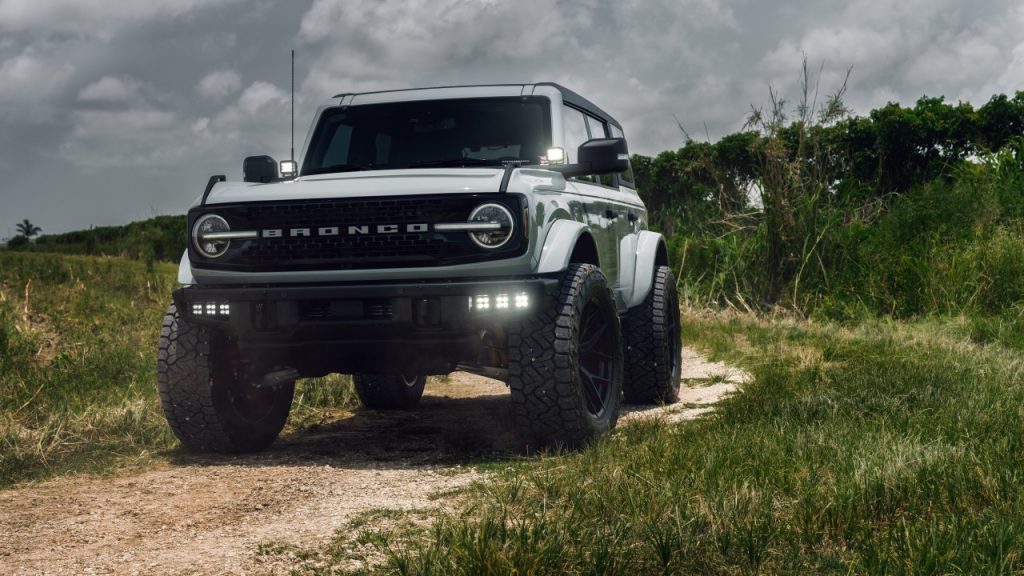
If you want an SUV that can comfortably commute during the week, handle family duties, and still tackle demanding trails on weekends, the Bronco delivers the better balance.
When all categories are considered together, the Bronco wins more sections and provides the broader appeal for most buyers.
Winner: Ford Bronco
The Bronco combines excellent off-road capability, superior technology, better ride quality, stronger practicality, and competitive pricing into a package that appeals to a wider range of buyers.
Jeep Wrangler vs Ford Bronco Winner Comparison Table
| Category | Winner | The Edge |
|---|---|---|
| Exterior Design and Road Presence | Ford Bronco | A wider stance and modern styling create a stronger visual presence |
| Interior Design and Technology | Ford Bronco | Larger cargo area, superior technology, and better cabin refinement |
| Powertrains and Performance | Jeep Wrangler | Hybrid and V8 options provide unmatched powertrain diversity |
| Towing and Payload Capability | Ford Bronco | Higher payload ratings and better towing stability |
| Off-Road Capability | Jeep Wrangler | Better articulation and unmatched aftermarket support |
| Ride Quality and Daily Driving | Ford Bronco | Smoother ride and more comfortable highway behavior |
| Fuel Economy | Jeep Wrangler | 49 MPGe 4xe hybrid dramatically improves efficiency |
| Reliability, Resale Value, and Ownership Experience | Jeep Wrangler | Stronger resale value and larger enthusiast community |
| Pricing and Value | Ford Bronco | Better equipment levels and technology for the money |
| Final Verdict | Ford Bronco | Better balance of comfort, capability, technology, and practicality |
Also Read: 10 Strangest Concept Cars & Ranked
