
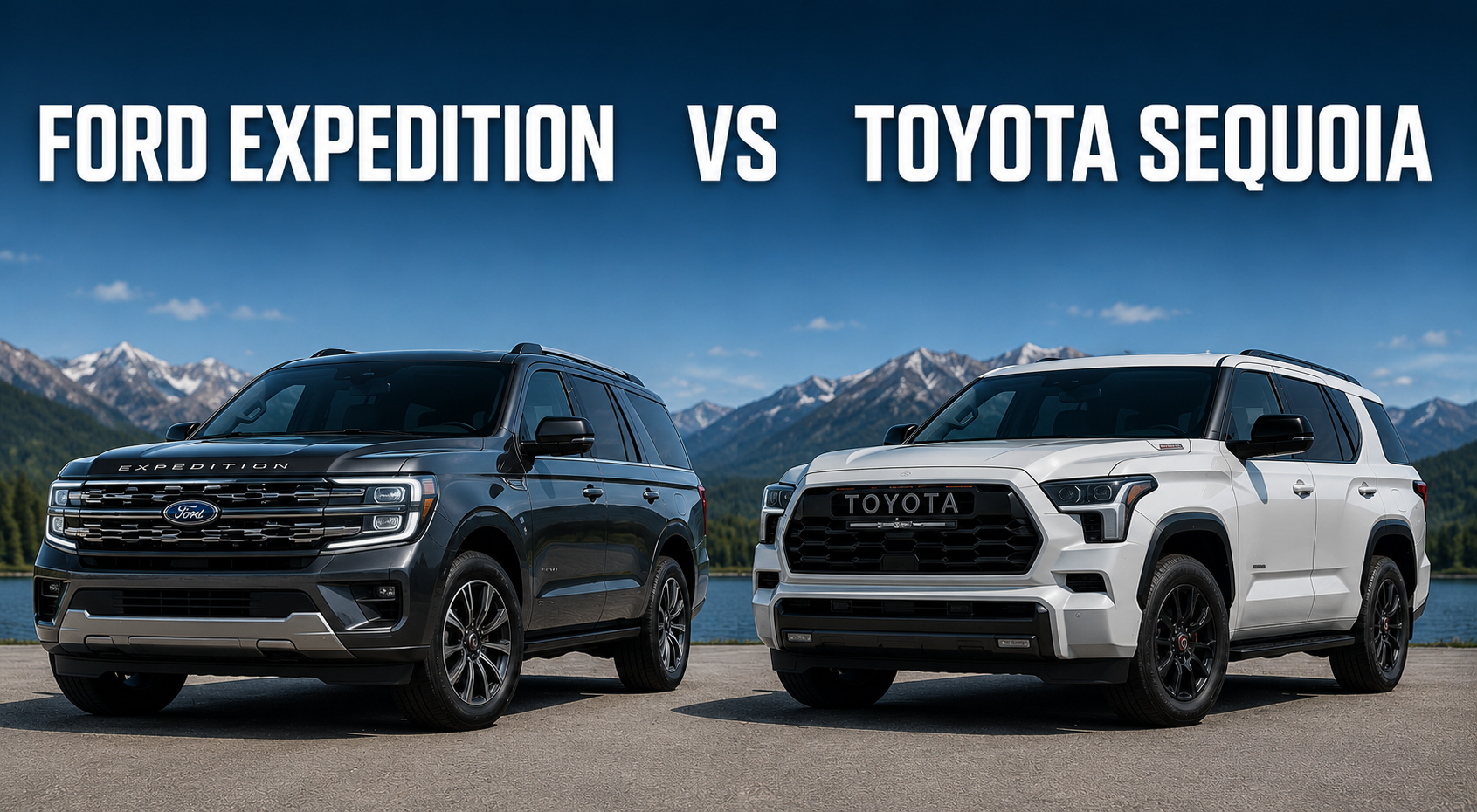
The full-size SUV segment remains one of the most competitive corners of the automotive market, especially for buyers who need serious passenger space, towing capability, and long-distance comfort.
Among the most popular choices are the Ford Expedition and Toyota Sequoia, two SUVs designed to handle everything from family road trips to towing heavy trailers. While both offer three rows of seating and impressive capability, they take very different approaches to achieving their goals.
The Ford Expedition has long been one of the segment’s benchmarks thanks to its spacious cabin, powerful turbocharged engine, and extensive lineup that includes both standard and extended-wheelbase versions.
Ford has refined the Expedition over multiple generations, creating an SUV that balances comfort, practicality, and capability in a package that appeals to a wide range of buyers.
Toyota, meanwhile, completely reinvented the Sequoia with its latest generation. Rather than sticking with a traditional V8, Toyota adopted a hybrid powertrain, modernized the interior, and focused on improving efficiency without sacrificing towing capability.
The result is a very different kind of full-size SUV that prioritizes technology and fuel economy alongside traditional truck-based durability.
Both vehicles target families that need substantial space and capability, but their strengths become apparent in different areas. Some buyers will prioritize interior room and cargo capacity, while others may place greater importance on efficiency, technology, or long-term ownership confidence.
Examining the most important categories reveals which SUV delivers the better package for the majority of buyers and where each model maintains a meaningful advantage.
Also Read: 10 SUVs Ranked By Cargo Space Behind The Third Row
Exterior Presence And Design Philosophy
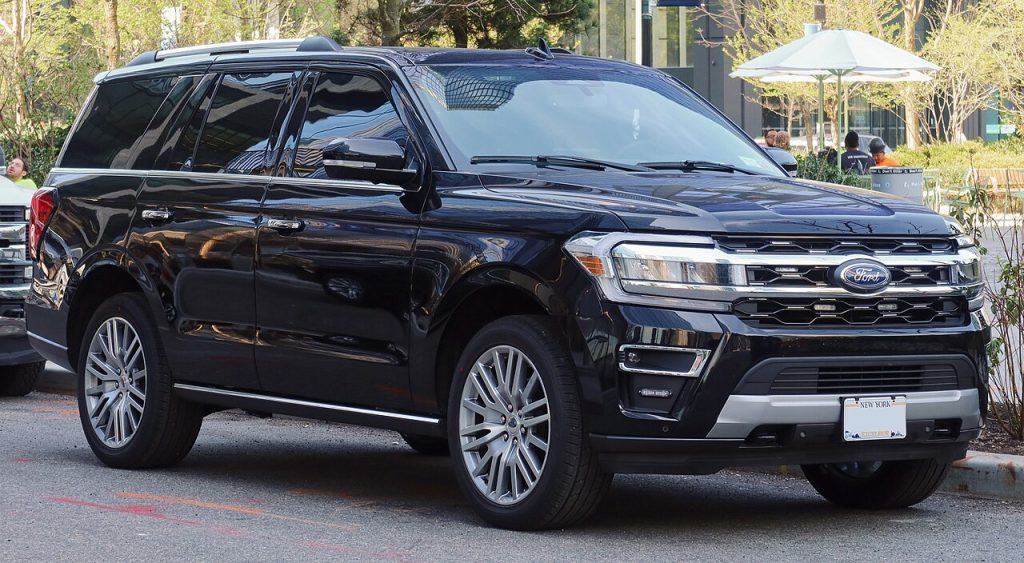
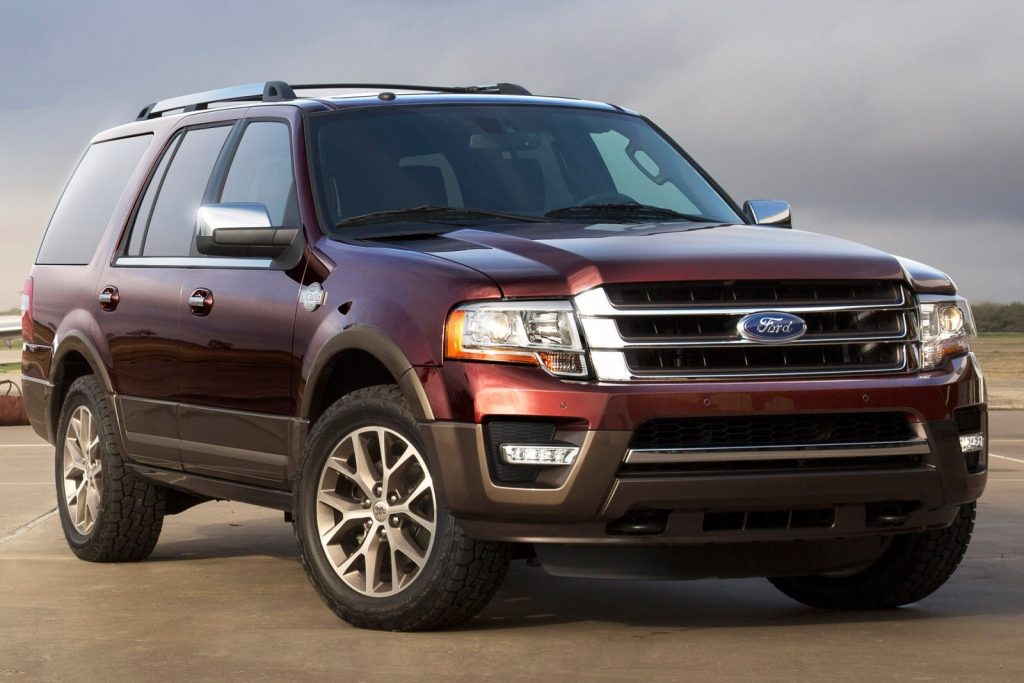
The Ford Expedition embraces a traditional full-size SUV appearance. Its large dimensions, upright stance, and substantial grille immediately communicate capability.
The latest Expedition features modern lighting elements and cleaner body lines than previous generations, helping it look contemporary while maintaining the rugged image buyers expect.
Ford offers multiple trim levels that significantly alter the vehicle’s appearance. Higher-end Platinum and King Ranch models add premium detailing, while Timberline variants emphasize off-road capability. This broad range allows buyers to choose a personality that matches their preferences.
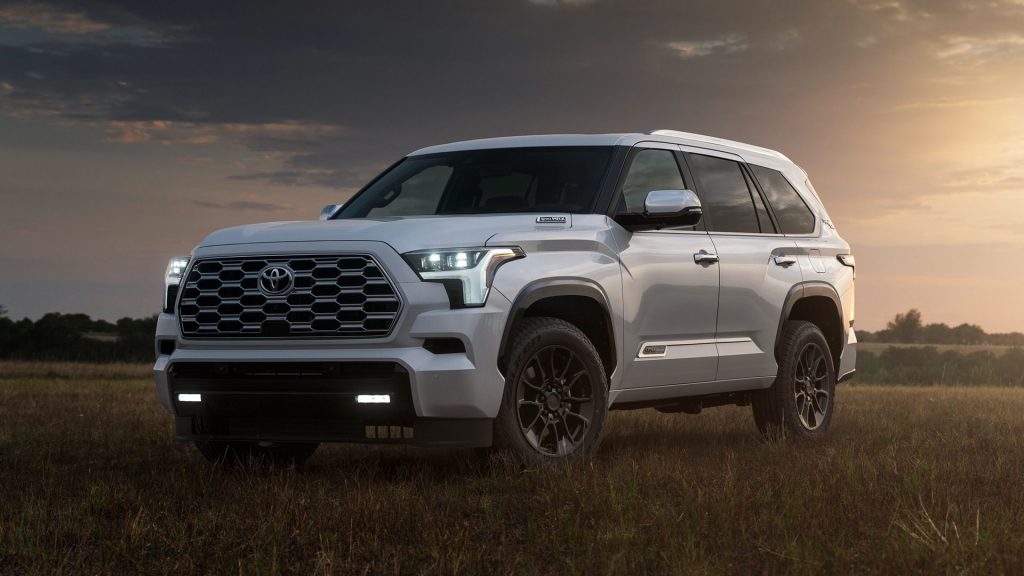
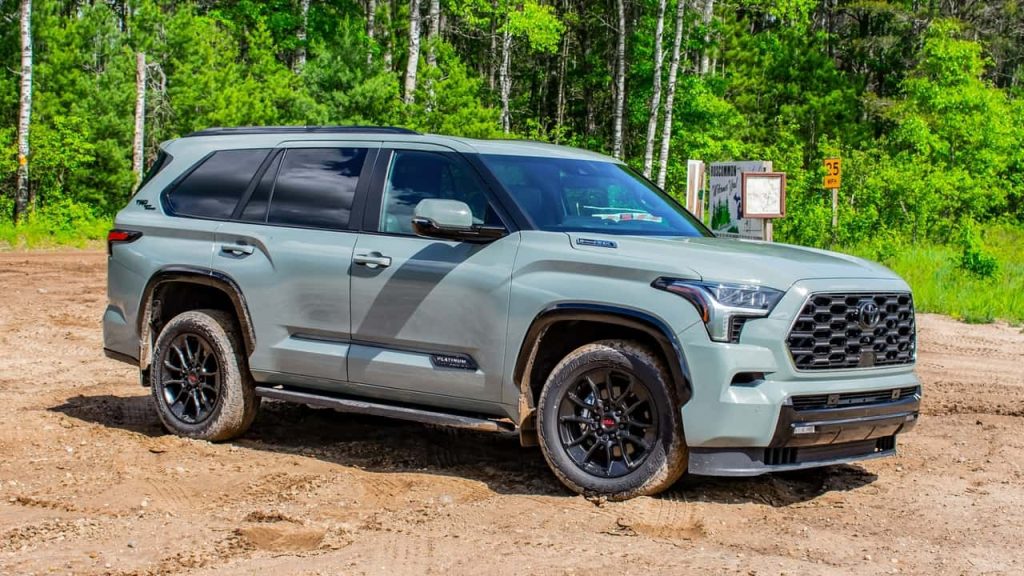
Toyota took a more aggressive approach with the latest Sequoia. Drawing inspiration from the Toyota Tundra pickup, the SUV features bold styling, a massive front grille, sharp lighting signatures, and muscular bodywork.
The Sequoia looks modern and rugged, particularly in TRD Pro form, where off-road enhancements create an especially distinctive appearance.
While the Sequoia projects toughness, the Expedition appears more balanced. Its design manages to look both upscale and capable without leaning too heavily toward either luxury or off-road themes. The proportions also appear cleaner, especially in extended-wheelbase Max models.
Road presence is strong in both vehicles, but the Expedition benefits from its size and more refined styling. It looks equally comfortable arriving at a business meeting or towing a large camper. The Sequoia’s aggressive design may appeal to adventurous buyers, but it is less universally elegant.
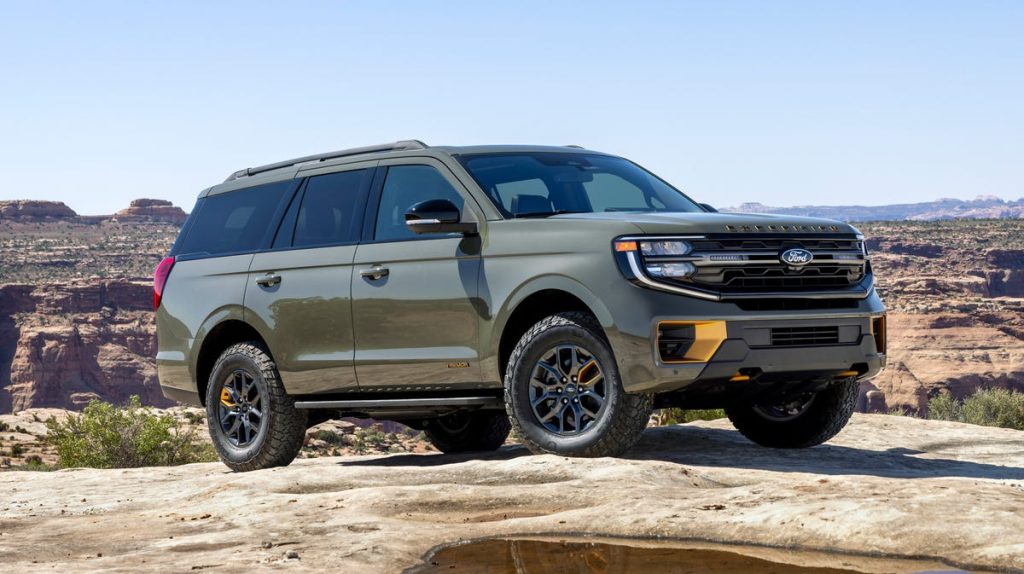
For many full-size SUV shoppers, versatility matters. The Expedition’s design succeeds because it appeals to a broader audience while still delivering the commanding presence expected from a vehicle in this class.
Winner: Ford Expedition
Why It Wins: More balanced styling, wider trim variety, and stronger premium presence appeal to more buyers.
Cabin Space, Passenger Comfort, And Interior Flexibility
Interior accommodations represent one of the biggest differences between these SUVs. The Ford Expedition has long been recognized for its exceptional passenger space. Adults can comfortably occupy all three rows, and the cabin feels open and airy.
The Expedition Max takes things even further by offering limousine-like third-row room and massive cargo capacity.
Seat comfort is excellent throughout the lineup. Higher trims feature premium leather upholstery, heated and ventilated seating, and upscale materials that make long-distance travel enjoyable. Ford’s interior layout is also straightforward and practical, with controls that are easy to understand and access.
Toyota’s Sequoia features a dramatically improved interior compared to its predecessor. Material quality is competitive, technology integration is modern, and front-seat comfort is excellent. However, the hybrid battery packaging creates compromises in cargo space and third-row functionality.
Unlike the Expedition, the Sequoia’s third row does not fold completely flat into the floor. This affects cargo flexibility and reduces convenience when transporting large items. Third-row space is respectable but falls short of Ford’s accommodations.
Families purchasing a full-size SUV often do so specifically because they need maximum passenger and cargo capacity. In these areas, the Expedition remains one of the segment leaders. The available Expedition Max further widens the gap by offering significantly more usable interior volume.
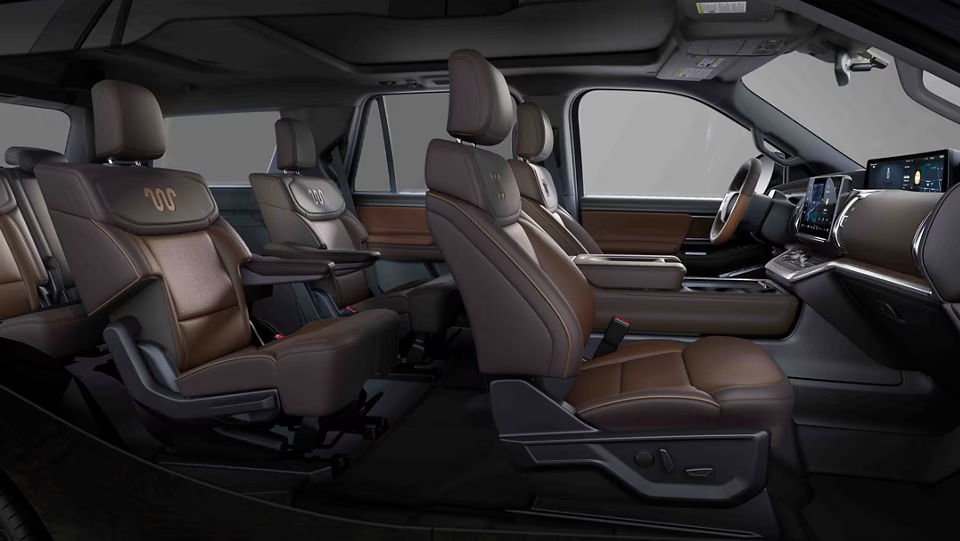
Toyota deserves credit for improving refinement and material quality, but Ford continues to deliver one of the most spacious and practical cabins available in any SUV.
Winner: Ford Expedition
Why It Wins: Superior passenger room, better cargo flexibility, and a more accommodating third row.
Technology, Infotainment, And Connectivity
Technology expectations have risen dramatically in recent years, and both manufacturers have responded with modern digital experiences.
The Expedition offers a large touchscreen running Ford’s SYNC infotainment system. The interface is intuitive, responsive, and easy to navigate. Wireless smartphone integration, multiple USB ports, over-the-air updates, and advanced driver-assistance features help keep the SUV competitive.
Ford also offers impressive convenience features, including advanced towing technology that simplifies trailer management. For owners who regularly tow boats or campers, these systems can make a noticeable difference in everyday usability.
Toyota’s Sequoia features one of the brand’s best infotainment systems to date. The large central touchscreen is crisp and responsive, while menu organization is significantly improved compared to older Toyota systems. Wireless Apple CarPlay and Android Auto integration are standard on many trims, and voice controls work well.
Toyota Safety Sense also provides a comprehensive suite of driver-assistance technologies. Adaptive cruise control, lane-keeping assistance, and collision mitigation systems contribute to a strong safety package.
While Toyota has made substantial progress, Ford’s technology suite feels more comprehensive. The towing-focused features, larger available displays, and highly polished user interface create a more complete ownership experience.
Technology should make ownership easier rather than simply adding features. Ford succeeds by combining useful innovations with intuitive operation, particularly for buyers who use their SUV for work or recreational towing.
Winner: Ford Expedition
Why It Wins: Better towing technology, larger available displays, and a more complete digital experience.
Performance, Towing, And Driving Experience
The powertrain battle highlights the different philosophies behind these SUVs. Ford equips the Expedition with a twin-turbocharged 3.5-liter EcoBoost V6. Depending on trim level, output varies, but performance is consistently strong. Acceleration is impressive for a vehicle of this size, and the engine delivers substantial torque across the rev range.
Toyota counters with its i-FORCE MAX hybrid powertrain. Combining a twin-turbocharged V6 with an electric motor, the system generates impressive power and torque while also improving efficiency. The hybrid setup provides strong low-speed response and smooth power delivery.
Both SUVs tow substantial loads, making them suitable for trailers, boats, and campers. Capability differences are relatively small, with each vehicle offering competitive maximum ratings.
Where the Sequoia gains ground is efficiency. The hybrid system delivers noticeably better fuel economy than the Expedition, an increasingly important consideration given fluctuating fuel prices. Buyers covering significant annual mileage will appreciate the savings.
Ride quality is another area where Toyota shines. The Sequoia feels refined and composed, particularly on highways. Steering responses are predictable, and the hybrid powertrain contributes to a smooth driving experience.
The Expedition remains highly capable and enjoyable to drive, but Toyota’s combination of strong performance and improved efficiency creates a more compelling package. The hybrid powertrain represents a meaningful advancement in the segment.
Winner: Toyota Sequoia
Why It Wins: Strong hybrid performance and superior fuel efficiency provide a significant advantage.
Practicality And Everyday Family Usability
A full-size SUV must excel at daily family duties, and both vehicles perform well in this regard. The Expedition’s spacious interior immediately benefits families.
Multiple seating configurations, abundant storage areas, and excellent visibility make daily use straightforward. Loading passengers and cargo is easy, while the large rear opening simplifies transporting bulky items.
Ford also offers practical features such as power-folding seats, numerous charging ports, and family-friendly technology. Long road trips become less stressful thanks to the vehicle’s generous interior dimensions.
The Sequoia offers strong family credentials as well. The hybrid powertrain improves fuel economy during daily commuting, and Toyota’s reputation for durability provides additional peace of mind. Safety technology is comprehensive, and cabin quality is significantly improved over previous generations.
However, cargo flexibility remains a weakness. The third-row design limits available storage configurations, and the cargo area does not adapt as easily to changing needs. Families frequently transporting sports equipment, luggage, or large household items may notice the difference.
Daily practicality often comes down to space and versatility. While Toyota offers efficiency advantages, Ford delivers a more adaptable interior environment. For many households, that flexibility proves more valuable than fuel savings alone.
The Expedition’s ability to accommodate passengers, cargo, and towing responsibilities simultaneously gives it an edge in real-world family use.
Winner: Ford Expedition
Why It Wins: Greater interior flexibility and cargo usability better suit large-family needs.
Pricing, Ownership Experience, And Long-Term Value
Value means more than simply comparing sticker prices. The Expedition offers a wide range of trims, allowing buyers to choose a model that fits their budget and needs. From well-equipped entry-level versions to luxurious Platinum models, Ford provides substantial flexibility.
Toyota’s Sequoia is generally positioned slightly higher in the market, particularly when equipped with premium features. However, the hybrid powertrain helps offset some ownership costs through reduced fuel consumption.
Reliability remains one of Toyota’s strongest selling points. The brand has built a reputation for durability that continues to attract buyers seeking long-term ownership confidence. Resale values are also consistently strong, helping reduce depreciation concerns.
Ford has improved quality and reliability in recent years, but Toyota still enjoys a stronger reputation in this category. Buyers planning to keep their vehicle for many years often place significant weight on this factor.
The Sequoia’s combination of efficiency, resale strength, and expected durability creates a compelling ownership proposition. While the Expedition may offer more space and flexibility, Toyota’s long-term value remains difficult to ignore.
For shoppers concerned with total ownership costs rather than simply purchase price, the Sequoia presents the stronger case.
Winner: Toyota Sequoia
Why It Wins: Better efficiency, stronger resale value, and Toyota’s reliability reputation support long-term ownership.
Comparison Scorecard
| Category | Winner | The Edge |
|---|---|---|
| Exterior Presence And Design Philosophy | Ford Expedition | More balanced styling and broader appeal across trims |
| Cabin Space, Passenger Comfort, And Interior Flexibility | Ford Expedition | Better third-row room and superior cargo versatility |
| Technology, Infotainment, And Connectivity | Ford Expedition | More advanced towing technology and stronger usability |
| Performance, Towing, And Driving Experience | Toyota Sequoia | Hybrid power improves efficiency without sacrificing capability |
| Practicality And Everyday Family Usability | Ford Expedition | More adaptable cabin and family-friendly interior layout |
| Pricing, Ownership Experience, And Long-Term Value | Toyota Sequoia | Strong resale value and better long-term ownership confidence |
Also Read: 10 Compact Sedans Ranked By Backseat Space
