
For most of automotive history, manufacturers straightforwardly made money. They designed vehicles, built them in factories, sold them through dealerships, and generated additional revenue through financing, maintenance, and replacement parts.
The car itself was the product, and once it left the showroom, the automaker’s direct relationship with the customer often became limited. That business model is rapidly changing.
Modern vehicles are among the most connected consumer products in the world. Cars now contain dozens of sensors, advanced software systems, built-in internet connectivity, GPS tracking capabilities, cameras, radar units, and cloud-based services. Every trip generates enormous amounts of information about how a vehicle is driven, maintained, and used.
While consumers may view connected features as conveniences, automakers increasingly see something else: data. The information generated by millions of connected vehicles has become one of the industry’s most valuable assets.
Analysts, technology experts, and investors are paying close attention because the long-term financial potential of vehicle data could rival or even surpass traditional automotive revenue streams.
The shift reflects a broader transformation occurring across the transportation sector. Automakers are no longer simply manufacturers. They are becoming technology companies, software providers, and data businesses operating on a global scale.
Also Read: 10 Luxury Cars With Factory Sound Systems Worth Every Penny
Modern Vehicles Generate Massive Amounts Of Data
Every time a connected vehicle is driven, information is collected. Modern cars can monitor speed, acceleration, braking habits, steering inputs, fuel consumption, battery performance, navigation routes, tire pressure, engine diagnostics, climate-control usage, and countless other variables.
Advanced driver-assistance systems add another layer of information through cameras, sensors, and radar systems that continuously analyze the vehicle’s surroundings.
Research from S&P Global Mobility estimates that hundreds of millions of connected vehicles are currently operating worldwide, with that number expected to grow substantially throughout the decade.
As more vehicles receive embedded internet connections, manufacturers gain access to increasingly large streams of real-world information.
This data has tremendous value because it reflects actual consumer behavior rather than laboratory testing. Engineers can see how vehicles perform in different climates, how drivers use specific features, and how components age over time. Unlike traditional product sales, data generation does not stop after purchase.
A vehicle sold today may continue producing useful information for ten years or longer. That ongoing flow of insights creates opportunities that previous generations of automakers never possessed.
For many companies, the information itself has become nearly as important as the vehicle generating it.
Software and services are becoming major revenue sources.
One reason connected-car data is so valuable is that it supports entirely new business models.
Historically, an automaker earned most of its profit when a vehicle was sold. Today, connected technologies allow manufacturers to generate revenue long after the initial purchase.
McKinsey & Company has projected that automotive software and connected-service revenues could become a market worth hundreds of billions of dollars globally over the next decade. Manufacturers are investing heavily because digital services often produce higher profit margins than vehicle production.
Subscription-based features provide a clear example. Many modern vehicles offer connected navigation services, remote vehicle monitoring, smartphone integration packages, advanced driver-assistance functions, and enhanced entertainment systems. These features frequently require recurring payments, creating ongoing revenue streams.
The data collected from vehicles helps manufacturers understand which services customers use most frequently. This information allows companies to improve offerings, refine pricing strategies, and develop new digital products.
As software becomes a larger part of vehicle ownership, data increasingly serves as the fuel powering these businesses.
Insurance Companies Are Paying For Driving Data
Insurance has become one of the fastest-growing applications for connected-car information. Traditional insurance models rely on factors such as age, location, driving history, and vehicle type. Connected vehicles allow insurers to evaluate actual driving behavior in far greater detail.
Acceleration patterns, braking habits, mileage, travel times, and driving routes can all provide insights into risk levels. Programs commonly known as usage-based insurance use this information to calculate premiums more accurately.
Studies from J.D. Power show increasing consumer interest in these programs, particularly among drivers seeking lower insurance costs. Safe drivers often receive discounts because insurers gain greater confidence in their risk assessments.
Automakers benefit as well. Some manufacturers partner directly with insurance companies, while others have begun offering their own insurance products supported by vehicle-generated information. The arrangement creates additional revenue opportunities while strengthening customer relationships.
Without connected-car data, these programs would be far less sophisticated. The growing importance of usage-based insurance illustrates how vehicle information is becoming a valuable commercial asset across multiple industries.
Predictive Maintenance Creates New Opportunities
Vehicle maintenance represents another area where connected data is transforming the automotive business.
Traditionally, maintenance has been reactive. Drivers notice a problem, receive a warning light, or experience a mechanical issue before scheduling service.
Connected vehicles allow manufacturers to take a more proactive approach. Sensors continuously monitor vehicle health, generating information about engine performance, battery condition, fluid levels, brake wear, and numerous other systems.
By analyzing data from large fleets of vehicles, manufacturers can identify patterns that suggest future problems.
Research from Deloitte indicates that predictive maintenance technologies could significantly reduce unexpected breakdowns while improving customer satisfaction.
The financial benefits are substantial. Manufacturers can identify reliability concerns earlier, dealerships can improve service scheduling, and owners can address problems before they become expensive repairs.
Every maintenance interaction also creates additional opportunities for dealerships to generate service revenue. Predictive maintenance depends entirely on data collection.
The more information manufacturers gather, the better they become at anticipating potential issues. As a result, connected-car data directly contributes to both customer retention and profitability.
Electric Vehicles Have Increased The Importance Of Data
The rapid growth of electric vehicles has made connected-car data even more valuable. Unlike traditional gasoline-powered vehicles, EVs rely heavily on software management systems. Battery performance, charging behavior, temperature regulation, and energy efficiency all depend on continuous monitoring and analysis.
Every charging session generates useful information. Manufacturers can evaluate charging speeds, battery temperatures, degradation patterns, driving habits, and environmental conditions. This information helps engineers improve future battery designs while optimizing current vehicles through software updates.
The International Energy Agency has repeatedly highlighted the role of data in accelerating EV development. Real-world operating information allows manufacturers to understand how vehicles perform outside controlled testing environments.
Battery packs represent one of the most expensive components in an electric vehicle. Even small improvements in battery longevity or efficiency can save manufacturers significant amounts of money.
For this reason, many industry experts describe connected EV fleets as rolling research platforms.
Every mile driven contributes valuable information that helps shape future products. In the EV era, data has become an essential competitive advantage.
Privacy Concerns Continue To Grow
As connected-car data becomes more valuable, questions about privacy have become increasingly important.
Many consumers are unaware of how much information their vehicles collect. Navigation systems, mobile apps, voice assistants, driver-assistance features, and connected services can all contribute to data generation.
Consumer advocacy groups have raised concerns about transparency and consent. The Mozilla Foundation attracted significant attention with research suggesting that many vehicles collect extensive information about drivers and passengers.
Regulators are paying closer attention as well. Government agencies in both North America and Europe have begun examining how automakers collect, store, and share consumer information. Questions regarding ownership, security, and data usage continue to evolve alongside technological advancements.
For manufacturers, maintaining consumer trust is critical. The same information that creates valuable business opportunities can also create reputational risks if customers believe their privacy is being compromised. Companies must balance innovation with transparency to ensure long-term success.
As vehicle connectivity expands, privacy will remain one of the industry’s most closely watched issues.
Why Data Could Become More Valuable Than Vehicle Sales
The economics help explain why connected-car data has become such a major focus. Vehicle manufacturing is expensive. Factories require billions of dollars in investment, supply chains are complex, and competition remains intense. Profit margins can be relatively thin, particularly in lower-priced segments.
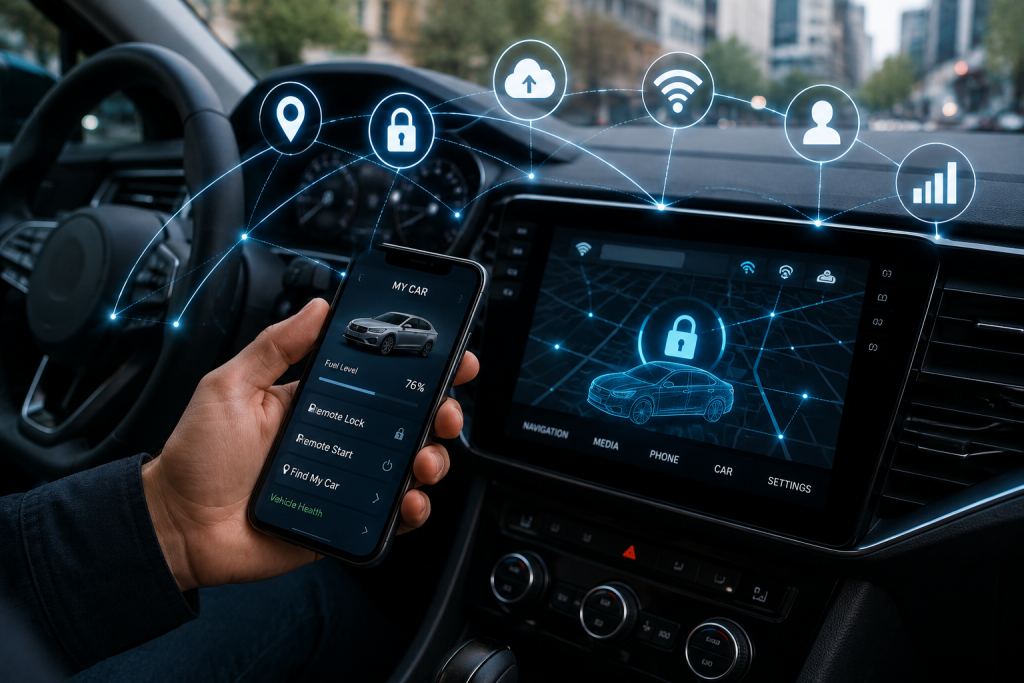
Digital services operate differently. Once software platforms and data infrastructure are established, manufacturers can serve millions of customers with relatively low incremental costs.
Subscription services, insurance partnerships, predictive maintenance programs, fleet-management systems, and software upgrades all generate recurring revenue without requiring entirely new vehicles to be built.
Investors often favor recurring revenue businesses because they provide greater stability and predictability.
Morgan Stanley analysts have noted that software-driven automotive revenue could become a major factor influencing manufacturer valuations in the future. Companies that successfully monetize connected-car ecosystems may enjoy financial advantages that extend far beyond vehicle sales.
That reality helps explain why nearly every major automaker is investing heavily in software development, cloud infrastructure, and data analytics.
The Automotive Industry’s New Gold Mine
The automobile is undergoing a transformation that extends far beyond electrification and autonomous driving.
Connected vehicles are creating an entirely new economic opportunity centered on information. Every trip, every charging session, every navigation request, and every maintenance alert contributes to a growing pool of data that manufacturers can analyze and monetize.
Consumers still purchase vehicles for transportation, comfort, safety, reliability, and performance. Those fundamentals remain essential. Yet behind the scenes, automakers increasingly recognize that the information generated by vehicles may be just as valuable as the vehicles themselves.
From insurance programs and predictive maintenance to subscription services and future product development, connected-car data now influences nearly every aspect of the automotive business.
The companies that thrive in the coming decade may not simply be the ones that build the best vehicles. They may be the ones who learn how to use vehicle data most effectively. In an industry once defined by steel, engines, and assembly lines, information has become the newest and potentially most valuable commodity of all.
Also Read: First 1,000-Volt EVs Arrive as Sub-10-Minute Charging Claims Continue
