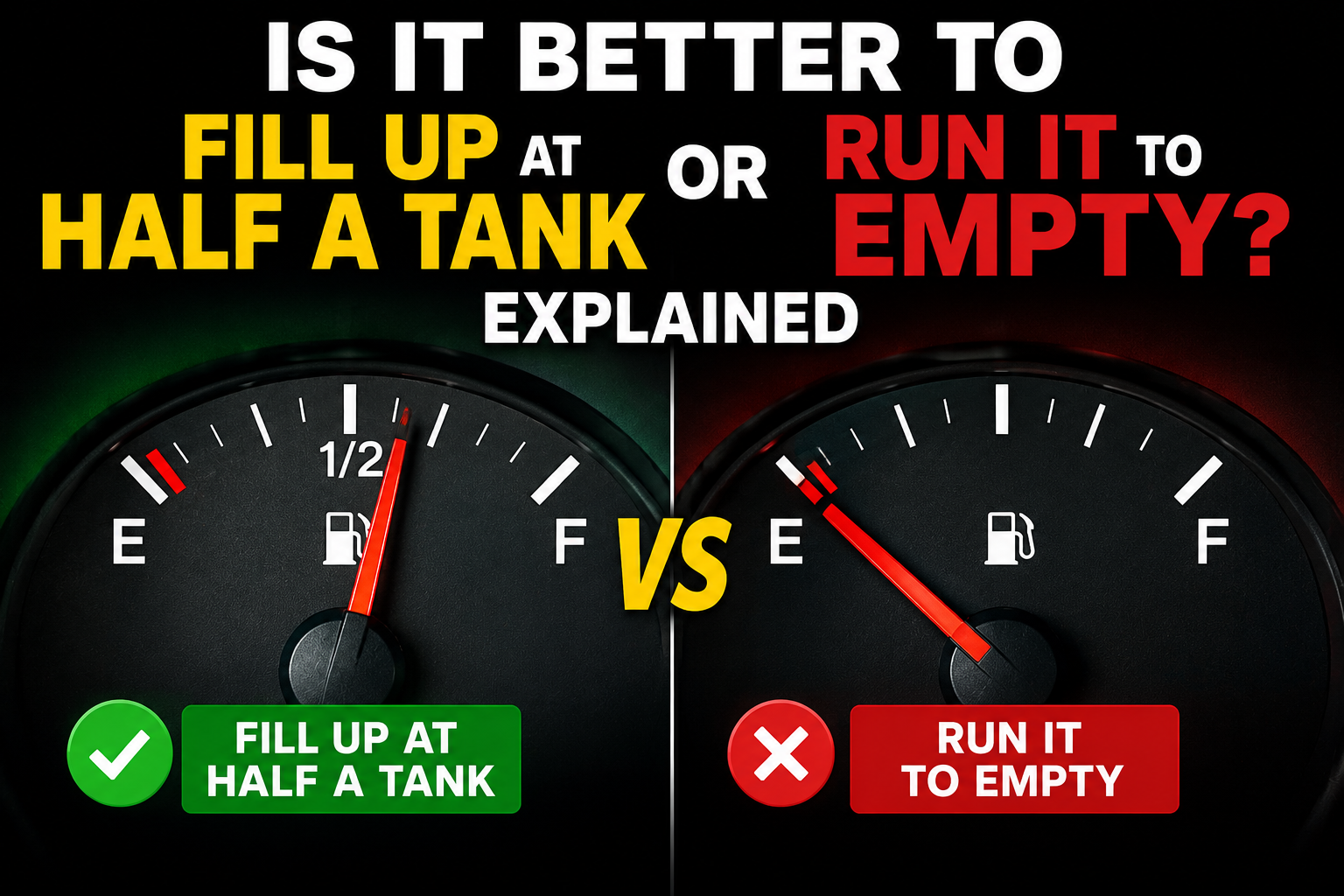
Few automotive debates generate as much everyday discussion as fuel habits. Some drivers head to the gas station as soon as the gauge drops below half a tank, while others routinely wait until the low-fuel warning light illuminates before refueling.
Both groups often claim their approach is better for the vehicle, but modern fuel systems have changed significantly over the years, making some long-held beliefs outdated.
The question seems simple: Is it better to keep a tank relatively full or use as much fuel as possible before filling up? The answer involves more than convenience. Fuel pump design, vehicle reliability, emergency preparedness, and even long-term maintenance costs all play a role.
Modern vehicles are engineered to operate safely across a wide range of fuel levels. Manufacturers know drivers will not always refill at the same point, and fuel systems are designed accordingly. However, that does not mean every fueling habit is equally beneficial.
Automotive engineers, mechanics, and industry organizations generally agree that consistently running a vehicle close to empty offers few advantages and can create several potential drawbacks. On the other hand, keeping the tank topped off at every opportunity is not necessarily required either.
For most drivers, the ideal strategy falls somewhere in the middle. Understanding how modern fuel systems work helps explain why many experts recommend refueling before the tank gets too low rather than pushing every gallon to its limit.
Also Read: BMW Reveals a Concept for M Division’s First EV
Modern fuel pumps depend on fuel for cooling.
One of the most commonly cited reasons for avoiding extremely low fuel levels involves the fuel pump.
In most modern vehicles, the electric fuel pump sits inside the fuel tank. Its job is to deliver gasoline from the tank to the engine at the correct pressure. Because the pump operates continuously while the vehicle is running, it generates heat during operation.
Fuel helps manage that heat.
The gasoline surrounding the pump acts as both a coolant and a lubricant, helping maintain normal operating temperatures. When fuel levels become very low, less liquid surrounds the pump.
Many mechanics point to this design when recommending that drivers avoid routinely operating with nearly empty tanks. While modern pumps are engineered to tolerate varying fuel levels, constantly running near empty may increase stress over time.
Consumer automotive experts have generally noted that maintaining a reasonable amount of fuel in the tank can help reduce unnecessary wear on fuel-system components.
This does not mean a single trip with the warning light illuminated will damage the pump. Problems tend to arise when low-fuel operation becomes a long-term habit repeated over thousands of miles.
The risk is relatively small, but the potential repair costs can be significant if a fuel pump eventually fails.
Sediment Concerns Are Less Serious Than They Once Were
Older vehicles often accumulate sediment, rust particles, and contaminants in fuel tanks. As a result, many drivers were warned against running tanks too low because debris could be drawn into the fuel system.
Modern vehicles have largely reduced this concern. Fuel systems now include sophisticated filtration systems designed to capture contaminants before they reach sensitive engine components. Fuel tanks are also manufactured using materials that resist corrosion far better than older designs.
According to automotive service experts, the idea that running a tank low automatically causes sediment-related engine damage is largely outdated.
That said, contaminants can still exist. Over many years, small amounts of debris may accumulate inside a fuel tank. Fuel filters are specifically designed to handle these particles, but constantly operating at extremely low fuel levels may increase the likelihood of drawing contaminants toward the fuel pickup area.
For most drivers, this is not the primary reason to avoid running near empty. Fuel-pump longevity and practical driving considerations tend to be more important factors.
Still, maintaining moderate fuel levels provides an additional margin of protection against any contaminants that may exist within the system.
Low fuel levels can create problems in extreme conditions.
One reason many automotive experts recommend refueling around one-quarter tank rather than waiting for empty involves real-world driving situations.
Fuel gauges are estimates, not precision measuring instruments. A vehicle that appears capable of traveling another 30 or 40 miles may deliver significantly less range depending on weather, traffic conditions, terrain, or driving habits.
Strong headwinds, heavy cargo, steep grades, and cold temperatures can all increase fuel consumption unexpectedly.
AAA has repeatedly emphasized the importance of maintaining adequate fuel reserves, particularly during long trips and severe weather conditions. Winter driving provides a good example.
Traffic accidents, road closures, and weather emergencies can leave motorists stranded for extended periods. A vehicle with only a few miles of fuel remaining offers little flexibility during such situations.
Drivers in rural areas face similar concerns. Gas stations may be farther apart than expected, and unexpected detours can quickly consume remaining fuel.
Keeping at least a quarter tank available provides a safety buffer that many experts consider worthwhile.
The small inconvenience of slightly more frequent refueling is often outweighed by the additional flexibility it provides.
Running Out Of Fuel Can Be More Expensive Than Expected
Many drivers assume that running out of fuel simply requires adding more gasoline and continuing the trip. Unfortunately, the situation is not always that simple.
Modern vehicles often rely on pressurized fuel systems that can require additional procedures after the tank has been completely emptied. While many vehicles will restart normally once fuel is added, others may require extended cranking or system priming.
The larger issue is usually inconvenience. Running out of gas can result in towing charges, roadside assistance fees, lost time, and potentially dangerous roadside situations. According to AAA roadside assistance statistics, running out of fuel remains one of the more common reasons drivers require emergency service.
Even if the financial consequences are relatively modest, the disruption can be significant. A fuel stop planned at a convenient station is almost always preferable to an emergency stop on the shoulder of a highway.
This is one reason many automotive professionals view low-fuel warnings as signals to refuel soon rather than invitations to see how much farther the vehicle can travel.
Treating the warning light as a reserve rather than a challenge generally produces better outcomes.
Is Filling Up At Half A Tank Necessary?
While running near empty offers few benefits, filling up at half a tank is not strictly necessary either.
Some drivers believe maintaining at least half a tank improves vehicle reliability. In most cases, modern vehicles simply do not require such conservative fueling practices.
From a mechanical standpoint, there is little evidence that refueling at half a tank provides significant advantages over waiting until one-quarter tank remains.
The decision often comes down to convenience and personal preference. Drivers who commute long distances, travel through rural regions, or live in areas with severe weather may appreciate the additional flexibility provided by higher fuel levels.
Others may prefer fewer stops and choose to refuel closer to one-quarter tank. Both approaches are generally acceptable.
The key distinction is that neither method consistently pushes the vehicle into extremely low-fuel territory.
Most automotive experts agree that maintaining a reasonable reserve matters more than adhering to a specific percentage.
Whether that reserve begins at half a tank or one-quarter tank depends largely on individual circumstances.
Fuel Prices Can Influence Refueling Habits
Another reason some drivers refill earlier involves fuel prices. When prices fluctuate significantly, maintaining more fuel in the tank can provide flexibility. Drivers may have more opportunities to choose lower-priced stations rather than being forced to purchase fuel immediately.
Apps and fuel-price tracking services have made this strategy increasingly common. However, financial benefits tend to be relatively modest unless fuel prices change dramatically.
The larger advantage remains convenience. A driver with half a tank has more freedom to select where and when to refuel than someone operating on the last few gallons.
This flexibility becomes especially valuable during holiday travel periods or emergencies when station availability may be limited.
While fuel-price optimization should not dictate every fueling decision, maintaining a healthy reserve does create additional options.
What Automakers And Experts Generally Recommend
Automakers rarely specify an exact fuel level at which drivers should refill. Instead, owner manuals generally emphasize avoiding situations where the vehicle runs completely out of fuel. Fuel gauges, warning lights, and range estimates are intended to provide adequate notice before that occurs.
Many automotive technicians recommend refueling once the tank reaches approximately one-quarter full.
This guideline balances convenience with mechanical considerations. It provides sufficient reserve for unexpected circumstances while avoiding unnecessary trips to the gas station.
Consumer Reports and various automotive service organizations have echoed similar advice over the years, noting that consistently operating near empty provides little benefit while introducing potential downsides.
Importantly, occasional low-fuel situations are unlikely to cause immediate harm. The concern involves long-term habits rather than isolated incidents.
A driver who occasionally waits until the warning light appears is unlikely to damage a vehicle. Someone who repeatedly drives until nearly empty for years may place additional stress on fuel-system components.
The Best Fueling Habit For Most Drivers
The debate between filling up at half a tank and running nearly empty often treats the issue as an either-or choice. In reality, the best approach lies between those extremes.
Modern vehicles are designed to operate across a broad range of fuel levels, and there is no requirement to refill every time the gauge reaches halfway.
At the same time, consistently pushing a vehicle to the brink of empty offers little practical advantage and may increase risks related to fuel-pump wear, unexpected delays, and emergencies. For most drivers, refueling somewhere around one-quarter tank represents the ideal balance.
It preserves a comfortable reserve, reduces the likelihood of running out of fuel, and helps maintain favorable operating conditions for the fuel system without requiring excessive trips to the gas station.
The goal is not to maximize every drop of gasoline. It is to keep the vehicle operating reliably while avoiding unnecessary stress, inconvenience, and risk. A quarter tank may not seem like much, but it often provides exactly the margin of safety modern drivers need.