
For decades, BMW’s M division has built its reputation on high-revving engines, sharp handling, and performance machines that appeal to driving enthusiasts around the world. Now, the German automaker is preparing for one of the biggest transformations in the history of the M badge.
On June 12, BMW pulled the covers off the Concept M Neue Klasse, a dramatic preview of what the company’s first fully electric M model could look like when it reaches production later in the decade.
The concept debuted during the 24 Hours of Le Mans race weekend, a fitting stage for a vehicle that BMW says has been shaped by motorsport thinking.
While still officially a concept, industry observers view it as a near-production preview of the electric successor to the legendary M3. More importantly, it offers the clearest picture yet of how BMW intends to translate its performance heritage into the electric era.
The introduction comes at a moment when luxury automakers are under increasing pressure to balance strict emissions rules, rising customer expectations, and the fast-paced development of electric vehicle technology.
For BMW, the challenge is particularly significant because the M brand has always been closely tied to the sound, character, and mechanical engagement of gasoline-powered performance cars.
Also Read: First 1,000-Volt EVs Arrive as Sub-10-Minute Charging Claims Continue.
A New Chapter for BMW M
BMW executives have repeatedly stated that electrification does not mean abandoning the values that made M vehicles successful. Instead, the company argues that electric power can create new opportunities for performance, precision, and control.
The Concept M Neue Klasse serves as the first major demonstration of that philosophy. Built on BMW’s upcoming Neue Klasse architecture, the vehicle represents the future foundation for many of the company’s next-generation electric models.
However, unlike standard BMW EVs, the M version receives significant engineering changes designed specifically for high-performance driving.
BMW describes the project as the beginning of a new era for the M division. Rather than simply adapting an existing electric vehicle into a performance model, engineers developed unique systems intended to preserve the responsiveness and driver involvement associated with the M badge.
The company believes that advanced software and electric power delivery can create a driving experience that remains distinctly BMW, even without a traditional internal combustion engine.
Aerodynamics Take Center Stage
One glance at the concept reveals that its designers prioritized aerodynamic efficiency alongside visual drama.
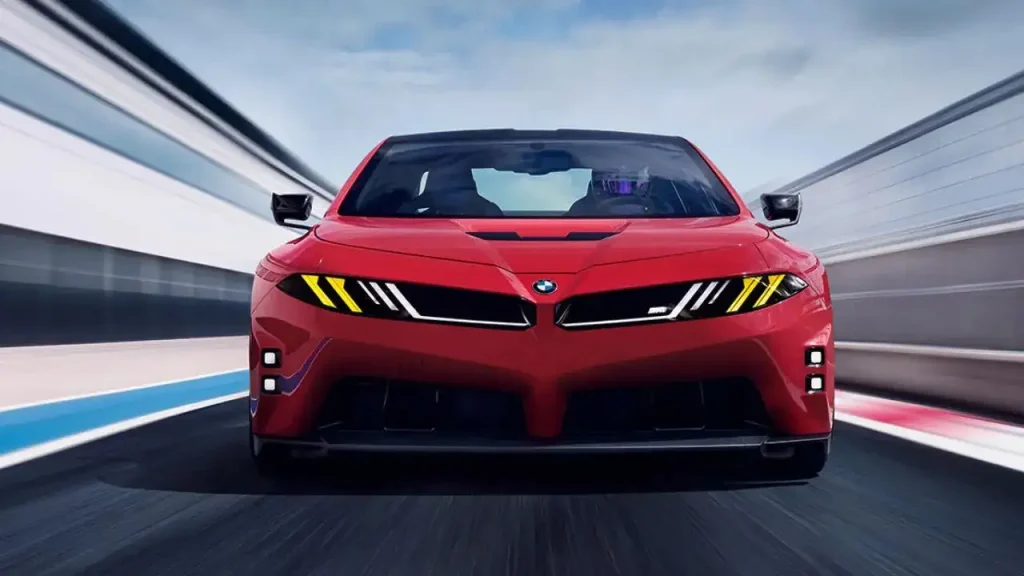
The front end features a modern interpretation of BMW’s classic shark-nose design, combined with an aggressive splitter and large air-management channels. A prominent V-shaped outlet integrated into the hood helps manage airflow while assisting with cooling requirements for the electric drivetrain.
From the side, the vehicle adopts a low-slung stance with muscular rear fenders and sharply defined body surfaces. Wide wheel arches reinforce its performance intentions, while aerodynamic mirrors reduce drag.
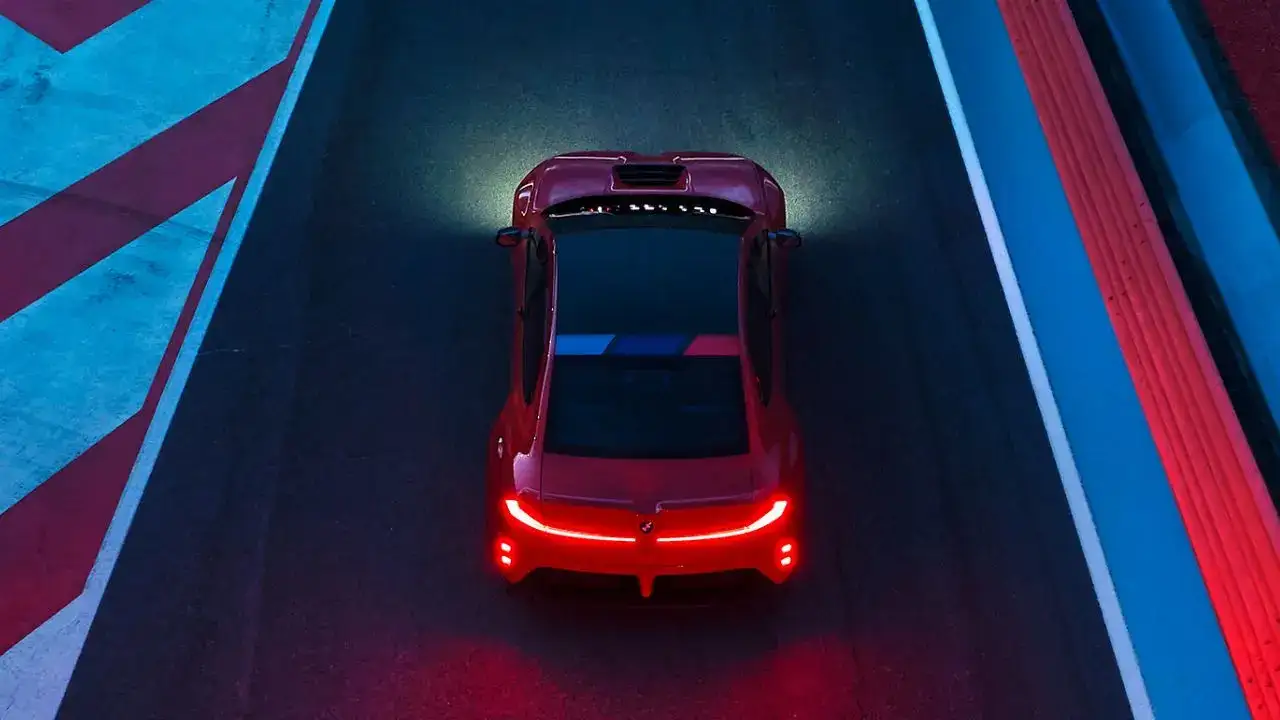
The rear section is equally dramatic. Engineers incorporated a floating diffuser, distinctive track-inspired lighting elements, and a ducktail spoiler designed to generate additional downforce at higher speeds. Every major styling element appears to serve a functional purpose rather than existing solely for appearance.
BMW designers have emphasized a “form follows function” philosophy throughout the project. The result is a concept that looks futuristic without completely abandoning the visual identity enthusiasts associate with M cars.
Sustainable Materials Meet Performance Engineering
One of the most interesting aspects of the concept is BMW’s focus on environmentally conscious materials.
For years, carbon fiber has been a staple of high-performance vehicles because of its strength and lightweight properties. The challenge has been that producing carbon fiber can be energy-intensive. BMW’s latest concept introduces natural fiber composite materials in several exterior and interior components as a more sustainable alternative.
Elements such as the front splitter, rear diffuser, roof structure, and certain aerodynamic components make use of these advanced materials. According to BMW, the manufacturing process can reduce carbon emissions significantly compared with conventional carbon fiber production.
The company has spent several years developing expertise in natural fiber technologies through its motorsport programs. Lessons learned on the racetrack are now beginning to appear in road-car projects.
Rather than treating sustainability and performance as opposing goals, BMW is attempting to combine the two. The Concept M Neue Klasse demonstrates how future performance vehicles may incorporate environmentally friendly materials without sacrificing strength or capability.
Four Motors and a New Performance Philosophy
Underneath the striking bodywork lies the technology that may ultimately define the future of BMW M.
Instead of relying on one or two electric motors, the concept utilizes a four-motor setup. Each wheel receives power from its own dedicated motor, creating unprecedented opportunities for torque management and vehicle control.
This arrangement allows the system to distribute power individually to each wheel based on driving conditions. During aggressive cornering, for example, the vehicle can precisely adjust torque levels to improve grip and stability.
At the center of the system is BMW’s new control architecture, known as the “Heart of Joy.” This high-performance computing platform continuously manages drivetrain behavior, braking responses, energy recuperation, and traction systems.
Traditional performance cars rely heavily on mechanical differentials and hardware solutions. BMW’s new approach shifts much of that responsibility to advanced software capable of making thousands of calculations every second.
Company engineers believe the technology can deliver sharper responses and greater precision than conventional systems while maintaining the emotional engagement expected from an M vehicle.
High-Voltage Technology for Serious Performance
The concept also showcases BMW’s next-generation electrical architecture. An 800-volt system forms the backbone of the vehicle, allowing faster charging and improved power delivery. The high-voltage setup is becoming increasingly common among premium electric vehicles because it supports both performance and efficiency goals.
Power comes from a battery pack exceeding 100 kilowatt-hours in capacity. Engineers integrated the battery structure directly into the vehicle’s chassis, increasing rigidity while reducing unnecessary weight.
BMW says the battery has been optimized not only for range but also for sustained high-performance driving. That distinction is important because repeated acceleration and track use can place significant stress on electric powertrains.
Cooling systems have been specifically engineered to ensure consistent performance even during demanding driving conditions. The company wants future M EVs to remain capable of extended spirited driving rather than delivering only brief bursts of acceleration.
Inside the Driver-Focused Cabin
While many modern electric vehicles prioritize minimalism, BMW’s concept attempts to maintain a strong connection between the driver and machine.
The cabin features four deeply sculpted bucket seats finished in contrasting blue and red materials. A race-inspired atmosphere is reinforced by performance harnesses, motorsport-style accents, and a cockpit-oriented layout.
A wide digital display stretches across the base of the windshield, presenting key driving information directly within the driver’s field of view. Additional screens and controls are arranged to minimize distraction while providing access to vehicle functions.
The dashboard incorporates illuminated patterns that create a distinctive visual identity when the vehicle is activated. Red accents appear throughout the cabin, highlighting performance-related controls and emphasizing the M division’s racing heritage.
Despite the futuristic technology, BMW has clearly tried to preserve the emotional character associated with its performance vehicles.
Looking Ahead to the Electric M3 Era
The Concept M Neue Klasse may still wear a concept badge, but many automotive analysts believe it offers a realistic preview of BMW’s future electric M3.
Reports suggest that a production version could arrive around 2027, joining a broader Neue Klasse family of electric vehicles. BMW has also confirmed that gasoline-powered M models will continue alongside electric offerings for the foreseeable future, giving customers multiple choices during the industry’s transition.
That dual-track strategy reflects the realities of today’s performance car market. Enthusiasts remain passionate about traditional engines, yet electric technology continues to advance rapidly.
The Concept M Neue Klasse illustrates BMW’s belief that electrification can enhance rather than diminish performance.
Whether customers embrace that vision remains to be seen, but one thing is becoming increasingly clear: the future of BMW M will be shaped as much by software, batteries, and advanced materials as it once was by cylinders, displacement, and exhaust notes.
With its combination of cutting-edge technology, sustainable engineering, and unmistakable performance ambition, BMW’s latest concept marks one of the most significant milestones in the history of the M division.
As the automotive industry moves deeper into the electric age, the company is betting that driving excitement can survive the transition and perhaps even evolve into something entirely new.
Also Read: 10 Vintage Cars With Features That No Longer Exist
