
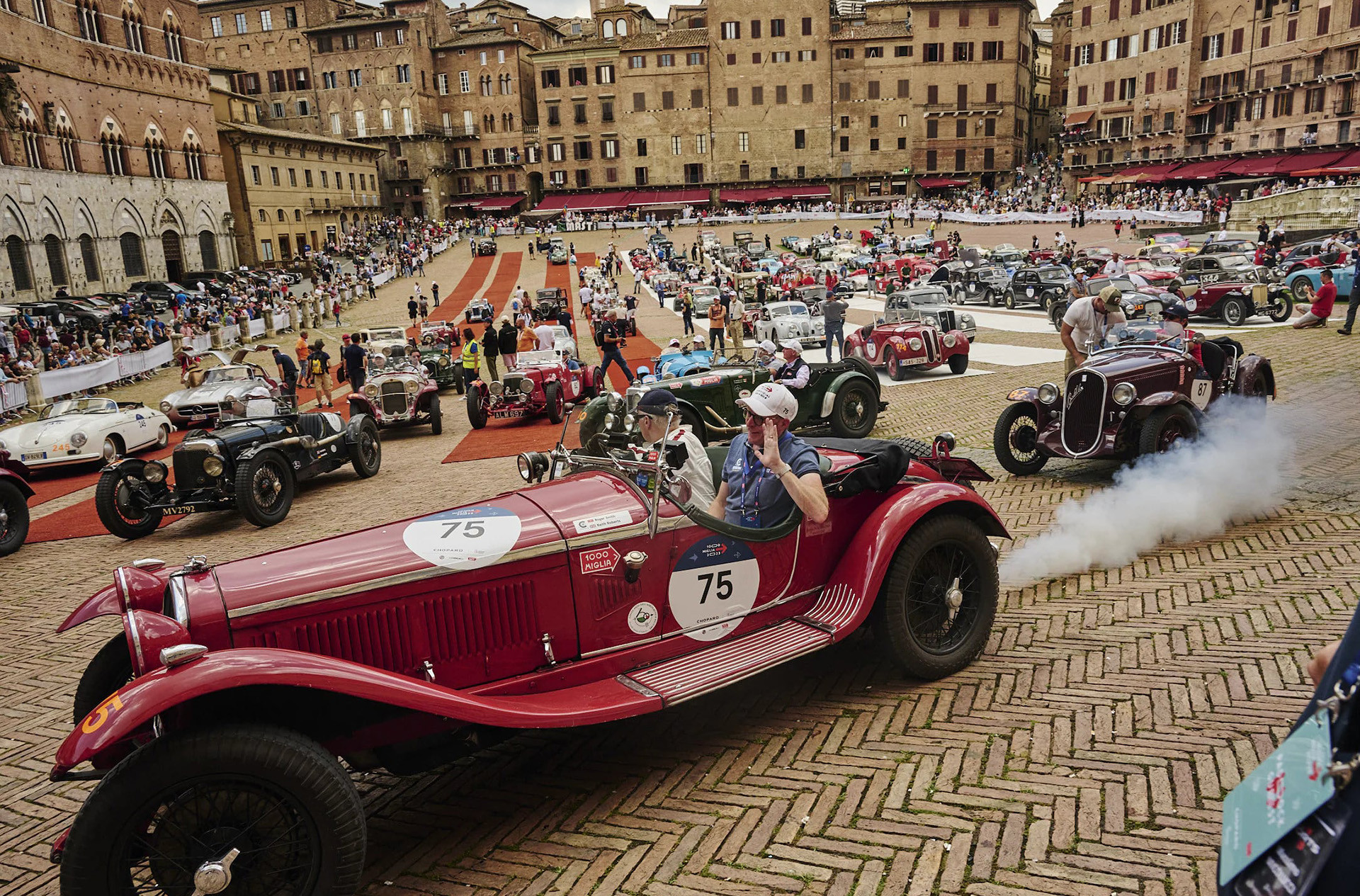
The roads of Italy once again became a rolling museum of automotive history as the 2026 Mille Miglia returned from June 9 through June 13, drawing hundreds of historic vehicles, thousands of spectators, and enthusiasts from around the world.
Widely regarded as one of the most prestigious classic car events on the calendar, this year’s edition continued a tradition that blends competition, culture, and Italian heritage in a way few motoring events can match.
More than 400 historic automobiles assembled in the northern Italian city of Brescia, the spiritual home of the Mille Miglia, before embarking on a five-day journey across some of the country’s most scenic roads and historic cities.
The event followed a figure-eight route that connected destinations including Padua, Siena, Rome, Assisi, and Rimini before returning to Brescia for the finish.
While the original Mille Miglia was known as a high-speed open-road race that tested both machine and driver, the modern version has evolved into a time-speed-distance rally.
Precision, consistency, and navigation now determine success, allowing participants to enjoy the historic route while preserving the spirit of one of motorsport’s most legendary events.
Also Read: First 1,000-Volt EVs Arrive as Sub-10-Minute Charging Claims Continue.
A Historic Event With Deep Italian Roots
The Mille Miglia occupies a unique place in automotive history. First held in 1927, the original event quickly became one of the world’s most famous races, attracting elite drivers and manufacturers eager to prove their engineering capabilities on public roads stretching from Brescia to Rome and back.
The race earned global recognition for its demanding route and dramatic stories. Icons such as Alfa Romeo, Ferrari, Mercedes-Benz, and Maserati became closely associated with the competition, while legendary drivers used the event to establish their reputations.
Safety concerns eventually brought the original race to an end in the late 1950s. However, the event’s legacy proved too powerful to disappear. Decades later, organizers revived the Mille Miglia as a historic rally, allowing classic vehicles to retrace portions of the famous route while celebrating automotive history rather than outright speed.
Today, participation is restricted to vehicles that either competed in or were eligible for the original Mille Miglia races. This requirement helps maintain the authenticity that has become one of the rally’s defining characteristics.
The Figure-Eight Route Returns
One of the most talked-about aspects of the 2026 edition was the return of the figure-eight route inspired by some of the earliest races in Mille Miglia history.
The five-day itinerary began on June 9 in Brescia, where participants departed amid large crowds lining the streets. The opening stage led competitors toward Padua, passing through picturesque regions that showcased northern Italy’s diverse landscapes. Organizers designed the route to highlight both driving enjoyment and cultural significance.
The second day carried the field southward through Italy’s renowned Motor Valley. This region, home to some of the world’s most celebrated automotive manufacturers, offered a fitting backdrop for a rally dedicated to motoring excellence.
Historic city centers and countryside roads provided a dramatic contrast to the high-tech facilities associated with modern supercar production.
As the rally progressed, competitors headed toward Rome, the symbolic midpoint of the journey. Passing through Siena and other historic locations, participants encountered routes that connected centuries of Italian history with the country’s enduring automotive culture.
The arrival in Rome remains one of the event’s most celebrated moments each year, attracting spectators eager to see rare and valuable automobiles parade through one of the world’s most famous cities.
The northern return leg guided entrants through Assisi, Rimini, and additional destinations before the final push back to Brescia. The route covered a broad cross-section of Italy, offering participants and spectators alike an opportunity to experience the country’s geographic and cultural diversity.
More Than a Competition
Although trophies and rankings remain important, the modern Mille Miglia is about far more than determining a winner.
For many entrants, participation represents a once-in-a-lifetime opportunity to drive historically significant vehicles across roads closely linked to automotive legend. The event regularly features rare examples from brands that helped shape the industry during the twentieth century.
Many of the participating cars are meticulously restored and maintained. Owners often spend years preparing for the rally, ensuring that every mechanical component remains faithful to the vehicle’s original specification while maintaining the reliability needed to complete the demanding route.
The result is a moving exhibition of automotive craftsmanship. Spectators can witness machines from different eras operating exactly as their designers intended, creating an experience that no museum display can fully replicate.
Unlike modern motorsport events that often separate competitors from fans, the Mille Miglia places participants directly within communities. Residents gather in city squares, villages, and roadside viewing areas to welcome the passing cars, creating a festive atmosphere that has become a hallmark of the event.
A Global Gathering of Enthusiasts
The appeal of the Mille Miglia extends far beyond Italy. Participants travel from numerous countries to take part in the rally, bringing together collectors, historians, engineers, and enthusiasts who share a passion for classic automobiles.
For many international competitors, simply earning a place on the entry list represents a significant achievement.
The event’s global reputation has grown steadily over recent decades. What began as an Italian motorsport contest has evolved into an internationally recognized celebration of automotive heritage.
Manufacturers also maintain a strong interest in the rally. Historic racing success remains an important part of brand identity, and the Mille Miglia provides an ideal platform for showcasing vehicles that helped establish legendary reputations.
The presence of prestigious marques contributes to the event’s unique atmosphere. Rare Alfa Romeos, vintage Mercedes-Benz models, historic Ferraris, and numerous other classics create a field unlike any other in motorsport.
Tourism and Economic Impact
Beyond its automotive significance, the Mille Miglia delivers substantial benefits to the regions it visits.
Hotels, restaurants, shops, and local attractions experience increased activity as participants, support crews, journalists, and spectators travel along the route. Many communities organize festivals, exhibitions, and cultural events timed to coincide with the rally’s arrival.
Tourism officials frequently highlight the event as a valuable opportunity to showcase destinations to international audiences. Television coverage, digital media content, and extensive social media engagement help introduce viewers to cities and regions they may not otherwise consider visiting.
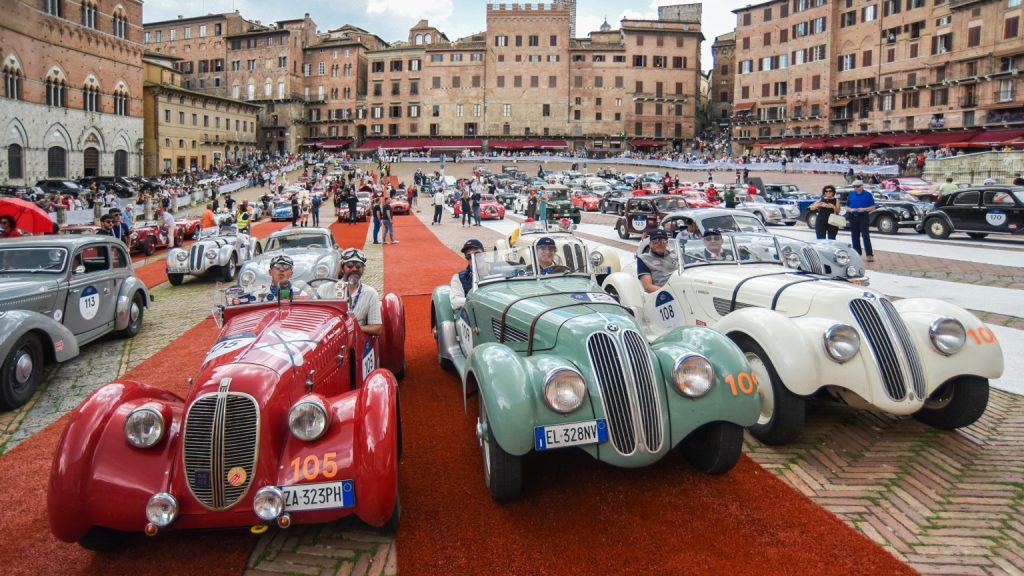
The combination of historic vehicles and iconic Italian settings creates highly shareable imagery, further extending the event’s reach beyond those physically present.
For local businesses, the annual rally has become an anticipated economic boost that complements the cultural prestige associated with hosting part of the route.
Preserving Automotive History for Future Generations
As the automotive industry undergoes one of the most significant transformations in its history, events such as the Mille Miglia take on additional importance.
Electric vehicles, advanced driver-assistance systems, and digital technologies are reshaping the modern driving experience. Against that backdrop, the Mille Miglia offers a reminder of the engineering innovations and design philosophies that laid the foundation for today’s automobiles.
The rally serves as a living archive, preserving vehicles that represent important chapters in transportation history. Younger generations who may never have experienced these machines in everyday use can witness them operating in their intended environment rather than behind barriers.
Organizers continue to emphasize this educational aspect while ensuring the event remains relevant to modern audiences.
As the 2026 edition concludes in Brescia, the Mille Miglia once again demonstrates why it remains one of the most celebrated automotive events in the world. Combining competition, history, culture, and community, the rally continues to honor the legacy of the original race while adapting to the expectations of a new era.
For five days each June, Italy’s roads become a stage where the past and present meet, proving that the fascination with classic automobiles remains as strong as ever.
Also Read: 10 Secret Features in the Jeep Grand Cherokee Most Owners Do Not Know
