
Buying a car is only the beginning of the financial commitment. The real cost of ownership stretches far beyond the dealership. Every year, drivers spend hundreds, sometimes thousands, of dollars on routine maintenance, unexpected repairs, and part replacements. Over a full decade, these costs can quietly add up to a staggering sum. Choosing the right brand from the start can make a difference of tens of thousands of rupees or dollars over time.
Most car buyers focus heavily on the sticker price and the monthly EMI. Very few stop to ask: how much will this car cost me to maintain five or ten years from now? That question, however, is arguably more important than the purchase price itself. An $800 yearly difference in maintenance costs compounds fast. Over five years, you’re looking at a $4,000 gap, and over a decade, you’re pushing $8,000.
According to AAA’s 2025 Your Driving Costs study, the average American spends $11,577 annually on vehicle ownership. A small sedan operates at just 55.87 cents per mile, which is 43% less than a pickup truck. These numbers make it clear that brand selection is a financial decision as much as it is a personal one.
According to Consumer Reports’ 2025 data, the most expensive brands to maintain over ten years include Land Rover at $17,450, Porsche at $16,000, and Mercedes-Benz at $13,100.
In stark contrast, the brands on this list keep you on the road without draining your wallet. Whether you are in India, the United States, or anywhere else, these seven brands represent the smartest long-term investment a car buyer can make.
1. Toyota
When discussions focus on affordable long-term car ownership, one brand consistently stands out. Toyota has long been regarded as the most reliable and least expensive brand to maintain. This reputation is backed not only by perception but also by consistent findings from multiple independent studies each year.
According to CarEdge, Toyota’s 10-year maintenance cost across its lineup averages just $5,996. The Toyota Prius, for instance, is the least expensive car model in terms of average maintenance and repair costs, with a 10-year maintenance total of approximately $4,008.
That is a remarkably low figure for a full decade of ownership. For Indian buyers, this translates to peace of mind that the Innova, Fortuner, Glanza, or Urban Cruiser will not drain your savings over the years.
Toyota vehicles are built around the principle of mechanical simplicity. Rather than chasing accolades for cutting-edge innovation, their engines are designed with longevity in mind, aiming to deliver dependable performance for hundreds of thousands of miles with minimal issues.
Parts are everywhere, and if you need a water pump for a common Toyota model, any decent mechanic can swap it in under an hour. This massive parts ecosystem drives costs down through sheer availability and competition. You are never at the mercy of a single dealership for parts.
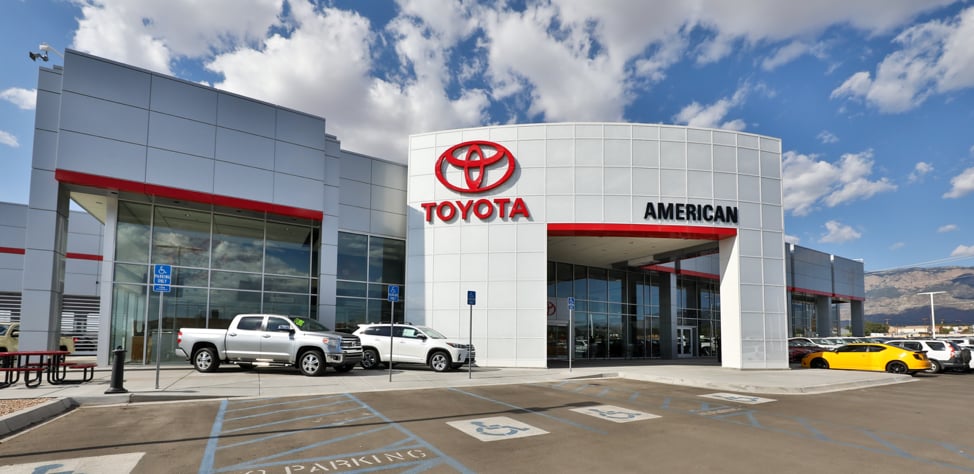
Japanese automakers like Toyota are well-known for making cars that last a long time with minimal issues. Models like the Corolla and Prius are known for being dependable and easy on the wallet when it comes to repairs. The Corolla, in particular, has been one of the best-selling cars for decades. It holds that position not just because of its price tag, but because of its legendary dependability.
Toyota completely avoids the most expensive models list, and along with many Toyota models, other nameplate vehicles hold close to the Prius’s low-cost lead. That consistency across an entire lineup is rare. Most brands have a few reliable models mixed in with problem-prone ones. Toyota’s entire catalogue trends toward low maintenance costs.
Another major advantage is Toyota’s hybrid technology. The Prius has been on the market for over two decades, and the hybrid system has been thoroughly tested and refined. Maintenance costs for Toyotas are estimated to be just $2,290 over a six- to ten-year time frame, the lowest of any automotive brand. That figure alone should speak volumes about what Toyota ownership actually means for your long-term budget.
Resale value also plays a role in the ownership equation. Toyota holds its value better than almost any other brand. If you decide to sell after ten years, you will recover a higher percentage of your purchase price. Combined with low maintenance costs, Toyota makes financial sense at every stage of ownership. It is the benchmark against which every other brand on this list is measured.
2. Honda
Honda is the closest rival to Toyota in the long-term maintenance cost race. Year after year, Honda vehicles rank among the most affordable to own and operate. From the humble City sedan to the popular Amaze and the globally beloved Civic, Honda builds cars that are designed to last with minimum fuss.
Honda ranks among the five cheapest brands to maintain, costing under $7,000 over 10 years. Consumer Affairs calculates that Honda’s average maintenance cost per year is around $428, compared to Toyota’s $441. The difference between the two brands is so small that it largely comes down to personal preference. Both offer exceptional long-term value that far outpaces most of the competition.
Vehicles like the Honda Civic and Honda Accord are known for their durable engines and for not needing much in the way of repairs. Hondas generally have lower-than-average repair bills, and their parts are widely available, which can mean lower labor costs. In India, this part’s availability is particularly valuable. Whether you are in a metro city or a smaller town, Honda spares and service centres are easy to find.
Honda has a reputation for building engines made to last well beyond general expectations. With proper maintenance, Honda CR-Vs often reach 250,000 to 300,000 miles before needing major work, and many have been known to pass 350,000 miles. These are extraordinary numbers that very few brands can match. The engineering philosophy at Honda prioritises longevity above everything else.
The Honda Accord is a midsize sedan that customers often compare to vehicles from premium brands such as Audi. What impresses people about this car is how smooth the drive is. If you keep up with regular maintenance, it’s not unheard of for an Accord to last 300,000 miles.
Getting near-luxury driving experience at non-luxury maintenance costs is Honda’s core promise. It is one that the brand has consistently delivered on for over fifty years.
Honda’s engineering philosophy emphasises simplicity and durability above complexity. The brand resists the temptation to over-engineer its powertrains. Simpler mechanics mean fewer failure points, lower parts costs, and mechanics who can diagnose and fix problems quickly without needing expensive specialised tools.
Honda’s average maintenance cost over a six- to ten-year span is just $2,580, making it one of the most cost-effective choices on the market. For families who depend on a vehicle for daily commuting, school runs, and occasional long-distance travel, Honda provides exactly the kind of stress-free, budget-friendly ownership experience that makes life easier. It is a brand you can buy with confidence and drive without worry.
3. Buick
Buick might not be the first name that comes to mind when thinking about cheap maintenance. It is a luxury-adjacent American brand with a premium image. However, the numbers from Consumer Reports tell a surprisingly different story. Buick is consistently one of the most affordable brands to maintain over a full decade.
Consumer Reports’ 2025 Annual Auto Surveys show Buick owners spend an average of $1,160 in the first five years and $4,100 in the next five, totalling $5,260 over a decade. Lincoln follows at $5,620, and Toyota at $5,950. That places Buick right at the top of the most affordable brands list, ahead of even Toyota in some studies. For a brand with a luxury image, that is a remarkable achievement.
Buick came second in J.D. Power’s ranking of the most reliable U.S. car brands for 2025. Being a domestic U.S. brand helps to keep repair costs lower, as parts are widely available and service networks are well established.
This combination of brand reliability and domestic supply chain efficiency creates a low-cost ownership environment that buyers rarely anticipate when they purchase a Buick.
The secret behind Buick’s low maintenance costs lies in its parent company, General Motors. Buick shares many components, platforms, and service infrastructure with other GM vehicles like Chevrolet. This shared parts ecosystem keeps individual component costs down significantly. When a part needs replacing, you are not dealing with rare imports or limited supply chains.
Buicks were known to be durable and dependable. The Buick Verano, for example, delivers a relatively low repair cost burden. According to RepairPal, its average annual repair cost is quite modest, and major failures are uncommon. The brand’s entire philosophy leans toward quiet reliability rather than flashy performance. Fewer high-stress components mean fewer things that can go wrong over time.
Buick also has a strong warranty programme that covers vehicles for an extended period. During the first several years of ownership, most repair costs are absorbed entirely by the manufacturer. This pushes the ten-year cost even lower when factoring in the protection that comes standard with every new Buick vehicle.
For buyers who want a touch of luxury without paying luxury maintenance bills, Buick is a genuinely smart choice. The interiors are well-appointed, the ride quality is refined, and the long-term cost of ownership is impressively competitive. It is one of the best-kept secrets in the automotive world, a brand that gives you more comfort for less money over the long run.
4. Hyundai
Hyundai’s rise from a budget-focused economy car maker to a respected global automotive player has been one of the industry’s most notable transformations. Today, Hyundai vehicles are not only well built but also among the most affordable to maintain over the long term. The brand has built its reputation through steady and sustained investment in quality and reliability.
The Hyundai Elantra Hybrid, with its combined 58 MPG rating, features Hyundai’s above-average reliability. The cost to maintain this car brand for up to 10 years is just $2,655, far below the average for the market. For a car that also delivers exceptional fuel economy, those combined savings make Hyundai one of the smartest value propositions available to buyers today.
Toyota, Tesla, Honda, and Hyundai all top the reliability charts, and after year five, when most warranties expire, costs for less reliable brands often triple or quadruple. Hyundai’s engineering has evolved to ensure that the post-warranty years do not become a financial nightmare for owners. This represents a significant shift from the brand’s earlier reputation and reflects years of dedicated manufacturing improvements.
Hyundai offers one of the most generous warranty packages in the entire automotive industry. In many markets, the brand provides a five-year or 100,000-kilometre bumper-to-bumper warranty, along with a ten-year or 160,000-kilometre powertrain warranty. This coverage means that for a significant portion of the vehicle’s life, repair costs are essentially zero for the owner.
In India, Hyundai is already one of the best-selling brands, with models like the Creta, Verna, i20, and Grand i10 dominating their respective segments. Service centres are available in virtually every major city and district town across the country. Labour rates are reasonable, and parts costs are kept manageable thanks to Hyundai’s large-scale local manufacturing operations in Chennai.
Hyundai has also invested heavily in modern turbocharged petrol engines and diesel engines that are designed for both efficiency and longevity. When these engines are serviced at regular intervals, they routinely reach high mileages without requiring major internal work. The brand’s SmartStream engine family, in particular, has received strong reviews for durability.
The combination of a reliable product, an outstanding warranty, a widespread service network, and affordable parts pricing makes Hyundai one of the top choices for budget-conscious car buyers. Over a decade, the financial advantage of owning a Hyundai has become increasingly clear. It is a brand that rewards loyal owners who stick with it for the long haul.
Also Read: 8 Best Motorcycles For Two-Up Riding With A Passenger
5. Kia
Kia and Hyundai share the same parent company, which means they also share many of the same engineering and reliability benefits. However, Kia has carved out its own distinct identity with bolder styling, modern interiors, and a product lineup that appeals to younger buyers. What many of those buyers may not realise is that Kia also happens to be one of the cheapest brands to maintain over time.
The brands that dominate the cheapest-to-maintain conversation, Toyota, Honda, and increasingly Hyundai and Kia, are popular because owners actually save money. Parts are affordable, repairs are straightforward, and labour costs are reasonable because mechanics are not spending hours decoding proprietary systems just to perform basic work. That accessibility to standard service is one of Kia’s greatest long-term ownership advantages.
Kia’s warranty programme is one of the best in the business. In many global markets, including India and the United States, Kia offers coverage that extends well beyond what most competitors provide. This means that during the most critical first few years of ownership, when issues are most likely to appear, the financial exposure for the owner is significantly minimised.
The Kia Seltos has become one of India’s best-selling compact SUVs, and for good reason. It combines a strong feature set with practical reliability.
Owners across the country have reported positive long-term ownership experiences, with few major mechanical surprises even at higher mileages. The Carens, Sonet, and EV6 have all attracted similar praise.
Kia’s parts-sharing arrangement with Hyundai also means that the parts ecosystem is large and competitive. Many components are interchangeable between the two brands, which keeps pricing from rising due to scarcity. Independent workshops can often service Kia vehicles using widely available tools, which expands your service options and keeps labour costs competitive.
Asian imports, including Kia, are among the least expensive cars to maintain. Along with other compact and mid-sized models from Japanese and Korean brands, Kia’s Soul holds close to some of the lowest cost maintenance averages available.
The brand’s focus on practical, well-engineered vehicles rather than complexity for complexity’s sake keeps ownership costs manageable year after year.
Kia has also made significant strides in build quality over the past decade. Earlier perceptions of the brand as a maker of entry-level, throwaway vehicles have been replaced by a strong reputation for solid, well-finished products.
When a brand improves its build quality while maintaining low parts and service costs, the result is a compelling long-term value proposition that is hard to argue with.
6. Mazda
Mazda occupies a unique position in the automotive market. It offers vehicles with near-premium interiors, a sporty and refined driving experience, and a product philosophy that emphasises human-centred design.
Despite these raised aspirations, Mazda is consistently ranked among the most affordable brands to maintain over a decade. It is arguably the best value secret in the global car market.
Mazda’s 10-year maintenance cost averages $8,035 across its lineup, which places it competitively among the cheapest brands to maintain. For a brand that competes directly with near-luxury vehicles in terms of interior quality and driving dynamics, that cost figure is genuinely impressive. You are getting a lot of refinement for a reasonable long-term price.
The Mazda MX-5 Miata is proclaimed as the best-selling roadster of all time. If maintained properly, the 2.0-litre engine can reach up to 250,000 miles without internal system repairs, and in some cases, 300,000 miles for cars driven more frequently.
That extraordinary engine longevity is a product of Mazda’s signature engineering philosophy. The brand obsesses over getting fundamental components absolutely right.
Mazda added more advanced features in later models but kept its focus on mechanical durability, helping its vehicles maintain a reputation for being reliable and low-maintenance. Consumer Reports predicted reliability for the 2025 Mazda MX-5 Miata as 83 out of 100 on the Mazda brand score. That is an exceptional number that places Mazda among the elite tier of reliable automakers worldwide.
In India, Mazda is less common than Toyota or Hyundai, but the brand has a loyal following among enthusiasts who appreciate its SkyActiv engine technology. This system is designed to extract maximum efficiency from naturally aspirated petrol engines, reducing fuel consumption and mechanical stress simultaneously. Less stress on the engine means a longer service life and fewer costly repairs.
Mazda’s SKYACTIV technology also means that routine maintenance intervals are straightforward and predictable. Oil changes, brake inspections, and tyre rotations follow a logical schedule. There are no exotic fluid requirements or unusual service procedures that would require a specialist and inflate your maintenance bill unnecessarily.
Mazda is an automaker that regularly matches the quality of other Japanese brands, even though it often gets overlooked when it comes to reliability discussions.
That underappreciation actually works in the buyer’s favour. Mazda vehicles often carry lower resale prices than Toyotas and Hondas in the used car market, meaning you can acquire a highly reliable vehicle at a better initial price point. Combined with low running costs, the total financial advantage of owning a Mazda over a decade is very significant.
7. Mitsubishi
Mitsubishi is perhaps the most underrated brand on this list. It rarely tops the headlines or dominates conversations about reliability, but the data tells a compelling story.
Mitsubishi is one of the cheapest car brands to maintain, and it backs that up with one of the best warranty programmes in the industry. For buyers who want genuine long-term value, Mitsubishi deserves serious consideration.
The average Mitsubishi costs just $7,787 to keep running over a decade. While that’s nearly $2,000 more than Toyota, Mitsubishi joins Honda as one of only three nameplates with 10-year maintenance costs under $8,000.
Breaking into that elite sub-$8,000 club is a significant achievement that very few brands manage. It confirms that Mitsubishi ownership is genuinely one of the most affordable options available over the long term.
Mitsubishi is often overlooked, but it’s a surprisingly affordable option when it comes to maintenance. The Mitsubishi Mirage is a great example of a low-maintenance, budget-friendly car that’s easy to keep running without breaking the bank.
In markets where fuel economy and minimal running costs are priorities, the Mirage remains one of the most financially sensible vehicles available anywhere.
Mitsubishi vehicles combine modern styling, practical technology, and time-tested engineering to create one of the most value-driven options on the market.
Most vehicles perform consistently well beyond the 100,000-mile mark, and parts and service costs are lower than those of many competitors. The brand’s focus on practical, no-nonsense vehicles keeps the ownership experience simple and affordable for everyday drivers.
Models like the Mirage and Outlander are built with high-tensile steel frames that increase body rigidity and reduce long-term flex or wear in the chassis.
Even the compact Mirage uses durable materials in its suspension and underbody components to withstand potholes, curbs, and general wear from daily commuting. These structural choices reflect a brand that genuinely thinks about long-term durability rather than just short-term cost-cutting.
Mitsubishi has shown periods of strong performance in quality studies, ranking sixth and highest among Japanese brands in the 2020 Initial Quality Study.
It was placed fourth among mass-market brands in the 2023 U.S. Vehicle Dependability Study, even outperforming Toyota in that specific year. These rankings demonstrate that Mitsubishi’s reliability improvements are real and consistent, not just a single-year anomaly.
Mitsubishi cars are considered affordable to maintain, with lower-than-average repair costs. Oil changes, basic maintenance, and routine service stay pretty budget-friendly compared to competitors.
In India and Southeast Asia, where Mitsubishi has a strong presence with models like the Outlander and the Eclipse Cross, this affordability is a key reason why buyers continue to choose the brand for their second and third car purchases.
The Mitsubishi warranty is another important factor. In many markets, the brand offers five-year warranties that provide genuine peace of mind during the most ownership-critical period.
Combine that warranty coverage with naturally low repair frequency and affordable parts, and you have a brand that can genuinely compete with much more celebrated names on the long-term cost-of-ownership scorecard.
