
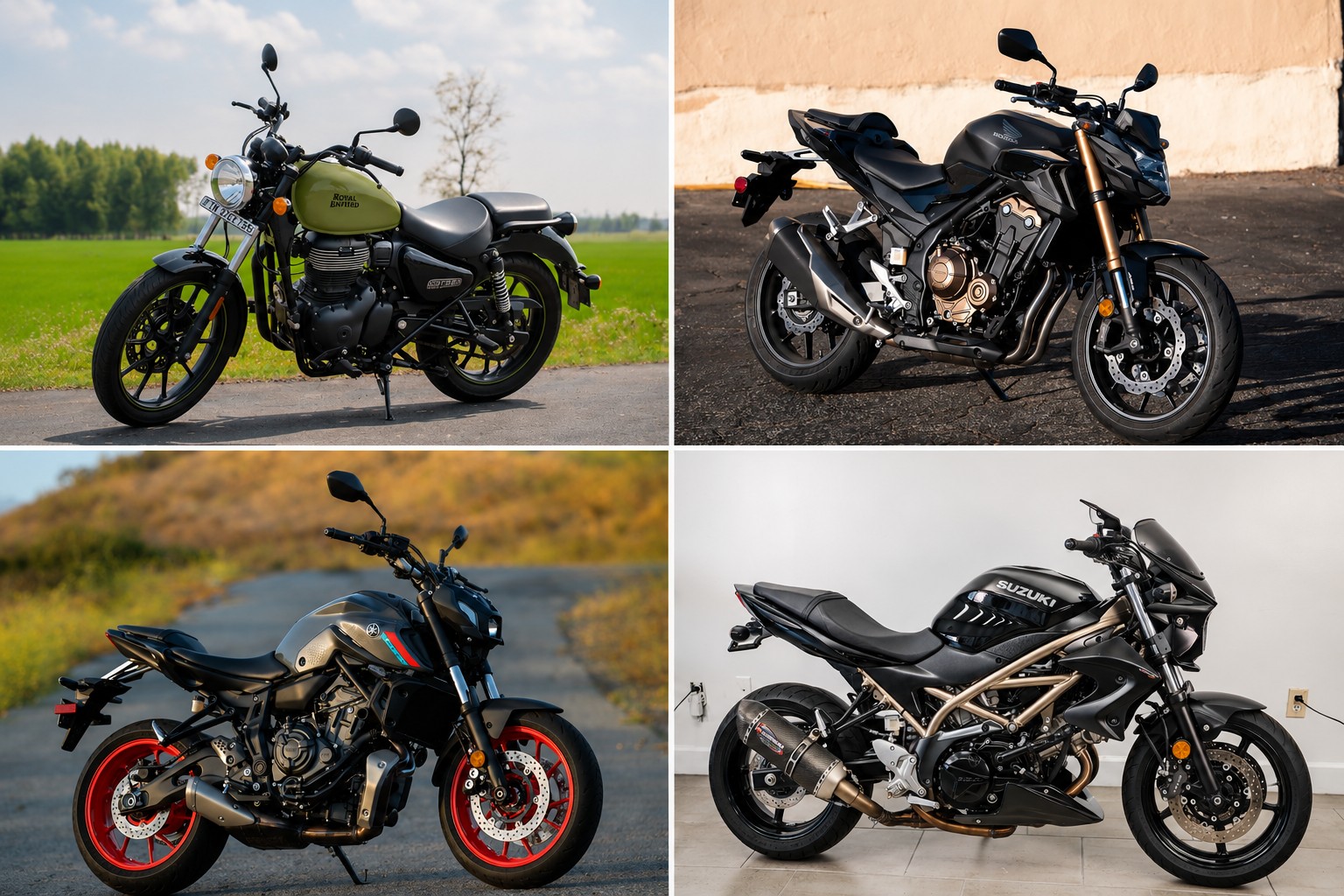
Choosing a motorcycle goes beyond selecting a machine. It is a commitment to the freedom and experiences that come with life on two wheels. A dependable bike starts reliably on cold mornings and keeps going when the road takes you far from home. More than any other trait, reliability defines the ownership experience. It influences whether your time is spent enjoying the ride or dealing with unexpected repairs and workshop visits.
The global motorcycle market is flooded with options. Every manufacturer promises the world in its brochures, but the truth shows up after 20,000 miles and a few hard seasons. Reliability is built into engines through decades of engineering refinement, not just marketing promises. It lives in tolerances, metallurgy, and service intervals that a brand has tested and retested over generations.
Some motorcycles have earned their reputations through sheer endurance. They have been ridden across continents, used as daily commuters, and handed down from one owner to the next with little more than oil changes in between. These machines tend to come from manufacturers who have been at it long enough to eliminate their mistakes.
This article covers seven of the most dependable motorcycles available today. Each one has been selected based on long-term owner feedback, professional reviews, engineering pedigree, and real-world track records. Whether you are a beginner rider or a seasoned veteran, these are the motorcycles that will show up for you every single time.
1. Honda CB500F
When people talk about reliable motorcycles, the Honda CB500F comes up almost immediately. It has built a reputation so solid that it almost seems unfair to every other bike in its class. Honda set the standard for what a practical, dependable naked motorcycle should look like, and the CB500F continues to carry that torch with quiet confidence.
At the heart of this machine is a 471cc parallel-twin engine built around a dual overhead cam design. Honda describes it, and few would argue, as “famously reliable.” This engine delivers strong low-end torque alongside high-rpm horsepower, making it equally at home in city traffic and on open highways. It is not about wild power figures here. It is about smooth, predictable energy that the rider can trust every single day.
The 2024 and 2025 updates brought meaningful improvements without changing what made the CB500F great. Honda added a five-inch TFT display with three selectable layout designs. Honda Selectable Torque Control joined the package as standard, offering riders more confidence on wet or loose surfaces. An ECU revision also improved acceleration feel by refining the air/fuel ratio and ignition timing, making the throttle response noticeably crisper.
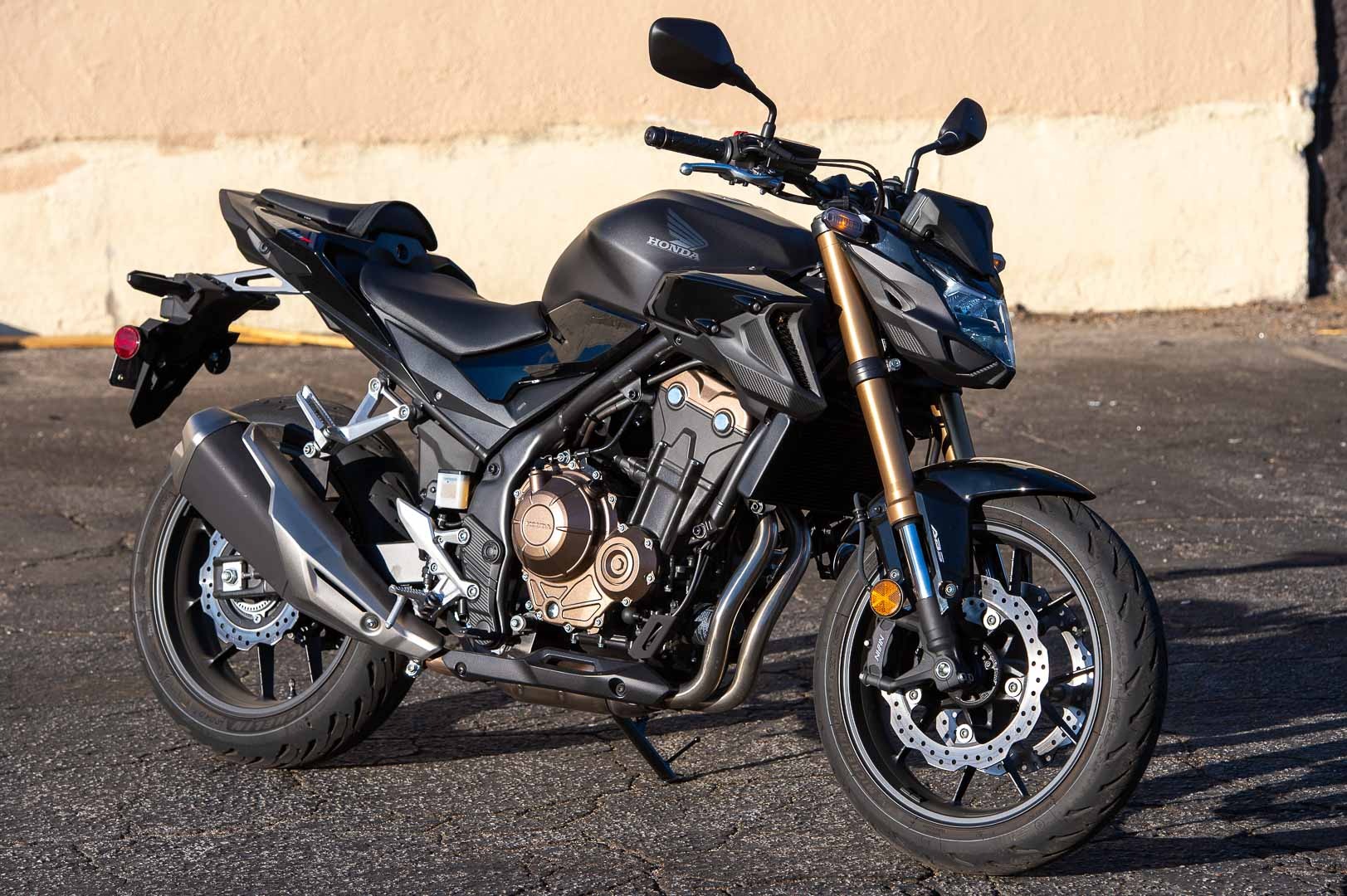
The CB500F sits on a compact, lightweight chassis that gives it genuinely nimble handling. The front end uses a 41mm inverted Showa Separate Function Fork with Big Piston technology, which provides the rigidity needed for precise steering and strong front-end feedback. These are not budget components thrown together to hit a price point. They are proper, quality hardware that punches well above the bike’s entry-level price.
Honda also fitted a slipper clutch to the CB500F. This reduces lever pull effort by 45 percent and prevents rear-wheel hop during hard deceleration. Standard ABS provides confident stopping power across a wide range of road conditions. The whole package is engineered to reduce the chances of rider error translating into disaster.
The CB500F weighs around 414 pounds with a full tank of fuel. It’s 49.7/50.3 front-to-rear weight bias promotes nimble handling and excellent front grip. The seat height and ergonomics make it approachable for newer riders while still offering enough depth to keep experienced riders entertained. It does not scare anyone away, yet it never bores anyone either.
From a maintenance perspective, the CB500F is generous with its service intervals and forgiving with its engine internals. Parts are widely available. Dealer networks are dense. Running costs remain low across the ownership period. It is a bike you can buy, ride hard for years, and sell on without a single dramatic repair bill.
The CB500F costs around $6,899 in the United States, a reasonable value given the engineering quality on offer. In a world where motorcycle prices keep climbing, it remains one of the best-value reliability packages available. It is the kind of bike that makes you wonder what more you could possibly need.
2. Yamaha MT-07
Yamaha has sold more than 200,000 MT-07s since its introduction in 2014. That figure alone says something powerful about how this motorcycle is perceived. You do not accumulate that kind of sales volume without building something that genuinely works. The MT-07 is proof that a middleweight naked motorcycle can be exciting and dependable without compromise.
The CP2 engine, Yamaha’s 689cc parallel-twin, is the soul of this machine. It has been deployed across multiple platforms in the Yamaha range, from the Ténéré 700 adventure bike to the XSR700 retro and the Tracer 7 tourer. The fact that Yamaha trusts this engine across so many different bikes tells you everything about its robustness. It has been tested by millions of riders in every conceivable condition, and it keeps passing.
The 2025 MT-07 received its most significant generational update yet. Yamaha overhauled the chassis with a stiffer tubular steel frame, new suspension, new wheels, and radial-mounted brakes. A proper inverted fork joined the package for the first time on this generation.
Despite this more structural build, the bike actually lost three pounds over its predecessor, coming in at 403 pounds curb weight. That is engineering confidence.
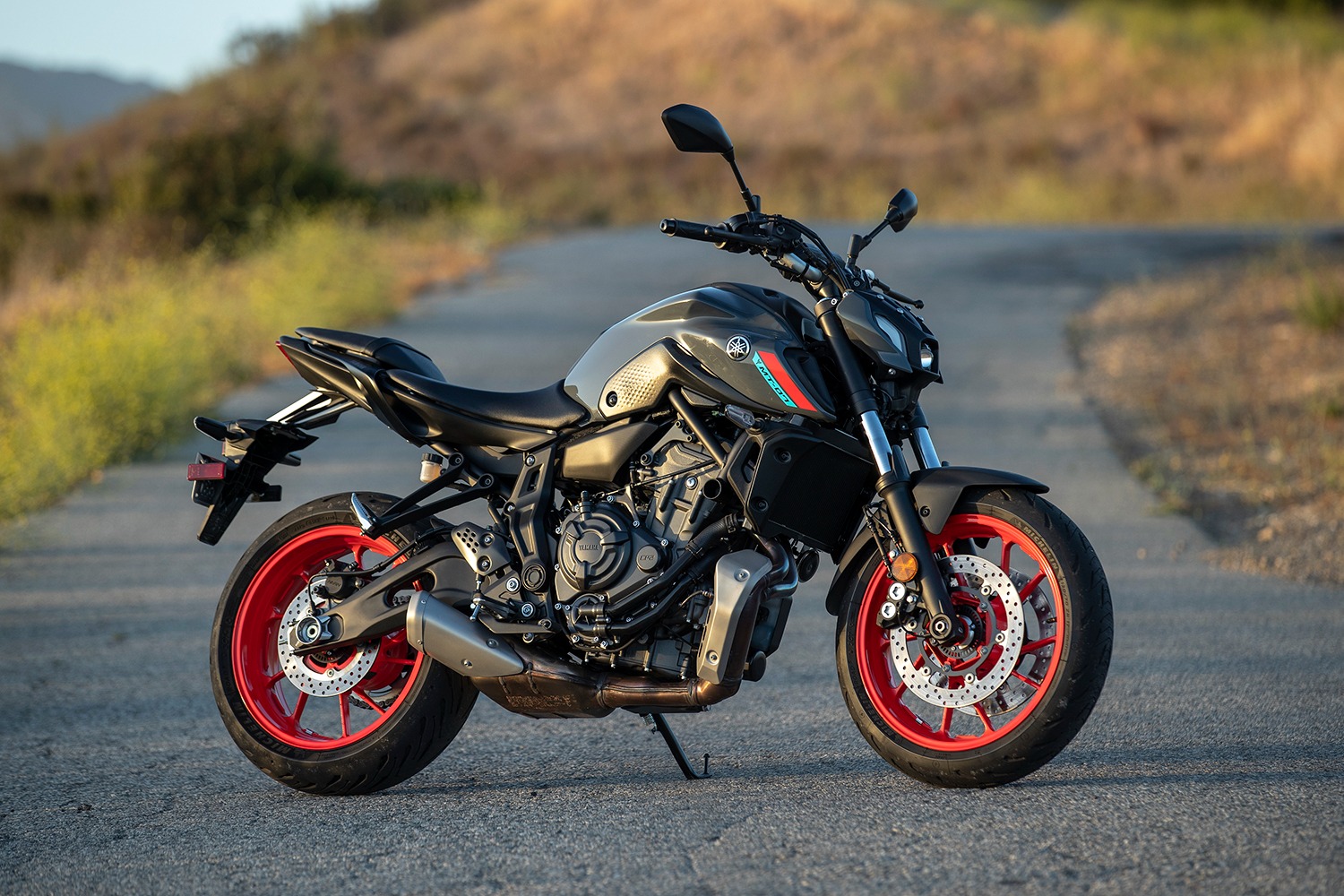
Ride-by-wire throttle technology arrived on the MT-07 for 2025. This is Yamaha’s YCC-T system, and it delivers sharp, precise throttle response without any artificial delays or digital snatchiness.
Riders who tested it described the response as smooth and clean from the bottom of the rev range all the way up. The electronic connection between hand and wheel feels immediate and honest.
The 2025 model also introduced a five-inch TFT dashboard, different power modes, and an optional Yamaha Automated Manual Transmission. The Y-AMT system adds a semi-automatic gearbox option for riders who want a different experience. At just £350 more than the standard model in the UK market, it makes the MT-07 accessible to an even wider range of riders without alienating the traditionalists.
One area where the MT-07 has drawn mild criticism is cosmetic build quality. Owner surveys for the 2021–2024 models show a collective rating of 3.6 out of 5 for reliability and build quality, with most complaints aimed at corrosion resistance on surface finishes rather than mechanical concerns.
The engine itself has an outstanding reputation for robustness and longevity. Service intervals arrive every 6,000 miles, with valve clearances checked at 24,000 miles, a manageable schedule for any serious rider.
The MT-07 holds its value remarkably well, largely because of its widespread popularity and strong demand in the used motorcycle market. Purchasing one is more than a practical way to get around. It is also a smart financial choice. In the United States, the 2025 model carries a starting price of $8,599, which is $400 higher than the 2024 version. Even so, the improvements introduced with the latest model make the price increase easy to justify.
This is a motorcycle that improved without losing the character that made people fall in love with it in the first place. The MT-07 captured 30 percent of European sales in its sector in 2024, and for very good reason.
3. Suzuki SV650
Few motorcycles in history have earned the kind of devotion that surrounds the Suzuki SV650. It has been in production in various forms since 1999, and it has spent every one of those years winning over riders with its dependability and honest character. This is not a bike chasing trends. It is a motorcycle that found the right formula early and has been refining it ever since.
The engine at the centre of the SV650 is a 645cc 90-degree V-twin. This configuration is celebrated for its torque delivery and the strong engine braking that makes the bike feel alive and connected on twisty roads.
The power band comes alive between 5,000 and 9,000 rpm, with a lively surge that feels genuinely exciting without overwhelming newer riders. It is not the most powerful motor in the segment, but real-world usefulness was never about peak horsepower alone.
The SV650’s reliability record is remarkable even by Japanese motorcycle standards. Many owners report trouble-free operation beyond 50,000 miles with routine maintenance.
Some have ridden coast-to-coast tours, daily commuted for a decade, and even taken the bikes to track days all on their original engines. Multiple forum accounts document owners surpassing 100,000 miles without needing major mechanical intervention. That kind of longevity is extraordinary.
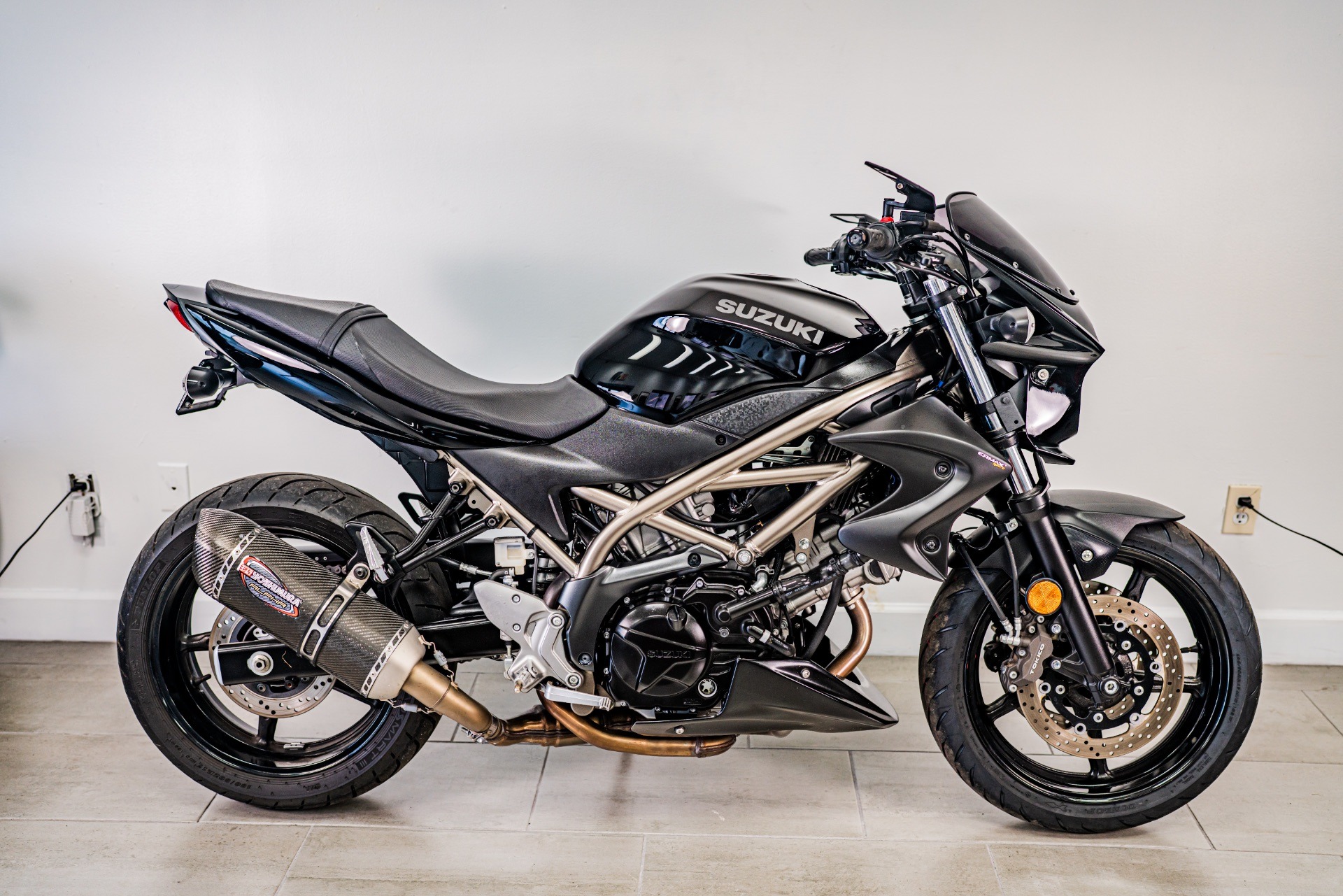
One major contributing factor to this track record is that the SV650 has remained largely unchanged in fundamental engineering. The last major update was in 2016, which sounds like a weakness but is actually a strength.
Years of production mean years of refinement and problem elimination. Parts are cheap, widely available, and easy to source globally. Mechanics everywhere know this engine. Roadside assistance in remote areas is far less stressful when parts can be found at almost any motorcycle shop.
At an MSRP of $7,949 for the 2025 ABS model in the United States, the SV650 offers remarkable value. The acquisition cost is low. The running costs are lower. Insurance is friendly.
And the bike has proven over and over that it will hold its value better than more exotic alternatives. This is a motorcycle you buy once and ride for a very long time, and that is exactly the point.
4. Kawasaki Z650
The Kawasaki Z650 shares its core 649cc DOHC parallel-twin engine with the company’s long-running Ninja 650, a platform that has been continuously developed since its introduction in the mid-2000s.
That shared heritage matters enormously. Kawasaki has had well over a decade to understand every weakness, every failure mode, and every opportunity for improvement in this engine. What you get in the Z650 is a powertrain that has been thoroughly proven in the real world.
The Z650 is built around Kawasaki’s philosophy of accessible performance. The engine is tuned specifically to deliver strong, smooth power in the low-to-mid range, exactly where street riding happens most of the time.
This tuning approach keeps the motor under less stress during everyday riding and contributes directly to long-term reliability. Engines that are constantly pushed to their limits wear out faster; engines designed to operate comfortably in their normal working range last longer.
The chassis is built around an exposed trellis frame in high-tensile steel. This frame configuration combines lightness with rigidity, giving the Z650 excellent handling characteristics without adding unnecessary weight.
The curb weight sits at 412 pounds for the non-ABS model, making it one of the lighter bikes in its middleweight class. A lighter motorcycle is easier to manage, easier on tyres, and generally easier on its own components over time.
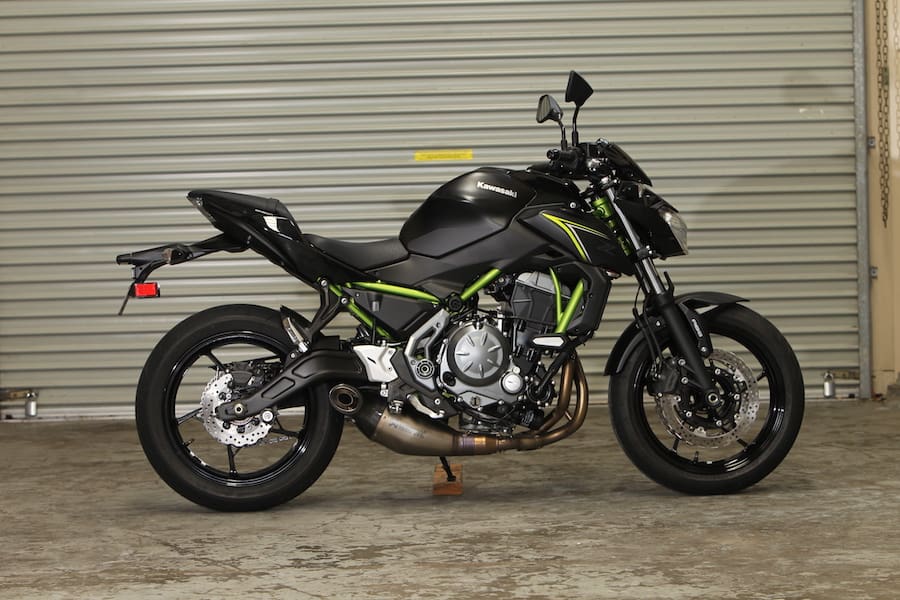
For 2025, Kawasaki fitted the Z650 with the KTRC system, a traction control system, as standard equipment. Full LED lighting was added across the entire motorcycle. The 4.3-inch colour TFT display gives the cockpit a modern, high-tech appearance with selectable background colours and automatic brightness adjustment.
Smartphone connectivity through Kawasaki’s Rideology app rounds out the technology package, allowing riders to track trip data and monitor vehicle information from their phones.
The Z650’s suspension setup does not offer extensive adjustability. Only the spring preload is available at the rear. However, Kawasaki engineered the spring and damping rates carefully from the start, resulting in a chassis that handles both smooth canyon roads and imperfect urban pavement with equal composure across a range of rider weights.
It is a case of getting the fundamentals right rather than relying on adjustability to compensate for poor base setup. Braking comes from dual 300mm front discs clamped by twin-piston slider calipers, complemented by a 220mm rear disc with a single-piston caliper.
The machine has been debugged, refined, and validated through years of real-world use. Service intervals are reasonable, parts availability is excellent, and the Kawasaki dealer network is extensive in most major markets. For riders who want reliable, exciting performance without paying a premium for experimentation, the Z650 delivers exactly that.
Also Read: 8 Most Popular Cars by Decade (1950s to 2020s)
5. Royal Enfield Meteor 350
The Royal Enfield Meteor 350 occupies a unique space in the motorcycle world. It is not chasing performance records. It is not loaded with the kind of electronic rider aids that require a manual to understand.
What it does offer is a thoughtfully engineered, beautifully executed cruiser that is accessible, comfortable, and built to last across years of riding. For its intended audience, this is arguably the most complete motorcycle on the market today.
Powering the Meteor 350 is a 348cc single-cylinder engine that produces 20.2 bhp and 27 Nm of torque. Those numbers do not sound dramatic, but they suit the Meteor’s character perfectly.
The engine delivers strong low-end torque with minimal vibration, a significant departure from older Royal Enfield engines that were notorious for their harshness. Highway cruising at 90 to 100 kmph is genuinely relaxed. The motor does not feel strained. There is no constant buzzing through the handlebars.
Long-term owner reviews speak consistently about the engine’s refinement and dependability. Owners who have ridden beyond 20,000 kilometres describe the Meteor as dependable and enjoyable throughout the experience.
Multiple long-term reviewers have taken the bike on 1,000-kilometre single-day rides and come away impressed by its endurance. That level of sustained performance from a budget-tier cruiser is something that could not have been said about older Royal Enfield products.
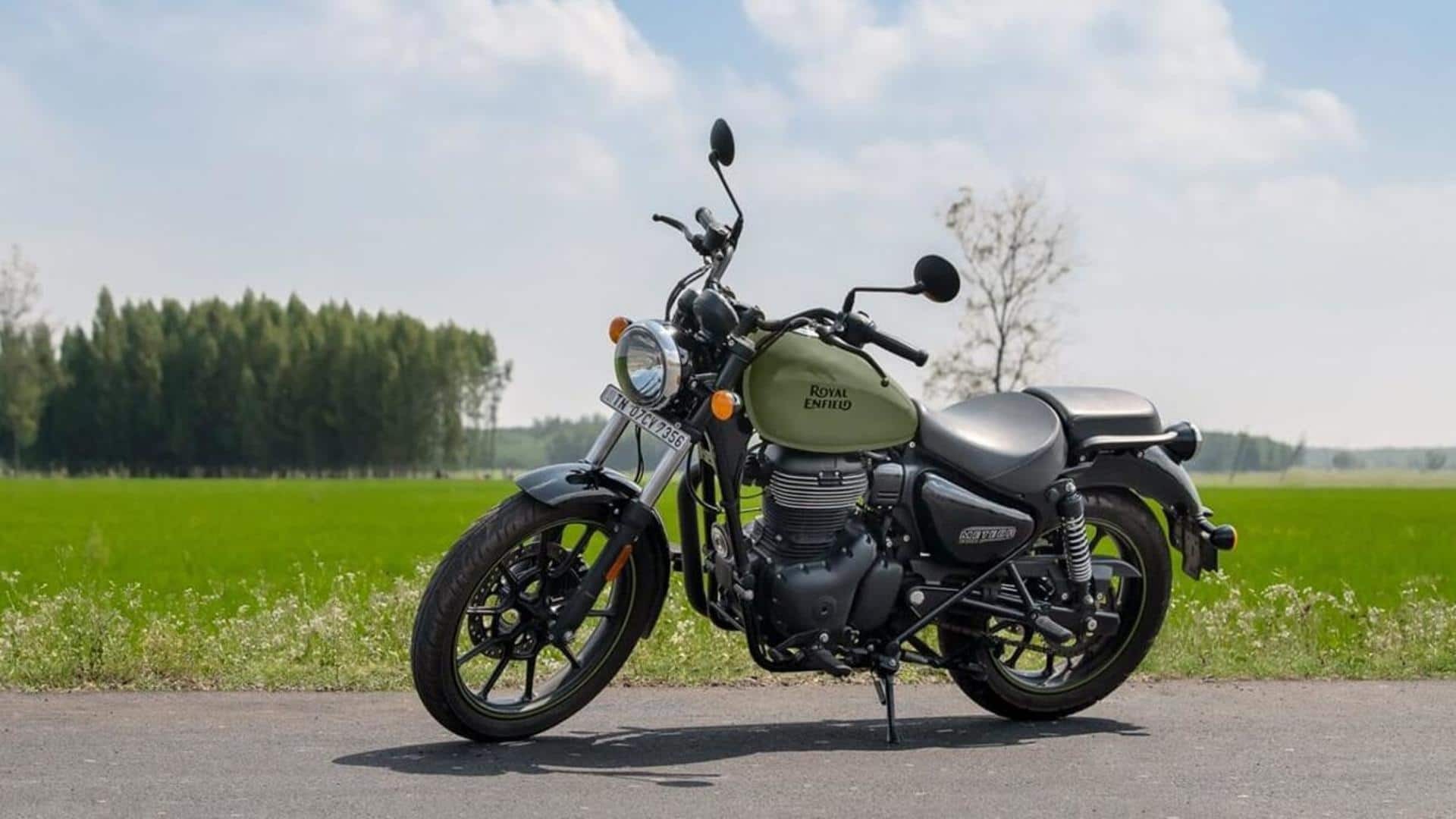
The chassis uses a twin-downtube steel spine frame that offers stability and a confidence-inspiring ride on both city streets and moderate highway speeds.
A 41mm front fork and twin tube emulsion rear shocks with soft settings soak up road imperfections extremely well. The Meteor prioritises comfort over sporting handling, and it delivers on that promise consistently. Riders in markets with rough road surfaces, including large parts of India where the bike sells in enormous volumes, report strong satisfaction with how the suspension manages poor asphalt.
The Meteor 350 starts at around $4,599 in the United States, making it among the most affordable bikes on this list. Reliability and simplicity are its core propositions. This is a motorcycle designed to be ridden, serviced cheaply, and trusted completely. Royal Enfield has genuinely transformed its engineering quality in recent years, and the Meteor 350 is the clearest proof of that transformation.
6. Yamaha Ténéré 700
The Yamaha Ténéré 700 borrows its heart from the same CP2 engine family that powers the MT-07. This 689cc parallel-twin has proven its robustness in road applications, and Yamaha then took that proven powertrain and placed it inside an adventure-ready chassis designed for some of the world’s most demanding riding conditions.
The result is a motorcycle that can handle whatever the rider throws at it, from motorway miles to rocky mountain passes, without complaint. The Ténéré 700 was introduced in 2019 following years of anticipation from the adventure riding community.
Yamaha had been developing the concept for an extended period, testing the platform extensively before releasing it to market. This careful development approach paid off. The T7, as it is affectionately known, arrived already refined, without the teething problems that often afflict new motorcycle platforms in their early years.
The engine in the Ténéré 700 is tuned differently from its roadster siblings. It emphasises low-down torque and mid-range pulling power rather than top-end excitement.
This characteristic makes it ideally suited to technical off-road terrain where smooth, controllable power is more valuable than peak horsepower. The motor pulls cleanly from very low revs, allowing riders to manage their speed precisely on loose or uneven surfaces without constantly working the gearbox.
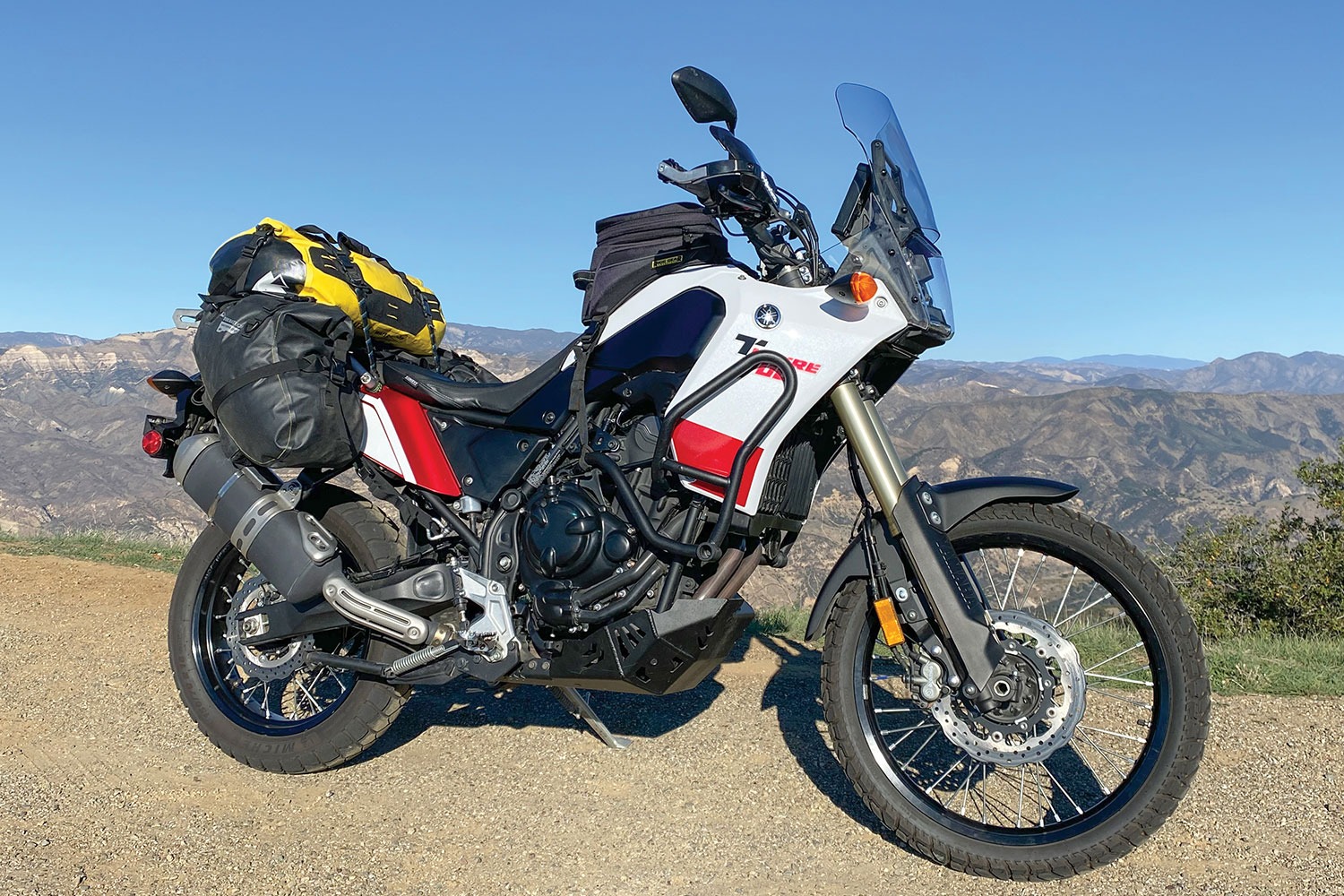
The suspension setup on the Ténéré 700 is built for genuine off-road use. Long-travel, fully adjustable KYB forks sit up front. A link-type rear suspension unit provides comparable travel at the back.
Ground clearance is impressively generous, allowing the bike to tackle rough terrain with confidence. Its 21-inch front wheel can roll over obstacles that would challenge or even halt a smaller 17-inch wheel. Rather than merely adopting the appearance of an adventure tourer, this machine is built with genuine off-road capability while still delivering strong performance and comfort on paved roads.
Two riding modes, Road and Off-Road, allow the rider to adjust the traction control intervention to suit the surface. The Off-Road mode allows a meaningful amount of wheel slip before intervening, which is exactly what skilled dirt riders need.
The Road mode provides tighter control for highway use. Both modes keep the experience natural and unobtrusive rather than feeling like electronic interference.
Pricing for the Ténéré 700 sits around $9,999 to $10,499, depending on the market and variant. Yamaha has produced a World Rally Edition with upgraded components for riders wanting to push the off-road performance further. The standard version, however, is more than capable for the vast majority of adventure riders, and its reliability in that role is essentially unmatched at its price point.
7. Honda Gold Wing
The Honda Gold Wing is one of the most extraordinary motorcycles ever made. It has been in production since 1975, and it has spent every decade since becoming more refined, more comfortable, and more dependable.
Very few machines of any kind can claim half a century of continuous production and improvement. The Gold Wing has earned its status not through marketing but through an unbroken record of real-world performance.
The engine at the core of the Gold Wing is a 1,833cc horizontally opposed six-cylinder unit. This flat-six configuration is celebrated for its smoothness, its balance, and its outright power.
It produces 125 horsepower at 5,500 rpm with peak torque arriving at 4,500 rpm. The horizontally opposed layout keeps the engine mass low in the chassis. This is part of why the Gold Wing handles so much better than its considerable weight suggests.
The flat-six engine’s reliability credentials are exceptional. Honda introduced this basic engine configuration to the Gold Wing in 1988 with the GL1500, and it has been continuously refined over the decades since.
The current unit benefits from aluminium cylinder sleeves, an integrated starter generator system, and four valves per cylinder. Each successive generation has eliminated weaknesses, strengthened components, and improved the engineering quality. This is what decades of focused development look like in practice.
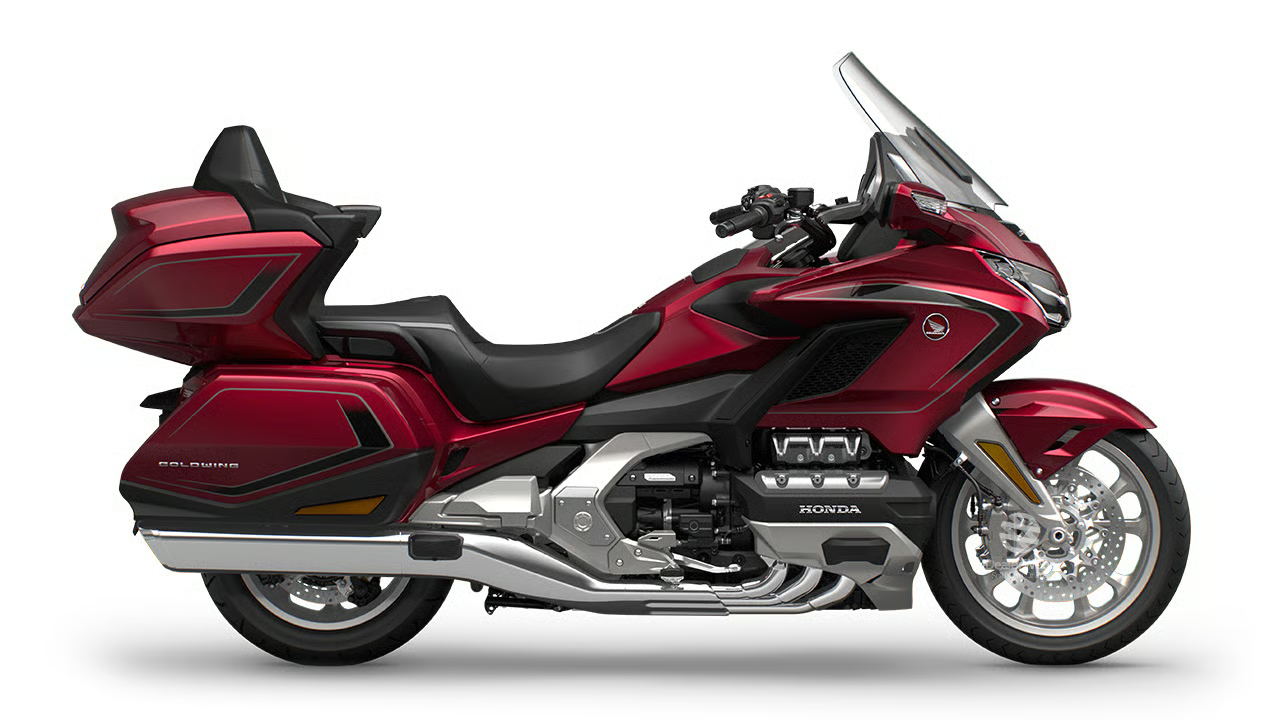
For the 2025 and 2026 model years, the Gold Wing Tour features electronic preload suspension as standard equipment. This allows the rider to adjust suspension behaviour on the fly without stopping the motorcycle.
Combined with the available Dual Clutch Transmission, a seven-speed unit that automates clutch and shift operations while retaining the feel of a manual gearbox, the Gold Wing becomes remarkably effortless over long distances. Cycle World named it the best touring motorcycle of 2025.
Technology aboard the Gold Wing is genuinely impressive. Apple CarPlay and Android Auto integration bring smartphone functionality to the dashboard. A state-of-the-art infotainment system manages navigation, audio, and communications.
An electronic windscreen adjusts at the touch of a button. The Gold Wing is also the only production motorcycle currently offered with an airbag, a detail that speaks to Honda’s commitment to occupant safety over long-distance journeys.
The acquisition cost spread across 100,000 miles of trouble-free touring looks very different from a cheaper bike that needs regular significant investment in repairs. The Gold Wing is, ultimately, one of the best long-term motorcycle investments a serious rider can make.
Also Read: 10 Tips To Make Your Truck Last Past 250,000 Miles
