
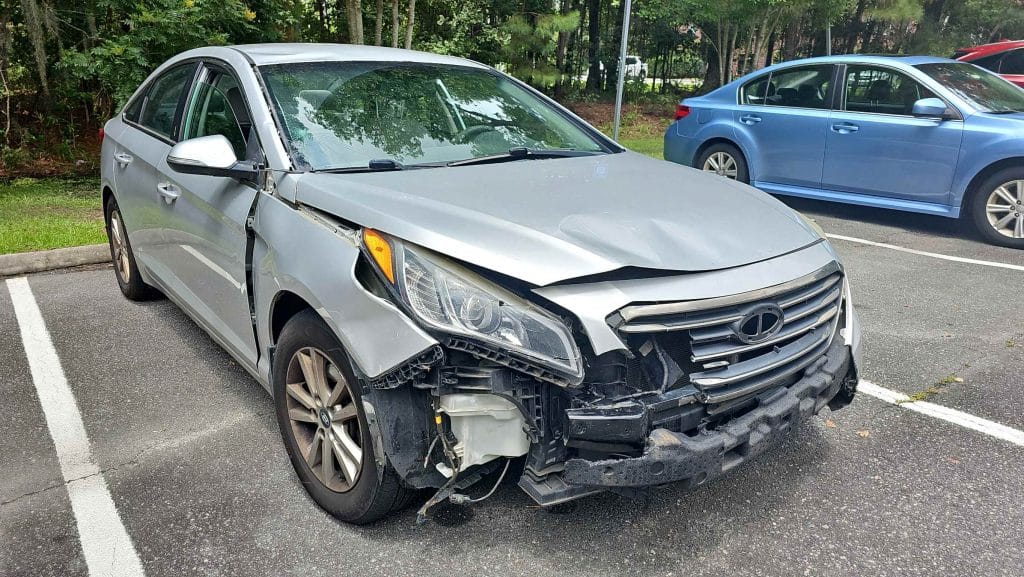
A few decades ago, a vehicle involved in a moderate collision would almost certainly be repaired and returned to the road. Bent fenders could be replaced, damaged bumpers swapped out, and body panels straightened without much debate.
Today, many vehicles are declared total losses after accidents that would have been considered routine repair jobs in the past.
The sight has become increasingly common across the automotive industry. A late-model vehicle suffers what appears to be relatively minor front-end or rear-end damage, only for an insurance company to determine that repairs are economically impractical.
Owners are often shocked when a car that still runs, drives, and appears structurally intact is suddenly classified as a total loss.
Data from insurance industry organizations and vehicle valuation firms shows that total-loss rates have increased significantly over the past decade. Although rising repair costs contribute to this trend, the reasons extend far beyond expensive bodywork.
Modern vehicles contain sophisticated sensors, advanced driver-assistance systems, high-strength materials, and complex electronics that dramatically change the economics of collision repair.
The result is a reality many drivers struggle to understand: cars are safer and more technologically advanced than ever before, but they are also increasingly likely to be totaled after damage that once would have been repaired without hesitation.
Also Read: 8 Car Brands’ Reliability Rankings In 2016 vs 2026
The Economics of Totaling a Vehicle Have Changed
Insurance companies do not declare vehicles total losses simply because they are difficult to repair. The decision is primarily financial.
In most states, insurers compare the estimated repair cost against the vehicle’s actual cash value before the accident. If repairs approach or exceed a certain percentage of that value, totaling the vehicle often becomes the more economical option.
The Insurance Information Institute explains that total-loss decisions are influenced by several factors, including repair expenses, salvage values, labor costs, and the cost of replacing the vehicle.
As repair estimates continue rising, more vehicles cross the threshold where repairing them no longer makes financial sense.
The trend affects vehicles across multiple price categories, from economy cars to luxury models. What has changed is the cost structure behind those repairs.
Bumpers Are No Longer Just Bumpers
One of the biggest misconceptions among drivers involves modern bumper systems.
For decades, bumpers primarily served as cosmetic components designed to absorb low-speed impacts. Replacing one was relatively straightforward and often inexpensive.
Today’s bumpers are fundamentally different. Many modern vehicles house radar sensors, ultrasonic parking sensors, cameras, adaptive cruise control equipment, collision-avoidance systems, and pedestrian-detection technologies within bumper assemblies.
A seemingly minor impact can affect several systems at once. Repair industry experts and collision-repair organizations note that replacing a bumper often involves more than just physical parts, as it may also require sensor replacement, calibration work, software updates, and thorough testing.
A repair that once cost several hundred dollars may now exceed several thousand. In some cases, the electronics hidden behind the bumper cost more than the visible damage itself.
ADAS Technology Has Changed Collision Repair
Advanced Driver Assistance Systems, commonly known as ADAS, represent one of the biggest factors driving modern repair costs.
Features such as automatic emergency braking, lane-keeping assistance, blind-spot monitoring, adaptive cruise control, and surround-view camera systems rely on precisely calibrated sensors.
After a collision, those systems frequently require recalibration even when no visible damage exists.
Industry studies referenced by the Collision Industry Conference and repair organizations show that calibration procedures are now among the fastest-growing costs in collision repair.
A radar sensor mounted slightly out of position can affect system performance. Cameras used for lane-centering technology often require specialized calibration equipment and carefully controlled repair environments.
Many repairs now involve both physical restoration and digital restoration. The vehicle must be repaired structurally and electronically before it can safely return to service.
High-Strength Steel Is Safer but More Expensive
Modern vehicles are dramatically safer than their predecessors. A major reason is the widespread use of advanced high-strength steel, ultra-high-strength steel, aluminum structures, and engineered crumple zones.
These materials help protect occupants during severe crashes by directing energy away from passenger compartments. The tradeoff is repair complexity.
Vehicle engineering experts explain that many structural components are designed to deform in a controlled manner during impacts. When these parts are damaged, they typically need to be replaced instead of being repaired using traditional straightening methods.
Repair procedures have become increasingly manufacturer-specific. Certain steels cannot be heated during repair. Others require specialized welding techniques or replacement procedures. Aluminum structures demand different equipment than conventional steel repairs.
As materials become more sophisticated, repair costs rise accordingly. What appears to be minor structural damage may involve extensive labor and expensive replacement parts.
Labor Costs Continue Rising
Even when replacement parts remain reasonably priced, labor expenses can push repair estimates much higher.
Modern vehicles require technicians with advanced training in electronics, structural repair, calibration procedures, and manufacturer-specific repair methods.
Collision-repair industry groups report that labor shortages have become a major challenge across the automotive service sector.
As demand for qualified technicians increases, wages have risen. Repairs also take longer than they once did.
A technician repairing a modern collision-damaged vehicle may need to coordinate with software specialists, calibration technicians, parts suppliers, and manufacturer repair databases. The process is substantially more complex than repairing older vehicles.
Higher labor costs directly influence insurance calculations regarding whether a vehicle should be repaired or declared a total loss.
Vehicle Values Often Work Against Owners
Ironically, newer technology is not always the primary reason a vehicle gets totaled. Sometimes the vehicle simply is not worth enough to justify repairs.
Consider an older sedan valued at $8,000 before an accident. A repair estimate of $6,500 may immediately place the vehicle near the insurer’s total-loss threshold.
The same damage on a vehicle worth $40,000 might be repaired without controversy. This dynamic disproportionately affects older vehicles.
Even relatively modest repair estimates can exceed a large percentage of a vehicle’s market value, making total-loss decisions more likely.
Insurance analysts note that rising repair costs, along with vehicle depreciation, are widening the gap between repair economics and owner expectations.
Many drivers view their vehicles as functional transportation. Insurers view them as financial assets with measurable market values. Those perspectives do not always align.
Electric Vehicles Introduce New Challenges
The growth of electric vehicles has added another layer of complexity to total-loss decisions. Battery packs represent one of the most expensive components in any vehicle. Even when a battery appears undamaged following a collision, manufacturers often require extensive inspections to verify its condition.
Reports from Reuters and industry repair experts indicate that battery safety concerns are driving up repair costs for many electric vehicles.
Some manufacturers recommend battery replacement after impacts affecting certain structural areas. Others require detailed diagnostic procedures before approving repairs.
Because battery packs are integrated into vehicle structures, seemingly minor damage can trigger expensive evaluations.
Several insurers have reported upgraded total-loss rates among certain electric vehicles compared with comparable gasoline-powered models.
As EV adoption increases, the industry continues developing more efficient repair procedures. However, battery-related costs remain a significant factor.
Parts Prices Have Increased Dramatically
Inflation and supply chain disruptions have also influenced repair economics. Data from CCC Intelligent Solutions and other industry sources shows that replacement part costs have risen significantly over the past several years.
Headlights provide a striking example. A halogen headlight assembly that once cost a few hundred dollars has often been replaced by LED or matrix lighting systems costing thousands. Modern headlights frequently contain sensors, adaptive lighting mechanisms, and sophisticated electronics.
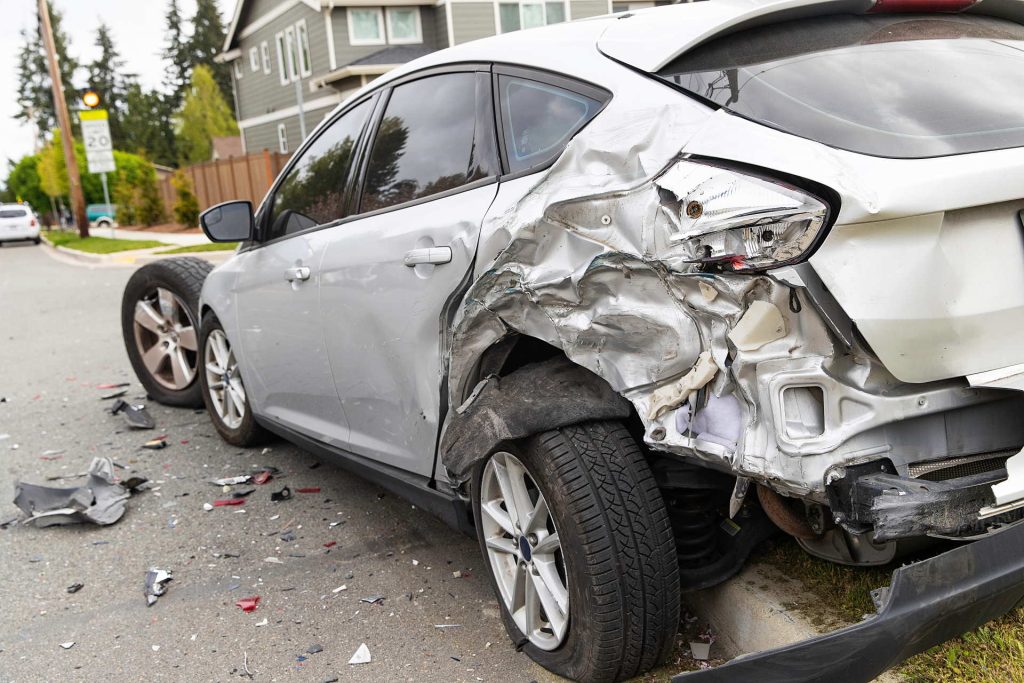
Damage to a single lighting assembly can significantly increase repair estimates. The same pattern applies to mirrors, cameras, radar units, touchscreen displays, and numerous other components.
Modern vehicles contain more technology than ever before, and replacing that technology is rarely inexpensive.
Salvage Values Are Influencing Decisions
Another factor many consumers overlook is salvage value. When insurers total a vehicle, they often recover part of their costs by selling it through salvage auctions.
The rise of used-parts recycling and vehicle dismantling operations has increased the value of many damaged vehicles.
When salvage values are strong, insurance industry analysts say it can be more cost-effective to classify a vehicle as a total loss.
If repair costs are high and salvage returns are favorable, insurers may determine that totaling the vehicle represents the better economic outcome.
This calculation has become increasingly important as parts shortages and repair delays affect the broader market.
Software Has Become Part of the Repair Process
One of the newest developments influencing total-loss decisions involves software. Many modern vehicles require programming after component replacement. A new camera, radar module, lighting assembly, or electronic control unit often cannot simply be installed and used.
Repair industry organizations report that software integration is now a necessary part of modern vehicle repair. Manufacturers are increasingly restricting access to diagnostic tools, calibration processes, and programming systems, making software-related procedures a standard component of collision repair work.
These requirements add both cost and time. The era when body repair involved only sheet metal and paint has largely disappeared. Today’s repairs often involve software engineers as much as body technicians.
The growing number of vehicles declared total losses after seemingly repairable accidents reflects a fundamental transformation in automotive design. Modern vehicles are safer, smarter, and more technologically advanced than ever before, but those advancements have dramatically altered repair economics.
Advanced driver-assistance systems, high-strength materials, sophisticated electronics, rising labor costs, expensive replacement parts, and complex software requirements all contribute to repair estimates that can quickly exceed a vehicle’s economic value.
What appears to be a minor collision may involve hidden sensors, calibration procedures, structural components, and software integrations that push costs far beyond what drivers expect.
As insurers weigh those expenses against vehicle values and salvage returns, more vehicles are being declared total losses than at any point in recent memory.
The irony is impossible to ignore. The same technologies that help prevent crashes and protect occupants during accidents are often the very features that make modern vehicles economically difficult to repair afterward.
In today’s automotive world, a car can survive an accident remarkably well and still end up totaled.
Also Read: 8 Financial Drawbacks of Owning an Electric Vehicle
