
Automotive reliability rankings rarely stay frozen in time. A brand that dominated dependability studies a decade ago can lose ground as technology becomes more complex, while another manufacturer can climb the ladder through better engineering, stronger quality control, and more durable components.
Looking back at 2016 and comparing it with 2026 highlights just how dramatically the automotive industry has evolved.
During 2016, many rankings were heavily influenced by traditional gasoline-powered vehicles with relatively simple electronics and proven powertrains. Reliability was often measured through long-term durability, low repair frequency, and owner satisfaction.
Brands that mastered consistency earned strong reputations and enjoyed loyal customer bases. At the same time, several manufacturers struggled with transmission problems, electrical faults, or quality-control issues that damaged their standings.
Fast forward to 2026, and the definition of reliability has evolved. Modern vehicles contain advanced driver-assistance systems, larger infotainment displays, hybrid technology, turbocharged engines, and sophisticated software.
Manufacturers now face the challenge of delivering cutting-edge features without sacrificing dependability. Some brands successfully adapted to these changes and improved their rankings, while others saw their positions decline as complexity introduced new points of failure.
The comparison between 2016 and 2026 offers a fascinating look at which automakers strengthened their reputations and which lost momentum. The eight brands featured here represent some of the most notable shifts in reliability rankings over the past decade.
Their journeys reflect changing engineering philosophies, technological advancements, and the ever-growing expectations of vehicle owners around the world.
Also Read: 8 Repairs That Cost More in Parts Than Labor
1. Toyota
Reliability Rank: 2016 #2 | 2026 #1
Few manufacturers have demonstrated consistency like Toyota. In 2016, the company already occupied a position near the top of most major dependability studies.
Its reputation had been built through decades of producing vehicles that routinely exceeded 200,000 miles with basic maintenance. Models such as the Corolla, Camry, Prius, and Tacoma became benchmarks for long-term durability.
The decade that followed brought major changes across the automotive industry. Turbocharging became widespread, safety systems grew increasingly sophisticated, and digital interfaces expanded dramatically.
While some automakers struggled with these transitions, Toyota remained conservative in its engineering approach. Instead of rushing unproven technologies into production, the company focused on refining existing systems before large-scale deployment.
Another factor behind Toyota’s rise to the number-one position by 2026 was its hybrid strategy.
Rather than relying heavily on newly developed electric platforms, Toyota continued improving hybrid systems that had already accumulated millions of miles of real-world testing. This reduced the likelihood of widespread reliability concerns while allowing owners to benefit from improved efficiency.
Quality control also remained one of Toyota’s strongest assets. Manufacturing consistency across global plants helped ensure that vehicles delivered similar durability regardless of where they were assembled. Owners consistently reported fewer major mechanical issues than many competing brands.
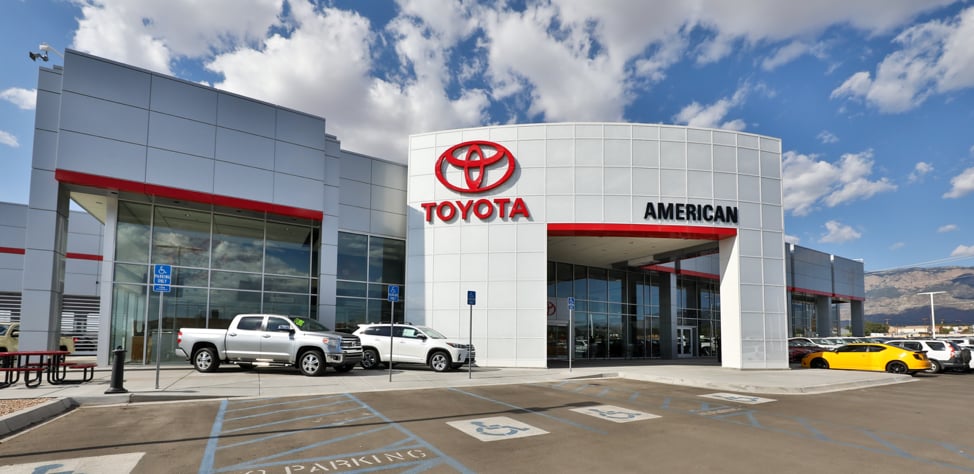
As a result, Toyota moved from an already impressive second-place ranking in 2016 to the top reliability position in 2026, reinforcing its status as one of the industry’s most trusted names.
2. Lexus
Reliability Rank: 2016 #1 | 2026 #2
Luxury vehicles often face reliability challenges because they incorporate cutting-edge technology before mainstream brands. Lexus has long been an exception. In 2016, it held the top position in many reliability rankings thanks to its ability to blend premium features with Toyota-derived engineering principles.
Unlike several European luxury competitors that prioritized rapid technological innovation, Lexus focused on refinement and durability. Owners frequently praised the brand for delivering quiet cabins, high-quality interiors, and dependable mechanical components that remained trouble-free for years.
The transition from 2016 to 2026 introduced a new set of challenges. Luxury buyers increasingly demanded larger touchscreens, advanced connectivity features, sophisticated driver-assistance systems, and electrified powertrains. Lexus adopted these technologies while attempting to preserve the reliability standards that had defined the brand.
Although Lexus slipped from first to second place by 2026, the drop reflected stronger competition rather than a dramatic decline in quality. Reliability studies continued to show excellent results across much of the lineup.
Vehicles such as the RX, NX, GX, and ES maintained reputations for low ownership costs compared with many luxury rivals.
One area where Lexus excelled was long-term durability. Many examples from the previous decade remained on the road with exceptionally high mileage and relatively few major repairs. This reinforced consumer confidence and supported strong resale values.
Moving from first to second over ten years might appear negative at first glance, but remaining near the top for an entire decade is an achievement few automotive brands can match.
3. Buick
Reliability Rank: 2016 #5 | 2026 #3
Not many people expected Buick to become one of the biggest reliability success stories of the past decade. In 2016, the brand already performed respectably, frequently appearing in the upper tier of dependability studies.
However, it was still overshadowed by Japanese competitors that traditionally dominated conversations about long-term durability.
The years that followed saw Buick quietly strengthen its position. Rather than chasing extreme performance or introducing overly complicated technologies ahead of competitors, the company concentrated on building comfortable vehicles with mature powertrains and steadily improving quality standards.
This strategy paid dividends as consumers increasingly prioritized ownership costs and dependability over flashy specifications.
Buick’s lineup also became more focused. Crossovers such as the Encore GX, Envision, and Enclave benefited from years of refinement, helping reduce the frequency of recurring mechanical and electronic complaints.
Owners often reported that routine maintenance was sufficient to keep these vehicles operating smoothly for extended periods.
An important contributor to Buick’s rise was the improvement of interior quality and electronic reliability. During the early 2010s, infotainment systems across the industry generated numerous complaints.
By the mid-2020s, Buick’s systems had become more stable and user-friendly, reducing owner frustration and boosting satisfaction scores.
Another advantage came from General Motors’ efforts to standardize components across multiple vehicle lines. Shared engineering resources allowed problems to be identified and corrected more efficiently, contributing to stronger reliability results.
The jump from fifth place in 2016 to third in 2026 reflects a decade of steady progress rather than a sudden breakthrough. Buick may not attract the same attention as some luxury or performance brands, but its consistent improvement has earned it a place among the most dependable automakers in the modern market.
4. Mazda
Reliability Rank: 2016 #12 | 2026 #4
Mazda’s climb through the reliability rankings represents one of the most impressive transformations of the last ten years. Back in 2016, the company enjoyed a reputation for building engaging vehicles with sharp handling characteristics, but it did not consistently appear among the elite reliability leaders.
The turning point came through Mazda’s commitment to engineering simplicity. While many competitors aggressively downsized engines and adopted complex transmission technologies, Mazda refined its naturally aspirated Skyactiv engines and conventional automatic transmissions. This decision appeared conservative at the time, yet it proved highly effective from a durability standpoint.
Customers purchasing vehicles such as the Mazda3, CX-5, CX-50, and CX-90 often discovered that the vehicles combined driving enjoyment with remarkably low repair rates. As reliability surveys accumulated data throughout the late 2010s and early 2020s, Mazda steadily moved upward in rankings.
A notable strength involved manufacturing consistency. The company’s production facilities achieved increasingly high quality-control standards, reducing defects before vehicles reached customers. This translated into fewer warranty claims and stronger owner confidence.
Mazda also resisted the temptation to overload its vehicles with experimental technologies. New features were generally introduced only after extensive testing and validation. As a result, the brand avoided many of the software-related headaches that affected portions of the industry during the rapid expansion of digital vehicle systems.
By 2026, Mazda had risen all the way to fourth place, a remarkable improvement from twelfth a decade earlier. The brand’s success demonstrates that reliability gains often come from disciplined engineering decisions rather than dramatic redesigns.
Consumers who once viewed Mazda primarily as a driver’s brand increasingly recognized it as one of the industry’s strongest choices for dependable transportation.
5. Honda
Reliability Rank: 2016 #4 | 2026 #7
For decades, Honda occupied a position near the very top of reliability rankings. In 2016, the company stood fourth in many industry studies and remained one of the safest recommendations for buyers seeking dependable transportation.
Models such as the Civic, Accord, CR-V, and Odyssey had established reputations for longevity that extended across multiple generations.
The decade that followed was not necessarily a story of declining quality, but rather one of intensified competition and increasing technological complexity. Honda expanded its use of turbocharged engines, advanced safety systems, larger infotainment interfaces, and hybrid technologies.
These changes helped the brand remain competitive, yet they also introduced additional components that required careful management and refinement.
Unlike some manufacturers that experienced dramatic reliability setbacks, Honda’s movement from fourth to seventh was relatively modest. Many vehicles in its lineup continued to achieve excellent long-term durability, particularly after early production issues were addressed.
However, several surveys during the early and mid-2020s indicated that competitors such as Toyota, Lexus, Mazda, and Buick were posting slightly stronger consistency scores.
One area where Honda continued to excel was powertrain durability. Engines remained capable of accumulating substantial mileage when maintained properly, and many owners reported years of trouble-free service.
The company’s engineering culture still emphasized mechanical robustness, even as software and electronics played increasingly larger roles in vehicle development.
Consumer confidence also remained high because of Honda’s extensive track record. A small drop in ranking did little to erase decades of goodwill earned through reliable products.
Although seventh place in 2026 represented a lower standing than in 2016, Honda continued to rank among the industry’s most dependable brands. The shift illustrates how competitive the reliability race has become rather than suggesting any major collapse in quality.
6. Kia
Reliability Rank: 2016 #18 | 2026 #8
A decade ago, Kia was still working to shed perceptions formed during its early years in the North American market. While quality had already improved considerably by 2016, many buyers remained cautious.
Reliability rankings often placed the brand in the middle of the pack, reflecting progress but not yet signaling leadership.
What followed was one of the industry’s most significant upward trajectories. Kia invested heavily in manufacturing quality, engineering refinement, and supplier oversight. New generations of vehicles displayed better fit and finish, more durable interiors, and improved mechanical dependability.
The brand’s transformation became visible through products such as the Telluride, Sportage, Sorento, K5, and Carnival. These vehicles attracted praise not only for value and design but also for increasingly strong ownership experiences.
Reliability studies began showing meaningful gains as owners reported fewer unexpected repairs than in previous years.
Kia’s approach differed from some rivals because it combined aggressive feature content with substantial quality improvements. Vehicles frequently offered technologies that were uncommon in their price segments, yet the company worked to prevent those features from becoming sources of recurring problems.
Warranty coverage also played a role in strengthening consumer trust. Although warranty length does not directly determine reliability, it demonstrates confidence in the durability of the company’s products and encourages buyers to consider the brand more seriously.
The leap from eighteenth position in 2016 to eighth in 2026 highlights how dramatically perceptions can change when a manufacturer consistently improves execution. Kia’s journey illustrates that reliability rankings are not permanent labels.
Through sustained investment and disciplined product development, the company succeeded in moving from a developing contender into the upper tier of dependable automotive brands.
7. BMW
Reliability Rank: 2016 #23 | 2026 #11
In 2016, BMW occupied an unusual position within the automotive industry. The brand enjoyed immense respect for engineering excellence, driving dynamics, and performance capabilities, yet reliability rankings often placed it well behind many mainstream manufacturers.
Owners loved the way BMW vehicles drove, but maintenance expenses and occasional electronic issues prevented the company from competing near the top of dependability charts.
The next ten years brought meaningful change. BMW invested heavily in improving manufacturing processes, simplifying portions of its engine portfolio, and strengthening quality-control procedures.
Lessons learned from earlier turbocharged powertrains contributed to more durable modern engines, while software systems became increasingly refined.
Vehicles such as the 3 Series, X3, X5, and 5 Series demonstrated that premium performance and respectable reliability were no longer mutually exclusive. Independent studies throughout the early 2020s showed gradual improvement as fewer owners reported severe mechanical concerns during the first years of ownership.
Another contributor to BMW’s rise involved modular engineering. The company’s newer vehicle architectures allowed components to be shared across multiple models, making development and quality validation more efficient. This reduced variability and helped engineers identify recurring issues earlier in the production cycle.
BMW also improved powertrain durability by refining cooling systems, turbocharger designs, and transmission calibrations. While ownership costs remained higher than many mainstream brands, reliability performance became noticeably stronger than in previous decades.
The climb from twenty-third place in 2016 to eleventh in 2026 reflects a substantial achievement for a luxury performance manufacturer.
BMW still prioritizes driving engagement, but it has increasingly demonstrated that sophisticated engineering can coexist with improved long-term dependability. For many consumers, this shift has made the brand a far more attractive ownership proposition than it was ten years earlier.
8. Volkswagen
Reliability Rank: 2016 #29 | 2026 #15
Volkswagen entered 2016 facing one of the most difficult periods in its modern history. Beyond the challenges created by the diesel emissions controversy, the company also struggled with reliability perceptions in several markets.
Owners frequently praised driving characteristics and cabin quality, but dependability rankings often placed the brand well below industry leaders.
The years that followed required a comprehensive rebuilding effort. Volkswagen focused on improving quality assurance, modernizing production facilities, and refining powertrain technologies.
Engineers worked to address recurring concerns that had affected previous generations of vehicles, particularly in areas involving electronics and drivetrain components.
Instead of chasing rapid expansion at any cost, the company increasingly emphasized product consistency. Models such as the Golf, Tiguan, Atlas, and Jetta benefited from updated architectures that delivered better reliability outcomes than many of their predecessors.
An interesting aspect of Volkswagen’s improvement involved software integration. As vehicles became more digital, the company invested heavily in ensuring that infotainment systems and vehicle electronics operated more reliably.
While challenges remained, customer feedback showed meaningful progress compared with earlier years.
Volkswagen also strengthened supplier relationships and manufacturing oversight, helping reduce defects before vehicles reached dealerships. These improvements gradually translated into better scores in owner surveys and industry dependability studies.
Moving from twenty-ninth place in 2016 to fifteenth by 2026 may not place Volkswagen among the elite leaders, but the gain represents one of the largest positive movements in this comparison.
The brand demonstrated that even manufacturers facing significant reputation challenges can regain consumer confidence through sustained improvements in engineering and quality execution.
Also Read: 8 Luxury SUVs That Become Bargains the Moment the Warranty Ends
