
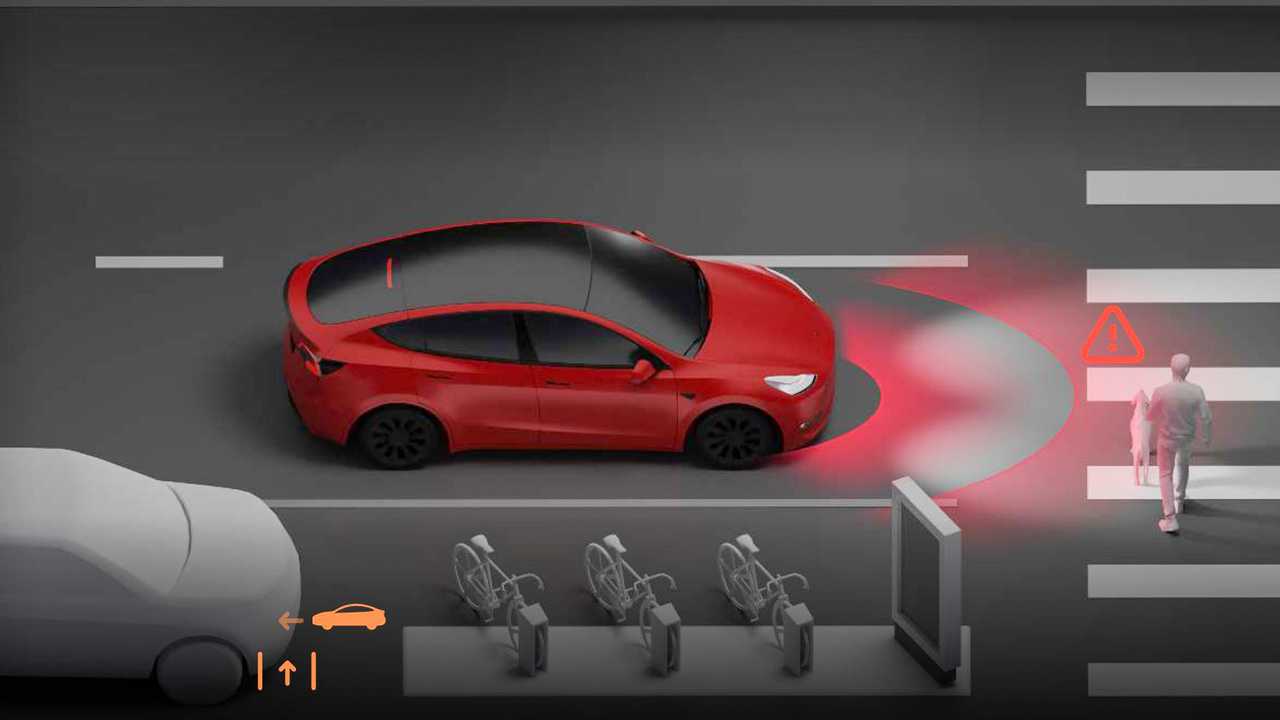
Not long ago, automatic emergency braking (AEB) was a premium feature found mainly on luxury vehicles costing well over $40,000.
Buyers shopping for mainstream sedans, compact SUVs, or pickup trucks rarely encountered the technology unless they purchased expensive option packages. Today, the situation looks dramatically different.
Whether someone buys an economy hatchback, a family crossover, or a full-size truck, there is a strong chance the vehicle comes equipped with some form of automatic emergency braking as standard equipment.
The rise of AEB represents one of the fastest and most significant safety technology adoptions in automotive history. In little more than a decade, the feature moved from a niche innovation to an almost universal component of new vehicles sold in the United States.
Many automotive technologies require decades before becoming widely adopted, but automatic emergency braking followed a different path. It gained rapid momentum through a mix of regulatory pressure, safety advocacy, insurance industry backing, technological progress, and strong consumer demand.
According to the Insurance Institute for Highway Safety (IIHS), vehicles equipped with front crash prevention systems have demonstrated meaningful reductions in rear-end collisions and injury-producing crashes.
Those results accelerated industry adoption and helped transform AEB from a competitive advantage into an expected safety feature.
Today, many drivers take automatic emergency braking for granted. Yet its journey from experimental technology to near-universal equipment reveals how rapidly the automotive industry can evolve when safety, economics, and consumer expectations align.
Also Read: 8 Car Brands’ Reliability Rankings In 2016 vs 2026
The Problem Automakers Were Trying to Solve
Rear-end collisions have long been among the most common types of traffic accidents. According to the National Highway Traffic Safety Administration (NHTSA), distraction, inattention, delayed reaction times, and driver error contribute to hundreds of thousands of crashes annually.
Even attentive drivers can fail to react quickly enough when traffic suddenly slows or stops. Traditional safety systems, such as seat belts and airbags, help protect occupants after a crash occurs. Automatic emergency braking was designed to prevent the crash from happening in the first place.
The concept emerged from a growing realization within the automotive industry that advances in sensors, cameras, and computing power could allow vehicles to detect potential collisions and intervene before impact.
Rather than waiting for drivers to react, the vehicle itself could apply the brakes if it determined a crash was imminent. At the time, the idea sounded remarkably ambitious. Today, it has become routine.
Early Systems Were Limited and Expensive
The first generation of automatic emergency braking systems appeared primarily on high-end luxury vehicles during the late 2000s and early 2010s.
Manufacturers such as Mercedes-Benz, Volvo, BMW, and Lexus introduced systems capable of detecting obstacles ahead and warning drivers of potential collisions. Some versions could even apply the brakes automatically under certain conditions.
These early systems relied on expensive radar sensors and relatively limited computing power. Performance varied significantly.
Many could operate only at lower speeds. Others functioned primarily in urban environments. False alerts were more common than they are today, and the systems often intervened later than modern versions.
Despite these limitations, the technology demonstrated considerable promise. According to early safety research conducted by the IIHS and international testing organizations, vehicles equipped with crash-avoidance technologies showed measurable reductions in collision frequency. The challenge was making the technology affordable enough for widespread deployment.
Cameras and Radar Changed the Economics
One reason AEB spread so rapidly was the declining cost of key components. As cameras, radar modules, and processing systems became less expensive, automakers found it easier to integrate advanced safety features into mainstream vehicles.
At the same time, many manufacturers were already installing forward-facing cameras and radar systems to support adaptive cruise control, lane-keeping assistance, traffic sign recognition, and other driver-assistance technologies.
Once those sensors were present, adding automatic emergency braking became more practical. The same hardware could support multiple features.
According to automotive technology analysts, economies of scale dramatically reduced costs as production volumes increased. Sensors that were once reserved for luxury vehicles gradually became affordable for mass-market models.
This shift helped transform AEB from an expensive option into a viable standard feature.
Safety Organizations Played a Major Role
While technological progress was important, safety organizations helped accelerate adoption. The Insurance Institute for Highway Safety became one of the strongest advocates for automatic emergency braking.
Through its crash-testing and vehicle-rating programs, the organization increasingly rewarded manufacturers that included crash-prevention technologies.
According to IIHS studies, front crash prevention systems reduced police-reported rear-end crashes by roughly 50% in many cases. The organization also found meaningful reductions in injury-producing collisions. Those findings carried significant weight throughout the industry.
Manufacturers understood that strong safety ratings influenced consumer purchasing decisions. Vehicles that lacked advanced safety features risked receiving lower scores than competitors.
The pressure encouraged broader adoption across multiple vehicle segments. What began as a competitive advantage gradually became a competitive necessity.
The Insurance Industry Saw Financial Benefits
Insurance companies also recognized the potential value of automatic emergency braking. Fewer collisions translate directly into fewer claims.
According to research conducted by the Highway Loss Data Institute (HLDI), vehicles equipped with front crash prevention technologies generated lower claim frequencies than comparable vehicles without such systems. The economic implications were substantial.
Even modest reductions in crash rates can save insurers millions of dollars annually. As evidence accumulated, the insurance industry became an important supporter of widespread AEB adoption.
Some insurers began offering discounts for vehicles equipped with advanced safety technologies. The financial incentives reinforced the safety arguments already being made by regulators and advocacy groups. Together, those forces created powerful momentum.
A Landmark Industry Agreement Accelerated Adoption
One of the most important milestones occurred in 2016. According to NHTSA and the IIHS, twenty major automakers voluntarily agreed to make automatic emergency braking standard on nearly all new passenger vehicles sold in the United States.
The agreement covered manufacturers representing the overwhelming majority of the U.S. market. Rather than waiting for formal regulation, the industry committed to accelerating deployment voluntarily.
At the time, the move was viewed as one of the most significant safety commitments ever made by automakers.
The agreement established ambitious adoption targets and created a clear pathway toward widespread implementation.
Industry observers frequently cite the 2016 commitment as the moment when AEB’s future became inevitable.
Once virtually every major manufacturer agreed to participate, universal adoption became a matter of execution rather than debate.
Consumer Expectations Changed
As more vehicles arrived with automatic emergency braking, consumer expectations evolved. Drivers who experienced the technology often appreciated the additional safety margin it provided.
Automotive reviewers began highlighting AEB availability in vehicle comparisons. Safety-conscious buyers increasingly expect crash-prevention technologies even in affordable vehicles.
According to J.D. Power consumer studies, advanced safety features became increasingly influential factors during purchase decisions. Manufacturers responded accordingly.
AEB moved from optional packages into standard-equipment lists. Vehicles lacking the feature began appearing outdated compared with competitors.
The market effectively reached a tipping point. Consumers no longer viewed automatic emergency braking as a luxury feature. They viewed it as a basic safety expectation.
Pedestrian Detection Expanded the Technology’s Role
The evolution of AEB did not stop with vehicle-to-vehicle collision prevention. Modern systems increasingly incorporate pedestrian detection, cyclist recognition, and intersection-assist functions.
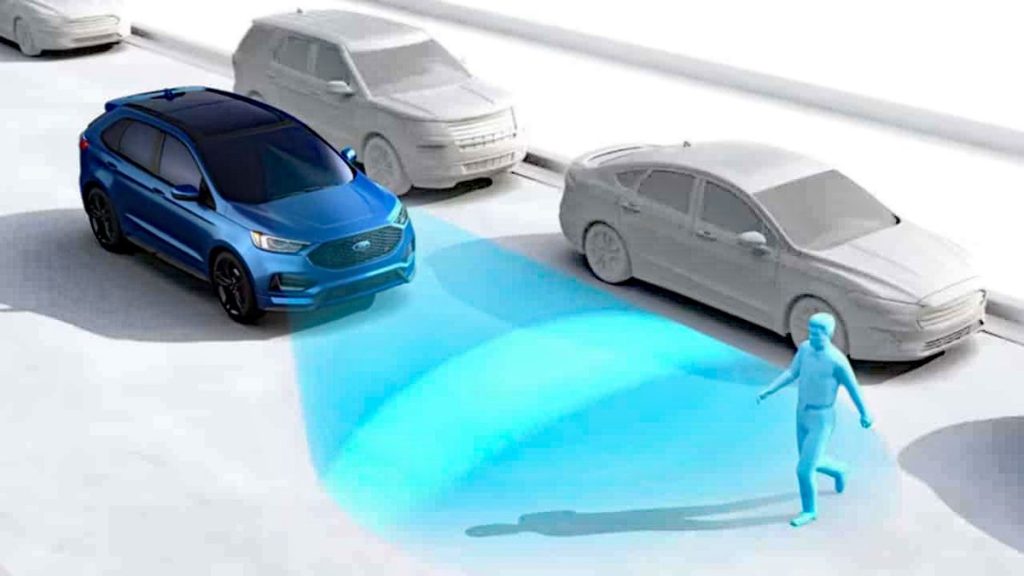
According to NHTSA and IIHS evaluations, newer systems can identify a wider variety of hazards and intervene under more complex circumstances than earlier generations.
This expansion significantly increased the technology’s value. Preventing a rear-end collision is important. Avoiding a pedestrian strike can be life-saving.
Automakers invested heavily in improving detection accuracy because the potential safety benefits extended far beyond traditional crash scenarios.
The technology continues evolving today. Each new generation becomes more capable and more sophisticated.
Regulation Helped Cement Its Future
Although voluntary agreements drove much of the early adoption, regulatory actions have reinforced the trend.
NHTSA has continued evaluating automatic emergency braking requirements, while international markets have increasingly incorporated AEB into safety regulations and testing standards.
The European Union, for example, requires advanced emergency braking systems on many new vehicles.
Global safety standards have encouraged manufacturers to standardize technology across multiple markets.
As a result, automakers often find it more efficient to equip vehicles with AEB globally rather than developing separate configurations for different regions.
Regulatory momentum has helped ensure that the technology remains a core component of future vehicle development.
The Technology Is Not Perfect
Despite its success, automatic emergency braking is not flawless. Performance can vary depending on weather conditions, lighting, sensor cleanliness, and vehicle speed. Some systems perform better than others in independent testing.
According to IIHS evaluations, certain vehicles still struggle with nighttime pedestrian detection or complex traffic scenarios.
Manufacturers continue refining algorithms and sensor technologies to address these limitations.
Safety experts consistently emphasize that AEB is intended to assist drivers rather than replace them. Drivers remain responsible for vehicle operation.
Nevertheless, even imperfect systems have demonstrated significant safety benefits when compared with vehicles lacking the technology entirely.
Automatic emergency braking’s rise from luxury-car novelty to near-universal safety feature represents one of the most remarkable technology adoption stories in modern automotive history.
A combination of declining sensor costs, advances in computing power, strong support from organizations such as NHTSA and the IIHS, insurance industry incentives, and changing consumer expectations helped drive rapid adoption across the market.
According to IIHS research, the technology has contributed to substantial reductions in rear-end collisions and injury-producing crashes. Those results convinced automakers that AEB was not merely another convenience feature but a meaningful safety innovation capable of preventing accidents altogether.
Today, automatic emergency braking is found on the vast majority of new vehicles sold in the United States. What was once an expensive luxury feature has become a standard safeguard protecting millions of drivers every day.
Its widespread adoption also offers a view into the future. As vehicle technology continues evolving, other advanced safety systems may follow a similar path from premium option to universal expectation. AEB simply happened to be the first major success story.
Also Read: 8 Financial Drawbacks of Owning an Electric Vehicle
