
The transition from gasoline powered vehicles to electric vehicles has been one of the most significant developments in the automotive industry during the twenty first century. While many companies have entered the electric vehicle market, Tesla stands out not only because of its vehicles but also because of the charging infrastructure it built to support them.
One of the biggest concerns among potential electric vehicle buyers has always been charging availability. Drivers worry about running out of power, finding a compatible charger, or waiting too long to recharge their vehicles. These concerns, often referred to as range anxiety, represented a major obstacle to widespread electric vehicle adoption.
Tesla recognized this challenge early and decided that creating great vehicles alone would not be enough to transform transportation.
Instead of relying entirely on governments, utility companies, or third party charging providers, Tesla chose to invest heavily in its own charging network. This decision proved to be one of the company’s most important strategic moves. By building a dedicated network of fast chargers, Tesla created an ecosystem that made electric vehicle ownership more convenient and practical.
The company focused on placing charging stations along major travel routes, near urban centers, and in locations where drivers naturally stop during long trips. This approach helped Tesla owners travel longer distances with confidence.
Tesla’s charging network also benefited from deep integration between the company’s vehicles, software, and infrastructure. Drivers could easily locate charging stations through their vehicle navigation systems, receive real time information about charger availability, and optimize routes based on charging needs.
This seamless user experience helped differentiate Tesla from competitors whose customers often depended on multiple charging providers and apps.
Another factor behind Tesla’s success was timing. The company began investing in charging infrastructure long before electric vehicles became mainstream.
While many automakers focused primarily on vehicle production, Tesla viewed charging infrastructure as an essential part of the customer experience. This long term perspective allowed the company to establish a significant lead in charging coverage and reliability.
Today, Tesla’s Supercharger network is widely regarded as one of the strongest and most reliable electric vehicle charging systems in the world. Understanding how Tesla built this network offers valuable insights into strategic planning, customer focused innovation, infrastructure development, and competitive advantage in emerging industries.
Also Read: 7 Most Reliable Motorcycles You Can Buy Today
Tesla Identified the Charging Problem Before Its Competitors
One of Tesla’s greatest strengths was its ability to identify a critical customer problem before many competitors fully understood its importance.
Early electric vehicles faced significant limitations in driving range and charging convenience. Many consumers were hesitant to switch from traditional vehicles because they feared becoming stranded without access to charging facilities. Tesla understood that overcoming this fear would be essential for achieving mass adoption.
Most traditional automakers viewed charging infrastructure as someone else’s responsibility. They expected governments, energy companies, or independent charging providers to build the necessary networks.
Tesla took a different approach by treating charging infrastructure as a core component of its business strategy. The company recognized that vehicle sales and charging availability were closely connected.
This customer focused mindset allowed Tesla to address concerns that extended beyond the vehicle itself. Buyers were not simply purchasing a car. They were investing in a new transportation system.
Tesla understood that consumers needed confidence in the entire ownership experience. Providing reliable charging solutions helped reduce uncertainty and encouraged more people to consider electric vehicles.
The company also recognized that charging infrastructure could become a competitive advantage. By creating a network exclusive to Tesla owners, the company increased the attractiveness of its vehicles. Customers gained access to a convenient ecosystem that competitors struggled to match. This strategy strengthened customer loyalty and enhanced Tesla’s value proposition.
By identifying and solving a major industry challenge early, Tesla positioned itself as more than an automaker. It became a provider of an integrated mobility solution. This broader vision played a significant role in the success of the company’s charging network.
Strategic Placement of Supercharger Stations
The success of Tesla’s charging network is closely tied to where the company chose to place its charging stations. Rather than randomly expanding the network, Tesla carefully analyzed travel patterns, transportation corridors, and customer behavior. The company focused on locations that would maximize convenience and utility for drivers.
Tesla initially concentrated on major highways connecting large cities. This strategy enabled long distance travel and addressed one of the most common concerns among potential electric vehicle buyers. Drivers could travel between cities knowing they would have access to reliable charging options along the route. This dramatically increased the practicality of electric vehicle ownership.
Another important aspect of Tesla’s placement strategy involved selecting locations where drivers naturally spent time. Many Supercharger stations were built near restaurants, shopping centers, hotels, and service areas. Since charging requires some waiting time, these locations allowed drivers to eat, shop, or relax while their vehicles recharged.
Tesla also expanded into urban areas where many customers lived and worked. Although home charging remains the primary charging method for many owners, urban charging stations provided additional flexibility. This was particularly valuable for apartment residents or individuals without dedicated home charging facilities.
Over time, Tesla continued refining its expansion strategy using real world data. Vehicle usage patterns, charging demand, and customer feedback helped determine where new stations should be built. This data driven approach improved network efficiency and ensured that resources were invested where they could provide the greatest benefit.
Investment in Fast Charging Technology
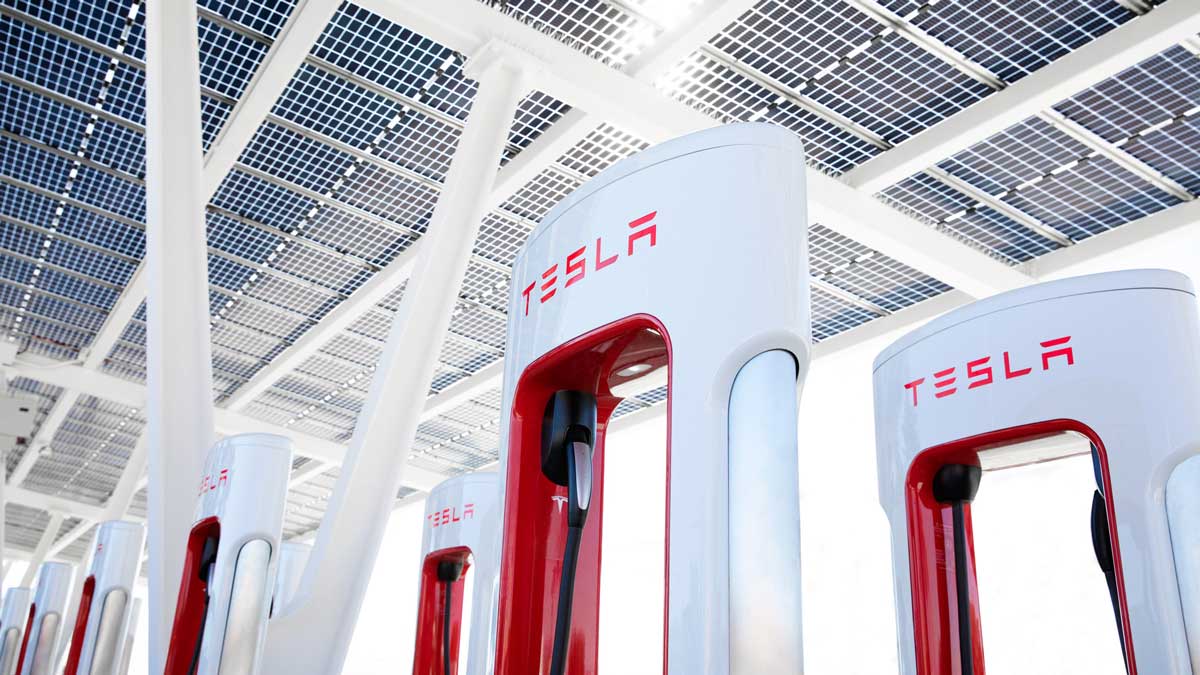
A strong charging network requires more than widespread coverage. Charging speed is equally important. Tesla understood that consumers would be reluctant to adopt electric vehicles if charging took several hours during long trips. As a result, the company invested heavily in developing high speed charging technology.
The introduction of Superchargers significantly reduced charging times compared to conventional charging options available at the time. Faster charging made electric vehicle travel more practical and convenient. Drivers could add substantial driving range during relatively short stops, making road trips far easier to manage.
Tesla continually improved its charging technology through multiple generations of Superchargers. Each new version delivered greater power output and improved efficiency.
These advancements reduced charging times and enhanced the customer experience. Continuous innovation helped Tesla maintain a technological advantage in charging infrastructure.
The company also designed its vehicles and charging systems to work together efficiently. Because Tesla controlled both the vehicle and charger design, engineers could optimize charging performance across the entire ecosystem. This level of integration provided benefits that were difficult for competitors relying on multiple suppliers to replicate.
Fast charging technology also contributed to network capacity. When vehicles spend less time occupying charging stations, more drivers can use the network throughout the day. This improves utilization rates and helps support growing numbers of electric vehicles without requiring a proportional increase in charging locations.
Also Read: 10 Cars That Drove Over 800,000 Miles
Vertical Integration and Ecosystem Control
Tesla’s business model differs from many traditional automakers because of its emphasis on vertical integration. Rather than depending heavily on external partners, Tesla develops and controls many aspects of its products and services. This philosophy played a major role in the development of its charging network.
By controlling vehicle design, battery technology, software systems, and charging infrastructure, Tesla created a highly integrated ecosystem. This allowed the company to optimize interactions between different components and deliver a more seamless customer experience. Drivers benefited from reliable performance and simplified charging processes.
Vehicle navigation systems automatically guide drivers to appropriate charging stations when necessary. The software can estimate battery consumption, recommend charging stops, and provide information about charger availability. These features reduce uncertainty and make long distance travel easier.
Tesla’s direct control over network operations also enables rapid problem solving. The company can monitor charger performance, deploy software updates, and address technical issues efficiently. This centralized management structure contributes to higher reliability compared to fragmented charging networks operated by multiple organizations.
Vertical integration also allowed Tesla to innovate more quickly. Decisions regarding hardware upgrades, software improvements, and network expansion could be coordinated across different parts of the organization. This flexibility helped Tesla adapt to changing customer needs and technological developments more effectively than many competitors.
Creating Customer Trust Through Reliability
One of the most important reasons Tesla’s charging network became successful is reliability. Charging infrastructure is only valuable if drivers can depend on it when needed. Tesla invested considerable effort into ensuring that its charging stations consistently functioned as expected.
Reliability begins with network monitoring. Tesla uses connected technology to track charger performance and identify issues quickly. When problems occur, maintenance teams can respond more effectively because they have access to detailed operational data. This proactive approach reduces downtime and improves customer satisfaction.
The company also focused on standardization. Because Tesla vehicles and charging equipment were designed within the same ecosystem, compatibility issues were minimized. Drivers did not need to worry about whether a particular charger would work with their vehicle. This simplicity enhanced user confidence.
Customer trust was further strengthened through consistent user experiences. Tesla owners generally encountered similar interfaces, charging procedures, and payment systems across the network. Familiarity reduced confusion and made travel more predictable. Consistency became a key advantage as the network expanded.
As positive experiences accumulated, Tesla developed a strong reputation among electric vehicle owners. Word of mouth recommendations, customer reviews, and media coverage reinforced perceptions of reliability. This reputation became a powerful asset that encouraged additional vehicle purchases and supported continued network growth.
