
For many drivers, charging speed matters almost as much as driving range. A long-range electric vehicle can reduce the number of charging stops during a trip, but a vehicle that replenishes its battery quickly can make each stop far easier to manage.
The best fast-charging EVs are designed to add a meaningful amount of range while the driver takes a short break, gets food, uses a restroom, or checks the route ahead.
Charging claims need careful context. A vehicle’s advertised peak charging rate does not mean it will hold that number throughout the session. Battery temperature, charger capability, weather, state of charge, and software all affect the result.
The most useful comparison is usually the time required to charge from 10 percent to 80 percent, since charging slows sharply as the battery approaches full capacity. A 350-kW public charger also cannot make a car charge at 350 kW if the vehicle itself accepts less power.
The EVs in this list are selected for strong real-world fast-charging potential, including high-voltage electrical systems, efficient powertrains, and short advertised 10 percent to 80 percent charging times.
Some are available in the United States, while others are sold in selected global markets. They show how quickly EV charging technology is progressing, particularly in vehicles using 800-volt or higher electrical architectures.
Also Read: 10 Best Jaguar Cars Ever Made – Ranked
1. Lucid Gravity
The Lucid Gravity is one of the most impressive electric SUVs for drivers who want to minimize time spent at public charging stations. Its high-voltage electrical architecture and advanced battery system allow it to accept extremely high DC charging power when connected to a compatible high-speed charger.
Lucid states that the Gravity can add up to 200 miles of range in roughly 12 minutes under ideal conditions, an exceptional result for a large three-row luxury SUV.
That ability matters because the Gravity is not a small city EV. It is designed to carry families, luggage, and passengers while also offering a long-distance range. Larger vehicles normally need more battery energy, which can mean longer stops.
Lucid reduces that disadvantage by combining a high-capacity battery with strong charging performance and an efficient powertrain. The result is an SUV that can recover useful highway range during a short break rather than requiring a long wait.
Charging speed still depends on the station. The Gravity can perform best on high-voltage equipment capable of supplying the necessary power. At lower-voltage chargers, the vehicle can still charge quickly, but its maximum output may be reduced.
Battery preconditioning also matters, especially in cold weather, because the pack needs to reach the right temperature before it can accept its highest charging rate.
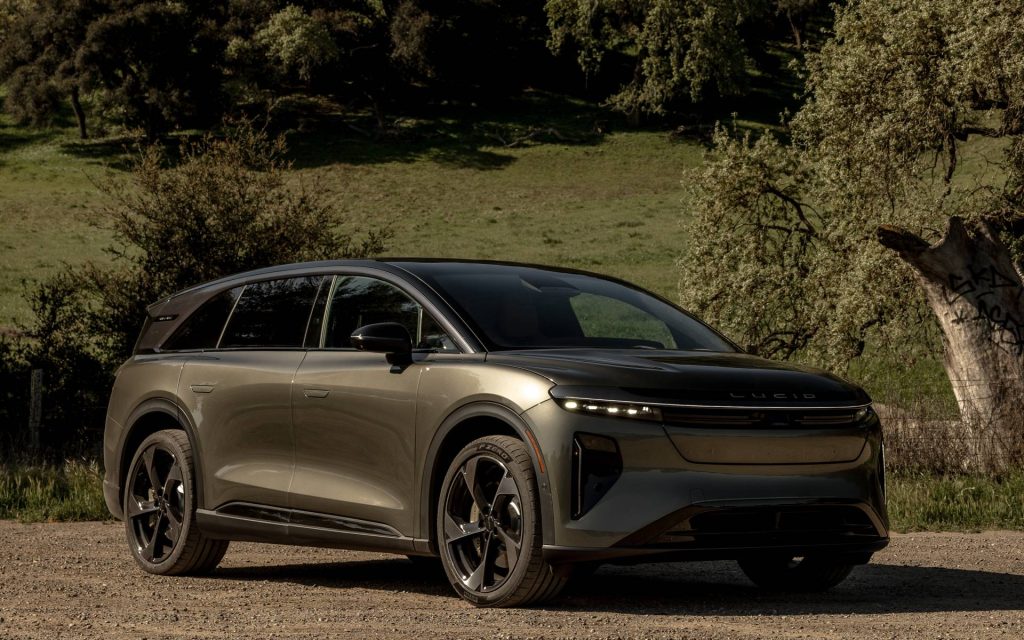
The Gravity proves that fast charging is no longer limited to low-slung electric sedans. It gives large-SUV buyers a more practical road-trip experience, combining passenger space with a charging system that can reduce downtime substantially. Its 400-kW capability places it among the fastest-charging production EVs currently available.
- Engine: Dual electric motors
- Torque: Not officially published for all trims
- Horsepower: Up to 828 horsepower
- Length/Width: 198.2 inches / 78.7 inches
2. Porsche Taycan
The Porsche Taycan has been a benchmark for rapid charging since it introduced an 800-volt electrical system to the modern luxury EV market. Porsche designed the Taycan for repeated high-performance driving, and that engineering also benefits its charging behavior.
Instead of only reaching a high peak number briefly, the Taycan can sustain strong charging power through much of its session when the battery is properly prepared.
Current Taycan models can accept DC charging at up to 320 kW. Porsche says the battery can charge from 10 percent to 80 percent in about 18 minutes under ideal conditions, making it one of the quickest choices for drivers who regularly travel long distances.
The car can add a substantial amount of range during a short stop, which helps make it more usable for highway journeys than many earlier EVs.
Its charging advantage comes from more than voltage alone. The Taycan uses sophisticated thermal management to control battery temperature before and during charging.
When the driver enters a fast charger into the navigation system, the vehicle can precondition the battery as it approaches the station. This helps the pack arrive at a temperature where it can accept electricity more efficiently.
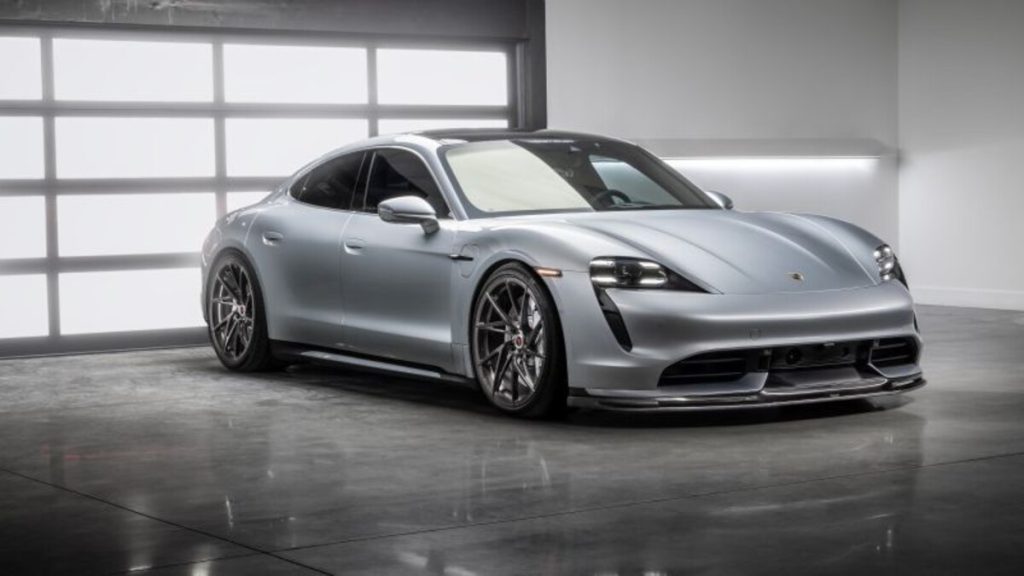
The Taycan is expensive, but its charging performance matches its premium position. Drivers who buy it for speed, handling, and luxury also receive one of the most road-trip-friendly charging systems in the industry.
It remains a strong example of how a well-managed battery can make charging stops feel closer to a normal travel break than a lengthy interruption.
- Engine: Dual electric motors
- Torque: Up to 988 lb-ft
- Horsepower: Up to 1,019 horsepower
- Length/Width: 195.4 inches / 77.4 inches
3. Hyundai IONIQ 5
The Hyundai IONIQ 5 is one of the most practical EVs for drivers who want short charging stops without moving into an expensive luxury segment. Its 800-volt electrical architecture gives it a major advantage over many mainstream electric SUVs that use lower-voltage systems.
When connected to a suitable 350-kW DC fast charger, Hyundai states that the IONIQ 5 can charge from 10 percent to 80 percent in about 20 minutes. Certain rear-wheel-drive versions can add up to 178 miles of EPA-estimated range in around 15 minutes under the specified charging conditions.
What makes the IONIQ 5 especially appealing is that it combines this fast-charging ability with a roomy, easy-to-use cabin. Its boxy shape creates good passenger space, and the flat-floor interior gives it a more open feel than many compact SUVs.
This makes it useful for families and commuters who want an EV that is comfortable in daily use but also capable of longer trips.
The charging system performs best when the battery has been preconditioned, and the station can provide enough power. Cold weather, a busy charging site, a battery that is too cold, or a lower-output charger can extend the stop.
Even so, the IONIQ 5 has consistently been one of the strongest choices for adding useful driving range quickly. Independent testing has also placed it among the quickest EVs for miles added per charging hour.
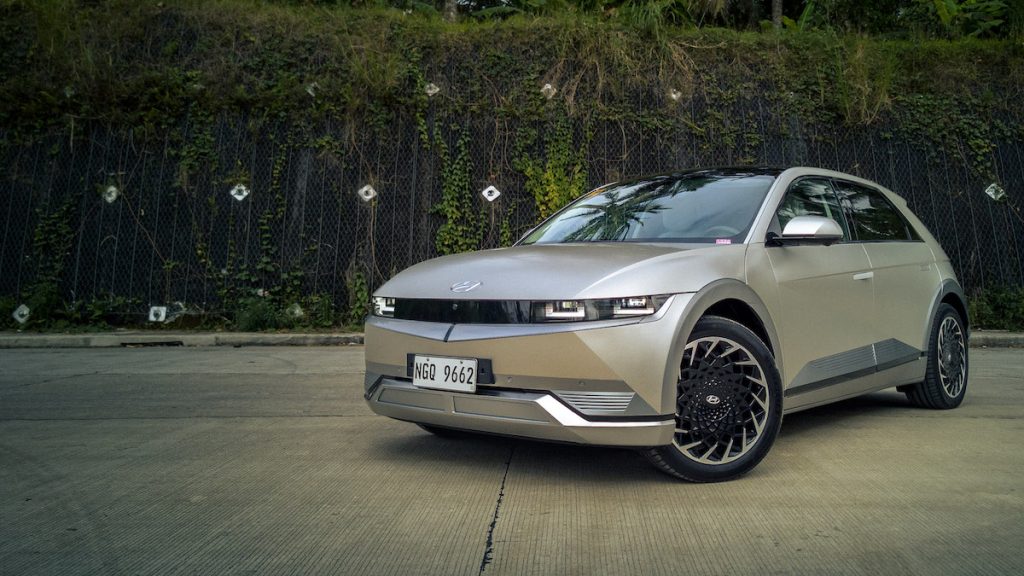
Hyundai has made the IONIQ 5 more convenient for North American charging networks as well, with access arrangements and adapters that help owners use more public fast chargers. For buyers who want a well-rounded electric SUV that does not turn every highway stop into a long wait, it remains one of the most convincing options.
- Engine: Single or dual electric motors
- Torque: Up to 446 lb-ft
- Horsepower: Up to 320 horsepower
- Length/Width: 183.3 inches / 74.4 inches
4. Hyundai IONIQ 6
Aerodynamics can matter as much as raw charging power, and the Hyundai IONIQ 6 demonstrates why. Its sleek sedan shape helps it use energy efficiently at highway speeds, meaning each minute at a fast charger can restore a meaningful amount of driving range.
Like the IONIQ 5, it uses Hyundai Motor Group’s 800-volt E-GMP platform, allowing it to charge rapidly on compatible DC equipment.
The IONIQ 6 can move from 10 percent to 80 percent in approximately 18 minutes under ideal conditions using a 350-kW charger. Its peak charging acceptance is lower than the charger’s advertised maximum output, but the vehicle’s efficient shape allows it to recover range quickly.
One recent fast-charging comparison placed the IONIQ 6 at the top for range added per charging hour, with the tested rear-wheel-drive version delivering 926 miles of range per charging hour.
That makes the IONIQ 6 particularly useful for road-trip drivers. A car with a huge peak charging number is not always the most convenient choice if it consumes more electricity at highway speeds.
The IONIQ 6 combines a fast charge curve with low energy consumption, so a brief stop can prepare it for a substantial next driving leg.
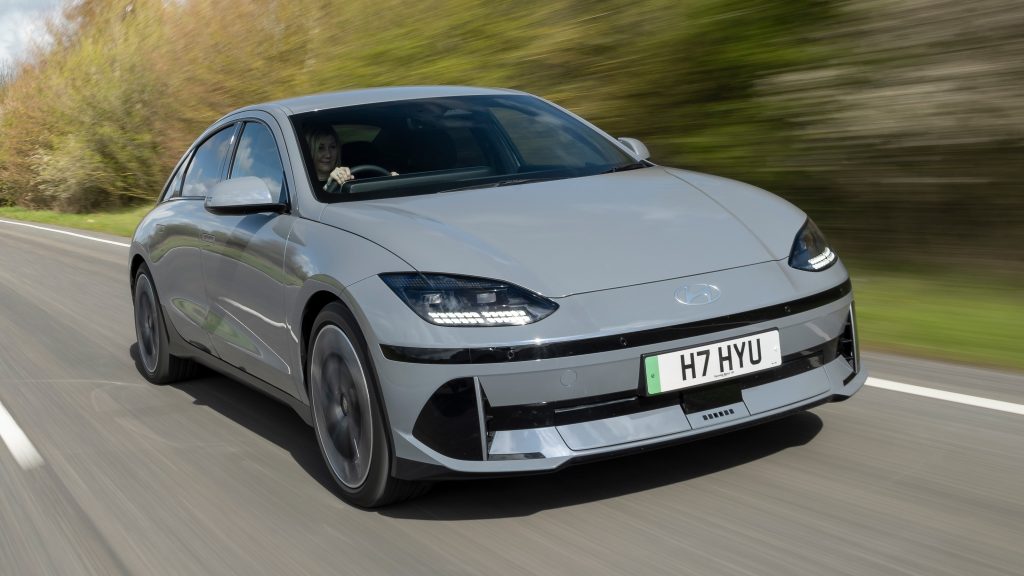
Its sedan body is less practical for bulky cargo than an SUV, but it offers a comfortable cabin, a quiet ride, and a long-range focus. Drivers who mostly travel on highways may appreciate its ability to cover distance efficiently between charging stops.
As with every EV, real charging times depend on battery temperature, weather, charger output, and the state of charge when the vehicle arrives.
- Engine: Single or dual electric motors
- Torque: Up to 446 lb-ft
- Horsepower: Up to 320 horsepower
- Length/Width: 191.1 inches / 74.0 inches
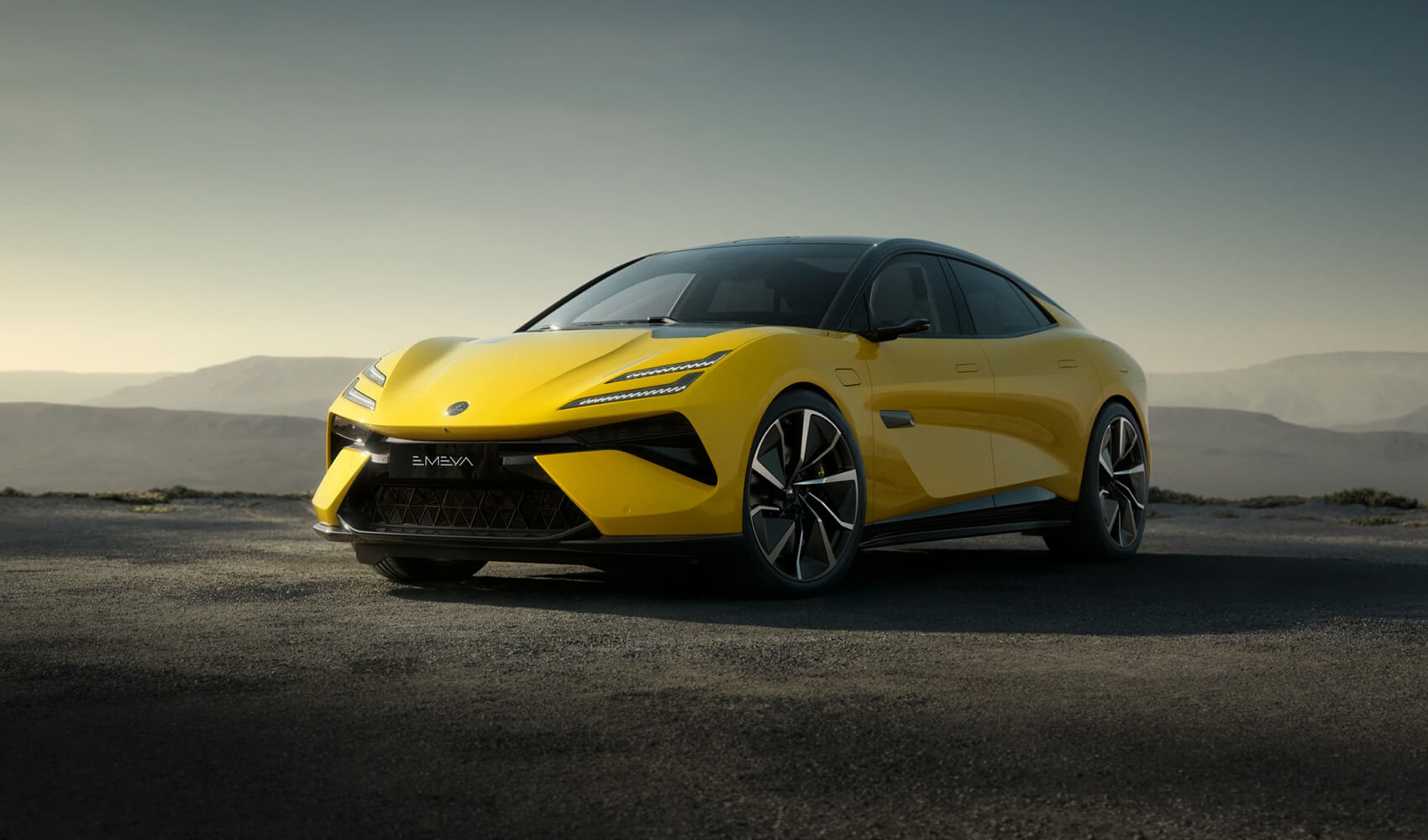
5. Lotus Emeya
The Lotus Emeya is built around the idea that an electric grand tourer should be able to cover long distances without turning every charging stop into a lengthy delay.
Its 800-volt architecture, large battery pack, and extremely high charging capability place it among the quickest-charging production EVs available in markets where it is sold. Under ideal conditions, the Emeya can charge from 10 percent to 80 percent in about 13 to 15 minutes on suitable ultra-fast DC equipment.
That figure is impressive because the Emeya has a battery capacity of roughly 102 kWh. Recharging 70 percent of a large pack in such a short period requires more than a high peak charging number.
The vehicle also needs effective thermal management and a strong charging curve that can hold high power for a meaningful portion of the session. Lotus has reported a public charging result of 10 percent to 80 percent in 13 minutes and 35 seconds, with charging power reaching 443 kW.
For road-trip use, the benefit is simple. A driver can stop, connect the car, and recover a large amount of driving range during a short break. That makes the Emeya more convenient than many EVs that may have a good range but need much longer at a charger. It also helps offset the energy demands of a high-performance luxury vehicle.
Charging results will still vary with weather, battery temperature, charger condition, and the state of charge at arrival.
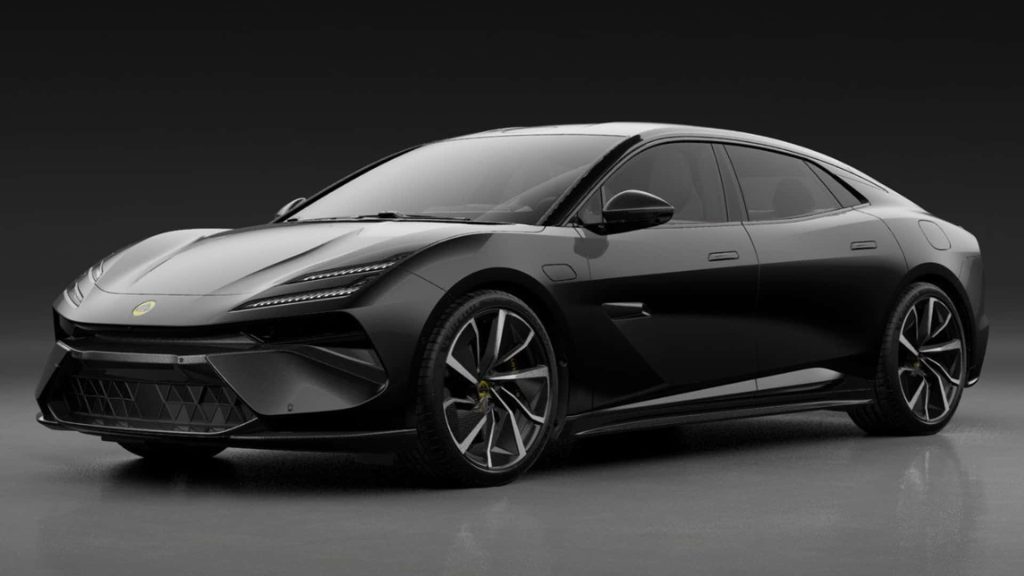
The Emeya performs best when its battery is preconditioned through the navigation system, and a high-output charger is available. It is not sold in every market, but its technology shows how quickly ultra-fast EV charging is advancing.
- Engine: Dual electric motors
- Torque: Up to 726 lb-ft
- Horsepower: Up to 905 horsepower
- Length/Width: 202.2 inches / 78.7 inches
6. Audi e-tron GT
The Audi e-tron GT is a luxury electric sedan that shares important electrical architecture with the Porsche Taycan. Like the Porsche, it uses an 800-volt system designed to reduce charging time during long journeys.
Audi has updated the e-tron GT with higher charging capability, allowing newer versions to accept up to 320 kW of DC power under the right conditions.
Audi says the latest e-tron GT can charge from 10 percent to 80 percent in around 18 minutes when connected to a compatible high-speed charger. That makes it a strong choice for drivers who want a premium EV that can recover useful range quickly rather than remaining plugged in for a long time.
Its fast-charging performance is especially important because the car is designed as a grand tourer, with a quiet cabin, stable high-speed behavior, and performance that suits highway travel.
A major advantage is the car’s battery management system. The e-tron GT can prepare its battery for fast charging when the driver uses built-in navigation to route to a suitable charging station.
This preconditioning process helps bring the battery to a temperature where it can accept power more effectively. Without it, particularly in cold weather, even a high-output charger may not deliver the vehicle’s best charging result.
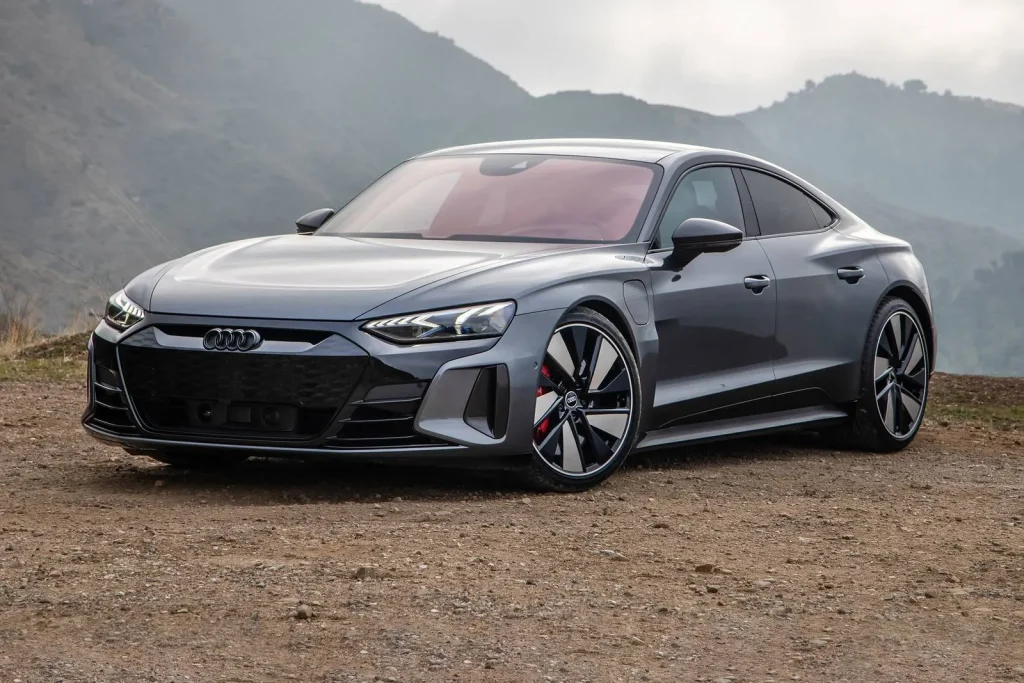
The e-tron GT is not the most practical EV for large families because its low roofline limits rear-seat space and cargo flexibility. Its strength lies in combining luxury, strong acceleration, and rapid charging into one long-distance-focused package.
For buyers who want an electric performance sedan that spends little time at charging stations, it remains one of the most capable options.
- Engine: Dual electric motors
- Torque: Up to 988 lb-ft
- Horsepower: Up to 912 horsepower
- Length/Width: 196.1 inches / 77.3 inches
7. Kia EV6
The Kia EV6 is a strong choice for drivers who want quick charging without buying a luxury EV. It shares Hyundai Motor Group’s 800-volt E-GMP electrical platform with the Hyundai IONIQ 5 and IONIQ 6, but it has a lower, more athletic body shape that gives it a distinct character.
Its charging performance is the key reason it belongs here. On a compatible high-output DC fast charger, the EV6 can move from 10 percent to 80 percent in about 18 minutes.
That short stop is valuable on a long highway journey. Instead of waiting close to an hour for a battery to recover useful range, an EV6 driver can often use a normal rest break to continue the trip.
The vehicle’s charging curve is designed to accept high power early in the session, although output naturally tapers as the battery approaches 80 percent. Planning charging stops between roughly 10 and 80 percent is usually more time-efficient than waiting for a full charge.
The EV6 also shows why peak charging power is only one part of the story. Battery conditioning, charger reliability, weather, and the vehicle’s starting battery percentage can change the result.
Navigation-based battery preconditioning is helpful because a cold battery may not accept its maximum charging rate immediately. When the battery is ready, and a suitable charger is available, the EV6 is among the most convenient mainstream EVs for road trips.
Kia offers rear-wheel-drive and all-wheel-drive versions, along with the high-performance EV6 GT. The regular long-range versions are often the better choice for drivers who prioritize efficiency and travel distance.
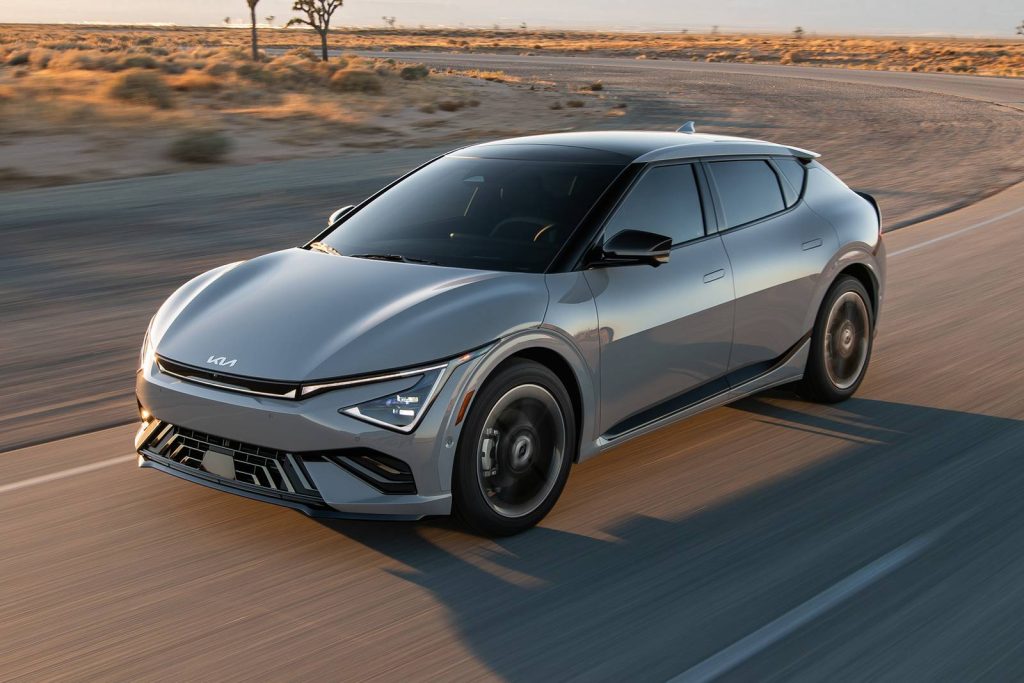
The EV6 combines useful range, rapid charging, and a practical hatchback-like cargo area, making it one of the most balanced fast-charging EVs available.
- Engine: Single or dual electric motors
- Torque: Up to 545 lb-ft
- Horsepower: Up to 576 horsepower
- Length/Width: 184.8 inches / 74.0 inches
8. Mercedes-Benz EQS
The Mercedes-Benz EQS approaches rapid charging from a luxury sedan perspective. It is designed to be quiet, comfortable, aerodynamic, and capable of covering long distances with fewer interruptions.
Its 400-volt electrical system does not use the same 800-volt setup found in the Porsche Taycan or Hyundai IONIQ 6, yet the EQS can still provide strong DC fast-charging performance thanks to its large battery and sophisticated thermal management.
On a suitable DC fast charger, the EQS can charge from 10 percent to 80 percent in about 31 minutes. That is not as quick as the fastest 800-volt EVs, but the car’s exceptional efficiency and long available range mean it can travel farther between stops than many rivals.
For a driver covering highway miles, the important question is not only how quickly the battery charges but also how much distance the vehicle can cover after each session.
The EQS uses battery preconditioning to improve charging performance. When a compatible fast charger is selected through the navigation system, the vehicle can warm or cool the battery before arrival.
This helps the pack accept energy more efficiently and reduces the chance of a slower session caused by unfavorable battery temperature.
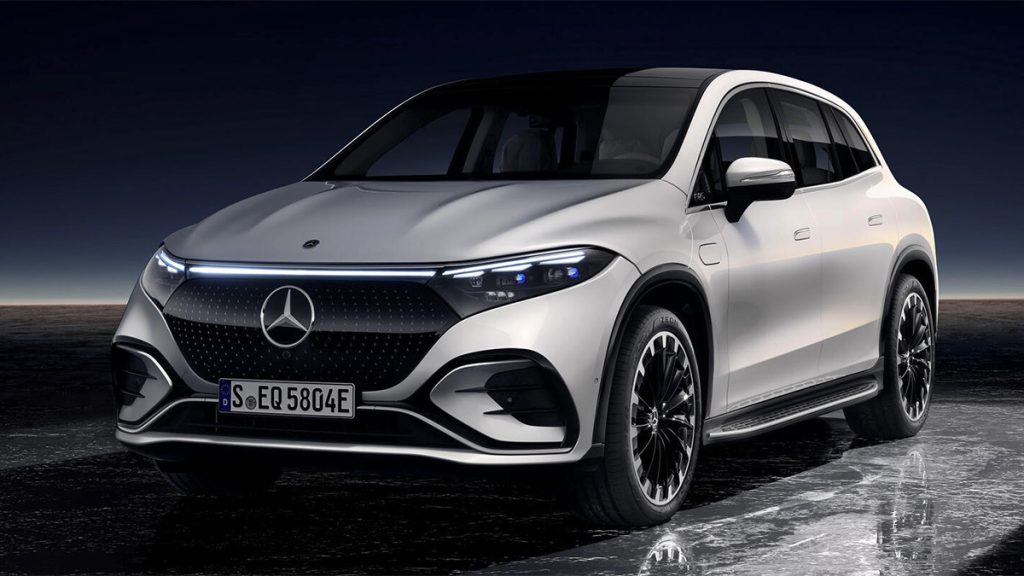
Its large battery also gives the EQS an advantage for drivers who do not want to charge frequently. The vehicle can cover a substantial distance before needing a stop, then recover enough energy to continue during a meal or rest break.
It is not the shortest-stop EV in this list, but its combination of range, refinement, and consistent charging behavior makes it suitable for luxury buyers who want fewer interruptions on long journeys.
- Engine: Single or dual electric motors
- Torque: Up to 950 lb-ft
- Horsepower: Up to 649 horsepower
- Length/Width: 205.4 inches / 83.7 inches
9. Zeekr 7X
The Zeekr 7X is one of the most remarkable charging-focused electric SUVs currently sold in markets such as China and parts of Europe. Its 800-volt electrical system and Golden Battery technology allow it to recover energy at a pace that many established EVs cannot match.
Zeekr states that the 7X can charge from 10 percent to 80 percent in as little as 13 minutes on a suitable DC fast charger, while certain versions equipped with the Golden Battery have recorded even quicker results in testing.
This SUV is important because it proves that ultra-fast charging is not limited to low-slung performance sedans. The 7X has the practical proportions of a family SUV, with a taller roofline, useful passenger space, and a large cargo area.
Yet it can still accept up to 480 kW of DC charging power in the right conditions. That gives it a major advantage during long journeys, since a short break can add enough energy for a substantial next leg of travel.
The claimed numbers require compatible high-power chargers, which are more common in China than in many other markets. Battery temperature also remains critical.
Navigation-guided preconditioning can warm or cool the battery before arrival, helping it accept electricity at the intended rate. A lower-output charger, a cold battery, or a crowded station can extend the charging stop.
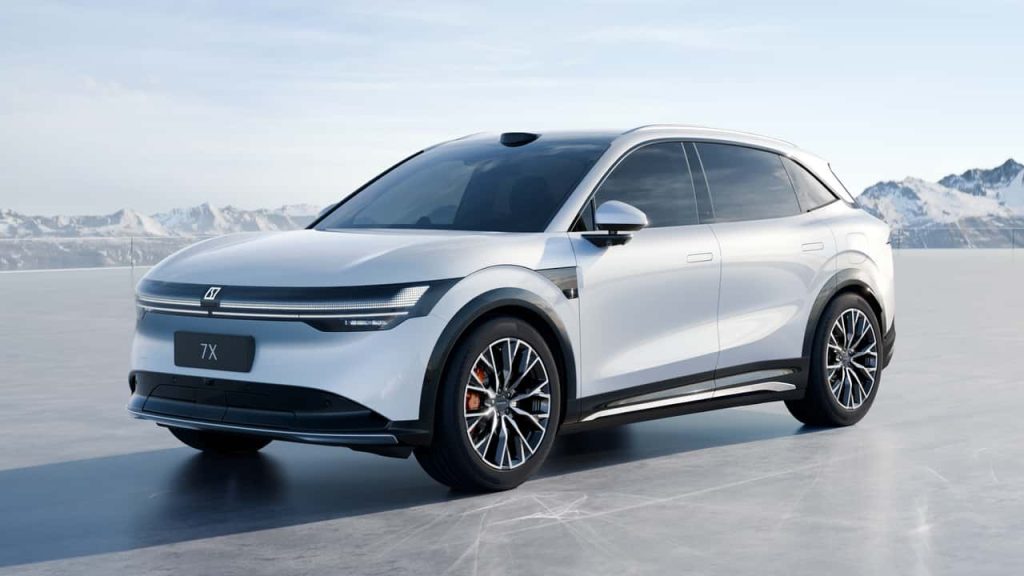
For buyers in markets where it is available, the 7X shows how quickly EV charging expectations are changing. It is a family-oriented SUV that can spend less time connected to a charger than many smaller electric cars, provided the charging infrastructure can support its technology.
- Engine: Single or dual electric motors
- Torque: 524 lb-ft
- Horsepower: Up to 646 horsepower
- Length/Width: 189.8 inches / 76.4 inches
10. Zeekr 001
The Zeekr 001 has become one of the clearest examples of how quickly Chinese EV technology is advancing. This electric shooting brake combines long-distance practicality with some of the fastest charging claims available from a production vehicle.
The latest high-performance version uses a 900-volt electrical architecture and Zeekr’s Golden Brick battery, allowing a claimed 10 percent to 80 percent charging session in about seven minutes when connected to a suitable megawatt-class charger.
That figure is far beyond what most public charging networks in North America and Europe can currently provide. The 001 can reportedly accept more than 1 megawatt of charging power, so its fastest result depends on Zeekr’s newest high-output charging stations in China.
On more common fast chargers, it will still charge rapidly, but it cannot achieve its headline time without the necessary infrastructure.
The 001’s charging performance is especially impressive because it is not a small, lightweight city car with a tiny battery. Its 95-kWh battery version combines substantial capacity with strong performance, allowing drivers to add a large amount of range during a stop that may be shorter than a typical coffee break.
The dual-motor version also delivers serious acceleration, making it a fast grand touring EV rather than a vehicle designed only around efficiency.
Its availability remains limited outside China, which is an important consideration for international buyers. Still, the Zeekr 001 belongs in this list because it represents the current extreme of production EV charging technology.
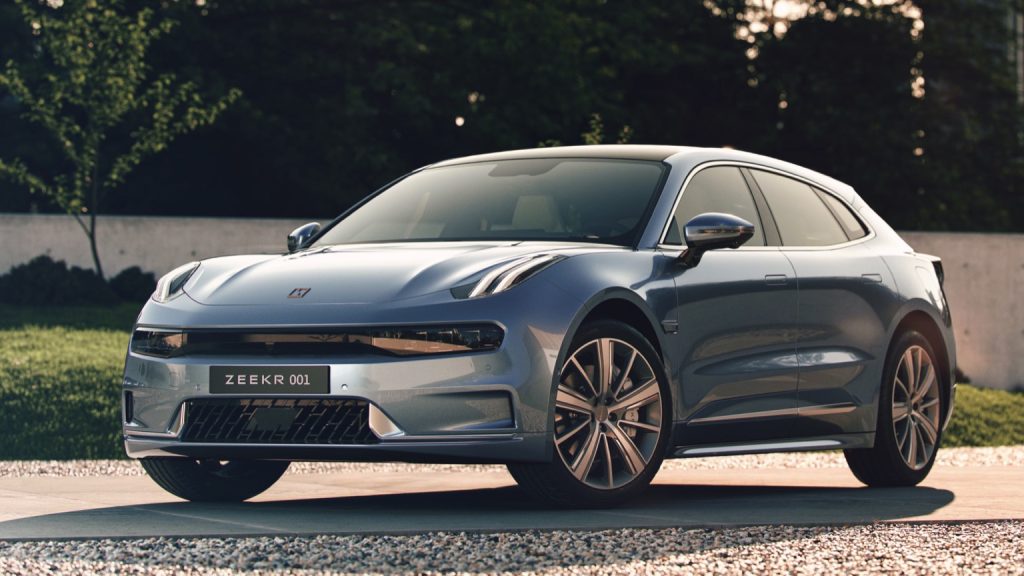
It shows that battery systems, cooling hardware, and charging networks are moving toward stops measured in minutes rather than lengthy waiting periods.
- Engine: Dual electric motors
- Torque: 593 lb-ft
- Horsepower: 912 horsepower
- Length/Width: 195.2 inches / 78.5 inches
Also Read: Toyota Holds 10 of the 25 Longest-Lasting Vehicles on the Road
