
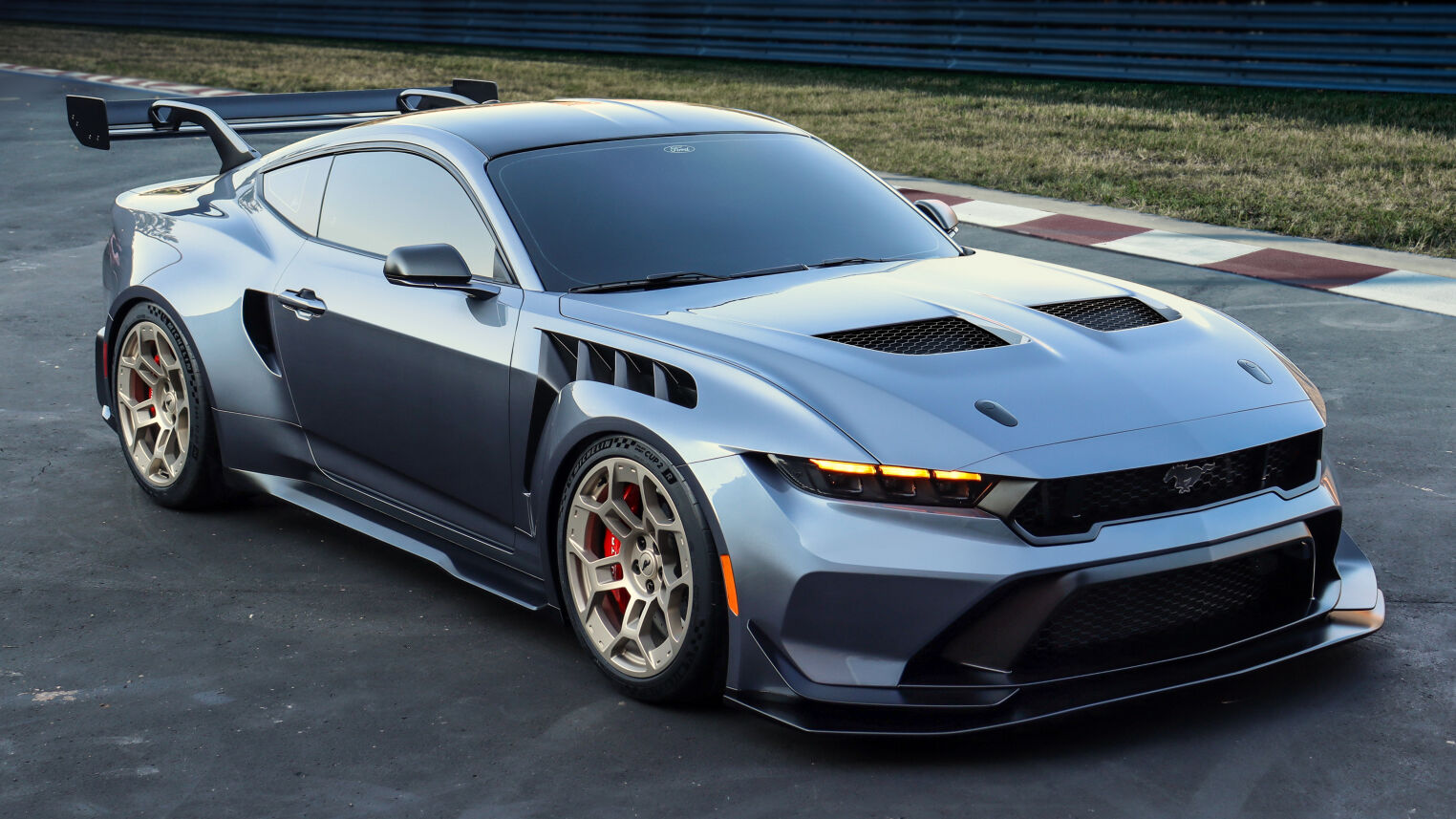
Ford is often associated with affordable transportation, mass production, and iconic muscle cars, but the Blue Oval has also produced some of the most valuable and expensive automobiles in history.
From championship-winning race cars and ultra-rare homologation specials to limited-production supercars and record-breaking collector vehicles, Ford’s legacy extends far beyond everyday family cars and pickup trucks.
Many of these extraordinary machines have become prized possessions among collectors, with auction prices climbing into the millions of dollars due to their rarity, historical significance, and remarkable engineering.
Several factors determine why these Fords command such astonishing values. Limited production numbers, motorsport achievements, celebrity ownership, groundbreaking technology, and historical importance all contribute to their desirability.
Some of these vehicles were created specifically to dominate famous endurance races like Le Mans, while others served as engineering showcases that demonstrated Ford’s ability to compete with Europe’s finest performance manufacturers.
As collector demand has increased over the decades, many of these cars have appreciated dramatically, making them some of the most sought-after American automobiles ever built.
This ranking combines original exclusivity with present-day collector value to identify the ten most expensive Ford models ever made.
Some achieved incredible prices when new, while others became multi-million-dollar collector pieces through their historical importance. Together, they represent the pinnacle of Ford’s engineering ambition, racing heritage, and automotive excellence.
Also Read: 10 Cars With The Best City MPG
1. Ford GT40 Mk II (1966)
Few racing cars have changed automotive history as dramatically as the Ford GT40 Mk II. Developed during Ford’s determined effort to defeat Ferrari at the 24 Hours of Le Mans, the GT40 Mk II became one of the company’s greatest engineering achievements.
Its famous one-two-three finish at Le Mans in 1966 transformed Ford into a global motorsport powerhouse and cemented the GT40’s legendary status. Original race-winning examples have sold for well over $10 million, making them the most valuable Ford automobiles ever built.
The GT40 Mk II was designed with only one objective: endurance-racing victory. Every aspect of its construction prioritized speed, reliability, and aerodynamic efficiency.
The low-profile body minimized drag, while lightweight materials helped reduce mass during long-distance competition. Engineers subjected the car to relentless development, ensuring it could withstand the demands of one of the world’s toughest races.
Behind the cockpit sat a massive V8 engine producing enormous power for its era. Combined with exceptional chassis balance and race-proven durability, the GT40 possessed the performance necessary to challenge Europe’s finest manufacturers on their home turf. Its thunderous exhaust note became one of the defining sounds of 1960s endurance racing.
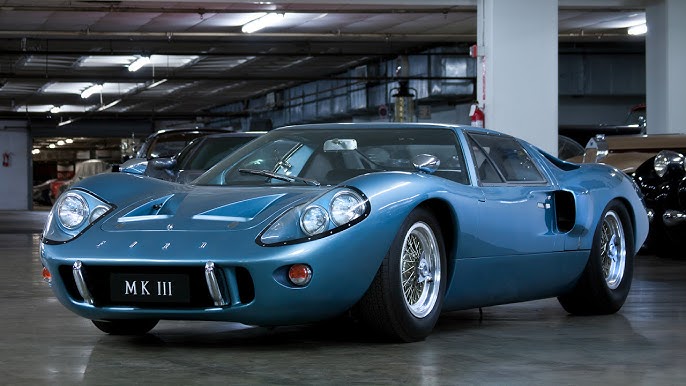
Today, surviving GT40 Mk II race cars represent the pinnacle of Ford collecting. Their direct connection to one of motorsport’s greatest triumphs, combined with extremely limited production and unquestionable historical importance, ensures that values continue climbing.
Few automobiles embody determination, engineering excellence, and competitive spirit as completely as the Ford GT40 Mk II.
Specifications
- Engine: 7.0-liter naturally aspirated V8
- Torque: Approximately 475 lb ft
- Horsepower: 485 hp
- Length/Width: 160.0 in / 70.0 in
2. Ford GT40 Mk I Road Car (1965 to 1969)
Although the racing versions earned worldwide fame, the road-going Ford GT40 Mk I has become equally desirable among collectors.
Built in extremely limited numbers to satisfy homologation requirements and offer customers a street-legal version of Ford’s racing masterpiece, the GT40 Mk I combined exotic styling with authentic competition engineering.
Today, original examples regularly command values exceeding $5 million, placing them among the most expensive production Fords ever created.
Many road cars inspired by motorsport differ significantly from their racing counterparts, but the GT40 Mk I remained remarkably faithful to its competition origins. Drivers sat inside a compact cockpit surrounded by a lightweight chassis, wide bodywork, and dramatic proportions that looked almost identical to the racing version.
Visibility required adjustment, cabin space was limited, and practicality ranked far behind performance, but these characteristics only enhanced its authenticity.
Power came from a high-performance V8 mounted behind the driver, delivering exhilarating acceleration and a distinctive soundtrack.
The mid-engine layout provided exceptional balance, allowing experienced drivers to appreciate handling characteristics that closely resembled those of the Le Mans race cars.
Every journey reminded owners they were driving a machine developed with international motorsport success as its primary objective.
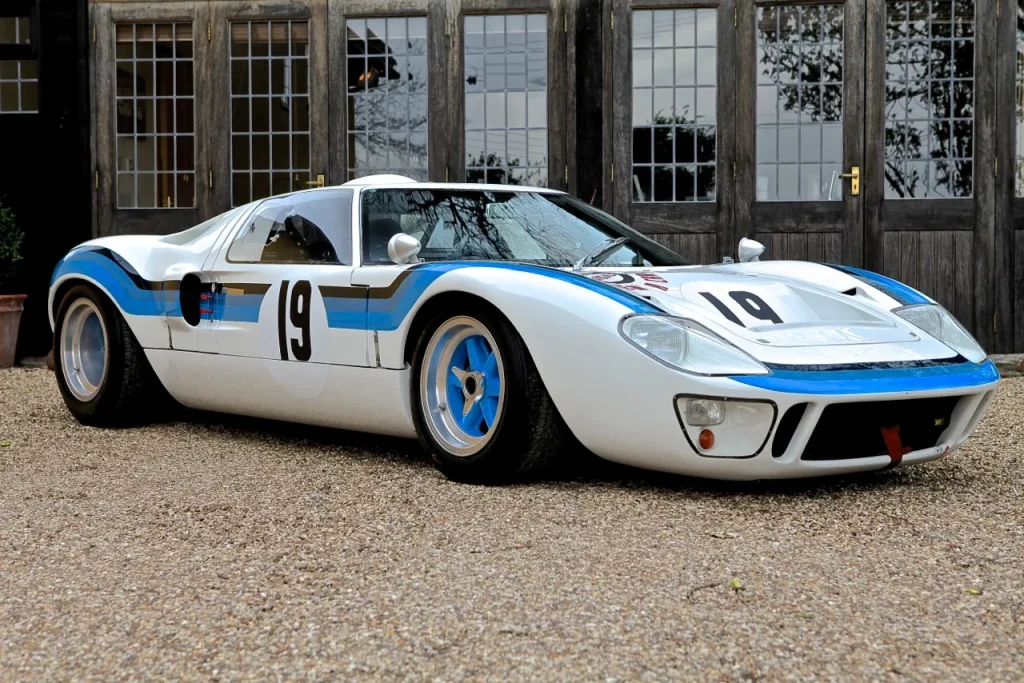
Collectors continue to value the GT40 Mk I because it captures one of Ford’s greatest achievements in a package that can legally be driven on public roads.
Its combination of rarity, historical significance, unmistakable styling, and direct racing heritage ensures lasting demand. Few American performance cars have achieved such universal admiration or such extraordinary market values.
Specifications
- Engine: 4.7-liter naturally aspirated V8
- Torque: 306 lb ft
- Horsepower: 306 hp
- Length/Width: 160.0 in / 70.0 in
3. Ford GT Mk IV (2023)
Modern supercars often chase higher horsepower figures, but the Ford GT Mk IV pursued something more ambitious. Developed as the ultimate evolution of the second-generation Ford GT, the Mk IV was designed exclusively for track use without the compromises required for road legality.
Limited to just 67 examples worldwide, it immediately became one of the rarest and most expensive Ford vehicles ever offered directly by the manufacturer. With a starting price approaching $1.7 million before personalization, every production slot was claimed almost immediately.
Compared with the standard Ford GT, the Mk IV features a completely revised long-tail carbon fiber body engineered to maximize aerodynamic efficiency.
A larger rear wing, aggressive front splitter, redesigned underbody, and extensive airflow management generate significantly more downforce, allowing the car to maintain extraordinary stability during high-speed circuit driving.
Every panel serves a functional purpose, reflecting Ford Performance’s focus on lap time rather than everyday usability.
The powertrain also received substantial upgrades. A specially developed twin-turbocharged EcoBoost V6 produces more than 800 horsepower, working alongside a racing transmission and extensively revised suspension.
Lightweight construction keeps mass under control, while adjustable dampers and competition-focused chassis tuning allow drivers to extract the maximum possible performance on demanding race circuits.
The GT Mk IV represents the final chapter of the modern Ford GT program, giving it special significance among collectors.
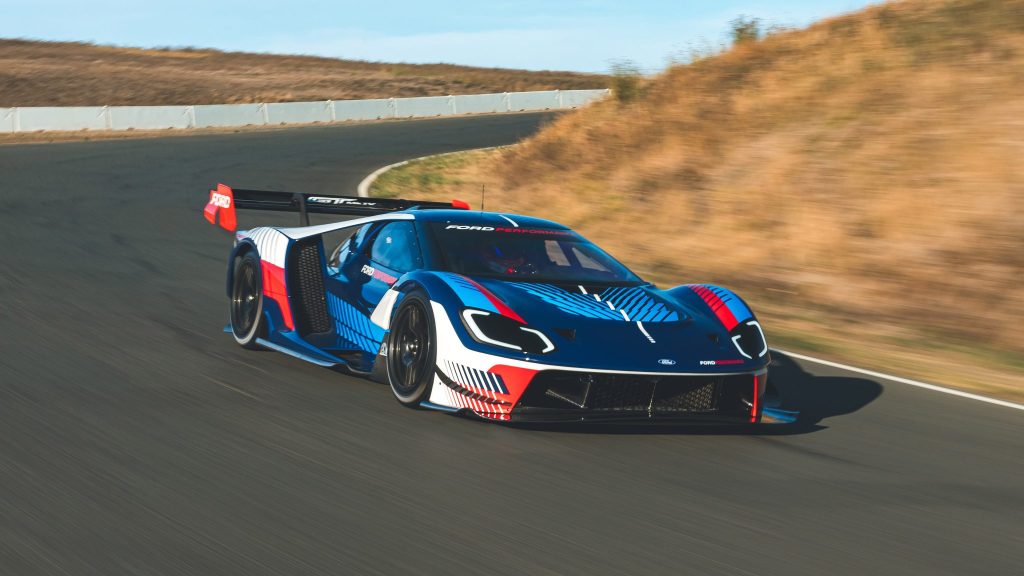
Its combination of extremely limited production, uncompromising engineering, and direct connection to Ford’s legendary GT heritage has already upgraded it into one of the most sought-after American performance cars of the modern era.
It demonstrates that Ford remains capable of producing exclusive machines worthy of standing beside the world’s most prestigious exotic automobiles.
Specifications
- Engine: 3.5-liter twin-turbocharged EcoBoost V6
- Torque: Not officially disclosed
- Horsepower: More than 800 hp
- Length/Width: Approximately 190.0 in / 79.0 in
4. Ford GT (2017 to 2022)
When Ford announced the return of the GT for the 2017 model year, it surprised the automotive world by creating a technology-driven supercar instead of a traditional muscle car.
Inspired by the company’s Le Mans-winning heritage, the second-generation Ford GT combined advanced aerodynamics, carbon fiber construction, and cutting-edge engineering to compete with Europe’s finest exotics.
Its original price exceeded $500,000, but demand quickly pushed resale values well beyond $1 million for desirable examples.
Rather than relying on a large-displacement V8, Ford selected a compact twin-turbocharged EcoBoost V6. This decision generated debate initially, yet the lightweight engine contributed to outstanding performance while allowing engineers greater flexibility with the car’s aerodynamic design.
Active suspension, a flying buttress body structure, and an adjustable rear wing created remarkable stability at both road and track speeds.
Entry into ownership was intentionally selective. Ford required prospective buyers to complete an application process before purchasing the car, helping ensure many examples reached genuine enthusiasts rather than immediate speculators.
Limited annual production further strengthened exclusivity, making every GT feel like a highly collectible automobile from the moment it left the factory.
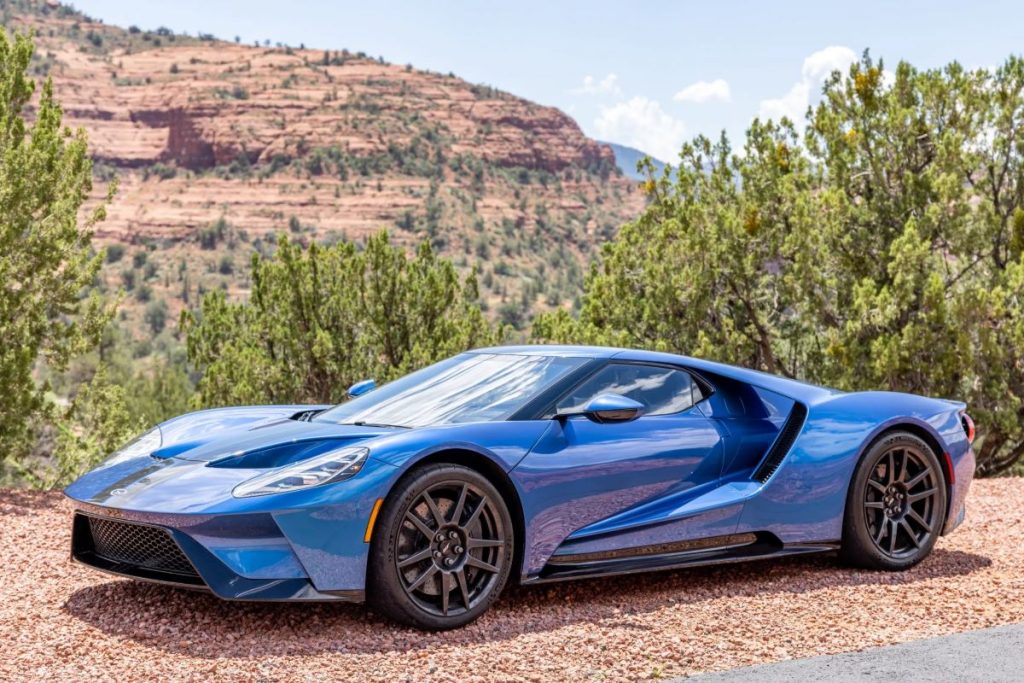
Beyond impressive acceleration figures, the second-generation GT symbolized Ford’s return to elite international performance engineering. It successfully balanced race-inspired technology with road legality, proving the company could compete against brands traditionally associated with the supercar segment.
As production concluded, collector interest intensified, establishing the modern Ford GT as one of the most valuable and expensive production vehicles the company has ever built.
Specifications
- Engine: 3.5-liter twin-turbocharged EcoBoost V6
- Torque: 550 lb ft
- Horsepower: 660 hp
- Length/Width: 188.1 in / 78.7 in
5. Ford Shelby Cobra 427 Super Snake (1966)
The Shelby Cobra 427 Super Snake occupies a unique position in Ford history because it combines breathtaking performance with extraordinary rarity. Although developed by Carroll Shelby, the car was powered by Ford’s legendary 427 cubic inch V8 and represented the most extreme evolution of the Cobra platform.
Only two Super Snake examples were ever completed, and just one survives today. That unmatched exclusivity has pushed auction values beyond $5 million, making it one of the most expensive Ford-powered automobiles ever sold.
The Super Snake was never intended to be an ordinary roadster. Shelby envisioned it as a road-legal machine with race car performance, equipping it with twin superchargers that transformed an already potent engine into something almost uncontrollable by 1960s standards.
The enormous power output demanded exceptional driver skill, earning the car a reputation as one of the wildest production-based performance vehicles of its generation.
Its lightweight aluminum body amplified every aspect of the driving experience. Acceleration was explosive, steering remained incredibly direct, and the thunderous exhaust note reflected the immense capability hiding beneath the hood.
In contrast to modern supercars equipped with electronic safety systems, the Super Snake relied entirely on driver ability, adding to both its excitement and legendary status among enthusiasts.
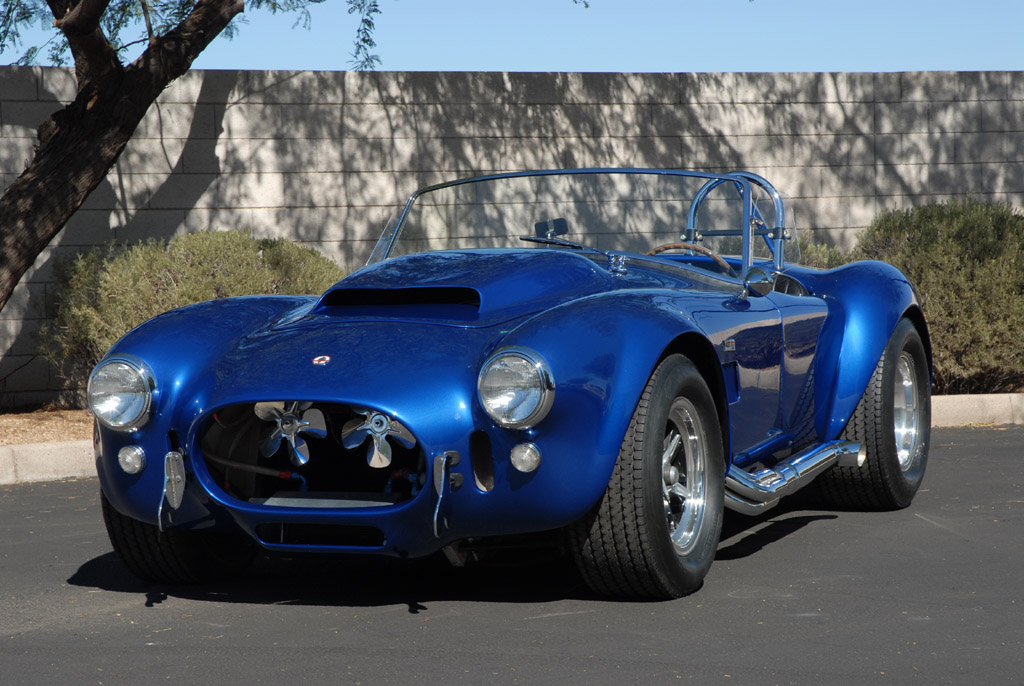
Collectors consider the surviving Super Snake almost priceless because it represents a perfect combination of Ford performance, Carroll Shelby’s engineering vision, and extreme rarity.
Few American automobiles possess such an extraordinary history or command similar respect within the collector market. Every public appearance reminds enthusiasts why the Super Snake remains one of the most valuable Ford-powered cars ever created.
Specifications
- Engine: 7.0-liter supercharged V8
- Torque: Approximately 640 lb ft
- Horsepower: Approximately 800 hp
- Length/Width: 157.5 in / 68.0 in
6. Ford Mustang GTD (2025 to Present)
The Mustang GTD represents one of the boldest projects in Ford’s modern history. Rather than creating another high-performance version of its famous pony car, Ford engineered a road-legal machine inspired directly by the Mustang GT3 race car.
Featuring advanced motorsport technology rarely seen in production vehicles, the GTD entered the market with a starting price of approximately $325,000, making it the most expensive production Mustang ever offered.
Almost every major component distinguishes the GTD from conventional Mustangs. Extensive carbon fiber body panels reduce weight, while a rear-mounted transaxle improves weight distribution for sharper handling.
Active aerodynamics continuously adjust to maximize downforce at high speeds, and a sophisticated semi-active suspension allows the car to adapt instantly between public roads and race circuits. These technologies upgrade the GTD into genuine supercar territory.
Power comes from a hand-assembled supercharged 5.2-liter V8 producing more than 800 horsepower.
Combined with exceptional chassis engineering and advanced braking systems, the GTD has been developed with the ambitious goal of becoming one of the fastest production cars ever to lap Germany’s Nürburgring. Ford’s focus extends far beyond straight-line acceleration, emphasizing complete track capability.
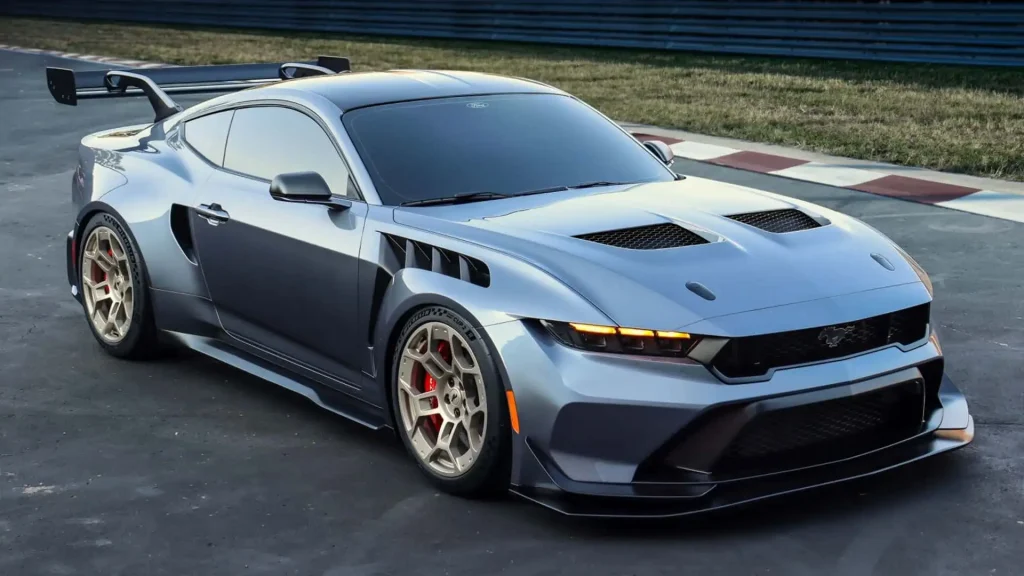
Demand for the Mustang GTD has dramatically exceeded production capacity, with prospective buyers undergoing an application process similar to Ford’s previous GT program.
Limited availability, groundbreaking engineering, and exceptional performance have already secured its place as one of the company’s most desirable modern vehicles.
The GTD demonstrates how far the Mustang has evolved from its original muscle car roots into a world-class performance machine.
Specifications
- Engine: 5.2-liter supercharged V8
- Torque: Approximately 664 lb ft
- Horsepower: 815 hp
- Length/Width: Approximately 189.0 in / 80.0 in
7. Ford RS200 Evolution (1986)
The original RS200 was already an extraordinary machine created for the fearsome Group B rally era, but the Evolution version upgraded performance to an entirely different level. Produced in extremely limited numbers to satisfy homologation regulations, the RS200 Evolution became one of the rarest performance Fords ever built.
Fewer than 30 Evolution models were completed, and surviving examples now command prices well above $700,000, with exceptional cars occasionally approaching or exceeding the million-dollar mark depending on provenance and condition.
The RS200 Evolution was engineered for rally competition first and foremost, rather than as a conventional sports car.
A lightweight composite body, mid-engine layout, advanced four-wheel drive system, and sophisticated suspension gave it remarkable capability across gravel, snow, asphalt, and mud. Every design decision prioritized speed over challenging terrain rather than comfort or practicality.
Its turbocharged four-cylinder engine became one of the most powerful engines of the Group B era. In competition specification, output could exceed 600 horsepower, while roadgoing Evolution models still delivered astonishing acceleration.
Combined with compact dimensions and exceptional traction, the RS200 Evolution earned a reputation for explosive performance that demanded respect from even the most experienced drivers.
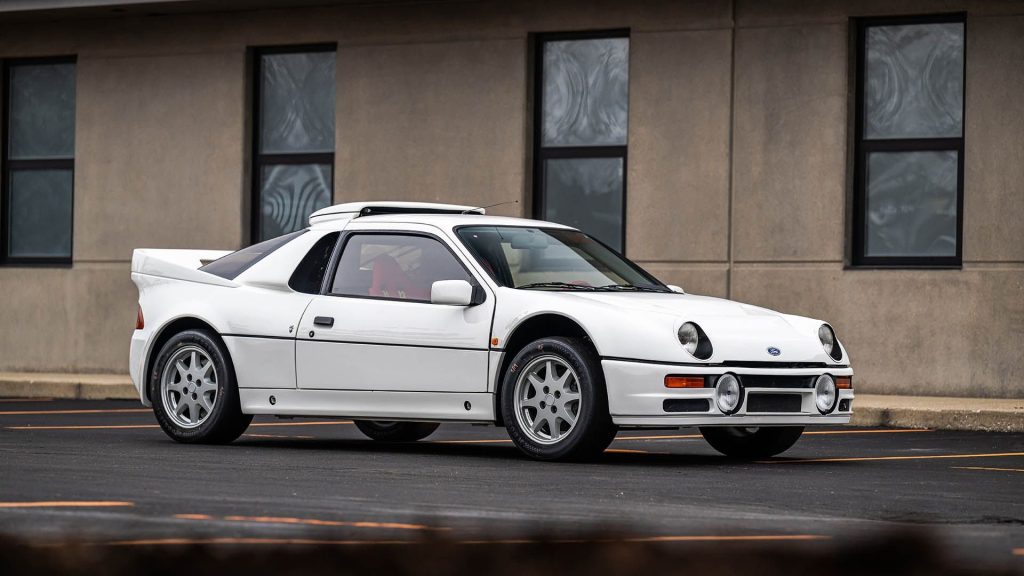
The cancellation of the Group B competition shortly after the car’s introduction only increased its legendary status. With so few examples built and even fewer remaining in original condition, collectors now view the RS200 Evolution as one of the ultimate Ford performance icons.
Its combination of motorsport history, rarity, and technical innovation ensures its position among the most expensive Ford automobiles ever produced.
Specifications
- Engine: 2.1-liter turbocharged inline-4
- Torque: 291 lb ft
- Horsepower: 450 hp
- Length/Width: 157.5 in / 69.7 in
8. Ford Shelby GT350R Prototype “Flying Mustang” (1965)
Not every valuable Ford achieved its status through production numbers alone. The Shelby GT350R Prototype, famously nicknamed the “Flying Mustang,” holds a unique place in American motorsport history because it was the very first competition-prepared Shelby Mustang.
Driven by Ken Miles during its debut race in 1965, the car immediately demonstrated its potential by securing a victory and laying the foundation for decades of Shelby racing success. When it crossed the auction block in 2020, it sold for more than $3.8 million, setting a record for a Mustang at the time.
Its importance comes primarily from historical significance rather than extreme engineering. This prototype became the blueprint for every Shelby Mustang race car that followed.
Carroll Shelby’s team extensively modified the standard Mustang with upgraded suspension, improved braking, reduced weight, and a race-tuned V8, transforming an already capable sports coupe into a dominant SCCA competition machine.
The nickname “Flying Mustang” originated when photographs captured all four wheels leaving the ground during aggressive racing. Those dramatic images became iconic within American motorsport and remain closely associated with the car today.
Beyond its racing achievements, the prototype symbolizes the beginning of one of the most successful partnerships in automotive history between Ford and Carroll Shelby.
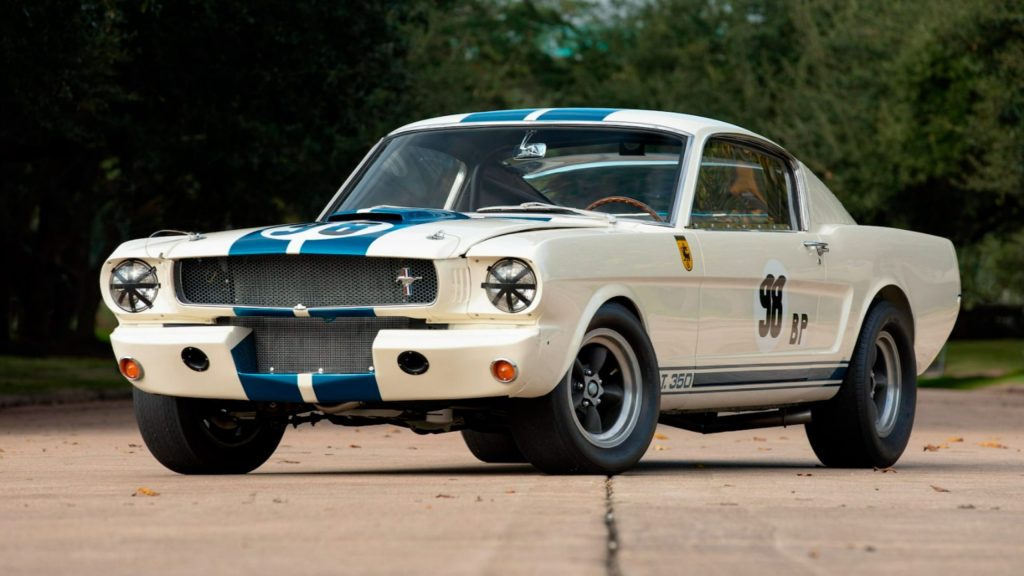
Collectors place extraordinary value on vehicles that mark significant turning points, and the GT350R prototype represents exactly that. It combines documented racing history, legendary drivers, and unmatched historical importance into a single automobile.
While later Shelby Mustangs became celebrated performance cars, this prototype remains the one that started the legend, securing its place among the most expensive Fords ever sold.
Specifications
- Engine: 4.7-liter naturally aspirated V8
- Torque: 329 lb ft
- Horsepower: 306 hp
- Length/Width: 181.6 in / 68.2 in
9. Ford GT Heritage Edition (2022)
Special editions often become collectible because of unique paintwork or limited production, but the 2022 Ford GT Heritage Edition carried a much deeper meaning.
Created to commemorate the 1964 Ford GT prototype that began the company’s journey toward Le Mans glory, this version combined exclusive styling with the engineering excellence of the modern Ford GT. Finished in Wimbledon White with distinctive Antimatter Blue accents, it immediately stood apart from every other GT.
With production already tightly restricted, the Heritage Edition became one of the most desirable modern Fords, with resale prices comfortably surpassing $1 million shortly after deliveries began.
The Heritage Edition retained the carbon fiber monocoque, advanced active aerodynamics, and race-inspired suspension that made the standard Ford GT one of the world’s finest supercars.
Owners received lightweight carbon fiber wheels, exposed carbon trim, Alcantara upholstery, and individually numbered plaques that reinforced the car’s exclusivity. Every detail celebrated Ford’s historic motorsport achievements while showcasing modern engineering.
Its twin-turbocharged EcoBoost V6 delivered exceptional performance, producing rapid acceleration and outstanding handling without relying on excessive engine displacement.
Active suspension and aerodynamic elements continuously adapt to changing driving conditions, allowing the GT to remain equally impressive on race circuits and public roads. The combination of advanced technology and limited availability created instant collector appeal.
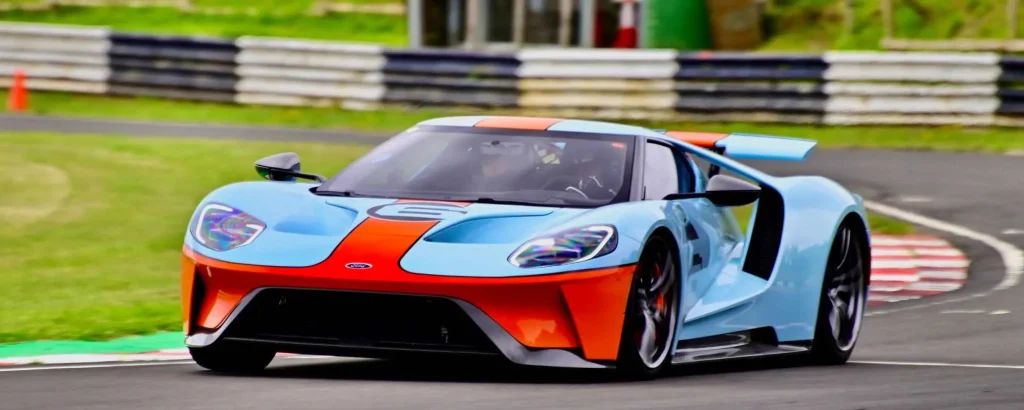
What separates the Heritage Edition from many special models is its historical connection. Rather than simply introducing cosmetic revisions, Ford honored the prototype that launched one of the greatest racing stories in automotive history.
As production of the second-generation GT concluded, demand for every Heritage Edition intensified, making it one of the most valuable and expensive road-going Fords ever offered to customers.
Specifications
- Engine: 3.5-liter twin-turbocharged EcoBoost V6
- Torque: 550 lb ft
- Horsepower: 660 hp
- Length/Width: 188.1 in / 78.7 in
10. Ford Falcon GTHO Phase III (1971)
The final position belongs to a car that achieved legendary status far from Ford’s American headquarters. Developed by Ford Australia, the Falcon GTHO Phase III became one of the country’s greatest performance cars and remains one of the most valuable Australian automobiles ever produced.
Built in limited numbers specifically to dominate touring car racing, the Phase III combined muscular V8 performance with practical sedan styling. Today, immaculate examples regularly sell for well over $1 million, making it one of the most expensive Ford models in the world.
The Falcon GTHO relied on traditional muscle car engineering instead of the exotic mid-engine layouts found in many supercars. Beneath its understated exterior sat a massive 351-cubic-inch Cleveland V8 tuned for exceptional high-speed performance.
The car gained widespread recognition after demonstrating remarkable top-speed capability, earning a reputation as one of the fastest four-door production sedans of its era. Its blend of everyday practicality and racing-inspired engineering earned the admiration of enthusiasts throughout Australia.
The Falcon’s motorsport achievements significantly enhanced its reputation. Success in endurance racing events, particularly the demanding Bathurst 500, established the Phase III as a national icon.
Victories against fierce competition upgraded its status beyond that of an ordinary muscle car, creating an enduring legacy that continues more than five decades later.
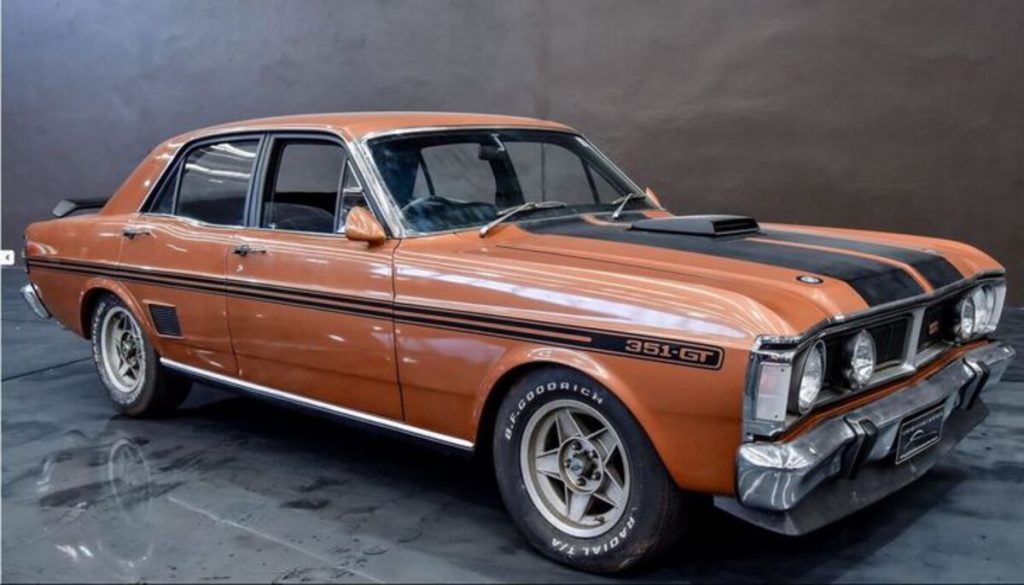
Collectors value the Falcon GTHO Phase III because it represents the pinnacle of Ford Australia’s performance heritage. Limited production, proven racing success, historical significance, and growing international recognition have steadily increased values over the years.
It closes this ranking as a reminder that Ford’s most expensive automobiles are not limited to American factories but include exceptional machines developed around the world.
Specifications
- Engine: 5.8-liter naturally aspirated Cleveland V8
- Torque: 380 lb ft
- Horsepower: 300 hp
- Length/Width: 193.0 in / 73.0 in
Also Read: 10 Car Brands That Built Aircraft Engines
