
For many vehicle owners, inspection season can be stressful, especially in states where the testing process is detailed and strictly enforced. Inspectors do much more than confirm that a car starts properly. They examine the brakes, lights, tyres, emissions system, window tint, windshield wipers, steering, suspension, and several other safety components. While some states carry out only basic checks, others require a much deeper inspection before a vehicle qualifies for registration renewal.
The inspection experience can differ greatly depending on where you live. A driver in Vermont may face a much more demanding process than someone in Florida, where inspection requirements are far less strict. Certain states have developed detailed inspection programmes that leave very little to chance. Mechanics follow clear guidelines to ensure every vehicle meets the required safety and environmental standards before issuing approval.
This page looks at the eight states with the toughest vehicle inspection rules and highlights a car that matches the driving needs of each location. If you travel regularly, plan to relocate, or simply want to understand how these inspections work, this guide provides useful information.
It also offers practical suggestions for choosing a vehicle that is more likely to meet inspection requirements, helping you avoid unnecessary repairs, repeated testing, and delays when it is time to renew your registration.
1. New York
Vehicle owners in New York must meet strict inspection requirements every year before their cars can remain legally registered for use on public roads. The state requires both safety and emissions inspections, and many people relocating there are surprised by how detailed the process can be. Inspectors carefully examine the brakes, exhaust system, lights, steering components, suspension, and other safety items.
A vehicle with an illuminated check engine light will not pass the inspection until the fault has been properly repaired. Window tint rules also catch many drivers by surprise. New York requires passenger vehicles to allow at least 70 percent of light through the windows, making the rule stricter than what applies in many other states. Inspection stations use special measuring equipment to verify compliance rather than relying on a visual check.
Another area that deserves attention is the state’s focus on keeping vehicles safe and environmentally compliant. Every inspection is designed to confirm that the car meets both mechanical and emissions requirements before a new inspection sticker is issued. Drivers who install dark aftermarket window tints or delay repairs after a warning light appears often face failed inspections and extra repair costs. Following the manufacturer’s recommendations helps reduce those problems and keeps the inspection process much easier.
Anyone looking for a dependable sedan that fits New York’s inspection standards should consider the Toyota Camry LE. It comes with a 2.5-litre four-cylinder engine producing about 203 horsepower, matched with an eight-speed automatic transmission. Fuel economy is rated at about 28 mpg in the city and 39 mpg on the highway.
Toyota Safety Sense 2.5, forward collision warning, and lane departure alert come as standard equipment. Starting at about $27,000, the Camry LE also has factory window tint that meets state requirements, reducing the chances of inspection problems.
2. Massachusetts
Massachusetts has earned its reputation as one of the toughest states for inspections, and drivers here will tell you it’s not an exaggeration. The annual safety check goes beyond the basics, covering suspension components, tire tread depth, and structural rust, which can be a real issue in a state that salts its roads heavily during winter.
Paired with that is a strict onboard diagnostics emissions test that reads directly from your car’s computer. If there’s a stored trouble code, even one that hasn’t triggered a dashboard warning yet, your car can fail on the spot. This system leaves very little room for drivers to slide by with minor issues unaddressed.
What makes Massachusetts unique is how quickly inspectors flag problems that other states might overlook. A slightly worn brake pad or a marginal tire might pass elsewhere, but Massachusetts inspectors are trained to catch these early. This creates a culture where routine maintenance isn’t optional; it’s basically mandatory if you want to keep driving legally.
The Honda Civic EX fits Massachusetts life well. It runs on a 2.0-liter four-cylinder engine producing 158 horsepower, delivering about 31 city and 40 highway mpg. Its CVT transmission keeps things smooth, while Honda Sensing comes standard, bundling adaptive cruise control, collision mitigation braking, and road departure mitigation.
Starting around $24,000, the Civic EX also holds up well against rust thanks to Honda’s corrosion-resistant body treatments, a real advantage in a state where road salt eats away at older vehicles. Reliable emissions performance and a clean diagnostic history make this car a smart pick for anyone trying to breeze through Massachusetts inspections year after year.
Also Read: 8 Most Stolen Luxury Cars in the US
3. New Hampshire
New Hampshire may be famous for its “Live Free or Die” motto, but vehicle inspection rules leave very little room for ignoring state requirements. Every year, motorists must complete both safety and emissions inspections before their vehicles can remain legally registered.
Inspection stations carefully examine important parts such as the suspension, steering system, brakes, lights, tyres, and emissions equipment. Vehicles fitted with major aftermarket modifications receive even closer attention. Lifted trucks and sport utility vehicles are among those most likely to face extra scrutiny, especially when the changes affect safe operation or fail to meet state regulations.
Many truck owners only discover the effect of these modifications when inspection time arrives. Installing lift kits may change the height of the headlights or alter bumper positioning beyond the legal limit. Worn steering parts or poorly fitted suspension components can also lead to an inspection failure.
Certified inspectors know what to look for and follow the state’s guidelines closely, leaving little opportunity for exceptions. Keeping a vehicle close to its factory condition usually makes the inspection process much easier and reduces the chances of paying for extra repairs before receiving approval.
Drivers searching for a pickup that suits New Hampshire’s inspection standards should consider the Ford F-150 XLT. It is powered by a 2.7-litre EcoBoost V6 engine that produces 325 horsepower and 400 lb-ft of torque, working with a 10-speed automatic transmission. Fuel economy is estimated at 20 mpg in the city and 24 mpg on the highway.
Ford Co-Pilot360 comes as standard and includes automatic emergency braking, blind spot monitoring, and lane keeping assist to support safer driving. With a starting price of about $38,000, the F-150 XLT keeps its original factory ride height, helping owners avoid inspection problems linked to modified suspension, headlight positioning, and bumper alignment while remaining dependable during harsh winter conditions.
4. Pennsylvania
Vehicle inspections in Pennsylvania go beyond checking whether a car starts and drives properly. The state requires annual safety inspections along with emissions testing in most counties, giving inspectors plenty to examine before a vehicle receives approval. During the process, they check the horn, confirm the headlights are correctly aligned, measure tire tread depth, inspect for fluid leaks, and make sure the windshield wipers are in good working condition.
Even something as simple as a windshield crack that exceeds the permitted size can lead to a failed inspection, meaning the owner must carry out repairs before getting a new inspection sticker. One reason Pennsylvania maintains these strict inspection rules is the wide variety of driving conditions across the state.
Motorists travel through busy cities, quiet rural roads, and long highways, each presenting different driving demands. Inspectors are trained to confirm that every vehicle can handle daily use safely, regardless of where it is driven or the weather conditions it encounters throughout the year. This careful process helps reduce mechanical issues that could create safety concerns for road users.
Drivers looking for a vehicle that matches Pennsylvania’s inspection standards may find the Chevrolet Equinox LT to be a dependable choice. It is powered by a 1.5-litre turbocharged four-cylinder engine producing 175 horsepower and comes with a six-speed automatic transmission. Fuel economy is estimated at 26 mpg in the city and 31 mpg on the highway.
Standard safety equipment includes automatic emergency braking, forward collision alert, and a following distance indicator. Priced from about $28,000, the Equinox LT also features LED headlights that hold their alignment well and an emissions system that meets OBD-II requirements, helping owners avoid unnecessary inspection failures.
5. Maine
Annual vehicle inspections in Maine are among the strictest in the United States, with inspectors paying close attention to both mechanical parts and the vehicle’s structural condition. Every inspection includes careful checks of the suspension, braking system, steering components, frame, and underbody.
Because the state experiences long winters and roads are regularly treated with salt, rust is one of the biggest reasons vehicles fail inspection. A car may appear to be in excellent condition from the outside, yet corrosion underneath can weaken the frame or other supporting parts enough to prevent it from passing the inspection.
Years of dealing with harsh weather have shaped Maine’s inspection programme into one that places safety ahead of appearance. Inspectors are trained to identify corrosion and mechanical wear that could create problems during daily driving, especially on icy or snow-covered roads.
Small cosmetic defects rarely receive the same level of attention as structural damage or worn safety components. Vehicle owners who carry out regular maintenance and wash the underside of their cars during winter usually have a better chance of passing without expensive repairs.
For motorists searching for a dependable vehicle that meets Maine’s demanding inspection standards, the Subaru Outback Premium is a practical choice. It is powered by a 2.5 litre four-cylinder engine producing 182 horsepower and comes with a Lineartronic continuously variable transmission.
Fuel economy is estimated at about 26 mpg in the city and 33 mpg on the highway. Standard all-wheel drive provides added confidence during snowy weather, while EyeSight Driver Assist Technology includes adaptive cruise control, pre-collision braking, and lane departure warning.
Starting at about $30,000, the Outback also features raised ground clearance and protective underbody coatings that help reduce rust caused by road salt. Its suspension parts are built with corrosion-resistant materials, giving owners a stronger chance of passing Maine’s yearly inspection while remaining dependable through harsh winter conditions.
6. Vermont
Vermont combines annual safety and emissions inspections into a single rigorous process, and inspectors here are known for scrutinizing lights, mirrors, windshields, and steering mechanisms with real precision. A chip in your windshield that might pass elsewhere could be enough to fail you in Vermont if it sits within the driver’s direct line of sight.
Mirrors that are cracked or improperly mounted also draw attention, since visibility is treated as a serious safety factor rather than a minor detail. Something interesting about Vermont’s approach is how it balances rural driving realities with strict oversight. Many roads here are winding and narrow, so steering precision and visibility become even more important than they might in a state with wider, straighter highways.
This practical reasoning shapes why inspectors focus so heavily on these specific components rather than spreading attention evenly across every system. The Jeep Wrangler Sport is a fitting match for Vermont’s rugged, visibility-focused inspection culture. It comes with a 3.6-liter V6 engine producing 285 horsepower, paired with either a six-speed manual or eight-speed automatic transmission, and delivers about 17 city and 25 highway mpg.
Its factory windshield meets strict clarity standards, and Jeep’s design keeps side mirrors sturdy and properly angled for maximum visibility. Starting around $32,000, the Wrangler Sport also includes a rearview camera and available blind spot monitoring, both helpful additions given Vermont’s emphasis on sightlines.
Its steering system holds up well against the state’s winding back roads, giving it a solid shot at passing inspection without the common mirror or windshield complaints that trip up other vehicles.
7. Virginia
Virginia has one of the more organised vehicle inspection programmes in the United States because only certified mechanics are allowed to carry out the yearly safety checks. That requirement helps keep the inspection process consistent across approved centres.
During each inspection, mechanics carefully examine the vehicle’s structure, exhaust system, and emissions equipment to confirm everything meets the state’s requirements. Since trained professionals follow the same guidelines, motorists usually experience fewer differences in inspection standards than they might see in states with less uniform procedures.
Air quality rules are stricter in counties close to Washington, D.C., leading to more detailed emissions inspections in those locations. Vehicle owners living in these areas should expect extra attention during the testing process, while those in smaller towns and rural counties may go through a less demanding inspection.
Even with those regional differences, every vehicle must still satisfy Virginia’s safety and emissions regulations before receiving approval for the road. For motorists searching for a dependable sedan, the Nissan Altima SV is well suited to Virginia’s inspection standards.
It comes with a 2.5-litre four-cylinder engine that produces 188 horsepower and works alongside a continuously variable transmission. Fuel economy is rated at about 28 mpg in the city and 39 mpg on the highway, making it an economical choice for daily use. Nissan Safety Shield 360 is included as standard, offering automatic emergency braking, blind spot warning, and rear cross-traffic alert.
These safety features support the state’s inspection requirements. Priced from about $27,000, the Altima also has an efficient exhaust system that satisfies emissions rules across Virginia. Its sturdy factory construction helps limit rust and frame damage, giving owners a better chance of passing the annual inspection without unnecessary repairs.
Also Read: 10 Things to Check During a Used Car Test Drive
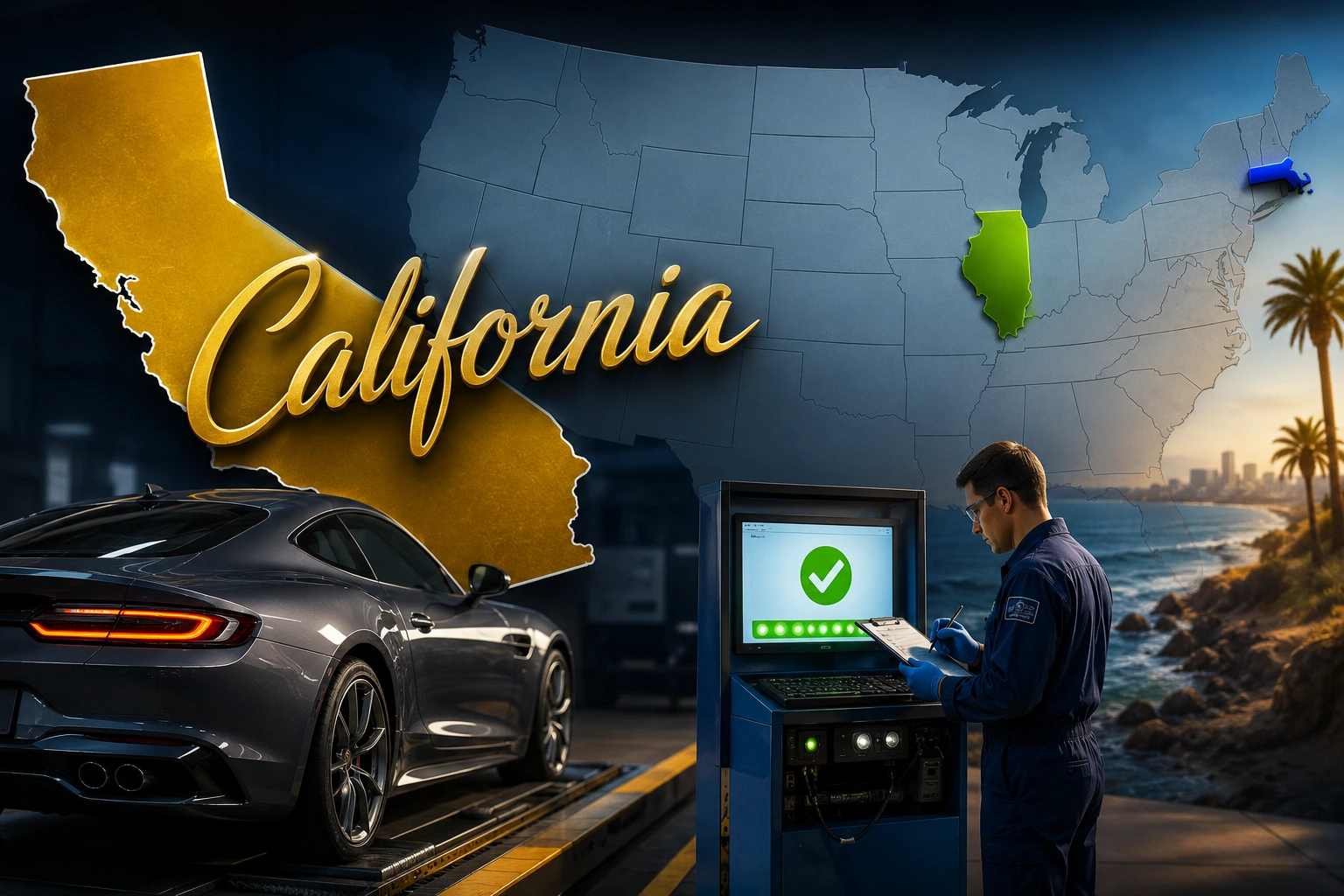
8. California
Unlike many other states, California does not require yearly vehicle safety inspections. That does not mean vehicle owners have an easier experience. The state places much more attention on emissions control, operating one of the toughest smog testing programmes in the United States.
Cars brought into California must meet the strict standards set by the California Air Resources Board, often called CARB. These requirements are stricter than the federal rules in many cases. The state also carries out roadside emissions checks in different locations, meaning drivers can be stopped for testing even if their vehicles passed inspections elsewhere. Many newcomers discover that meeting another state’s requirements does not always guarantee approval in California.
California adopted this approach because air pollution has remained a major concern for many years, especially in busy cities such as Los Angeles. Rather than concentrating on yearly mechanical inspections, state authorities place greater attention on reducing harmful emissions from vehicles.
Car owners are expected to maintain their engines and emissions systems properly, as any fault can lead to failed smog tests and expensive repairs before registration can be renewed. This system encourages cleaner vehicles and supports the state’s environmental goals without requiring annual safety inspections for every car.
For anyone planning to drive regularly in California, the Tesla Model 3 stands out as a smart choice. Since it is fully electric, it produces no tailpipe emissions and does not require routine smog testing. The standard version offers up to 272 miles of driving range on a full charge, while the Long Range model delivers 346 horsepower and reaches 60 mph in about 4.2 seconds.
Starting at around $40,000, it comes with Autopilot, automatic emergency braking, and lane-keeping assist as standard features. California also encourages electric vehicle ownership through rebates and access to certain carpool lanes, giving Model 3 owners extra benefits while avoiding many emissions-related inspection concerns.
