
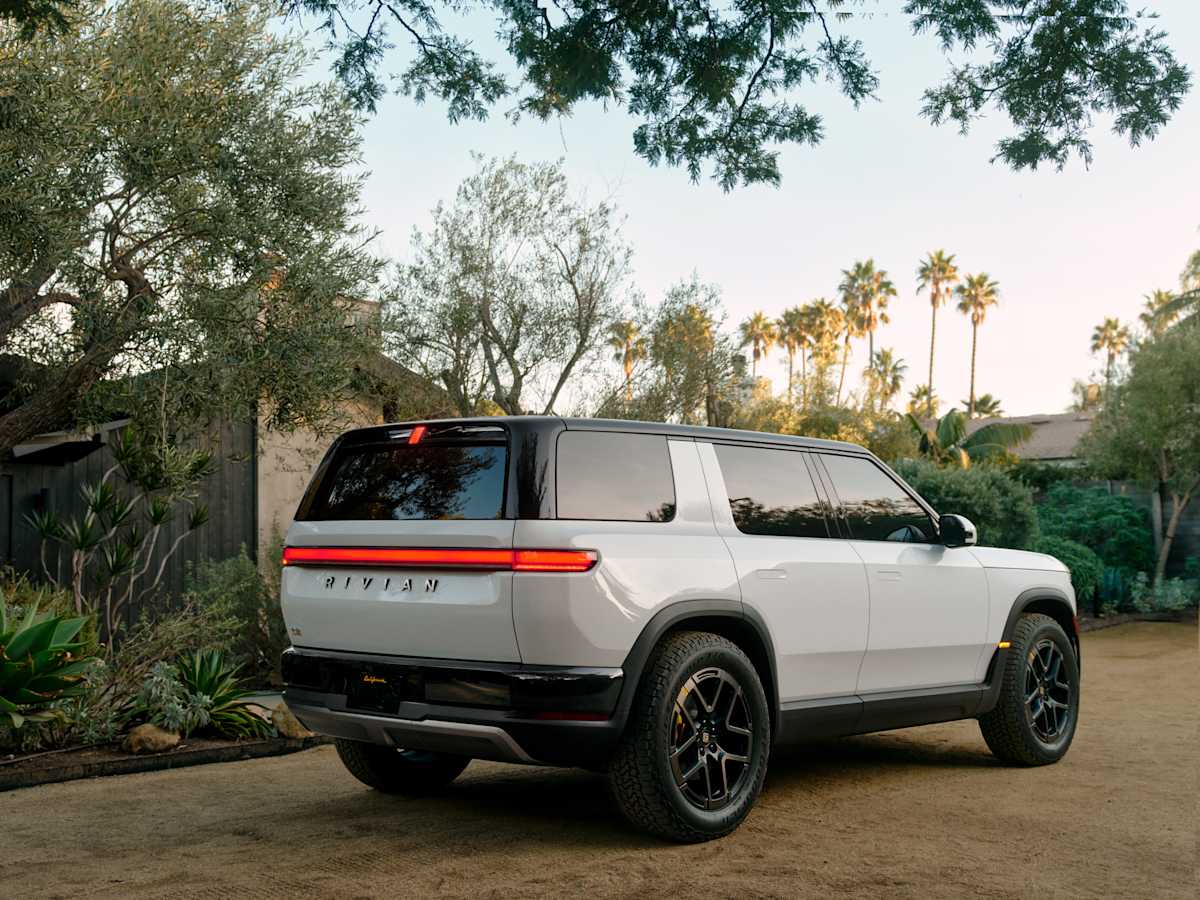
For Rivian, 2026 was always expected to be the most important year in the company’s history. The electric vehicle startup had spent years developing the R2, a smaller and significantly more affordable SUV designed to move the company beyond its premium niche and into the heart of the mass-market EV segment.
Then, just days before production was scheduled to begin, an unexpected tornado struck Rivian’s manufacturing complex in Normal, Illinois, threatening to derail one of the most critical vehicle launches in the company’s history.
Instead of allowing the storm to delay its plans, Rivian accelerated recovery efforts and pushed ahead with production almost immediately. The company’s response demonstrated not only its operational resilience but also the enormous importance of the R2 to its long-term survival.
Industry analysts widely agree that Rivian’s future depends less on its current lineup of premium R1T pickups and R1S SUVs than on whether the R2 can attract a much broader customer base while steering the company toward profitability.
According to Reuters, Rivian exceeded Wall Street’s expectations during the second quarter of 2026 by delivering 12,194 vehicles, outperforming analyst forecasts of roughly 10,500 units.
The company also raised its full-year delivery guidance to between 65,000 and 70,000 vehicles, citing strong demand for the R1 lineup, commercial delivery vans, and growing interest in the newly launched R2.
Investors responded positively, sending Rivian shares up more than 10 percent following the announcement.
While the quarterly delivery figures were encouraging, executives made it clear that the R2 remains the company’s most significant product.
Chief Executive RJ Scaringe has repeatedly described the midsize SUV as the vehicle that can transform Rivian from a low-volume premium manufacturer into a mainstream competitor capable of challenging established players in the electric vehicle market.
Also Read: 10 Automakers Ranked by How Much Driver Data They Collect
The Tornado Tested Rivian’s Operations
The April tornado that swept through central Illinois arrived at the worst possible time. Production equipment was being prepared for the start of R2 manufacturing when severe weather caused structural damage and flooding in portions of Rivian’s Normal factory.
Reports from Automotive World and other industry publications indicated that cleanup crews worked around the clock to restore damaged sections of the facility.
Importantly, the main assembly lines responsible for producing the R1T and R1S remained largely unaffected, allowing Rivian to continue manufacturing existing vehicles while repairs were completed. Just five days after the storm, the company officially began customer production of the R2, avoiding what could have become a costly delay.
Speaking shortly after the tornado, RJ Scaringe said the company did not expect any meaningful impact on the R2 launch schedule, reinforcing confidence among investors and reservation holders.
The rapid recovery highlighted improvements in Rivian’s manufacturing operations, especially for a company that has faced repeated production challenges since launching its first vehicles.
Industry analysts viewed the recovery as an important milestone. Scaling vehicle production is one of the most difficult challenges for any young automaker, and Rivian’s ability to overcome an unexpected natural disaster without significantly disrupting operations strengthened confidence in its manufacturing capabilities.
Why the R2 Matters More Than Any Previous Rivian
The R2 represents a dramatic shift in Rivian’s business strategy. Unlike the premium-priced R1T pickup and R1S SUV, which primarily target affluent buyers, the R2 has been designed to compete in one of the fastest-growing segments of the automotive market.
Reuters reported that the vehicle is expected to start at approximately $45,000, placing it much closer to mainstream electric SUVs and directly challenging high-volume competitors such as Tesla’s Model Y. Price alone, however, is only part of the strategy.
The R2 is expected to share many of Rivian’s signature characteristics, including rugged styling, advanced software, over-the-air updates, and strong off-road capability, while being significantly cheaper to manufacture.
By using a simplified production process, fewer components, and a new midsize vehicle platform, Rivian aims to improve manufacturing efficiency and reduce costs per vehicle. That cost reduction is essential.
Since becoming a public company, Rivian has consistently reported significant quarterly losses despite increasing production. Developing premium electric trucks required enormous investments in manufacturing, battery technology, software, and supply chains.
The R2 is designed to generate substantially higher sales volumes, allowing those fixed costs to be spread across many more vehicles.
Reuters previously reported that Rivian expects the R2 to drive a sharp increase in annual deliveries while moving the company closer to positive gross margins over the next several years. The company also continues investing heavily in production capacity and next-generation software despite ongoing financial losses.
More Than Just a New SUV
The R2 is becoming the foundation for Rivian’s broader growth strategy. Beyond individual consumers, the vehicle has already attracted interest from commercial customers. Reuters recently reported that Uber plans to purchase up to 10,000 autonomous R2-based robotaxis as part of a long-term partnership expected to begin later this decade.
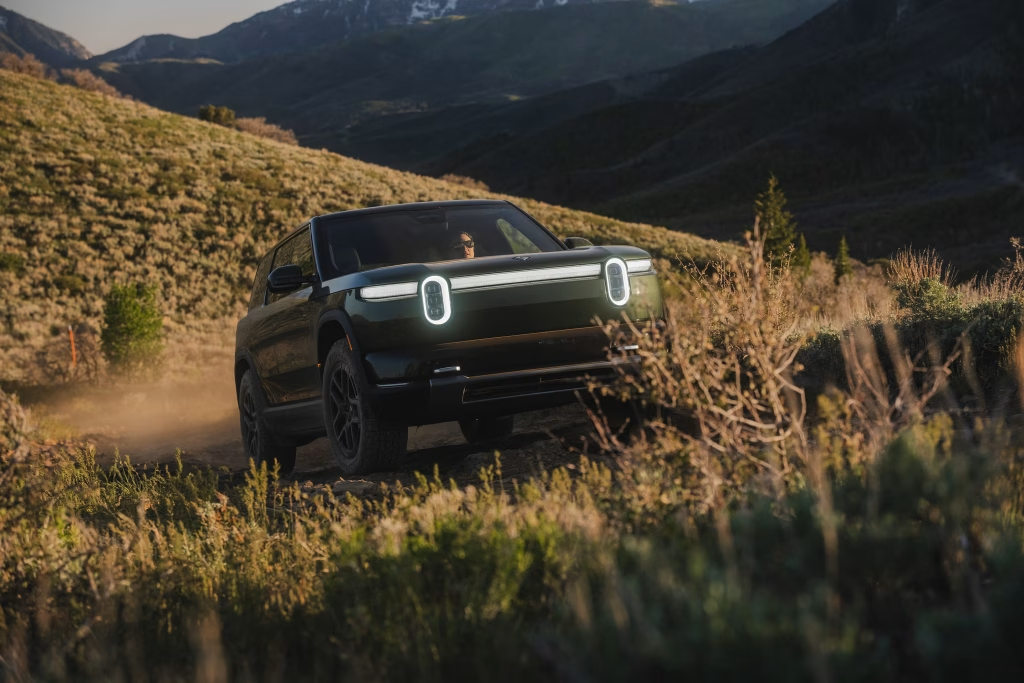
That agreement provides Rivian with another potential revenue stream while supporting its ambitions in autonomous transportation.
At the same time, Rivian’s partnership with Volkswagen continues to strengthen the company’s financial position.
The two manufacturers have established a multibillion-dollar joint venture focused on software and electrical architecture, allowing Rivian to generate revenue beyond vehicle sales while helping Volkswagen modernize its future EV platforms.
Analysts believe the collaboration provides Rivian with valuable financial flexibility as it ramps up production of the R2 during one of the most competitive periods in the global electric vehicle industry.
Competition Is Intensifying as Rivian Enters the Mainstream Market
While Rivian has earned praise for the R1T pickup and R1S SUV, the R2 will compete in a far more crowded segment. Mid-size electric SUVs have become the focal point of the global EV market, with consumers increasingly looking for vehicles that combine practical driving range, family-friendly interiors, and competitive pricing.
Tesla’s Model Y continues to dominate U.S. EV sales, while manufacturers including Hyundai, Kia, Ford, Chevrolet, and Honda are expanding their offerings with more affordable electric crossovers.
Unlike the premium adventure-focused market where Rivian initially established its reputation, the company must now convince mainstream buyers that it can deliver reliability, value, and a strong ownership experience alongside its distinctive design and technology.
Industry analysts say Rivian’s challenge extends beyond simply launching another electric SUV. The company must also manufacture the R2 at significantly higher volumes while maintaining quality standards and controlling production costs.
Young automakers have historically struggled during this stage of expansion, where rapid growth often exposes weaknesses in supply chains, manufacturing efficiency, and quality control.
Rivian’s ability to recover quickly from the Illinois tornado has strengthened confidence in its operational resilience, but sustaining that performance over the coming quarters will be equally important.
Financially, the stakes are equally high. Rivian has invested billions of dollars in product development, manufacturing facilities, battery technology, and software platforms.
Although the company has maintained a strong cash position through strategic investments and partnerships, investors are increasingly focused on the path toward consistent profitability rather than production growth alone.
According to Reuters, Rivian expects manufacturing efficiencies associated with the R2 platform, combined with higher production volumes and continued cost reductions, to improve gross margins over the next several years.
The company has repeatedly emphasized that lowering production costs remains one of its highest priorities as it scales operations.
The partnership with Volkswagen also gives Rivian an important advantage. Beyond the financial support provided through the joint venture, the collaboration validates Rivian’s software and electrical architecture, creating opportunities to generate revenue from licensing technology rather than relying solely on vehicle sales.
Analysts believe this diversification could become increasingly valuable as competition intensifies throughout the electric vehicle industry.
Looking ahead, the success of the R2 will likely determine Rivian’s direction for the remainder of the decade. Strong customer demand would allow the company to expand production, strengthen its financial position, and accelerate development of future models, including the smaller R3 crossover announced alongside the R2.
A successful launch would also reinforce investor confidence that Rivian can compete beyond the premium EV segment.
The company’s response to the factory tornado has already demonstrated an ability to overcome unexpected operational challenges.
Rather than delaying production, Rivian restored operations quickly and remained focused on its most important vehicle program. That resilience has become an encouraging signal for both investors and customers.
For Rivian, the R2 represents far more than another model in its lineup. It is the vehicle expected to transform the company from a niche electric truck manufacturer into a high-volume competitor capable of challenging some of the industry’s biggest names.
The coming months will reveal whether that strategy can deliver the sustained growth and profitability that shareholders have been waiting for, but one thing is already clear: Rivian’s future is closely tied to the success of the R2, and the company is betting that its newest SUV can carry it into the next stage of its evolution.
