
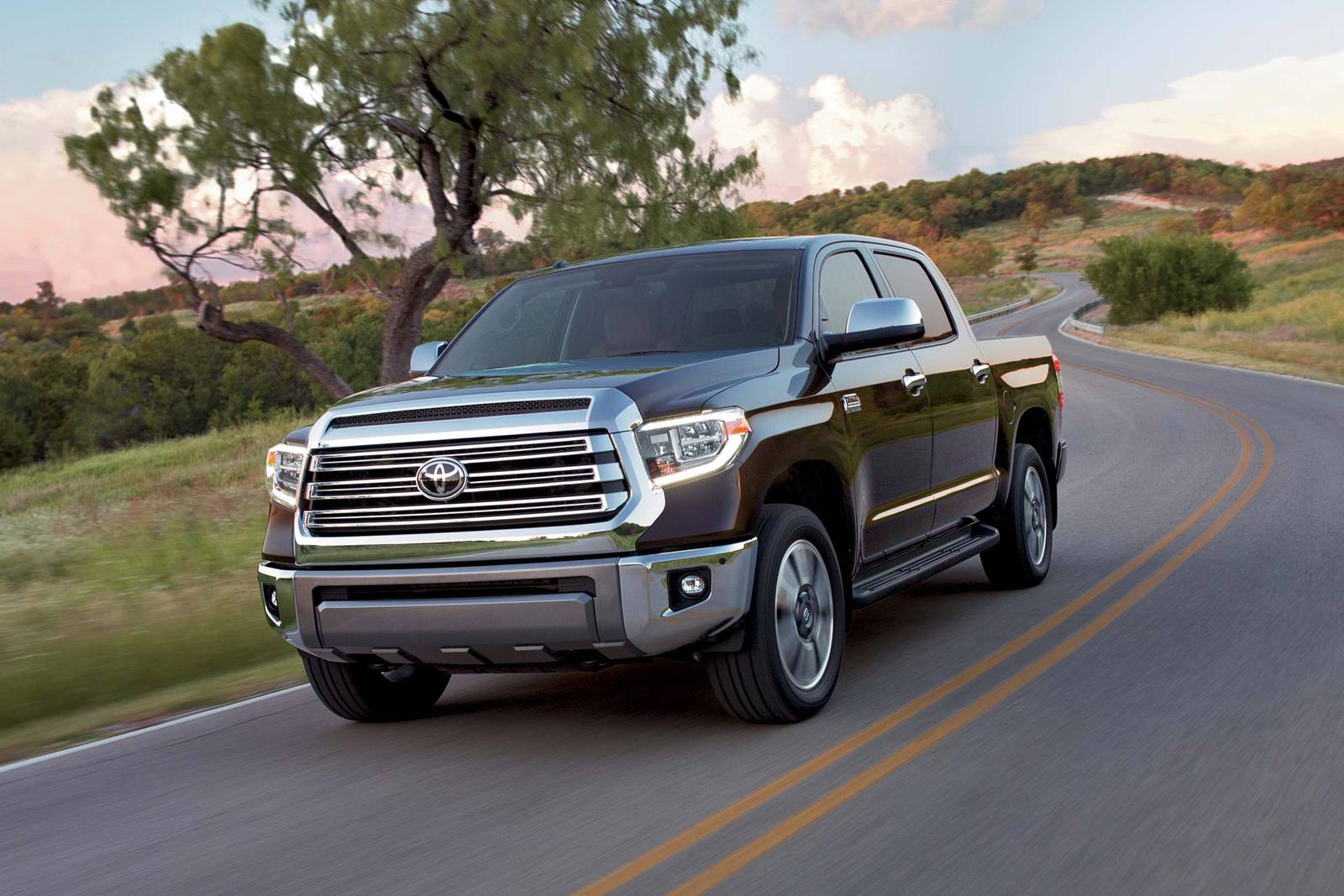
A standard garage is usually built somewhere between 20 and 24 feet deep. That leaves surprisingly little room to spare. Full-size trucks have grown enormously over the last two decades. Crew cabs and long beds now routinely stretch past 20 feet.
Some of these trucks flirt with the very edge of what a garage can hold. A few extra inches can mean the difference between fitting and not. This list ranks eight of the longest pickups currently sold that can still squeeze into a typical garage bay. Each one pushes close to that 22-foot ceiling.
These trucks combine cavernous interior space with genuinely serious hauling ability. Long wheelbases also translate into smoother, more planted highway rides.
But that length comes with real tradeoffs. Tight parking lots, narrow driveways, and sharp turns all become bigger challenges. Below, we break down the engine, horsepower, torque, length, and width for each truck in detail. Every figure comes from current manufacturer data and verified industry specification sheets.
Whether you’re shopping for a new truck or just curious about size limits, this guide covers the real numbers. No rounding shortcuts, no vague estimates. We’ll also look at trims, engine lineups, and practical parking considerations for each entry. Garage math matters more than most buyers realize.
1. GMC Sierra 3500HD Crew Cab Long Box
The Sierra 3500HD Crew Cab with the long box is one of the longest production pickups sold in America today. It measures roughly 266.8 inches from bumper to bumper.
That works out to just over 22 feet 2 inches. It barely clears most single-bay garages built to modern standards. GMC engineers this truck primarily for serious towing and hauling work. Dual rear wheel configurations are extremely common on mid and upper trims.
The standard engine is a 6.6-liter gasoline V8 paired with a heavy-duty automatic transmission. It handles moderate towing duties without much drama.
Buyers who need more capability step up to the Duramax 6.6-liter turbo-diesel V8. This engine completely transforms what the truck can pull. Torque output from the diesel is genuinely enormous compared to half-ton trucks. Nearly 1,000 lb-ft reshapes towing math entirely.
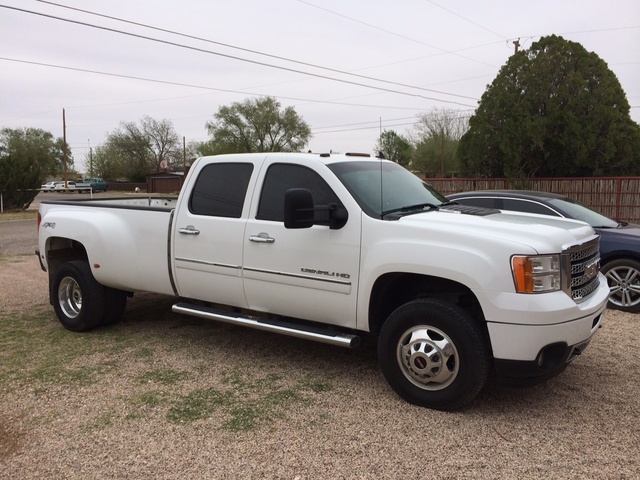
Interior space benefits hugely from the crew cab layout. Rear passengers get real legroom, not a cramped afterthought seat. The long box adds meaningful cargo capacity over the standard bed length. Contractors, ranchers, and equipment haulers rely on that extra room daily.
GMC also offers a wide trim variety, from the work-focused Pro to the luxury-oriented Denali Ultimate. Length stays consistent across these trims when the long box is chosen. Parking this truck demands real planning ahead of time. Overhangs at both the front and rear require generous clearance.
Specifications:
- Engine: 6.6L gas V8 (standard); 6.6L Duramax turbo-diesel V8 (optional)
- Horsepower: 401 hp (gas); 470 hp (Duramax diesel)
- Torque: 464 lb-ft (gas); 975 lb-ft (Duramax diesel)
- Length: approximately 266.8 inches (22’2.8″)
- Width: approximately 96.9 inches (8’0.9″), dually configuration
2. Ford F-350 Super Duty Crew Cab Long Bed
Ford’s F-350 Crew Cab, paired with the long bed, measures 266.2 inches. That’s about 22 feet 2 inches in total. It’s dramatically longer than any F-150 configuration Ford offers. The size gap between half-ton and heavy-duty trucks becomes obvious the moment you stand next to one.
Ford gives buyers four distinct engine choices for this truck. Each targets a slightly different type of owner and use case. The base 6.8-liter gas V8 delivers dependable, everyday performance for lighter-duty tasks. It’s the simplest and most affordable option in the lineup.
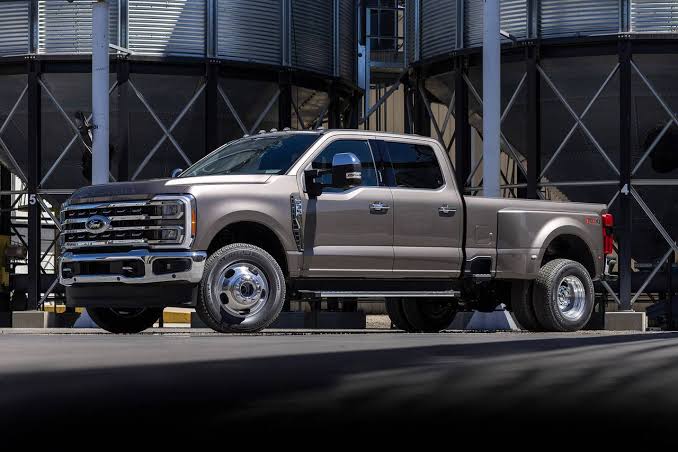
Diesel buyers can choose the 6.7-liter Power Stroke or its high-output variant. Torque numbers here climb into genuinely massive territory. Towing capacity scales dramatically once you move into the diesel engines. This truck can pull loads that most passenger vehicles simply cannot approach.
Cab and bed combinations vary widely across the full Super Duty lineup. The crew cab long bed sits right at the top of that range for length. Ford also offers an F-450 variant built on similar dimensions. That model pushes commercial capability even further, though it’s less common with private buyers.
Interior technology has improved significantly on recent Super Duty models. Large touchscreens and driver-assist features now come standard on higher trims.
Garage owners need roughly two extra feet of clearance beyond a typical passenger car’s length. Precise measuring beforehand avoids frustrating surprises on delivery day.
Specifications:
- Engine: 6.8L gas V8 (standard); 6.7L Power Stroke turbo-diesel V8 (optional); 6.7L High Output diesel (optional)
- Horsepower: 405 hp (gas); 475 hp (diesel); 500 hp (HO diesel)
- Torque: 445 lb-ft (gas); 1,050 lb-ft (diesel); 1,200 lb-ft (HO diesel)
- Length: approximately 266.2 inches (22’2.2″)
- Width: approximately 96 inches (8’0″), dually configuration
3. Chevrolet Silverado 3500HD Crew Cab Long Bed
Chevrolet’s 3500HD Crew Cab Long Bed nearly matches its GMC sibling in size. Total length comes in at around 266.1 inches. Both trucks share the same underlying heavy-duty platform. Badge and trim differences aside, the core dimensions stay almost identical.
The base engine here is a 6.6-liter gasoline V8. It handles moderate towing tasks capably without needing the diesel upgrade. Serious hauling calls for the Duramax 6.6-liter turbo-diesel option. Nearly 1,000 lb-ft of torque changes what’s realistically possible behind the wheel.
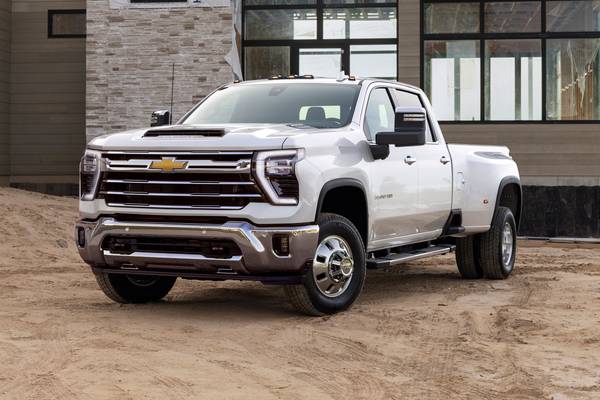
Chevrolet markets this specific configuration toward commercial buyers and large-property owners. Horse trailers and gooseneck rigs are extremely common pairings.
The dual rear wheel setup widens the rear track substantially compared to single-wheel trucks. This adds meaningful stability under heavy loads. Cab interior space genuinely rivals full-size SUVs in usable room. Six adults can ride comfortably even on longer road trips.
Trim levels range from the basic Work Truck up through the luxury-focused High Country. Length remains constant across trims within the same cab and bed configuration.
Chevrolet also offers extensive factory towing technology on this truck. Trailer cameras and hitch guidance systems come standard on many trims.
Anyone considering garage storage should measure their space twice before buying. This truck leaves minimal margin inside a typical 22-foot garage bay.
Specifications:
- Engine: 6.6L gas V8 (standard); 6.6L Duramax turbo-diesel V8 (optional)
- Horsepower: 401 hp (gas); 470 hp (Duramax diesel)
- Torque: 464 lb-ft (gas); 975 lb-ft (Duramax diesel)
- Length: approximately 266.1 inches (22’2.1″)
- Width: approximately 96.9 inches (8’0.9″), dually configuration
4. Ram 3500 Mega Cab
The Ram 3500 Mega Cab is famous for its cabin space, not just its length. Total length measures 249.9 inches. That’s roughly 20 feet 10 inches long. It fits more comfortably into standard garages than the dually trucks listed above.
Ram extended the cab structure by more than 11 inches compared to a standard crew cab. Rear passengers get reclining seats and generous extra storage as a result. The tradeoff is a shorter bed, fixed permanently at 6 feet 4 inches. Cargo capacity drops slightly to make room for that expanded cabin.
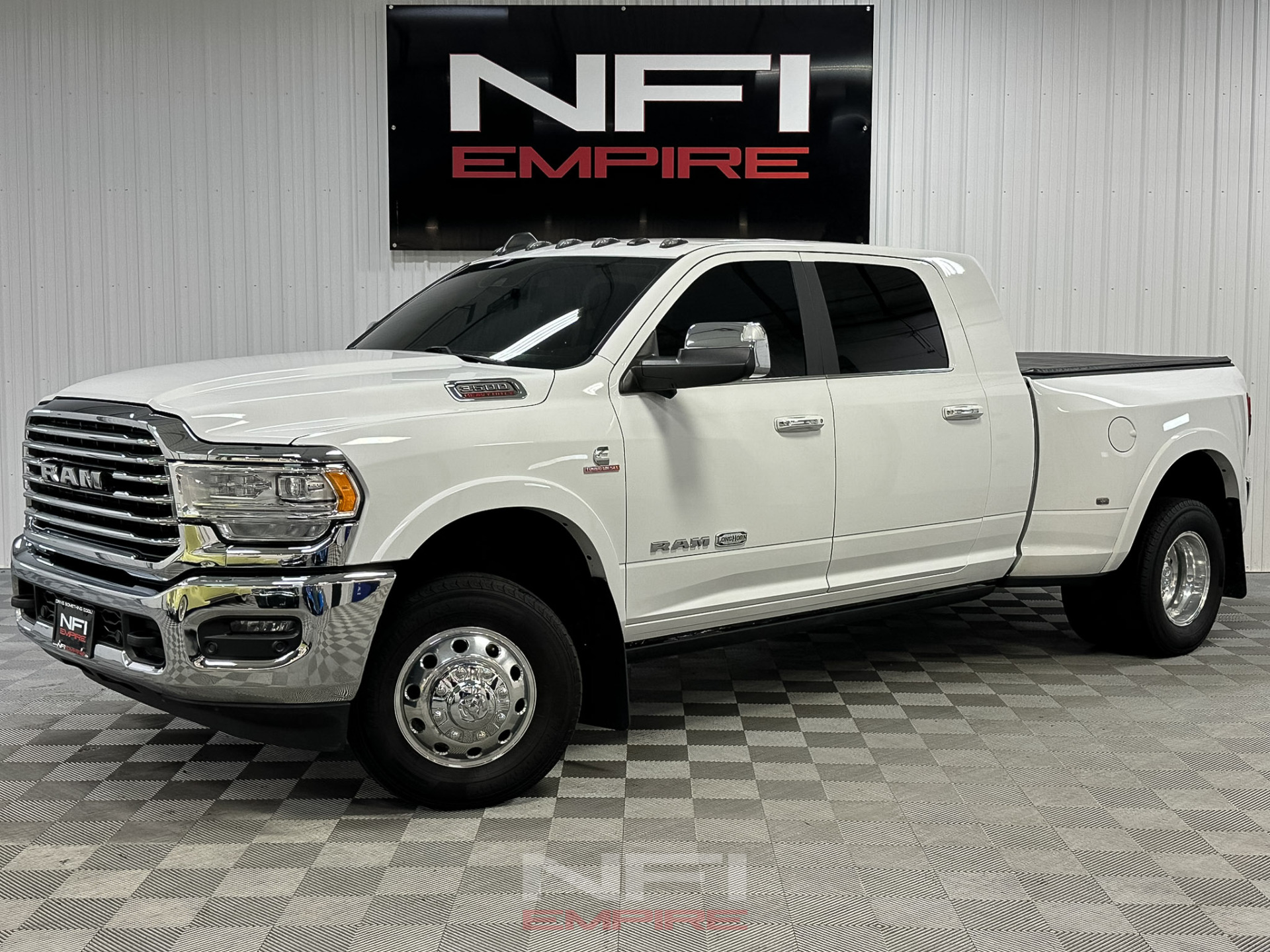
Two distinct engines power the Mega Cab lineup today. Buyers essentially choose between gas simplicity and diesel-grade torque. The 6.4-liter HEMI V8 handles daily driving duties reasonably well. It’s the more affordable, lower-maintenance choice for buyers who don’t need extreme towing.
The Cummins 6.7-liter high-output turbo-diesel is the true headline engine here. Over a thousand pound-feet of torque enables serious, heavy-duty towing work.
Ram only offers the Mega Cab in four-wheel-drive configuration. There’s no rear-wheel-drive option available on this particular body style. Wheelbase length affects the truck’s turning radius noticeably compared to a standard crew cab. Tight parking garages and multi-level structures can genuinely challenge this truck.
Interior tech includes large touchscreens and available massaging seats on top trims. Ram has leaned heavily into luxury positioning for this configuration.
Specifications:
- Engine: 6.4L HEMI V8 (standard); 6.7L Cummins high-output turbo-diesel I6 (optional)
- Horsepower: 405 hp (gas); 430 hp (diesel)
- Torque: 429 lb-ft (gas); 1,075 lb-ft (diesel)
- Length: approximately 249.9 inches (20’9.9″)
- Width: approximately 96 inches (8’0″)
Also Read: 8 Settings to Turn Off Data Sharing in Modern Cars
5. Toyota Tundra CrewMax Long Bed
Toyota’s Tundra CrewMax, paired with the long bed configuration, measures around 245.6 inches. That translates to about 20 feet 5 inches. It’s the longest Tundra configuration Toyota currently builds. The CrewMax cab prioritizes rear passenger comfort above nearly everything else.
Under the hood sits Toyota’s twin-turbocharged i-FORCE V6 engine. It fully replaced the old naturally aspirated V8 several years ago. Standard output is respectable for a half-ton class truck. Torque arrives early in the rev range thanks to turbocharging.
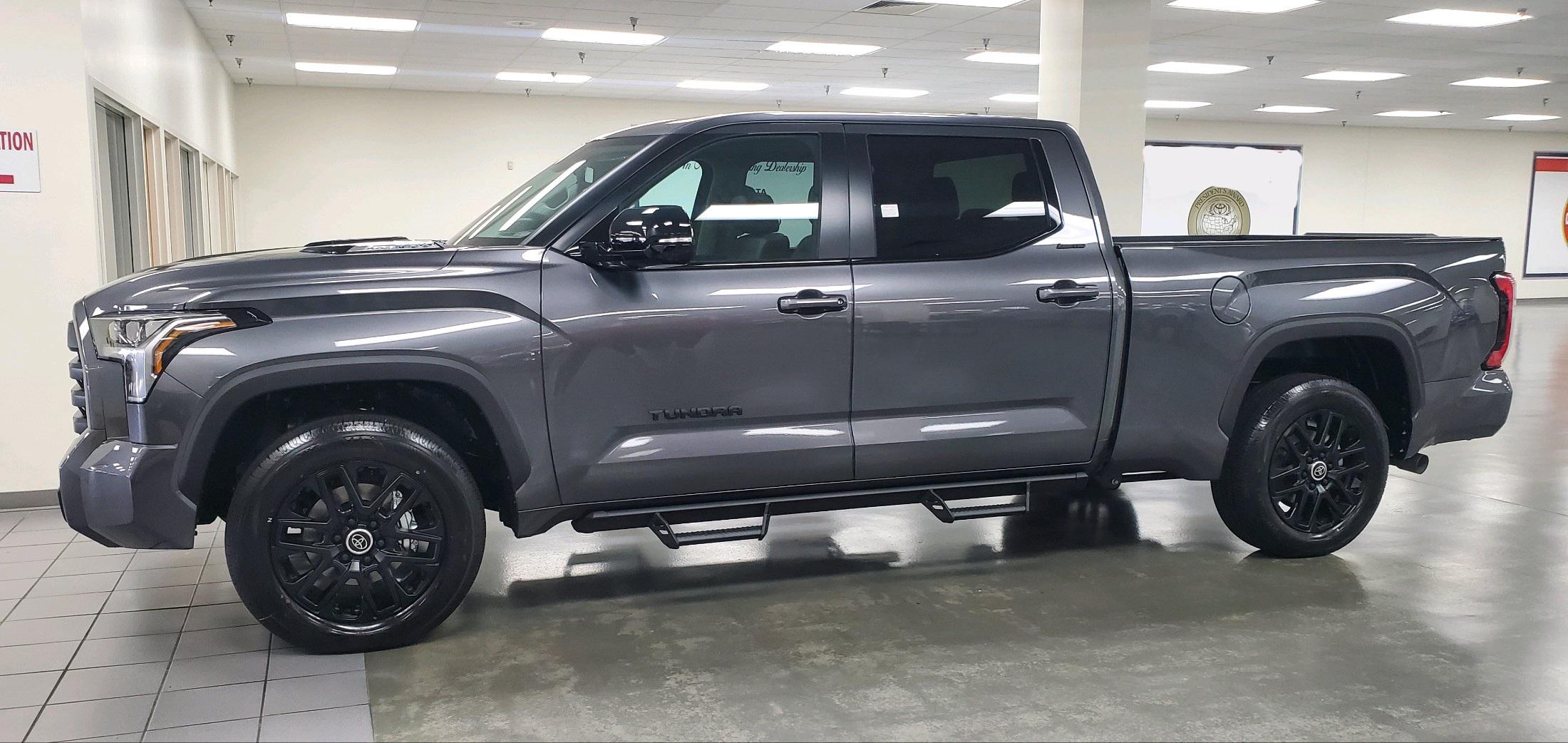
Buyers wanting additional performance can step up to the i-FORCE MAX hybrid powertrain. It adds an electric motor positioned between the engine and transmission.
That hybrid setup boosts both horsepower and torque meaningfully over the standard engine. Towing capacity improves as a direct, measurable result.
Toyota’s long-standing reputation for reliability continues to draw buyers away from domestic rivals. Resale value on the Tundra tends to stay notably strong over time.
Trim levels range from the work-oriented SR up through the off-road-focused TRD Pro. Length stays consistent across trims sharing the same cab and bed combination.
This truck’s width is narrower than that of most American full-size competitors. That narrower footprint can actually help significantly in cramped garage spaces.
Toyota also offers a shorter double-cab configuration for buyers prioritizing bed length over interior room. The CrewMax remains the passenger-focused flagship.
Specifications:
- Engine: 3.4L twin-turbo V6 (standard); 3.4L twin-turbo V6 hybrid, i-FORCE MAX (optional)
- Horsepower: 389 hp (standard); 437 hp (hybrid)
- Torque: 479 lb-ft (standard); 583 lb-ft (hybrid)
- Length: approximately 245.6 inches (20’5.6″)
- Width: approximately 80.3 inches (6’8.2″), excluding mirrors
6. Ford F-150 SuperCrew with 6.5-Foot Bed
Ford’s best-selling F-150 reaches its maximum length in SuperCrew form, paired with the 6.5-foot bed. That specific combination measures 243.8 inches.
This works out to roughly 20 feet 4 inches long. It’s the largest configuration Ford currently offers on its half-ton flagship truck. Engine choice on the F-150 is remarkably broad compared to most competitors.
Six different powertrains cover everything from economy-focused commuting to outright high performance. The standard 2.7-liter EcoBoost V6 balances power and efficiency quite well. Most everyday buyers find it more than adequate for daily needs.
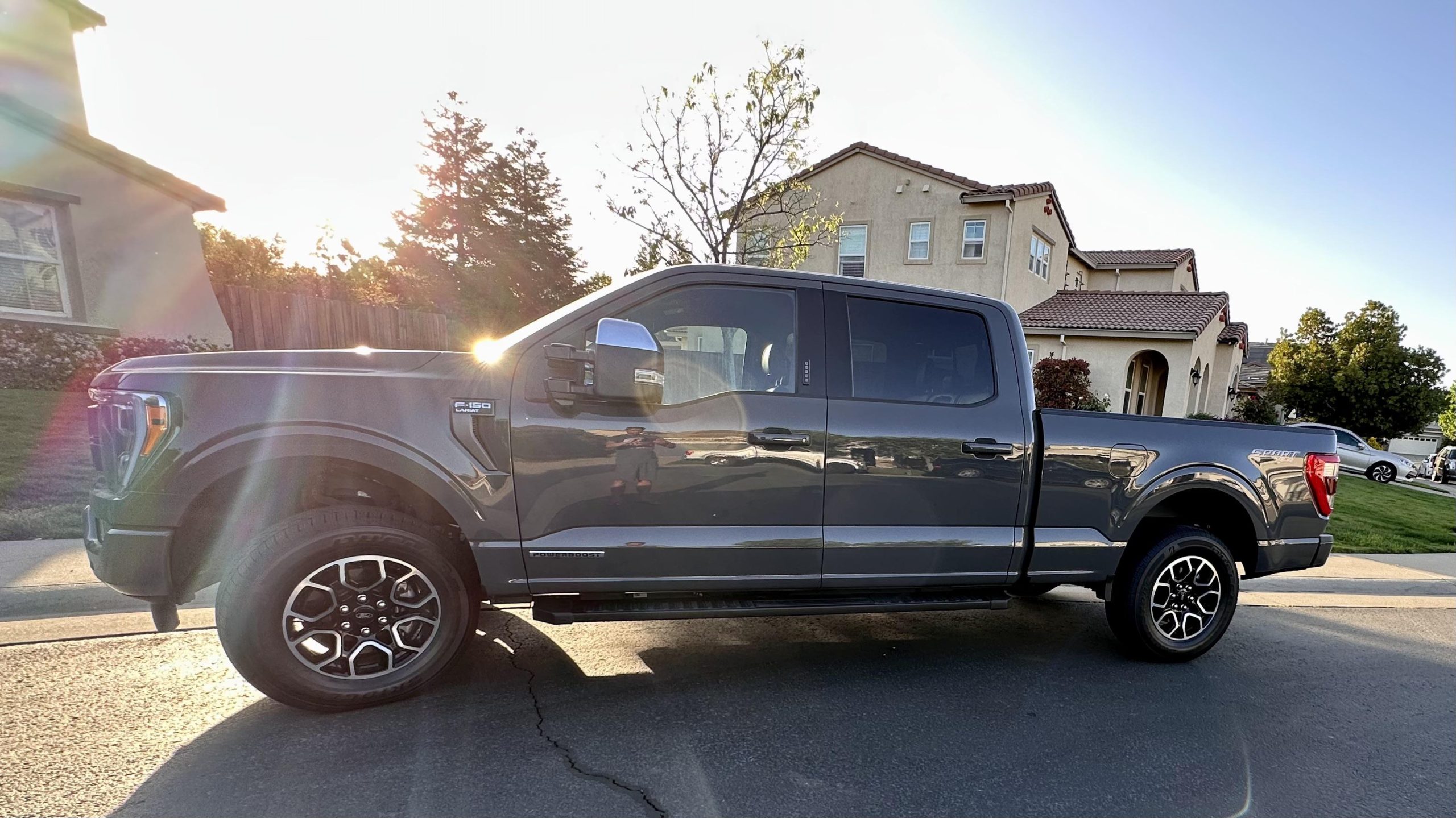
At the extreme performance end sits the Raptor R’s supercharged 5.2-liter V8 engine. It’s built specifically for off-road capability, not maximum towing.
A hybrid option, called PowerBoost, adds strong low-end torque to the lineup. It also enables useful onboard power generation directly at job sites. Bed width stays remarkably consistent across nearly all trims at 50.6 inches. This one dimension rarely changes despite length variations.
Ford offers a wide trim variety here, too, from the basic XL up through the luxury Platinum and King Ranch models. Length depends mainly on cab and bed choice, not trim level.
The SuperCrew’s rear seating area is genuinely spacious for a half-ton truck. Families cross-shopping SUVs often end up here instead. This configuration remains one of the more practical entries on this entire list for everyday garage use.
Specifications:
- Engine: 2.7L EcoBoost V6 (standard), 5.0L V8, 3.5L PowerBoost hybrid V6, 3.5L High-Output EcoBoost V6, or 5.2L supercharged V8 (optional)
- Horsepower: 325 hp (standard) up to 720 hp (Raptor R)
- Torque: 400 lb-ft (standard) up to 640 lb-ft (Raptor R)
- Length: approximately 243.8 inches (20’3.8″)
- Width: approximately 79.9 inches (6’7.9″), excluding mirrors
7. Nissan Titan XD Crew Cab
The Nissan Titan XD Crew Cab measures approximately 243.4 inches. That’s just over 20 feet 3 inches long. Nissan positioned the XD deliberately between the half-ton and heavy-duty truck segments. It’s a niche approach that few rivals have directly copied.
Originally offered with a Cummins diesel engine option, that powertrain has since been discontinued. Today, the Titan XD runs exclusively on gasoline power. The 5.6-liter Endurance V8 is now the sole engine available across the lineup. It’s shared directly with the standard, non-XD Titan.
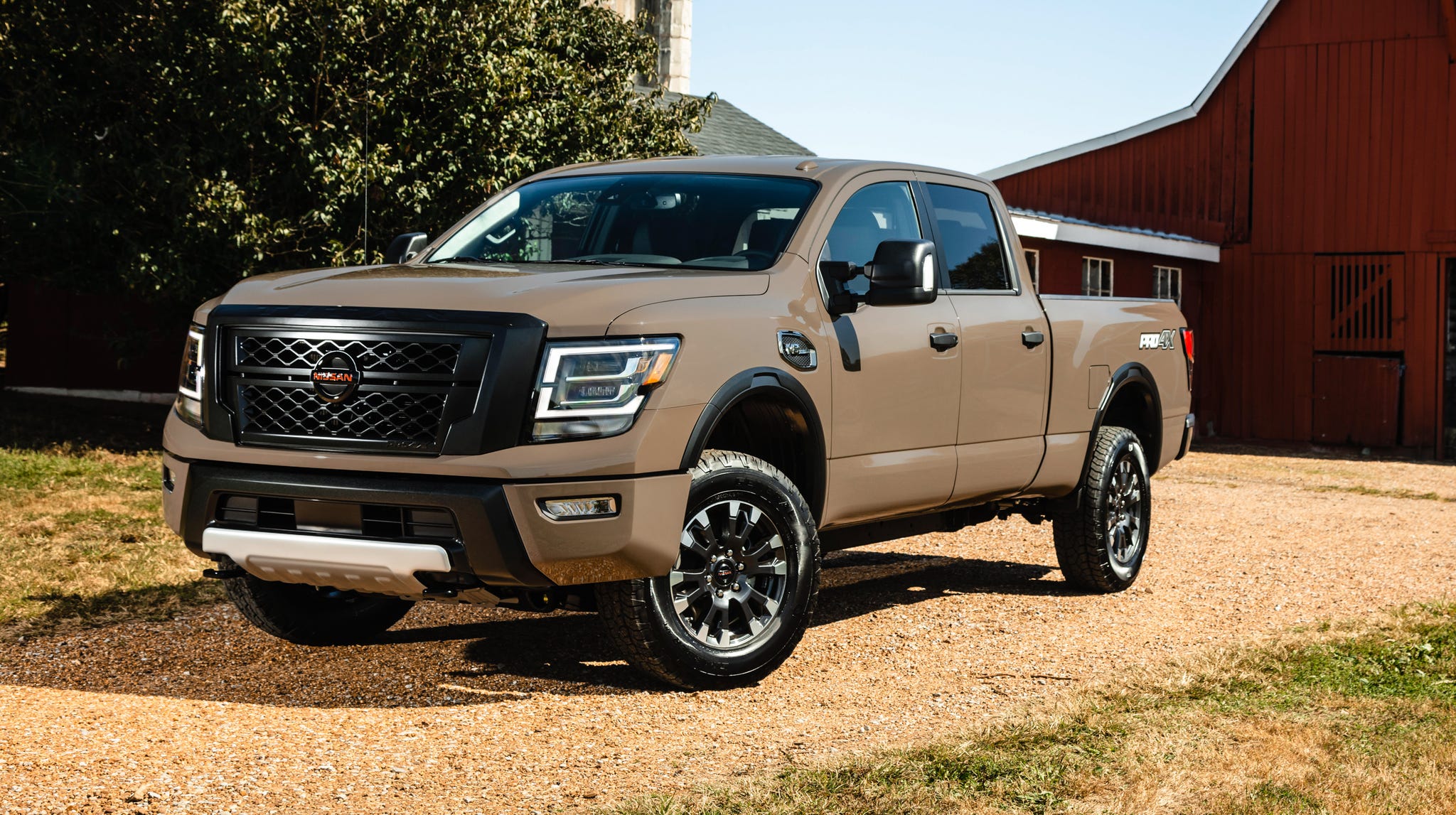
Output numbers here are solid without being class-leading compared to rivals. Reliability and mechanical smoothness matter more to Nissan’s typical target buyer.
Towing capacity sits below the heavy-duty diesel trucks featured earlier on this list. It still comfortably outperforms most standard half-ton competitors, though.
Interior space benefits directly from the longer, extended frame underneath the body. The cabin room feels noticeably closer to a heavy-duty truck than a typical half-ton.
Nissan offers fewer trim levels here than most domestic competitors. The lineup stays relatively simple from base models up through the Platinum Reserve.
Production numbers remain modest compared to Ford, Chevrolet, and Ram output. Finding a used example can genuinely take some patience and searching. Resale demand stays steady among buyers specifically seeking this in-between size class. It fills a genuine gap in the current market.
Specifications:
- Engine: 5.6L Endurance V8
- Horsepower: 400 hp
- Torque: 413 lb-ft
- Length: approximately 243.4 inches (20’3.4″)
- Width: approximately 79.5 inches (6’7.5″), excluding mirrors
8. Ram 1500 Crew Cab Standard Bed
The Ram 1500 Crew Cab with the standard bed rounds out this list at number eight. Length lands near 241.8 inches, about 20 feet 2 inches. This is Ram’s mainstream half-ton offering aimed at everyday buyers. It competes directly against the F-150 and Silverado 1500 in showrooms.
Base power comes from a 3.6-liter Pentastar V6 fitted with mild-hybrid assistance. It’s genuinely efficient for daily commuting duty. Buyers wanting more performance choose Ram’s newer twin-turbo Hurricane inline-six engine. It fully replaced the old HEMI V8 as the primary performance option.
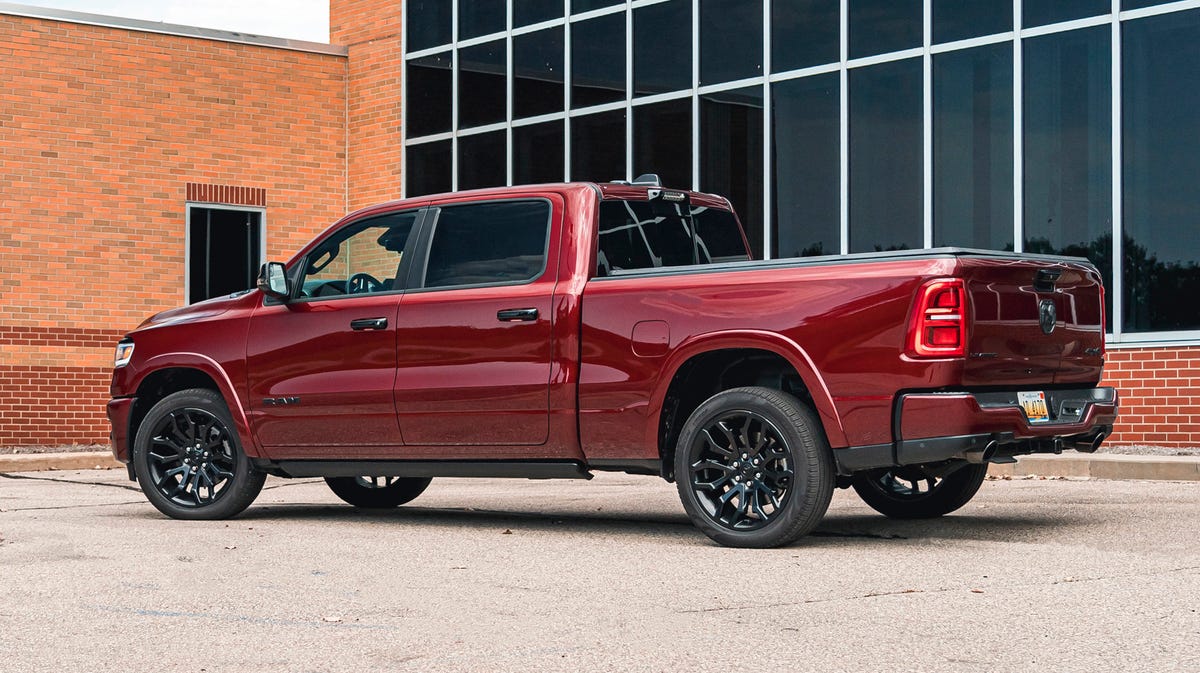
The standard Hurricane produces strong numbers for a six-cylinder engine design. A high-output version pushes well beyond those already impressive figures.
Interior refinement is often cited by reviewers as the Ram’s single biggest advantage. Ride quality also tends to edge out most direct rivals. Bed length here uses the shorter 5-foot-7-inch option as standard equipment. Choosing the longer available bed adds several more inches to the length.
Ram offers extensive trim diversity, from the work-focused Tradesman up through the luxurious Limited and Tungsten trims. Length stays fixed once cab and bed choices are locked in.
Even at this comparatively modest length, careful garage measuring still genuinely matters. Mirrors and hitch-mounted accessories can add unexpected extra inches.
The Ram 1500 continues to win awards for interior quality and driving comfort. It remains a strong choice for buyers who don’t need heavy-duty towing capability.
Specifications:
- Engine: 3.6L Pentastar V6 mild-hybrid (standard); 3.0L twin-turbo Hurricane I6 (optional); Hurricane High-Output (optional)
- Horsepower: 305 hp (standard) up to 540 hp (Hurricane HO)
- Torque: 269 lb-ft (standard) up to 521 lb-ft (Hurricane HO)
- Length: approximately 241.8 inches (20’1.8″)
- Width: approximately 82.3 inches (6’10.1″), excluding mirrors
Also Read: Once Outdated, Manual-Transmission Cars Are Now a Premium Category
