
Buying a vehicle with a dependable engine is one of the smartest decisions an American driver can make. Engine replacements often cost several thousand dollars, and even smaller internal failures can quickly turn routine ownership into an expensive experience.
While no manufacturer can guarantee that every engine will last forever, decades of owner reports, independent reliability studies, warranty records, and government complaint databases reveal that certain models consistently experience remarkably few serious engine problems.
These vehicles have earned strong reputations by reaching well beyond 200,000 miles with only routine maintenance.
This list focuses on cars sold in the United States that have demonstrated exceptional engine durability through verified reliability data.
Information is based on long-term findings from Consumer Reports reliability surveys, J.D. Power Vehicle Dependability Studies, NHTSA owner complaint records, iSeeCars longevity research, and established maintenance histories from reputable automotive sources.
Instead of looking at a single model year, this article highlights nameplates whose engines have repeatedly shown low rates of catastrophic failures across multiple generations.
Factors such as regular oil changes, cooling system maintenance, and timely repairs always influence engine life. Even the most dependable powertrain can suffer damage if neglected.
Still, the following ten vehicles stand apart because they have consistently earned praise from mechanics, owners, and reliability researchers alike for delivering dependable performance year after year with remarkably few reported engine failures.
Also Read: 10 SUVs With the Most Affordable Replacement Parts
1. Toyota Corolla
The Toyota Corolla has built one of the strongest reputations in the American automotive market for long-term engine durability. For decades, Consumer Reports has regularly placed the Corolla among the most reliable compact cars, while J.D. Power dependability studies have consistently ranked recent model years near the top of their segments.
At the same time, NHTSA complaint data shows relatively few reports involving catastrophic engine failures compared with many competing compact sedans.
One reason behind this reputation is Toyota’s conservative engineering philosophy. Rather than chasing the highest horsepower figures, Toyota refined naturally aspirated four-cylinder engines over many years before introducing major updates.
Engines such as the 1.8-liter 2ZR-FE and the newer 2.0-liter Dynamic Force four-cylinder are known for strong internal durability, dependable timing chain systems, and efficient cooling designs. These characteristics help reduce the likelihood of major internal damage even after years of daily use.
Independent research from iSeeCars has repeatedly found the Corolla among vehicles most likely to surpass 200,000 miles. Mechanics frequently report that routine maintenance is usually all these engines require, with oil leaks, worn accessories, and ignition components appearing far more often than complete engine failures.
That distinction is important because normal wear items are inexpensive compared with replacing an entire engine.
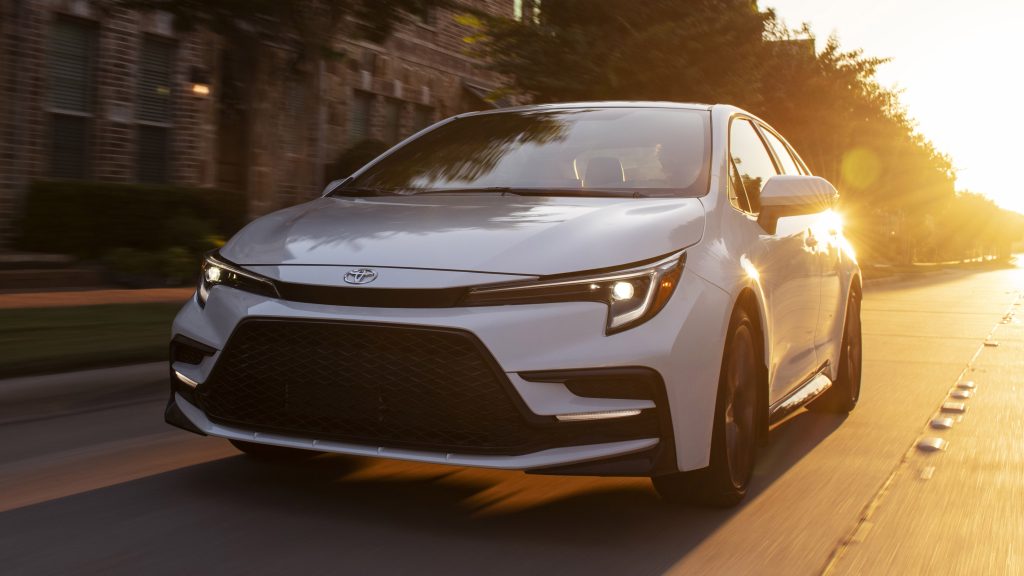
Owners who follow Toyota’s recommended maintenance schedule often keep their Corollas on the road for well over a decade without facing major engine repairs. This combination of low complaint rates, proven longevity, and consistent reliability data makes the Corolla one of the safest choices for buyers seeking an engine designed to last.
Specifications
- Engine: 2.0-liter naturally aspirated inline four
- Torque: 151 lb-ft
- Horsepower: 169 hp
- Length/Width: 182.5 inches / 70.1 inches
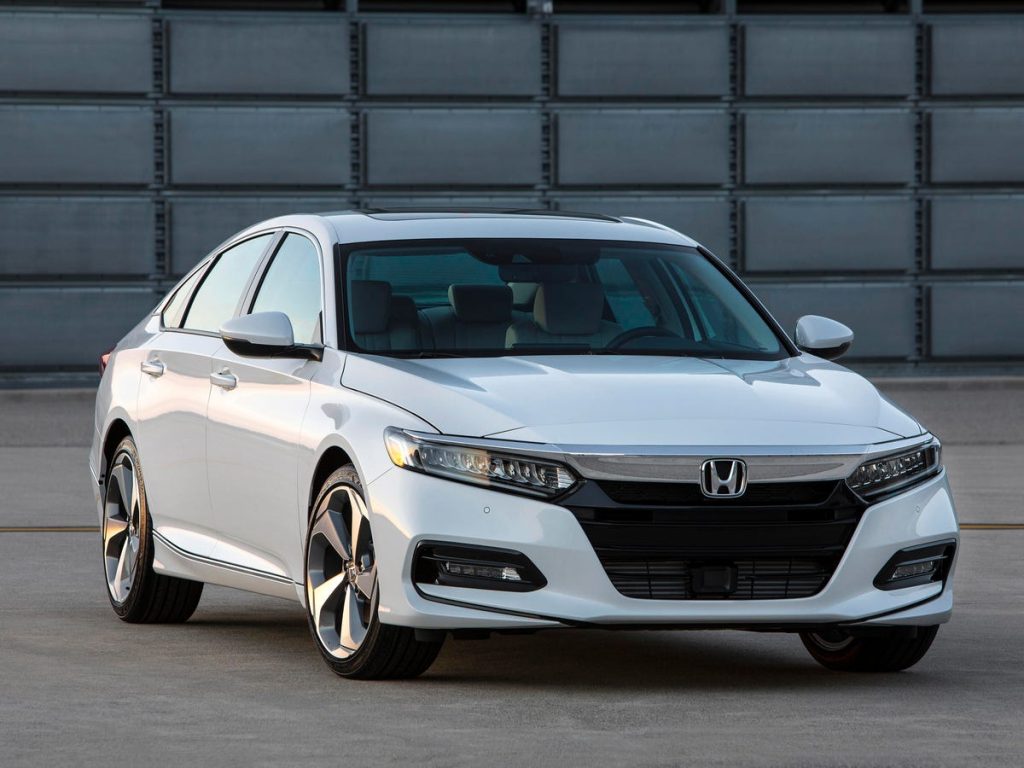
2. Honda Accord
Unlike many midsize sedans that have changed powertrain strategies several times, the Honda Accord has maintained an impressive record for engine reliability across multiple generations sold in the United States.
Consumer Reports has repeatedly awarded the Accord excellent reliability ratings, while J.D. Power studies consistently place it among dependable family sedans.
NHTSA complaint records also indicate relatively few widespread reports of complete engine failure, especially for models equipped with Honda’s naturally aspirated four-cylinder engines.
Honda has long emphasized precision engineering, and many Accord engines have become known for lasting well beyond 200,000 miles with routine maintenance.
The well-regarded K Series engines established an outstanding reputation during the 2000s, and newer direct-injected four-cylinder engines continue that tradition with improved efficiency while maintaining solid durability.
Careful attention to lubrication, durable timing chain systems, and efficient cooling contribute to the engine’s long service life.
Repair professionals frequently point out that Accords usually visit workshops for maintenance items such as brakes, suspension components, batteries, or air conditioning repairs rather than internal engine damage.
Long-term ownership surveys also show many drivers keeping their Accords for well over fifteen years without requiring engine replacement. That consistency has helped the model maintain one of the strongest reputations in its class.
Another advantage comes from Honda’s extensive parts availability throughout the United States. Routine maintenance remains straightforward, allowing owners to keep engines operating efficiently throughout their lifespan.
Supported by decades of owner satisfaction, low engine-related complaint rates, and strong dependability research, the Accord remains one of America’s benchmark vehicles for dependable engine performance.
Specifications
- Engine: 1.5-liter turbocharged inline four
- Torque: 192 lb-ft
- Horsepower: 192 hp
- Length/Width: 195.7 inches / 73.3 inches
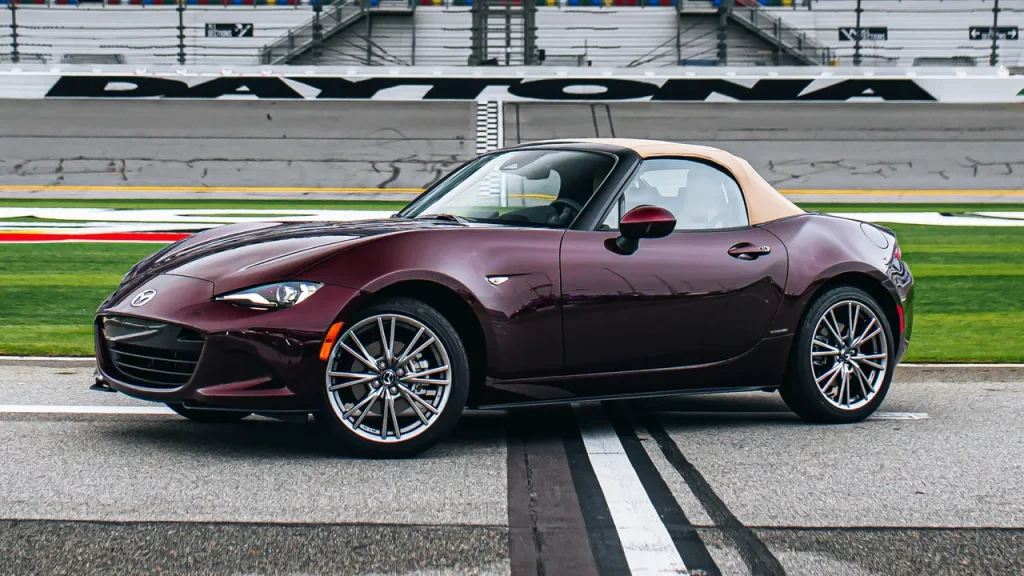
3. Mazda MX-5 Miata
Not every car earns its reputation through high sales volume. The Mazda MX-5 Miata has become a standout because it combines simple engineering with remarkable mechanical durability.
Sold in the United States for more than three decades, the lightweight roadster consistently receives high reliability scores from Consumer Reports, while owner surveys show very few complaints involving major engine failures.
NHTSA records also reveal that serious internal engine issues remain uncommon across multiple generations when compared with many sports cars.
Mazda has avoided unnecessary complexity with the Miata. The current naturally aspirated 2.0-liter Skyactiv-G engine delivers responsive performance without relying on turbochargers or heavily stressed internal components.
Lower operating temperatures, carefully engineered compression ratios, and a robust timing chain system all contribute to the engine’s long service life. Rather than extracting maximum output, Mazda focused on balancing efficiency, responsiveness, and durability.
Another factor that supports the Miata’s reliability is its lightweight design. Weighing substantially less than many modern sports cars, the engine experiences less strain during acceleration and everyday driving.
This reduced mechanical stress can help extend the life of internal components such as pistons, connecting rods, bearings, and crankshafts. Owners who perform routine oil changes and cooling system maintenance frequently report reaching well beyond 200,000 miles without experiencing significant engine repairs.
Professional mechanics often describe the Miata as one of the easiest sports cars to maintain. Most service procedures are straightforward, replacement parts are widely available across the United States, and the engine bay offers reasonable accessibility.
Long-term ownership data continues to reinforce its reputation, making the MX-5 Miata one of the few affordable sports cars that pair enjoyable driving with an exceptionally low rate of reported engine failures.
Specifications
- Engine: 2.0-liter naturally aspirated Skyactiv-G inline four
- Torque: 151 lb-ft
- Horsepower: 181 hp
- Length/Width: 154.1 inches / 68.3 inches
4. Lexus ES 350
Luxury vehicles are often associated with expensive repairs, yet the Lexus ES 350 has repeatedly proven that premium comfort does not have to come at the expense of engine reliability. Across several generations sold in the United States, the ES has earned outstanding dependability ratings from Consumer Reports and J.D. Power.
Owner complaint databases maintained by NHTSA also show relatively few reports of catastrophic engine failures, reinforcing its reputation as one of the most dependable luxury sedans available.
A major contributor is Toyota’s well-established 3.5-liter V6 engine from the GR family. This powerplant has been refined over many years and is used across several Toyota and Lexus models.
Engineers prioritized durability by incorporating a timing chain instead of a timing belt, durable aluminum construction, advanced cooling passages, and proven fuel injection technology. The result is an engine capable of delivering smooth performance while maintaining excellent long-term reliability.
Unlike some luxury brands that frequently introduce new powertrain designs, Lexus tends to improve existing engines gradually. This measured approach allows engineering teams to identify and resolve potential weaknesses before they affect a large number of customers.
Independent repair shops regularly report that the ES 350 spends far more time receiving scheduled maintenance than undergoing major engine work. Many examples comfortably exceed 250,000 miles while retaining their original engine.
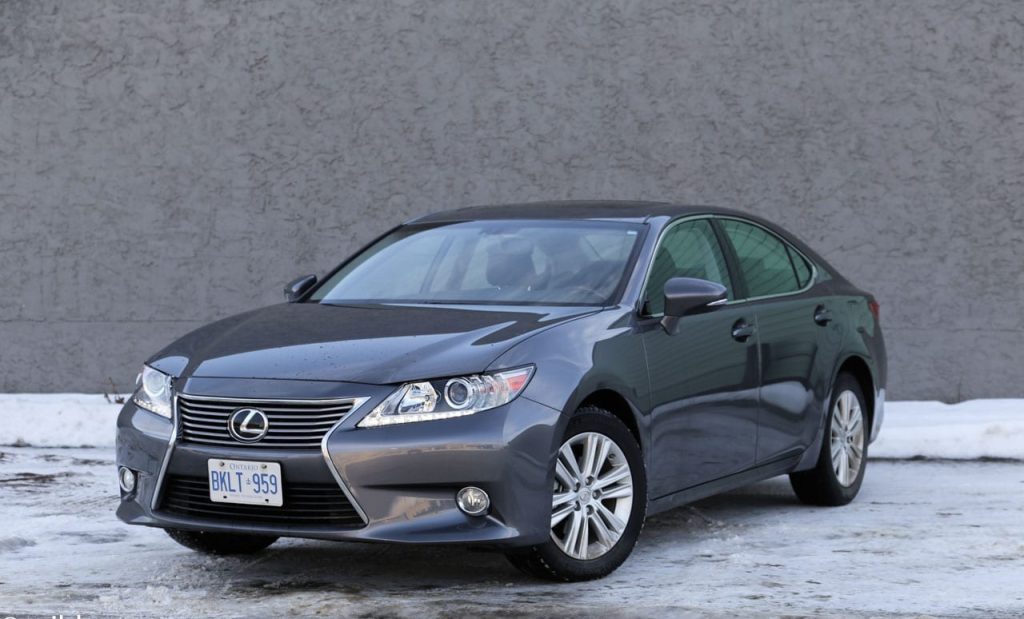
The ES also benefits from disciplined ownership. Buyers of this model often follow factory maintenance schedules carefully, helping preserve engine health for years.
Combined with low engine-related complaint rates, consistently high owner satisfaction, and decades of dependable service records, the Lexus ES 350 remains one of the strongest choices for drivers seeking a luxury sedan with a proven history of avoiding major engine failures.
Specifications
- Engine: 3.5-liter naturally aspirated V6
- Torque: 267 lb-ft
- Horsepower: 302 hp
- Length/Width: 195.9 inches / 73.4 inches
5. Toyota Camry
When mechanics are asked to name a sedan that routinely survives years of commuting with minimal engine trouble, the Toyota Camry is almost always part of the conversation. Its reputation is supported by more than anecdotes.
Consumer Reports has consistently ranked the Camry among the most dependable midsize sedans, while J.D. Power Vehicle Dependability Studies regularly place it near the top of its class.
NHTSA complaint records also show relatively few reports involving catastrophic engine failures, especially for recent generations equipped with Toyota’s naturally aspirated four-cylinder engines.
Toyota has earned this standing by refining its powertrains over multiple production cycles rather than introducing radical redesigns.
The current 2.5-liter Dynamic Force engine features dual fuel injection, a durable timing chain, and an efficient cooling system designed to minimize wear during long-term operation. Internal components are engineered to withstand daily commuting, highway travel, and high-mileage ownership without placing excessive stress on critical engine parts.
Long-term ownership research from iSeeCars frequently identifies the Camry as one of the passenger cars most likely to exceed 200,000 miles.
Many independent repair shops report seeing Camrys with extremely high mileage that continue to operate with their original engines, provided owners follow recommended oil change intervals and address routine maintenance before small issues become larger repairs. Engine replacements remain uncommon compared with many competing midsize sedans.
Another advantage is the extensive availability of genuine and aftermarket replacement parts throughout the United States. Maintenance costs remain reasonable, encouraging owners to keep their vehicles serviced on schedule.
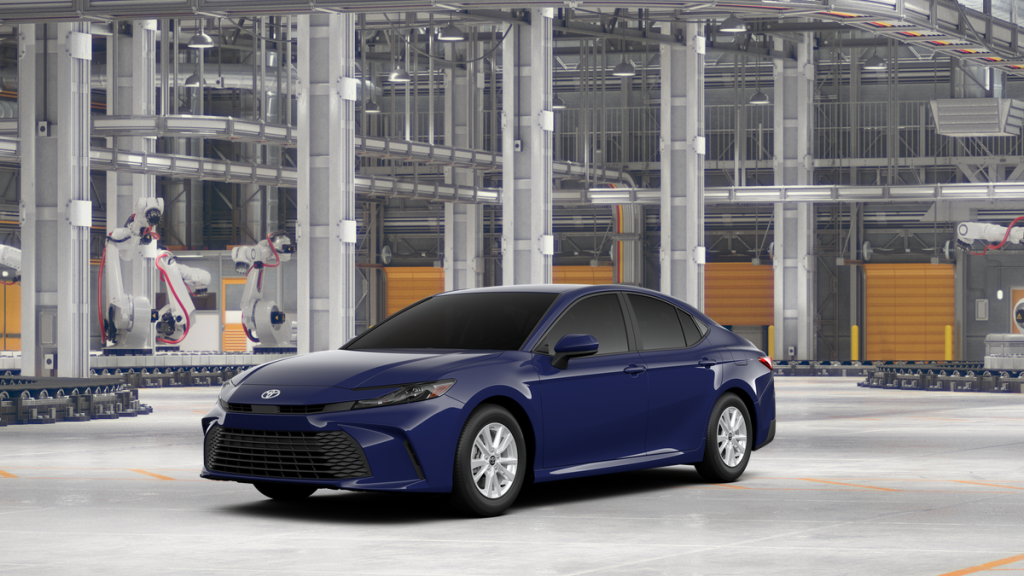
Supported by decades of reliability surveys, owner satisfaction, and low rates of serious engine complaints, the Toyota Camry remains one of America’s strongest examples of long-lasting engine dependability.
Specifications
- Engine: 2.5-liter naturally aspirated Dynamic Force inline four
- Torque: 184 lb-ft
- Horsepower: 203 hp
- Length/Width: 193.5 inches / 72.4 inches
6. Honda Civic
Few compact cars have developed the loyal following enjoyed by the Honda Civic, and much of that loyalty comes from the durability of its engines. Across numerous generations sold in the United States, the Civic has consistently achieved excellent reliability scores from Consumer Reports while performing strongly in J.D. Power dependability rankings.
A review of NHTSA complaint data also shows that widespread engine failures occur far less frequently than in many competing compact vehicles.
The Civic’s success stems from Honda’s long history of building efficient engines capable of handling years of everyday driving. Earlier K Series and R Series engines became known for exceptional longevity, and newer models continue that legacy with updated technology while preserving dependable internal construction.
Timing chains, carefully engineered oil circulation systems, and durable aluminum engine blocks all contribute to reducing the likelihood of severe internal damage.
Another characteristic that helps the Civic stand apart is its ability to tolerate high annual mileage. Delivery drivers, commuters, and fleet owners frequently choose Civics because the engines continue performing reliably with proper servicing.
Mechanics often note that these vehicles arrive for scheduled maintenance, suspension work, or brake service far more often than for major engine repairs. That pattern has remained remarkably consistent across multiple generations.
Consumer confidence is also reinforced by strong resale values. Vehicles known for dependable engines tend to retain value longer because buyers recognize the reduced likelihood of facing expensive repairs.
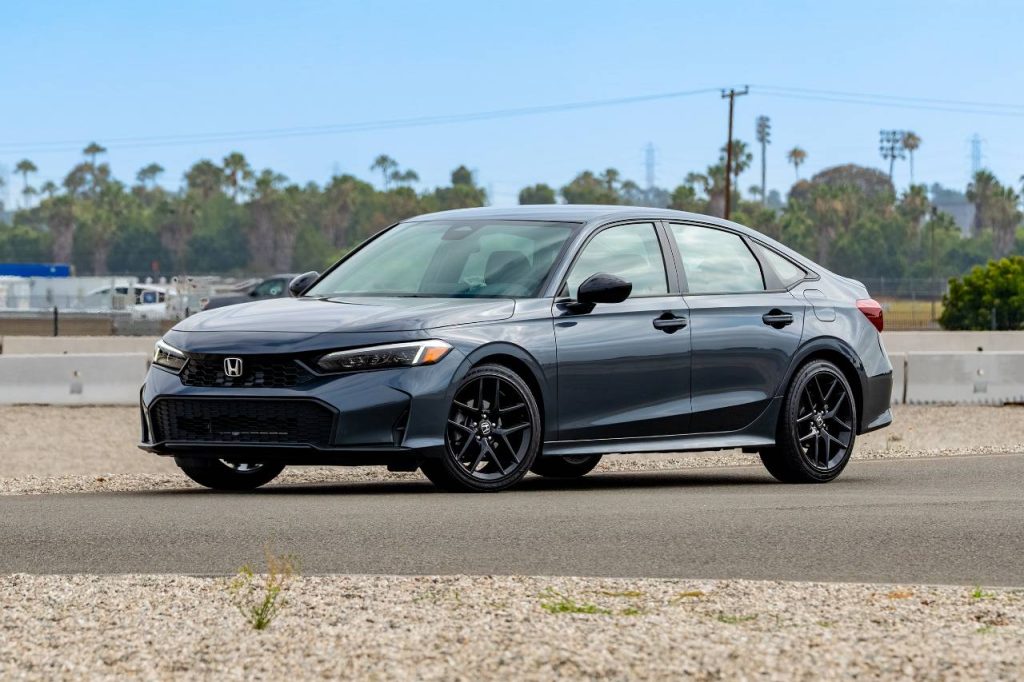
Thousands of Civic owners continue driving well beyond 200,000 miles with their original engines, reinforcing the findings of reliability surveys and owner reports.
This combination of dependable engineering, extensive real-world mileage, and low engine failure rates keeps the Honda Civic firmly among the most trustworthy cars sold in the American market.
Specifications
- Engine: 2.0-liter naturally aspirated inline four
- Torque: 133 lb-ft
- Horsepower: 150 hp
- Length/Width: 184.0 inches / 70.9 inches
7. Subaru Impreza
While Subaru is often recognized for its standard all-wheel-drive system, the Impreza has also established a strong reputation for dependable engine performance in the United States.
Consumer Reports has consistently rated recent Impreza models highly for predicted reliability, and J.D. Power dependability studies place the compact sedan and hatchback among the more dependable choices in their segment.
A review of NHTSA owner complaints indicates that catastrophic engine failures are relatively uncommon in newer generations equipped with the updated FB-series boxer engines.
Subaru learned valuable lessons from earlier engine designs that experienced oil consumption and head gasket concerns.
Engineers responded by redesigning critical components, improving piston rings, strengthening sealing materials, and refining the cooling system. These improvements significantly increased long-term durability.
The naturally aspirated 2.0-liter boxer engine found in many Impreza models has since demonstrated dependable service when maintained according to factory recommendations.
The horizontally opposed engine layout offers another advantage by lowering the vehicle’s center of gravity while distributing forces evenly across internal components.
Although boxer engines require a different maintenance approach than traditional inline engines, owners who stay current with oil changes, cooling system service, and fluid inspections frequently report well beyond 200,000 miles without experiencing serious internal engine damage.
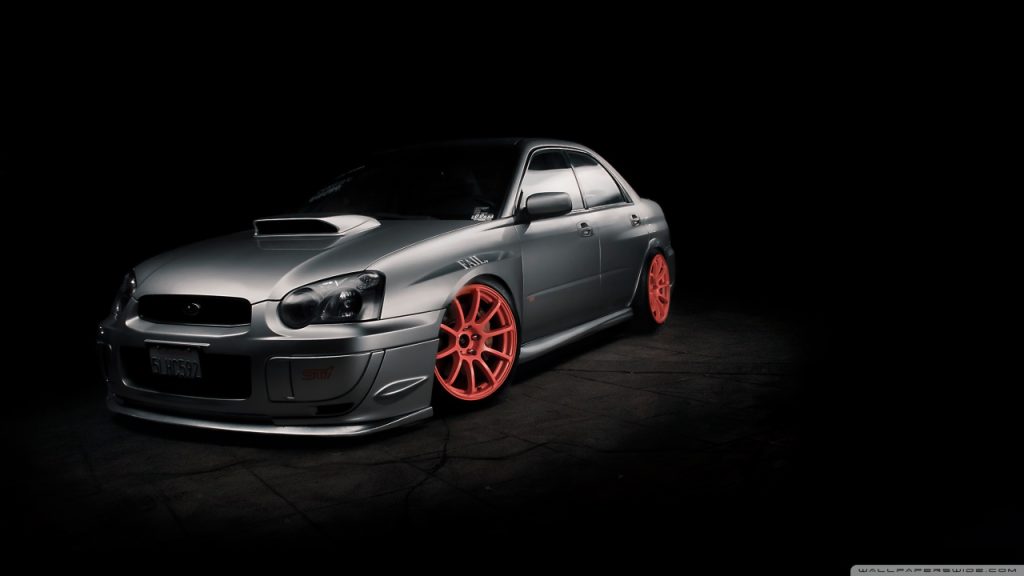
Independent repair facilities also note that newer Imprezas are more likely to visit the shop for routine maintenance, brake work, or suspension service than for complete engine replacements.
Combined with strong owner satisfaction and steadily improving long-term reliability scores, the Subaru Impreza has become one of the safest choices for buyers seeking dependable all-weather transportation with a low incidence of reported engine failures.
Specifications
- Engine: 2.0-liter naturally aspirated boxer four
- Torque: 145 lb-ft
- Horsepower: 152 hp
- Length/Width: 176.2 inches / 70.1 inches
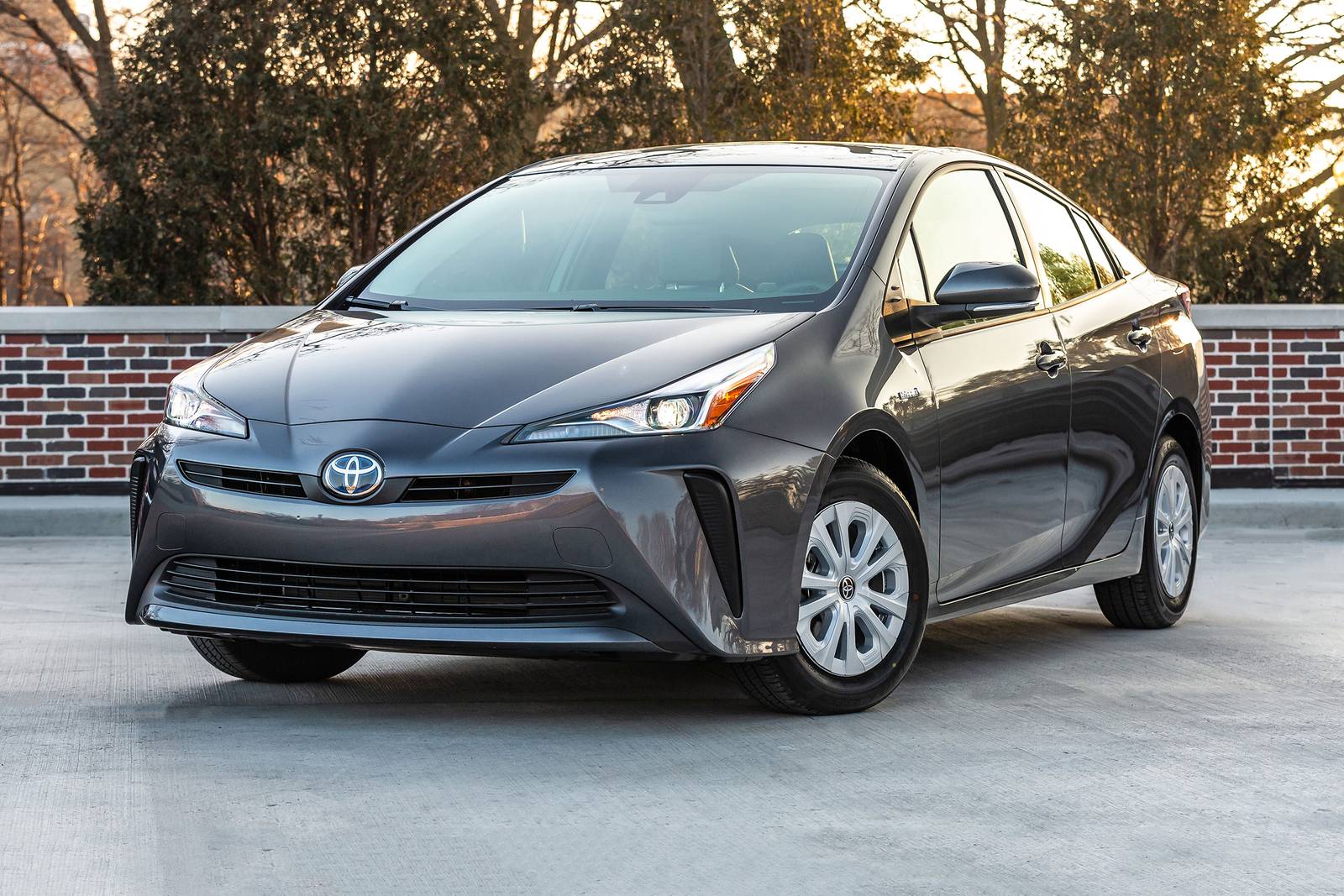
8. Toyota Prius
The Toyota Prius demonstrates that exceptional engine reliability is not limited to conventional gasoline vehicles. Since its introduction to the U.S. market, the Prius has built an outstanding record for durability, supported by consistently high rankings from Consumer Reports and J.D. Power.
NHTSA complaint data also reflects relatively few reports involving catastrophic engine failures, despite many owners accumulating exceptionally high mileage through daily commuting and rideshare use.
A key reason for this success lies in the hybrid system’s operating strategy. The gasoline engine does not run continuously because the electric motor assists during acceleration and low-speed driving.
This reduces mechanical stress and limits the amount of time the engine spends operating under heavy loads. Toyota’s hybrid control software carefully manages engine temperature and operating speed, helping extend the life of critical internal components.
The 2.0-liter hybrid engine uses a naturally aspirated design paired with Toyota’s proven hybrid technology. Rather than focusing on maximum output, engineers prioritized efficiency and longevity.
Many Prius models in taxi fleets and commercial services have surpassed 300,000 miles while retaining their original engines. Independent repair specialists frequently report that hybrid battery replacement is far more common than engine replacement, highlighting the durability of the gasoline engine itself.
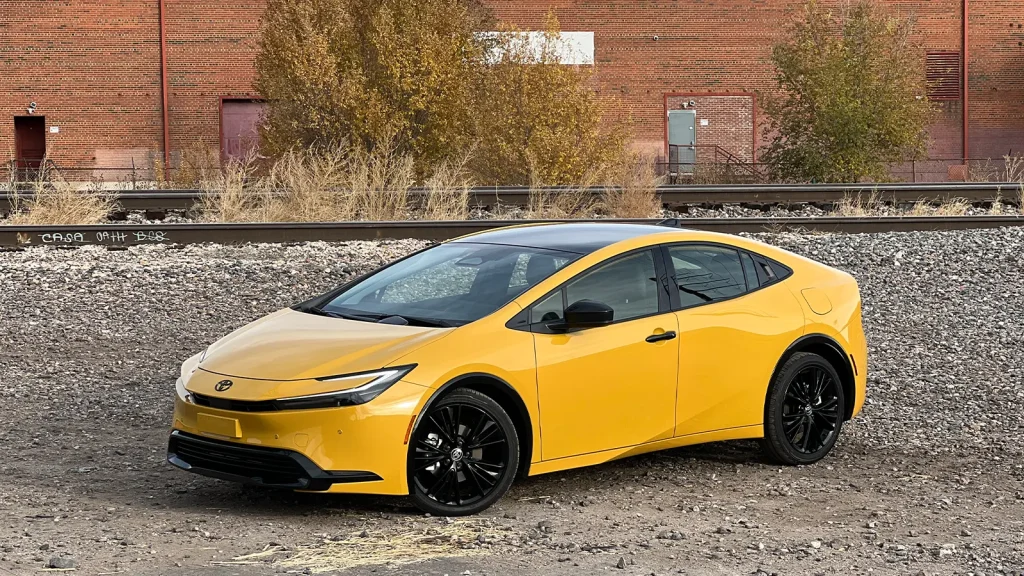
Long-term ownership costs remain attractive because routine maintenance requirements are straightforward. Regular oil changes, coolant replacement, and scheduled inspections are typically sufficient to keep the engine performing reliably for years.
Supported by extensive owner data, professional fleet experience, and independent reliability research, the Toyota Prius continues to rank among the American market’s most dependable vehicles for drivers seeking minimal risk of major engine failure.
Specifications
- Engine: 2.0-liter naturally aspirated hybrid inline four
- Torque: 139 lb-ft
- Horsepower: 194 hp (combined system output)
- Length/Width: 181.1 inches / 70.2 inches
Also Read: 8 Vehicles Most Stolen in Rural States
