
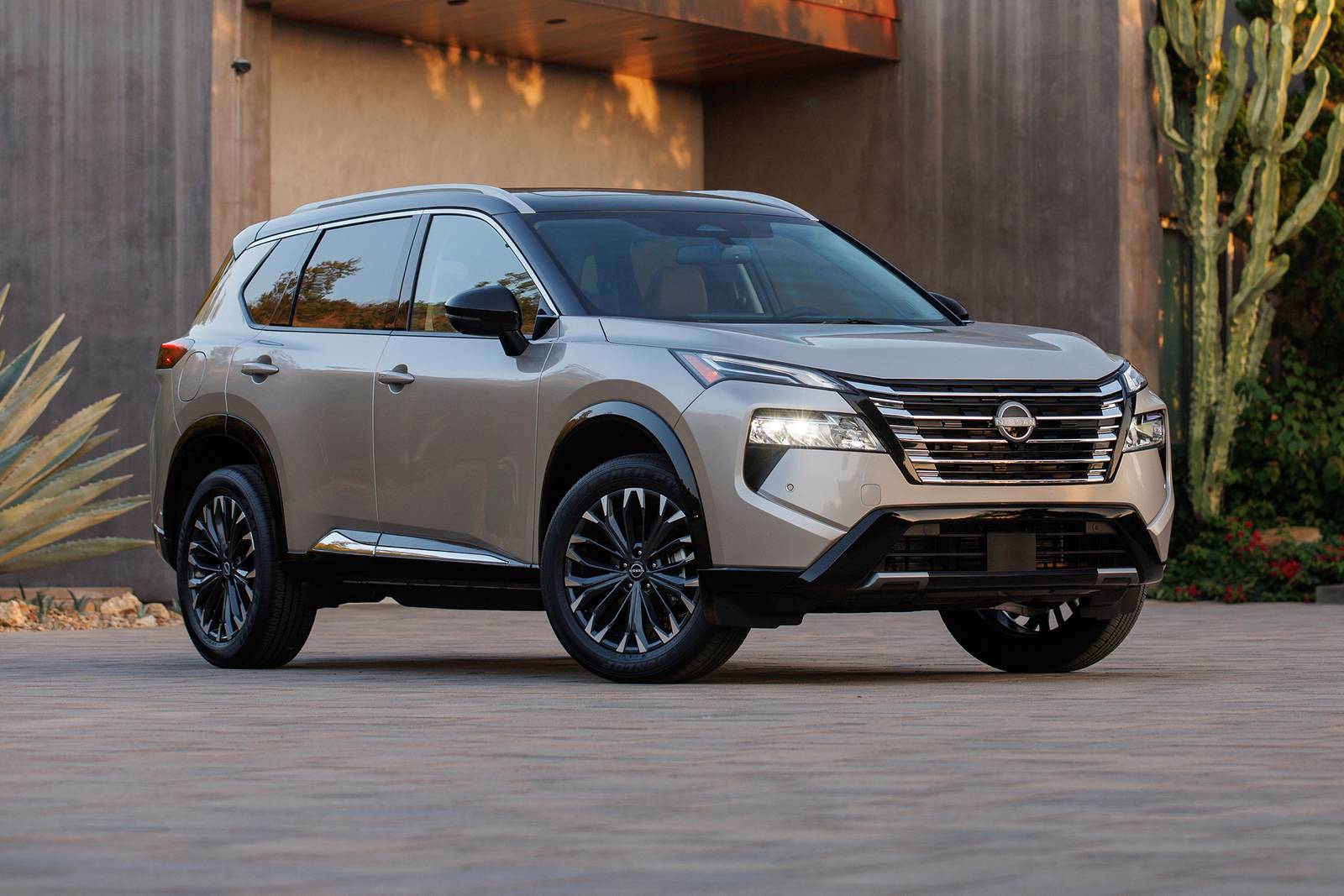
The Nissan Rogue has consistently ranked among America’s best-selling compact SUVs thanks to its spacious interior, comfortable ride, strong safety ratings, and competitive fuel economy. It appeals to a broad range of buyers, from young families and commuters to retirees looking for a practical daily driver.
While the Rogue’s starting price is often competitive with rivals like the Toyota RAV4, Honda CR-V, and Subaru Forester, the purchase price is only one part of the financial picture. The real cost of ownership includes depreciation, fuel, insurance, maintenance, repairs, financing, registration fees, and taxes over the years you keep the vehicle.
Many shoppers focus on the monthly payment without considering these additional expenses. However, industry ownership studies show that depreciation alone often accounts for the largest share of the total cost of owning a new vehicle.
Fuel, insurance, and financing also contribute thousands of dollars over five years, while routine maintenance and occasional repairs add to the long-term investment.
According to Kelley Blue Book, a 2025 Nissan Rogue has an estimated five-year cost to own of approximately $48,000 to $50,000, depending on trim level and equipment. Edmunds’ True Cost to Own estimates fall into a similar range for most Rogue trims, assuming an average of 15,000 miles driven per year.
These figures include depreciation, financing, insurance, fuel, maintenance, repairs, taxes, and registration fees, providing buyers with a more complete understanding of ownership costs than the MSRP alone.
Here’s a closer look at where those expenses come from and what prospective owners should expect during the first five years.
Also Read: What It Costs to Replace a Full Set of Shocks and Struts
Depreciation Is the Largest Expense
No ownership cost has a greater financial impact than depreciation. The moment a new vehicle leaves the dealership, it begins losing value. Although compact SUVs generally retain their value better than many sedans, depreciation still represents the largest ownership expense for most Rogue buyers.
According to Kelley Blue Book’s Cost to Own data, depreciation accounts for roughly $18,000 to $21,000 during the first five years, depending on trim level and market conditions.
Several factors influence resale value, including:
- Mileage
- Vehicle condition
- Accident history
- Maintenance records
- Trim level
- Regional demand
Well-maintained Rogues with complete service records generally command stronger resale prices than vehicles with inconsistent maintenance histories or cosmetic damage.
Owners planning to keep the SUV beyond five years spread this depreciation over a longer ownership period, reducing its annual financial impact.
Fuel Costs Remain Competitive
One reason the Rogue remains popular is its fuel efficiency. Current models use Nissan’s 1.5-liter VC-Turbo three-cylinder engine, which is paired with an Xtronic continuously variable transmission (CVT).
According to the U.S. Environmental Protection Agency (EPA), front-wheel-drive models achieve up to 30 mpg in the city and 37 mpg on the highway, while all-wheel-drive versions post slightly lower ratings.
Assuming 15,000 miles per year and average U.S. gasoline prices, Edmunds estimates fuel expenses of approximately $8,000 to $9,500 over five years, depending on drivetrain, driving habits, and fuel prices.
Drivers who spend most of their time on the highway may spend less than these estimates, while those who frequently encounter stop-and-go traffic or carry heavy cargo could see somewhat higher fuel costs.
Insurance Costs Vary by Driver
Insurance is another major ownership expense that differs considerably from one owner to another.
Premiums depend on factors such as:
- Age
- Driving history
- ZIP code
- Credit-based insurance score where permitted
- Coverage limits
- Deductible amount
- Annual mileage
Because the Rogue is equipped with advanced driver-assistance systems and modern safety technology, repair costs after a collision can influence insurance premiums.
Edmunds estimates insurance costs of approximately $5,000 to $6,000 over five years for many Rogue trims using average national insurance rates. Drivers with clean records may pay less, while younger drivers or those living in high-cost insurance markets may pay substantially more.
Financing Can Add Thousands
For buyers financing their purchase, interest charges represent another significant ownership cost.
The total amount paid depends on:
- Loan term
- Down payment
- Interest rate
- Purchase price
- Credit score
Edmunds estimates financing costs ranging from approximately $5,000 to $7,000 during the first five years for many Nissan Rogue models financed under average market conditions.
Buyers with excellent credit may qualify for lower interest rates through Nissan Motor Acceptance Company or other lenders, reducing total ownership costs.
Choosing a shorter loan term can also lower total interest, although monthly payments will generally be higher.
Routine Maintenance Is Predictable
Routine maintenance remains one of the more manageable ownership expenses for the Rogue.
Factory maintenance typically includes:
- Engine oil and filter changes
- Tire rotations
- Brake inspections
- Cabin air filter replacement
- Engine air filter replacement
- Brake fluid service
- Coolant inspection
- CVT fluid inspection and service as specified in the owner’s manual under applicable driving conditions
Edmunds estimates maintenance expenses of approximately $3,000 to $3,800 over the first five years.
Following Nissan’s recommended maintenance schedule is especially important because regular servicing helps maintain reliability and protects warranty coverage.
Owners who frequently drive in severe conditions, such as heavy traffic, dusty environments, or mountainous terrain, may require more frequent service than drivers operating under normal conditions.
Repairs Are Usually Limited During the Warranty Period
The Rogue includes Nissan’s factory warranty coverage, which helps reduce out-of-pocket repair expenses during the early years of ownership.
Current warranty coverage includes:
- Three-year/36,000-mile basic limited warranty
- Five-year/60,000-mile powertrain limited warranty
Because many major drivetrain components remain covered during much of the first five years, repair expenses are generally modest.
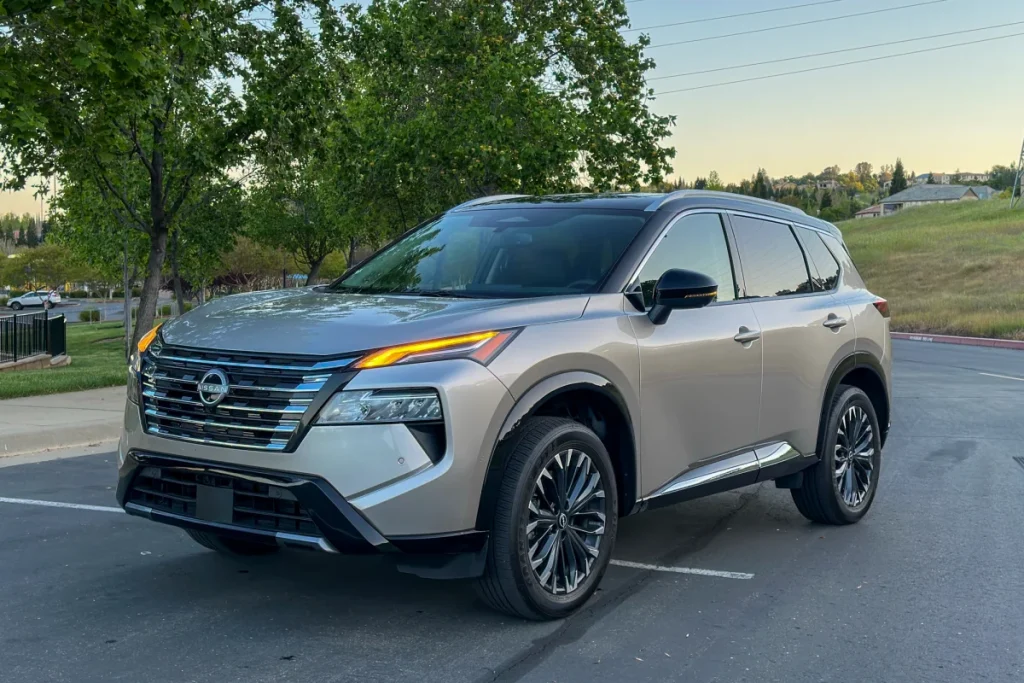
Edmunds estimates repair costs of approximately $700 to $1,000 during the first five years for many Rogue trims.
Unexpected repairs can still occur, but warranty protection significantly reduces the likelihood of major repair bills during the early ownership period.
Registration, Taxes, and Fees Add Up
Government-related expenses are often overlooked when estimating ownership costs.
These include:
- Sales tax
- Title fees
- Registration fees
- License plate charges
- Annual registration renewals
The amount varies widely depending on state and local regulations. Edmunds estimates these costs at approximately $5,000 to $6,500 over five years for many Rogue configurations.
States that calculate annual registration based on vehicle value generally result in higher ownership costs than those using flat registration fees.
Driving Habits Can Significantly Change Costs
Ownership calculators rely on standardized assumptions, but actual costs depend heavily on how the vehicle is used.
For example:
- Driving more than 15,000 miles annually increases fuel, maintenance, and depreciation.
- Frequent highway driving often improves fuel economy.
- Heavy city traffic may increase fuel consumption and brake wear.
- Regular towing, where equipped and within Nissan’s limits, can accelerate wear on tires, brakes, and transmission components.
- Keeping up with routine maintenance helps reduce the likelihood of expensive repairs later.
Owners who maintain detailed service records may also benefit from stronger resale values when it comes time to sell or trade the vehicle.
How Does the Rogue Compare With Other Compact SUVs?
The Rogue’s five-year ownership costs are generally competitive within the compact SUV segment.
Compared with rivals such as the Toyota RAV4, Honda CR-V, Hyundai Tucson, and Chevrolet Equinox, the Rogue delivers similar full ownership expenses. Its fuel economy helps keep operating costs under control, while routine maintenance and warranty coverage remain in line with segment averages.
Depreciation continues to be the largest single expense, but the Rogue’s popularity in the used vehicle market helps support resale values relative to many competitors.
Buyers should still compare insurance quotes, financing offers, and maintenance costs before making a purchase, as these factors can vary significantly based on personal circumstances.
Owning a Nissan Rogue involves much more than its purchase price. Over five years, owners should budget for depreciation, fuel, insurance, financing, maintenance, repairs, taxes, and registration, all of which contribute to the SUV’s total cost of ownership.
According to Kelley Blue Book and Edmunds, most 2025 Nissan Rogue models accumulate approximately $48,000 to $50,000 in total ownership costs during the first five years, assuming average annual driving and standard financing.
Depreciation remains the largest expense, followed by fuel, insurance, and financing. Routine maintenance and repair costs are comparatively modest, particularly during the factory warranty period, making the Rogue a competitive choice among compact SUVs for buyers seeking predictable ownership expenses.
For shoppers evaluating a new compact SUV, looking beyond the MSRP is essential. Understanding long-term ownership costs provides a more accurate picture of what the Nissan Rogue will truly cost over five years and helps buyers choose a vehicle that fits both their transportation needs and their long-term budget.
Also Read: What Does It Cost to Replace an ABS Control Module? Explained
