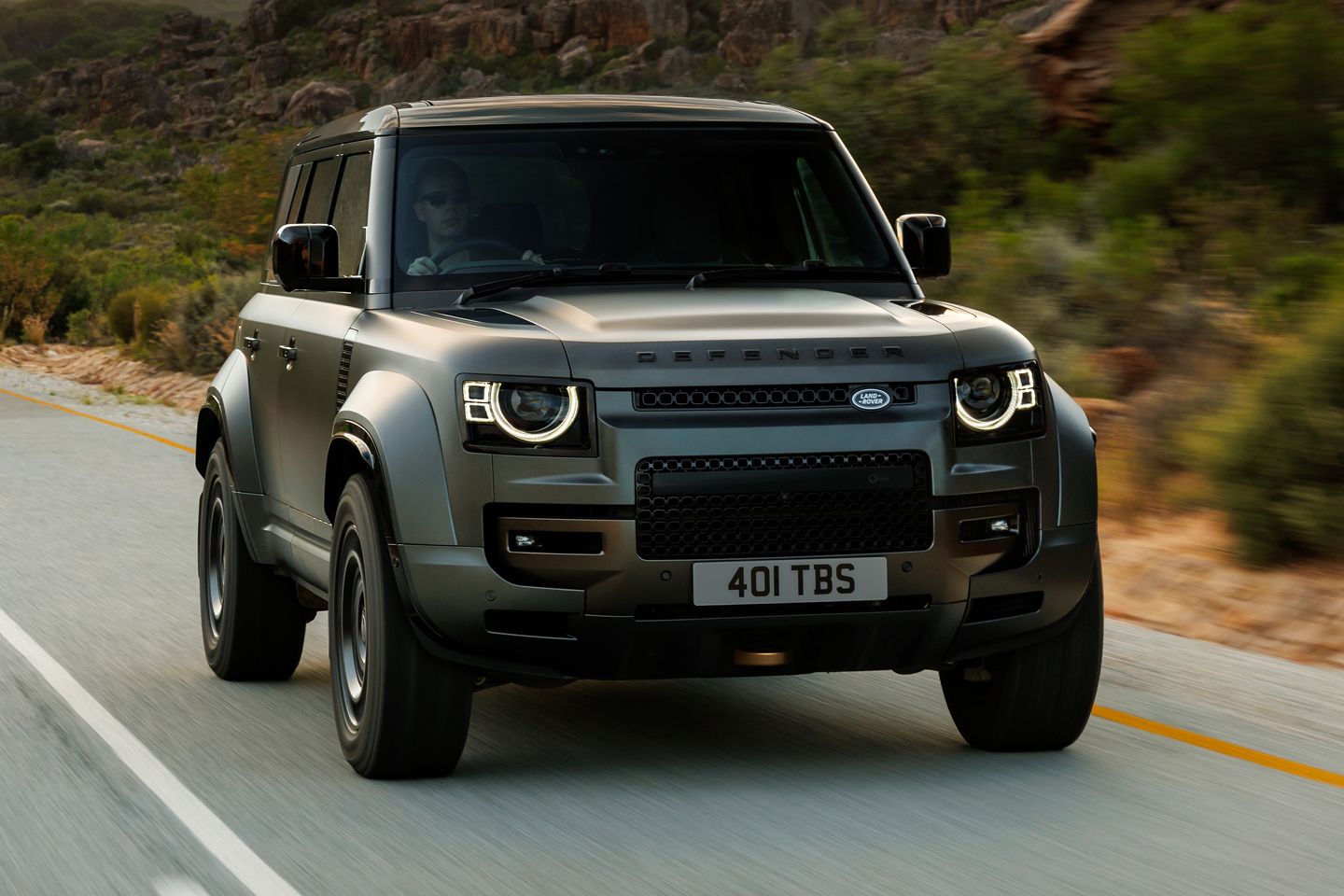
Land Rover is making one of the most significant changes to the Defender lineup since the current generation debuted in 2019.
For the 2027 model year, the British automaker has officially confirmed that it is eliminating the entry-level turbocharged four-cylinder gasoline engine from the Defender range in several markets, replacing it with a new 3.0-liter inline-six mild-hybrid powertrain.
The decision reflects a broader strategy to simplify the Defender’s engine lineup while improving performance, refinement, and real-world efficiency.
The update arrives alongside the introduction of the new Defender Vertex trim, fresh exterior styling options, additional accessories, revised seating configurations, and updates to the high-performance Defender OCTA. While the visual enhancements are welcome, the biggest story lies beneath the hood.
By retiring the long-serving 2.0-liter Ingenium turbocharged four-cylinder engine, Land Rover is signaling a move toward larger electrified engines that better match the Defender’s premium positioning and growing customer expectations.
According to Land Rover’s official announcement, the new engine lineup introduces fresh six-cylinder mild-hybrid options while discontinuing the 2.0-liter P300 engine in applicable markets.
The changes are part of the Defender’s 2027 model year update and will roll out depending on regional regulations and product strategies. The revised lineup also includes enhancements to the Defender OCTA’s twin-turbocharged V8, reinforcing the brand’s commitment to offering both efficiency and high-performance capability.
Also Read: 10 Fastest Diesel Pickups Ever Made – Ranked
The End of the Turbocharged Four-Cylinder Era
The outgoing 2.0-liter turbocharged Ingenium engine has served as the Defender’s entry-level gasoline option since the current generation launched. Producing around 296 horsepower and paired with an eight-speed automatic transmission, the P300 variant provided an accessible entry point into the Defender family.
While the engine delivered respectable performance for daily driving, many buyers felt it lacked the effortless power expected from a premium off-road SUV weighing well over two tons.
Competitors such as the Jeep Wrangler 392, Toyota Land Cruiser, Lexus GX, Mercedes-Benz G-Class, and Ford Bronco have increasingly shifted customer expectations toward stronger six-cylinder or V8 performance.
Land Rover appears to have reached the same conclusion. As part of the 2027 refresh, the company has replaced the four-cylinder with a newly introduced 3.0-liter inline-six P300 gasoline engine in select markets.
Unlike the outgoing engine, the new six-cylinder produces 470 Nm (347 lb-ft) of torque while benefiting from mild-hybrid technology that improves fuel economy and throttle response.
Land Rover says the new powertrain incorporates multiple efficiency-enhancing technologies designed to deliver better real-world performance without sacrificing refinement.
Although official U.S. specifications may differ slightly from European versions, the strategy clearly points toward a simplified lineup built around six-cylinder and V8 power.
Why Land Rover Is Making the Change
Several factors likely contributed to Land Rover’s decision. First, customer buying patterns have steadily shifted toward higher-output engines.
Many Defender buyers already opt for the six-cylinder mild-hybrid P400 or the V8-powered models, particularly in North America, where buyers tend to prioritize towing capability and highway performance.
Second, modern emissions regulations have changed how manufacturers approach engine development. Rather than investing heavily in updating an older four-cylinder platform, Land Rover appears to have concluded that electrified six-cylinder engines offer a better balance between performance, emissions compliance, and customer satisfaction.
According to JLR’s long-term business strategy announced in June, the company is pursuing greater propulsion flexibility by expanding its range of mild-hybrid, plug-in hybrid, hybrid, and battery-electric vehicles.
Rather than forcing every model toward full electrification immediately, the company plans to offer multiple powertrain choices depending on customer demand and regional regulations.
This approach gives Land Rover greater flexibility while maintaining the Defender’s reputation as a capable long-distance expedition vehicle.
A New Six-Cylinder Takes Center Stage
The replacement engine represents much more than a simple displacement increase. The new P300 utilizes a turbocharged 3.0-liter inline-six configuration supported by a 48-volt mild-hybrid system.
Mild-hybrid technology allows the vehicle to recover energy during braking, assist the engine during acceleration, and improve stop-start operation, all without requiring drivers to plug in the vehicle.
Land Rover has also introduced a higher-output P380 mild-hybrid variant producing 550 Nm (406 lb-ft) of torque, giving buyers another option between the standard six-cylinder and the flagship V8-powered models.
According to the company, both new engines have been engineered to improve real-world fuel efficiency while delivering smoother power delivery than the outgoing four-cylinder.
For buyers who regularly tow trailers, travel long distances, or venture off-road, the added torque should prove especially beneficial during low-speed crawling and highway passing.
Defender OCTA Receives Performance Improvements
The engine updates extend beyond the mainstream Defender lineup. Land Rover has also revised the twin-turbocharged 4.4-liter mild-hybrid V8 powering the Defender OCTA.
While output varies slightly depending on regional emissions requirements, the updated engine continues producing 750 Nm (553 lb-ft) of torque and maintains its impressive acceleration capabilities.
Engineers have revised the exhaust manifold to create a deeper and more authentic V8 soundtrack. According to Land Rover, the changes produce a richer exhaust note without compromising emissions compliance.
In European markets, the OCTA now produces 540 PS due to revised calibration, while North American versions are expected to retain higher output specifications where regulations permit.
The updates demonstrate that Land Rover remains committed to offering high-performance internal combustion engines even as the industry transitions toward electrification.
More Than Just an Engine Update
The 2027 Defender receives several other meaningful improvements beyond its revised powertrain lineup.
The newly introduced Defender Vertex expands the model range with unique exterior styling, including redesigned bumpers, a revised grille, gloss-black accents, yellow brake calipers, and exclusive accessories.
The model is intended to appeal to buyers seeking a more premium urban appearance without sacrificing the Defender’s renowned off-road capability.
The Defender 110 also gains a new six-seat interior configuration featuring individual captain’s chairs in the second row, providing an alternative to the traditional seven-seat layout.
Land Rover has further expanded personalization options with new paint colors, protective film finishes, accessory packages, expedition lighting equipment, roof-mounted storage solutions, and additional cargo-carrying accessories designed for adventure-focused customers.

Rather than introducing an entirely new generation, the company has chosen to refine the existing platform through targeted upgrades that improve ownership while preserving the Defender’s recognizable design.
What This Means for Buyers
For prospective Defender owners, the elimination of the turbocharged four-cylinder will likely simplify purchasing decisions.
The new six-cylinder engines should deliver noticeably stronger acceleration, smoother highway cruising, and improved towing confidence while maintaining competitive fuel economy through mild-hybrid technology.
Buyers who previously questioned whether the four-cylinder offered sufficient performance for a vehicle of the Defender’s size may find the updated lineup more compelling.
Pricing may increase in markets where the four-cylinder served as the entry-level engine, but many customers are expected to view the added performance and refinement as worthwhile improvements.
Existing owners of four-cylinder Defenders should not view the change as an indication that their vehicles are obsolete. The outgoing P300 remains a capable engine, particularly for everyday commuting and moderate off-road use.
However, Land Rover’s decision reflects evolving customer expectations in the premium SUV segment, where six-cylinder power has increasingly become the norm.
A Defender Built for the Next Chapter
The retirement of the turbocharged four-cylinder marks an important milestone in the Defender’s evolution. Instead of chasing downsized engines solely for efficiency, Land Rover has chosen to pair larger-displacement six-cylinder powerplants with mild-hybrid technology, delivering stronger performance while meeting increasingly demanding emissions standards.
Combined with updated styling, expanded customization options, new seating configurations, and enhancements to the Defender OCTA, the 2027 model represents a thoughtful refinement rather than a complete reinvention.
As JLR continues balancing electrification with traditional combustion engines, the Defender remains central to the company’s global strategy. The updated powertrain lineup demonstrates that customers can still expect capable gasoline-powered SUVs, but with greater emphasis on electrification, refinement, and efficiency.
For one of the world’s most iconic off-road vehicles, the latest changes ensure the Defender remains competitive as buyer expectations and industry regulations continue to evolve.
Also Read: 8 One-Generation Car Models That Were Never Renewed