
The automotive industry is filled with nameplates that have survived for decades through multiple redesigns. Models such as the Toyota Camry, Honda Civic, and Ford F-150 have evolved generation after generation while maintaining their place in the market.
Not every vehicle enjoys that level of longevity. Some cars are introduced with high expectations, receive only a single production generation, and are discontinued without ever receiving a true successor. In some cases, weak sales ended the program.
In others, changing consumer preferences, corporate restructuring, or economic conditions convinced manufacturers to abandon the model despite positive reviews.
A one-generation vehicle is different from a car that simply changes its name. These models completed their entire production life on a single platform and were never replaced by a second generation carrying the same nameplate.
Many have since become interesting pieces of automotive history because they represent unique engineering ideas or ambitious business decisions that were never repeated.
This article highlights eight one-generation car models sold in the United States that never received a direct second generation. Each vehicle has been selected based on documented production history and manufacturer records.
Although some were short-lived and others remained on sale for several years, every model shared the same outcome: its original generation became its only generation before production came to an end.
Also Read: 8 EVs That Can Recharge in Under 20 Minutes
1. Honda Crosstour (2010 to 2015)
The Honda Crosstour entered the American market as an unconventional blend of sedan, hatchback, and crossover. Based on the eighth-generation Honda Accord, it was introduced for the 2010 model year with the goal of appealing to buyers who wanted more cargo flexibility than a traditional sedan without moving into a full SUV.
Despite Honda’s reputation for reliability and quality, the Crosstour struggled to establish a clear identity in a rapidly changing marketplace.
Early models were powered by a 3.5-liter V6 before Honda later added a fuel-efficient 2.4-liter four-cylinder option. The vehicle offered available all-wheel drive, a spacious cabin, and a large rear cargo area made possible by its fastback design.
While reviewers generally praised ride quality and refinement, many buyers found the styling polarizing. At the same time, compact and midsize crossover SUVs were rapidly becoming the preferred choice for American families, leaving the Crosstour positioned between two shrinking market segments.
Honda attempted to improve the model through updates for the 2013 model year, including revised exterior styling and additional equipment. Those changes helped modernize the vehicle but did not significantly improve sales.
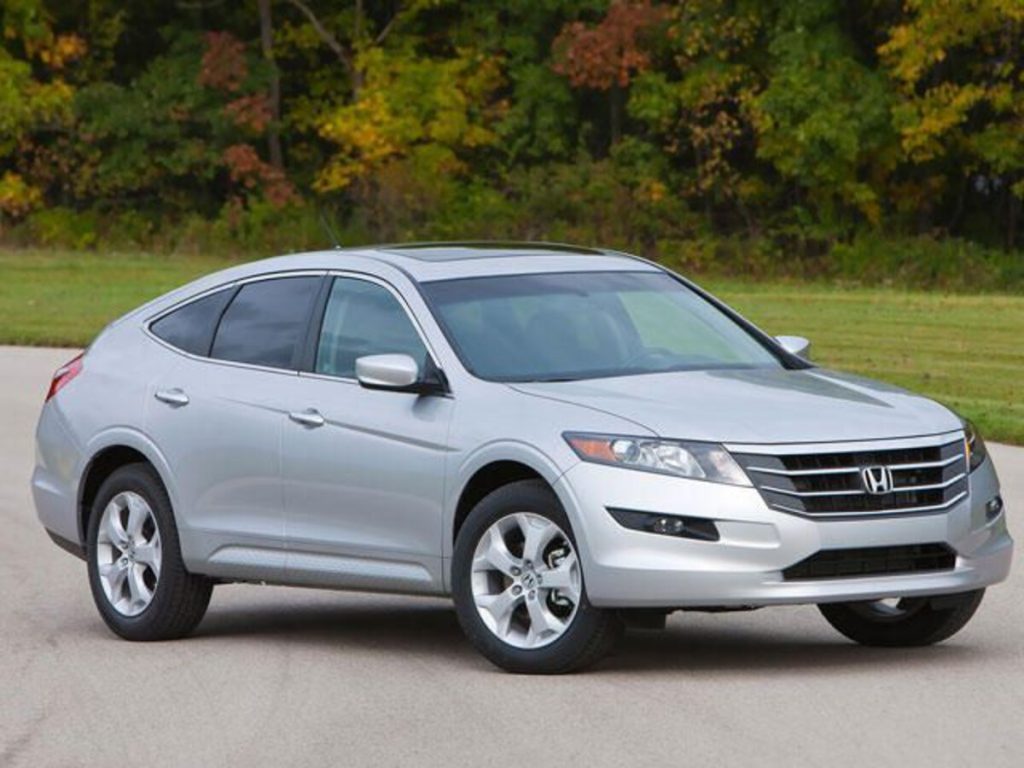
By the end of the 2015 model year, Honda discontinued the Crosstour without announcing a replacement.
Because the nameplate never advanced beyond its original platform, the Crosstour remains a true one-generation vehicle. It serves as an example of how a well-engineered automobile can still struggle if market timing and consumer demand move in a different direction.
Specifications
- Engine: 3.5-liter naturally aspirated V6
- Torque: 252 lb-ft
- Horsepower: 278 hp
- Length/Width: 196.1 inches / 74.7 inches
2. Nissan Murano CrossCabriolet (2011 to 2014)
Few vehicles have generated as much curiosity as the Nissan Murano CrossCabriolet. Introduced for the 2011 model year, it combined the body of a midsize crossover with the retractable soft top of a convertible.
At the time, very few manufacturers attempted anything similar, making the CrossCabriolet one of the most distinctive vehicles sold in the United States.
Building a convertible from an SUV required extensive engineering changes. Nissan reinforced the body structure to compensate for the loss of a fixed roof, redesigned the rear section to accommodate the folding soft top, and retained seating for four occupants.
The vehicle also kept the Murano’s proven 3.5-liter V6 engine and available all-wheel drive, giving buyers capabilities rarely associated with convertibles.
Although the engineering effort was impressive, customer demand never matched expectations.
The vehicle entered the market during a period when buyers increasingly preferred practical crossover SUVs or traditional sports convertibles rather than a combination of both. Its premium price also limited its audience, placing it against well-established luxury alternatives.
Production remained low throughout its short lifespan, and Nissan discontinued the CrossCabriolet after the 2014 model year. The standard Murano continued through later generations, but the convertible version never received a redesign or direct successor.
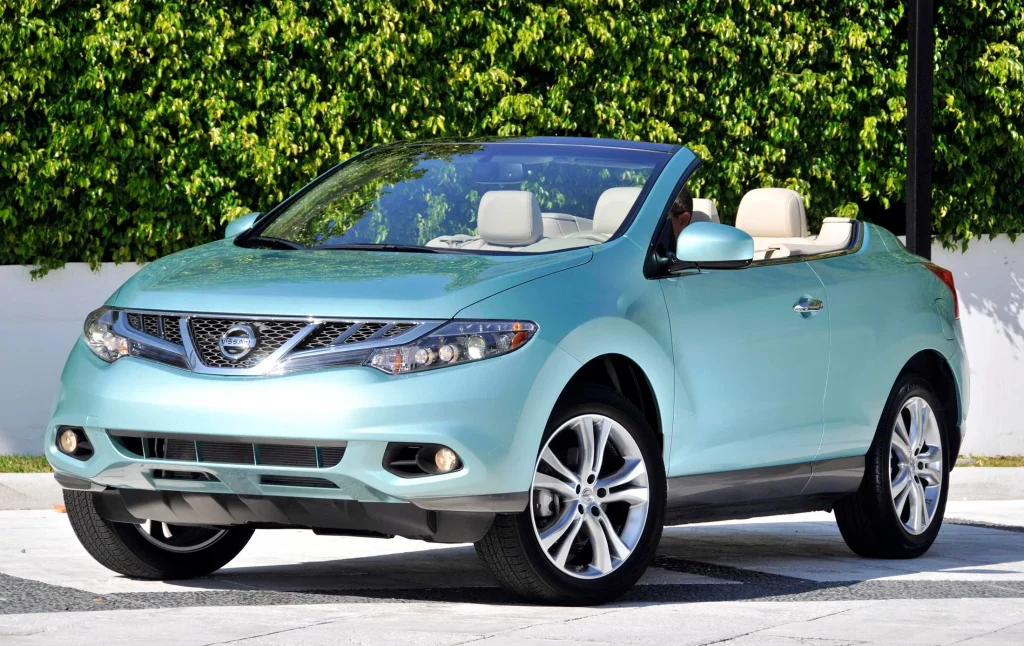
Today, the Murano CrossCabriolet stands as one of the automotive industry’s boldest experiments. Its unique design, limited production, and single-generation history have made it an uncommon sight on American roads and an interesting example of how innovation does not always translate into long-term commercial success.
Specifications
- Engine: 3.5-liter naturally aspirated V6
- Torque: 248 lb-ft
- Horsepower: 265 hp
- Length/Width: 190.6 inches / 74.1 inches
3. Volkswagen Routan (2009 to 2012)
The Volkswagen Routan entered the American market at a time when minivans remained an important choice for large families.
Rather than developing an entirely new platform, Volkswagen partnered with Chrysler and based the Routan on the Chrysler RT minivan architecture that also underpinned the Chrysler Town & Country and Dodge Grand Caravan.
Although the mechanical foundation was familiar, Volkswagen redesigned the exterior, retuned the suspension, and upgraded portions of the interior to better match its own brand identity.
Volkswagen hoped the changes would attract buyers seeking a more refined driving experience without sacrificing the practicality expected from a family minivan.
The Routan offered seating for up to seven passengers, available power sliding doors, a power liftgate, flexible cargo space, and a choice of V6 engines.
Ride quality and handling received positive reviews, particularly because Volkswagen engineers recalibrated the steering and suspension to deliver a more composed driving feel than its Chrysler counterparts.
Despite those improvements, the Routan struggled to establish itself in a highly competitive segment. Many customers preferred purchasing the original Chrysler products, while others gravitated toward established rivals such as the Honda Odyssey and Toyota Sienna.
Sales never reached Volkswagen’s expectations, and production effectively ended after the 2012 model year, although a limited number of leftover vehicles were sold as 2014 models.
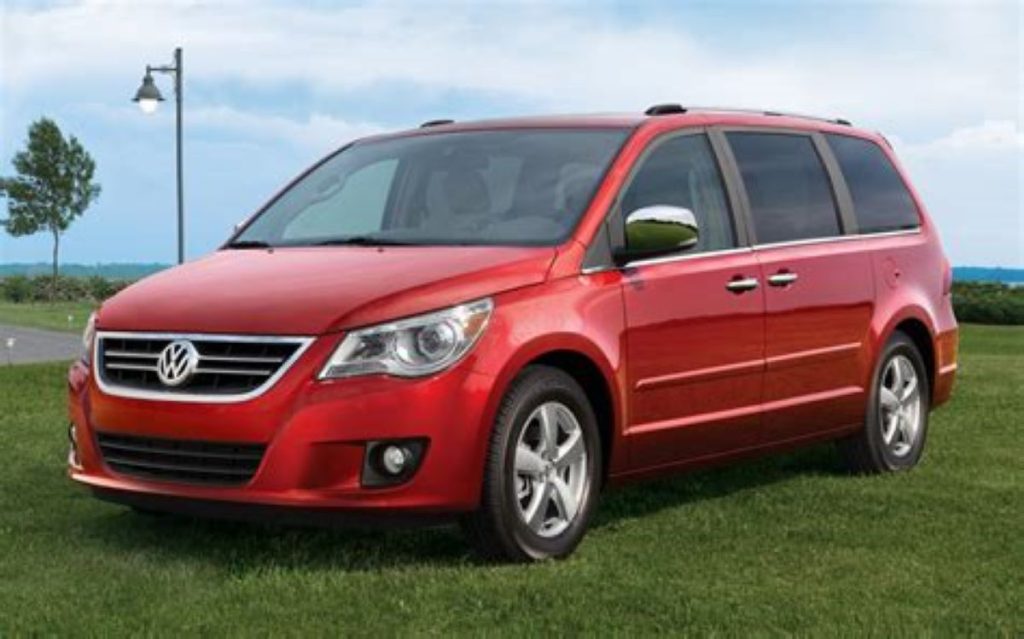
Volkswagen never introduced a second-generation Routan or another minivan carrying the same name. Instead, the company shifted its American strategy toward crossover SUVs.
The Routan remains an interesting chapter in Volkswagen’s history because it represented the brand’s only modern attempt to compete directly in the U.S. minivan segment using a one-generation model.
Specifications
- Engine: 3.6-liter naturally aspirated Pentastar V6
- Torque: 260 lb-ft
- Horsepower: 283 hp
- Length/Width: 202.5 inches / 78.7 inches
4. Lincoln Blackwood (2002)
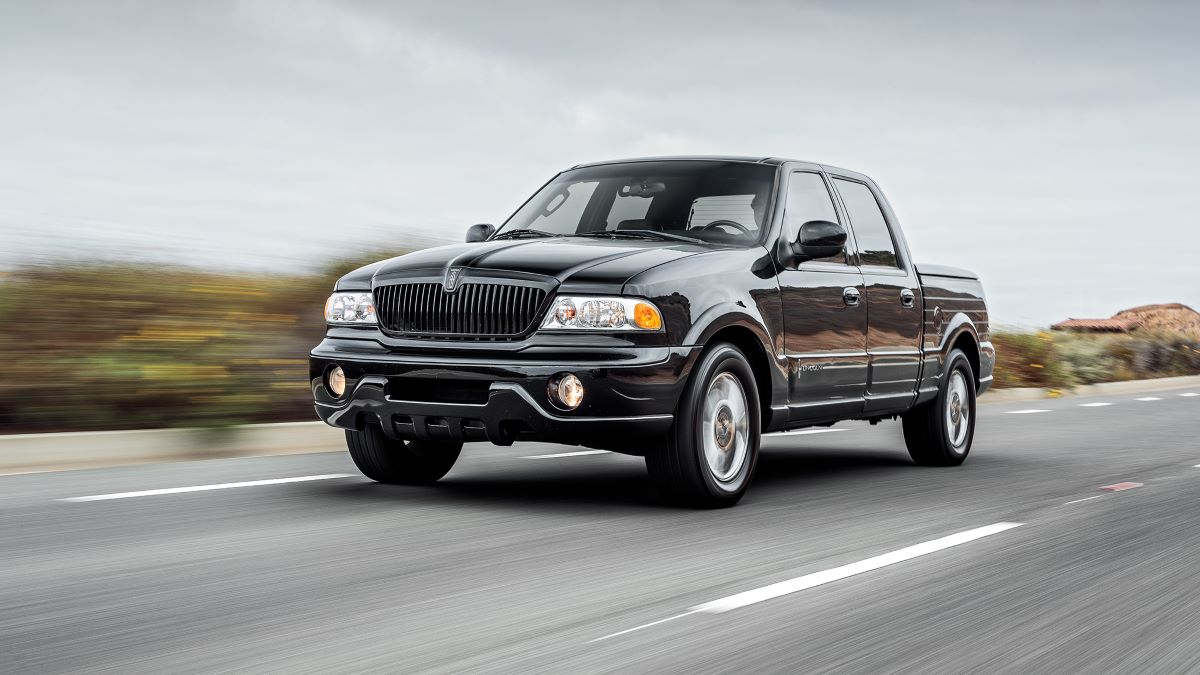
The Lincoln Blackwood is remembered as one of the shortest-lived luxury pickup trucks ever introduced in the United States. Produced for only the 2002 model year, it was Lincoln’s first attempt to enter the premium pickup segment by transforming the popular Ford F-150 into a luxury-focused vehicle.
Rather than emphasizing heavy-duty work capability, the Blackwood targeted buyers who wanted the comfort and prestige of a luxury sedan combined with the appearance of a pickup.
Its cabin featured premium leather upholstery, wood trim, heated front seats, and upscale amenities that were uncommon in pickups at the time.
The cargo bed received a distinctive carpeted interior with aluminum accents and a powered tonneau cover, giving the truck a refined appearance unlike anything else on the market. Power came from Ford’s proven 5.4-liter V8 paired with a four-speed automatic transmission.
Although the concept attracted considerable attention, several factors limited its appeal. The Blackwood was offered only with rear-wheel drive, reducing its usefulness for many truck buyers.
Its cargo bed prioritized appearance over practicality, making it less suitable for traditional pickup tasks. At the same time, its premium price placed it in a niche market that remained relatively small.
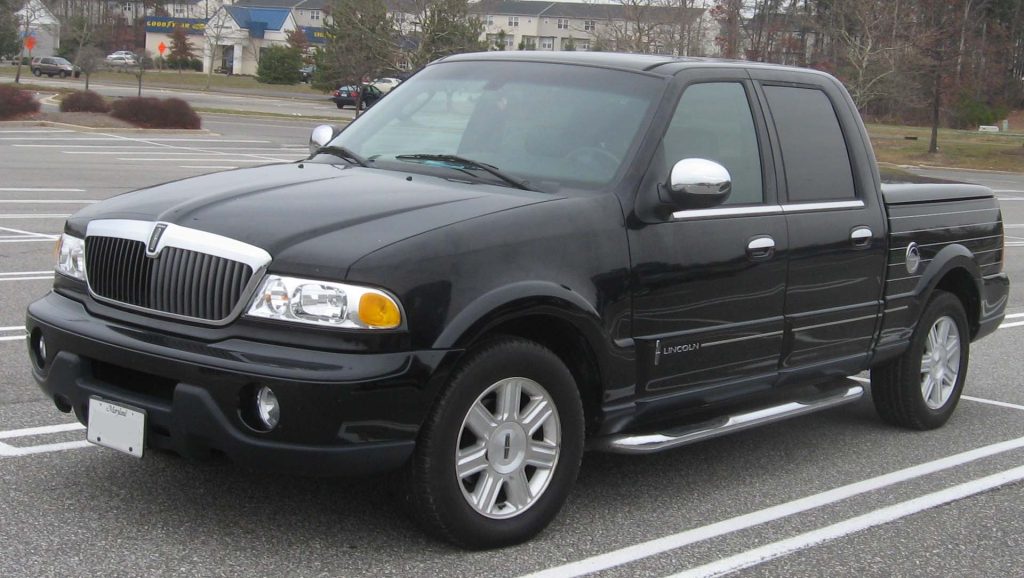
Sales were far below Lincoln’s expectations, leading the company to discontinue the Blackwood after just one production year. Several years later, Lincoln introduced the Mark LT, but it was a completely separate model rather than a second-generation Blackwood.
Because it existed for only a single production generation and was never directly renewed, the Blackwood remains one of the rarest modern Lincoln vehicles and an important example of how luxury alone cannot guarantee success in the pickup market.
Specifications
- Engine: 5.4-liter naturally aspirated V8
- Torque: 350 lb-ft
- Horsepower: 300 hp
- Length/Width: 216.7 inches / 79.9 inches
5. Chevrolet SSR (2003 to 2006)
Some vehicles are created to fill an existing market segment, while others are designed to stand apart from everything else on the road.
The Chevrolet SSR belonged to the second category. Introduced for the 2003 model year, it blended styling inspired by Chevrolet’s late 1940s pickup trucks with a retractable hardtop convertible and a two-seat roadster cabin.
No other American manufacturer offered anything quite like it, making the SSR one of General Motors’ boldest design experiments.
Although the retro appearance attracted immediate attention, the SSR was built using many proven GM mechanical components. Early models used the 5.3-liter V8 before Chevrolet upgraded the truck to the 6.0-liter LS2 V8 for 2005, bringing a substantial increase in performance.
Buyers could even choose a six-speed manual transmission during the final years of production, giving the vehicle genuine sports car character.
Despite those improvements, the SSR faced a difficult market position. It combined pickup styling with limited cargo capacity and offered seating for only two passengers.
Buyers seeking practical trucks found more capable alternatives, while convertible shoppers often preferred traditional sports cars. Its premium pricing further narrowed the potential customer base.
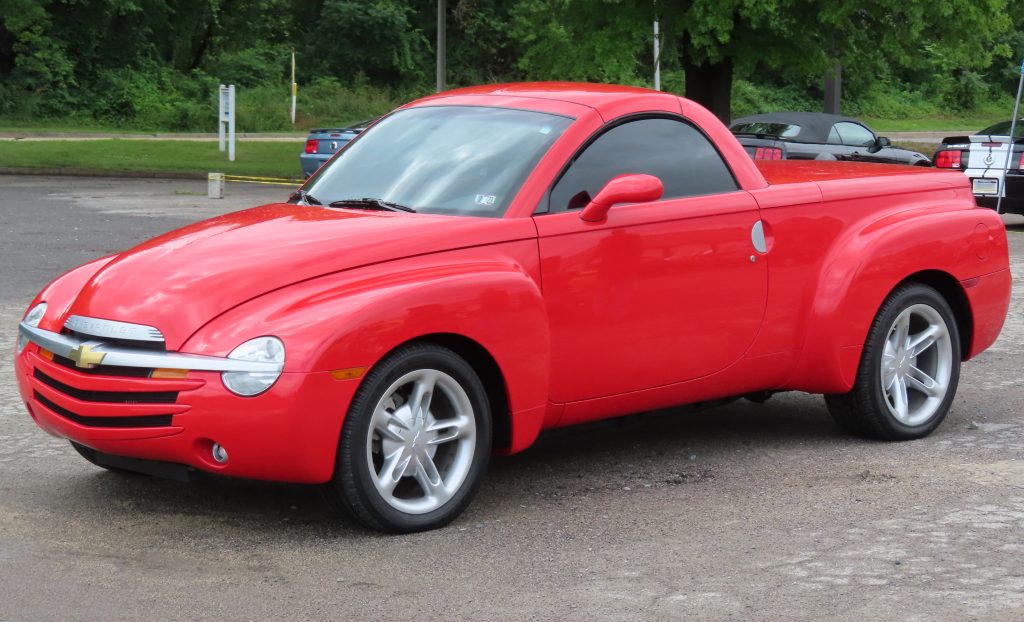
Production ended after the 2006 model year without plans for a replacement. Chevrolet never developed a second-generation SSR, and the company shifted its attention toward more conventional trucks and performance cars.
Today, the SSR remains highly recognizable because of its distinctive styling and limited production. Its unusual combination of retro design, convertible engineering, and V8 performance ensured it would become one of the most memorable one-generation vehicles in modern Chevrolet history.
Specifications
- Engine: 6.0-liter naturally aspirated LS2 V8
- Torque: 400 lb-ft
- Horsepower: 390 hp
- Length/Width: 191.4 inches / 78.6 inches
6. Suzuki Kizashi (2010 to 2013)
When Suzuki introduced the Kizashi, the company intended to compete directly with established midsize sedans such as the Honda Accord, Toyota Camry, and Nissan Altima.
Instead of emphasizing low prices, Suzuki developed a sedan that offered refined handling, a well-built interior, and available all-wheel drive, a feature rarely found in this segment at the time.
The Kizashi received praise from automotive journalists for its balanced chassis and composed driving dynamics. Its 2.4-liter four-cylinder engine delivered respectable performance, while the cabin featured higher-quality materials than many buyers expected from the brand.
Available equipment included leather seating, a premium audio system, navigation, and advanced safety features that made the sedan competitive with more established rivals.
Despite receiving positive reviews, the vehicle arrived in the United States at a challenging time for Suzuki’s automotive business. The brand’s relatively small dealership network limited its reach and made it harder to compete with larger manufacturers, reducing its ability to attract a wider audience.
Consumer awareness remained low, and sales never reached the levels needed to justify a second generation.
Suzuki discontinued the Kizashi after the 2013 model year, and shortly afterward, the company withdrew from the U.S. passenger vehicle market. As a result, the Kizashi never received a successor, leaving it as the brand’s final midsize sedan sold in America.
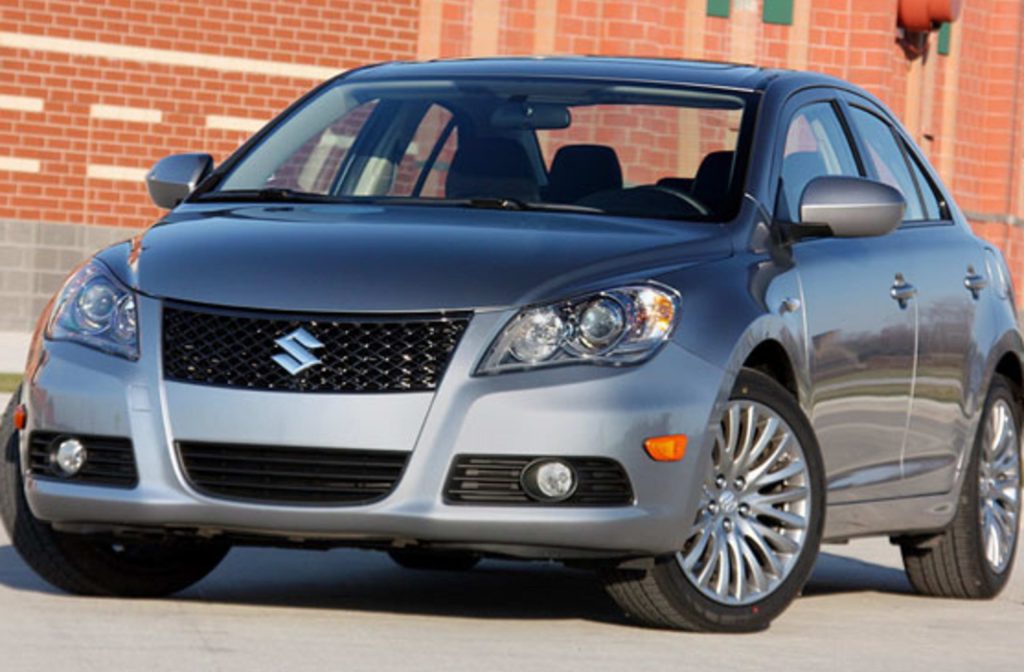
Although it was short-lived, the Kizashi demonstrated that Suzuki could build a refined and enjoyable family sedan. Its combination of quality engineering and limited production has made it an interesting choice for enthusiasts looking for a unique one-generation vehicle.
Specifications
- Engine: 2.4-liter naturally aspirated inline-four
- Torque: 170 lb-ft
- Horsepower: 185 hp
- Length/Width: 183.1 inches / 71.7 inches
7. Dodge Magnum (2005 to 2008)
The Dodge Magnum arrived at a time when station wagons had largely disappeared from the American market. Instead of following traditional wagon styling, Dodge created a bold performance-oriented vehicle that combined the proportions of a muscle car with the practicality of a large cargo area.
Built on Chrysler’s LX rear-wheel-drive platform, the Magnum shared much of its engineering with the Dodge Charger and Chrysler 300, giving it capabilities rarely found in family wagons.
Buyers could choose from several powertrains during its production run, ranging from efficient V6 engines to powerful HEMI V8s.
The high-performance SRT8 version, equipped with a 6.1-liter HEMI V8, became especially popular among enthusiasts because it delivered sports car acceleration while retaining impressive cargo space.
The Magnum also offered available all-wheel drive on selected trims, expanding its appeal to buyers in regions with challenging weather.
Despite its unique combination of practicality and performance, sales gradually declined as consumer preferences shifted toward crossover SUVs.
Manufacturers increasingly invested in utility vehicles that offered higher seating positions and greater market demand, leaving traditional wagons with a shrinking customer base. Chrysler responded by ending Magnum production after the 2008 model year.
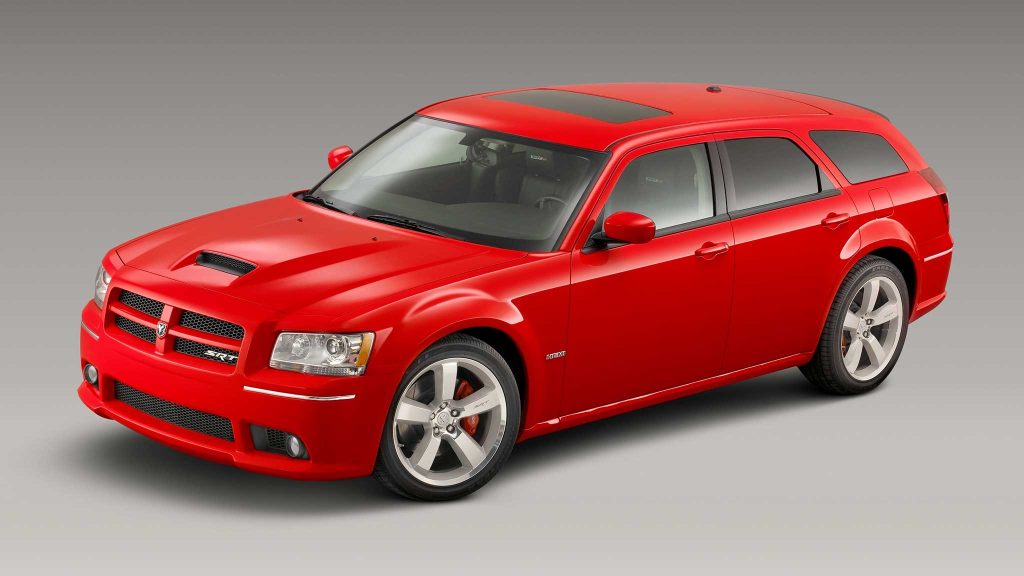
Although later Dodge vehicles inherited portions of its performance philosophy, the Magnum nameplate itself never received a second generation. No direct replacement carrying the same identity was introduced, making it a genuine one-generation model in Dodge’s history.
Today, well-preserved Magnum models remain popular among enthusiasts because of their distinctive styling, rear-wheel-drive architecture, and available HEMI performance. Its short production life has helped transform it into one of the more recognizable modern Dodge collectibles.
Specifications
- Engine: 5.7-liter HEMI naturally aspirated V8
- Torque: 390 lb-ft
- Horsepower: 340 hp
- Length/Width: 197.7 inches / 74.8 inches
8. Plymouth Prowler (1997 to 2002)
Few American production cars attracted as much attention as the Plymouth Prowler. Introduced as a factory-built hot rod, it featured exposed front wheels, dramatic fenders, a pointed nose, and styling inspired by custom street rods from the 1930s.
While concept cars often lose many of their original design elements before reaching production, the Prowler remained remarkably faithful to its show car appearance, making it one of the most distinctive vehicles ever sold by Chrysler.
The Prowler’s aluminum-intensive construction was equally ambitious. Engineers used lightweight materials throughout the chassis to improve handling while maintaining structural rigidity.
Power came from Chrysler’s 3.5-liter V6 paired with an AutoStick automatic transmission mounted in the rear through a transaxle configuration. Although some enthusiasts wished for a V8, the car still delivered respectable acceleration while emphasizing balanced weight distribution.
The vehicle appealed primarily to collectors and enthusiasts rather than mainstream buyers. Limited practicality, a small trunk, and niche styling naturally restricted sales volume. Even so, the Prowler succeeded in demonstrating Chrysler’s willingness to bring an unconventional design into full production.
After Plymouth was discontinued as a brand in 2001, the Prowler briefly continued as the Chrysler Prowler before production ended in 2002. No second-generation Prowler was ever developed, and Chrysler never introduced a direct successor carrying the same concept or name.
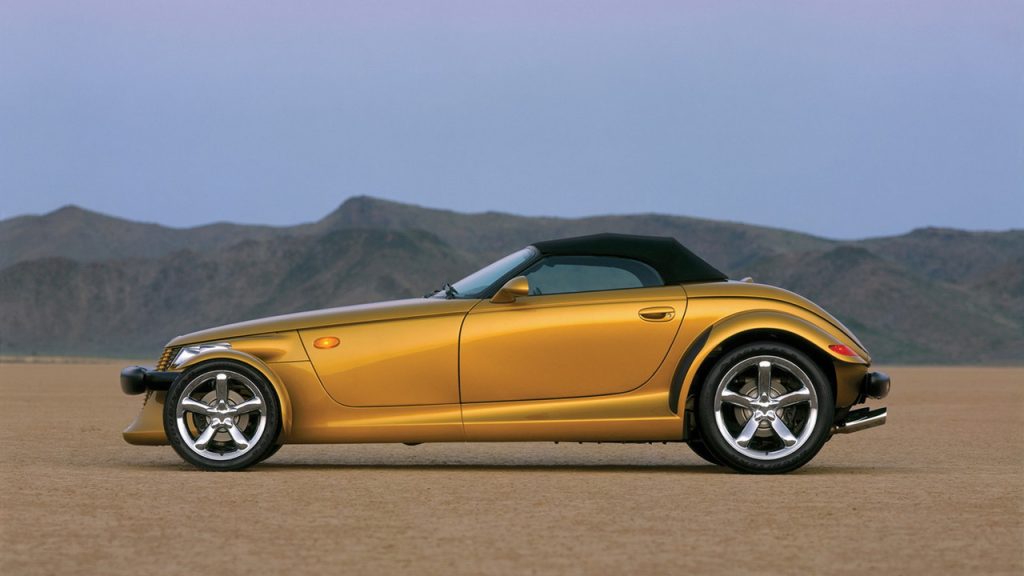
More than two decades later, the Prowler continues attracting attention at car shows across the United States. Its unmistakable styling, limited production numbers, and one-generation history have secured its place as one of the most unique American specialty cars of the modern era.
Specifications
- Engine: 3.5-liter naturally aspirated V6
- Torque: 255 lb-ft
- Horsepower: 253 hp
- Length/Width: 165.0 inches / 76.7 inches
Also Read: 8 Connected-Car Subscriptions That Keep Billing After You Sell
