
Most cars place the driver’s seat on the left or right side of the cabin, depending on the country where they are built and sold. However, a small group of unusual vehicles has challenged this traditional layout by placing the driver directly in the middle of the car.
A centrally positioned driver’s seat offers a unique driving experience, improved visibility, and a feeling that is closer to piloting a racing machine than to operating a regular road vehicle. Over the years, several manufacturers have experimented with this design for different reasons, including performance, practicality, and futuristic styling.
Central driving positions are not common because they require major changes to vehicle design, passenger placement, and manufacturing processes. Despite these challenges, some legendary supercars, concept vehicles, and specialized models have adopted this arrangement.
From high-speed machines designed for maximum driver engagement to futuristic prototypes built around new ideas of mobility, these cars prove that there is more than one way to design a cockpit.
This article explores ten remarkable cars with a driver’s seat in the center. Each vehicle shows how creative engineering can transform the traditional driving position and create a completely different connection between the driver, the road, and the machine.
Also Read: 8 Hidden Features in the Volkswagen Atlas
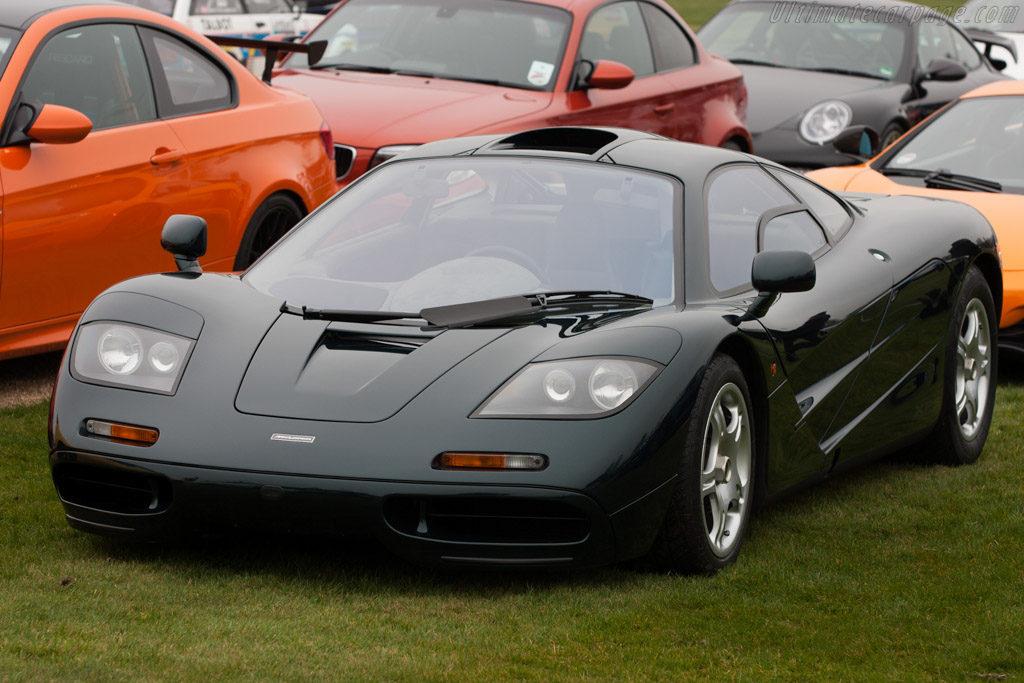
1. McLaren F1 (1992)
- Engine: 6.1-liter naturally aspirated BMW S70/2 V12
- Torque: 651 Nm (479 lb-ft)
- Horsepower: 618 hp
- Length: 4,287 mm (168.8 inches)
- Width: 1,820 mm (71.7 inches)
The McLaren F1 is perhaps the most famous road car ever produced with a central driver’s seat. Introduced in 1992, this British supercar was created with the goal of becoming the ultimate driving machine.
Designed by legendary engineer Gordon Murray, the McLaren F1 used a three-seat layout with the driver positioned in the center and two passenger seats placed slightly behind on either side. This arrangement was inspired partly by racing cars and gave the driver an unmatched view of the road ahead.
The central seating position was chosen for more than just appearance. By placing the driver in the middle, McLaren created a balanced driving environment where visibility was symmetrical.
The driver could judge corners, road placement, and vehicle width more easily because there was no offset from one side of the car. This helped make the F1 feel extremely precise, especially during high-speed driving.
Another advantage of the design was weight distribution. The driver’s position was closer to the center of the vehicle, reducing the effect of driver weight on handling balance. Combined with a lightweight carbon fiber body and a powerful BMW-built V12 engine, the McLaren F1 became one of the most respected performance cars in automotive history.
The McLaren F1 featured an interior that stood apart from other road cars of its era. Its central driving position placed the driver in a specially crafted carbon fiber seat, with every control and instrument arranged for maximum focus and ease of use. Although fully road legal, the cabin delivered an experience that closely resembled a purpose-built race car adapted for public roads.
The McLaren F1 remains a symbol of engineering ambition and is highly valuable among collectors. Its central driving position became one of its defining characteristics and influenced future vehicle designs.
Even decades after production ended, the F1 continues to represent what is possible when designers ignore traditional conventions and focus entirely on creating a pure driving experience.
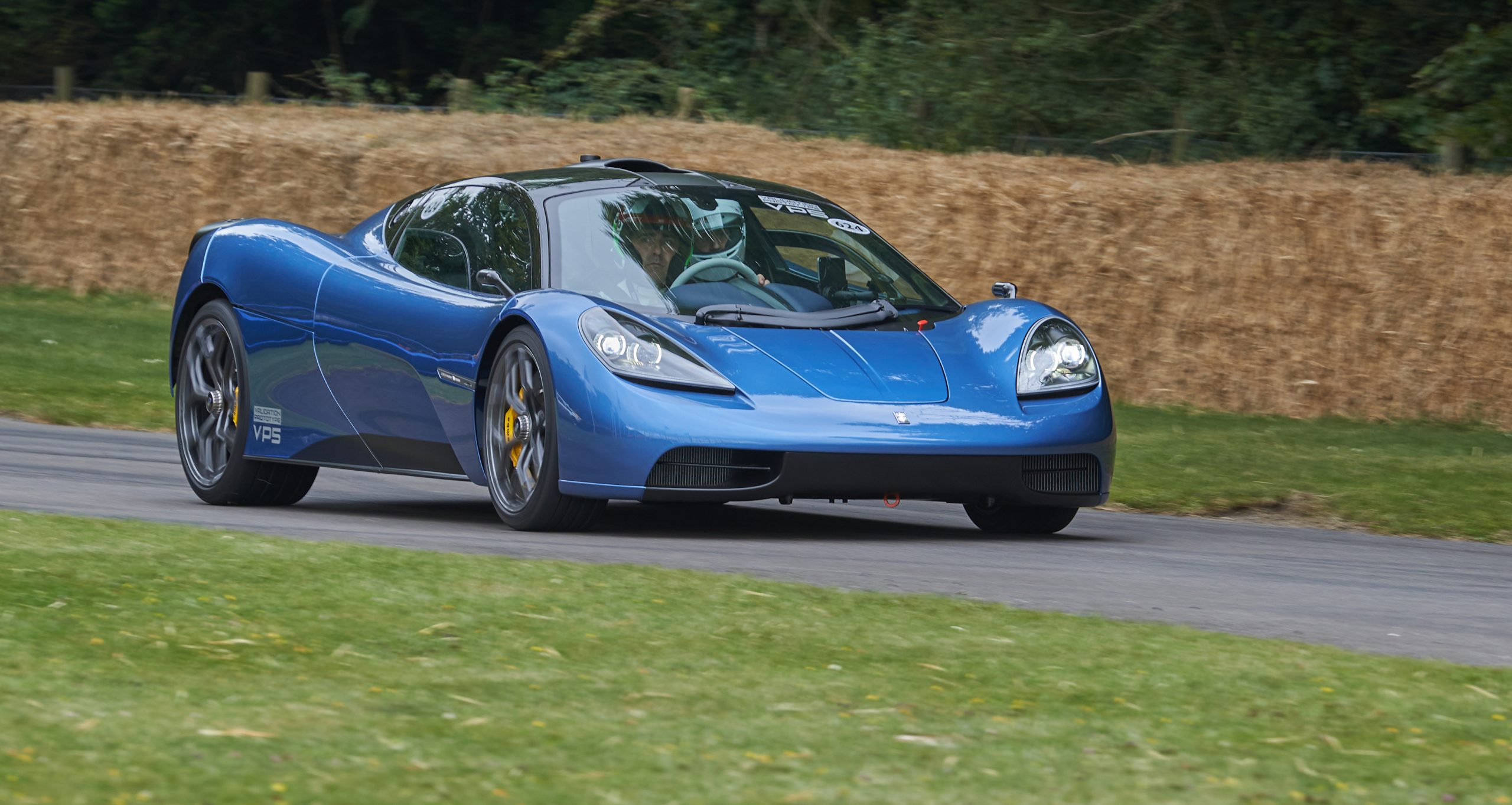
2. Gordon Murray Automotive T.50 (2022)
- Engine: 3.9-liter naturally aspirated Cosworth GMA V12
- Torque: 467 Nm (344 lb-ft)
- Horsepower: 654 hp
- Length: 4,352 mm (171.3 inches)
- Width: 1,850 mm (72.8 inches)
The Gordon Murray Automotive T.50 was developed as a spiritual successor to the McLaren F1. Created by the same designer responsible for the F1, the T.50 brings back the central driving position while introducing modern engineering improvements. The car follows a similar three-seat layout, with the driver placed in the center and two passenger seats positioned behind.
The T.50 was engineered with an emphasis on lightweight construction, driver involvement, and mechanical purity. Instead of relying heavily on electronic systems, it prioritizes a direct and engaging connection between the driver and the machine, delivering an experience centered on skill and responsiveness.
The central seat plays an important role in this philosophy because it places the driver exactly where the designers believe they should be.
The driver has a clear view forward without the limitations created by sitting closer to one side of the cabin. This design helps the driver understand the car’s position on the road and creates a more natural feeling during cornering.
The interior design of the T.50 reflects its racing influence. The steering wheel, displays, and controls are arranged around the central driver’s position. The cabin avoids unnecessary distractions and focuses on providing essential information. This creates an experience that feels closer to a professional racing car while still being suitable for road use.
The T.50 demonstrates that the central driving position is not just a historical curiosity. Modern engineering can still benefit from this layout when the goal is maximum driver engagement. By combining advanced materials, aerodynamic technology, and a carefully designed cockpit, the T.50 continues the tradition started by the McLaren F1.
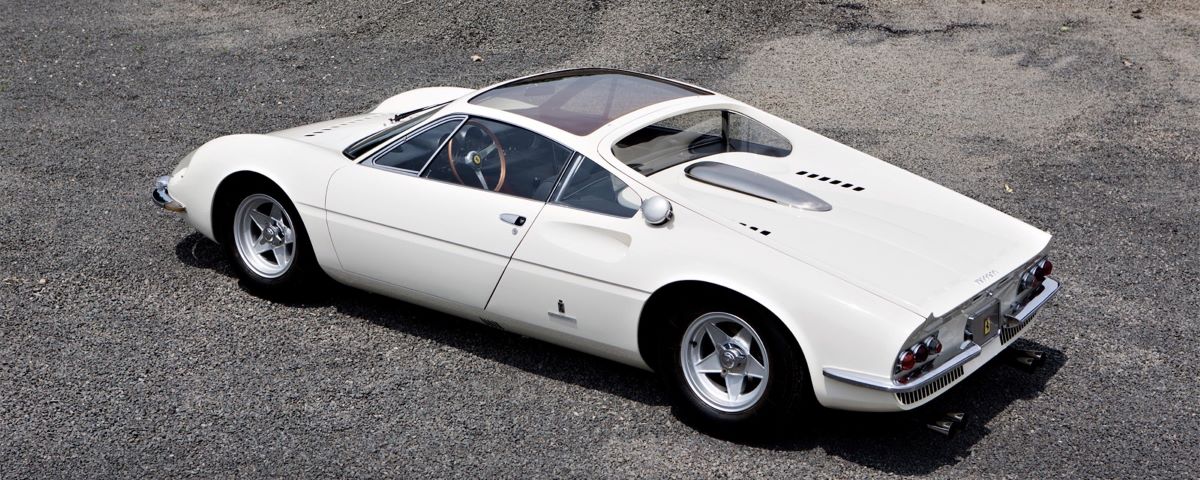
3. Ferrari 365 P Berlinetta Speciale (1966)
- Engine: 4.4-liter naturally aspirated Ferrari Colombo V12
- Torque: Approximately 430 Nm (317 lb-ft)
- Horsepower: Approximately 380 hp
- Length: Approximately 4,650 mm (183 inches)
- Width: Approximately 1,760 mm (69.3 inches)
The Ferrari 365 P Berlinetta Speciale is the rarest example of a Ferrari featuring a central driving position. Built in the 1960s as a special prototype, this unusual sports car explored a layout that was very different from Ferrari’s traditional designs.
Instead of placing the driver on one side, Ferrari positioned the driver in the middle with two passenger seats arranged behind and beside the driver.
The inspiration behind this layout came from racing cars. Many competition vehicles place the driver centrally because it provides better visibility, improved balance, and a more direct connection between the driver and the machine. Ferrari wanted to bring some of those racing characteristics into a road-going vehicle, creating a car that felt more focused and unique.
The 365 P Berlinetta Speciale was powered by a V12 engine and featured the kind of performance expected from Ferrari during that era. However, its interior design made it stand apart from other Ferrari models. The central seating arrangement gave the driver a commanding view and created an unusual but engaging driving experience.
Only a small number of examples were produced, making the Ferrari 365 P Berlinetta Speciale extremely valuable today. Its rarity has increased interest among collectors who appreciate experimental designs and important moments in automotive history. The car represents a period when manufacturers were willing to explore unconventional ideas.
Ferrari never adopted the central driving position across its production lineup, but the 365 P Berlinetta Speciale remains a fascinating example of the company’s willingness to experiment with unconventional ideas. It demonstrated that a traditional sports car could be reinvented by placing the driver in an entirely different position, challenging long-held design conventions.
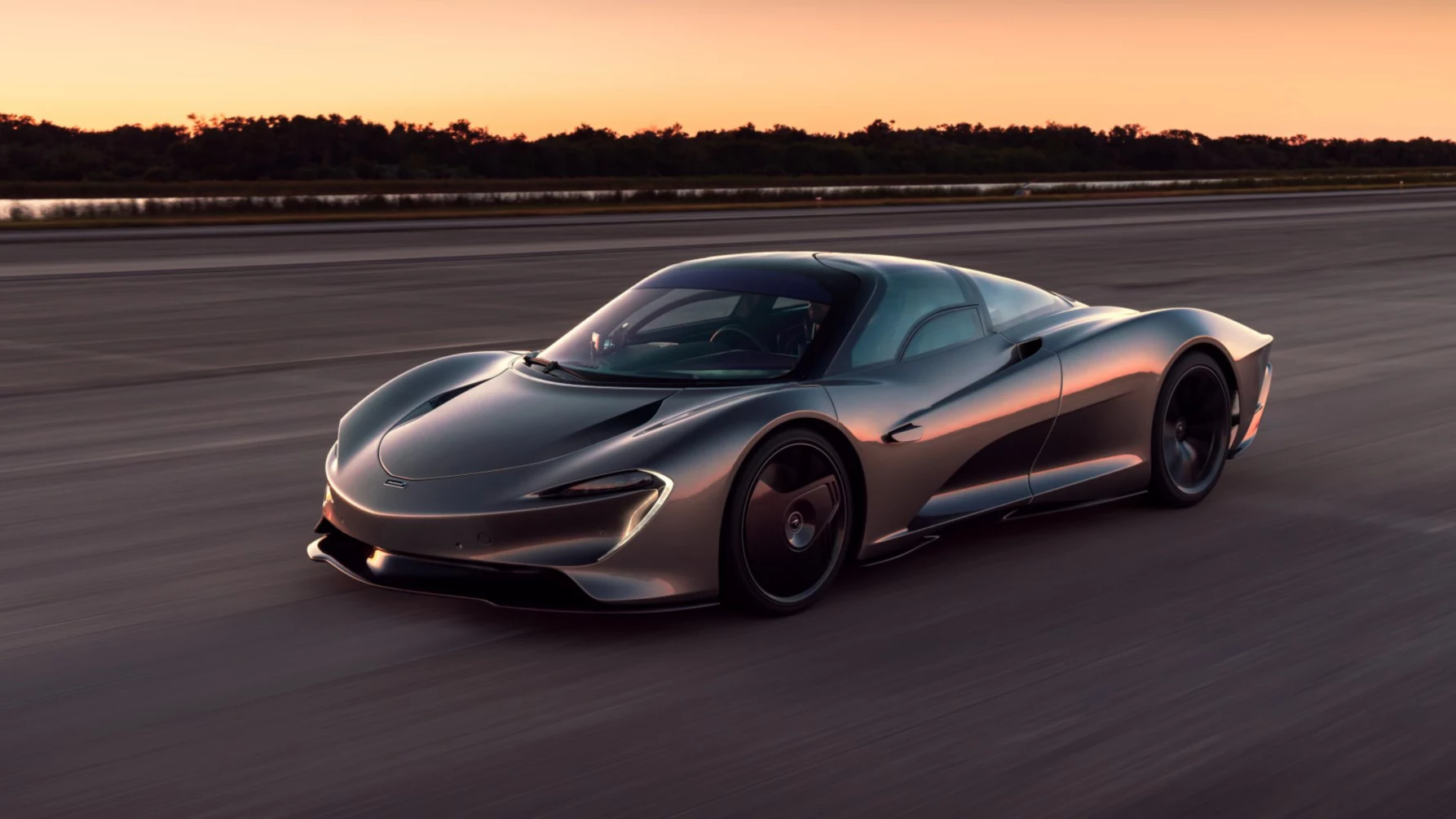
4. McLaren Speedtail (2020)
- Engine: 4.0-liter twin-turbocharged V8 hybrid powertrain
- Torque: 1,150 Nm (848 lb-ft)
- Horsepower: 1,036 hp
- Length: 5,137 mm (202.2 inches)
- Width: 1,995 mm (78.5 inches)
The McLaren Speedtail is one of the most futuristic cars to feature a central driver’s seat. Introduced as part of McLaren’s Ultimate Series, the Speedtail was designed as a high-speed grand touring machine rather than a traditional track-focused supercar. Like the McLaren F1, it uses a three-seat arrangement with the driver sitting in the middle.
The main reason behind the central position was to create a unique driving environment and improve visibility at high speeds. The Speedtail was designed to reach exceptional performance levels, with a streamlined body shape focused on reducing aerodynamic resistance. A central seating position helps the driver feel more connected to the vehicle’s shape and movement.
The cabin of the Speedtail combines futuristic technology with a driver-focused layout. Digital screens replace many traditional controls, and the interior surrounds the driver with advanced materials and modern design elements. The central seat creates a feeling similar to being positioned inside a cockpit rather than a standard passenger car.
Built with grand touring in mind, the McLaren Speedtail blends exceptional performance with luxury and comfort for long-distance driving. Its design places less emphasis on track-focused aggression and more on effortless speed and refinement. The central driving position remains a defining feature, giving the driver a commanding view while two passengers sit on either side to share the journey.
The Speedtail proves that the central driver layout can work in a modern hypercar. It combines advanced aerodynamics, hybrid technology, and a carefully designed cabin to create something completely different from ordinary luxury vehicles. Its connection to the McLaren F1 also gives it historical importance among cars with unconventional seating arrangements.
5. Pininfarina Modulo (1970)
- Engine: 4.4-liter Ferrari 512 S V12
- Torque: Approximately 500 Nm (369 lb-ft)
- Horsepower: Approximately 550 hp
- Length: 4,480 mm (176.4 inches)
- Width: 2,040 mm (80.3 inches)
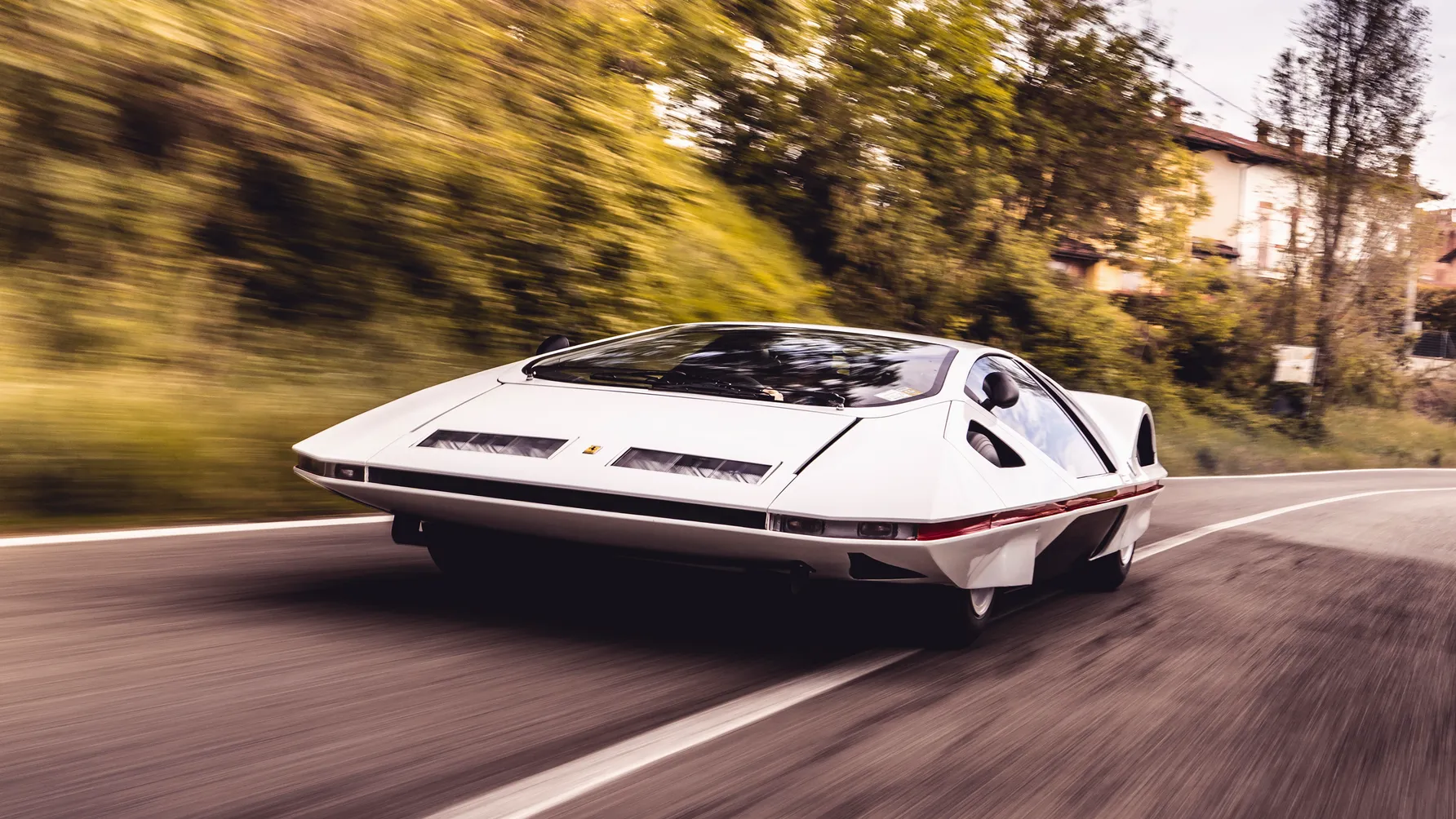
The Pininfarina Modulo ranks among the most unconventional concept cars ever created. Introduced in 1970 by the renowned Italian design house Pininfarina, it challenged traditional automotive styling with a bold vision of the future. Although it was never meant for mass production or everyday road use, the Modulo served as a showcase for radical design ideas and innovative thinking about the future of automobiles.
The vehicle featured a very low, spaceship-like body with a cabin designed around a central driving position. The concept focused heavily on creating a futuristic experience rather than following traditional automotive rules. The driver sat in a unique position surrounded by a minimalist environment.
The centrally positioned driver’s seat complemented the Modulo’s futuristic design by reinforcing the vehicle’s emphasis on symmetry. Instead of separating the cabin into traditional driver and passenger sections, Pininfarina created a unified interior that felt cohesive and purposeful. The result was an environment that resembled the cockpit of an advanced technological machine more than the cabin of a conventional automobile.
The Modulo was based on Ferrari mechanical components, including a Ferrari V12 engine. However, its purpose was not simply performance. It was created as a design statement showing how automotive styling could evolve. The unusual seating arrangement was part of a larger vision about future transportation.
The Pininfarina Modulo never reached production, but it remains one of the most recognizable concept cars in automotive history. Its centrally positioned driver’s seat reinforced the car’s futuristic identity and demonstrated how an unconventional seating arrangement could completely reshape both the driving experience and the vehicle’s design philosophy.
Also Read: 5 Best Ford Escape Years vs 5 to Avoid
6. Yamaha OX99-11 (1992)
- Engine: 3.5-liter naturally aspirated Yamaha OX99 V12
- Torque: Approximately 390 Nm (288 lb-ft)
- Horsepower: 400 hp
- Length: 4,400 mm (173.2 inches)
- Width: 2,000 mm (78.7 inches)
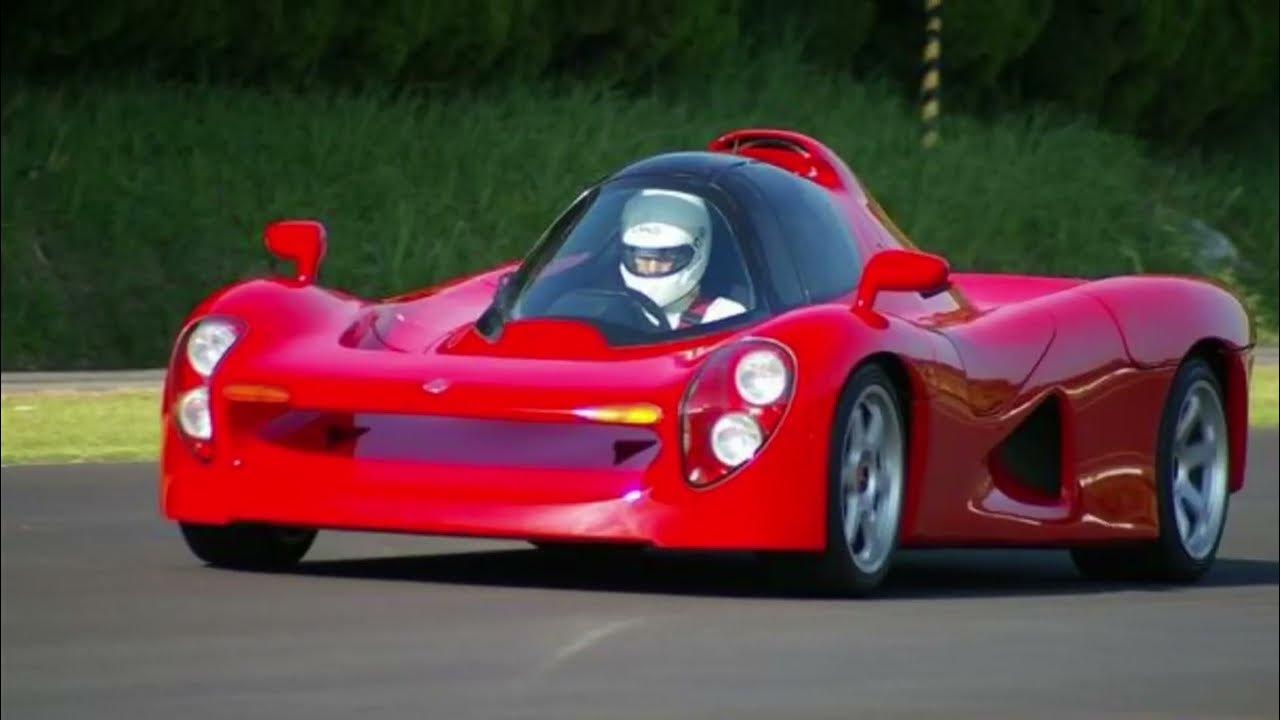
The Yamaha OX99-11 was an ambitious supercar project developed by Yamaha in the early 1990s. Although the company had already earned worldwide recognition for its motorcycles and musical instruments, this remarkable vehicle was created to demonstrate its advanced engineering capabilities. Drawing inspiration from Formula One technology, the OX99-11 featured a centrally positioned driver’s seat that emphasized its race-focused design.
The car was powered by a high-revving V12 engine developed from Yamaha’s Formula One involvement. The connection to motorsport influenced many aspects of the design, including the cockpit layout. By placing the driver in the center, Yamaha aimed to create a driving experience closer to a race car.
The interior was compact and focused. The driver sat in front of a passenger seat positioned behind, creating a layout similar to some racing prototypes. This arrangement allowed the driver to feel like the main focus of the machine rather than simply one occupant among several.
The OX99-11 was developed during a period when several manufacturers were experimenting with extreme sports cars. Its central seating position helped distinguish it from other performance vehicles and highlighted its connection to racing technology.
Unfortunately, the OX99-11 never entered mass production due to financial challenges and changing market conditions. It remains an important example of automotive experimentation. The car showed how a central cockpit could create a unique identity and strengthen the connection between driver and machine.
7. Lamborghini Egoista (2013)
- Engine: 5.2-liter naturally aspirated Lamborghini V10
- Torque: Approximately 540 Nm (398 lb-ft)
- Horsepower: 600 hp
- Length: Approximately 5,000 mm (196.8 inches)
- Width: Approximately 2,000 mm (78.7 inches)
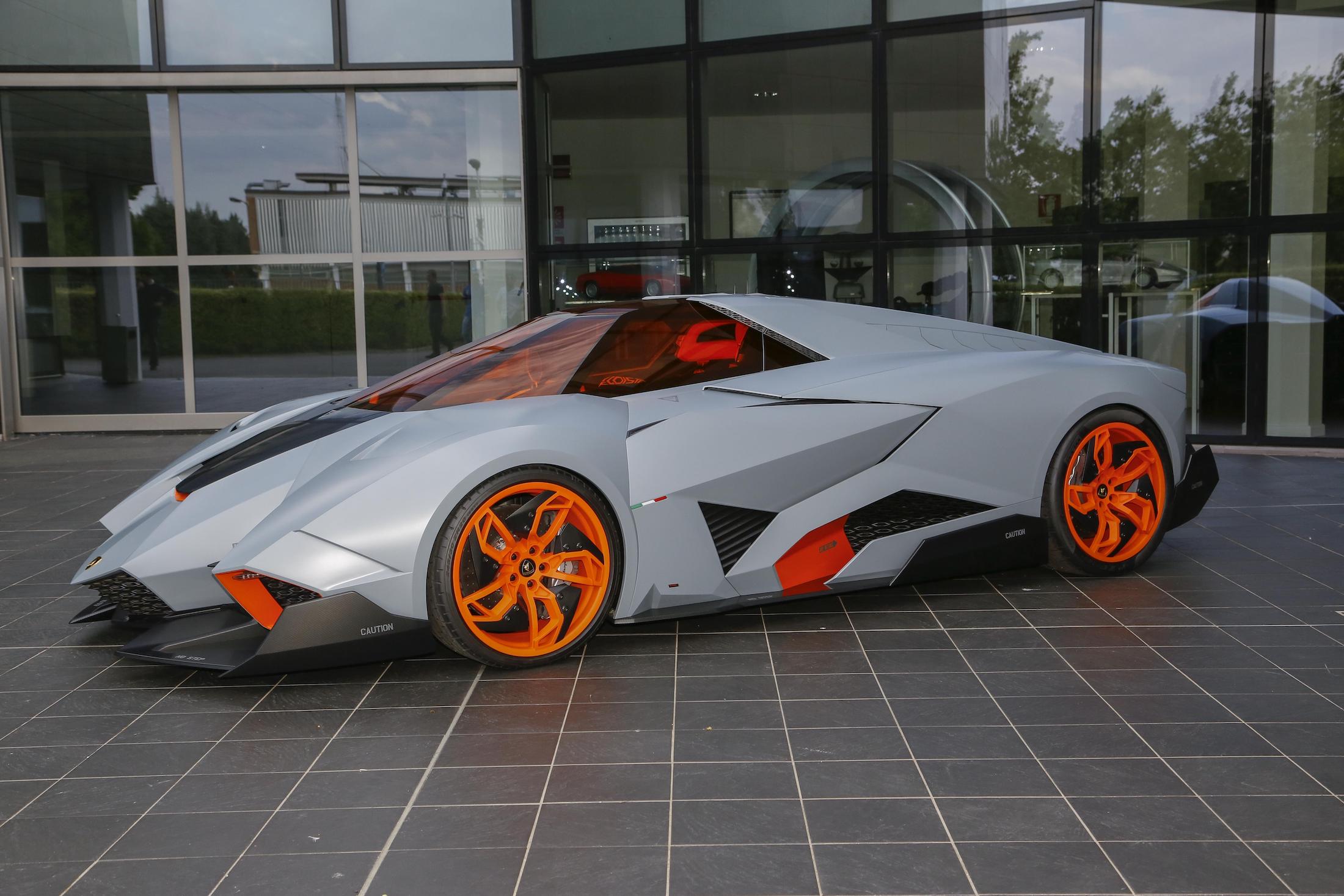
The Lamborghini Egoista stands among the boldest concept cars ever produced by the Italian manufacturer. Introduced in 2013 to mark Lamborghini’s 50th anniversary, it was conceived as a single-seat performance machine with styling heavily influenced by aviation technology. Every aspect of the design centered on the driver, making personal driving engagement the defining focus rather than passenger accommodation.
The name Egoista translates roughly to “selfish,” which reflects the vehicle’s purpose. Lamborghini designed it as a celebration of individual driving pleasure rather than practicality.
The cabin features a single central seat, making the driver the absolute focus of the vehicle’s design. The layout resembles a fighter jet cockpit, reinforcing the connection between automotive and aerospace engineering.
The central seating arrangement was essential to the Egoista’s identity. By placing the driver in the middle, Lamborghini created a symmetrical environment where every element of the car surrounds the person controlling it. The design removes traditional passenger considerations and focuses entirely on creating an immersive driving experience.
The exterior design of the Egoista is equally dramatic. Its sharp lines, aggressive shape, and aircraft-inspired appearance make it look more like a futuristic machine than a conventional automobile. The central cockpit blends with the body design, creating a vehicle that appears built around a single pilot.
The Lamborghini Egoista was created as a one-off concept rather than a production vehicle, allowing its designers to explore bold ideas without the constraints of commercial manufacturing. Its centrally positioned driver’s seat reinforced the car’s dramatic character and turned it into more than a styling exercise, expressing a vision of performance, advanced technology, and the close relationship between driver and machine.
8. Renault Twizy (2012)
- Engine: Electric motor powered by a lithium-ion battery pack
- Torque: 57 Nm (42 lb-ft)
- Horsepower: 17 hp (Twizy 80 version)
- Length: 2,338 mm (92 inches)
- Width: 1,237 mm (48.7 inches)
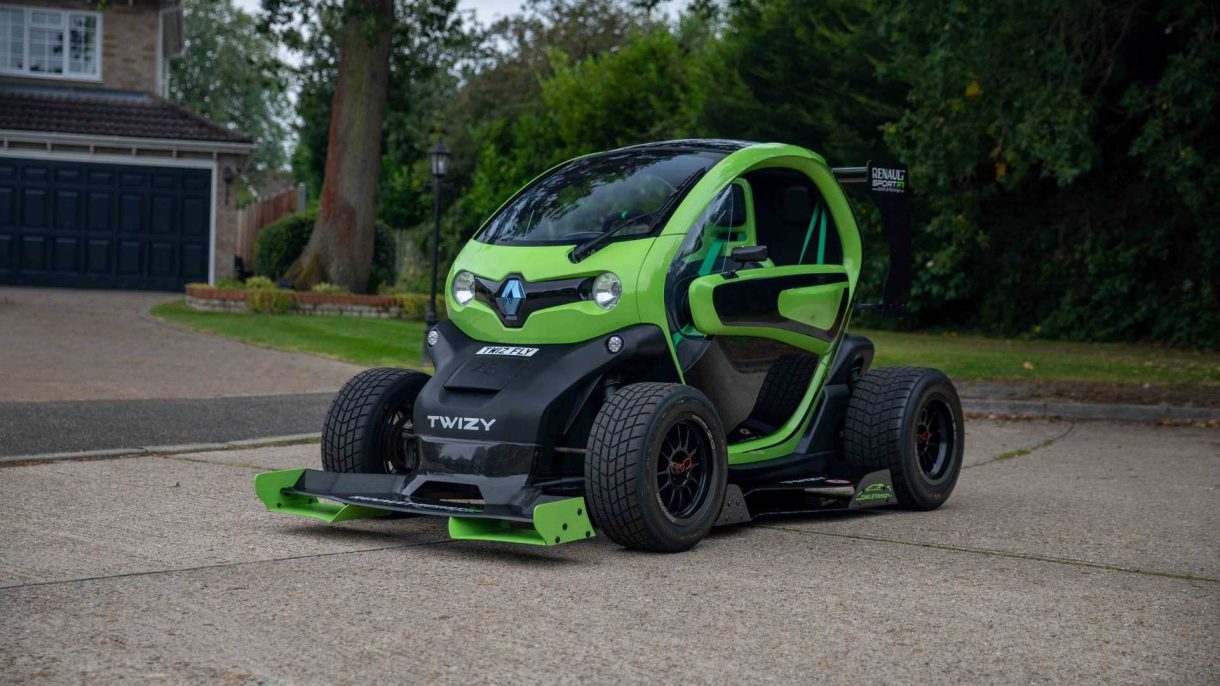
The Renault Twizy takes a completely different approach to the idea of a central driving position. Unlike high-performance supercars, the Twizy was created as a small electric urban vehicle designed for efficient transportation. Its compact structure and unusual cabin layout allowed designers to rethink traditional car packaging.
The driver’s seat in the Twizy is positioned centrally, with a passenger seat located behind. This arrangement helps maximize the vehicle’s narrow footprint while maintaining stability and visibility. Because the Twizy was designed for crowded city environments, its compact dimensions were one of its most important features.
The central driving position provides several practical benefits in a small vehicle. The driver has a clear view ahead and a balanced position within the cabin. This makes maneuvering through tight streets and parking areas easier, especially compared with larger vehicles, where the driver sits offset from the center.
The Twizy features a minimalist interior designed around essential controls and ease of operation. Rather than filling the cabin with luxury features and complex technology, it emphasizes a simple and intuitive driving experience. The centrally positioned seat reinforces this approach by creating a focused environment that keeps the driver’s attention on the road.
While the Renault Twizy is not a performance vehicle, it proves that central seating is useful beyond racing and exotic cars. Its design shows how unconventional layouts can solve practical transportation challenges. The vehicle represents a different reason for placing the driver in the center: efficiency, compactness, and urban mobility.
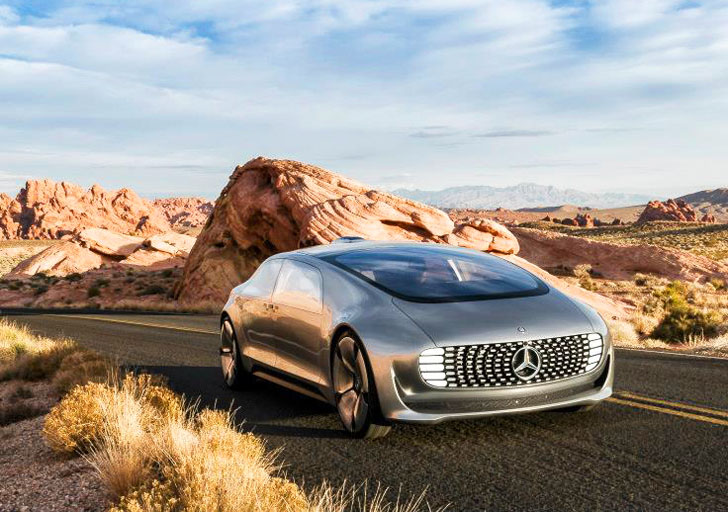
9. Mercedes-Benz F 015 Luxury in Motion Concept (2015)
- Engine: Hydrogen fuel cell electric powertrain
- Torque: Approximately 398 Nm (294 lb-ft)
- Horsepower: Approximately 272 hp
- Length: 5,220 mm (205.5 inches)
- Width: 2,018 mm (79.4 inches)
The Mercedes-Benz F 015 Luxury in Motion concept explored a future where autonomous technology could completely change the purpose of the automobile. Revealed in 2015, the vehicle was designed around the idea that cars could become mobile living spaces rather than machines controlled only by drivers.
The Mercedes-Benz F 015 placed autonomous driving at the center of its design philosophy while introducing a cabin with flexible seating that challenged conventional vehicle layouts. The concept explored how future automobiles could encourage new ways for occupants to interact with one another and their surroundings. As self-driving technology continues to advance, the traditional driver’s position may become far less important than it is today.
The vehicle included a highly adaptable cabin with rotating seats and a spacious interior. During autonomous operation, passengers could face each other and use the space more like a lounge. However, the concept also included driving controls, allowing human operation when desired.
The F 015 represents a broader discussion about the future of vehicle design. As technology develops, manufacturers have considered whether fixed driver positions are still necessary. Central seating concepts and flexible interiors provide possible solutions for vehicles that need to support both manual and autonomous driving.
The Mercedes-Benz F 015 never became a production model, but it influenced conversations about future mobility. Its exploration of unconventional cabin layouts showed that the relationship between people and vehicles may continue to change dramatically.
