
Cars have always represented freedom, exploration, and the ability to travel beyond ordinary limits. Over the years, engineers and designers have pushed automotive technology in surprising directions, creating vehicles that can handle challenging environments such as deserts, mountains, snow-covered roads, and even bodies of water.
Among the most fascinating innovations in transportation history are amphibious cars, vehicles designed to operate both on land and in water. These machines combine the features of traditional automobiles with the capabilities of boats, allowing drivers to move from highways directly into lakes, rivers, and coastal waters.
Amphibious cars are far less common than conventional vehicles, yet they continue to fascinate inventors, collectors, and adventure enthusiasts around the world. Their ability to travel on both land and water has secured a unique place in automotive history and innovation.
Some models were created for military purposes, while others were developed as luxury vehicles, experimental projects, or recreational machines. These vehicles demonstrate how creative engineering can overcome the boundaries between different forms of transportation.
This article explores 10 remarkable amphibious cars that can travel on roads and navigate through water. From famous historical models to modern innovations, each vehicle showcases unique technology, design ideas, and engineering solutions that make dual-environment travel possible.
Also Read: 8 Hidden Features in the Volkswagen Atlas
- Engine: 2.5L V6 gasoline
- Horsepower: 175 hp
- Torque: 211 Nm (156 lb-ft)
- Length: 3,790 mm (149.2 in)
- Width: 1,770 mm (69.7 in)
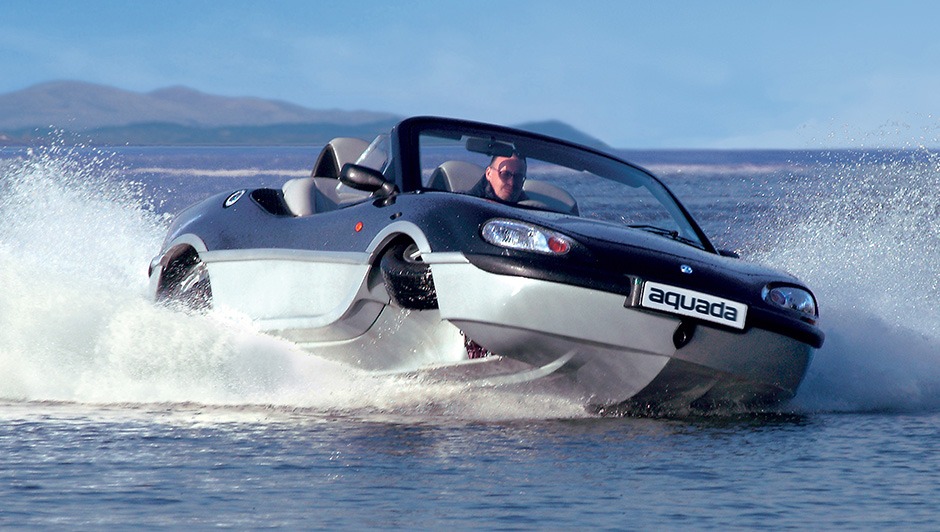
1. Gibbs Aquada: The High-Speed Amphibious Car
The Gibbs Aquada is among the most impressive examples of modern amphibious vehicle technology. Developed by the British company Gibbs Technologies, this vehicle was designed to provide a smooth transition between road travel and water navigation.
Unlike many earlier amphibious cars that sacrificed performance in one environment, the Aquada focused on creating a balanced experience where drivers could enjoy both driving and boating capabilities. Its lightweight construction, advanced engineering, and unique design helped it become the most recognized amphibious vehicle of the modern era.
On land, the Gibbs Aquada functions similarly to a sporty road vehicle, offering comfortable seating and responsive handling. When entering water, the vehicle uses a specialized water propulsion system that allows it to move efficiently across lakes and rivers.
One of its most important features is its ability to switch between driving and boating modes quickly. The wheels retract upward, reducing water resistance and allowing the vehicle to glide across the surface. This transformation represents a major achievement in amphibious engineering.
The Aquada gained international attention when entrepreneur Richard Branson used one to set a record for crossing the English Channel in an amphibious vehicle. This event demonstrated that amphibious cars could achieve impressive water performance while maintaining road capabilities.
The achievement helped increase public interest in vehicles that could move between land and water without requiring a trailer or separate boat.
The design philosophy behind the Gibbs Aquada focused on convenience and adventure. Traditional boat owners often need trailers, storage facilities, and launching areas before they can reach the water.
Amphibious cars eliminate many of these limitations by allowing users to simply drive to a lake or river and enter directly. This makes them appealing to people who enjoy outdoor activities and exploration.
The Gibbs Aquada was never manufactured in large numbers for the mass market, but it remains a significant achievement in the development of amphibious vehicles. It proved that advances in modern materials, computer-assisted engineering, and innovative propulsion technology could produce a practical vehicle capable of operating effectively on both land and water.
- Engine: 3.7L Honda V6 (Acura)
- Horsepower: 305 hp
- Torque: 370 Nm (273 lb-ft)
- Length: 4,270 mm (168 in)
- Width: 1,830 mm (72 in)
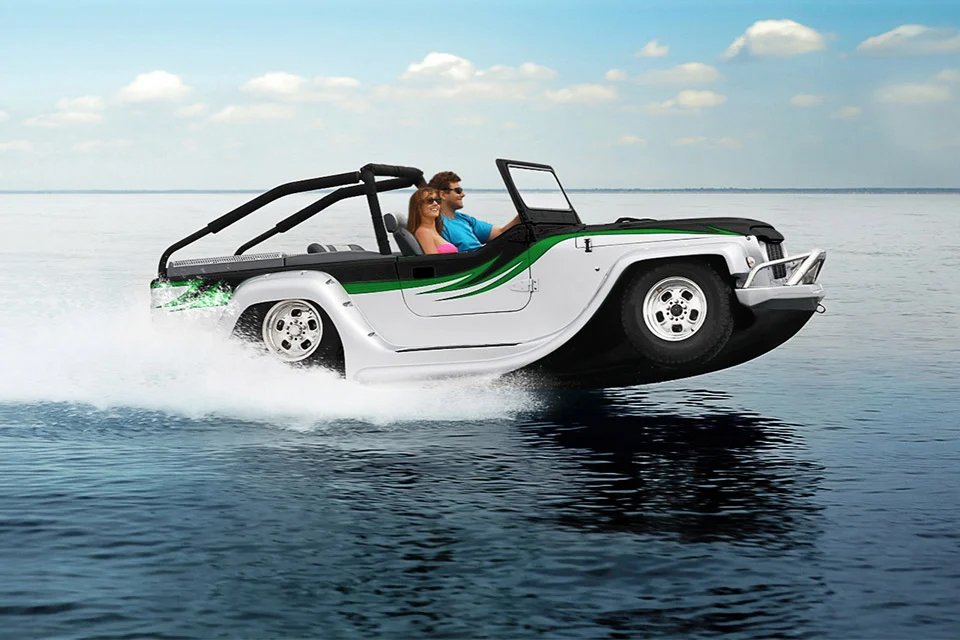
2. WaterCar Panther: A Jeep That Turns Into A Boat
The WaterCar Panther is a well-known amphibious vehicle that combines the appearance of an off-road vehicle with the abilities of a speedboat. Developed by the American company WaterCar, the Panther was designed for adventure enthusiasts who wanted a vehicle capable of handling beaches, trails, roads, and waterways.
Its rugged appearance and impressive performance have made it the most recognizable amphibious car available.
The Panther is inspired by the design of traditional Jeep-style vehicles, featuring an open cabin layout and a strong exterior appearance.
On land, it operates as a capable off-road vehicle that can handle different surfaces. Its lightweight body and powerful engine allow it to travel effectively on highways and rough terrain. The vehicle’s most interesting feature appears when it reaches water.
When entering a lake or river, the WaterCar Panther transforms into a boat-like machine. Its wheels rise above the waterline, reducing drag, while a water jet propulsion system moves the vehicle forward.
This allows the Panther to reach high speeds on water compared with many older amphibious vehicles. The transition between driving and boating is designed to be simple, making it suitable for recreational users.
The engineering behind the Panther required solving several difficult challenges. A normal car is designed to stay firmly connected with the road, while a boat needs to float and move efficiently through water.
The Panther uses lightweight materials and specialized construction methods to maintain buoyancy without making the vehicle too heavy. This balance between strength, weight, and performance is the reason amphibious cars why are these difficult to design.
The WaterCar Panther represents the adventurous side of amphibious transportation. Instead of focusing only on practicality, it was created for people who want a unique experience. Owners can drive along coastal roads, explore beaches, and enter waterways without changing vehicles.
- Engine: 1.1L Triumph inline 4
- Horsepower: 43 hp
- Torque: 72 Nm (53 lb-ft)
- Length: 4,330 mm (170.5 in)
- Width: 1,560 mm (61.4 in)
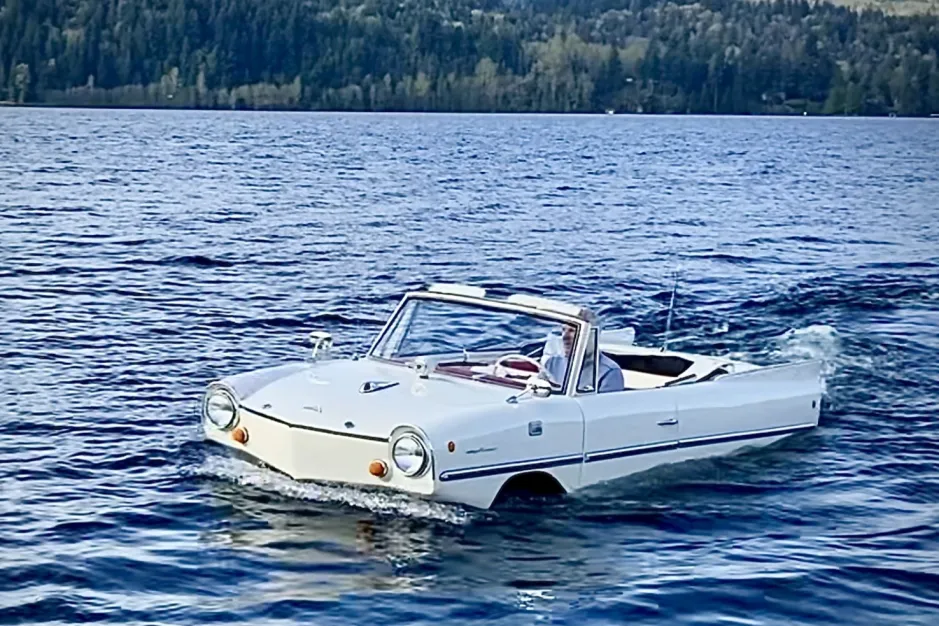
3. Amphicar Model 770: The Classic Amphibious Automobile
The Amphicar Model 770 is one of the most famous amphibious cars ever produced. Introduced in the 1960s, it became the first mass-produced civilian amphibious automobile.
Created by German engineer Hans Trippel and manufactured in Germany, the Amphicar combined the appearance of a small convertible car with the basic functions of a boat. Its unusual design made it a memorable part of automotive history.
The Amphicar was powered by a rear-mounted engine that provided power both on land and in water. When driven on roads, it behaved like a traditional automobile, although its performance was modest compared with other cars of the era.
When entering water, twin propellers located beneath the rear allowed the vehicle to move forward like a small boat. Drivers could steer using the front wheels while floating.
Unlike many experimental amphibious vehicles created for special purposes, the Amphicar was marketed toward everyday consumers.
Buyers could use it as a normal car during the week and as a recreational boat on weekends. This concept was innovative because it introduced the idea of combining two forms of transportation into one personal vehicle.
The vehicle was not as fast or powerful as dedicated cars or boats, and maintaining a waterproof body required careful attention.
Owners needed to perform regular maintenance to prevent corrosion and ensure that water did not enter important mechanical areas. These limitations affected its commercial success.
Today, the Amphicar Model 770 is considered a collectible classic. Enthusiasts appreciate it not only as a vehicle but also as a symbol of creative automotive thinking. Its existence proved that the idea of a car driving into a lake was not just a fantasy but a real engineering achievement.
- Engine: 750 cc Turbocharged 2-cylinder
- Horsepower: 140 hp
- Torque: 150 Nm (111 lb-ft)
- Length: 3,760 mm (148 in)
- Width: 1,800 mm (70.9 in)
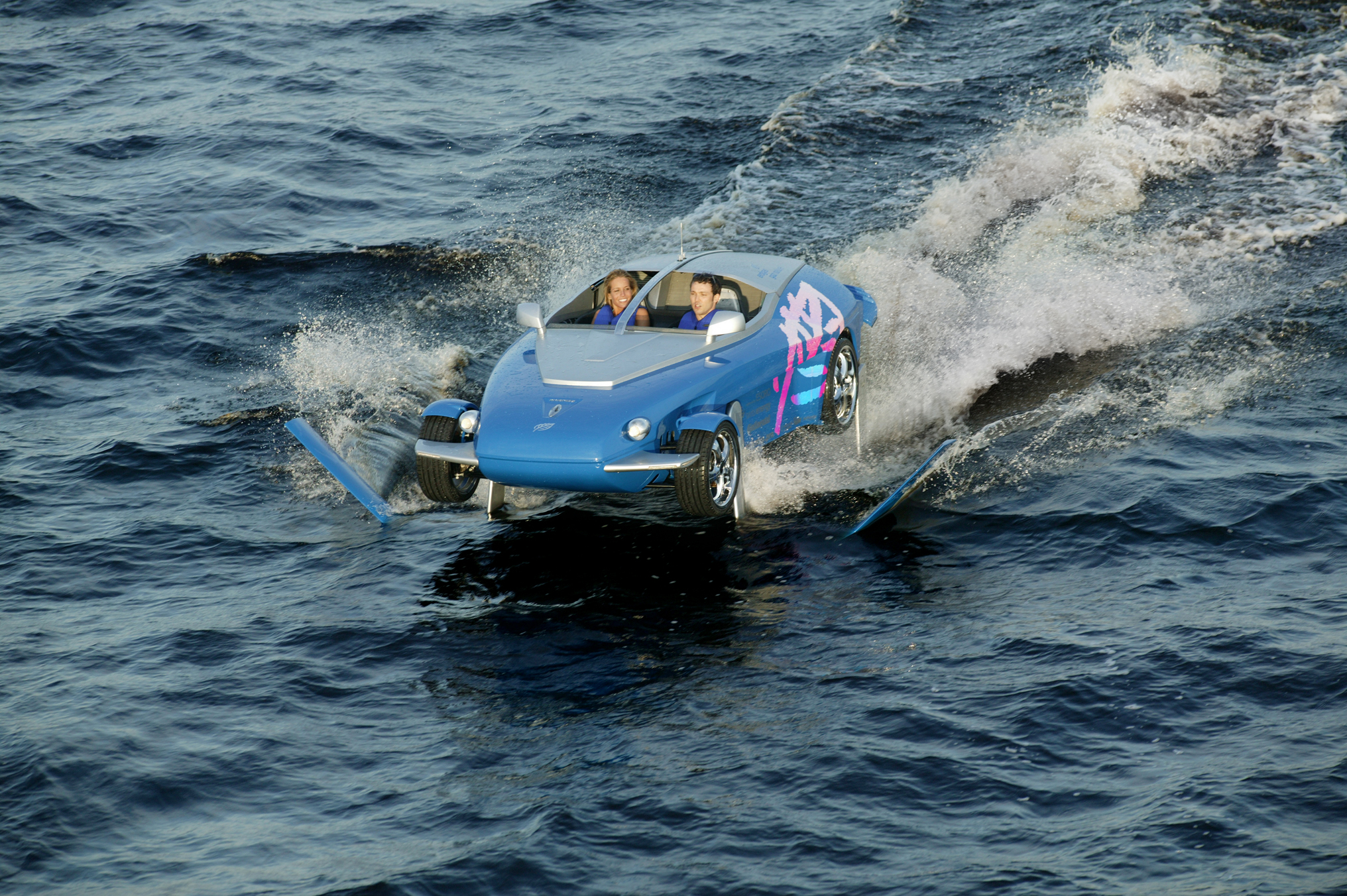
4. Rinspeed Splash: A Sports Car That Can Fly Over Water
The Rinspeed Splash is one of the most unique amphibious cars ever created because it introduced hydrofoil technology into a road-going vehicle. Developed by Swiss automotive company Rinspeed, the Splash was designed to combine the excitement of a sports car with the ability to travel across water.
Unlike many amphibious vehicles that simply float and move slowly, the Splash was engineered to deliver a more dynamic experience by using advanced water technology.
On normal roads, the Rinspeed Splash looks like a compact sports car with a futuristic design. Its lightweight body, aerodynamic shape, and low profile help improve driving performance.
However, its true innovation becomes visible when the vehicle enters water. The Splash uses retractable hydrofoils that extend beneath the vehicle, allowing the body to rise above the water surface at higher speeds. This reduces drag and creates a feeling similar to a boat flying across the water.
The technology behind hydrofoils is commonly used in high-performance boats, but applying it to an amphibious car required careful engineering.
The vehicle needed to remain stable while moving on roads, floating in water, and lifting above the surface. Engineers had to consider factors such as weight distribution, balance, and the interaction between the vehicle and moving water. The result was an amphibious sports car unlike traditional designs.
The Rinspeed Splash attracted attention because it showed that amphibious vehicles did not have to be limited to slow recreational machines. It represented a vision of future transportation where cars could provide excitement across different environments.
While it remained a concept rather than a widely available production vehicle, it demonstrated what was possible when automotive creativity was combined with marine engineering.
The Splash remains an important example of experimental vehicle design. It proved that amphibious cars could focus on performance and innovation rather than simply solving transportation problems. Although most people will never own a vehicle like this, it continues to inspire designers who imagine new ways of moving across land and water.
Also Read: 5 Best Ford Escape Years vs 5 to Avoid
- Engine: 2.5L Turbo Diesel
- Horsepower: 140 hp
- Torque: 340 Nm (251 lb-ft)
- Length: 4,730 mm (186.2 in)
- Width: 1,900 mm (74.8 in)
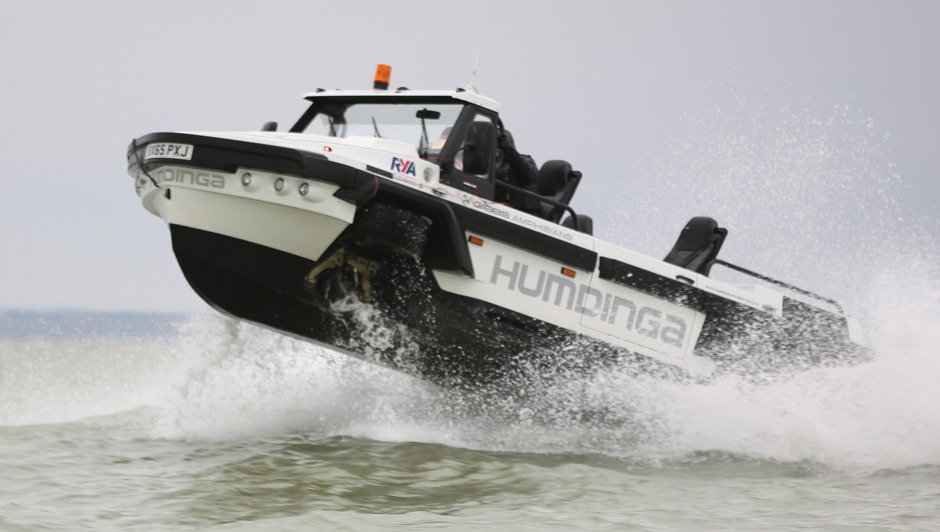
5. Gibbs Humdinga: An Amphibious Vehicle Built For Adventure
The Gibbs Humdinga is another impressive creation from Gibbs Technologies, the same company behind the Aquada. Unlike the Aquada, which focused more on personal luxury and speed, the Humdinga was designed as a tougher amphibious vehicle capable of handling challenging environments.
It was created for adventure, rescue operations, exploration, and situations where traditional vehicles might struggle.
The Humdinga features a larger body and a more rugged design compared with many amphibious cars. Its construction allows it to carry multiple passengers while maintaining the ability to travel through water.
On land, it can handle difficult surfaces, making it suitable for off-road conditions. In water, it uses a propulsion system that allows it to move efficiently across rivers, lakes, and coastal areas.
The biggest advantage of the Humdinga is its versatility. Many vehicles are designed specifically for one environment, such as trucks for land or boats for water. The Humdinga attempts to combine these abilities into a single platform.
This makes it useful for organizations that need transportation solutions in areas affected by flooding, remote places, or areas with limited infrastructure.
The development of vehicles like the Humdinga shows that amphibious technology has applications beyond entertainment. Emergency services, military organizations, and environmental researchers can benefit from vehicles capable of crossing both roads and waterways. A machine that can move directly from land into water can save time and provide access to locations that are difficult to reach.
The Humdinga has never been a mainstream consumer vehicle, but it highlights the practical possibilities of amphibious transportation. Built with durability, adaptability, and everyday functionality in mind, it demonstrates how automotive and marine engineering can work together to meet specialized transportation needs.
- Engine: Chevrolet LS Series 6.2L V8
- Horsepower: 640 hp
- Torque: 815 Nm (601 lb-ft)
- Length: 4,570 mm (180 in)
- Width: 2,030 mm (80 in)
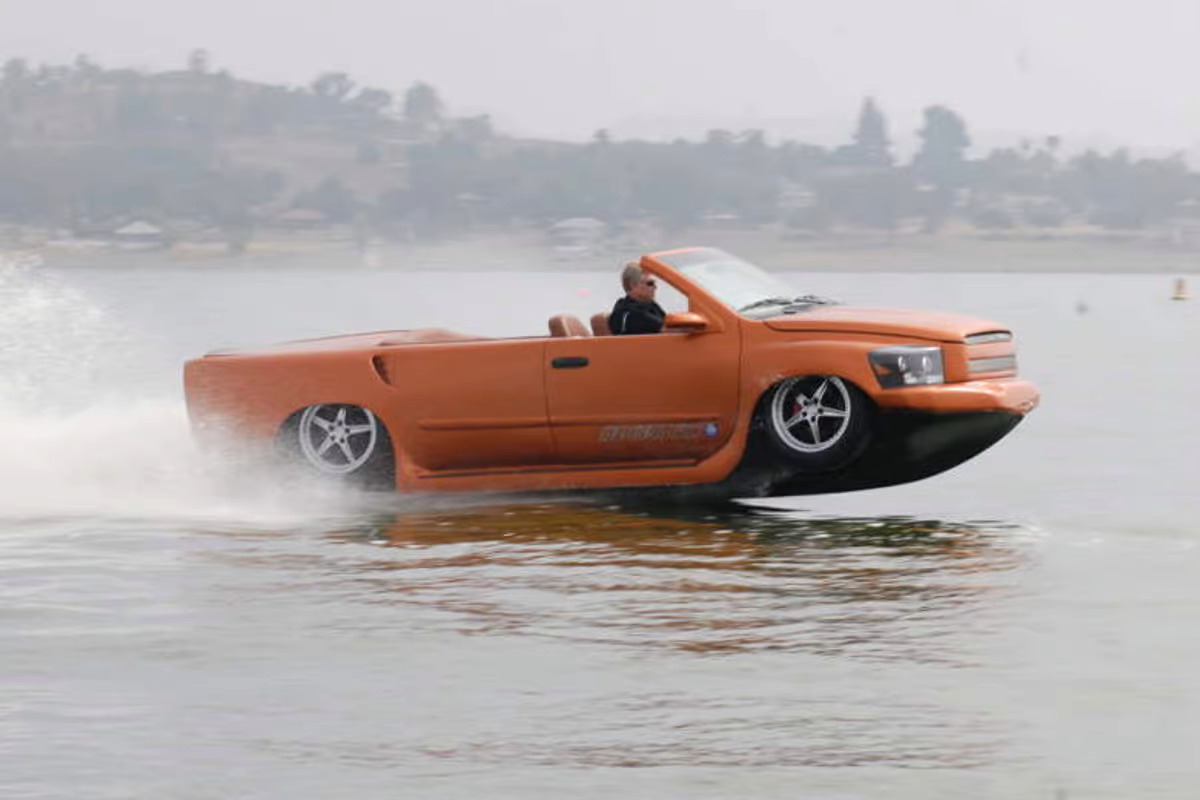
6. WaterCar Python: The Amphibious Sports Car
The WaterCar Python is the fastest and most unusual amphibious car ever developed. Created by WaterCar, this vehicle combines the appearance of a high-performance sports car with the ability to operate as a powerful speedboat. It was designed for enthusiasts who wanted a vehicle that could provide excitement both on highways and on open water.
The Python uses a powerful engine setup that gives it strong performance on both land and water. On roads, it provides the driving experience of a sports vehicle, with quick acceleration and responsive handling.
Once it enters water, the vehicle switches to a marine propulsion system that allows it to travel at high speeds across lakes and other waterways. This makes it very different from early amphibious cars that prioritized basic movement over performance.
The vehicle’s design required engineers to overcome major challenges related to weight, balance, and waterproofing. A sports car typically benefits from being lightweight and aerodynamic, while a boat requires enough buoyancy to remain stable on water. The Python combines these opposing requirements through specialized construction methods and careful engineering.
The WaterCar Python gained attention among automotive enthusiasts because it represented a dream-like combination of two vehicles in one. Instead of choosing between a sports car and a boat, owners could experience both.
Its unusual appearance and impressive abilities made it a popular topic among people interested in innovative transportation.
While the Python was never intended for mass ownership, it remains a symbol of extreme automotive creativity. It shows that amphibious vehicles can be designed for excitement, luxury, and performance rather than only for practical purposes. The Python proves that the boundary between cars and boats can become surprisingly flexible when engineers think beyond traditional designs.
- Engine: 1.1L Flat 4
- Horsepower: 25 hp
- Torque: Approximately 68 Nm (50 lb-ft)
- Length: 3,825 mm (150.6 in)
- Width: 1,480 mm (58.3 in)
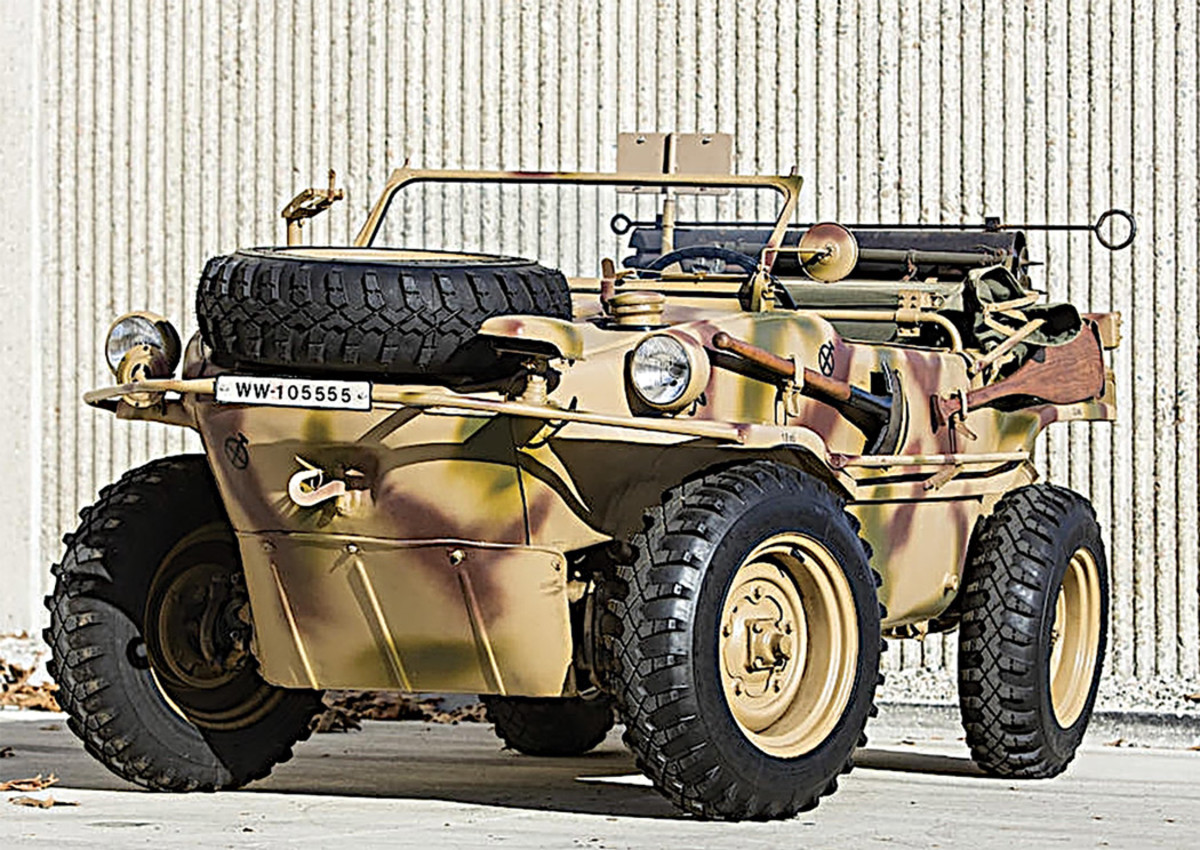
7. Volkswagen Schwimmwagen: The Military Amphibious Legend
The Volkswagen Schwimmwagen is the most historically significant amphibious vehicle ever created. Developed during World War II for the German military, it was designed to provide soldiers with transportation that could operate across roads, rough terrain, and waterways.
The vehicle was built with a lightweight body and a specialized design that allowed it to float. Unlike many modern amphibious cars that focus on comfort or speed, the Schwimmwagen was created for reliability and military usefulness.
When entering water, the Schwimmwagen used a propeller system that could be lowered into position. This allowed the vehicle to move through rivers and lakes without requiring bridges or additional transportation equipment. The ability to cross waterways gave military units greater flexibility during operations.
The engineering lessons from the Schwimmwagen influenced later amphibious vehicle development. Its designers demonstrated that a vehicle could successfully combine road mobility with water capability. Many modern amphibious concepts continue to use similar ideas, including lightweight construction, waterproof bodies, and specialized propulsion systems.
Today, surviving Schwimmwagens are highly valued by collectors and historians. They represent an important chapter in automotive engineering and show how transportation technology can be adapted for specific challenges. Although created for military purposes, the Schwimmwagen helped prove that amphibious vehicles could be practical and functional.
- Engine: 2.2L Inline 4 “Go Devil”
- Horsepower: 60 hp
- Torque: 142 Nm (105 lb-ft)
- Length: 4,620 mm (181.9 in)
- Width: 1,620 mm (63.8 in)
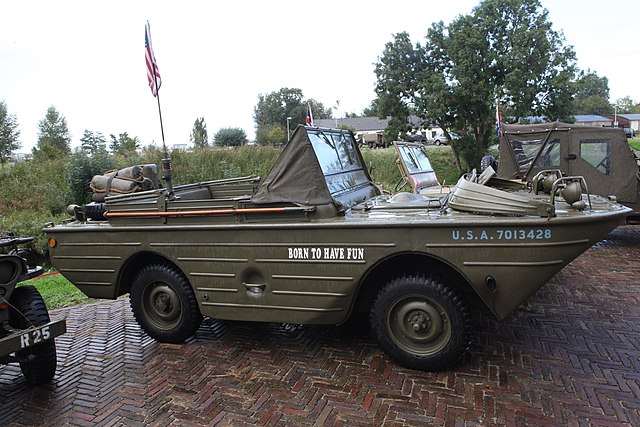
8. Amphibious Jeep: The Floating Military Vehicle Concept
The amphibious Jeep represents an important effort to create a vehicle capable of handling both land and water environments.
During military development programs, engineers explored ways to make small utility vehicles more versatile. The goal was to create machines that could transport troops and supplies across areas where traditional vehicles would face obstacles.
These amphibious Jeep designs focused on maintaining the useful characteristics of standard military Jeeps while adding floating capabilities. They needed to remain lightweight, durable, and easy to operate. Waterproof construction and improved buoyancy systems were essential because military vehicles often had to cross rivers, flooded areas, and coastal regions.
The idea behind amphibious Jeeps influenced later recreational and commercial vehicle concepts. Many modern amphibious vehicles borrow ideas from military designs, especially the emphasis on durability and adaptability. The ability to move through different environments remains valuable for exploration, emergency response, and outdoor activities.
Amphibious Jeep projects were not as commercially successful as some civilian models, but they played an important role in transportation history. They demonstrated that combining vehicle functions could provide advantages in challenging environments.
The legacy of amphibious Jeeps continues today through specialized off-road amphibious vehicles. Their designs helped establish the foundation for modern machines that can travel beyond ordinary roads and waterways.
- Engine: Mazda 13B Rotary
- Horsepower: Approximately 174 hp
- Torque: Approximately 216 Nm (159 lb-ft)
- Length: 4,930 mm (194 in)
- Width: 2,080 mm (82 in)
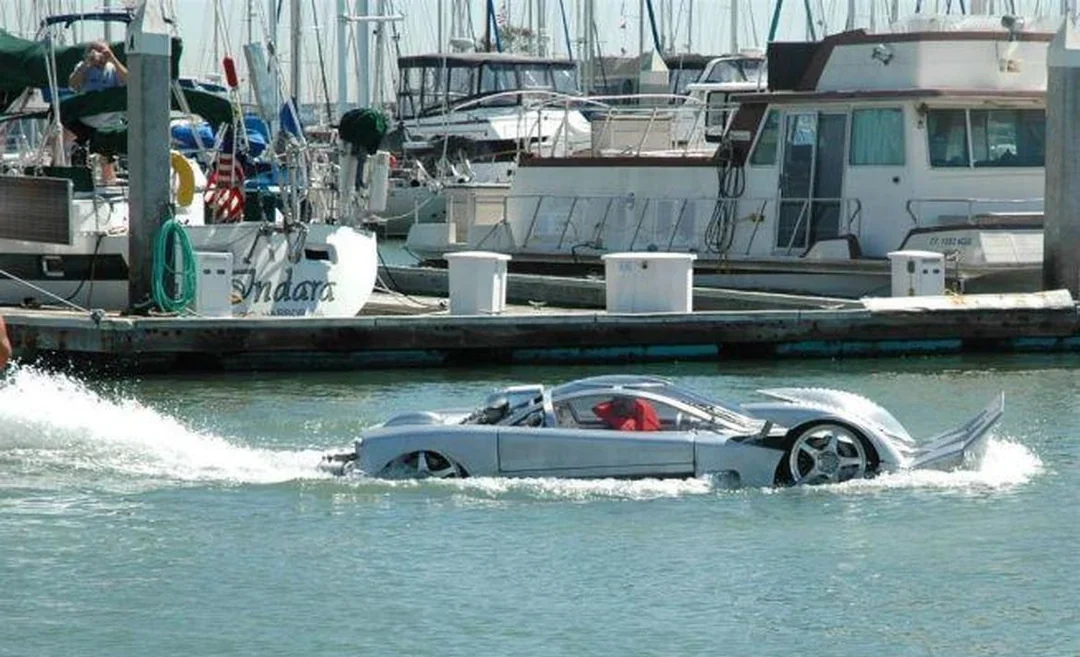
9. Sea Lion: The Fast Amphibious Car Concept
The Sea Lion is a futuristic amphibious vehicle concept created with a focus on speed and advanced design. Unlike traditional amphibious cars that often prioritize practicality, the Sea Lion was developed as a high-performance machine that could challenge the limits of water and road transportation.
Its streamlined body was designed to reduce resistance while traveling through water. The vehicle uses a lightweight structure and powerful propulsion system to achieve impressive performance. On land, it resembles a sports vehicle, while on water it functions more like a fast boat.
The Sea Lion gained attention because of its unusual approach to amphibious design. Instead of creating a vehicle that simply works in two environments, it aimed to create one that performs well in both. This required advanced engineering techniques involving aerodynamics, weight reduction, and marine efficiency.
The Sea Lion remains a specialized engineering project instead of a widely used production vehicle. It reflects the ongoing evolution of amphibious transportation and demonstrates how designers continue exploring new ways to combine speed, mobility, and versatility in a single machine.
The concept also highlights the future possibilities of personal transportation. As materials and technology improve, vehicles capable of adapting to multiple environments may become more advanced and efficient.
- Engine: Chevrolet 8.1L V8 Vortec
- Horsepower: 340 hp
- Torque: 617 Nm (455 lb-ft)
- Length: 12,190 mm (40 ft)
- Width: 2,590 mm (102 in)
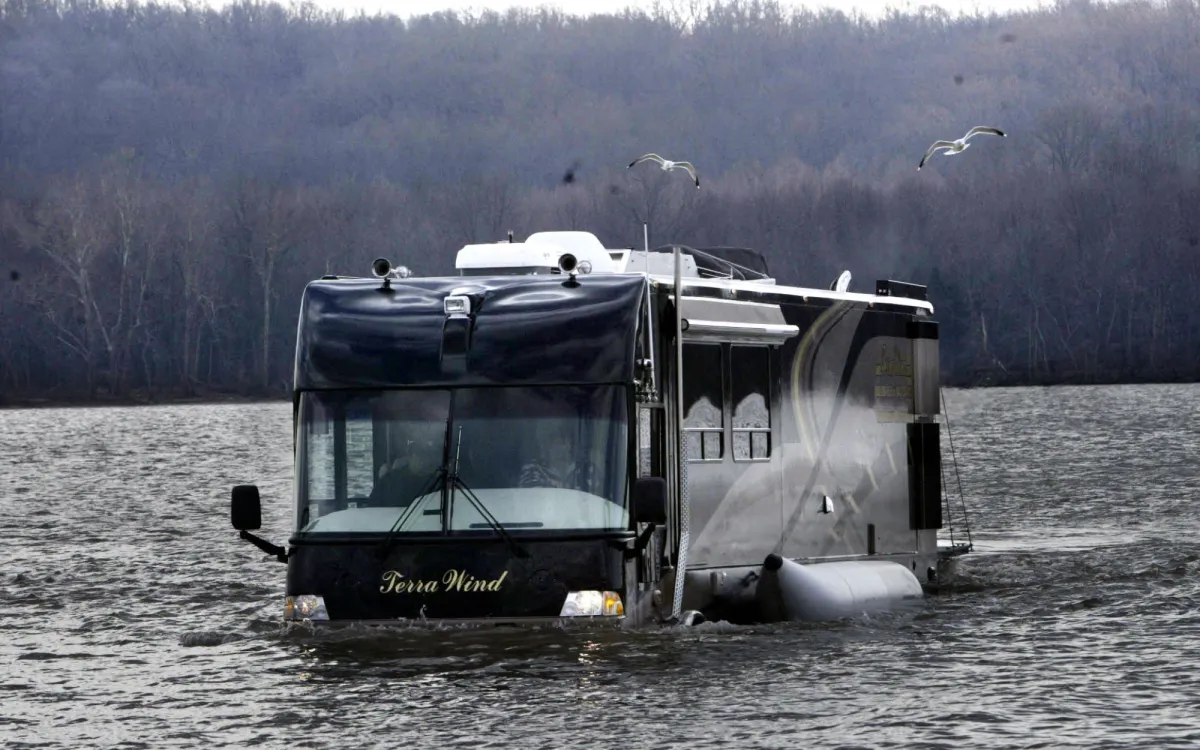
10. Terra Wind: The Luxury Amphibious Motorhome
The Terra Wind takes the idea of amphibious transportation in a completely different direction by combining a motorhome with a boat. Instead of focusing on sports performance or military use, this vehicle was designed for luxury travel. It allows passengers to enjoy road trips while also having the ability to cruise on water.
The vehicle features a spacious interior similar to that of a luxury recreational vehicle. It includes comfortable living areas and modern amenities, making it suitable for long journeys. When it reaches water, the Terra Wind transforms into a floating vessel capable of traveling across lakes and calm waterways.
Creating a luxury amphibious motorhome requires solving complex engineering challenges. The vehicle must support a heavy interior while maintaining enough buoyancy to stay afloat. Waterproofing, stability, and propulsion efficiency are all critical factors in its design.
The Terra Wind represents a unique vision of future travel where traditional boundaries between vehicles disappear. Instead of needing separate transportation for land and water adventures, travelers can use one machine for both experiences.
Rare and expensive, the Terra Wind demonstrates the wide range of possibilities within amphibious vehicle technology. From compact sports cars to luxury homes on wheels, amphibious engineering continues to inspire creative transportation solutions.
