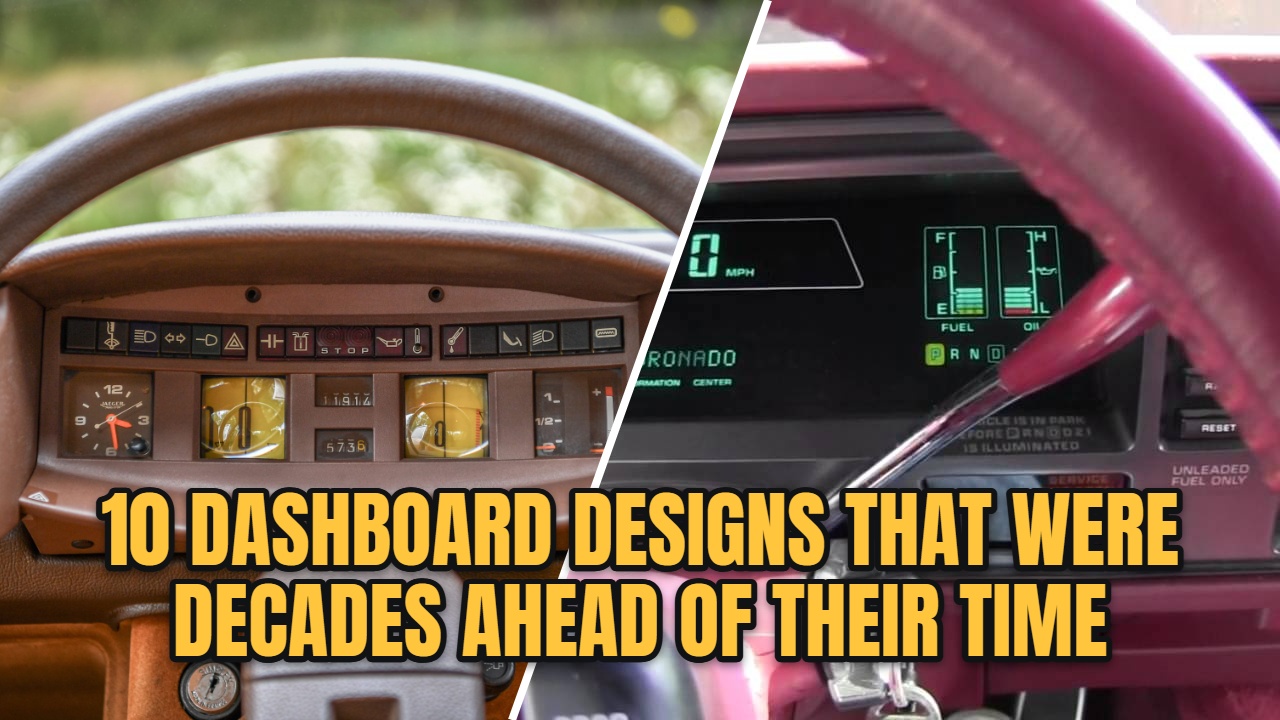
A dashboard was once expected to do little more than display speed, fuel level, engine temperature, and a handful of warning lights. Yet some automakers refused to treat the instrument panel as a simple collection of gauges.
Long before tablet-style screens, configurable displays, and touch-sensitive controls became normal, a small group of production cars experimented with ideas that looked almost impossible for their era.
The most remarkable dashboards were not always found in the fastest or most expensive vehicles. Designers played with rotating instruments, electronic displays, touch controls, driver-focused pods, and unconventional switch arrangements.
Some concepts disappeared because the electronics were expensive or buyers were not ready for them. Others quietly predicted features that returned decades later with modern hardware.
This list focuses on production vehicles whose dashboards represented a genuine technological or ergonomic departure from contemporary cars. The age of the design, the functions offered to drivers, and the influence of similar ideas on later vehicle interiors all matter.
Specifications are tied to representative versions of the vehicles discussed, since engines and dimensions could differ by model year and market. These ten dashboards prove that automotive designers were imagining the digital cockpit long before today’s giant displays arrived.
Also Read: 8 Motorcycles Known to Pass 100,000 Miles
1. 1986 Buick Riviera
Touchscreens feel inseparable from the modern automobile, but Buick placed one in a production Riviera during the Reagan era.
The 1986 Riviera’s Graphic Control Center, commonly called the GCC, used a 9-inch monochrome cathode-ray-tube display mounted in the dashboard. General Motors itself describes the system as a dramatically ahead-of-its-time feature and a precursor to displays now found across the industry.
The technology was far more ambitious than a glowing digital clock. Drivers could operate climate and audio functions through the display. The system also provided trip-computer information, vehicle diagnostics, and maintenance-related information.
A Mylar switch panel with transparent conductors sat over the CRT, creating a touch-sensitive interface years before smartphones taught consumers to tap screens for practically every digital function.
What makes the Riviera special is the breadth of integration. Buick was not merely replacing analog radio numbers with a digital readout. Multiple vehicle systems were being organized through one electronic interface.
That basic philosophy is immediately recognizable in current infotainment systems, where climate, media, trip data, and vehicle settings often share a central display.
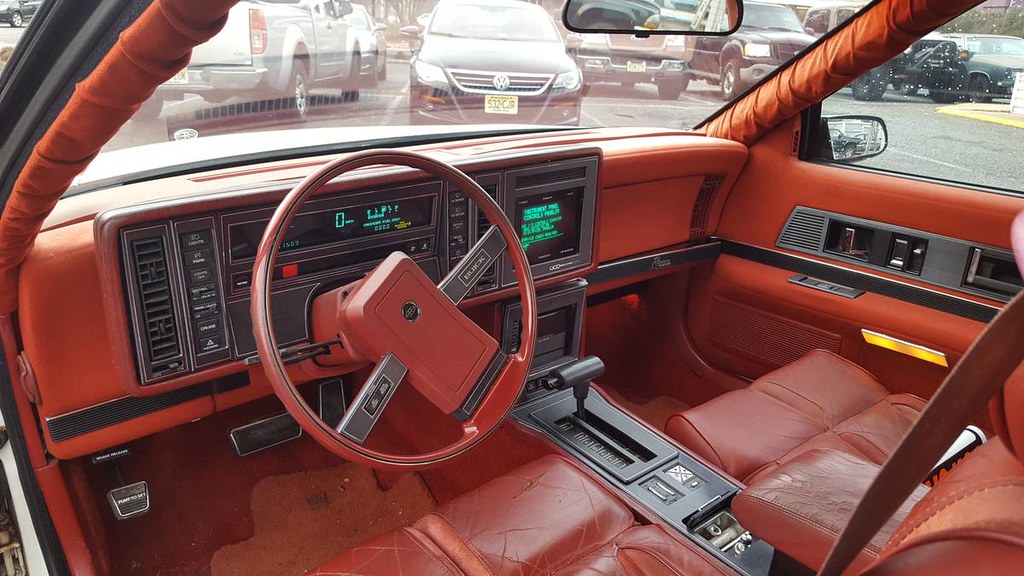
The hardware naturally reflected 1980s technology. Graphics were monochrome, processing was primitive by current standards, and the bulky CRT could never deliver the thin appearance of a modern LCD.
Yet the conceptual leap was enormous. In 1986, Buick had already asked a question automakers continue to debate today: how many dashboard functions should be moved into a screen?
- Engine: 3.8-liter V6
- Torque: 200 lb-ft
- Horsepower: 140 hp
- Length/Width: 188.3 inches / 71.7 inches
2. 1975 Citroën CX 2200
Citroën approached dashboard innovation from an entirely different direction. Rather than imagining a computerized control center, the CX challenged the basic assumption that a driver should move a hand away from the steering wheel to operate commonly used switches.
Its instrument area and control satellites created one of the strangest, yet most deliberately ergonomic, cockpits of the 1970s. The dashboard placed controls close to the steering wheel in distinctive pods. Indicators, lighting functions, and other switches could be reached with relatively small finger movements.
Citroën’s philosophy was centered on keeping the driver’s hands near the wheel instead of scattering controls across a broad dashboard. Modern steering-wheel buttons and column-mounted multifunction controls pursue a remarkably similar objective, even if their physical execution is much more conventional.
Then there were the instruments. Early CX models became famous for unusual rotating-drum displays rather than ordinary circular speedometer and tachometer needles.
The visual presentation appeared more like a piece of industrial equipment from a science-fiction set than the dashboard of a family-sized executive car. It was a dramatic rejection of the traditional gauge cluster.
The CX’s cabin mattered because it treated dashboard design as an interaction problem. Citroën was thinking about reach, hand movement, and the driver’s visual relationship with information at a time when many competing cars still relied on rows of similar switches and conventional round dials.
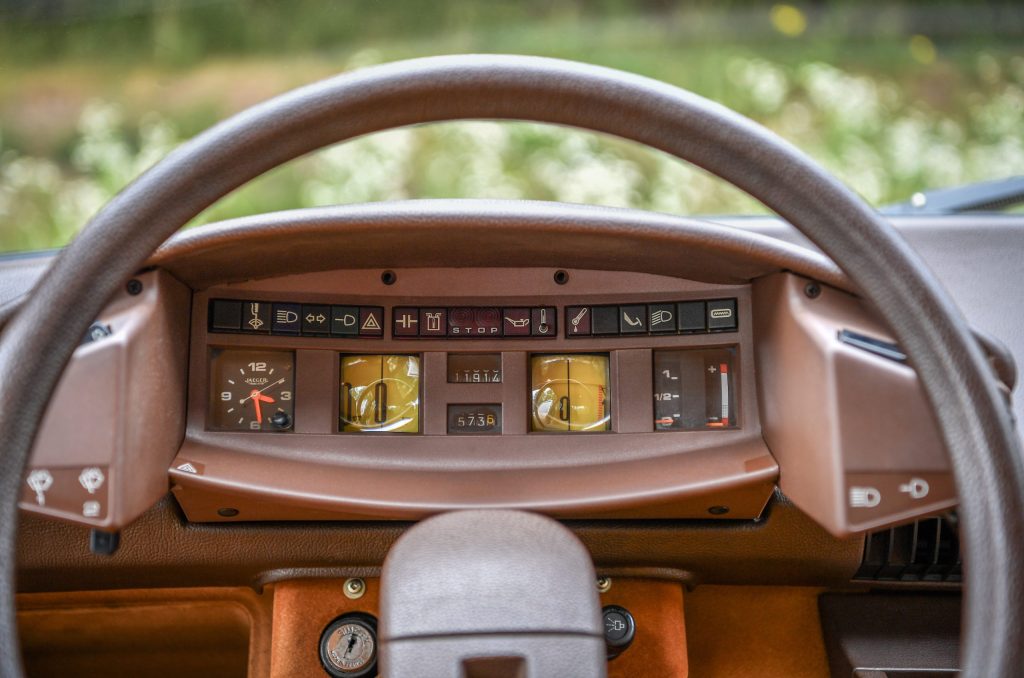
Not every driver loved the arrangement, and Citroën later moved toward more familiar instruments. Still, the original CX demonstrated that a dashboard could be designed around driver behavior instead of established automotive tradition.
- Engine: 2.2-liter inline-four
- Torque: 123 lb-ft
- Horsepower: 110 hp
- Length/Width: 183.7 inches / 68.1 inches
3. 1984 Nissan 300ZX Turbo
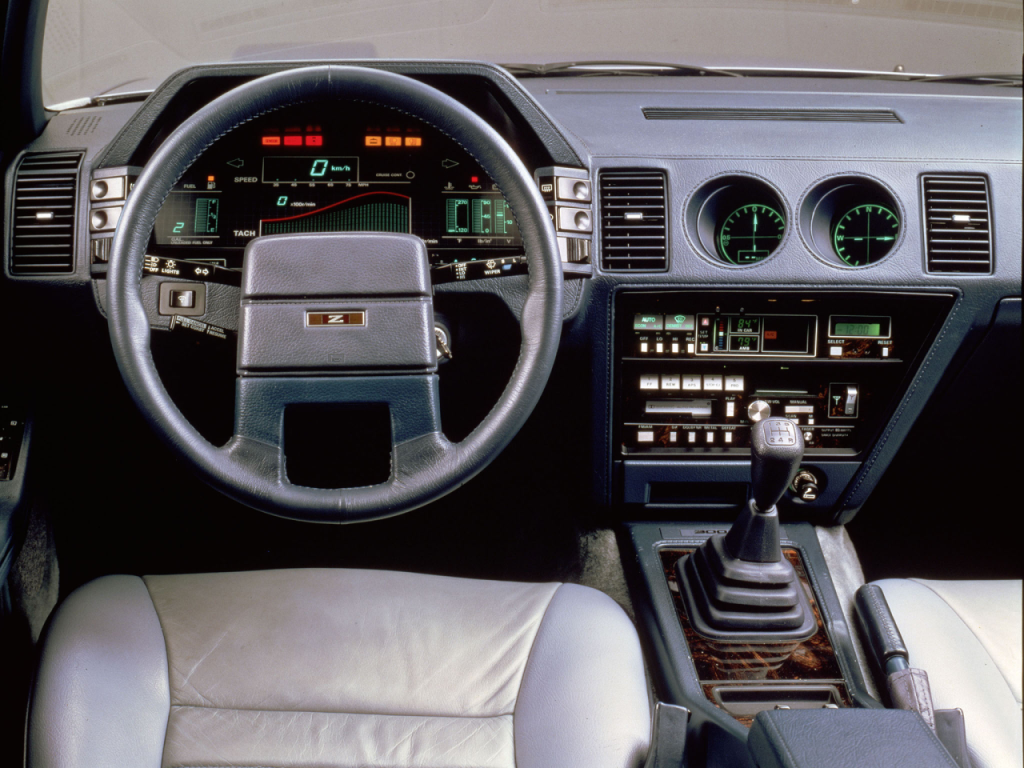
The 1984 Nissan 300ZX Turbo could make its driver feel as if the analog age had suddenly ended. With the available electronic instrument package, the Z31 replaced conventional round gauges with a glowing digital presentation that was exceptionally elaborate for an American-market sports car of the period.
Digital speed information dominated the cluster, while graphic-style displays communicated engine and vehicle data in a format closer to an electronic control panel. Nissan did not stop at changing the speedometer. The 300ZX could combine its digital instrumentation with ancillary electronic readouts for fuel economy and other driving information.
The 1984 50th Anniversary Edition pushed the idea particularly far, featuring a digital dash and additional displays that included average mileage, acceleration-related information, and a compass. The cabin’s technology-heavy character was reinforced by electronically adjustable shock absorbers and steering-wheel-mounted audio and cruise controls.
Even the car’s warnings could sound futuristic. Early Z31 models used a voice warning system that could interrupt the audio system and deliver spoken alerts for conditions such as a door being open, low fuel, the parking brake being applied while driving, or exterior lights being left on.
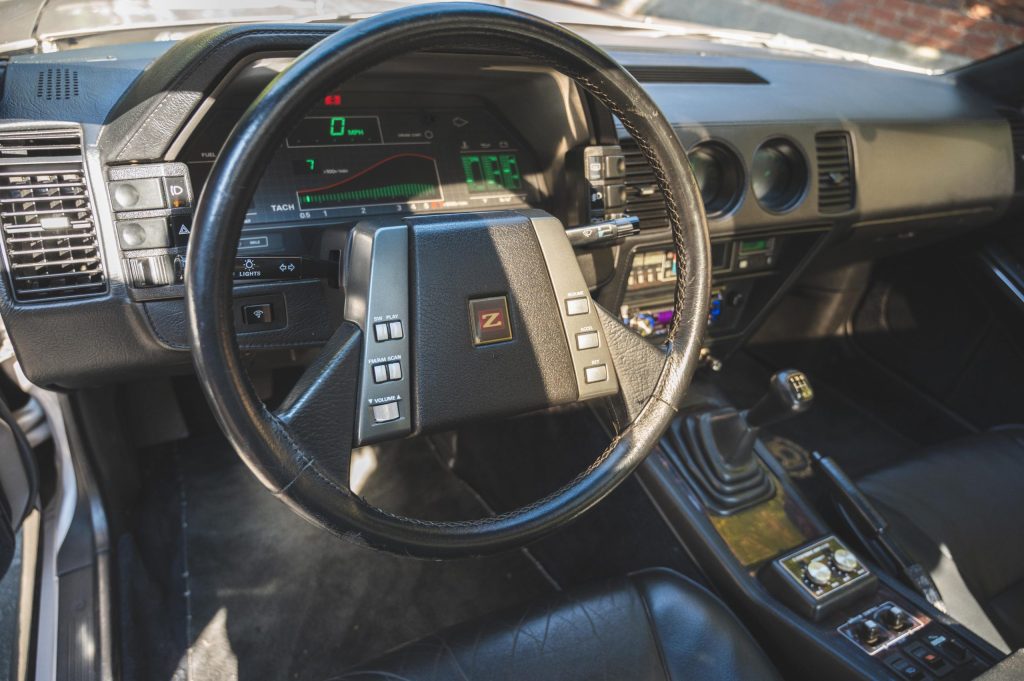
Decades before modern vehicles routinely spoke navigation directions and safety messages, a 300ZX could literally communicate a problem through the driver’s speaker. The dashboard was theatrical, bright, and unmistakably tied to the 1980s. Yet its combination of digital instruments, trip information, auxiliary data, and electronic alerts anticipated the information-rich clusters now fitted to modern performance cars.
- Engine: 3.0-liter turbocharged V6
- Torque: 227 lb-ft
- Horsepower: 200 hp
- Length/Width: 173.7 inches / 67.9 inches
4. 1984 Chevrolet Corvette
Chevrolet could have introduced the fourth-generation Corvette with another set of large round gauges and still created a convincing sports car. Instead, the 1984 Corvette arrived with an electronic instrument cluster that looked more appropriate for a flight simulator. The presentation instantly separated the C4 from the traditional dashboards used in earlier Corvettes.
A prominent digital speedometer occupied the driver’s view, accompanied by electronic graphic displays for engine speed and other vehicle information. The tachometer used a bar-style presentation rather than relying entirely on a conventional sweeping needle. At night, the illuminated cluster produced a dramatic cockpit effect that became one of the C4 generation’s most recognizable interior details.
Its importance goes beyond the 1980s visual style. Chevrolet was using electronic instrumentation to reorganize information according to priority. Speed could be read as a large numerical value, while engine behavior was represented graphically.
Current digital gauge clusters use the same basic format. Once physical needles are removed, designers can decide how information should be sized, positioned, and visually emphasized.
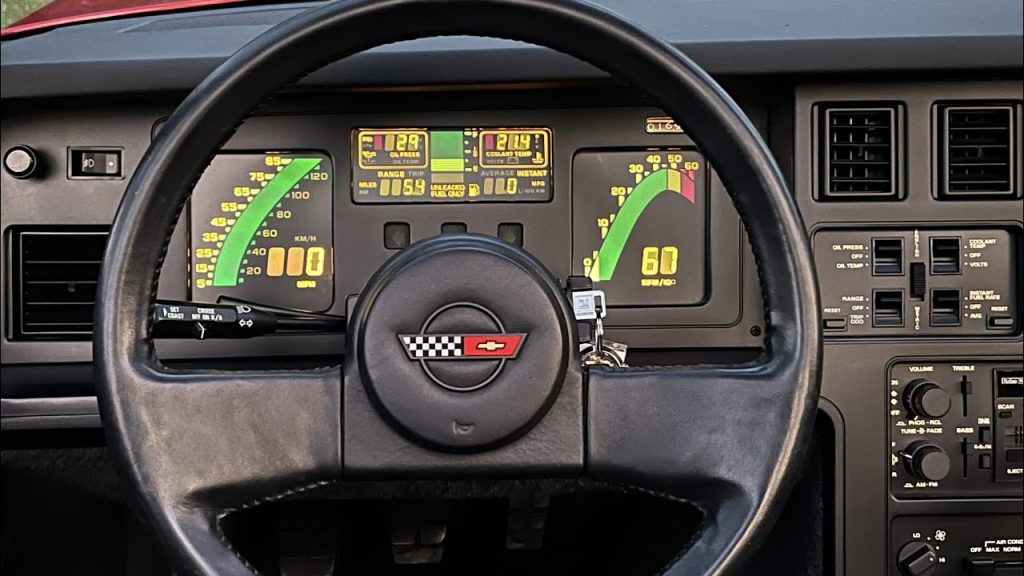
The Corvette’s electronics also reflected how Chevrolet viewed the C4 itself. This was a major technical reset built around a new chassis, improved aerodynamics, and handling capabilities that moved the Corvette into a different performance era.
A traditional dashboard might have felt disconnected from that mission. The electronic cluster visually announced the change every time the driver switched on the car.
Early digital displays could develop age-related electronic problems, and later Corvettes adopted different instrument designs. Still, the 1984 C4 proved that a production sports car’s dashboard could become an electronic interface rather than a panel of mechanical-looking gauges.
- Engine: 5.7-liter Cross-Fire Injection V8
- Torque: 290 lb-ft
- Horsepower: 205 hp
- Length/Width: 176.5 inches / 71.0 inches
5. 1989 Oldsmobile Toronado Troféo
By 1989, General Motors had already experimented with dashboard touchscreens in the Buick Riviera, but the Oldsmobile Toronado Troféo took the electronic cockpit concept in a particularly striking direction.
It’s available color visual information center, or VIC, used a dashboard-mounted cathode-ray-tube touchscreen to combine functions that were usually spread across separate switches, displays, and control panels.
The VIC could manage audio and climate settings while presenting trip computer and vehicle information. Period Oldsmobile material stated that the system could store and recall as many as 51 visual displays.
An available mobile telephone could also be integrated with the VIC for hands-free dialing. Consider how radical that combination was in 1989: a color touchscreen, vehicle data, entertainment controls, climate functions, and phone integration sharing a central electronic interface.
Rather than treating the screen as a decorative novelty, Oldsmobile built a genuine information hub. The driver could move between different pages and retrieve specific functions, a design principle now fundamental to modern infotainment software.
Today’s menu-based vehicle screens are faster and dramatically sharper, but their basic organizational logic is not far removed from what the Troféo attempted.
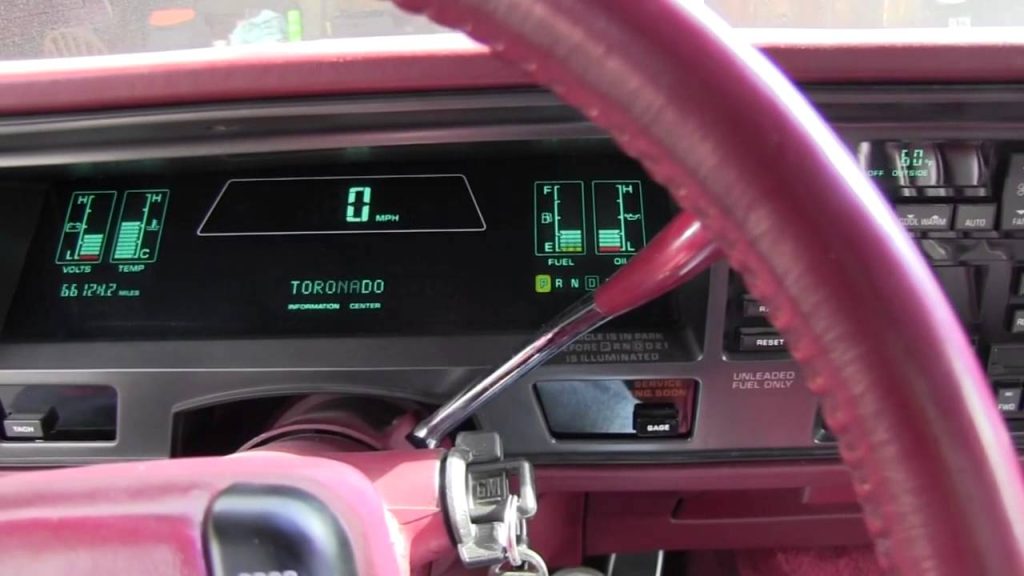
The surrounding cockpit reinforced the high-technology theme. Steering-wheel controls for radio and climate functions reduced the need to constantly reach toward the center of the dashboard.
Few late-1980s American luxury coupes were thinking this far ahead. The Troféo’s VIC effectively predicted the central touchscreen as the electronic command center of a car decades before that layout became an industry standard.
- Engine: 3.8-liter 3800 V6
- Torque: 210 lb-ft
- Horsepower: 165 hp
- Length/Width: 187.5 inches / 70.8 inches
6. 1988 Pontiac Bonneville SSE
Pontiac’s 1988 Bonneville SSE did not need a giant touchscreen to create a dashboard that felt technologically advanced. Its approach was information density. The SSE surrounded the driver with electronic features and presented a level of vehicle data rarely associated with an American family sedan in the late 1980s.
At the center of the concept was the Driver Information Center. Pontiac combined trip-computer functionality with a digital compass and other driver-oriented information, giving the Bonneville a cockpit designed around more than basic speed and fuel readings.
The SSE’s electronic climate control added another layer of digital interaction, while an available CD player represented premium in-car technology at a time when cassette systems remained common.
The dashboard’s physical design deserves equal attention. Controls were arranged in a distinctly driver-focused environment, with the instrument panel and center area emphasizing the person behind the wheel.
Pontiac marketed the SSE with a sportier, European-influenced personality, and the cabin supported that goal by making technology part of the driving experience rather than simply adding luxury trim.
There is a clear connection between this philosophy and the data-heavy instrument environments found in current vehicles. Modern dashboards routinely provide compass information, trip calculations, fuel data, vehicle status pages, and customizable settings. In 1988, presenting several electronic information functions together still felt exceptional.
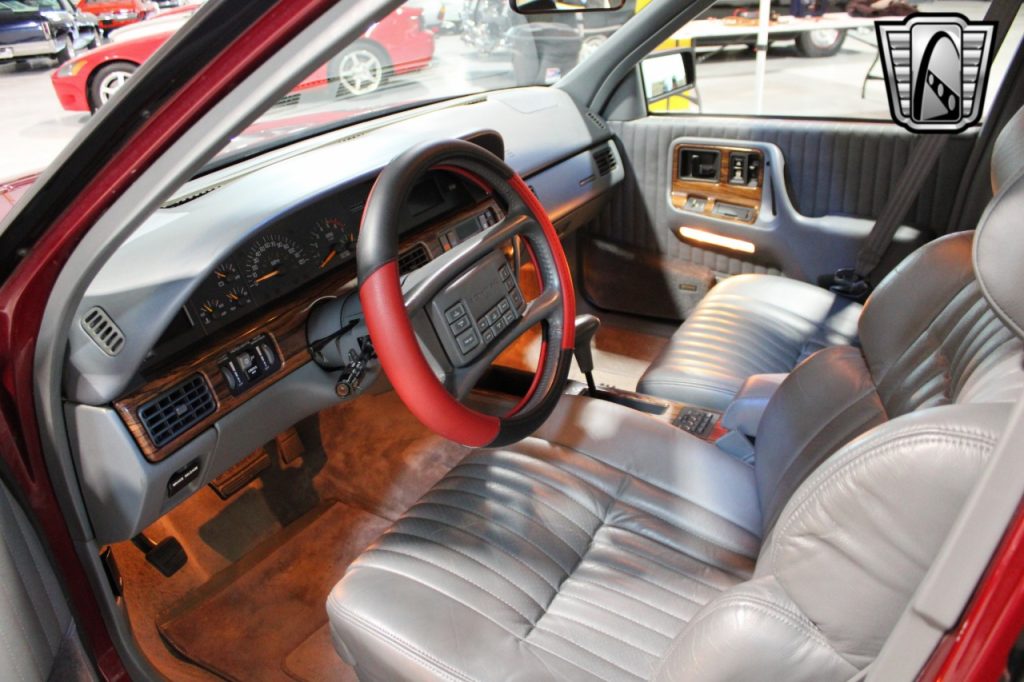
The Bonneville SSE showed another possible future for dashboards. Instead of replacing every control with one screen, Pontiac created an information-rich command area built specifically around the driver. That concept remains alive in today’s digital cockpits.
- Engine: 3.8-liter 3800 V6
- Torque: 210 lb-ft
- Horsepower: 165 hp
- Length/Width: 198.7 inches / 72.1 inches
7. 1985 Subaru XT Turbo
Few dashboards captured the idea of an aircraft-inspired automobile as completely as the 1985 Subaru XT Turbo. Subaru’s parent company, Fuji Heavy Industries, had deep aviation roots, and the XT’s cockpit made that influence impossible to miss.
The dashboard was not simply a futuristic decoration. Its controls and instruments were arranged around a distinct driver-centered philosophy that made the coupe feel radically different from an ordinary 1980s Subaru.
Turbo models could feature an orange-backlit electronic instrument display with graphics arranged to resemble an artificial horizon. Engine speed, turbo boost, temperature, and fuel information were presented through three-dimensional-style graphic elements.
Instead of recreating conventional round gauges electronically, Subaru used digital technology to invent a different visual language for vehicle information. The result looked closer to fictional spacecraft instrumentation than the instrument panel of a road car.
The physical dashboard was equally unconventional. Pod-mounted controls placed lighting, ventilation, and wiper functions near the steering wheel. Most impressively, the instrument panel moved with the tilt and telescoping steering column, helping maintain the relationship between the wheel and the driver’s instruments.
Modern manufacturers frequently advertise adjustable digital cockpit layouts and driver-focused ergonomics, but Subaru was mechanically addressing instrument visibility in 1985.
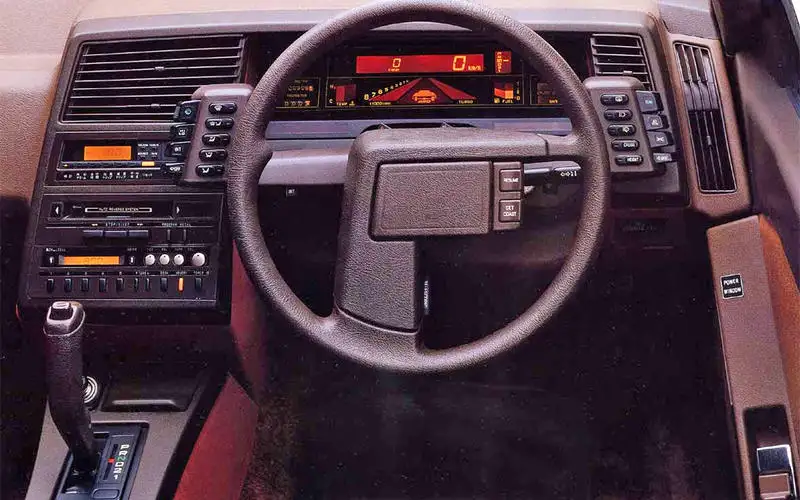
An electronic trip computer added another layer of technology. The XT even offered a 55-mph speed warning that could be activated with a separate key.
The XT’s cockpit was unusual because nearly every major element seemed to question normal dashboard design. It was a complete futuristic environment, not merely a standard interior with digital gauges added afterward.
- Engine: 1.8-liter turbocharged flat-four
- Torque: 143 lb-ft
- Horsepower: 115 hp
- Length/Width: 177.6 inches / 66.5 inches
8. 1988 Oldsmobile Cutlass Supreme Indy Pace Car
Sometimes a dashboard moves automotive design forward by displaying more information. The 1988 Oldsmobile Cutlass Supreme Indy Pace Car achieved the opposite. It placed essential information where the driver could see it without relying solely on the conventional instrument cluster.
General Motors installed an automotive head-up display in the 1988 Cutlass Supreme Indy Pace Car program, marking one of the earliest production applications of HUD technology in a civilian automobile.
The system projected information into the driver’s forward field of vision. Early functionality was modest compared with today’s navigation-rich color HUDs, displaying speed and turn-signal information, but the fundamental idea was already established.
That concept now appears in vehicles ranging from family crossovers to high-performance sports cars. Current head-up displays can show speed limits, navigation arrows, driver-assistance information, and warnings.
The Oldsmobile’s system was primitive beside them, yet it tackled the same ergonomic problem: important data should be available without requiring the driver to repeatedly look down at the gauge cluster.
The technology had roots in aviation, where head-up displays helped pilots view critical information in their forward sightline. Applying that principle to a late-1980s American automobile was a remarkable step.
General Motors subsequently expanded HUD availability to additional Cutlass Supreme and Pontiac Grand Prix applications.
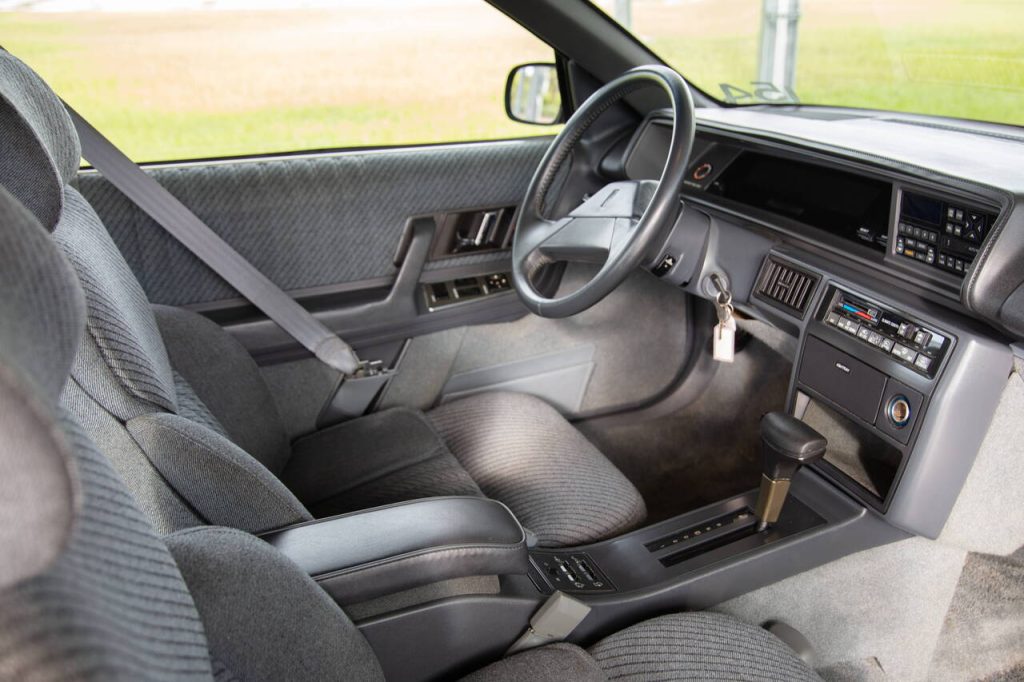
While other dashboards on this list predicted touchscreens or digital clusters, the Cutlass Supreme anticipated augmented driving information. Its windshield area effectively became another display surface, a concept that remains central to advanced cockpit design nearly four decades later.
- Engine: 2.8-liter V6
- Torque: 160 lb-ft
- Horsepower: 130 hp
- Length/Width: 192.1 inches / 71.0 inches
9. 1986 Audi Quattro
Audi’s Quattro dashboard did not depend on a single oversized screen to create a digital cockpit. Instead, the car surrounded its driver with electronic information and monitoring systems that felt remarkably advanced in the mid-1980s.
By 1986, the Quattro’s equipment could include a digital instrument display and an Auto-Check monitoring system, creating a cabin that communicated far more than the basic warning lamps fitted to many contemporary cars.
The electronic display presented information such as engine speed and turbo boost, two readings particularly relevant in a turbocharged performance car. Audi also used its monitoring electronics to check numerous vehicle functions.
Period Audi material described a system monitoring 15 functions, including items such as oil level. A synthesized voice system could communicate certain warnings to the driver. The combination effectively turned the dashboard into an early vehicle-status center rather than leaving the owner to interpret a collection of anonymous red lights.
This was especially appropriate for the Quattro. Turbocharging and permanent all-wheel drive made the coupe mechanically sophisticated, so an information-rich cockpit complemented the engineering underneath. The display was not trying to imitate a luxury lounge. Its presentation had a technical, functional character.
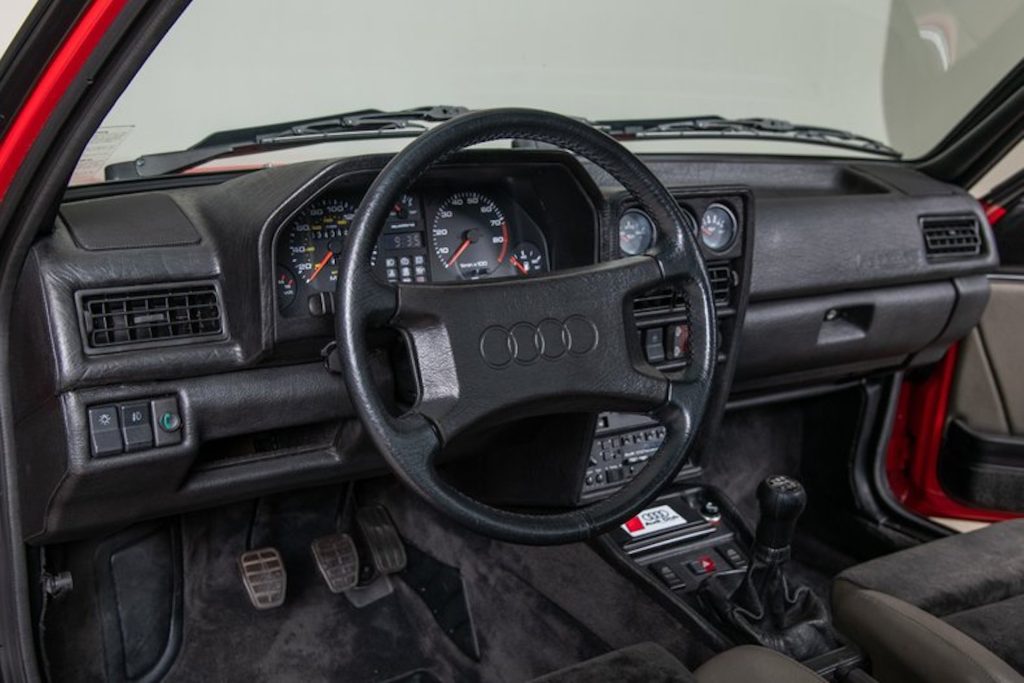
Modern performance vehicles now offer boost-pressure readouts, configurable engine-data pages, and detailed vehicle-status warnings through digital clusters. Audi was pursuing the same information-first philosophy decades earlier, with electronics that were primitive only by today’s processing standards.
The Quattro’s dashboard showed that digital instrumentation could serve a serious performance purpose. It gave technology a functional role and helped establish the idea that a sophisticated car should actively report its mechanical condition to the person driving it.
- Engine: 2.1-liter turbocharged inline-five
- Torque: 210 lb-ft
- Horsepower: 200 hp
- Length/Width: 173.4 inches / 67.8 inches
10. 1990 Nissan 300ZX Twin Turbo
Open the door of a 1990 Nissan 300ZX Twin Turbo, and one detail immediately explains Nissan’s thinking: the dashboard was designed around the driver’s reach. The Z32 did not chase the glowing digital theatrics of its Z31 predecessor. Nissan instead created an ergonomic cockpit with two prominent control pods flanking the instrument cluster.
Lighting and other frequently used functions were positioned close to the steering wheel. The layout allowed the driver to operate important controls with relatively small hand movements rather than searching across the center stack.
It was a different interpretation of futuristic design, one based on human interaction rather than the number of electronic pixels in the cabin. The instrument panel itself was clean and highly focused. Large analog gauges remained directly ahead, while the surrounding dashboard curved toward the driver. Nissan’s design made the cockpit feel almost separated from the passenger side.
This driver-oriented architecture later became common in performance cars, where center displays and controls are frequently angled toward the person behind the wheel.
Technology elsewhere strengthened the impression. The U.S.-market Twin Turbo produced 300 horsepower and used twin turbochargers, dual intercoolers, and Nissan’s Super HICAS four-wheel-steering system.
The cabin’s focused design matched a car developed during Nissan’s ambitious Project 901 era. Contemporary testing recorded 222 horsepower and 198 lb-ft for the naturally aspirated U.S. model, while the Twin Turbo specification reached 300 horsepower and 283 lb-ft.
Unlike many futuristic dashboards, the Z32’s layout has aged with unusual grace. Nissan proved that being ahead of time did not always require a touchscreen. Sometimes the breakthrough was understanding where the driver’s hands naturally wanted the controls to be.
- Engine: 3.0-liter twin-turbocharged V6
- Torque: 283 lb-ft
- Horsepower: 300 hp
- Length/Width: 169.5 inches / 70.5 inches
Also Read: 10 Amphibious Cars That Could Drive In A Lake & Road