
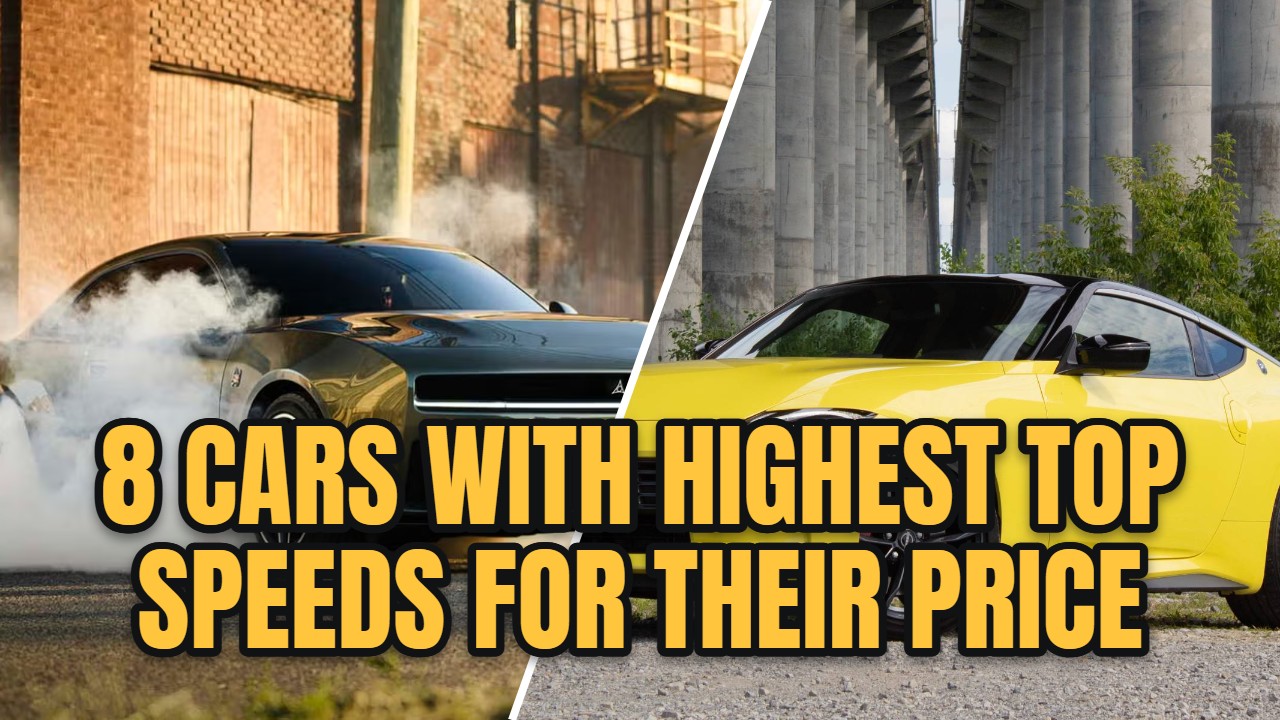
Extreme top speed usually comes with an extreme price. Modern hypercars capable of exceeding 200 mph can cost hundreds of thousands or even millions of dollars, making their performance inaccessible to most buyers.
Yet raw speed is not always tied directly to a seven-figure purchase. Several production cars sold in the United States deliver remarkably high maximum speeds relative to their manufacturer’s starting prices.
This ranking focuses on the relationship between verified or manufacturer-stated top speed and U.S. starting MSRP. It is not simply a list of the fastest cars available. A 250-mph hypercar may be quicker, but its enormous purchase price can make the speed-per-dollar equation far less impressive. Cars with electronic speed limiters are judged using their stated limited maximum speed, where applicable.
Prices also refer to starting manufacturer-suggested retail prices before destination charges, taxes, dealer markups, and major options unless otherwise stated. Performance can vary with equipment, tires, aerodynamic packages, and track conditions.
The cars selected here stand out because their speed figures remain extraordinary despite their purchase prices. From affordable twin-turbo coupes to mid-engine V8 machinery, these eight cars demonstrate that serious top-end performance does not always demand hypercar money.
Also Read: 8 Best V8 Engines With the Fewest Reported Problems
1. 2026 Chevrolet Corvette Stingray
Top Speed: 194 mph
Starting Price: $70,000
Few performance statistics expose the Corvette Stingray’s value advantage as clearly as 194 mph. Chevrolet lists the 2026 Stingray with a $70,000 starting MSRP and a top track speed of 194 mph. That places a near-200-mph production car at a price where many premium SUVs and luxury sedans operate, rather than in the financial territory occupied by exotic supercars.
The reason is not simply excessive engine output. A naturally aspirated 6.2-liter LT2 V8 produces 490 horsepower and 465 lb-ft of torque in standard specification. With the available performance exhaust, those figures rise to 495 horsepower and 470 lb-ft.
Chevrolet combines the V8 with an eight-speed dual-clutch transmission and a mid-engine layout, placing the powertrain behind the passenger compartment.
Aerodynamics becomes especially important near 200 mph. The Stingray’s relatively low body and mid-engine proportions help it achieve a top-speed figure that would require dramatically more horsepower from a poorly optimized vehicle.
Interestingly, high-downforce equipment can change maximum-speed performance because additional aerodynamic drag trades straight-line speed for cornering stability.
Price is what transforms the specification from impressive to exceptional. Dividing the $70,000 starting MSRP by the 194-mph top-speed figure works out to roughly $361 of base price for every mph of maximum speed. That is not a conventional industry measurement, but it clearly illustrates the Corvette’s speed-per-dollar advantage.
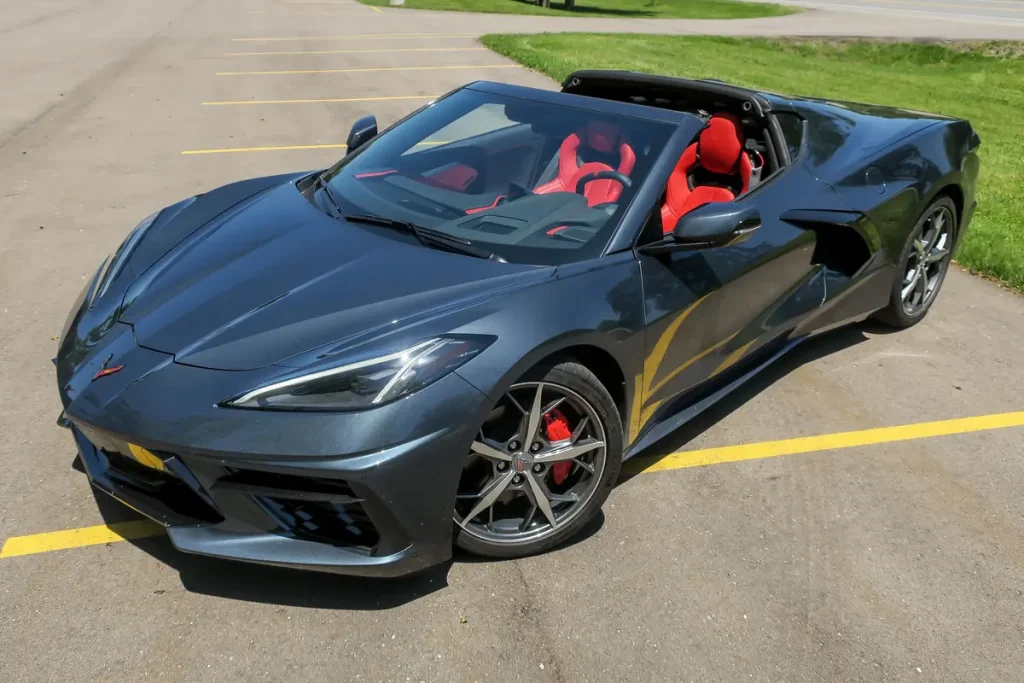
A buyer is getting genuine supercar velocity without paying the traditional supercar entry fee. In pure top-speed value, the 2026 Stingray remains extremely difficult to challenge.
- Engine: 6.2-liter naturally aspirated V8
- Torque: 465 lb-ft, up to 470 lb-ft with performance exhaust
- Horsepower: 490 hp, up to 495 hp with performance exhaust
- Length/Width: 182.3 inches / 76.1 inches
2. 2026 Nissan Z Sport
Top Speed: 155 mph
Starting Price: $42,970
The Nissan Z approaches the value equation from the opposite end of the price scale. Nissan’s U.S. specifications put the 2026 Z Sport at a starting MSRP of $42,970, yet the coupe brings a 400-horsepower twin-turbocharged V6 to the discussion.
Published specifications commonly place the Z’s electronically governed maximum at 155 mph, while Car and Driver estimates the platform’s unrestricted performance potential at approximately 165 mph. For a consistent production-car comparison, the 155-mph limited figure is the more conservative number to use.
There is no need to buy the NISMO version to receive the core engine output. The entry-level Sport uses Nissan’s VR30DDTT 3.0-liter twin-turbo V6, producing 400 horsepower and 350 lb-ft of torque.
Nissan offers a six-speed manual or nine-speed automatic, allowing buyers to choose between a traditional driver-focused transmission and quicker automatic gear changes. Now consider the price against the speed.
At $42,970 and 155 mph, the Z costs approximately $277 per mph of top speed using the same simple price-to-speed calculation. That numerical relationship is one reason the Nissan belongs here. Buyers do not have to cross $50,000 just to access a 400-horsepower rear-wheel-drive sports coupe.
The Z also avoids depending on a stripped-down, low-output engine for its advertised entry price. Its standard twin-turbo V6 is the same basic 400-horsepower heart that defines the regular Z range. Nissan’s official U.S. comparison material confirms the $42,970 starting price and 400-horsepower rating.
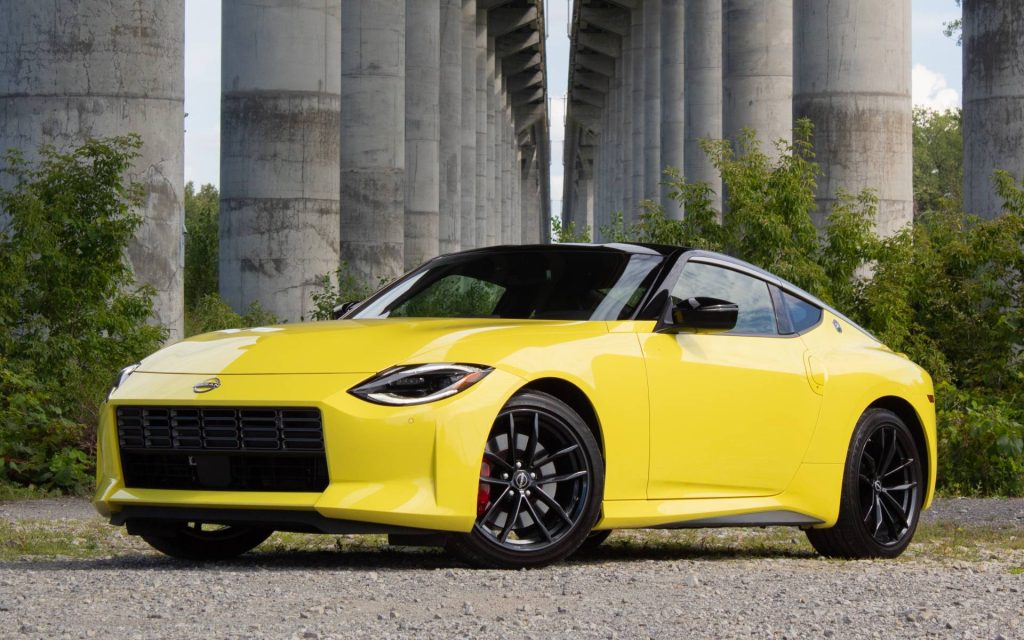
At 155 mph, the Nissan is not chasing 200-mph supercars. Its achievement is delivering high top-end speed for less than the average transaction prices attached to many premium vehicles.
- Engine: 3.0-liter twin-turbocharged V6
- Torque: 350 lb-ft
- Horsepower: 400 hp
- Length/Width: 172.4 inches / 72.6 inches
3. 2026 Ford Mustang GT Fastback
Top Speed: 155 mph
Starting Price: Approximately $48,000
The Ford Mustang GT proves that a naturally aspirated V8 can still deliver serious top-speed value in an era dominated by turbocharging and electrification.
For the 2026 model year, the GT Fastback sits near the $48,000 starting price range in the United States and brings 480 horsepower from Ford’s fourth-generation 5.0-liter Coyote V8. Published specifications place the GT’s electronically limited top speed at 155 mph. Those numbers create a particularly strong value argument. Using a starting price of roughly $48,000, the Mustang costs about $310 for every mph of top speed.
The calculation is simplistic, but it highlights why the GT remains difficult to ignore. Several luxury performance cars reach a similar electronically governed maximum while carrying substantially higher base prices. The Coyote V8 produces 415 lb-ft of torque in standard form. An available active-valve performance exhaust raises output to 486 horsepower and 418 lb-ft.
Buyers can pair the engine with a six-speed manual transmission or Ford’s 10-speed automatic. This is not a small turbo engine being pushed to an ambitious maximum. Five liters of naturally aspirated displacement provide the Mustang’s performance.
Aerodynamic drag and electronic governance ultimately define the 155-mph ceiling. Ford’s more track-focused Dark Horse is capable of a higher governed speed, but it also commands additional money. For buyers measuring straight-line capability against the initial purchase price, the regular GT presents the stronger affordability story.
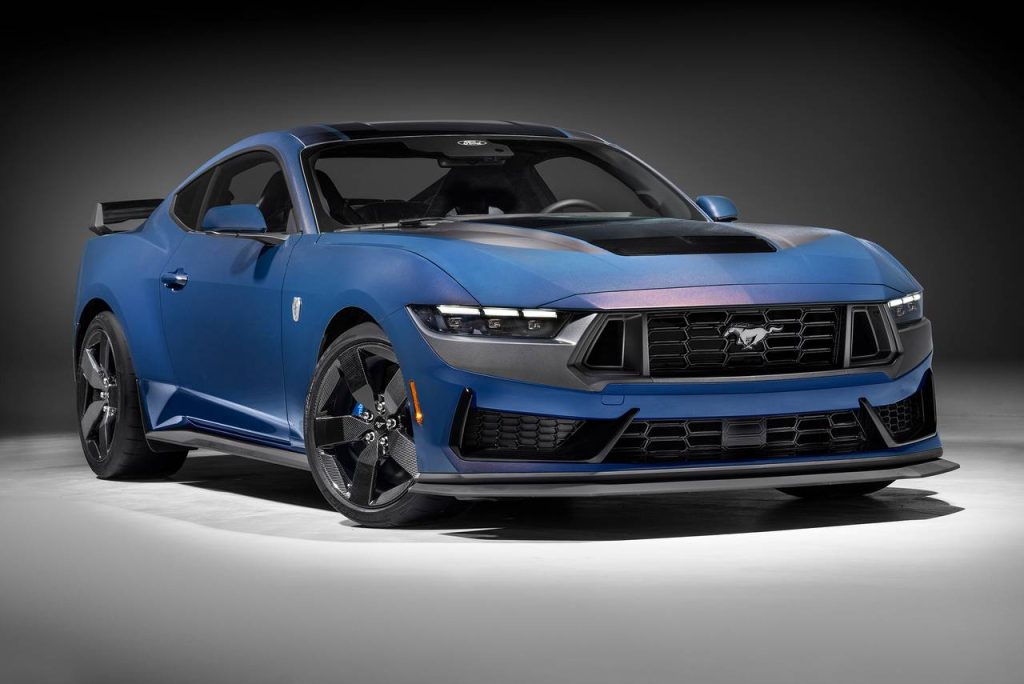
There is another advantage that a price chart cannot fully communicate. At nearly 500 horsepower, the Mustang GT combines its 155-mph capability with a V8 engine configuration that is disappearing from affordable performance cars. Speed per dollar is impressive here, but the method used to generate that speed is equally significant.
- Engine: 5.0-liter naturally aspirated V8
- Torque: 415 lb-ft, up to 418 lb-ft with active-valve performance exhaust
- Horsepower: 480 hp, up to 486 hp with active-valve performance exhaust
- Length/Width: 189.4 inches / 75.4 inches
4. 2026 Toyota GR Supra 3.0
Top Speed: 155 mph
Starting Price: $58,300
Toyota’s GR Supra reaches the same 155-mph electronically limited figure as several more expensive European performance cars, but the route it takes is distinctly focused on compact sports-car efficiency.
Toyota lists the 2026 GR Supra at a starting MSRP of $58,300 in the United States. Every 2026 version uses a turbocharged 3.0-liter inline-six producing 382 horsepower and 368 lb-ft of torque. Apply the same price-to-speed calculation used for the previous cars, and the Supra works out to approximately $376 per mph of top speed.
That figure is slightly higher than the Corvette Stingray’s exceptional result, yet the Toyota remains compelling because it enters the discussion below $60,000 while delivering a maximum speed associated with serious performance machinery.
Horsepower alone does not explain the result. The Supra’s relatively compact body and performance-focused aerodynamics help the car make effective use of 382 horsepower. At approximately 172.5 inches long, it is substantially shorter than a Mustang GT.
The two-seat layout and rear-wheel-drive architecture further reinforce the idea that Toyota did not design the Supra around broad family-car requirements.
Transmission choice adds another dimension. Buyers can select an eight-speed automatic or a six-speed manual. Toyota’s published acceleration figures put the automatic at 3.9 seconds from 0 to 60 mph, while the manual requires 4.2 seconds. The engine’s 368 lb-ft of torque is available across a broad 1,800-to-5,000-rpm range, helping the car build speed forcefully.
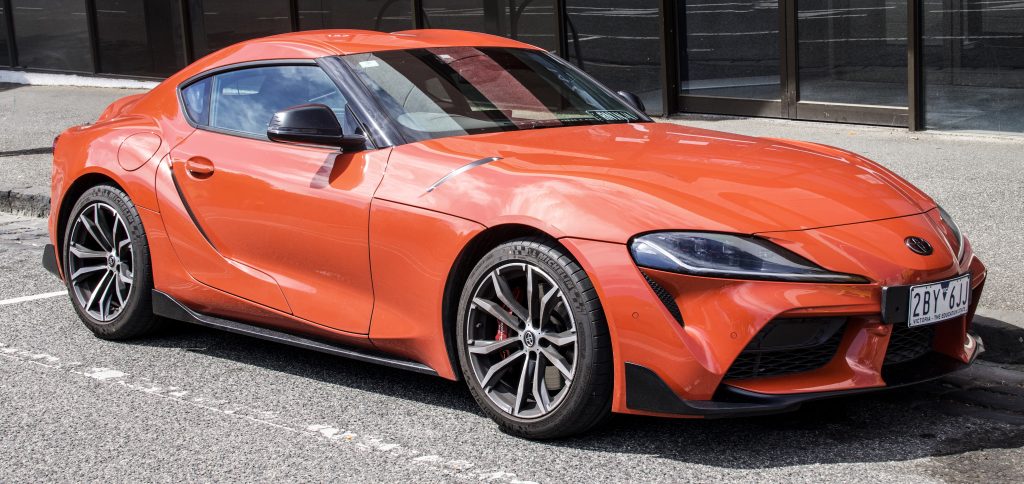
The 155-mph limiter means the Supra is not allowed to chase an unrestricted maximum in factory specification. Even so, $58,300 for a 155-mph, 382-horsepower inline-six sports car represents an impressive relationship between price and top-end performance.
- Engine: 3.0-liter twin-scroll turbocharged inline-six
- Torque: 368 lb-ft
- Horsepower: 382 hp
- Length/Width: Approximately 172.5 inches / 73.0 inches
5. 2026 Cadillac CT4-V Blackwing
Top Speed: More Than 189 mph
Starting Price: $63,600
A four-door Cadillac reaching more than 189 mph for $63,600 changes the speed-per-dollar conversation completely. Cadillac officially lists the 2026 CT4-V Blackwing at that starting price and states a racetrack top speed exceeding 189 mph.
That gives the compact performance sedan a maximum-speed figure sitting only a few mph below the Chevrolet Corvette Stingray discussed earlier.
Using 189 mph as the conservative calculation point, the Cadillac costs approximately $337 per mph of top speed. The actual ratio is marginally better because Cadillac describes the maximum as greater than 189 mph.
More importantly, the CT4-V Blackwing achieves this while providing four doors and a usable rear seat instead of adopting a dedicated two-seat sports-car layout. A 3.6-liter twin-turbocharged V6 generates 472 horsepower and 445 lb-ft of torque. Cadillac makes a six-speed manual transmission standard, while a 10-speed automatic is available.
Performance Traction Management, an electronic limited-slip rear differential, Magnetic Ride Control, and Brembo high-performance brakes support the engine rather than leaving the chassis overwhelmed by its output.
The top-speed number is what separates this Cadillac from ordinary sport sedans. Many performance cars are electronically restricted to 155 mph. The Blackwing moves well beyond that familiar ceiling and enters a speed range normally associated with substantially more expensive machinery.
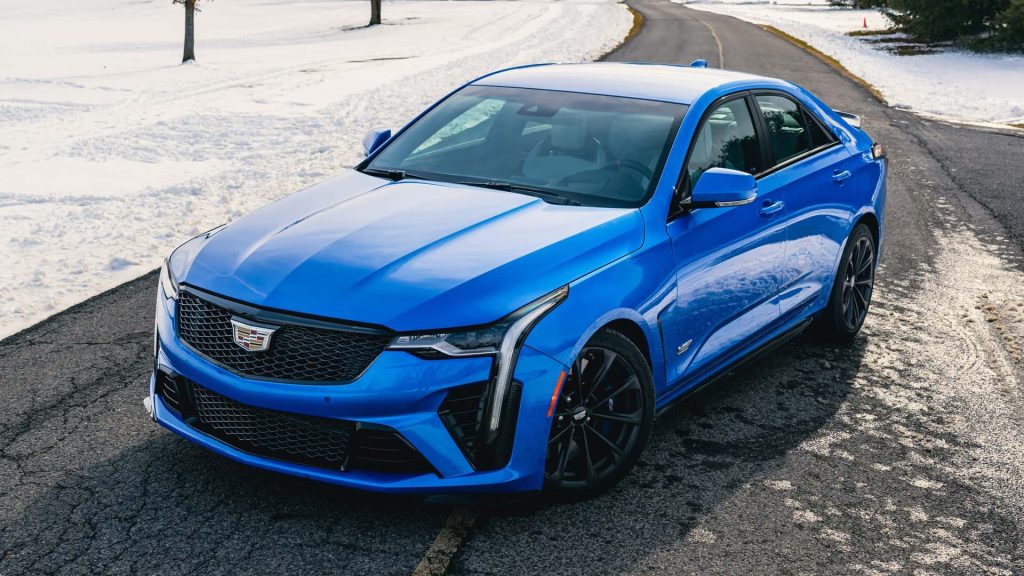
For less than $64,000 before destination charges and options, the CT4-V Blackwing combines a verified 189-plus-mph capability with 472 horsepower. Few new U.S.-market sedans deliver a stronger relationship between purchase price and maximum speed.
- Engine: 3.6-liter twin-turbocharged V6
- Torque: 445 lb-ft
- Horsepower: 472 hp
- Length/Width: 187.2 inches / 71.4 inches
6. 2026 BMW M2
Top Speed: Up to 177 mph with M Driver’s Package
Starting Price: Approximately $70,000
The BMW M2 is interesting because its top-speed story changes dramatically with equipment. In regular specification, BMW electronically limits the compact M coupe. When configured with the increased maximum-speed capability associated with the M Driver’s Package, the M2 can reach 177 mph. That transforms a relatively small two-door BMW into a genuine high-speed machine.
Price matters just as much here. With the rear-wheel-drive M2 positioned around the $70,000 mark in the U.S. market, a 177-mph maximum speed produces a rough ratio of $395 per mph of top speed before accounting for the additional package cost.
The exact transaction figure naturally rises with the M Driver’s Package and other options, so the M2 does not beat the Corvette’s extraordinary base-price calculation. Its advantage is the amount of speed available from a compact luxury performance coupe.
BMW’s current technical data lists 473 horsepower and 443 lb-ft of torque from a 2,993-cc inline-six. The 3.0-liter M TwinPower Turbo engine sends power to the rear wheels in the traditional M2 configuration, while current BMW data also documents the M2’s 473-horsepower output.
The M2’s dimensions make 177 mph seem even more dramatic. Its short, muscular body is considerably more compact than a full-size grand tourer, yet the turbocharged six-cylinder provides the sustained power necessary for serious top-end velocity.
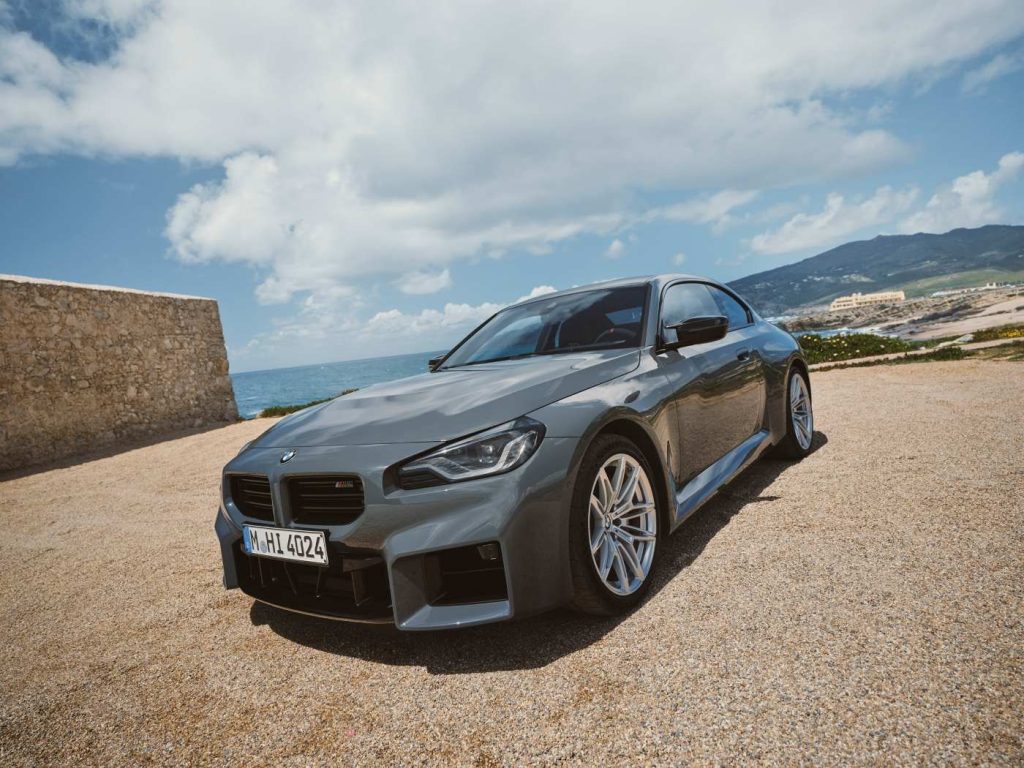
This BMW earns its position through choice. The standard electronic ceiling keeps the car restrained, but buyers seeking greater maximum speed can access a 177-mph configuration. That is an exceptional figure for a production coupe near this price category.
- Engine: 3.0-liter M TwinPower Turbo inline-six
- Torque: 443 lb-ft
- Horsepower: 473 hp
- Length/Width: Approximately 180.3 inches / 74.3 inches
7. 2026 Dodge Charger SIXPACK Scat Pack
Top Speed: 177 mph
Starting Price: $56,990
Dodge’s gasoline-powered Charger returned with an unexpected formula, and its top-speed value is difficult to overlook. The 2026 Charger SIXPACK Scat Pack starts at $56,990 and is rated for a 177-mph top speed.
Those figures place the new Charger in a particularly aggressive position because it combines high-speed capability with a price below $60,000. Run the numbers, and the Dodge costs approximately $322 for every mph of top speed based on its starting MSRP. More importantly, 177 mph is not an electronically restrained 155-mph figure shared by numerous performance cars.
Dodge allows the Scat Pack to move into a substantially faster category while maintaining a starting price below that of several European sports coupes. Its engine is a major departure from the previous V8-powered Charger formula. The 3.0-liter twin-turbocharged Hurricane SIXPACK inline-six develops 550 horsepower and 531 lb-ft of torque in the high-output Scat Pack specification.
Power passes through an eight-speed automatic transmission to a standard all-wheel-drive system. The driver can disconnect the front axle through a rear-wheel-drive mode when conditions and driving requirements call for it.
Dodge also claims a 3.9-second 0-to-60-mph time, but acceleration is only part of this car’s value argument. Sustaining 177 mph requires enough horsepower to overcome rapidly increasing aerodynamic drag, making the 550-horsepower output particularly relevant to this ranking.
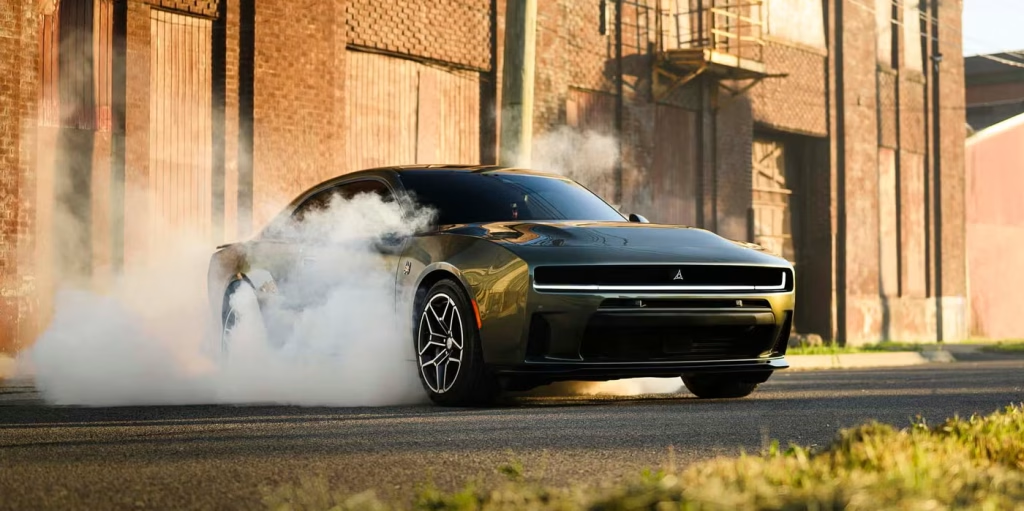
The Charger is also a large performance machine rather than a tiny two-seat sports car. Its body stretches approximately 206.6 inches in length and measures 79.8 inches wide.
Delivering 177-mph capability in such a sizable package for $56,990 makes the SIXPACK Scat Pack one of the strongest speed-for-price propositions in the current U.S. performance market.
- Engine: 3.0-liter twin-turbocharged inline-six
- Torque: 531 lb-ft
- Horsepower: 550 hp
- Length/Width: Approximately 206.6 inches / 79.8 inches
8. 2026 Chevrolet Corvette Z06
Top Speed: 195 mph
Starting Price: Approximately $113,000
The Corvette Z06 closes this list by showing how far Chevrolet can stretch the performance-per-dollar equation before entering seven-figure hypercar territory. Chevrolet states that the 2026 Z06 can reach a top track speed of 195 mph.
With a starting price around $113,000 before destination charges and options, the Z06 brings near-200-mph performance to a price class far below many European exotics capable of similar speed.
Using an approximate $113,000 starting figure, the simple calculation comes to about $579 for every mph of top speed. That ratio is higher than the Stingray’s extraordinary result, but speed becomes progressively more expensive as a vehicle approaches 200 mph.
Aerodynamic drag rises dramatically, requiring greater power, cooling capacity, tire capability, and chassis engineering. Chevrolet’s solution is the LT6. This 5.5-liter naturally aspirated V8 produces 670 horsepower at 8,400 rpm and 460 lb-ft of torque at 6,300 rpm.
Its flat-plane crankshaft architecture allows an 8,600-rpm redline, making the engine fundamentally different from the pushrod V8 used in the standard Stingray. An eight-speed dual-clutch transmission sends power exclusively to the rear wheels.
The 195-mph figure is particularly striking because the Z06 is engineered around circuit performance rather than maximum-speed bragging rights alone. Chevrolet lists a 0-to-60-mph time as quick as 2.6 seconds.
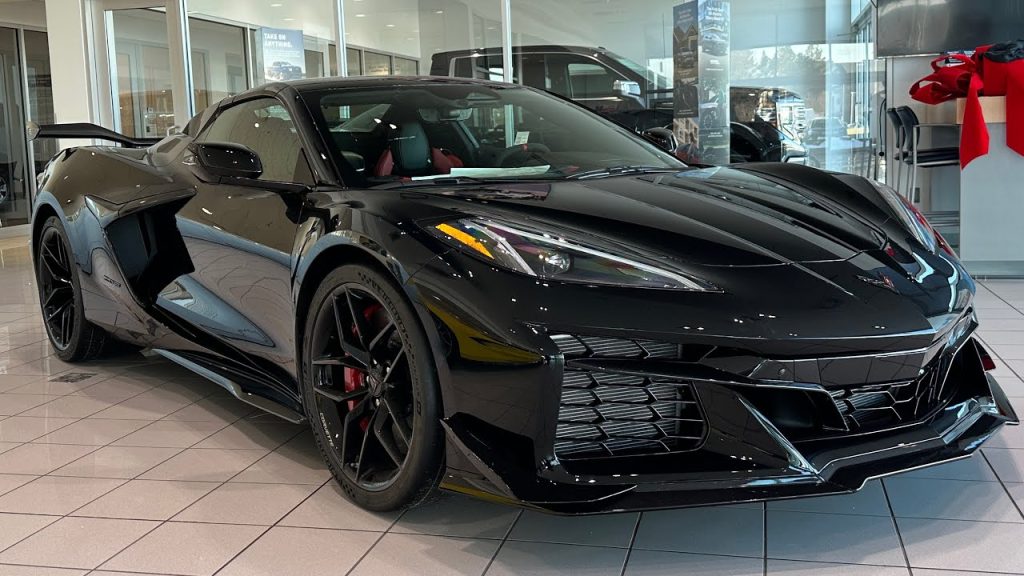
The available Z07 Performance Package adds equipment aimed at track use, although aerodynamic configuration can influence maximum velocity. Chevrolet’s own published material confirms the Z06’s 195-mph top-speed capability.
At its price, the Z06 gives American buyers a 670-horsepower, high-revving, mid-engine car capable of 195 mph. That combination explains why its performance is so frequently compared with far more expensive supercars.
- Engine: 5.5-liter naturally aspirated LT6 V8
- Torque: 460 lb-ft
- Horsepower: 670 hp
- Length/Width: 184.6 inches / 79.7 inches
Also Read: 8 Motorcycles Known to Pass 100,000 Miles
