
Luxury-car technology rarely stays exclusive forever. Features that first appeared in expensive flagship sedans eventually move into family cars, compact sedans, and even entry-level models. The important part of that transition is not simply offering an expensive option.
A feature becomes mainstream when high-volume, reasonably priced cars put it within reach of ordinary American buyers, and competing manufacturers begin treating similar technology as expected equipment.
Push-button ignition is a perfect example. Passive smart-key technology appeared on premium vehicles years before it became familiar in affordable sedans.
Adaptive cruise control followed a similar path, moving from expensive electronic driver-assistance systems to standard equipment on compact cars. Heated seats, touchscreen infotainment, backup cameras, blind-spot monitoring, and other conveniences have experienced comparable changes.
The nine cars on this list were not necessarily the first vehicles in history to use each technology. Instead, they played important roles in taking features associated with luxury vehicles and placing them into high-volume or value-focused segments of the U.S. market.
Manufacturer specifications, original press material, and documented model histories help show when these technologies reached affordable buyers. Together, these cars demonstrate how yesterday’s premium novelty can become tomorrow’s ordinary expectation.
Also Read: 10 Things to Check During a Used Car Test Drive
1. 2007 Nissan Altima: Push-Button Ignition
Starting a car without inserting a metal key once felt like flagship-sedan technology. Mercedes-Benz introduced Keyless-Go on the S-Class in the late 1990s, establishing passive key recognition and key-free starting as a premium convenience.
Less than a decade later, the redesigned 2007 Nissan Altima helped put a similar experience in front of mainstream midsize-sedan buyers.
Nissan’s original U.S. press information specifically listed the Intelligent Key with Push Start Ignition among the 2007 Altima’s convenience features. The Intelligent Key allowed the vehicle to electronically recognize the key, while push-button ignition replaced the traditional process of inserting and turning a key.
The importance of the Altima was its market position. This was not a limited-production luxury sedan. Nissan sold the Altima against cars such as the Toyota Camry and Honda Accord, making advanced convenience technology part of the competitive mainstream midsize market.
The 2007 Altima’s U.S. starting price was below $18,000 for the base 2.5 model, although equipment availability varied by trim and package.
Once buyers experienced key-free entry and button starting in cars from ordinary brands, the feature became increasingly difficult to present as a luxury-only novelty. Automakers expanded smart-key systems through compact cars, crossovers, and family sedans during the following years.
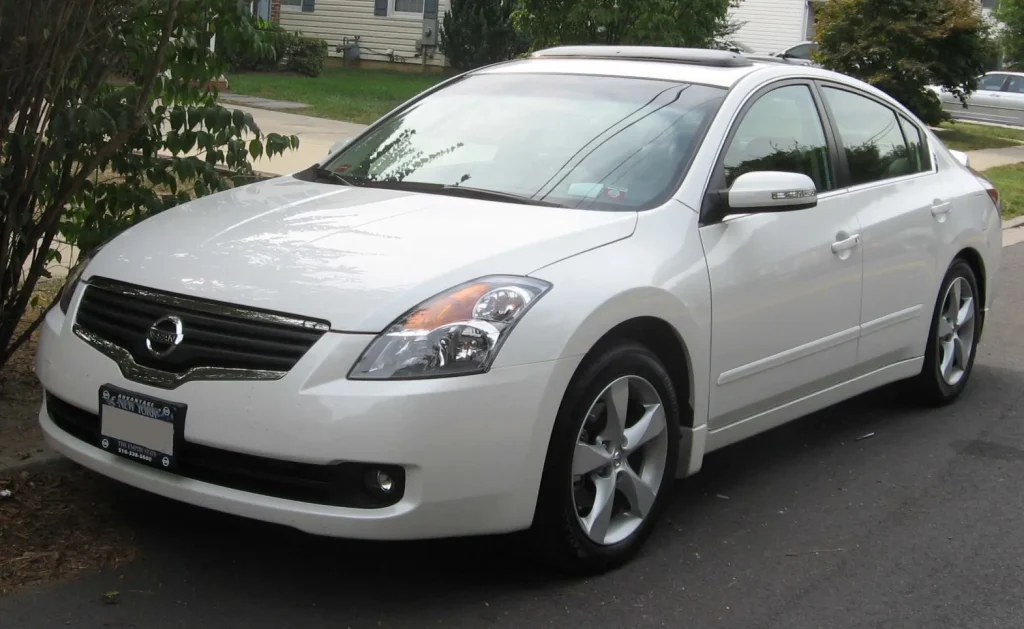
Today, pressing a dashboard button to start an affordable car hardly attracts attention. The 2007 Altima represents an important stage in that change because Nissan actively promoted Intelligent Key and Push Start Ignition as convenience features on a mass-market sedan.
It did not invent the smart key. Its contribution was helping remove the technology from the luxury-car bubble and placing it in a vehicle purchased by hundreds of thousands of American drivers.
- Engine: 2.5-liter DOHC four-cylinder
- Torque: 180 lb-ft
- Horsepower: 175 hp
- Length/Width: 189.8 inches / 70.7 inches
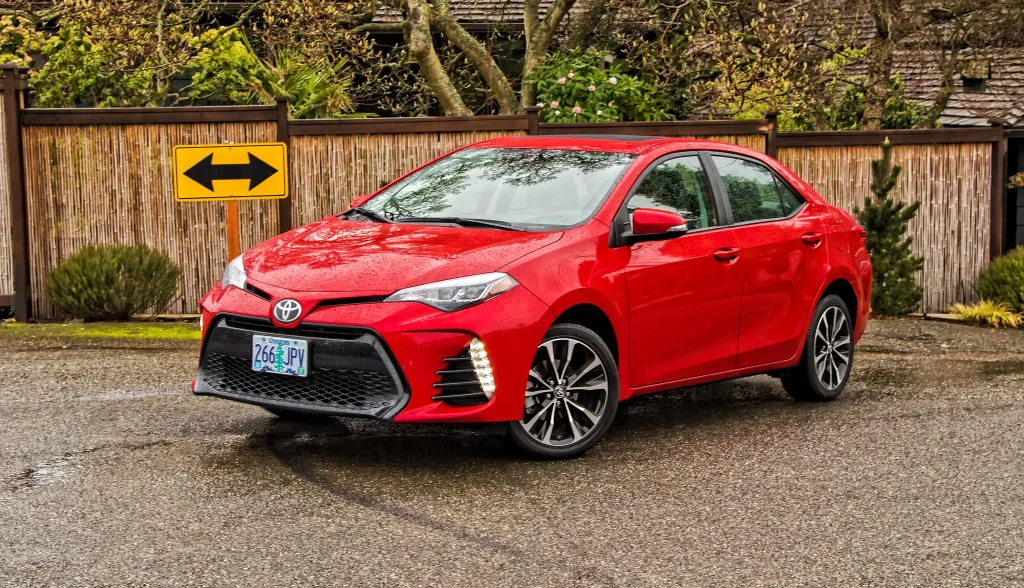
2. 2017 Toyota Corolla: Adaptive Cruise Control
Adaptive cruise control spent years associated with expensive technology packages and premium sedans. Early radar-based systems required costly sensors and computing hardware, making them easier to justify on luxury vehicles.
Toyota changed the conversation when it made advanced driver-assistance technology standard on one of America’s most familiar compact cars.
For 2017, every Toyota Corolla came standard with Toyota Safety Sense-P in the U.S. market. Toyota’s original model information confirms that the package bundles the Pre-Collision System with Pedestrian Detection, Lane Departure Alert with Steering Assist, Automatic High Beams, and Dynamic Radar Cruise Control.
The last feature was particularly significant. Dynamic Radar Cruise Control used a forward-facing sensor system to help maintain a preset distance from a vehicle ahead. Rather than forcing the driver to repeatedly cancel conventional cruise control as traffic slowed, the system could adjust vehicle speed based on traffic conditions.
Toyota was putting this technology into a Corolla with a starting manufacturer’s suggested retail price of $18,500. That price-to-technology relationship mattered. Adaptive cruise control was no longer restricted to buyers selecting an expensive flagship or adding a high-priced premium package.
Scale made the Corolla influential. Toyota later celebrated 50 million global Corolla sales, and the company itself highlighted the 2017 model’s standard Toyota Safety Sense-P package when reviewing the nameplate’s history.
Installing advanced safety technology across Corolla grades exposed a huge mainstream audience to features previously associated with more expensive vehicles.
Other manufacturers were also developing affordable driver-assistance systems, so the Corolla cannot receive sole credit for the industry’s transition. Its role was to make the technology difficult for competitors to ignore.
A compact economy sedan arriving with radar cruise control as standard equipment helped reset buyer expectations. Today, adaptive cruise control is available across numerous non-luxury cars and crossovers. The 2017 Corolla was one of the vehicles that accelerated that move.
- Engine: 1.8-liter DOHC four-cylinder
- Torque: 128 lb-ft
- Horsepower: 132 hp
- Length/Width: 183.1 inches / 69.9 inches
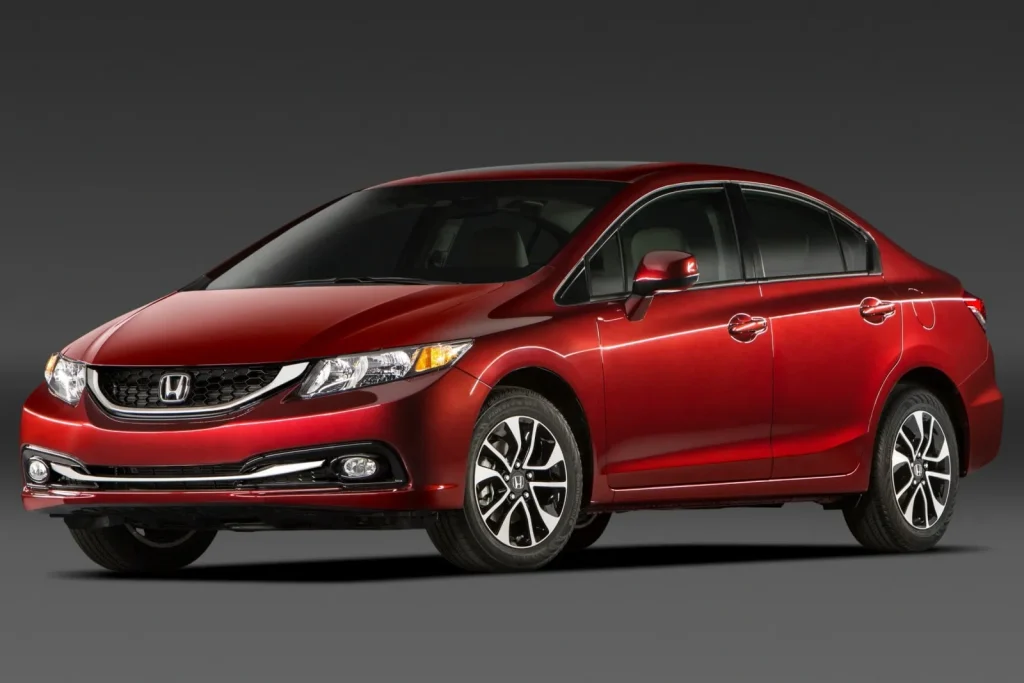
3. 2013 Honda Civic: Standard Rearview Camera
Backup cameras once looked like equipment meant for expensive cars with costly navigation screens. The 2013 Honda Civic helped challenge that perception by putting a rearview camera on every Civic in the U.S. lineup, years before federal rules effectively made the technology standard across new passenger vehicles.
Honda’s official 2013 Civic launch material identified the rearview camera as a standard visibility feature. Even the Civic LX displayed its camera image through the 5-inch i-MID screen.
That was notable in a compact car priced from $18,165 before destination charges. Buyers did not have to move into a luxury brand or order an expensive navigation system simply to see behind the vehicle electronically.
Scale strengthened the Civic’s influence. Honda later reported that more than 94 percent of Honda and Acura vehicles sold in the United States during 2013 were equipped with standard rearview cameras. The Civic was a key part of that strategy, bringing the feature into one of America’s most recognizable compact-car nameplates.
Timing was equally important. Federal Motor Vehicle Safety Standard No. 111 was later amended to require rear visibility technology on new light vehicles, with the requirement applying to vehicles manufactured on or after May 1, 2018. Honda had already normalized the experience for Civic buyers several years earlier.
The Civic did not invent the backup camera. What it did was remove the feature from the premium-options mindset. When a mainstream compact sedan could include a rearview camera across the lineup, consumers had a reason to expect the same convenience elsewhere.
A feature once associated with luxury navigation displays was rapidly becoming an ordinary part of parking and reversing.
- Engine: 1.8-liter four-cylinder
- Torque: 128 lb-ft
- Horsepower: 140 hp
- Length/Width: 179.4 inches / 69.0 inches
4. 2011 Hyundai Sonata: Heated Seats for Value-Minded Buyers
Heated seats have existed for decades, but for years, they were closely associated with leather interiors and expensive European or American luxury cars. The Hyundai Sonata helped make cabin comfort equipment far more accessible by aggressively packaging premium-style features into a competitively priced family sedan.
The redesigned 2011 Sonata is an especially strong example of Hyundai’s value strategy. U.S. buyers could move into the Sonata Limited and receive heated front and rear seats as standard equipment.
Rear heated seats were particularly unusual outside premium cars at the time. Hyundai’s own 2011 specifications listed heated front and rear seats on the Limited, alongside leather seating surfaces and dual automatic climate control.
This was a midsize Hyundai, not a six-figure flagship. The 2011 Sonata Limited carried a starting manufacturer’s suggested retail price of $25,295 before destination. Hyundai was effectively giving family-sedan buyers comfort equipment commonly used by luxury manufacturers to distinguish higher-end vehicles.
The Sonata’s contribution came from packaging several desirable features together at an attainable price. Buyers experiencing heated seats in an affordable sedan were less likely to view the technology as an indulgence reserved for luxury cars.
Competitors increasingly expanded heated-seat availability across mainstream trims and compact vehicles.
Rear-seat heating makes the Sonata example more compelling. Front heated seats were already moving downmarket, but extending the feature to rear passengers gave the Sonata a distinctly premium equipment story for its segment and price.
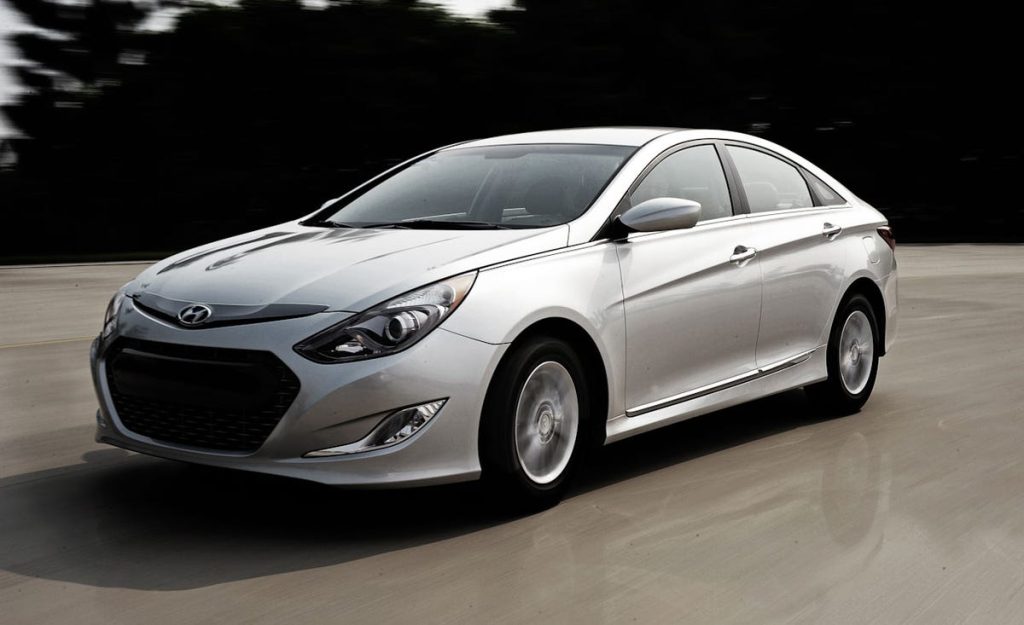
Today’s market shows how dramatically expectations have changed. Heated seats are offered on compact cars, small crossovers, pickup trucks, and mainstream family vehicles. The Sonata was part of the value-driven movement that accelerated this transition.
Hyundai did not invent heated seating. It helped demonstrate that premium cabin comfort could be used to sell an affordable mainstream car.
- Engine: 2.4-liter four-cylinder
- Torque: 184 lb-ft
- Horsepower: 198 hp
- Length/Width: 189.8 inches / 72.2 inches
5. 2016 Subaru Legacy: Automatic Emergency Braking
Automatic emergency braking now appears so frequently on new cars that it is easy to forget its premium beginnings. Early collision-mitigation systems were showcased on expensive Mercedes-Benz, Lexus, and Volvo models.
The 2016 Subaru Legacy helped put comparable active-safety capability within reach of family-sedan buyers through the available EyeSight Driver Assist Technology suite.
Subaru’s U.S. specifications identified EyeSight as a camera-based system combining adaptive cruise control, automatic pre-collision braking, and lane departure and sway warning. Two cameras mounted near the rearview mirror monitored the road ahead.
If the system detected a potential collision, it could warn the driver and automatically apply braking to help reduce or avoid an impact.
Price and vehicle class made the Legacy important. The 2016 model started at $21,745 before destination, while EyeSight was available on higher configurations rather than being reserved for a luxury-brand flagship. Subaru was offering sophisticated active safety in a practical midsize sedan with standard all-wheel drive.
The technology also reached a meaningful scale. Subaru announced in 2018 that it had sold its one-millionth EyeSight-equipped vehicle globally. The company specifically credited EyeSight’s combination of adaptive cruise control, pre-collision braking, and lane-related warnings as central elements of the system.
The Legacy did not invent automatic braking, and several manufacturers were moving similar systems downmarket. Its contribution was showing that camera-based collision intervention could become a realistic family-car feature.
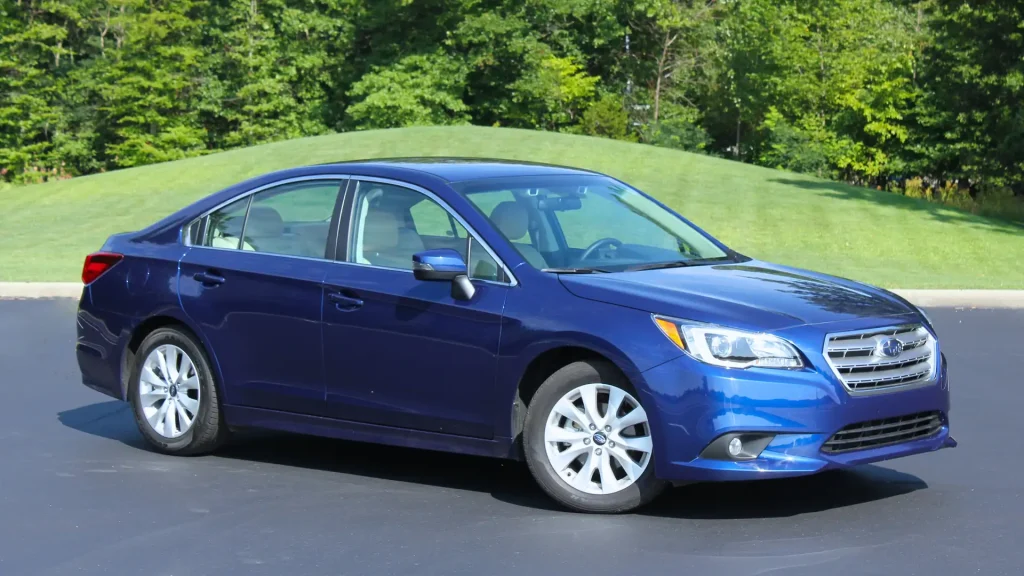
Today’s buyers increasingly expect their vehicles to react when a crash risk develops ahead. Cars such as the Legacy helped transform automatic braking from an exotic luxury demonstration into practical mainstream safety equipment.
- Engine: 2.5-liter horizontally opposed four-cylinder
- Torque: 174 lb-ft
- Horsepower: 175 hp
- Length/Width: 188.8 inches / 72.4 inches
6. 2011 Ford Fiesta: Voice-Controlled Connectivity
Luxury once meant having an integrated communication system built directly into the dashboard. Before smartphones became the center of the driving experience, sophisticated voice commands and hands-free phone controls were often associated with expensive cars carrying complicated proprietary electronics.
The 2011 Ford Fiesta helped bring connected-car technology to America’s subcompact segment.
Ford made SYNC a major part of the Fiesta’s U.S. identity. Developed with Microsoft, the system offered hands-free, voice-activated control of compatible mobile phones and digital music players. Drivers could connect devices through Bluetooth or USB and use spoken commands instead of relying entirely on dashboard buttons.
The choice of vehicle was significant. Ford introduced the 2011 Fiesta to U.S. buyers with a base price below $14,000. This was an economy car aimed at younger and value-conscious customers, yet Ford treated digital connectivity as an important selling point rather than technology suitable only for a Lincoln or expensive premium sedan.
SYNC’s wider impact came from scale. Ford expanded the system across its lineup and publicly reported millions of SYNC-equipped vehicles within the first few years of availability. The Fiesta placed that same connected-car philosophy into one of Ford’s least expensive passenger cars.
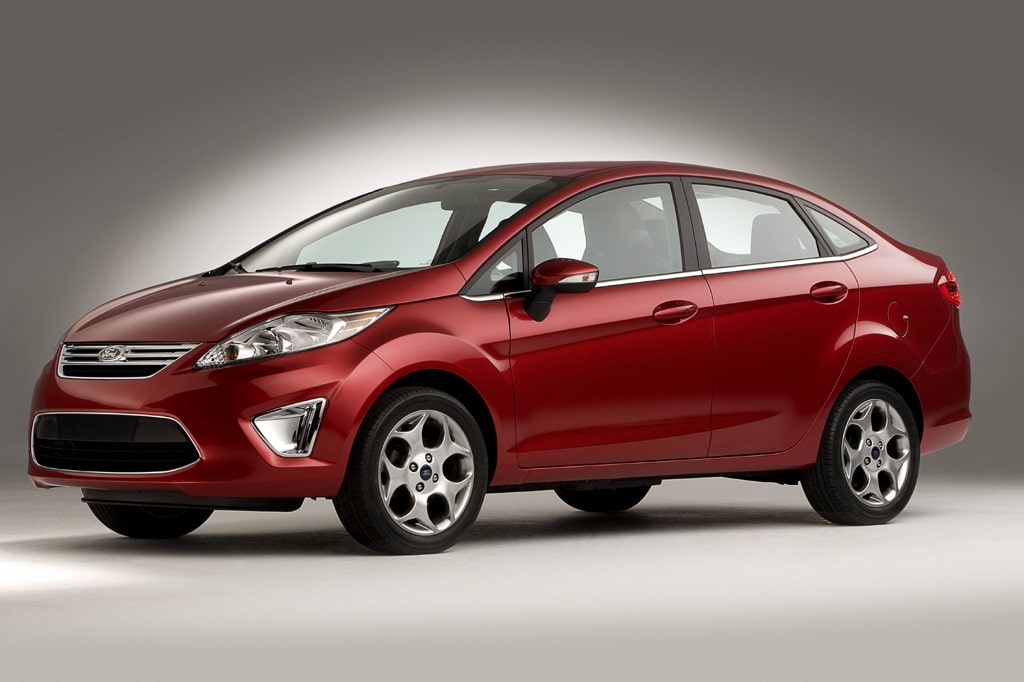
Its interface would look basic beside a modern wireless Apple CarPlay or Android Auto system. That comparison actually shows how rapidly expectations changed. Voice dialing, Bluetooth phone pairing, USB media access, and spoken music commands once sounded unusually advanced in a small, affordable car.
The Fiesta was part of the generation that taught buyers to expect their personal electronics to communicate directly with the vehicle. Automakers could no longer assume economy-car customers were satisfied with a basic radio and auxiliary input.
By making SYNC a prominent feature of an inexpensive subcompact, Ford helped move integrated voice-controlled connectivity away from the premium-car world and toward the connected dashboards drivers now consider ordinary.
- Engine: 1.6-liter four-cylinder
- Torque: 112 lb-ft
- Horsepower: 120 hp
- Length/Width: 160.1 inches / 67.8 inches
7. 2014 Kia Soul: Ventilated Seats
Ventilated seats once belonged to a very different class of vehicle. Buyers generally encountered cooled or actively ventilated seating in expensive luxury sedans, where elaborate climate-controlled chairs were used to distinguish premium cabins from ordinary cars.
The 2014 Kia Soul helped bring that experience into an affordable, unconventional compact vehicle.
Kia’s official U.S. feature specifications for the 2014 Soul confirm that ventilated front seats were available on Plus and Exclaim configurations. Heated front seats and heated rear seat cushions were also available.
The redesigned Soul could even be equipped with a heated steering wheel, leather trim, a 10-way power driver’s seat, and a panoramic sunroof. Kia was placing an unusual collection of upscale comfort features into one of its value-oriented models.
Price made the contrast hard to miss. The 2014 Soul started below $15,000 before destination, although ventilated seats required a higher trim and option package. The importance was not that every base soul received cooled seating.
It was that a buyer shopping a mainstream compact Kia could order technology that had previously carried strong luxury-car associations.
The Soul also reached a younger and more value-conscious audience than a traditional premium sedan. That helped change the way buyers viewed ventilated seats. Once drivers experienced airflow through the seat cushion and backrest during hot summer weather, the feature became a practical comfort item rather than an exotic luxury gimmick.
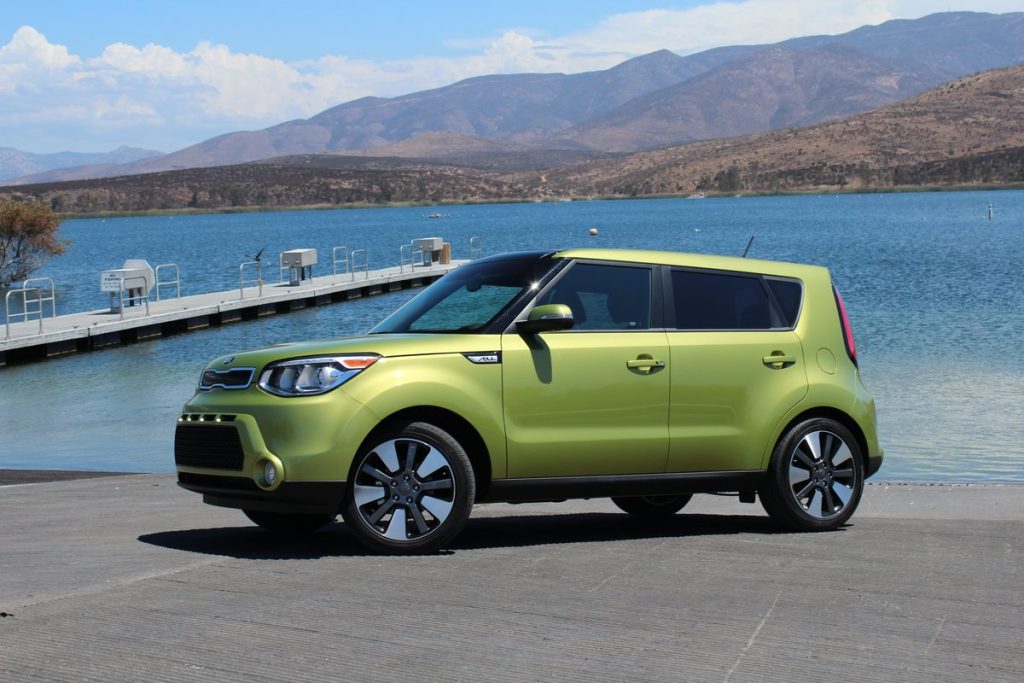
Kia continued expanding premium equipment across affordable vehicles, and competing mainstream manufacturers followed similar strategies. Ventilated seats can now be found in non-luxury sedans, crossovers, SUVs, and pickup trucks.
The 2014 Soul did not invent seat ventilation. Its contribution was putting the feature in a surprisingly inexpensive type of vehicle and proving that luxury-level climate comfort could help sell a compact mainstream car.
- Engine: 1.6-liter GDI four-cylinder
- Torque: 118 lb-ft
- Horsepower: 130 hp
- Length/Width: 163.0 inches / 70.9 inches
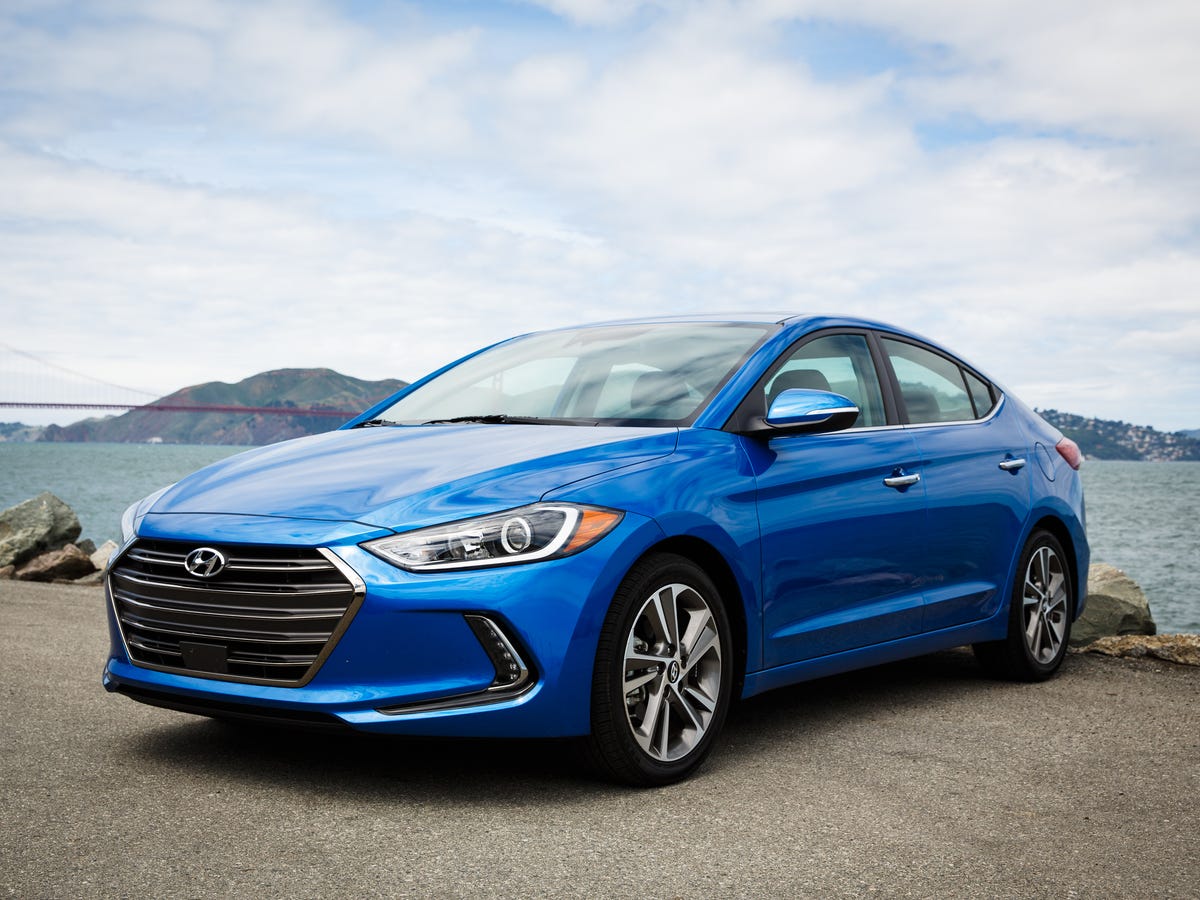
8. 2017 Hyundai Elantra: Hands-Free Smart Trunk
Power-operated cargo access had long been used as a premium convenience, particularly on luxury sedans and SUVs. Hyundai approached the idea differently with the redesigned 2017 Elantra. Instead of requiring a costly powered trunk lid, the company created a hands-free smart trunk system suited to an affordable compact sedan.
Hyundai described the feature as segment-exclusive when introducing the 2017 Elantra to the U.S. market. With the proximity key in the driver’s possession, the owner could stand near the rear of the locked car for several seconds.
The vehicle recognized the key and automatically released the trunk. There was no need to wave a foot under the bumper or press a button while carrying bags.
The Elantra’s price gives the technology its significance. The 2017 lineup started at $17,150 before destination. Smart Trunk availability depended on equipment and trim, but Hyundai had placed hands-free cargo access into the compact-car conversation rather than reserving the idea for its Genesis luxury models.
Hyundai also emphasized practicality. A driver approaching the vehicle with groceries, luggage, or other items could gain access to the cargo area without putting everything on the ground to search for the key. The system used proximity detection to deliver a luxury-style convenience with relatively simple operation.
The idea spread through Hyundai’s wider U.S. lineup, appearing on models such as the Sonata and later mainstream vehicles. Hands-free liftgates and smart cargo-opening systems also became increasingly common across the industry.
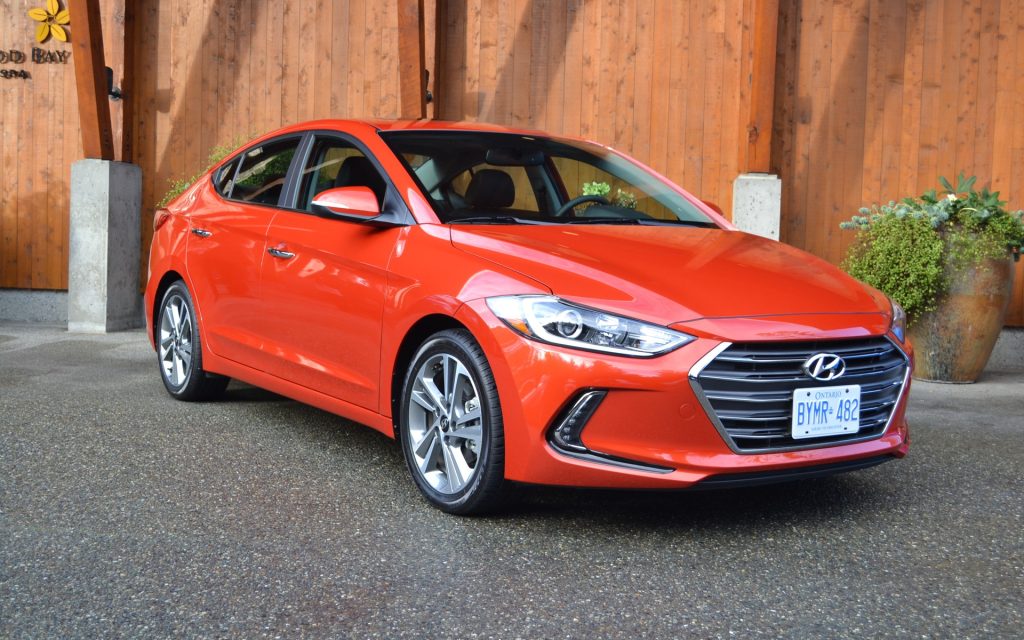
What makes the Elantra influential is the segment in which Hyundai offered the feature. Compact sedans traditionally competed on fuel economy, price, and warranty coverage. The 2017 model showed that an affordable car could also use convenience technology as a major selling point.
Today’s hands-free trunks and liftgates are no longer automatically viewed as luxury equipment. Value-focused cars such as the Elantra helped accelerate that change.
- Engine: 2.0-liter Atkinson-cycle four-cylinder
- Torque: 132 lb-ft
- Horsepower: 147 hp
- Length/Width: 179.9 inches / 70.9 inches
9. 2015 Mazda3: Blind-Spot Monitoring
Blind-spot monitoring was once the kind of electronic safety aid highlighted in brochures for premium sedans. Volvo introduced its BLIS technology in the 2000s, while other luxury manufacturers developed radar-based systems to watch areas beside a vehicle that mirrors might not clearly reveal. The 2015 Mazda3 showed how quickly that idea could reach an affordable compact car.
Mazda’s U.S. specifications confirm that Blind Spot Monitoring with Rear Cross Traffic Alert was offered on the 2015 Mazda 3. More importantly, the iTouring already included both systems. Mazda’s own 2015 model overview specifically identified Blind Spot Monitoring and Rear Cross Traffic Alert among the i-Touring’s equipment.
The price difference between this Mazda and traditional luxury cars was substantial. Mazda listed the entry-level 2015 Mazda3 i SV sedan at $16,945 before destination. Higher trims added the monitoring technology while keeping the car firmly in the mainstream compact segment. Mazda even promoted the 2015 Mazda3 as a technology-focused car priced below $20,000.
Blind Spot Monitoring watched areas beside the vehicle and warned the driver when another vehicle was detected in a potentially difficult-to-see position. Rear Cross Traffic Alert extended that electronic assistance to backing situations, helping warn of approaching traffic.
The Mazda3 did not invent either technology. Its importance came from packaging these electronic driver aids into a small, attainable car when such systems still carried strong premium associations.
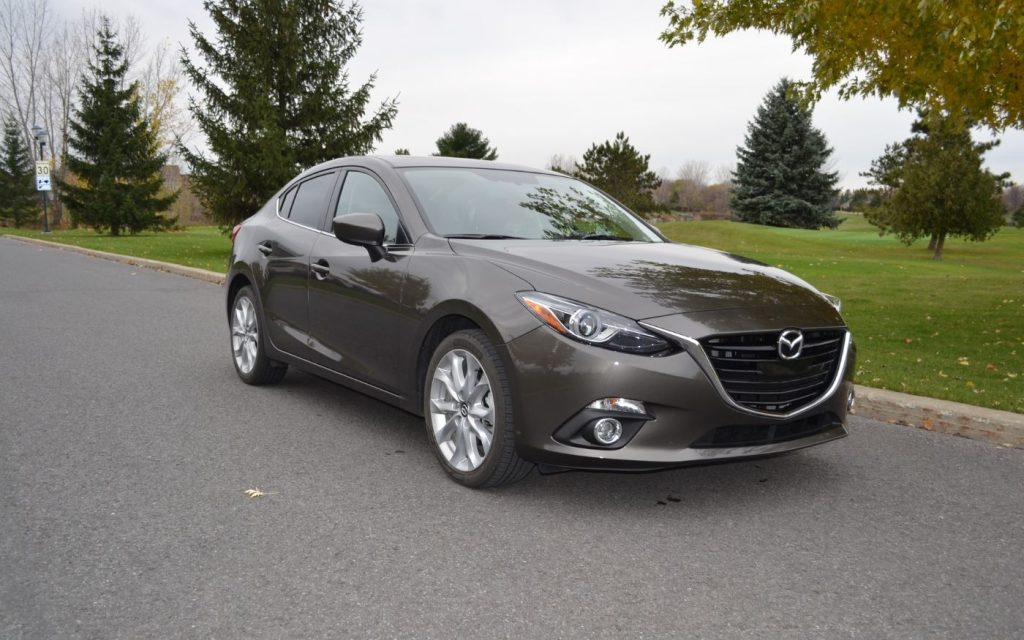
Today, blind-spot warnings are common across mainstream sedans, crossovers, and pickup trucks. Buyers frequently look for the small warning symbol in the side mirror without thinking of it as luxury technology.
The Mazda3 helped drive that change by proving sophisticated monitoring systems could be useful selling points in the compact-car class, not just expensive extras for luxury buyers.
- Engine: 2.0-liter SKYACTIV-G four-cylinder
- Torque: 150 lb-ft
- Horsepower: 155 hp
- Length/Width: 180.3 inches / 70.7 inches
Also Read: 10 People With The Biggest Car Collections In The World
