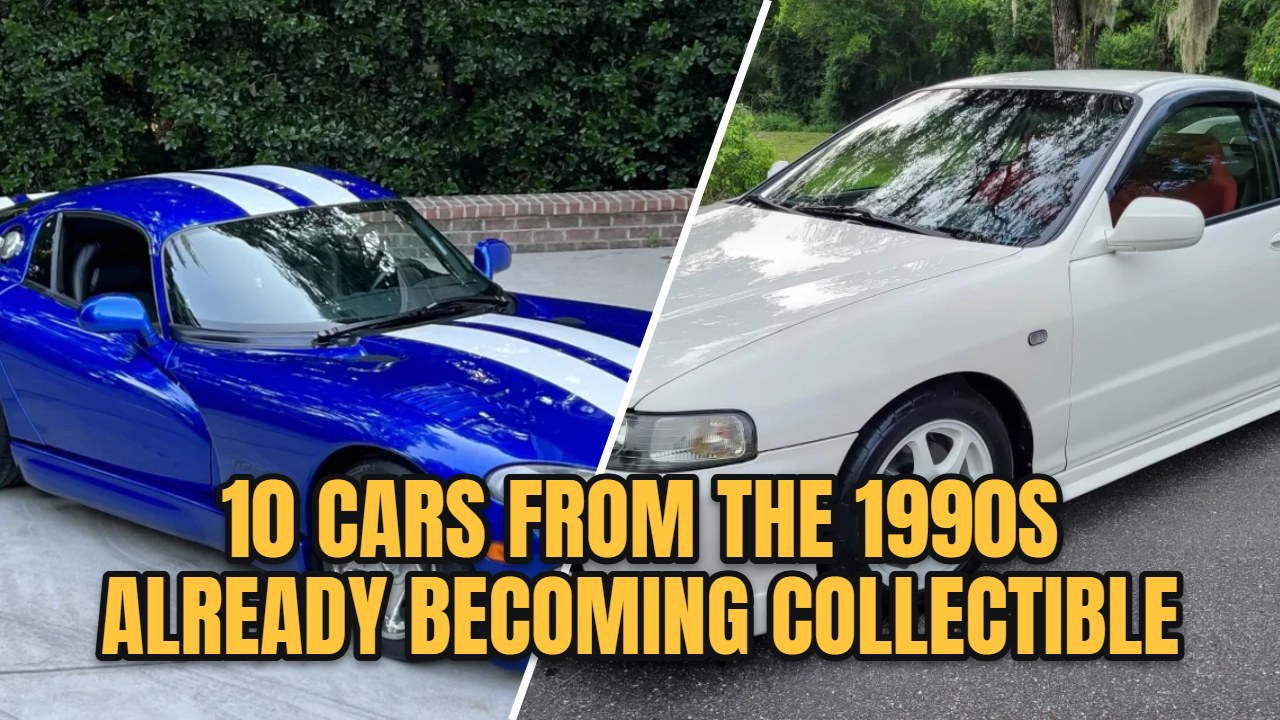
Cars from the 1990s are no longer simply used vehicles waiting at the bottom of the depreciation curve. A growing number have entered the collector market, where originality, mileage, transmission choice, color, documentation, and production rarity can create enormous differences in value.
Auction results and Hagerty Price Guide data now provide measurable evidence that certain 1990s performance cars have developed serious collector demand.
The change is visible across the U.S. market. Hagerty’s collector-car indexes track vehicles such as the 1991 to 2005 Acura NSX and 1993 to 2002 Mazda RX-7 as established collectible models.
Hagerty has also highlighted increasing interest from younger enthusiasts, with its research finding that nearly 60 percent of Gen Z respondents would like to own a collector car.
This list focuses on 1990s cars with documented valuation strength, notable auction activity, or clear collector-market recognition. It is not based only on nostalgia or internet popularity. Each selection has measurable evidence showing that buyers already treat clean examples differently from ordinary aging vehicles.
From Japanese performance icons to American sports cars and European homologation-era machinery, these ten vehicles show how quickly the definition of a classic car is changing.
Also Read: 10 SUVs That Are Easiest to Get In and Out Of
1. 1993 Toyota Supra Turbo
The fourth-generation Toyota Supra Turbo has moved well beyond the “future collectible” stage. Current valuation and auction data show that the A80 Supra is already an established collector car, particularly when a U.S.-market Turbo retains its original engine, factory bodywork, and six-speed manual transmission.
Hagerty’s valuation data for the 1993 Supra Mk IV Turbo identifies the car’s 3.0-liter twin-turbocharged six-cylinder at 320 horsepower. Its current valuation information places a good-condition example around $69,650, while a 1993 Turbo recorded an $85,575 sale in June 2026.
Hagerty’s separate marketplace data describes one 1993 Turbo Premier Edition hardtop as one of only 233 twin-turbo, six-speed hardtops produced for that year.
Those numbers help explain why collectors increasingly separate stock Supras from heavily modified cars. The 2JZ-GTE engine became famous for supporting major aftermarket power increases, and many cars were altered during the years when values were considerably lower. Finding an example that still reflects its original factory specification can therefore be difficult.
The market’s rise is measurable. Hagerty’s current data shows a 22.2 percent increase for the good-condition value of a 1993 Mk IV Supra, while its collector-market analysis specifically identifies the Mk IV Supra as one of the most desirable cars of the 1990s.
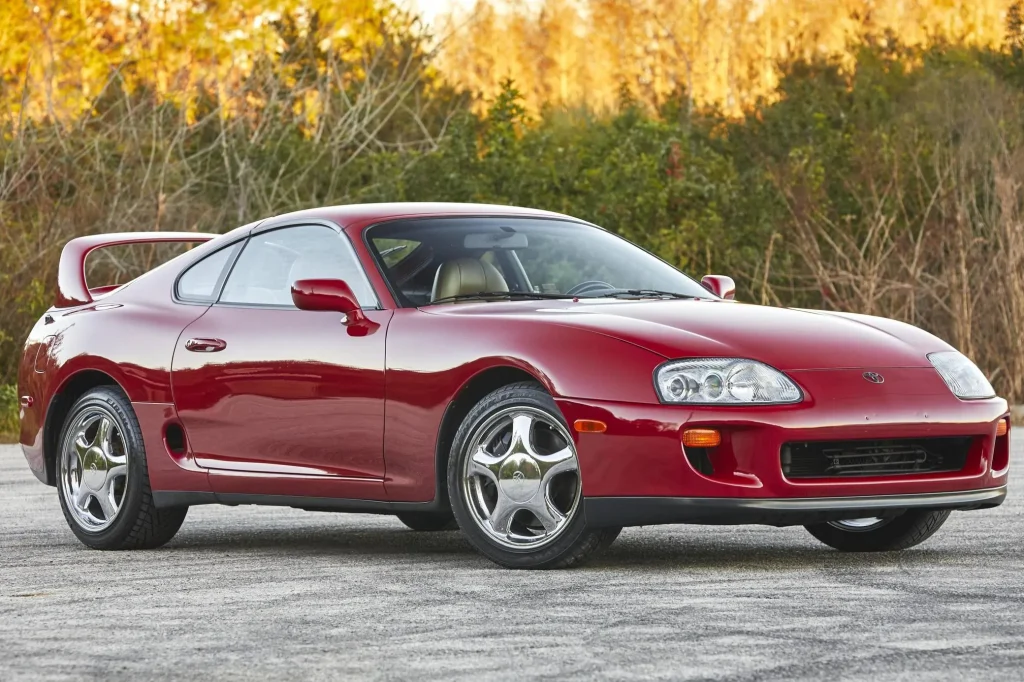
Pop-culture recognition certainly widened the Supra’s audience, but collector pricing is now driven by more than movie nostalgia. Rarity, the twin-turbo powertrain, manual-transmission demand, and the shrinking supply of unmodified U.S. examples have created a mature market.
The A80 Supra is no longer waiting to become collectible. Buyers are already paying collector-car money for the right cars.
- Engine: 3.0-liter sequential twin-turbocharged inline-six
- Torque: 315 lb-ft
- Horsepower: 320 hp
- Length/Width: 177.8 inches / 71.3 inches
2. 1991 Acura NSX
Consider what the Acura NSX market looks like in 2026: Hagerty’s recent sales records include 1991 examples at $90,825, $108,150, $106,050, and even $167,500. These are not theoretical asking prices. They are documented public-sale results appearing in Hagerty’s valuation database.
That auction activity places the original NSX firmly inside collector territory. Hagerty’s January 2026 market index valued the 1991 to 2005 Acura NSX at $157,500 in condition #2, or excellent condition, representing a 9 percent increase in the index’s measured period. By April, the indexed figure had reached $159,600.
The NSX earned this attention through engineering that was unusual in 1991. Acura’s original U.S. specifications confirm a 3.0-liter DOHC 24-valve V6 producing 270 horsepower and 210 lb-ft of torque.
The car used a mid-engine layout and an aluminum-intensive structure, while the five-speed manual version delivered the high-revving character associated with Honda’s VTEC technology.
Its collector appeal is also tied to usability. The NSX challenged the idea that an exotic-looking mid-engine car had to be intimidating or temperamental during normal driving. That reputation gave the Acura a distinct historical position, and collectors now recognize its influence more clearly than the used-car market did a decade or two ago.
Condition creates major price separation. Service history, accident records, transmission details, mileage, modifications, and original paint can move one NSX far away from another in value. A low-mileage, manual-transmission car with strong documentation belongs to a different market from a modified or damaged example.
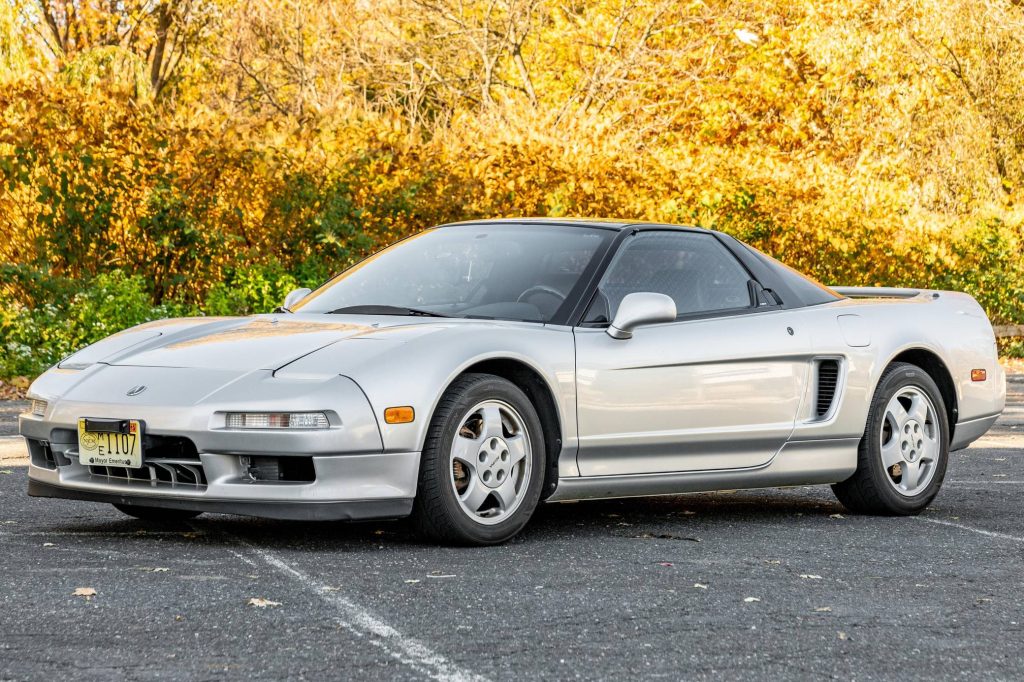
The sales evidence leaves little room for debate. The first-generation NSX has become a recognized modern classic, and rising Hagerty index values show collectors continue to place serious money behind that status.
- Engine: 3.0-liter naturally aspirated V6
- Torque: 210 lb-ft
- Horsepower: 270 hp
- Length/Width: 173.4 inches / 71.3 inches
3. 1993 Mazda RX-7
Few value charts illustrate the transformation of a 1990s Japanese sports car as dramatically as the third-generation Mazda RX-7.
Hagerty now calls the 1993 to 1995 FD RX-7 a “fully matured modern collector car,” and its valuation research found that the model’s condition #2 value had risen 363.4 percent over a decade. Current Hagerty valuation data places a good-condition 1993 example at about $42,500.
The reasons go deeper than styling. Mazda built the U.S.-market FD around a 1.3-liter twin-rotor Wankel engine with sequential twin turbochargers. Output was 255 horsepower and 217 lb-ft of torque for the American-market car.
Its lightweight construction was equally important. Period testing described the RX-7 as weighing roughly 2,800 pounds, giving the Mazda a very different personality from heavier performance coupes of the era.
Survival has become a major collector issue. RX-7s spent years as relatively affordable tuner cars, and many received engine swaps, larger turbochargers, altered suspension systems, or extensive body modifications.
Rotary-engine maintenance demands also removed neglected examples from the road. A stock car with service records now represents something far less common than production numbers alone might suggest.
Documented sales reinforce the point. Hagerty records a 1993 RX-7 R1 selling for $70,245 in December 2022, while its current valuation tools continue to track the model as a serious collector vehicle.
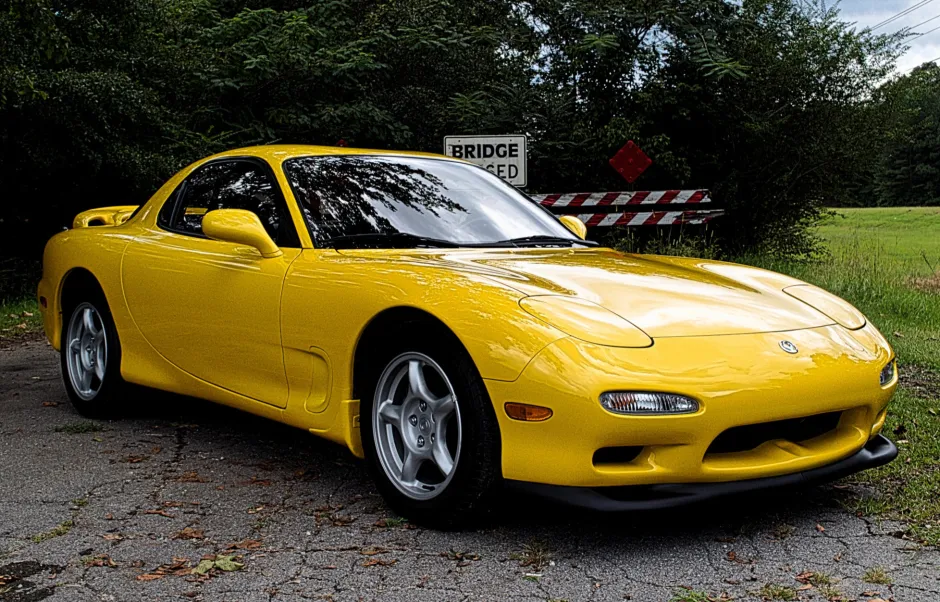
The FD’s value rise is not based on nostalgia alone. Sequential turbocharging, rotary power, low weight, and shrinking supplies of original cars have created genuine scarcity. Collectors have already recognized that combination, and the market numbers show the RX-7 has crossed firmly into modern-classic territory.
- Engine: 1.3-liter twin-rotor sequential twin-turbo rotary
- Torque: 217 lb-ft
- Horsepower: 255 hp
- Length/Width: 168.5 inches / 68.9 inches
4. 1995 BMW M3
The E36 BMW M3 spent years trapped in the shadow of the E30 that came before it. That situation is changing.
Hagerty’s BMW valuation research shows M3 models from 1986 through 2013 appreciated 21 percent in average value over five years, rising from $36,600 to $44,400. Recent Hagerty records also show a 1995 M3 selling for $38,850 in June 2026.
America received a different E36 M3 from Europe, and that distinction once hurt the car’s reputation among collectors. The 1995 U.S. model used the S50 3.0-liter naturally aspirated inline-six with 240 horsepower and 225 lb-ft of torque.
A five-speed manual sent power to the rear wheels. Period road testing praised the engine’s smooth delivery and the chassis balance rather than presenting the M3 as a straight-line horsepower monster.
Time has made clean examples harder to find. The E36 became an accessible track-day and modification platform after depreciation lowered purchase prices. Suspension changes, engine modifications, accident damage, and hard circuit use affected many cars.
Hagerty’s model guidance specifically warns buyers to inspect areas such as rear shock tower mounts, trailing-arm bushings, cooling-system leaks, and the oil-pump sprocket nut.
That history now favors preserved cars. A manual coupe with original body panels, a documented maintenance record, factory equipment, and a desirable color combination occupies a different collector category from a heavily modified E36.
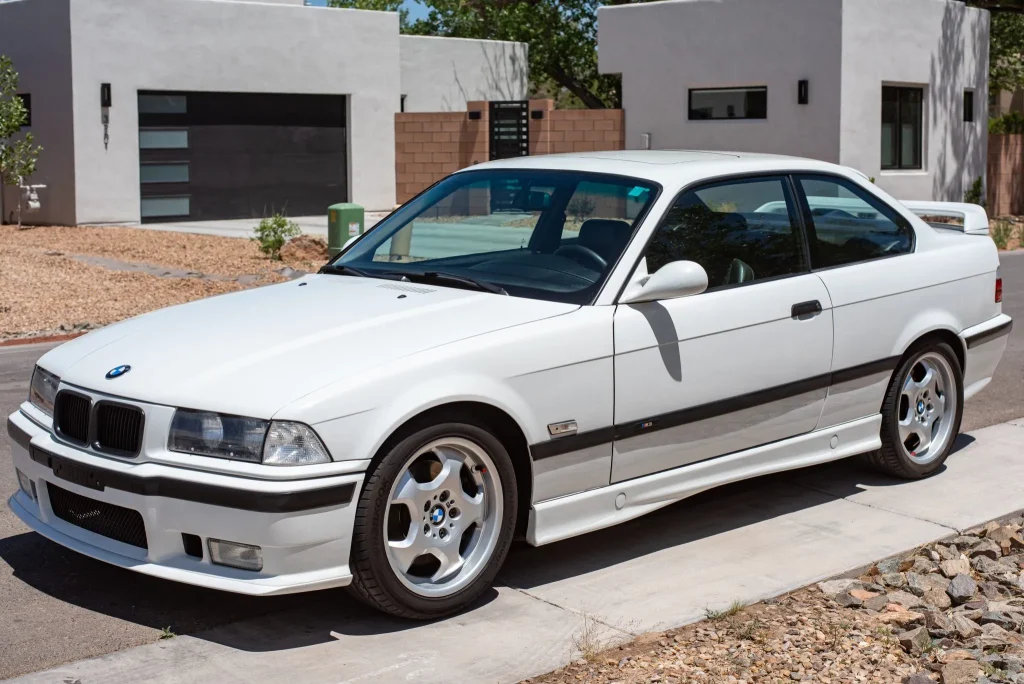
The 1995 M3’s appeal also comes from its analog character. Hydraulic steering, naturally aspirated six-cylinder power, rear-wheel drive, and a manual transmission create a combination that has largely disappeared from new BMW showrooms.
Collectors no longer see every E36 M3 as a cheap used performance car. Rising M3 valuations and current auction results show that carefully preserved examples are already being treated as modern classics.
- Engine: 3.0-liter naturally aspirated inline-six
- Torque: 225 lb-ft
- Horsepower: 240 hp
- Length/Width: 174.5 inches / 66.9 inches
5. 1995 Porsche 911 Carrera
The 993-generation Porsche 911 does not need speculative predictions to support its collector status. Hagerty describes the 1994 to 1998 generation as carrying enormous expectations because it was the final air-cooled 911.
Current valuation data gives a 1994 Carrera a typical good-condition value around $166,667, while documented 993 sales continue appearing regularly in the collector market.
Historical significance is central to the demand. Porsche’s 993 closed the air-cooled chapter of 911 production before the water-cooled 996 arrived. The generation also introduced a multilink rear suspension that helped make the rear-engined sports car more predictable.
Car and Driver’s 2026 retrospective testing highlighted the same combination, calling attention to the 993’s steering, brake feel, and chassis character.
A 1995 U.S.-market Carrera used a naturally aspirated 3.6-liter flat-six producing 270 horsepower and 243 lb-ft of torque. The six-speed manual is especially attractive to collectors seeking the traditional air-cooled driving experience.
Unlike the Supra or RX-7, the 993 did not need to recover from years of being ignored. Porsche enthusiasts recognized its importance relatively early. The modern collector market has instead placed increasingly sharp premiums on body style, transmission, originality, mileage, and specification.
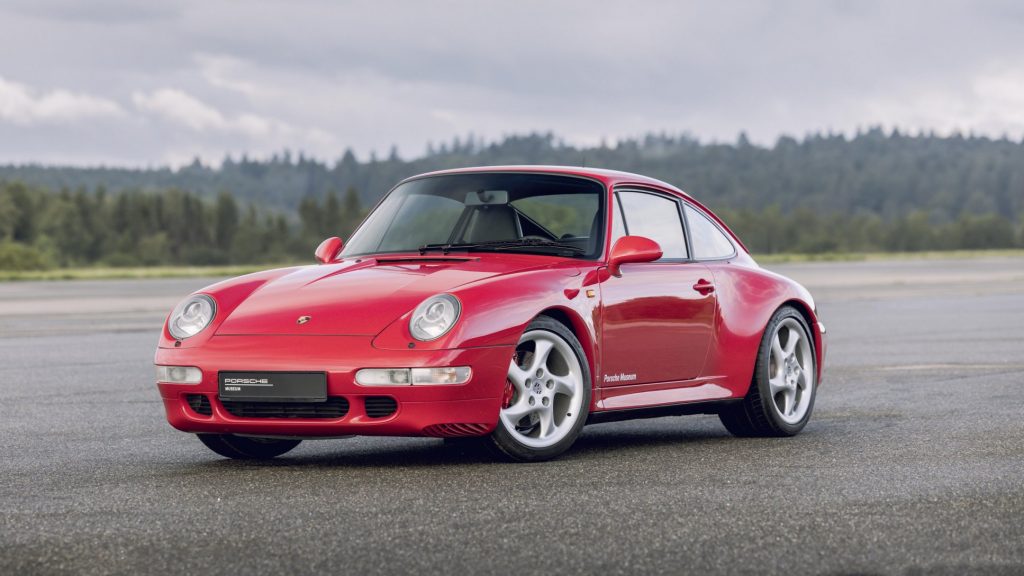
Hagerty Marketplace valuation information for one 1995 Carrera 4 showed guide values of $95,000 in excellent condition and $79,000 in good condition.
That price separation explains why a well-documented manual coupe can command serious attention. The 993 represents the end of a major Porsche engineering era, and there will never be another final air-cooled 911. Collectors have already assigned financial value to that distinction.
- Engine: 3.6-liter naturally aspirated flat-six
- Torque: 243 lb-ft
- Horsepower: 270 hp
- Length/Width: 167.7 inches / 68.3 inches
6. 1990 Nissan 300ZX Twin Turbo
For years, the Z32 Nissan 300ZX Twin Turbo was the complicated Japanese performance car that enthusiasts admired but could still buy for used-car money.
That market has changed. Hagerty’s research states that the 300ZX has been climbing in value and appeals to a broad range of collectors, while its current valuation database tracks Twin Turbo sales as dedicated collector-market transactions.
Recent results show where the car stands. Hagerty records a 1993 300ZX Turbo selling for $27,581 in June 2026 and a 1990 Turbo bringing $23,625 in May. A far more extreme example appeared earlier when a 528-mile 1996 Commemorative Edition sold for $90,100, proving that exceptional originality and mileage can place a Z32 in an entirely different price category.
The engineering remains a major part of its appeal. Nissan equipped the manual Twin Turbo with a 3.0-liter VG30DETT V6 producing 300 horsepower and 283 lb-ft of torque.
Twin turbochargers, dual intercoolers, multilink suspension, and Super HICAS rear-wheel steering made the Z32 one of Japan’s most technically ambitious performance cars of its period. Hagerty’s buyer guidance confirms the 300-horsepower rating for the twin-turbo manual model.
Collector demand now favors cars that escaped the modification culture surrounding Japanese performance vehicles. Original wheels, factory body panels, documented timing-belt service, a clean interior, and an unmodified engine compartment can significantly strengthen a car’s appeal.
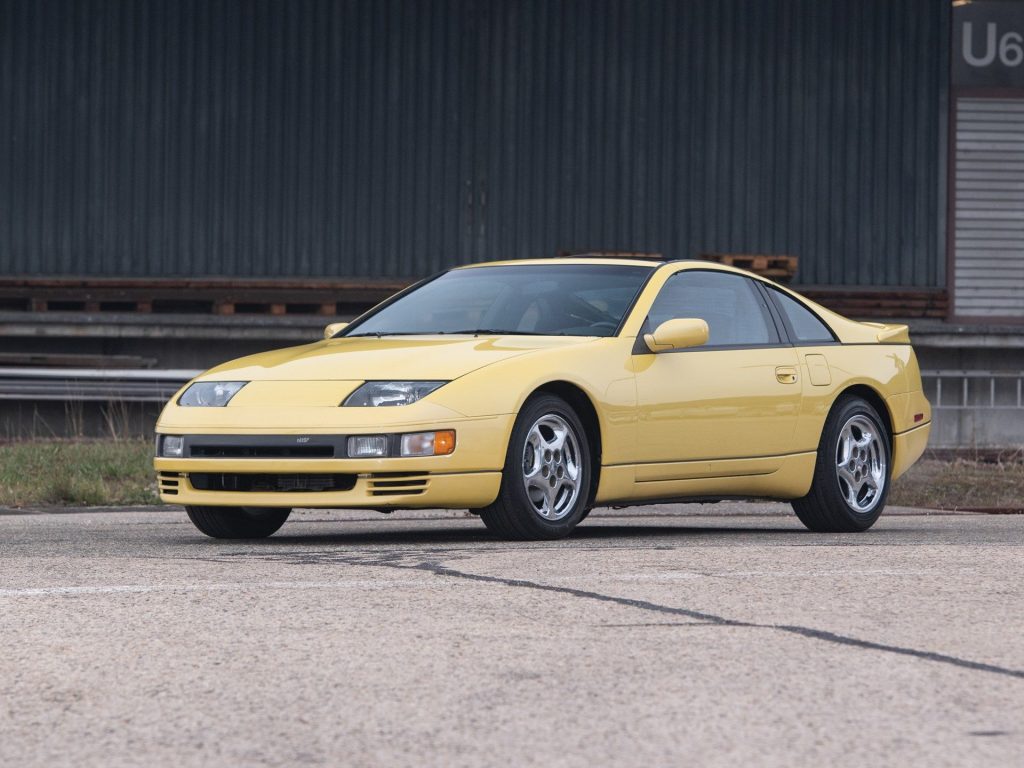
The 300ZX has not reached Supra Turbo prices, and that difference may actually help its collector momentum. Buyers can still acquire documented Twin Turbo examples below the six-figure territory occupied by elite Japanese icons. Rising values and high-profile sales show the Z32 is already leaving ordinary used-car status behind.
- Engine: 3.0-liter twin-turbocharged V6
- Torque: 283 lb-ft
- Horsepower: 300 hp
- Length/Width: 169.5 inches / 70.5 inches
7. 1996 Dodge Viper GTS
The Dodge Viper GTS entered the collector market through a combination that modern automakers would struggle to recreate: a huge naturally aspirated V10, six-speed manual transmission, rear-wheel drive, and almost no attempt to soften the driving experience.
Hagerty’s current market tracking and public sales records confirm that second-generation Vipers are now firmly traded as collector cars rather than ordinary used performance vehicles.
A documented 1996 Viper GTS sold for $62,580 in November 2025, according to Hagerty’s past-sales database. Hagerty also recorded another 1996 GTS sale at $41,250 on June 24, 2026. The gap between those results highlights how mileage, originality, color, condition, and documentation can dramatically affect Viper pricing.
Mechanically, the 1996 GTS represented a major step beyond the original RT/10. Its 8.0-liter naturally aspirated V10 produced 450 horsepower and 490 lb-ft of torque. The six-speed manual remained essential to the car’s character.
Even the earlier 400-horsepower Viper had already demonstrated extraordinary performance, with period testing recording a 13.2-second quarter-mile.
Collector interest is also strengthened by the GTS’s visual identity. The Viper GTS blue with white stripes became one of the most recognizable American performance-car color combinations of the decade. Cars retaining factory paint, original wheels, and an unmodified drivetrain can therefore receive special attention.
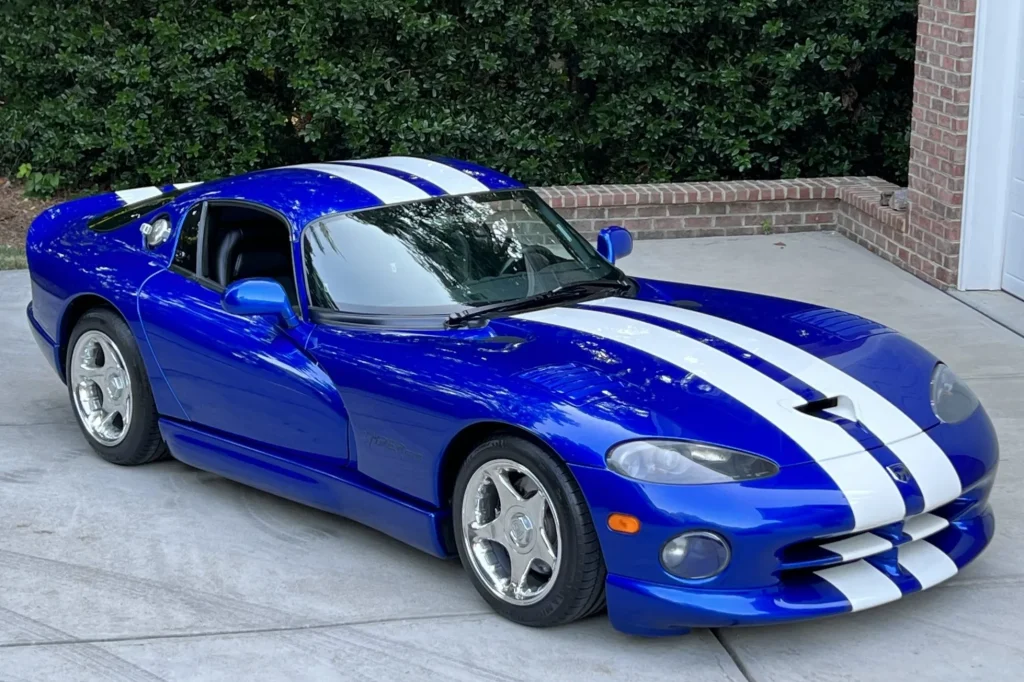
The Viper was never a subtle sports car, and that now works in its favor. Large-displacement V10 engines and manual-only performance machines have virtually disappeared from new-car showrooms.
The 1996 GTS captures a specific moment in American automotive history, and documented five-figure sales show collectors are already assigning substantial value to preserved examples.
- Engine: 8.0-liter naturally aspirated V10
- Torque: 490 lb-ft
- Horsepower: 450 hp
- Length/Width: 176.7 inches / 75.7 inches
8. 1994 Mitsubishi 3000GT VR-4
Complexity was once the Mitsubishi 3000GT VR-4’s greatest criticism. Three decades later, the same technology is helping distinguish it from nearly every other Japanese performance car of the 1990s. Twin turbochargers, all-wheel drive, rear-wheel steering, and a six-speed manual gave the 1994 VR-4 an unusually ambitious specification sheet.
Period testing confirms how serious Mitsubishi’s engineering effort was. For 1994, output increased to 320 horsepower, while Car and Driver recorded a 5.1-second run from 0 to 60 mph and a 153 mph top speed. The publication also measured 0.92 g of roadholding and noted the car’s 45/55 front-to-rear torque split.
Collector-market evidence is beginning to reflect growing interest. Hagerty’s valuation tools identify the VR-4 as the prized version of the 3000GT family and confirm its twin-turbocharged 3.0-liter DOHC V6.
Hagerty currently places a good-condition 1995 3000GT at about $22,400, while its recorded sales include a 1993 VR-4 that brought $25,201 in June 2023.
The challenge is finding the right car. Complicated mechanical systems, deferred maintenance, modifications, and years of relatively low usage have affected the surviving population.
A VR-4 with functioning factory systems and detailed service records can be much more appealing than a cheaper example needing extensive mechanical attention.
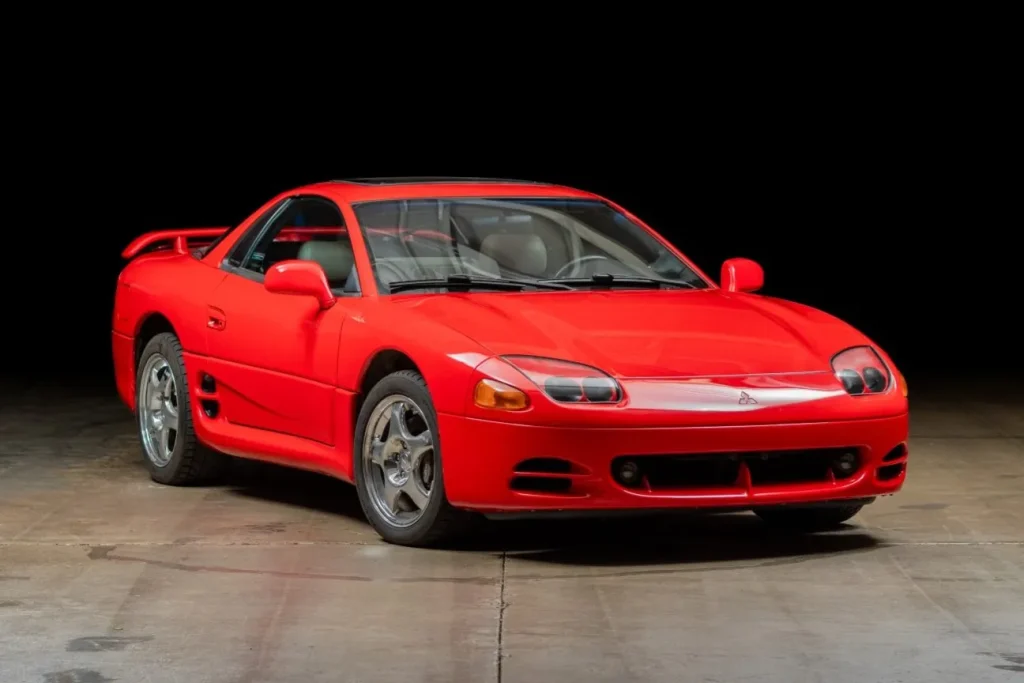
That scarcity of well-preserved cars is central to its collectible trajectory. The 3000GT VR-4 may not command Toyota Supra Turbo money, but it represents the technology-heavy side of Japan’s 1990s performance boom.
Buyers are increasingly recognizing that distinction, and Hagerty’s market coverage shows the VR-4 is already moving beyond anonymous used-car status.
- Engine: 3.0-liter twin-turbocharged V6
- Torque: 315 lb-ft
- Horsepower: 320 hp
- Length/Width: 179.7 inches / 72.4 inches
9. 1990 Chevrolet Corvette ZR-1
For years, the C4 Corvette ZR-1 occupied a strange position in the collector market. Enthusiasts respected its engineering, yet prices often failed to reflect its historical importance.
Recent sales provide stronger evidence that exceptional examples are finally receiving serious collector attention. A 37-mile 1990 ZR-1 sold for $53,500 in January 2026, while Hagerty’s market data lists a good-condition 1990 example around $23,800.
The engineering story is the reason this is not simply another C4. Chevrolet replaced the standard Corvette’s pushrod V8 with the all-aluminum 5.7-liter LT5.
Developed with Lotus involvement and built by Mercury Marine, the dual-overhead-cam, 32-valve V8 produced 375 horsepower and 370 lb-ft of torque in 1990. A ZF six-speed manual sent power to the rear wheels.
That specification gave the ZR-1 genuine supercar performance for its period. Its mechanical complexity and wide-body appearance also separated it from regular Corvettes, though the visual differences were subtle enough that casual observers could miss the significance.
Collector pricing now shows enormous separation between average cars and extraordinary examples. Market tracking has recorded a C4 ZR-1 sale as high as $297,500 in February 2026, illustrating what rarity, provenance, and exceptional specification can do at the top of the market.
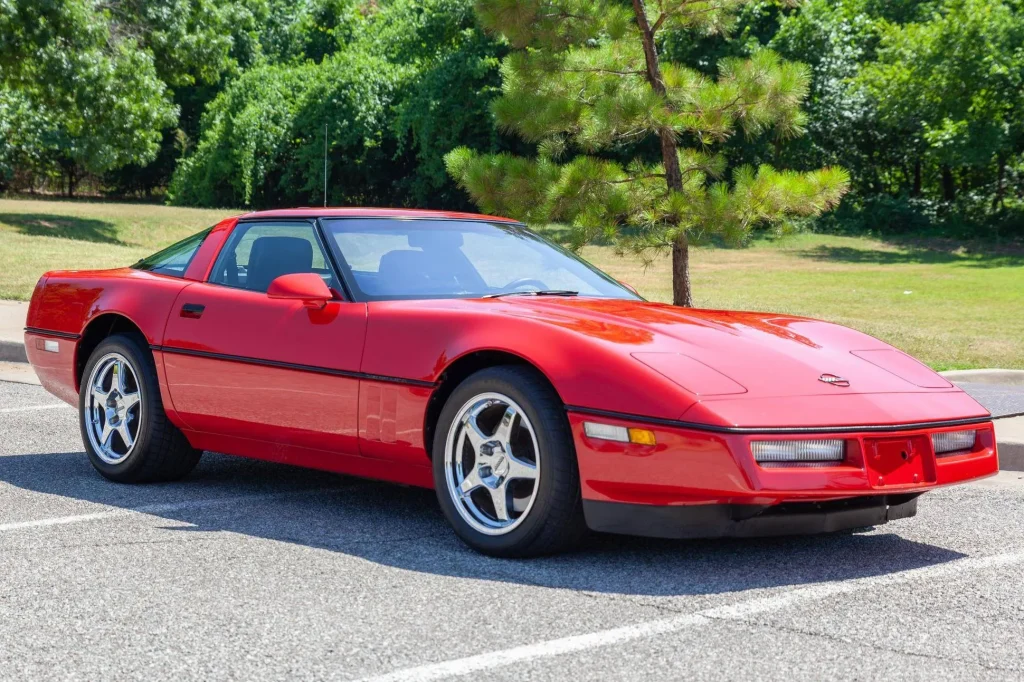
Most ZR-1s will never approach that result. Mileage, maintenance history, originality, and documentation remain crucial. Yet the LT5’s unique place in Corvette history gives collectors a clear reason to seek preserved cars.
The C4 ZR-1 was created to prove an American sports car could challenge far more expensive machinery. More than three decades later, the collector market is finally giving the model greater recognition.
- Engine: 5.7-liter naturally aspirated DOHC V8
- Torque: 370 lb-ft
- Horsepower: 375 hp
- Length/Width: 178.5 inches / 71.0 inches
10. 1997 Acura Integra Type R
The Acura Integra Type R closes this list because its collector status has developed from something enthusiasts once considered almost disposable.
Lightweight front-wheel-drive Hondas were frequently modified, raced, stolen, or driven hard. An original U.S.-market Type R is now a far rarer proposition, and the market increasingly prices clean examples accordingly.
Hagerty’s valuation data illustrates how seriously the model is treated today. A good-condition 2001 Integra Type R is valued at around $38,400. Hagerty also notes that even the more common 2000 model year was rare by Honda standards, with only 1,347 examples sold in the United States.
The 1997 car established the formula for American buyers. Its hand-assembled 1.8-liter B18C5 four-cylinder produced 195 horsepower at 8,000 rpm and 130 lb-ft of torque.
Those numbers may appear modest beside a modern turbocharged car, but output alone misses the Type R’s purpose. Honda removed weight, strengthened the body, revised the suspension, and gave the engine an exceptionally high-revving character.
Hagerty’s model research highlights the lower and stiffer suspension, reduced sound deadening, and added body reinforcements that distinguished the Type R from ordinary Integras. Those factory changes are exactly why originality matters so much today.
A modified Integra can still be an entertaining driver’s car, but collectors increasingly search for factory wheels, correct interiors, original engines, matching identification details, and documented ownership histories. Theft history and accident repairs deserve especially careful inspection.
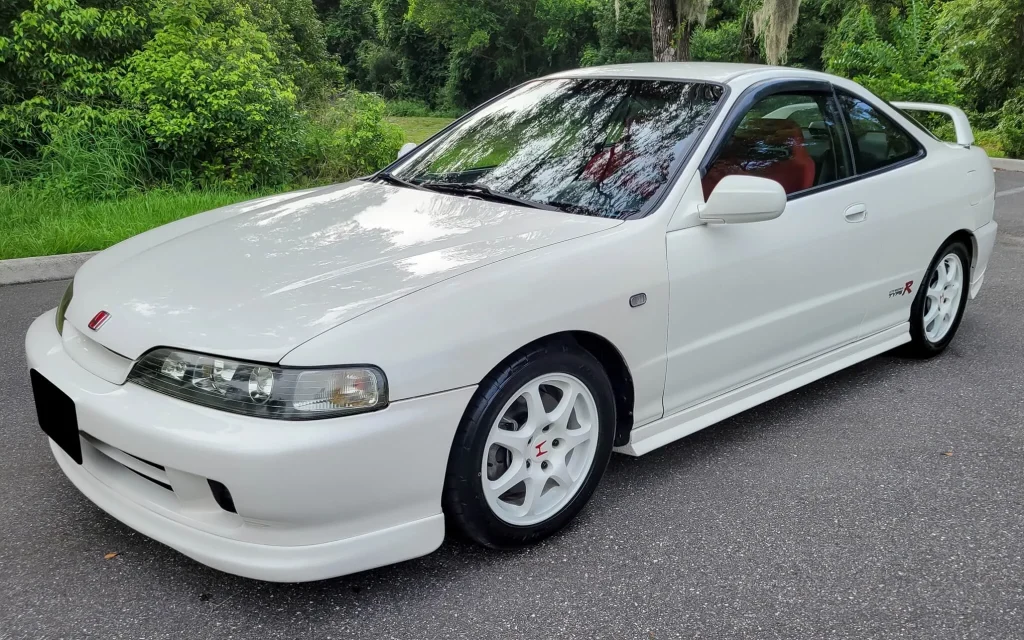
The Type R also represents an engineering philosophy that is difficult to reproduce under modern requirements. Honda extracted performance through low weight, high engine speed, chassis tuning, and precise manual controls rather than turbocharging or huge horsepower.
That purity has become financially valuable. The Integra Type R is no longer merely a 1990s tuner icon. Preserved examples are established modern collectibles.
- Engine: 1.8-liter naturally aspirated inline-four
- Torque: 130 lb-ft
- Horsepower: 195 hp
- Length/Width: 172.4 inches / 67.3 inches
Also Read: 10 Mercedes Cars Ranked by Total Sales Volume in the Last 5 Years