
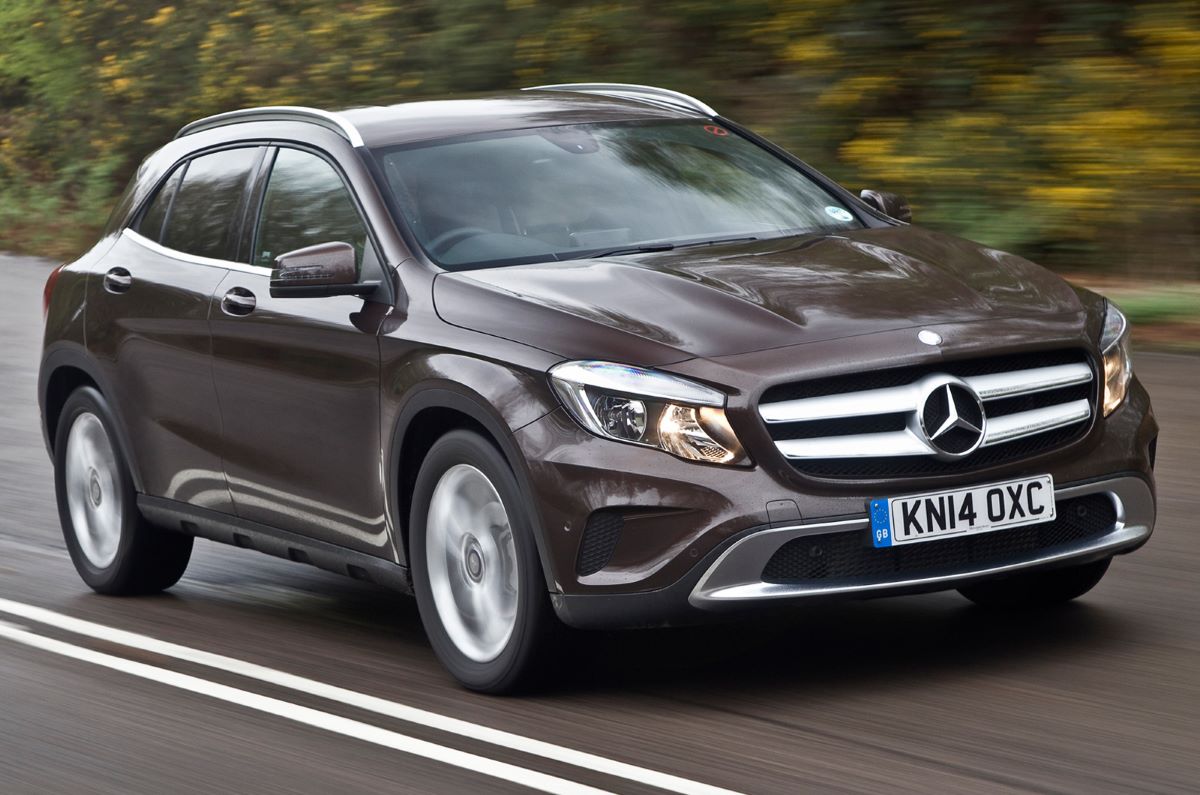
Mercedes-Benz’s U.S. sales numbers from 2020 through 2024 show how dramatically luxury-car buying habits have shifted toward SUVs. The German brand still sells some of America’s best-known luxury sedans, but the largest five-year totals belong to vehicles with higher seating positions, greater cargo capacity, and crossover or SUV body styles.
The sales gap between Mercedes-Benz’s leading models and several traditional passenger cars is substantial. This ranking uses five complete calendar years of U.S. Mercedes-Benz passenger-vehicle sales. Annual figures from 2020, 2021, 2022, 2023, and 2024 are added to produce each model line’s five-year total.
The ranking follows Mercedes-Benz USA’s published sales categories. This matters because the company reported the E-Class and CLS together in several annual sales tables, so that reporting line is treated consistently rather than creating unsupported estimates.
The figures are strictly U.S.-based and do not include global Mercedes-Benz sales. Technical specifications use representative U.S. configurations to provide a consistent reference after each entry.
From a midsize SUV exceeding 300,000 sales to flagship sedans operating in a much smaller market, these numbers show which Mercedes-Benz model lines generated the greatest American sales volume across five complete years.
Also Read: The 10 Cars Owners Hold For 15 Years or More Are All Japanese
1. Mercedes-Benz GLE: 306,812 U.S. Sales
The Mercedes-Benz GLE takes first place with 306,812 U.S. sales from 2020 through 2024. The five-year calculation consists of 48,154 vehicles in 2020, 65,074 in 2021, 63,050 in 2022, 62,606 in 2023, and 67,928 in 2024. Those annual figures show something especially valuable for an automaker: sustained high demand rather than one exceptional sales spike.
The GLE’s strongest increase came early in the measured period. U.S. volume jumped from 48,154 vehicles in 2020 to 65,074 in 2021, an increase of 16,920 units. Sales remained above 62,000 for each of the next three years.
Even when volume slipped in 2022 and 2023, the decline was relatively controlled compared with the larger fluctuations experienced by some Mercedes passenger cars. Then the GLE closed the five years with its best result. Mercedes-Benz reported 67,928 U.S. sales in 2024, up from 62,606 in 2023. That was an increase of 5,322 vehicles and placed the GLE ahead of the GLC for the calendar year.
Its U.S. production connection also deserves attention. Mercedes-Benz manufactures the GLE at its Alabama operation, where the company has built SUVs for global markets. The midsize format gives the GLE a broad position between the compact GLC and the three-row GLS.
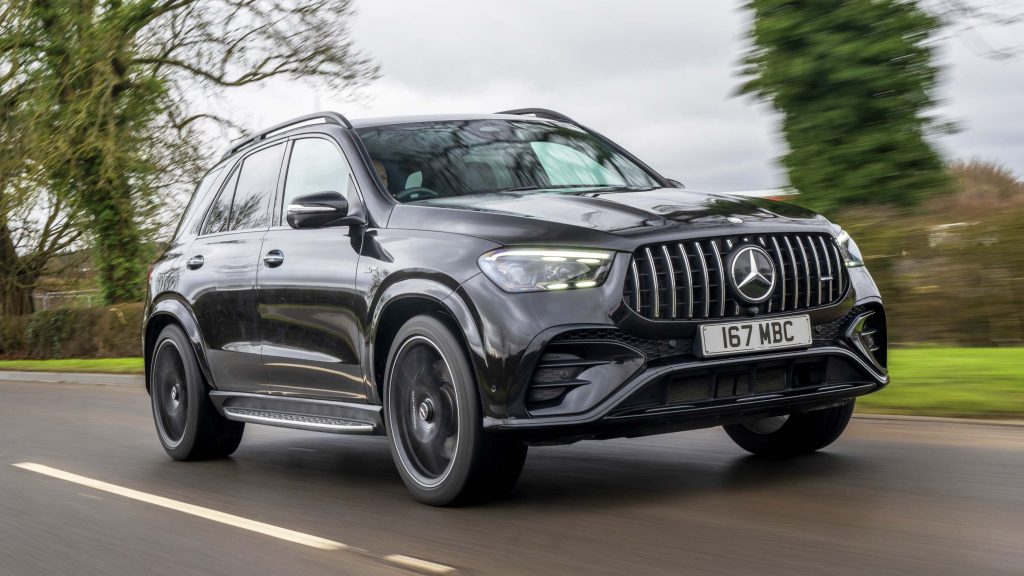
For a current technical reference, the GLE 350 4MATIC uses a 2.0-liter turbocharged four-cylinder with mild-hybrid technology. Mercedes-Benz rates the engine at 255 horsepower and 295 lb-ft of torque.
No other Mercedes model line reached 300,000 U.S. sales in this five-year ranking. The GLE’s ability to stay above 60,000 annual sales from 2021 through 2024 makes its first-place finish particularly convincing.
- Engine: 2.0-liter turbocharged inline-four with mild-hybrid technology
- Torque: 295 lb-ft
- Horsepower: 255 hp
- Length/Width: 194.3 inches / 76.7 inches
2. Mercedes-Benz GLC: 253,907 U.S. Sales
The Mercedes-Benz GLC accumulated 253,907 U.S. sales between 2020 and 2024, securing second place. Its annual figures were 52,626 vehicles in 2020, 51,805 in 2021, 44,614 in 2022, 40,699 in 2023, and 64,163 in 2024. The final number immediately stands out because the GLC finished the period with a dramatic rebound.
At the beginning of the calculation, the compact luxury SUV was already selling more than 50,000 units annually. Volume slipped by only 821 vehicles between 2020 and 2021, but the decline became more substantial during the next two years. Sales fell to 44,614 in 2022 and then reached 40,699 during 2023.
A model transition provides important context for the uneven sales pattern. Mercedes-Benz introduced a new-generation GLC to the U.S. market, bringing revised styling, a new cabin, and an electrified four-cylinder powertrain. By 2024, sales moved sharply in the opposite direction.
Mercedes-Benz recorded 64,163 GLC sales in 2024, a 58 percent increase from the 40,699 vehicles reported for 2023. The gain amounted to 23,464 additional units in a single year. No other year in this five-year calculation came close to the GLC’s 2024 volume.
The current GLC 300 uses a 2.0-liter turbocharged inline-four with 48-volt mild-hybrid technology. Its gasoline engine produces 255 horsepower and 295 lb-ft of torque. The model’s compact SUV dimensions help distinguish it from the larger GLE while still providing the upgraded driving position favored by many American luxury buyers.
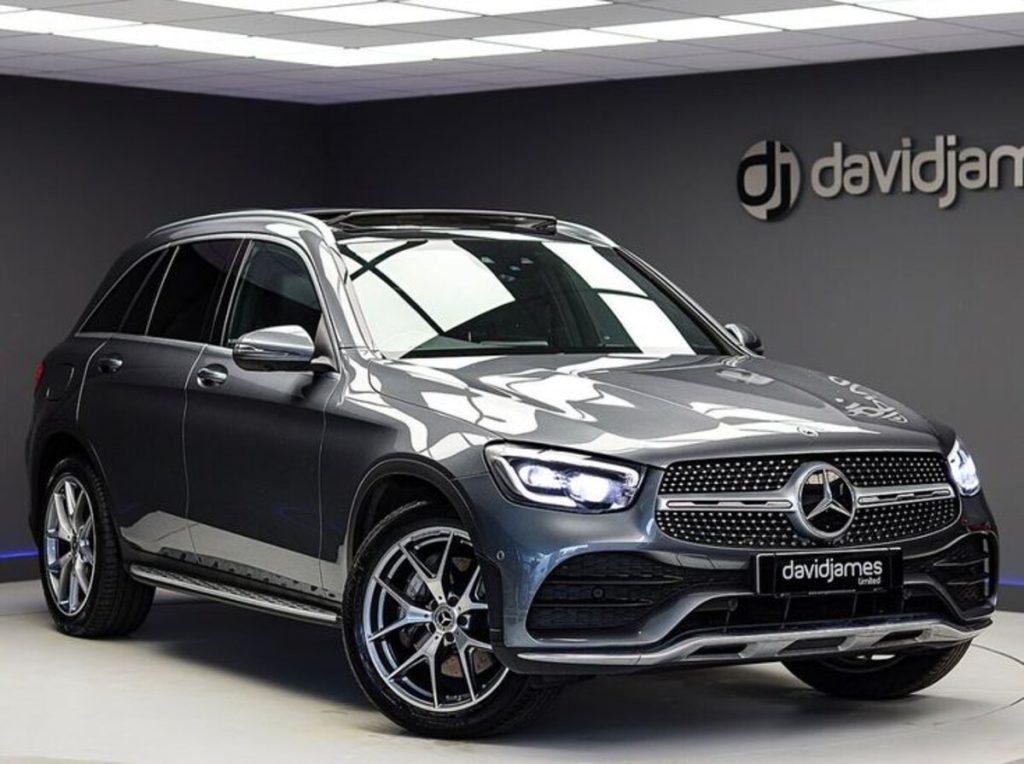
The GLC finishes more than 52,000 vehicles behind the GLE in the five-year calculation, but its final-year momentum is impossible to ignore. More than 253,000 accumulated sales and a 64,163-unit 2024 result establish the GLC as one of Mercedes-Benz’s two dominant U.S. volume models.
- Engine: 2.0-liter turbocharged inline-four with 48V mild-hybrid technology
- Torque: 295 lb-ft
- Horsepower: 255 hp
- Length/Width: 185.7 inches / 74.4 inches
3. Mercedes-Benz C-Class: 151,558 U.S. Sales
Traditional luxury sedans have lost market share to SUVs, yet the Mercedes-Benz C-Class still generated 151,558 U.S. sales from 2020 through 2024. Its annual sales were 26,294 vehicles in 2020, 30,815 in 2021, 26,161 in 2022, 32,698 in 2023, and 35,590 in 2024.
Rather than showing a continuous decline, the C-Class moved through alternating periods of growth and contraction. Sales increased by 4,521 units in 2021 before falling to 26,161 the following year. That 2022 figure was actually 133 units below the model’s 2020 result.
The final two years changed the direction. U.S. sales reached 32,698 vehicles in 2023, crossing 30,000 units for only the second time during the measured period. Volume then increased again to 35,590 in 2024. That made the final calendar year the C-Class’s strongest result in this five-year calculation.
Its position becomes more significant when compared with Mercedes-Benz’s SUV-heavy sales chart. The GLE and GLC occupy the first two positions, but the C-Class is the highest-ranked conventional passenger-car line. More than 151,000 units in five years show that American buyers continue to support Mercedes-Benz’s compact luxury sedan in meaningful numbers.
The current C 300 provides the technical benchmark. Its 2.0-liter turbocharged four-cylinder uses mild-hybrid technology and produces 255 horsepower and 295 lb-ft of torque. Mercedes-Benz pairs the engine with a nine-speed automatic transmission, while 4MATIC all-wheel drive is available.
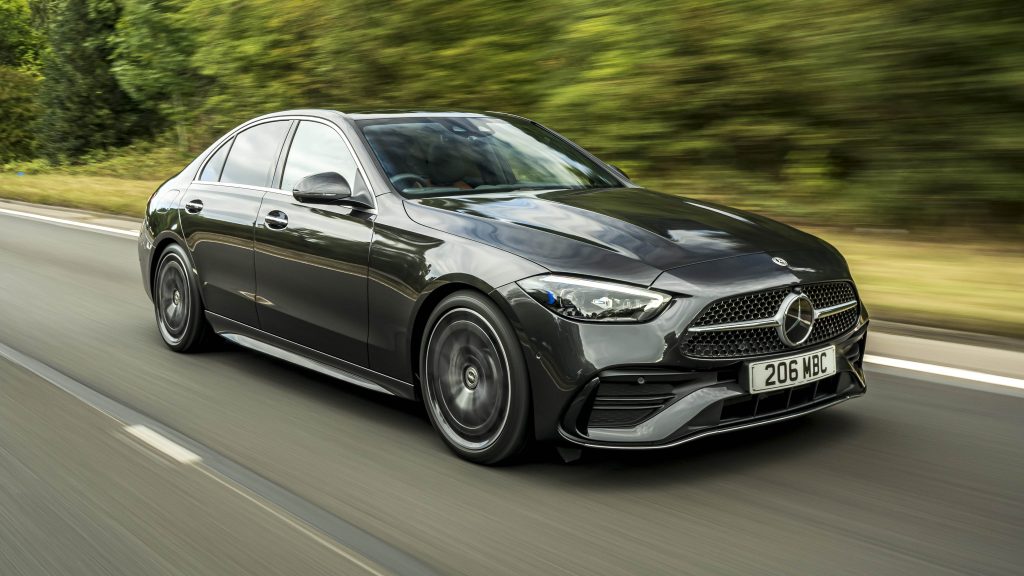
The C-Class earned third place through late-period strength rather than an early sales advantage. Its 2024 volume was 9,296 units higher than its 2020 result. In an American luxury market increasingly centered on crossovers, that sales growth gives the sedan’s 151,558-unit five-year total additional significance.
- Engine: 2.0-liter turbocharged inline-four with mild-hybrid technology
- Torque: 295 lb-ft
- Horsepower: 255 hp
- Length/Width: 187.0 inches / 71.7 inches
4. Mercedes-Benz GLS: 122,293 U.S. Sales
A large three-row luxury SUV with premium pricing would normally be expected to sell in much smaller numbers than compact models. The Mercedes-Benz GLS challenges that assumption with 122,293 U.S. sales from 2020 through 2024. Annual volume totaled 22,172 vehicles in 2020, 24,482 in 2021, 20,853 in 2022, 26,657 in 2023, and 28,129 in 2024.
The five-year sequence begins with moderate growth. GLS sales increased by 2,310 units between 2020 and 2021. A decline followed in 2022, pushing annual volume down to 20,853 vehicles, the model’s lowest result during the period.
What happened next gave the GLS its fourth-place ranking. Sales climbed to 26,657 in 2023, an increase of 5,804 vehicles. Mercedes-Benz then sold 28,129 examples during 2024, setting the GLS’s five-year annual high. From the 2022 low to the 2024 result, annual U.S. volume increased by nearly 35 percent.
The GLS serves a specialized role within the Mercedes SUV family. It provides three-row seating and a full-size footprint, measuring 205.0 inches long. Mercedes-Benz positions it above the GLE, with available configurations and powertrains extending into Mercedes-Maybach and AMG territory.
For the specification reference, the GLS 450 4MATIC uses a 3.0-liter turbocharged inline-six with mild-hybrid drive. Mercedes-Benz rates it at 375 horsepower and 369 lb-ft of torque. A nine-speed automatic transmission and 4MATIC all-wheel drive are part of the configuration.
The GLS did not reach the GLE or GLC’s massive volume, but its sales must be viewed in relation to its size and market position.
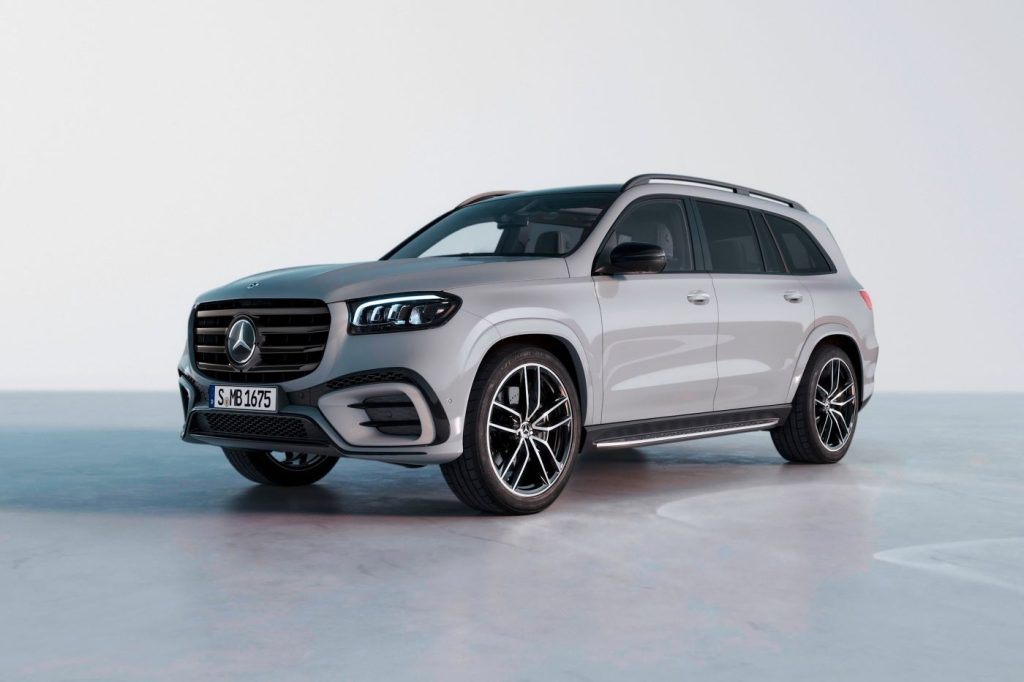
Exceeding 122,000 U.S. sales in five years allowed Mercedes-Benz’s largest mainstream SUV line to outperform several smaller and less expensive models. Its record 28,129-unit finish in 2024 also shows that demand strengthened at the end of the measured period.
- Engine: 3.0-liter turbocharged inline-six with mild-hybrid drive
- Torque: 369 lb-ft
- Horsepower: 375 hp
- Length/Width: 205.0 inches / 79.9 inches
5. Mercedes-Benz GLB: 104,153 U.S. Sales
The Mercedes-Benz GLB reaches fifth place with 104,153 U.S. sales between 2020 and 2024. The model recorded 18,709 sales in 2020, 26,677 in 2021, 23,274 in 2022, 20,634 in 2023, and 14,859 in 2024.
Its five-year history is unlike the models ranked above it. The GLB was still a relatively new Mercedes nameplate when this sales window began, yet it immediately generated substantial U.S. volume. After 18,709 sales in 2020, demand surged to 26,677 units in 2021. That remained the model’s highest annual result during the five years examined here.
From that peak, the numbers moved downward. Sales declined to 23,274 vehicles in 2022 and then fell to 20,634 during 2023. Mercedes-Benz’s 2024 sales table recorded 14,859 GLB sales, a decrease of 5,775 units from the previous year.
Even with that late-period decline, the GLB’s accumulated volume remained high enough to cross 100,000 vehicles. Its packaging helps explain the early sales strength. Unlike many compact luxury SUVs, the GLB offers an available third row. That gives buyers the possibility of seven-passenger seating without moving into the much larger GLS.
The current GLB 250 uses a 2.0-liter turbocharged four-cylinder with mild-hybrid technology. Mercedes-Benz rates the engine at 221 horsepower and 258 lb-ft of torque. Its boxier body also distinguishes the GLB visually from the smaller GLA.
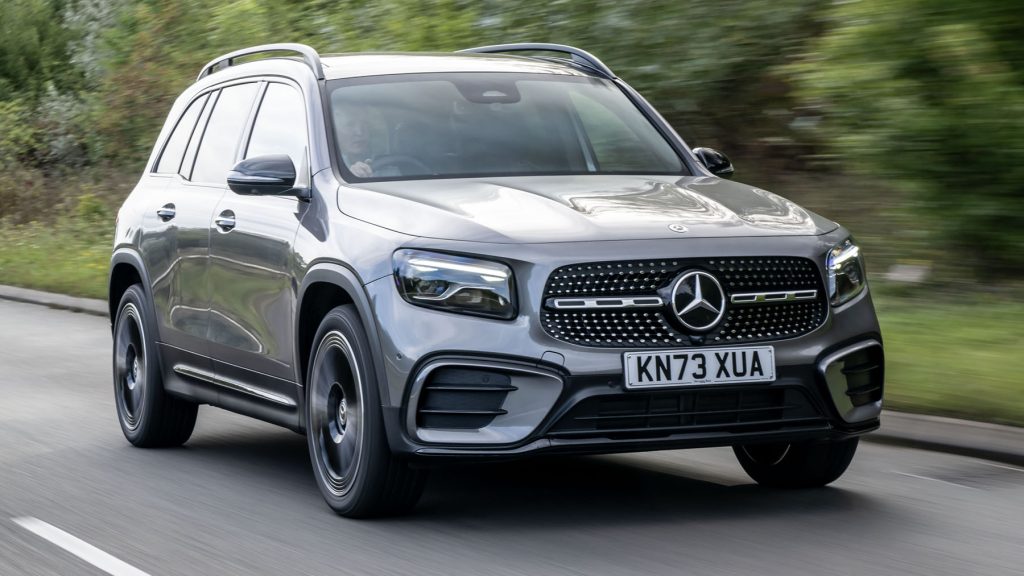
The sales numbers reveal two different phases. The first three years produced more than 68,000 combined U.S. sales, while volume weakened considerably in 2024. Still, the GLB’s ability to accumulate 104,153 sales in five complete calendar years places it ahead of several established Mercedes passenger-car lines.
- Engine: 2.0-liter turbocharged inline-four with mild-hybrid technology
- Torque: 258 lb-ft
- Horsepower: 221 hp
- Length/Width: 182.4 inches / 72.2 inches
6. Mercedes-Benz E-Class and CLS Reporting Line: 99,521 U.S. Sales
Sixth place requires careful explanation because Mercedes-Benz USA’s historical annual sales tables reported the E-Class and CLS together as one model line during the period used for this ranking. Following that official reporting structure produces 99,521 U.S. sales from 2020 through 2024.
The annual figures were 25,786 vehicles in 2020, 20,947 in 2021, 18,639 in 2022, 16,511 in 2023, and 17,638 in 2024.
These numbers should not be presented as pure E-Class sales because doing so would ignore the CLS vehicles included in Mercedes-Benz’s published category. Keeping the official combined label avoids creating unsupported model-specific estimates.
The sales pattern shows a steep contraction during the first four years. Volume fell by 4,839 units in 2021 and then declined to 18,639 during 2022. Another reduction followed in 2023, taking the combined reporting line to 16,511 vehicles.
The final year provided a modest recovery. Mercedes-Benz recorded 17,638 sales for the E-Class and CLS category in 2024, an increase of 1,127 units from the previous year. The result did not return the line to its 2020 level, but it stopped the continuous annual decline visible from 2020 through 2023.
The E-Class also entered a new generation during this period. For a current technical reference, the E 350 4MATIC uses a 2.0-liter turbocharged four-cylinder with mild-hybrid drive, producing 255 horsepower and 295 lb-ft of torque.
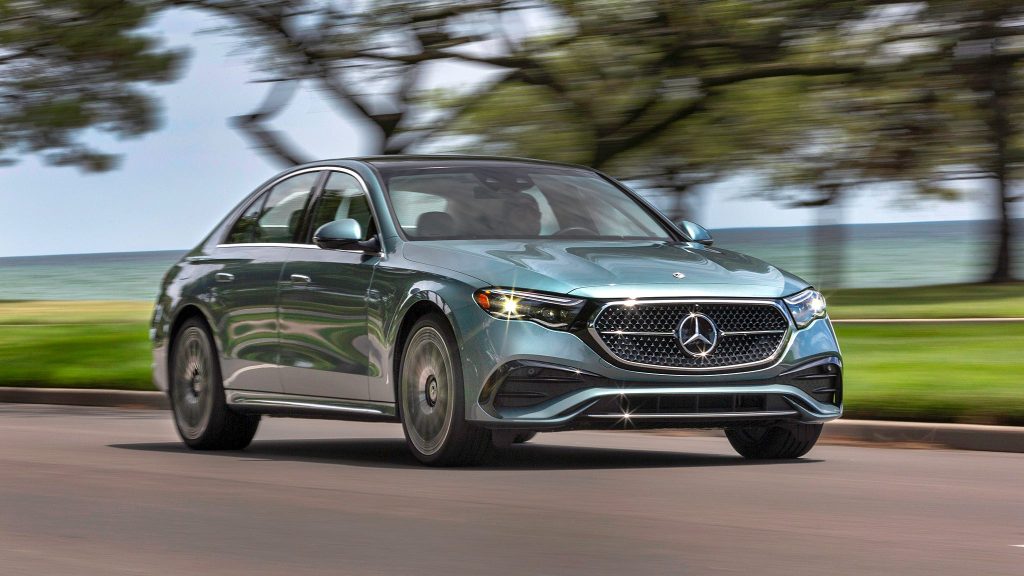
This position demonstrates why reporting methodology matters in a sales ranking. Calling all 99,521 vehicles, E-Class sales would be inaccurate under Mercedes-Benz USA’s own historical tables. The correct description is the E-Class and CLS reporting line.
Even with declining annual volume, the combined category came within 479 units of reaching 100,000 U.S. sales across the five years.
- Engine: 2.0-liter turbocharged inline-four with mild-hybrid drive, E 350 reference
- Torque: 295 lb-ft
- Horsepower: 255 hp
- Length/Width: 194.9 inches / 74.0 inches, E 350 reference
7. Mercedes-Benz GLA: 89,955 U.S. Sales
The Mercedes-Benz GLA accumulated 89,955 U.S. sales from 2020 through 2024, placing the compact SUV seventh. Its annual totals were 20,866 vehicles in 2020, 14,322 in 2021, 18,518 in 2022, 17,170 in 2023, and 19,079 in 2024.
The GLA’s numbers form an irregular sales pattern. It began the period with 20,866 sales before suffering a sharp 31 percent decline in 2021. The 14,322 vehicles sold that year represented the lowest annual total in the five-year calculation.
Recovery arrived quickly. Mercedes-Benz sold 18,518 GLAs in 2022, adding more than 4,000 units compared with the previous year. Volume then slipped to 17,170 in 2023 before returning to 19,079 in 2024.
That means the GLA ended the period 1,787 units below its 2020 result. Unlike the GLC, which produced an enormous final-year surge, the GLA remained within a relatively narrow sales range after recovering from its 2021 low.
Physical size is a major part of the model’s market position. At 173.6 inches long, the GLA is considerably shorter than the GLC and GLE. Its compact dimensions give Mercedes-Benz an entry point into the small luxury crossover segment and provide an alternative for buyers who do not need the GLB’s available third row.
The current GLA 250 uses a 2.0-liter turbocharged inline-four with mild-hybrid assistance. Mercedes-Benz rates the engine at 221 horsepower and 258 lb-ft of torque. An eight-speed dual-clutch transmission is used, while the GLA 250 4MATIC adds all-wheel drive.
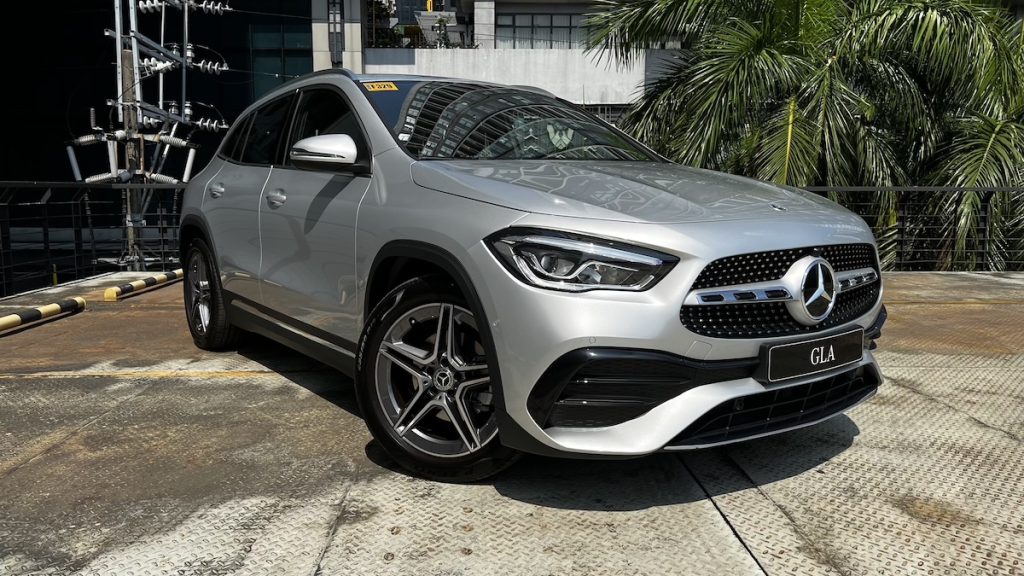
Nearly 90,000 sales over five years give the GLA a meaningful place in Mercedes-Benz’s U.S. lineup. Its annual results were inconsistent, but the model recovered from the severe 2021 decline and closed 2024 with its second-highest sales figure of the measured period.
- Engine: 2.0-liter turbocharged inline-four with mild-hybrid assistance
- Torque: 258 lb-ft
- Horsepower: 221 hp
- Length/Width: 173.6 inches / 72.2 inches
8. Mercedes-Benz S-Class: 57,589 U.S. Sales
The Mercedes-Benz S-Class reaches eighth place with 57,589 U.S. sales between 2020 and 2024. Annual volume totaled 8,589 vehicles in 2020, 14,282 in 2021, 15,927 in 2022, 9,982 in 2023, and 8,809 in 2024.
Those figures must be interpreted differently from the sales of a GLE or GLC. The S-Class operates at the flagship end of the Mercedes-Benz passenger-car lineup, where pricing and positioning naturally limit the number of potential buyers. A five-figure annual sales result, therefore, carries a different significance.
The greatest change occurred in 2021. U.S. volume increased from 8,589 to 14,282 vehicles, a gain of 5,693 units. Mercedes-Benz had introduced a new generation of its flagship sedan, and the sales increase continued into 2022.
At 15,927 units, 2022 became the S-Class’s best year in this five-year calculation. Sales then fell sharply to 9,982 vehicles during 2023. Another decline followed in 2024, when Mercedes-Benz recorded 8,809 units. The final-year result was only 220 vehicles higher than the model’s 2020 sales figure.
Mercedes-Benz offers the S-Class with several powertrain configurations. Using the current S 500 4MATIC as the technical reference, its 3.0-liter turbocharged inline-six with mild-hybrid drive produces 442 horsepower and 413 lb-ft of torque. The sedan measures 208.2 inches long, reflecting its full-size flagship proportions.
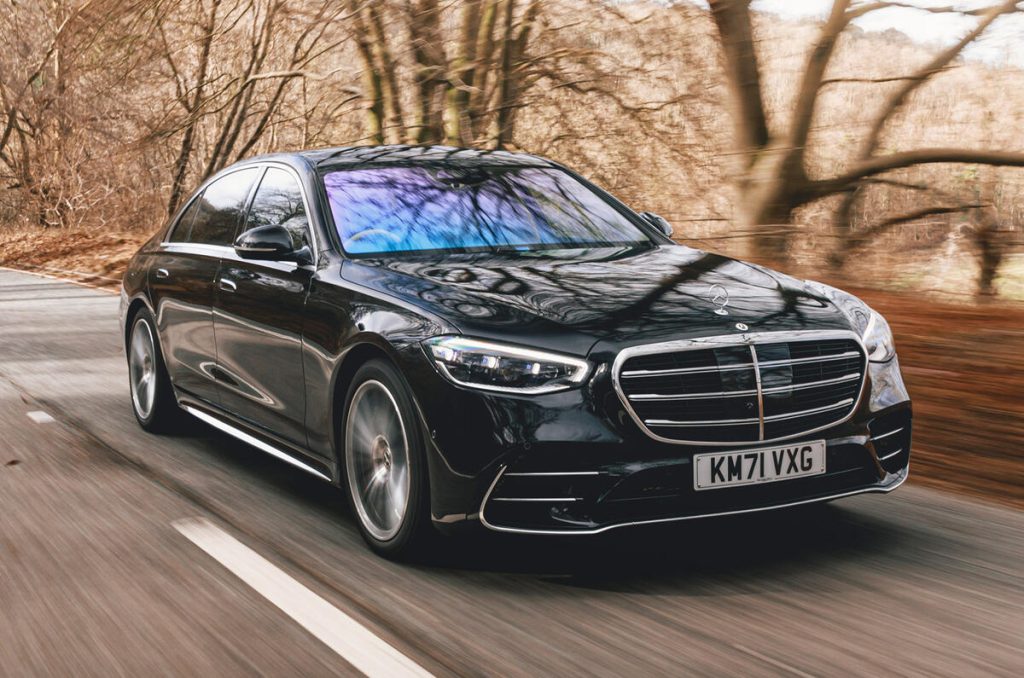
The S-Class’s eighth-place position is driven by the enormous volume difference between mainstream luxury SUVs and top-tier executive sedans. Yet 57,589 U.S. sales across five years remain substantial for a flagship model. It’s 2021 and 2022 surge also shows how strongly a new product generation can temporarily lift demand, even in one of the luxury market’s most expensive traditional sedan segments.
- Engine: 3.0-liter turbocharged inline-six with mild-hybrid drive
- Torque: 413 lb-ft
- Horsepower: 442 hp
- Length/Width: 208.2 inches / 76.9 inches
9. Mercedes-Benz CLA: 47,604 U.S. Sales
The Mercedes-Benz CLA takes ninth place with 47,604 U.S. sales from 2020 through 2024. The five-year calculation comes from 11,644 vehicles in 2020, 6,823 in 2021, 8,766 in 2022, 9,803 in 2023, and 10,568 in 2024. The figures show a compact luxury model that suffered a substantial early decline before rebuilding its U.S. sales volume during the final three years of the measured period.
Its strongest year came immediately in 2020, when American sales reached 11,644 units. The following year was far more difficult. Volume dropped to 6,823 vehicles, a decline of 4,821 units, and the CLA’s lowest annual result in this five-year calculation.
What followed was a gradual recovery rather than a sudden sales surge. Mercedes-Benz sold 8,766 CLAs in 2022, bringing volume back above 8,000 units. Sales increased again in 2023 and remained above 10,000 in 2024. The CLA, therefore, ended the five-year window much closer to its 2020 sales level than its weak 2021 performance initially suggested.
The CLA’s market position is different from the C-Class. Its coupe-inspired roofline and compact proportions give it a more style-focused character, while Mercedes-Benz has historically positioned the model as one of the more accessible entries into its U.S. passenger-car lineup. That narrower role helps explain why sales remain well below C-Class volume.
Using the CLA 250 as the technical reference, the 2.0-liter turbocharged inline-four with mild-hybrid drive produces 221 horsepower and 258 lb-ft of torque. Mercedes-Benz pairs it with an eight-speed dual-clutch automatic transmission.
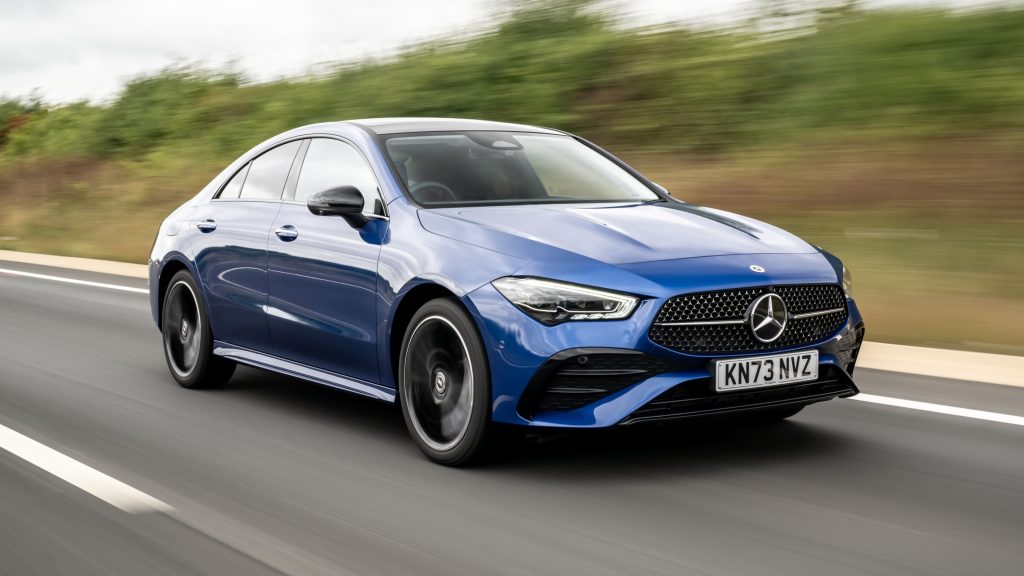
The CLA earns ninth place because its 47,604-unit five-year total narrowly exceeds the G-Class. Its late-period sales recovery also prevented the model from falling farther down the ranking.
- Engine: 2.0-liter turbocharged inline-four with mild-hybrid drive
- Torque: 258 lb-ft
- Horsepower: 221 hp
- Length/Width: 184.6 inches / 72.0 inches
10. Mercedes-Benz G-Class: 43,884 U.S. Sales
The Mercedes-Benz G-Class completes the ranking with 43,884 U.S. sales between 2020 and 2024. Annual U.S. volume totaled 7,723 vehicles in 2020, 8,521 in 2021, 7,297 in 2022, 9,355 in 2023, and 10,988 in 2024. Unlike several models higher on this list, the G-Class achieved its position while operating in one of Mercedes-Benz’s most exclusive and expensive market segments.
Sales initially moved upward from 7,723 units in 2020 to 8,521 in 2021. A decline followed in 2022, when volume fell to 7,297 vehicles. That was the G-Class’s weakest annual result in the five years examined here, but the downturn did not continue.
Demand accelerated during the final two years. U.S. sales reached 9,355 vehicles in 2023 before climbing to 10,988 in 2024. That final result represented the highest annual G-Class volume in this five-year calculation and was roughly 42 percent above the 2020 figure.
The G-Class is an unusual volume story because its design and pricing place it far outside the mainstream luxury SUV market. Mercedes-Benz continues to build the model around a ladder-frame structure, and production takes place in Graz, Austria. Its upright body, externally mounted spare wheel, and three locking differentials preserve characteristics closely connected to the vehicle’s off-road history.
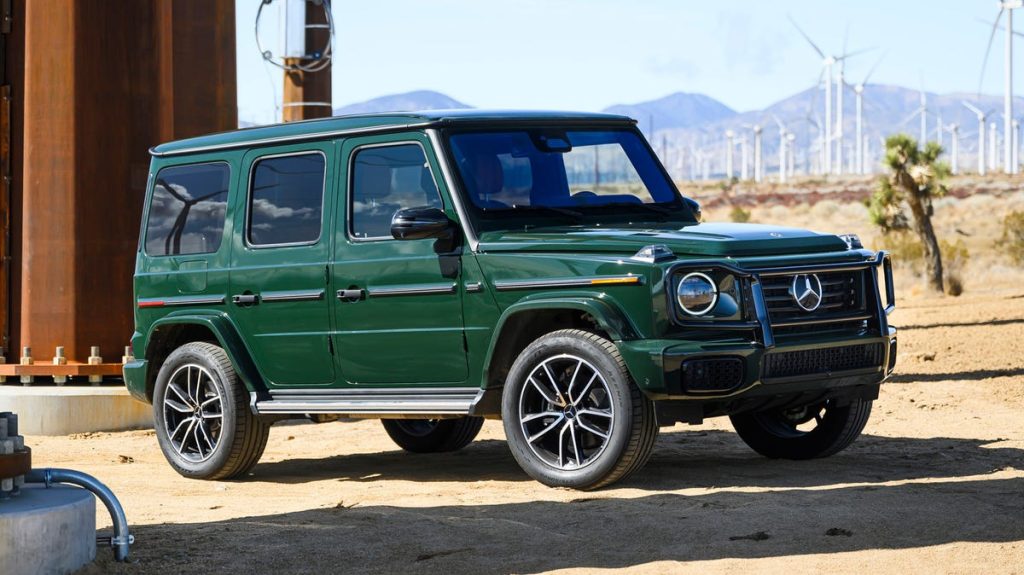
For a current technical benchmark, the G 550 uses a 3.0-liter turbocharged inline-six with hybrid assistance and an electric auxiliary compressor. Mercedes-Benz rates the gasoline engine at 443 horsepower and 413 lb-ft of torque. A nine-speed automatic transmission and all-wheel drive support its performance and off-road capability.
The G-Class finishes tenth by accumulated volume, but its sales direction is particularly important. It moved from fewer than 8,000 U.S. sales in 2020 to nearly 11,000 in 2024. For a high-priced luxury SUV with such specialized engineering and distinctive styling, 43,884 sales across five years represent substantial American demand.
- Engine: 3.0-liter turbocharged inline-six with hybrid assistance and electric auxiliary compressor
- Torque: 413 lb-ft
- Horsepower: 443 hp
- Length/Width: 190.0 inches / 76.0 inches
Also Read: 10 States With Highest Discount on EVs – Ranked
