
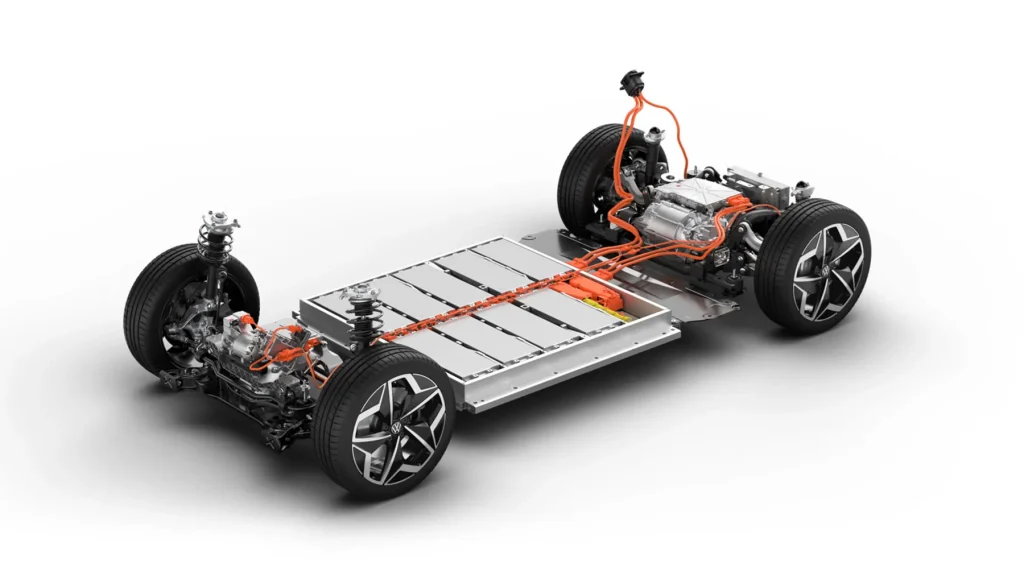
Battery longevity has become one of the defining questions surrounding electric vehicle ownership. While range anxiety has gradually faded thanks to larger battery packs and a growing charging infrastructure, many prospective buyers still wonder how much battery capacity an EV will retain after years of daily driving.
Concerns over expensive battery replacements and declining range remain among the most commonly cited reasons consumers hesitate to switch from gasoline-powered vehicles.
Real-world data, however, continues to challenge many of those assumptions. One of the largest battery health studies conducted to date, analyzing data from 22,700 electric vehicles across 21 different light- and medium-duty models, found that modern EV batteries degrade far more slowly than many expected.
According to Geotab’s latest analysis, the average electric vehicle battery is projected to retain 81.6% of its original usable capacity after eight years, assuming an average degradation rate of 2.3% per year.
The findings, highlighted by iSeeCars and based on real-world fleet data collected across North America and Europe, reinforce growing evidence that battery packs are likely to outlast the period most owners keep their vehicles.
The study represents another important milestone in understanding how lithium-ion batteries perform outside laboratory testing. Rather than relying on simulations, Geotab examined battery performance from thousands of connected vehicles operating under everyday conditions, including varying climates, driving styles, and charging habits.
Also Read: 8 Things to Do the Week Before Your Car’s Lease Ends
Real-World Battery Degradation Is More Gradual Than Many Buyers Expect
Every lithium-ion battery experiences gradual capacity loss over time. This natural process occurs because repeated charging and discharging slowly change the internal chemistry of battery cells. The important question has never been whether batteries degrade, but rather how quickly that degradation occurs under normal driving conditions.
Geotab’s latest research provides one of the clearest answers available. After expanding its database to include more than 22,700 electric vehicles representing 21 different models, the company calculated an average battery degradation rate of 2.3% annually.
At that pace, the typical EV would still retain 81.6% of its original battery capacity after eight years, leaving the vast majority of its original driving range available to the owner. While losing roughly one-fifth of usable capacity over eight years may initially sound significant, the practical impact is often smaller than many consumers assume.
Consider an electric vehicle originally rated for 320 miles of EPA range. Retaining 81.6% of its battery capacity would still provide approximately 261 miles of driving range under similar conditions.
For most daily commuters, whose average travel distance remains well below 50 miles per day according to U.S. transportation data, that reduction would have little effect on everyday usability.
The study also highlights that degradation is rarely linear. Many batteries lose a slightly higher percentage of capacity during their first year before stabilizing into a much slower, predictable decline.
As battery management systems improve, manufacturers continue reducing early degradation through software updates, optimized charging strategies, and better thermal control.
Battery chemistry has also advanced considerably over the past decade. Modern lithium-ion cells are substantially more durable than those used in the earliest generation of electric vehicles. Improvements in electrode materials, electrolyte formulations, and manufacturing precision have increased cycle life while reducing the rate of long-term capacity loss.
Importantly, Geotab’s findings represent an average across multiple manufacturers and battery chemistries. Individual vehicles may perform better or worse depending on climate, charging habits, battery design, and cooling technology.
Nevertheless, the full trend indicates that modern EV batteries are aging much more slowly than early projections suggested.
Several Factors Determine How Well an EV Battery Ages
Although average degradation remains relatively low, battery longevity depends on a combination of engineering and owner behavior.
Temperature is among the most important variables. Excessive heat accelerates the chemical reactions responsible for lithium-ion battery aging, while prolonged exposure to extreme cold can temporarily reduce available capacity until the battery warms.
This is why nearly every modern electric vehicle now uses sophisticated liquid-cooled thermal management systems that actively regulate battery temperature during driving, charging, and even while parked.
Charging habits also influence long-term battery health. Geotab’s research found that vehicles relying heavily on high-power DC fast charging above 100 kW tended to experience faster degradation than vehicles charged primarily using Level 2 AC chargers.
Specifically, vehicles that used ultra-fast charging for more than 12% of charging sessions experienced degradation rates approaching 3.0% annually, compared with approximately 1.5% per year for vehicles that relied mostly on slower charging.
Even so, occasional fast charging for road trips had a far smaller impact than making high-power charging the primary charging method.
Battery management software plays an equally critical role. Modern systems constantly monitor cell temperatures, voltage differences, charging currents, and full battery health. If charging conditions become unfavorable, software automatically reduces charging power or activates cooling systems to minimize stress on battery cells.
Manufacturers also intentionally reserve a portion of total battery capacity that drivers cannot access. These upper and lower buffers prevent batteries from reaching damaging states of complete charge or complete discharge, significantly extending service life.
Vehicle usage patterns matter as well. Frequent exposure to very high temperatures, leaving the battery fully charged for extended periods, or regularly depleting it to nearly zero can all contribute to faster degradation. Conversely, moderate charging habits and consistent thermal management help preserve long-term capacity.
The latest generation of lithium iron phosphate (LFP) batteries further improves durability in many applications. Compared with some nickel-based chemistries, LFP batteries generally tolerate more charging cycles and frequent charging to 100% while maintaining excellent long-term stability, although they have different energy density characteristics.
Long Battery Life Is Strengthening the Used EV Market
Battery health has become one of the most important considerations for used electric vehicle buyers. Unlike gasoline vehicles, where engine condition often determines long-term value, battery condition plays a similar role for EV resale prices.
Studies such as Geotab’s are helping reshape consumer confidence because they provide measurable evidence of long-term durability rather than relying on theoretical projections. If an average battery still retains more than 80% of its original capacity after eight years, many used EVs can continue providing practical driving range for years beyond their first owner.
Additional research supports this conclusion. Battery analytics company Recurrent recently reported that modern EVs retain approximately 95% of their original driving range after five years, while only 0.3% of 2022 model-year and newer EVs have required battery replacement outside manufacturer recalls.
Those findings suggest complete battery replacement is becoming exceptionally rare in current-generation electric vehicles.
Federal warranty requirements further reduce ownership risk. In the United States, electric vehicle manufacturers must generally provide battery warranty coverage for at least 8 years or 100,000 miles, while several automakers exceed those requirements with longer mileage limits or capacity-retention guarantees.
Real-world ownership continues to reinforce the statistical evidence. Numerous Tesla Model 3s, Hyundai Ioniq 5s, Kia EV6s, Ford Mustang Mach-Es, Rivian R1Ts, Chevrolet Equinox EVs, and other modern electric vehicles have surpassed 100,000 miles while maintaining strong battery performance.
Some high-mileage examples now exceed 200,000 miles without requiring battery replacement, demonstrating how far battery technology has progressed since the earliest mass-market EVs.
The latest data indicates that modern EV batteries are increasingly capable of lasting the practical lifetime of the vehicle. While every lithium-ion battery gradually loses some capacity, degradation is occurring much more slowly than many early critics predicted.
Geotab’s extensive study projects that the average battery will still retain 81.6% of its original capacity after eight years, supporting the growing consensus that battery longevity is becoming one of the strengths of modern electric vehicles rather than one of their biggest weaknesses.
Also Read: 8 Cheap Cars That Are Better Than Their Pricier Rivals
