
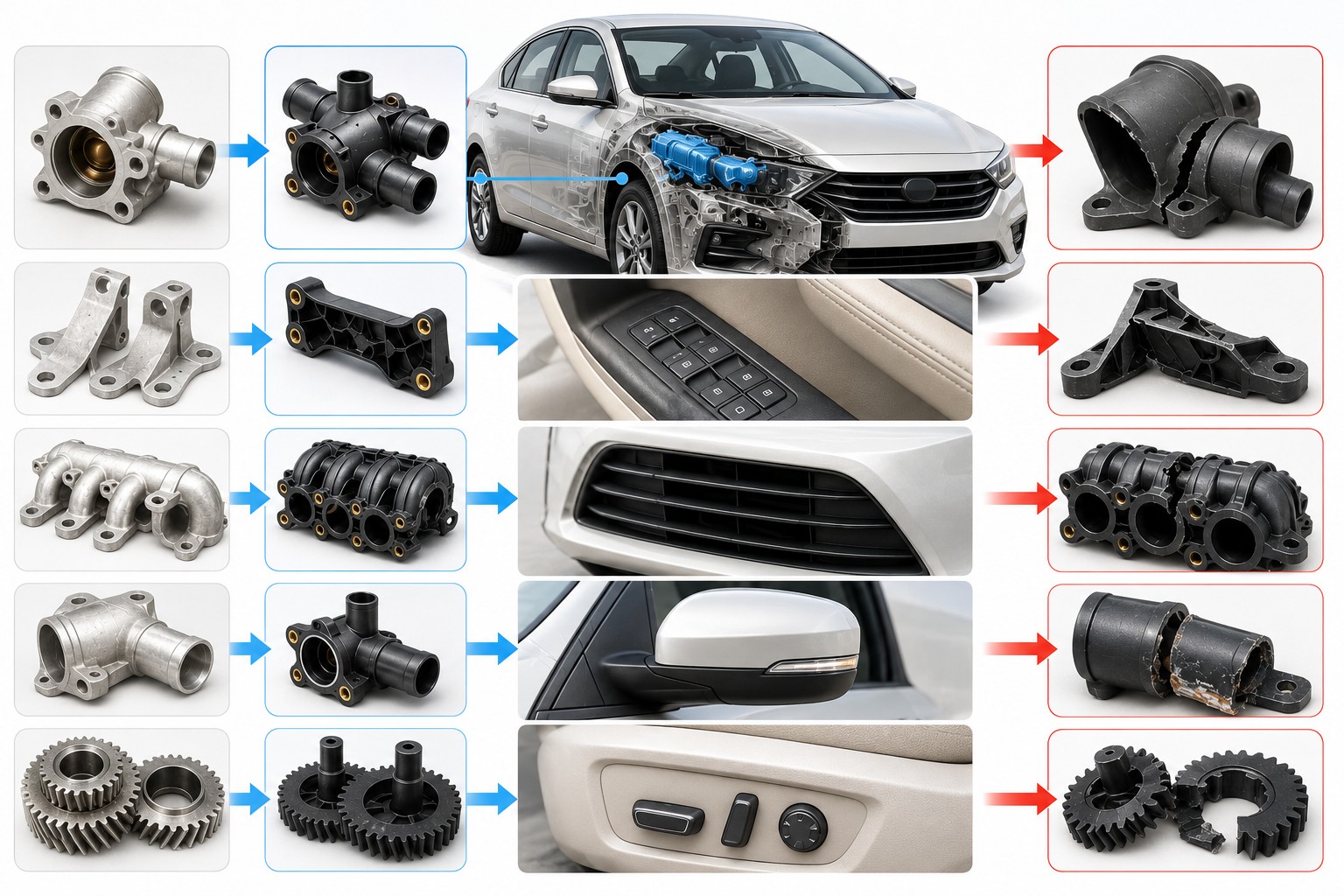
Modern automakers increasingly use engineered plastics instead of cast iron and aluminum to reduce vehicle weight, lower manufacturing costs, and improve fuel economy. Although these materials perform well when new, years of heat, vibration, and sunlight can make them brittle, leading to sudden cracks rather than the gradual wear typically seen with metal parts.
This guide explores eight plastic components that replaced metal counterparts, explaining the engineering decisions behind the change and the common failures reported by mechanics. Using documented examples from BMW, Chrysler, Nissan, Volkswagen, Tesla, and Jeep, it outlines real-world issues, recalls, and vehicle specifications that buyers and owners should understand.
1. Intake Manifolds
Intake manifolds used to be cast aluminum or iron. Automakers began switching to glass-reinforced nylon composites in the 1990s. GM’s 3.8-liter V6, Ford’s 4.6-liter modular V8, and Chrysler’s 4.7-liter V8 were among the first mainstream engines to get the treatment. The material is typically nylon 6/6 reinforced with roughly 35% fiberglass.
The upside is real. Plastic manifolds are lighter, cheaper to mold into complex runner shapes, and smoother on the inside than cast metal. That smoothness actually reduces intake turbulence.
The downside shows up with age. Plastic and the aluminum cylinder head it bolts to expand and contract at different rates under heat. Early designs didn’t account for that mismatch well enough.
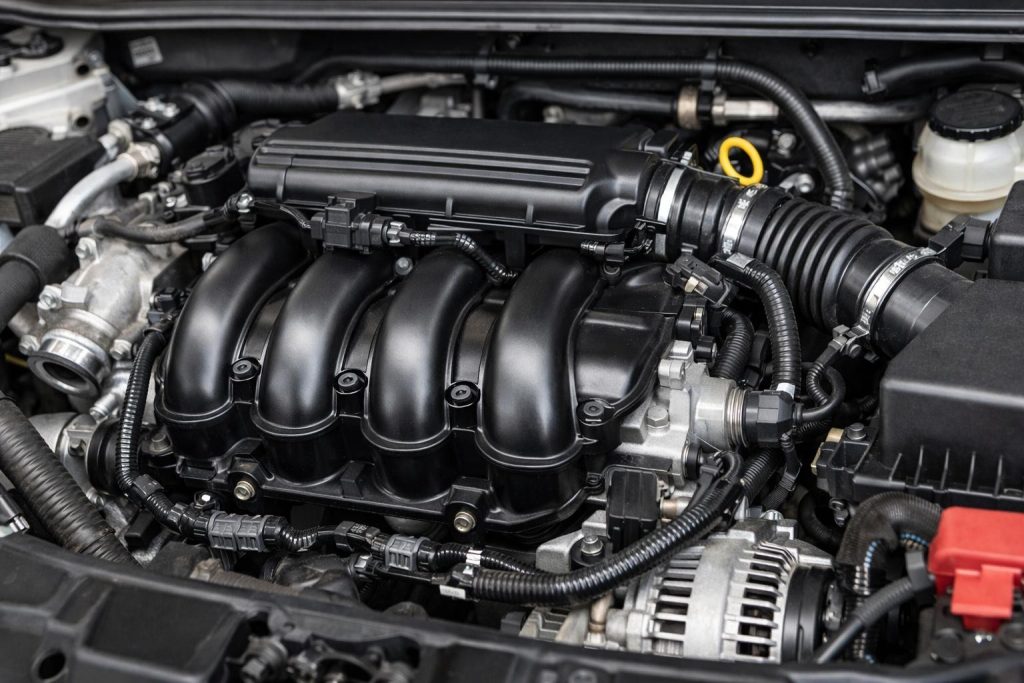
Ford even mounted alternator brackets directly onto the 1996-2001 plastic manifold. The extra vibration load eventually cracked the housing outright.
Old, degraded coolant is another enemy. It becomes mildly corrosive over time and can eat through the internal coolant passages molded into the manifold. When that happens, coolant leaks directly into the cylinders, not just onto the ground.
A hairline crack rarely kills the engine on the spot. It does trigger vacuum leaks that confuse the mass airflow sensor. The result is a lean misfire, a rough idle, or a stumble on throttle tip-in. Unlike aluminum, a warped or cracked plastic manifold can’t be machined flat again. Replacement is the only real fix.
2. Timing Chain Guides and Tensioners
Metal or fiber-reinforced steel guides once directed the timing chain around its sprockets. BMW, along with most manufacturers, moved to molded plastic guides and tensioner ratchets by the late 1990s.
The change reduced weight and noise. Plastic guides also run quieter against a moving chain than bare metal ever could. BMW’s M62TU V8, found in the E39 540i and E38 740i, became the textbook example of what goes wrong. Owners report the chain itself rarely fails. It’s the plastic guide rails and tensioner that degrade.
The N63 twin-turbo V8, used in the 750i, X5, and X6 from 2009 onward, inherited the same weak point. Two chains per bank means two sets of guides that can fail independently.
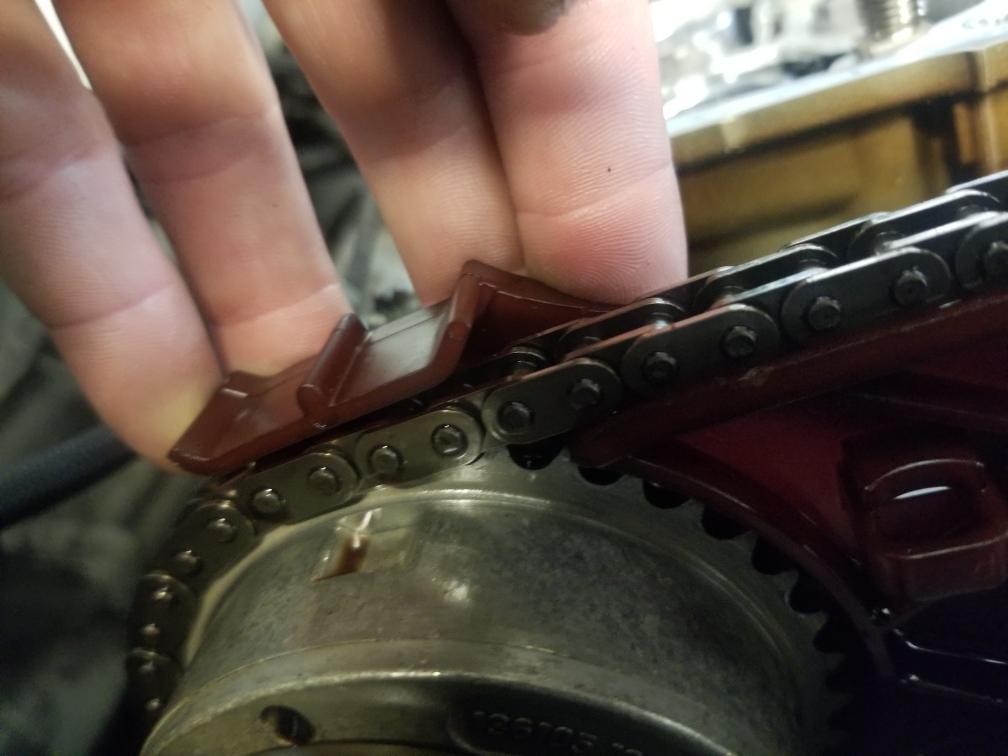
Heat is the primary killer here. Engine bay temperatures well above 200°F, especially in stop-and-go traffic, accelerate brittleness in the guide material.
BMW’s own oil specification for these engines runs long service intervals, sometimes 15,000 miles. Many independent shops now recommend cutting that interval nearly in half to slow guide degradation.
When a guide finally shatters, plastic fragments circulate through the oil system. They can clog the oil pickup screen, starving the engine of lubrication at the worst possible moment.
Because these are interference engines, a chain that jumps time lets pistons strike open valves. That turns a $30 plastic part into a five-figure engine rebuild. Class-action settlements followed for N63 owners specifically over chain stretch and related oil consumption problems.
3. Radiator End Tanks
Radiators once used all-metal construction, typically copper or brass tanks soldered to the core. Automakers switched the tanks to glass-reinforced nylon, commonly PA66 GF30, crimped onto an aluminum core.
The weight savings are meaningful across a whole vehicle line. Plastic tanks also simplify manufacturing since they can be molded with integrated mounting bosses and hose necks.
The failure pattern is thermal fatigue, plain and simple. Every heat cycle expands and contracts the plastic slightly more than the metal core beside it.
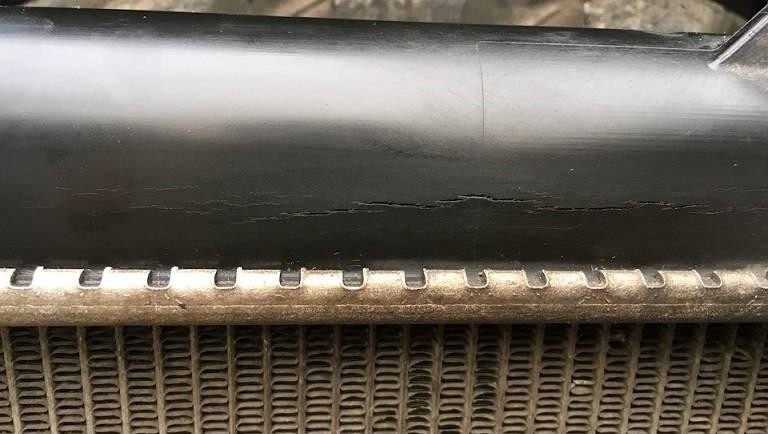
Over years, that mismatch works the crimped seam and the tank material itself. Hairline cracks typically start near mounting brackets, fan shroud tabs, or the hose spigot.
One documented case involved a Pontiac GTO with a 5.7-liter LS1 V8. The plastic end tank cracked near the fan bracket at 66,500 miles, leaking roughly a fifth of a gallon of coolant every few days before failure was caught.
The rubber gasket between the plastic tank and metal core degrades too. Crimp tabs can relax their clamping force over time, letting coolant weep slowly along the seam rather than gushing all at once.
That’s arguably worse. A slow weep goes unnoticed until the engine overheats on a hill or in traffic. Repairs with epoxy putty exist, but shops widely treat them as temporary. Full radiator replacement is the standard fix once a tank cracks.
4. Oil Pans
Steel and aluminum oil pans have been standard since the earliest engines. Nissan moved to a plastic pan on the 2021-2024 Rogue’s turbocharged three-cylinder engine.
The reasoning was weight and noise dampening near the bottom of the engine. Plastic also resists denting from road debris better than thin stamped steel.
The problem isn’t long-term wear. It’s the very first scheduled maintenance visit. The drain plug is still metal, threaded into a metal insert that’s heat-set into the plastic pan during manufacturing. Over-torque that plug even slightly, and the insert simply rips free of the surrounding plastic.
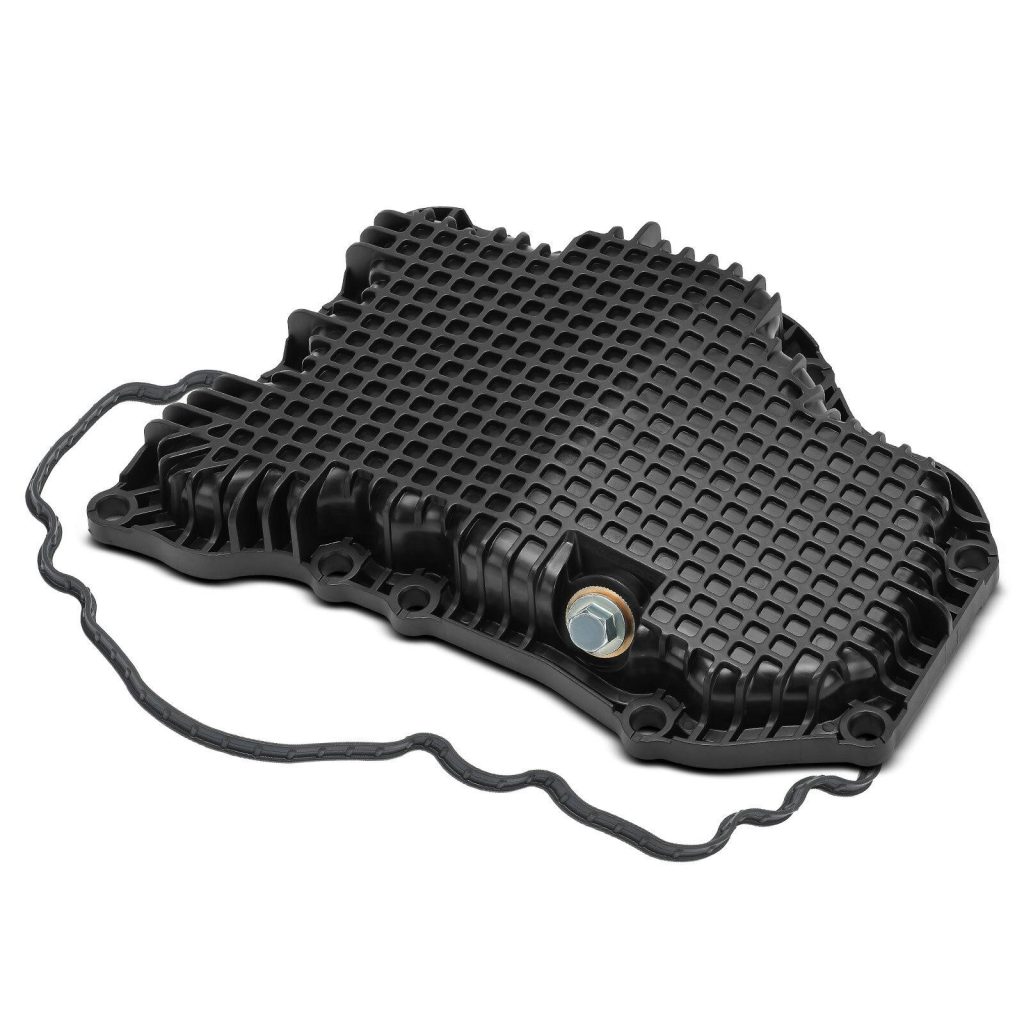
Independent shops and dealerships alike have reported this happening repeatedly. One dealership reportedly had five Rogues sitting on its lot at once, all waiting for replacement pans after a routine oil change went wrong.
The damage isn’t always obvious immediately. A pulled insert can still hold the plug in place temporarily, only to leak fully once a second technician tightens it again later.
Some independent shops have simply started refusing to service these vehicles. The liability risk of ruining a pan during a $60 oil change isn’t worth it to them.
Nissan’s official position points to the published torque spec. Aftermarket aluminum replacement pans, using the same drain plug design but in metal, are now a popular preventive swap among owners.
Also Read: Subaru Outback vs Subaru Forester Comparison: Which One Is Better?
5. Oil Cooler and Filter Housings
Chrysler’s 3.6-liter Pentastar V6 uses an integrated oil filter housing and oil cooler assembly. Earlier generations, from 2011 through 2013, made this housing entirely from plastic.
The part sits low in the engine’s valley, between the cylinder heads. That’s one of the hottest, most thermally punishing locations under the hood.
Coolant runs through a small internal heat exchanger inside the housing to regulate oil temperature. The housing also holds the cartridge oil filter, oil pressure sensor, and oil temperature sensor in one hub.
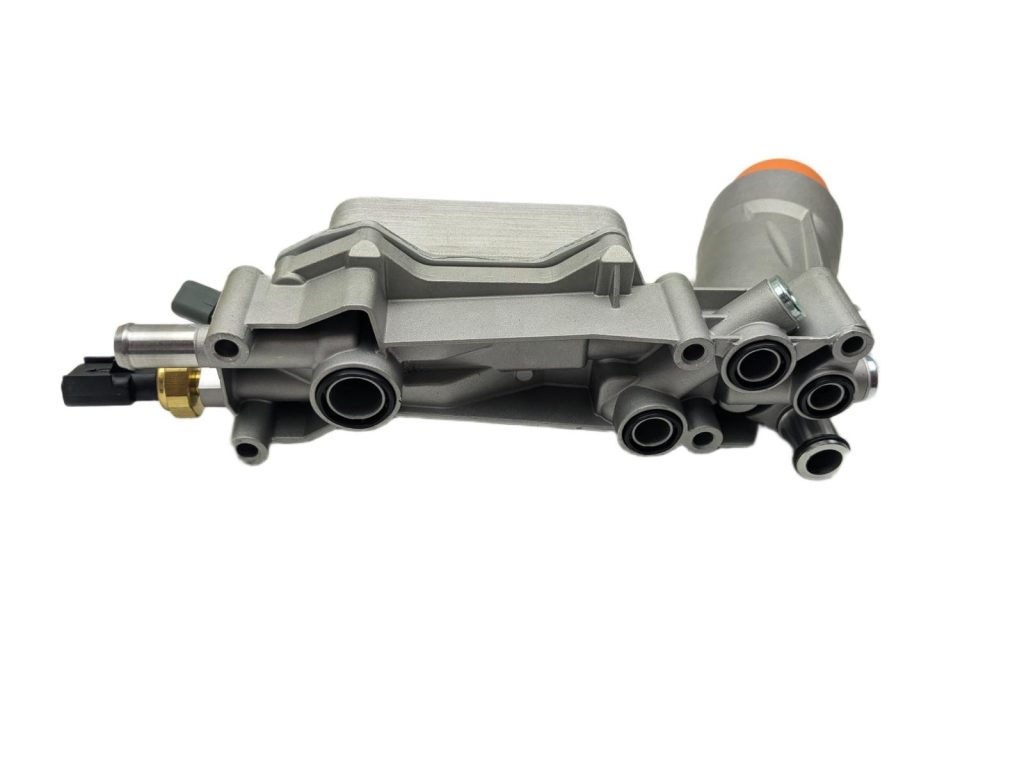
Thousands of heat cycles in that location harden the plastic and its integrated seals. Eventually the material cracks, and oil begins leaking down the back of the engine block.
That leak pattern is notoriously easy to misdiagnose. Many owners and even some technicians initially mistake it for a failed rear main seal, a much more labor-intensive repair.
Chrysler, now under Stellantis, never issued a formal recall for the housing despite widespread documented complaints. The company did eventually discontinue producing the original plastic version for aftermarket sale.
Later Pentastar model years kept the plastic design but revised the seals. Aftermarket suppliers now sell all-aluminum replacement housings specifically marketed as a permanent fix. Driving with a cracked housing isn’t advisable long-term. A worsening leak risks both oil starvation and coolant contamination of the oil supply simultaneously.
6. Window Regulator Clips
Older power window regulators used metal clips or riveted connections between the cable and the glass. Many manufacturers, including Jeep on the 2002-2007 Liberty, switched that connection point to a molded plastic clip.
The clip is small, cheap to produce, and easy to assemble on a production line. It also reduces the metal-on-glass contact points that could scratch window edges.
The failure mode is abrupt rather than gradual. Heat and stress make the plastic brittle over years, and one day the clip simply snaps. Owners describe a loud pop, followed by the window immediately dropping into the door cavity. It typically happens without warning, sometimes mid-drive.
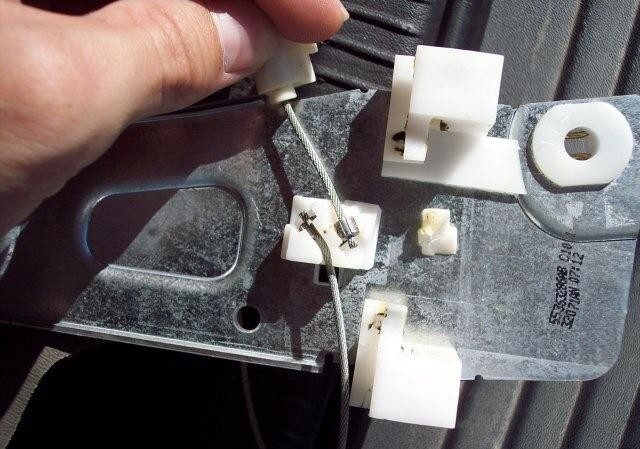
Because the regulator only supports the glass at its center point in many designs, a single broken clip changes how weight is distributed. That can cause the window to bind or tilt before it fully detaches.
The motor keeps running fine in these failures. Press the switch, hear the motor whir, and watch nothing happen because the glass is no longer physically connected to it.
Repair kits with reinforced metal clips are now sold specifically to fix this weak point permanently. Whole regulator assemblies are also commonly replaced rather than just the clip, since the plastic part is rarely sold separately by manufacturers. Driving with the window stuck open exposes the interior to weather and creates an obvious security gap.
7. Door Handles
Traditional door handles are a simple metal lever connected by a metal rod or cable to the latch. Tesla replaced that mechanism with flush, motorized handles built around plastic housings and a small internal paddle gear.
The flush door handle combines aerodynamic efficiency with a sleek, modern appearance by sitting flush with the body panel when not in use. Despite those advantages, owners have reported two common types of failures. The most frequent is a mechanical issue caused by the plastic paddle gear inside the handle mechanism wearing out or stripping after repeated motorized operation.
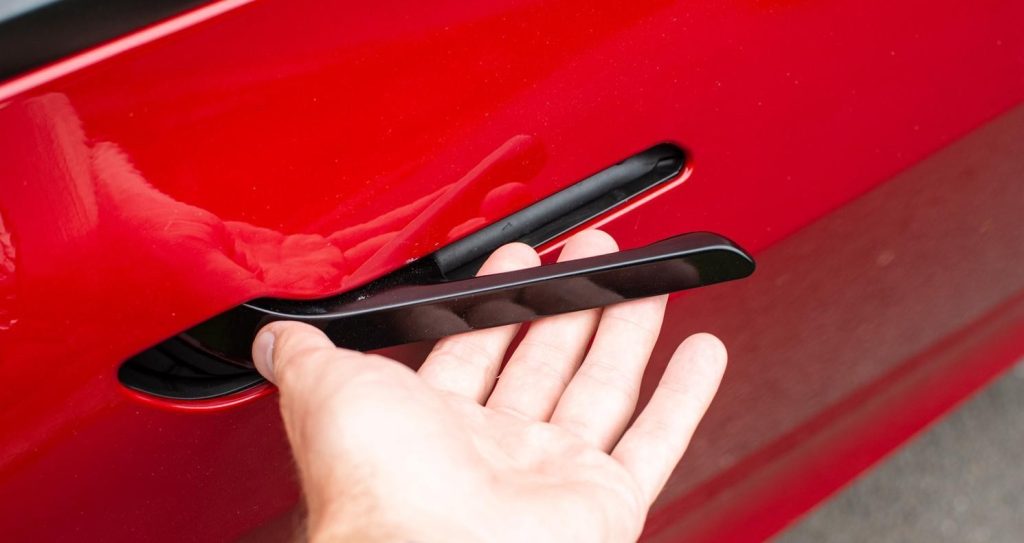
The second is environmental. Snow or water intrusion into the handle cavity can freeze solid in cold climates, locking the handle in place entirely. Tesla’s own published guidance for frozen handles includes warming the car remotely and applying firm bumps to break the ice free. At least one owner reported that procedure peeled the chrome trim off his handle because it had frozen to the paint.
More serious cases involve the handle failing to present at all, from the outside or from an emergency release inside. That’s drawn federal safety scrutiny, since a jammed handle after a collision can trap occupants.
NHTSA has opened investigations into emergency releases being hard to locate or use during a crash. Similar complaints have surfaced against other automakers using comparable flush or motorized handle designs, including Ford’s Mustang Mach-E. Repairing a failed unit typically means disassembling the door panel entirely, not just swapping a lever.
8. Valve Covers with Integrated PCV Systems
Metal valve covers historically just capped the cylinder head, with a separate rubber PCV valve mounted elsewhere. Volkswagen and Audi’s EA888 2.0-liter turbo engine family integrated the PCV diaphragm directly into a molded plastic valve cover.
Combining the parts cuts assembly steps and hose connections. It also reduces the number of potential leak points, at least on paper. In practice, the integrated diaphragm is the actual weak point, not the plastic housing itself. The rubber membrane inside tears with age and heat cycling, well before the surrounding plastic shows any damage.
A torn diaphragm creates a significant vacuum leak inside the crankcase ventilation system. The telltale symptom is a high-pitched whistle at idle, often changing pitch when the oil filler cap is touched.
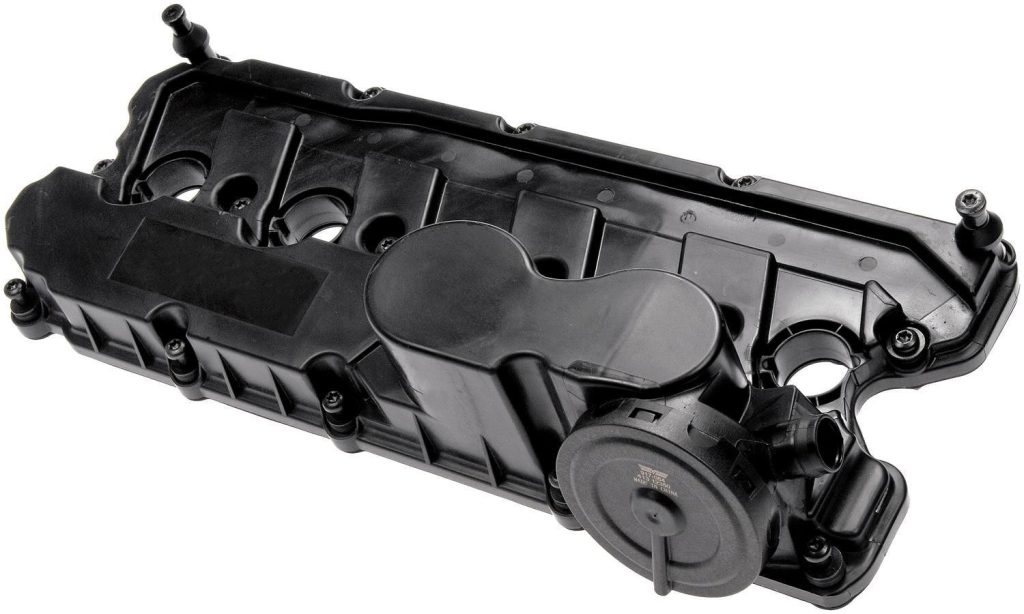
Because the diaphragm isn’t sold separately from the housing, a single torn membrane means replacing the entire valve cover assembly. There’s no way to fix just the failed rubber part.
Left unaddressed, the excess crankcase vacuum can pull the rear main seal inward over time. That turns a moderate PCV repair into a full rear main seal replacement job.
Oil forced past valve cover gaskets by the pressure imbalance often drips onto the exhaust manifold or turbocharger. That produces a distinct burning oil smell that many owners notice before they hear the whistle.
No major recall covers this part specifically, though Audi has issued technical service bulletins addressing related oil consumption symptoms. Used OEM covers are a common, cost-effective replacement since the plastic housing itself rarely cracks.
Also Read: 10 Most Reliable Volkswagen Jetta Generations Ranked
