A third row can make an SUV seem like the perfect family vehicle, but not every seven-passenger model delivers usable space for adults.
Many manufacturers advertise seating for six or seven occupants, yet the rearmost seats often sacrifice legroom, headroom, and ease of entry in favor of maximizing cargo space or keeping the vehicle compact.
Independent testing from organizations such as the EPA, Consumer Reports, Edmunds, MotorTrend, Car and Driver, and manufacturer specifications consistently show that several popular SUVs have third rows best reserved for children.
These models illustrate why shoppers should examine interior dimensions carefully before assuming every third-row SUV comfortably accommodates adult passengers.
Also Read: 10 States With the Roughest Roads, Per Federal Data
1. Toyota Highlander
The Toyota Highlander has earned an outstanding reputation for reliability, safety, and family-friendly features, making it one of America’s best-selling midsize SUVs. However, buyers expecting a genuinely comfortable third row for adults often discover that the rear seats are much more suitable for children or short trips.
Interior measurements published by Toyota and evaluated by outlets such as Edmunds and Car and Driver consistently show that the Highlander’s third row trails larger competitors in available passenger space.
The biggest limitation is legroom. The third row provides approximately 28 inches of legroom, which is significantly less than what most adults require for comfortable long-distance travel.
Even passengers around six feet tall usually need the second-row seats moved forward substantially just to fit, reducing comfort for those sitting in the middle row as well. Headroom is also limited because of the vehicle’s sloping rear roofline, forcing taller occupants into a hunched seating position.
Entry and exit present another challenge. Accessing the third row requires folding and sliding the second-row seats, and the opening is narrower than what buyers will find in larger SUVs such as the Toyota Grand Highlander or Chevrolet Traverse.
For children, this arrangement works well. For adults entering repeatedly during a road trip, it quickly becomes inconvenient.
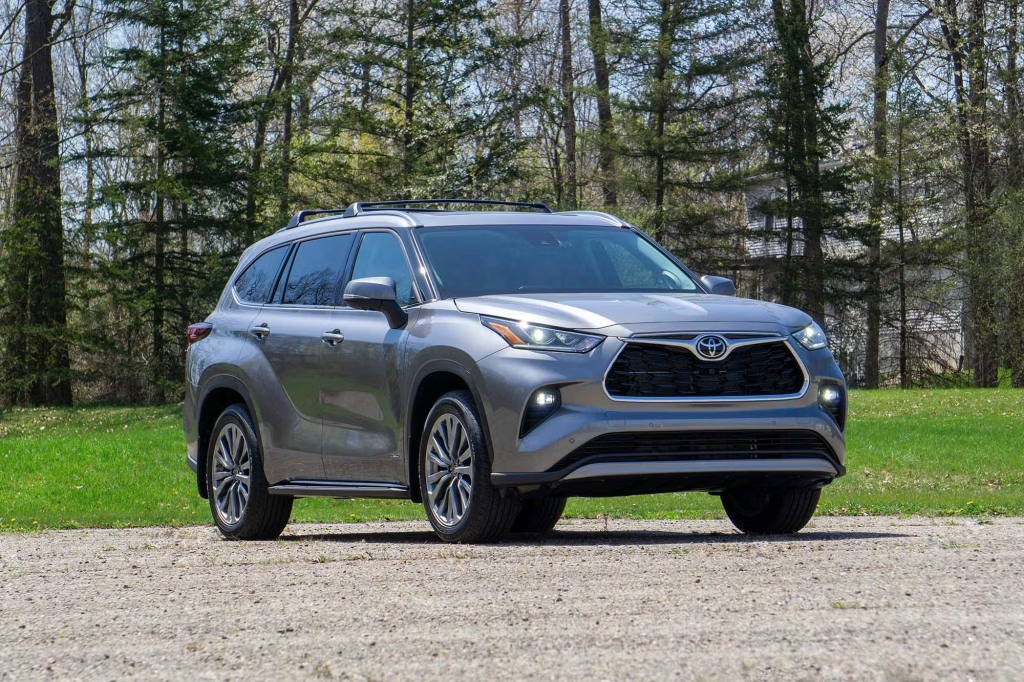
Consumer Reports, MotorTrend, and Edmunds have all noted that while the Highlander excels in ride quality, fuel economy, and reliability, its third row remains one of the least accommodating in the midsize three-row SUV segment.
Buyers who regularly carry adult passengers may find larger alternatives better suited to their needs despite the Highlander’s many strengths.
Specifications
- Engine: 2.4-liter Turbocharged Inline-4
- Torque: 310 lb-ft
- Horsepower: 265 hp
- Length/Width: 194.9 inches / 76.0 inches
2. Mazda CX-90
Mazda designed the CX-90 to compete with premium SUVs by emphasizing luxury materials, engaging driving dynamics, and refined styling. It succeeds in many of those areas, but buyers should carefully evaluate the third row before assuming it can comfortably accommodate adults.
Independent reviews from Edmunds, Car and Driver, MotorTrend, and manufacturer interior specifications consistently point out that the rear-most seating area is noticeably tighter than those found in several similarly sized competitors.
Although the CX-90 is physically larger than the outgoing CX-9, the stylish exterior design limits usable interior volume. Third-row legroom measures just under 31 inches, while the low roofline reduces headroom for taller passengers.
Adults can fit for short trips across town, but extended highway travel often leads to cramped knees and limited foot space beneath the second-row seats. Much of the available room also depends on second-row occupants sliding their seats forward, creating a compromise between passenger comfort in both rows.
Cargo capacity further illustrates the packaging challenge. With all three rows in use, luggage space behind the third row is relatively limited compared with larger family-oriented SUVs. This means owners carrying seven passengers often have little room left for larger suitcases, strollers, or sports equipment.
Reviewers have consistently praised the CX-90 for its premium interior, smooth inline-six engine, and balanced handling.
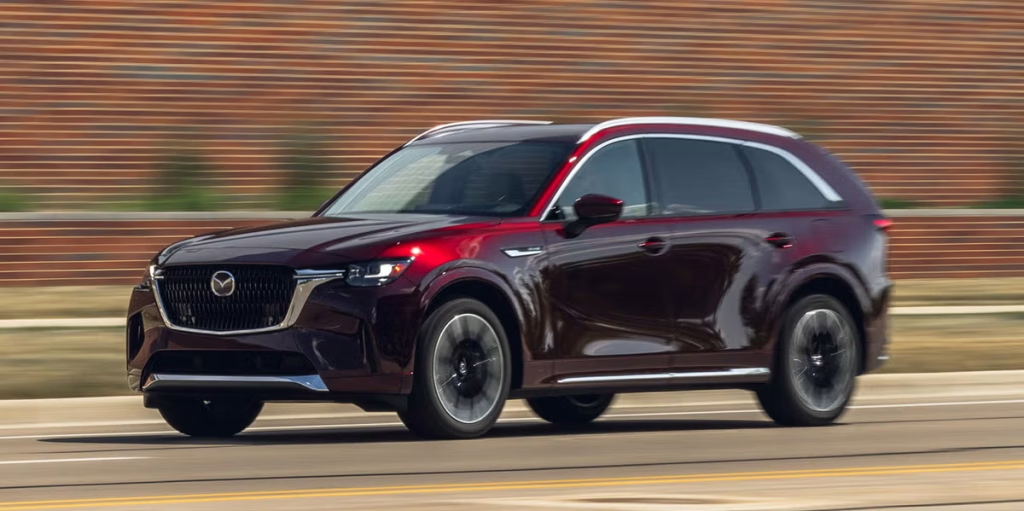
At the same time, many have concluded that buyers needing frequent adult use of the third row should consider roomier alternatives such as the Chevrolet Traverse, Volkswagen Atlas, or Toyota Grand Highlander.
The CX-90 excels as a luxury-focused midsize SUV, but its third row remains better suited for children and occasional adult passengers.
Specifications
- Engine: 3.3-liter Turbocharged Inline-6
- Torque: 369 lb-ft
- Horsepower: 340 hp
- Length/Width: 201.6 inches / 77.6 inches
3. Mitsubishi Outlander
The Mitsubishi Outlander stands out because it offers three-row seating in a compact SUV segment where most competitors only provide two rows. On paper, that sounds like a significant advantage.
In practice, however, the third row is among the smallest sold in the U.S. market and is intended primarily for children.
Interior specifications published by Mitsubishi, along with evaluations from Edmunds, MotorTrend, and Car and Driver, consistently conclude that the rear seats are unsuitable for most adults outside of very short trips.
The numbers tell much of the story. The Outlander’s third row provides approximately 18.7 inches of legroom, one of the lowest figures in the segment.
Even average-sized adults often find their knees positioned well above their hips because the seat cushion sits close to the floor. This posture quickly becomes uncomfortable during extended travel and leaves very little room for natural movement.
Getting into the third row also requires patience. The second-row seats slide forward to create an access path, but the opening itself remains narrow.
Taller passengers frequently need to bend considerably while entering, and exiting can be equally awkward, especially in crowded parking lots. The limited headroom caused by the sloping rear roof further reduces comfort for anyone taller than average.
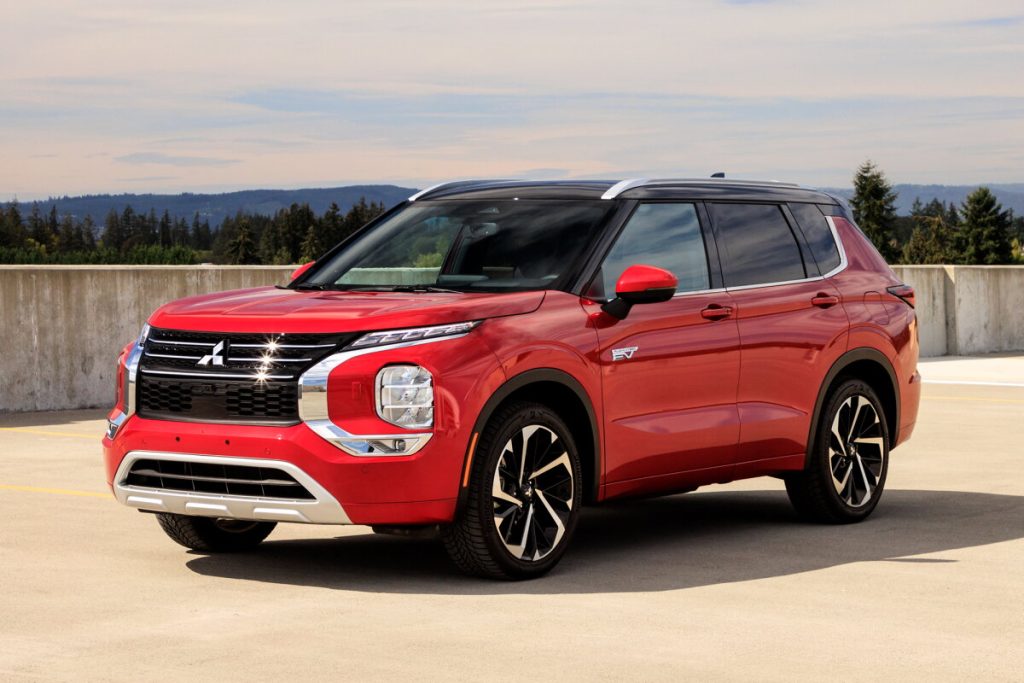
Consumer reviews have consistently praised the Outlander for its attractive interior, available plug-in hybrid technology, and excellent value. At the same time, reviewers nearly always describe the third row as an emergency seat rather than a practical space for adults.
Buyers who routinely transport six or seven grown passengers will likely be better served by a midsize SUV designed with larger rear seating areas instead of a compact crossover that simply adds an extra row.
Specifications
- Engine: 2.5-liter Inline-4
- Torque: 181 lb-ft
- Horsepower: 181 hp
- Length/Width: 185.4 inches / 73.3 inches
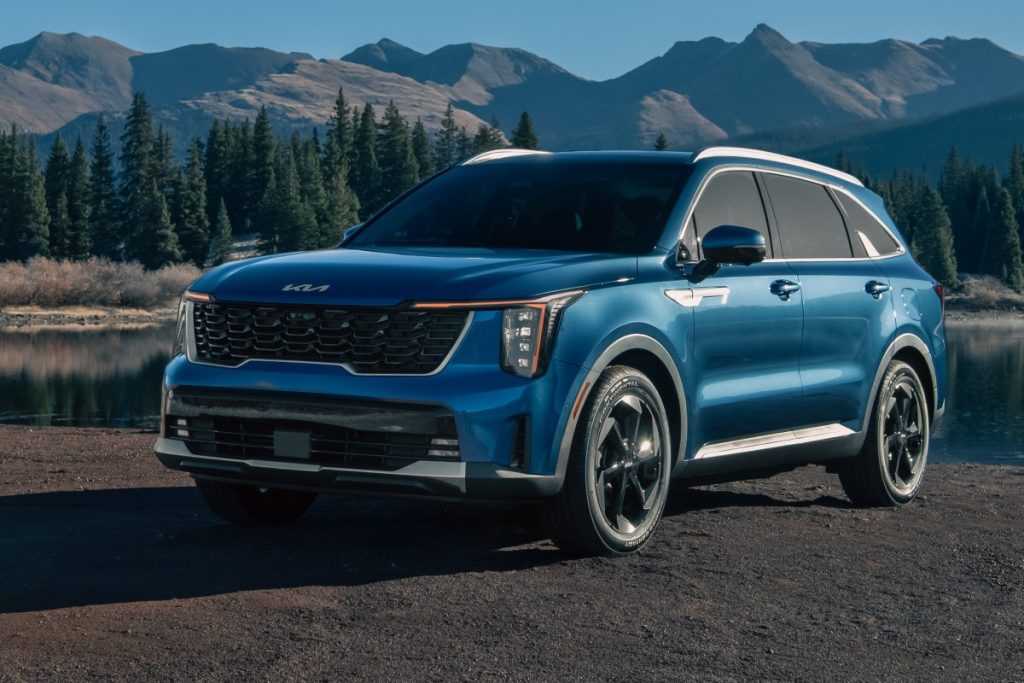
4. Kia Sorento
The Kia Sorento occupies an interesting position between compact and midsize SUVs. It offers available third-row seating, attractive styling, modern technology, and a comfortable cabin for front and second-row occupants.
The compromise appears once buyers reach the rearmost seats. Interior measurements published by Kia and analyzed by outlets including Edmunds, Kelley Blue Book, and Car and Driver show that the Sorento’s third row is best viewed as occasional seating rather than a place where adults will want to spend hours.
Third-row legroom measures approximately 29.6 inches, placing it behind several larger three-row competitors. Adults can physically fit, but the seating position forces knees upward because the floor sits relatively high.
Limited foot space beneath the second-row seats further restricts comfort, particularly for passengers wearing larger shoes. During long highway trips, this combination can become tiring far more quickly than in SUVs with more generous packaging.
The Sorento’s compact exterior dimensions also affect cargo capacity. When all three rows are occupied, the remaining storage area behind the third row is modest.
Families traveling with six or seven people often need to pack carefully or rely on roof-mounted cargo carriers to carry larger luggage. This limitation is common among smaller three-row SUVs but is worth considering before purchase.
Independent testing organizations consistently praise the Sorento’s efficiency, available hybrid powertrains, safety technology, and upscale interior design. They also agree that the third row serves children much better than adults.
Buyers who occasionally need extra seating will appreciate its flexibility, while those transporting adult passengers regularly may find larger vehicles such as the Kia Telluride or Hyundai Palisade considerably more accommodating.
Specifications
- Engine: 2.5-liter Turbocharged Inline-4
- Torque: 311 lb-ft
- Horsepower: 281 hp
- Length/Width: 189.6 inches / 74.8 inches
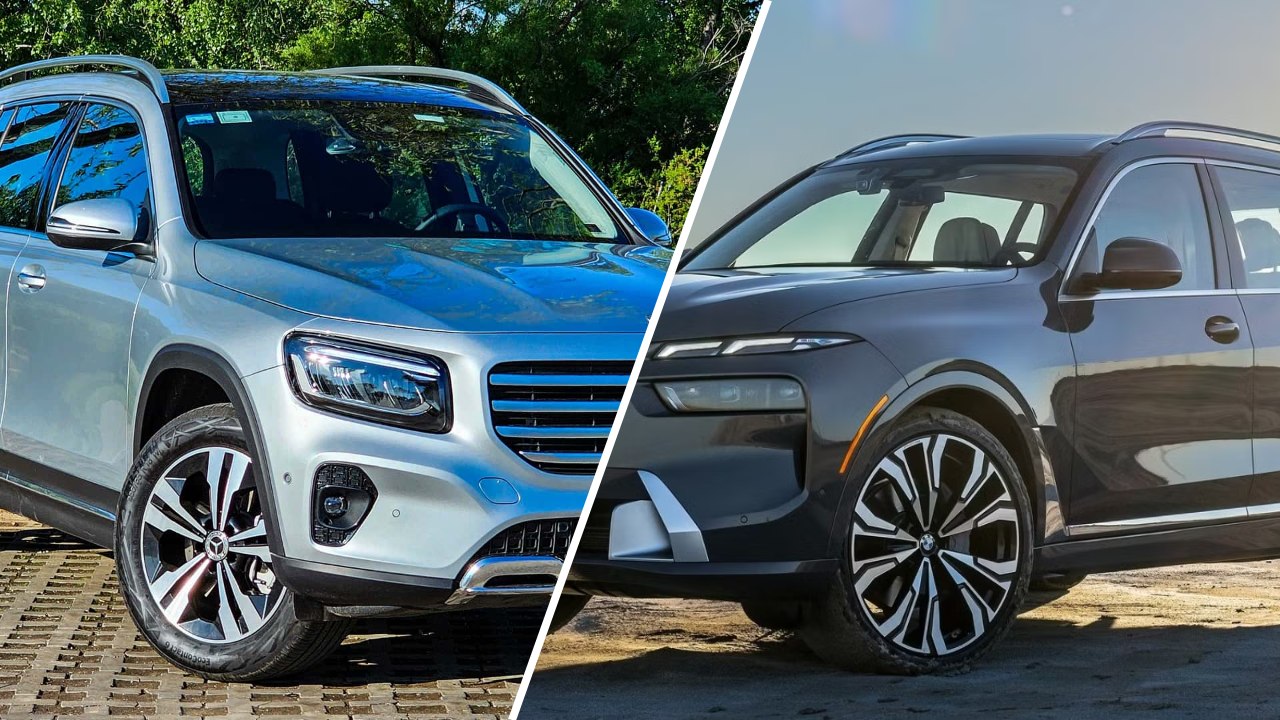
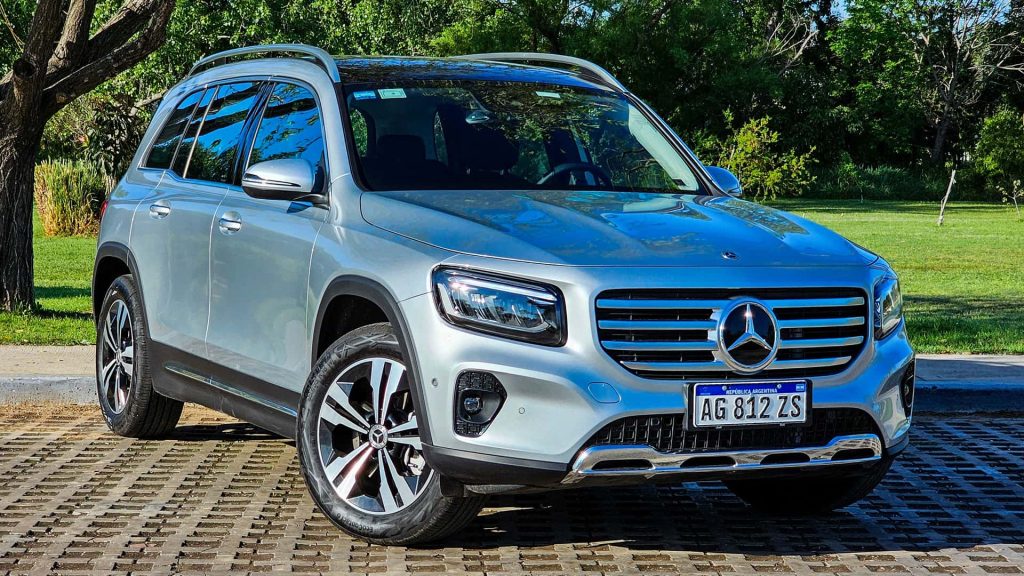
5. Mercedes-Benz GLB 250
At first glance, the Mercedes-Benz GLB 250 appears to solve a unique problem by offering optional third-row seating in a compact luxury SUV. Few premium vehicles of its size can claim seven-passenger capacity.
However, the third row is one of the smallest available in the luxury segment, and Mercedes-Benz itself notes that these seats are primarily intended for smaller occupants. Interior dimensions published by the manufacturer and evaluations from Car and Driver, Edmunds, and MotorTrend consistently show that adults will find the rear seats restrictive.
The compact platform dictates most of the compromises. Third-row legroom is limited, and the low seating position places passengers with their knees noticeably high. Adults taller than about 5 feet 8 inches will likely find both headroom and knee clearance insufficient for anything beyond a brief trip across town.
The seat cushions are also shorter than those in the first two rows, reducing thigh support and making longer journeys uncomfortable.
Cargo capacity highlights another tradeoff. With the third row raised, the available luggage area shrinks considerably, leaving only enough space for a few small bags or grocery items. Families traveling with six or seven people often need to fold one side of the third row or add a roof cargo carrier to carry larger suitcases.
This limitation is common among compact three-row SUVs, but it becomes more noticeable in a luxury vehicle where buyers expect greater versatility.
The GLB excels in other areas. Its upscale interior, advanced MBUX infotainment system, refined ride quality, and available all-wheel drive have earned praise from reviewers.
Still, nearly every major road test concludes that buyers who regularly transport adults in the third row should consider larger luxury SUVs such as the Mercedes-Benz GLS instead. The GLB’s rear-most seats are best treated as occasional accommodations rather than everyday adult seating.
Specifications
- Engine: 2.0-liter Turbocharged Inline-4
- Torque: 295 lb-ft
- Horsepower: 221 hp
- Length/Width: 182.4 inches / 72.4 inches
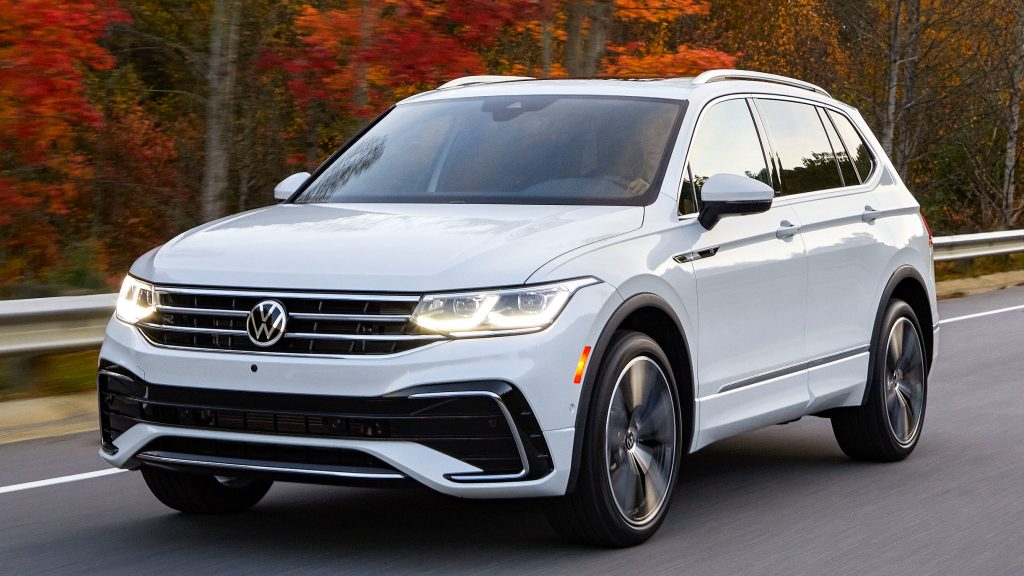
6. Volkswagen Tiguan
The Volkswagen Tiguan occupies a rare position in the compact SUV class by offering an available third row on front-wheel-drive models sold in the United States. That feature gives the Tiguan a marketing advantage over many competitors, but the additional seating comes with clear space limitations.
Independent testing by Consumer Reports, Edmunds, Kelley Blue Book, and Car and Driver consistently identifies the third row as suitable mainly for children rather than full-sized adults.
Unlike larger three-row SUVs built on longer wheelbases, the Tiguan must package an additional seat within compact exterior dimensions. The result is limited legroom and a relatively upright seating position.
Adults often find their knees pressed against the second-row seatbacks, while the raised floor forces legs into an uncomfortable angle. Even average-height passengers can begin feeling cramped after a relatively short drive.
Access also requires some planning. The second-row bench slides forward to improve entry, but the opening remains narrow compared with midsize SUVs.
Once seated, taller passengers may also notice limited shoulder room because the body narrows toward the rear of the vehicle. These compromises are understandable given the Tiguan’s size, yet they reinforce that the third row should be viewed as occasional seating rather than permanent accommodation.
Despite these shortcomings, the Tiguan remains a strong choice for buyers who only occasionally need extra seats. It offers a comfortable ride, intuitive controls, generous cargo space when the third row is folded, and respectable fuel economy.
The flexibility of having two additional seats available in an emergency is valuable, but buyers expecting adults to travel comfortably in the back for extended highway trips may want to step up to Volkswagen’s larger Atlas instead.
Specifications
- Engine: 2.0-liter Turbocharged Inline-4
- Torque: 221 lb-ft
- Horsepower: 184 hp
- Length/Width: 186.1 inches / 72.4 inches
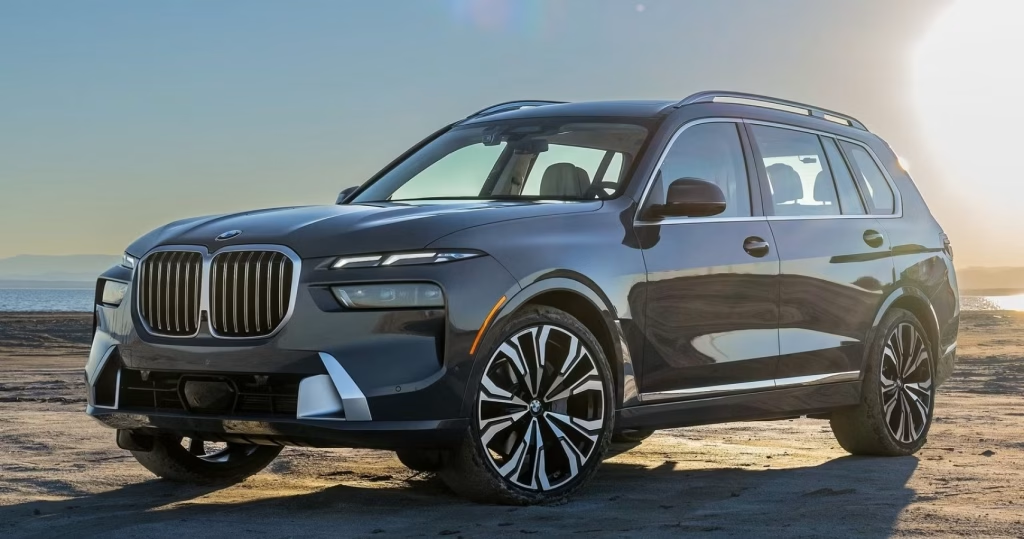
7. BMW X7
The BMW X7 is marketed as the flagship SUV in BMW’s lineup, and unlike many compact three-row crossovers, it is genuinely capable of carrying seven passengers. However, when all three rows are occupied by adults, the rear-most seats still present noticeable compromises compared with larger body-on-frame SUVs and luxury people movers.
Independent evaluations from Edmunds, Car and Driver, Consumer Reports, and manufacturer interior specifications consistently note that while the X7’s third row is among the better offerings in the luxury segment, it remains less comfortable for full-sized adults on extended trips than buyers may expect from a vehicle of this size and price.
Third-row legroom measures approximately 33.3 inches, which is respectable but still depends heavily on the second-row passengers sliding their seats forward.
If the captain’s chairs or bench remain in their normal position for taller occupants, rear passengers quickly lose knee clearance. The roofline also tapers toward the rear, reducing headroom for adults above six feet tall.
Seat design contributes to the issue as well. The third-row cushions sit lower to the floor than those in the first two rows, creating a knees-up seating posture during longer drives. While acceptable for occasional trips across town, this position becomes tiring during long interstate journeys. Cargo space is another compromise.
With all seats occupied, the luggage area behind the third row is noticeably smaller than what buyers receive in full-size SUVs such as the Chevrolet Suburban or Jeep Wagoneer, making family vacations more challenging.
The X7 remains an outstanding luxury SUV with exceptional technology, refined powertrains, and premium craftsmanship.
Still, buyers who frequently travel with seven adults should recognize that even BMW’s largest SUV cannot match the third-row comfort provided by larger truck-based competitors specifically engineered around maximum passenger space.
Specifications
- Engine: 3.0-liter Turbocharged Inline-6
- Torque: 398 lb-ft
- Horsepower: 375 hp
- Length/Width: 203.3 inches / 78.7 inches
8. Infiniti QX60
The Infiniti QX60 has long been positioned as a premium family SUV, offering upscale styling, a quiet cabin, and standard three-row seating. It succeeds in creating a comfortable experience for front and second-row passengers, but the third row tells a different story.
Measurements published by Infiniti and assessments from MotorTrend, Edmunds, Kelley Blue Book, and Car and Driver consistently indicate that the rear seats are better suited for children than adults during extended travel.
Legroom in the third row measures approximately 28 inches, placing it near the lower end of the midsize luxury SUV segment. Adults can fit for short drives, but their knees often rest close to the second-row seatbacks unless those seats are moved forward.
Because the floor sits relatively high, taller passengers also sit with high knees, reducing long-distance comfort. The gently sloping rear roof further limits headroom for occupants approaching six feet tall.
One feature the QX60 does perform well is accessibility. Infiniti’s one-touch second-row release allows easier entry into the third row even when child seats are installed, a thoughtful design that simplifies loading passengers.
Although getting in and out of the cabin is straightforward, interior space becomes noticeably tighter once adults are seated. Cargo capacity behind the third row is equally limited, so fitting luggage for seven passengers often requires strategic packing.
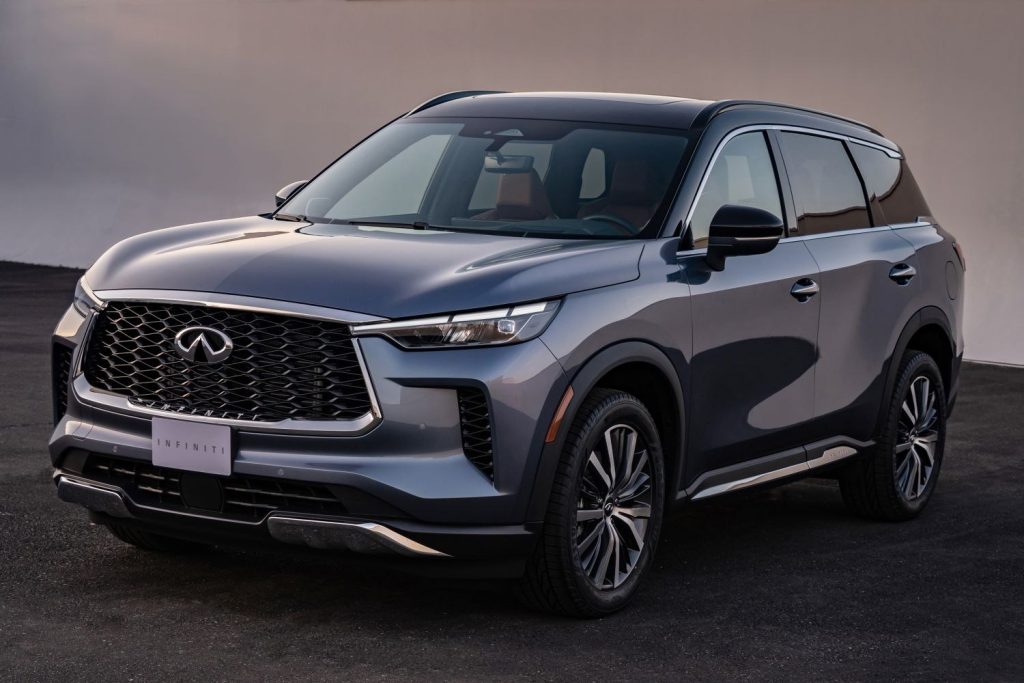
The QX60 continues to receive praise for its refined ride quality, quiet cabin, advanced driver assistance systems, and premium interior finishes.
Yet nearly every comprehensive comparison test reaches the same conclusion: families with younger children will appreciate the flexibility of the third row, while buyers expecting adults to travel comfortably on long road trips should consider larger SUVs with more generous rear passenger accommodations.
Specifications
- Engine: 2.0-liter Variable Compression Turbocharged Inline-4
- Torque: 286 lb-ft
- Horsepower: 268 hp
- Length/Width: 198.2 inches / 86.0 inches (including mirrors)
Also Read: 10 Cars With the Best Factory Headlights