
When enthusiasts think of Toyota performance, models like the Supra, GR Corolla, or GR86 usually come to mind. Long before any of those cars existed, however, Toyota built a machine that completely transformed the world’s perception of Japanese automobiles.
During the 1960s, Japanese cars were widely regarded as economical and dependable, but few people associated them with luxury, high performance, or exotic styling. Toyota set out to change that perception with a car unlike anything it had built before.
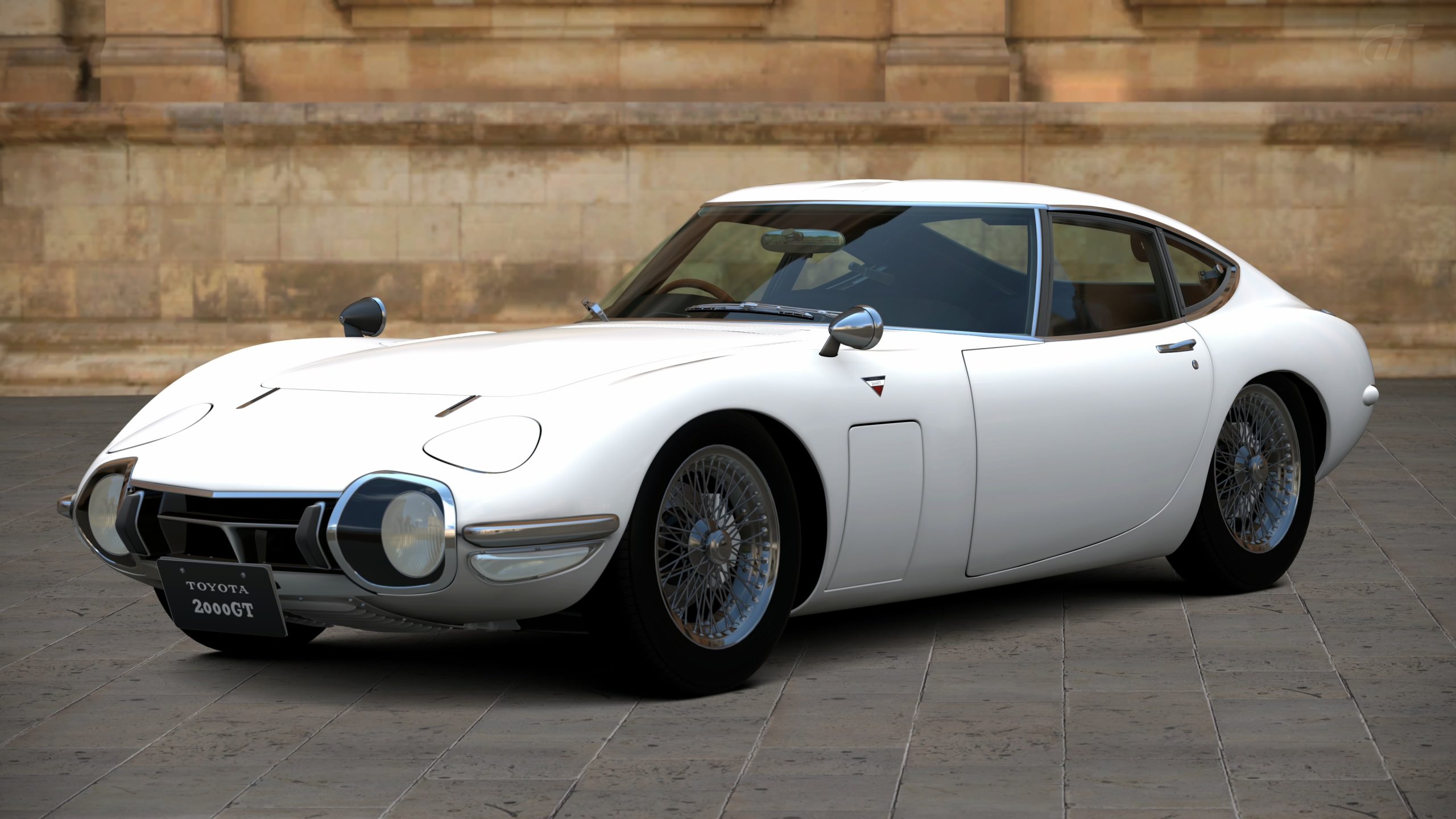
The result was the Toyota 2000GT, introduced in 1967, a sleek grand touring coupe that combined advanced engineering, breathtaking design, and meticulous hand-built craftsmanship.
Produced in partnership with Yamaha Motor Company, the 2000GT was assembled largely by hand, making it one of the rarest production sports cars ever to come from Japan. By the end of production in 1970, Toyota had built just 351 examples, instantly securing the car’s place among the world’s most exclusive classics.
Today, automotive historians often describe the 2000GT as Japan’s first true supercar. It wasn’t simply Toyota’s fastest vehicle of its era. It demonstrated that a Japanese manufacturer could compete with respected European brands in engineering, performance, and design, helping reshape the global automotive industry.
Also Read: 10 Sedans With Headlights That Yellow Before 60,000 Miles
A Collaboration That Changed Japanese Automotive History
The 2000GT began as an ambitious engineering project during the mid-1960s. Toyota wanted to build an international flagship capable of competing with prestigious grand touring cars from Europe.
To accomplish this, the company partnered with Yamaha, whose engineers brought extensive expertise in precision manufacturing, high-performance engines, and low-volume hand-built production.
While Toyota supplied the full concept and mechanical foundation, Yamaha played a major role in engineering development and final assembly.
Every 2000GT received an extraordinary amount of manual craftsmanship, with skilled technicians carefully fitting body panels, finishing interiors, and assembling components by hand rather than relying on mass-production techniques.
Power came from a 2.0-liter DOHC inline-six known as the 3M engine, derived from Toyota’s M-series architecture but extensively reworked by Yamaha.
The aluminum crossflow cylinder head featured dual overhead camshafts, hemispherical combustion chambers, and three Mikuni-Solex twin-choke carburetors, advanced technology for a production road car during the 1960s.
The engine produced approximately 150 horsepower and 130 lb-ft of torque, impressive figures considering the 2000GT weighed only about 2,500 pounds.
Combined with a close-ratio five-speed manual transmission, independent front and rear suspension, four-wheel disc brakes, and a limited-slip differential, the Toyota delivered driving dynamics comparable to many respected European sports cars.
Performance figures reflected the advanced engineering. Contemporary road tests recorded 0 to 60 mph in roughly 8.5 to 10 seconds, depending on testing conditions, with a top speed approaching 135 mph. Those numbers placed the 2000GT among the quickest production cars available from Japan during its era.
Its styling was equally remarkable. The long hood, short rear deck, flowing roofline, covered headlamps, and elegant proportions drew frequent comparisons with contemporary Jaguars, although the design was entirely Toyota’s own. Inside, rosewood dashboard trim crafted by Yamaha’s musical instrument division added an unusual level of luxury, while deeply recessed gauges and supportive bucket seats emphasized the car’s sporting intentions.
Toyota knew the 2000GT needed more than attractive styling to gain international credibility. Before production began, prototypes participated in endurance testing and speed-record attempts.
In 1966, specially prepared 2000GT prototypes established multiple international speed and endurance records at the Yatabe Test Track in Japan. The cars maintained exceptionally high average speeds over extended distances, proving the durability of Toyota’s engineering rather than simply demonstrating outright performance.
The 2000GT also gained worldwide recognition through popular culture. A specially modified open-top version appeared in the 1967 James Bond film You Only Live Twice.
Because actor Sean Connery was too tall to fit comfortably inside the production coupe, Toyota quickly created two custom roofless cars specifically for filming. Although these vehicles were never offered for sale, their appearance introduced millions of moviegoers to Toyota’s remarkable flagship.
Despite widespread praise from journalists, production remained intentionally limited. Building the 2000GT required extensive hand assembly, making it expensive to manufacture. In the United States, its sticker price exceeded many established European sports cars, limiting demand even though critics praised its quality and engineering.
A Rare Classic That Changed Toyota Forever
Only 351 production examples were completed between 1967 and 1970, making the 2000GT significantly rarer than many famous Ferraris, Aston Martins, or Maseratis from the same period. Its scarcity has made it one of the most valuable Japanese collector cars ever built.
Well-preserved examples regularly sell for more than $1 million, while exceptional, historically significant cars have crossed the auction block for well over $2 million.
Collectors value the 2000GT not only because of its rarity but also because it represents the moment Japanese manufacturers proved they could build world-class sports cars capable of competing with Europe’s finest.
The influence of the 2000GT extended far beyond its short production run. It established Toyota’s performance credentials decades before the Celica, MR2, Supra, and modern Gazoo Racing models arrived.
Many engineers and executives later acknowledged that the confidence gained from the 2000GT project helped shape Toyota’s future approach to sports-car development.
Looking back, the Toyota 2000GT was far more than the company’s first halo car. It combined advanced engineering, elegant styling, and meticulous hand-built craftsmanship into a package that challenged long-held assumptions about Japanese automobiles.
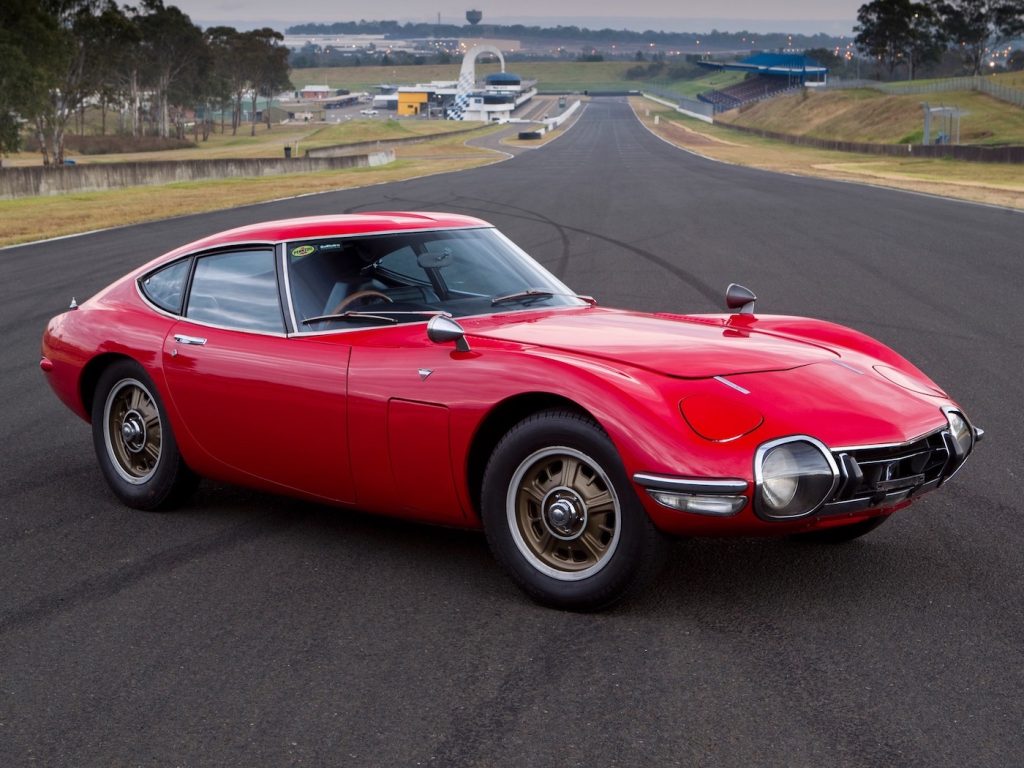
Its partnership with Yamaha produced one of the most technically sophisticated sports cars of the 1960s, while its production total of just 351 units ensured lasting exclusivity.
More than half a century later, the 2000GT remains one of the most important cars in automotive history. It was the vehicle that announced Japan’s arrival as a serious performance-car manufacturer, laying the foundation for generations of legendary Toyota sports cars that followed.
The 2000GT’s Lasting Legacy in the Collector Car World
The Toyota 2000GT’s reputation has grown dramatically over the past two decades, evolving from a little-known classic into one of the most coveted collector cars in the world. Much of its appeal comes from its rarity, historical significance, and originality.
With only 351 production cars built, surviving examples are scarce, and many remain in long-term private collections or museums. Unlike mass-produced sports cars of the era, the 2000GT was built in extremely limited numbers, making every authentic example an important piece of automotive history.
Collectors also value the car because it represents a pivotal moment for Japan’s automotive industry. Before the 2000GT, European manufacturers largely dominated the high-performance grand touring segment.
The success of Toyota’s flagship demonstrated that a Japanese automaker could produce a vehicle with world-class engineering, premium craftsmanship, and competitive performance.
That achievement paved the way for future icons such as the Toyota Supra, Lexus LFA, Honda NSX, and Nissan GT-R, all of which benefited from the credibility established by the 2000GT decades earlier.
Auction results reflect the growing appreciation for the model. During the last decade, exceptional examples have regularly sold for well over $1 million, with some historically significant cars exceeding $2 million at prestigious international auctions.
Factors such as original paint, matching-numbers engines, documented ownership history, and factory-correct components significantly influence values. Because replacement parts are limited and many components were unique to the 2000GT, well-preserved cars command a substantial premium.
Beyond its market value, the 2000GT remains an engineering milestone. Features such as four-wheel independent suspension, four-wheel disc brakes, a dual-overhead-cam inline-six, and meticulous hand-built construction placed it among the most technically advanced grand touring cars of the late 1960s.
More importantly, it changed global perceptions of Japanese automobiles. What began as Toyota’s ambitious experiment ultimately became the car that introduced Japan as a serious competitor in the international sports car arena.
More than half a century after production ended, the Toyota 2000GT continues to symbolize innovation, craftsmanship, and the beginning of Toyota’s performance legacy, ensuring its place among the greatest and most influential classic sports cars ever built.
