
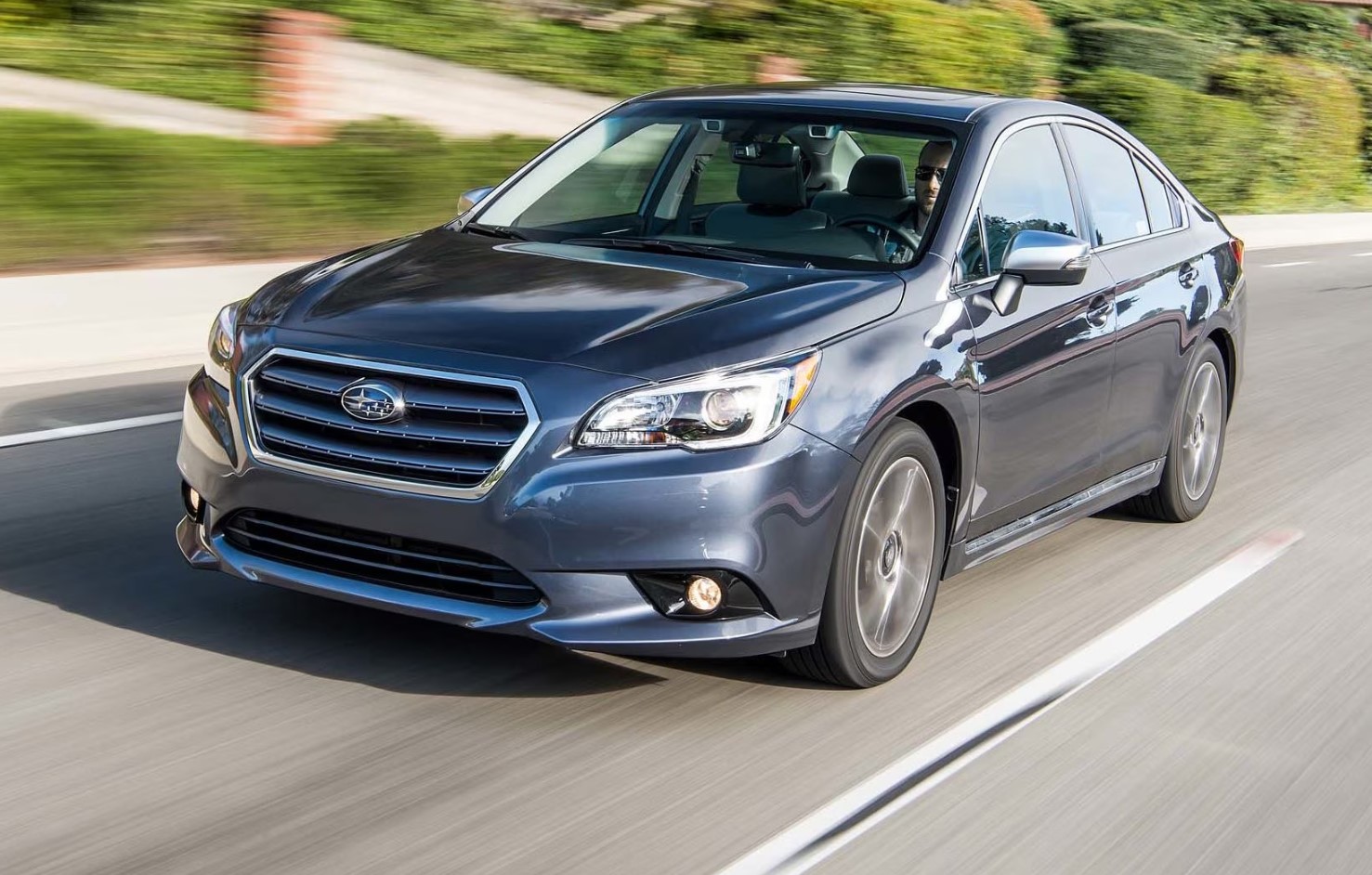
The Subaru Legacy has quietly built a reputation as one of the most dependable midsize sedans in America.
While rivals such as the Toyota Camry and Honda Accord dominate sales charts, the Legacy attracts buyers who prioritize standard all-wheel drive, strong safety ratings, comfortable ride quality, and long-term reliability.
It is particularly popular in regions with harsh winters, where its symmetrical all-wheel-drive system offers a clear advantage over most front-wheel-drive competitors.
However, buying a car is only the beginning of the financial commitment. The window sticker tells you how much the dealership charges, but it doesn’t reveal what you’ll spend over the next five years.
Fuel, depreciation, insurance, financing, maintenance, registration fees, tires, and unexpected repairs all contribute to the true cost of ownership.
According to ownership data published by AAA, Kelley Blue Book, Edmunds, Consumer Reports, FuelEconomy.gov, and J.D. Power, depreciation remains the largest expense for most owners, often exceeding fuel and maintenance combined.
Assuming a new Subaru Legacy driven 15,000 miles per year, this article breaks down every major ownership expense over five years to help buyers understand what they can realistically expect.
Also Read: What a Ford Endeavour Costs to Own for Five Years
Buying the Car: Purchase Price and Financing
The final generation Subaru Legacy sold in the U.S. was offered in several trims, ranging from well-equipped entry-level models to premium Touring XT versions with turbocharged power, leather upholstery, and advanced technology. Most buyers typically spent between $30,000 and $38,000 before taxes and destination charges.
For this ownership analysis, we’ll use a purchase price of $33,500, representing a well-equipped, mid-level Legacy.
Many buyers finance rather than pay cash. Assuming a 10% down payment, a 60-month loan, and an interest rate around 6%, financing adds a significant amount to the total ownership cost.
A typical breakdown looks like this:
- Purchase price: $33,500
- Down payment: $3,350
- Amount financed: $30,150
- Estimated interest over five years: $4,200 to $4,800
While interest rates vary with credit scores and market conditions, financing usually becomes the second hidden cost many shoppers overlook after depreciation.
Buyers paying cash eliminate loan interest entirely, but they still experience the vehicle’s depreciation.
Depreciation: The Largest Expense Most Owners Never Notice
Many drivers think fuel is their biggest automotive expense. In reality, depreciation usually costs far more.
Depreciation represents the difference between what you paid for the car and what it’s worth when you sell or trade it. Fortunately, Subaru generally performs better than many mainstream brands thanks to its reputation for reliability, all-wheel drive, and strong owner loyalty.
Industry resale studies from Kelley Blue Book and J.D. Power consistently rank Subaru among the stronger-performing brands for retained value.
Assuming our Legacy originally cost $33,500, its estimated resale value after five years falls between $19,000 and $20,500, depending on mileage, maintenance history, accident records, and local market demand.
That results in depreciation totaling roughly
$13,000 to $14,500
Although depreciation doesn’t require writing a check every month, it remains real money that disappears when it’s time to sell the vehicle.
For most owners, this single category represents nearly one-third of all ownership costs.
Fuel Costs: Predictable but Significant
The Subaru Legacy offers respectable fuel economy considering every model includes standard all-wheel drive.
Most naturally aspirated models achieve approximately 30 to 31 mpg combined, while turbocharged XT trims average closer to 26 to 27 mpg.
Using the naturally aspirated version as an example:
- Annual mileage: 15,000 miles
- Combined fuel economy: 31 mpg
- Regular gasoline price: $3.60 per gallon
The Legacy consumes approximately 484 gallons of fuel each year.
Annual fuel expense comes to approximately:
$1,740
Over five years:
About $8,700
Fuel prices naturally fluctuate throughout the country. If gasoline averages closer to $4.00 per gallon, total fuel costs can easily exceed $9,500 during five years of ownership.
One advantage of the Legacy is that it runs on regular unleaded gasoline, avoiding the higher operating costs associated with premium fuel required by some competitors.
Insurance and Registration Add Up Every Year
Insurance costs vary enormously depending on where the vehicle is registered, the driver’s age, accident history, annual mileage, deductible, and coverage limits.
Fortunately, the Legacy benefits from excellent crash-test ratings and a comprehensive suite of driver-assistance technologies, helping keep premiums relatively competitive.
A typical U.S. owner pays approximately the following:
Insurance: $1,600 to $1,900 annually
Five-year insurance estimate:
$8,000 to $9,500
Owners must also budget for expenses that are easy to forget when calculating ownership costs, including:
- Registration renewals
- Vehicle inspections
- License plate fees
- Local property taxes where applicable
- Title renewal fees
Depending on the state, these expenses generally total the following:
$1,800 to $2,500 over five years
Individually, these charges appear manageable, but together they add several thousand dollars to the ownership experience.
Maintenance Costs Stay Lower Than Many AWD Rivals
Routine maintenance is one area where the Subaru Legacy performs well. Subaru’s maintenance schedule is straightforward, and most services involve standard wear items such as oil changes, tire rotations, engine air filters, cabin air filters, brake inspections, coolant replacement, and spark plugs.
Following the factory maintenance schedule is the best way to preserve reliability and maximize resale value.
Over five years, a typical Legacy owner can expect to pay approximately the following:
- Oil and filter changes: $600 to $900
- Tire rotations and balancing: $250 to $400
- Engine and cabin air filters: $200 to $350
- Brake fluid service: $150 to $250
- Coolant replacement: $180 to $300
- Spark plugs: $350 to $600
- Miscellaneous inspections and scheduled services: $500 to $900
That brings scheduled maintenance to roughly $2,300 to $3,700 during the first five years. One advantage of owning a Legacy is Subaru’s well-established dealer and independent repair network across the United States.
Parts are readily available, and most independent repair shops are familiar with Subaru’s boxer engines, helping keep labor costs reasonable compared with luxury brands.
Tires, Brakes, and Other Wear Items
Standard all-wheel drive provides outstanding traction, but it also means tire maintenance is especially important. Subaru recommends replacing all four tires together if tread differences become excessive, since mismatched tire diameters can place unnecessary stress on the AWD system.
Most Legacy owners will purchase one complete set of replacement tires during the first five years.
Typical expenses include the following:
- Four quality all-season tires: $800 to $1,100
- Mounting, balancing, and alignment: $200 to $300
Total tire replacement:
$1,000 to $1,400
Brake pads generally last between 40,000 and 60,000 miles, depending on driving habits. Rotors may also require replacement if excessive wear or warping occurs.
Estimated brake service:
$500 to $900
Battery replacement, windshield wipers, and other small maintenance items typically add another $400 to $700 over five years.
Combined, normal wear items usually total:
$2,000 to $3,000
What About Unexpected Repairs?
Modern Subaru Legacy models have earned above-average reliability ratings, and major failures during the first five years are relatively uncommon, especially if maintenance is performed on schedule.
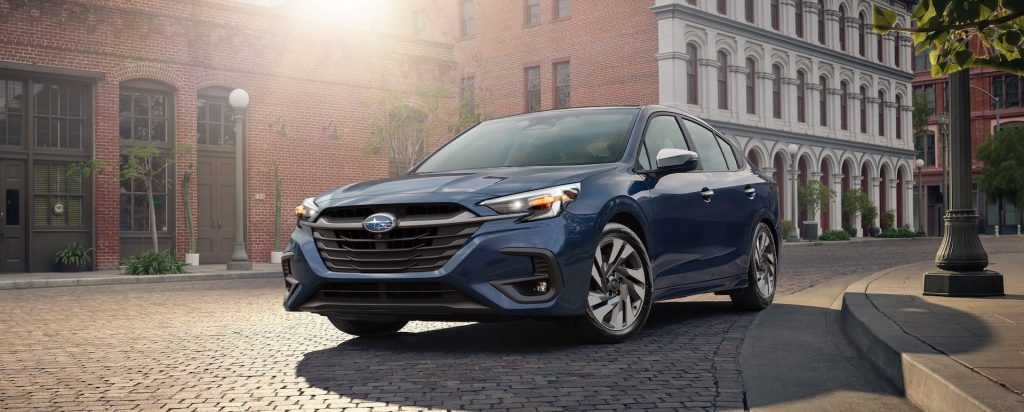
Still, no vehicle is immune to repairs. Some owners eventually encounter items such as the following:
- Wheel bearing replacement
- Suspension bushings
- CV axle boots
- Oxygen sensors
- Battery replacement
- Electronic sensors
- Air-conditioning components outside warranty
Fortunately, these repairs rarely occur during the early ownership period for most drivers. A reasonable estimate for unexpected repairs during five years is the following:
$500 to $1,500
Owners who drive well beyond 75,000 miles may begin encountering additional suspension or drivetrain repairs, but these generally fall outside a typical five-year ownership window.
Warranty Coverage Reduces Financial Risk
One reason the Legacy remains attractive to new-car buyers is Subaru’s factory warranty.
Coverage typically includes:
- 3 years/36,000 miles bumper-to-bumper
- 5 years/60,000 miles powertrain warranty
- Rust perforation coverage
- Roadside assistance during the basic warranty period
For most owners, this means expensive engine or transmission repairs are unlikely to become personal expenses during the first several years of ownership unless damage results from neglect or accidents.
Warranty coverage significantly reduces financial uncertainty compared with purchasing an older used vehicle with higher mileage.
The Complete Five-Year Ownership Stack
Using our example of a $33,500 Subaru Legacy driven 75,000 miles over five years, here’s what the total ownership picture looks like:
| Expense | Estimated Cost |
|---|---|
| Depreciation | $13,000 to $14,500 |
| Financing interest | $4,200 to $4,800 |
| Fuel | About $8,700 |
| Insurance | $8,000 to $9,500 |
| Registration and taxes | $1,800 to $2,500 |
| Scheduled maintenance | $2,300 to $3,700 |
| Tires and wear items | $2,000 to $3,000 |
| Unexpected repairs | $500 to $1,500 |
Estimated five-year ownership total:
Approximately $40,500 to $48,200 (excluding the vehicle’s purchase price, since depreciation already accounts for the loss in value).
For drivers covering 75,000 miles, that equals approximately the following:
54 to 64 cents per mile
If the purchase price itself is included as part of the total cash outflow before resale, the five-year ownership expenditure rises to roughly $54,000 to $62,000, depending on financing, insurance premiums, and resale value.
Is the Subaru Legacy Worth the Cost?
The Subaru Legacy is not the cheapest midsize sedan to buy, but it offers something many competitors do not: standard all-wheel drive on every trim level. That feature alone makes it an appealing choice for drivers who regularly face rain, snow, or icy roads without moving into the SUV segment.
Its ownership costs remain competitive because fuel economy is respectable, maintenance is predictable, and Subaru’s strong resale values help offset depreciation. Insurance rates are also reasonable thanks to the Legacy’s excellent safety record and advanced driver-assistance systems.
Compared with similarly equipped all-wheel-drive sedans, the Legacy delivers solid long-term value. While front-wheel-drive competitors like the Toyota Camry or Honda Accord may cost slightly less to operate, adding comparable all-weather capability often requires stepping up to higher trims or different models.
The biggest lesson for prospective buyers is that the purchase price is only one piece of the financial puzzle. Depreciation, insurance, fuel, maintenance, financing, and routine wear items together can equal or even exceed the amount initially paid for the vehicle.
Understanding these expenses before signing a purchase agreement provides a much clearer picture of what ownership will actually cost.
For buyers looking for a dependable, comfortable midsize sedan with year-round confidence and predictable operating expenses, the Subaru Legacy continues to make a strong case.
It may not lead the segment in sales, but when the complete five-year ownership stack is considered, it remains one of the most balanced and financially sensible choices available for drivers who value reliability, safety, and all-weather capability.
Also Read: What It Really Costs to Own a Ninja 400 for Five Years
