
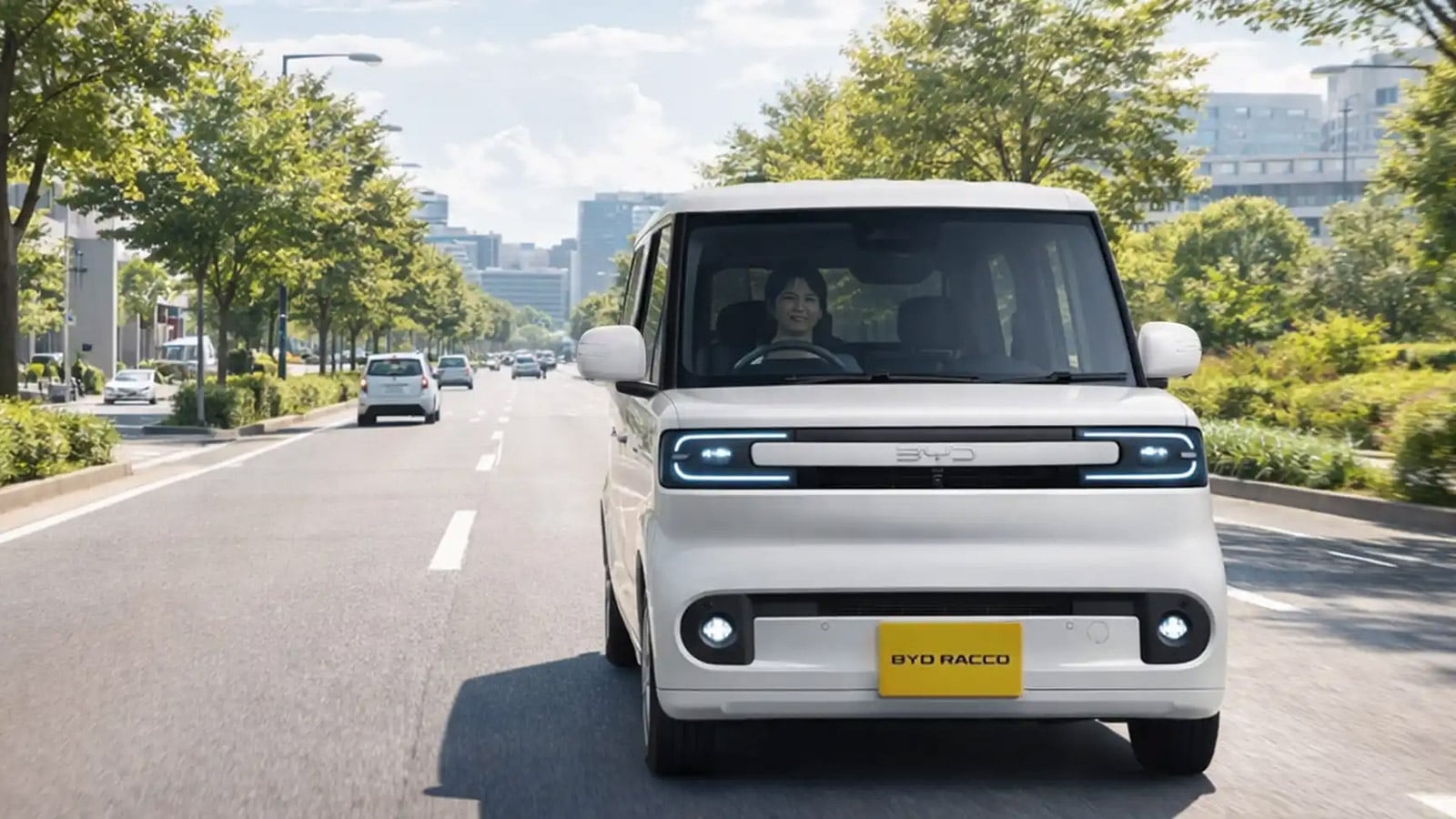
Chinese electric vehicle giant BYD has taken another significant step in its global expansion by revealing its first electric kei car for the Japanese market.
According to Reuters, the new model, called the Racco, was officially introduced on July 28, 2026, marking BYD’s entry into one of the world’s most competitive and unique automotive segments.
Kei cars occupy a special place in Japan’s automotive industry. Designed to meet strict government regulations on size, engine output, and dimensions, these compact vehicles have become a cornerstone of Japanese transportation thanks to their affordability, fuel efficiency, and ease of driving in crowded cities.
Until now, the segment has largely been dominated by domestic manufacturers such as Suzuki, Daihatsu, Honda, Nissan, and Mitsubishi.
BYD’s decision to launch an electric kei car represents more than the introduction of another EV. It signals the company’s determination to compete directly with established Japanese brands in their home market while expanding its international presence beyond larger SUVs and sedans.
The move also demonstrates growing confidence among Chinese automakers that they can successfully adapt products for highly specialized markets rather than relying solely on global vehicle platforms.
If successful, the Racco could reshape competition within Japan’s compact car segment while further strengthening BYD’s position as one of the world’s fastest-growing electric vehicle manufacturers.
Also Read: 10 Discontinued Engines Still In Great Demand
Understanding Japan’s Kei Car Market
Kei cars are unlike any other vehicle category found elsewhere in the world. Originally developed to encourage affordable personal transportation after World War II, the segment operates under strict government regulations governing vehicle dimensions and power output.
These compact vehicles offer several advantages, including lower purchase prices, reduced taxes, lower insurance costs, and easier parking in Japan’s densely populated cities. Because of these benefits, kei cars consistently account for a significant share of Japan’s annual new vehicle sales.
Manufacturers have spent decades refining these vehicles to maximize interior space, efficiency, and practicality despite their small exterior dimensions. Breaking into this market is considered one of the most challenging achievements for any automaker.
BYD’s First Purpose-Built Electric Kei Car
According to Reuters, the Racco represents BYD’s first dedicated electric model developed specifically for Japan’s kei car regulations. Rather than adapting an existing global product, the company has designed the vehicle to satisfy the unique requirements of Japanese consumers.
The compact EV is expected to prioritize urban mobility, ease of ownership, low operating costs, and practical daily transportation.
Although official technical specifications remain limited, industry observers expect a competitive driving range, modern battery technology, advanced safety features, and connected infotainment systems.
Developing a market-specific vehicle demonstrates BYD’s willingness to tailor products for individual regions instead of pursuing a one-size-fits-all global strategy.
Why Japan Matters to BYD
Japan represents one of the world’s most respected automotive markets. The country’s manufacturers have built global reputations for quality, reliability, efficiency, and engineering excellence.
Successfully competing in Japan therefore carries symbolic importance beyond simple sales volume. For BYD, introducing the Racco provides an opportunity to demonstrate that Chinese-built electric vehicles can satisfy the demanding expectations of Japanese consumers.
The launch also supports the company’s broader international expansion strategy, which includes increasing sales across Europe, Southeast Asia, Latin America, Australia, and additional Asian markets. A successful Japanese introduction would further strengthen BYD’s global credibility.
Japanese manufacturers have traditionally dominated the kei car segment with decades of engineering expertise and extensive dealer networks.
Companies such as Suzuki, Daihatsu, Honda, Nissan, and Mitsubishi have developed highly refined products specifically for local buyers. BYD’s arrival introduces a new competitive dynamic.
The company’s strength in battery manufacturing, electric drivetrain development, and large-scale production may allow it to compete aggressively on pricing and technology.
Industry analysts believe domestic manufacturers could face increasing pressure to accelerate EV development while maintaining competitive pricing in one of their strongest market segments.
One of BYD’s greatest competitive advantages has been its ability to produce relatively affordable electric vehicles.
The company benefits from extensive vertical integration, manufacturing many key components internally, including batteries, electric motors, and semiconductor technologies.
This integrated approach helps reduce production costs while improving supply chain efficiency. If the Racco enters the Japanese market with competitive pricing, it could make electric vehicle ownership accessible to a broader group of urban consumers.
Affordability remains one of the most important factors influencing EV adoption worldwide, particularly within small-car segments.
Battery Technology Could Be a Key Advantage
BYD has become one of the world’s leading battery manufacturers through continuous investment in battery research and production.
Its proprietary battery technologies have earned recognition for balancing safety, durability, efficiency, and cost. These capabilities may provide an important advantage within Japan’s compact EV market.
Consumers increasingly evaluate electric vehicles based on charging convenience, battery longevity, operating costs, and long-term reliability rather than simply driving range.
Strong battery performance could therefore become one of the Racco’s most significant selling points.
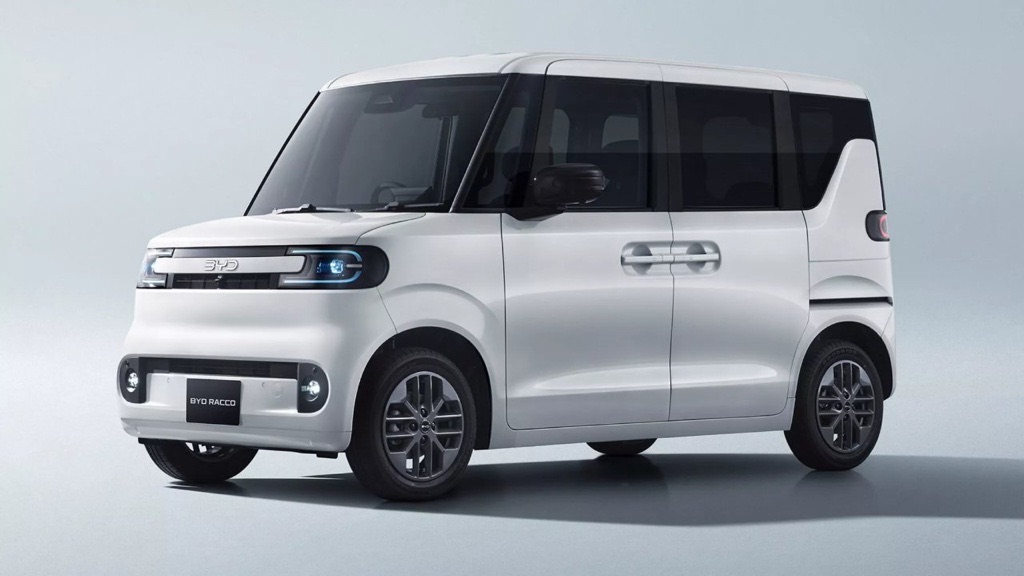
The Japanese launch forms part of BYD’s wider international growth ambitions. During the past several years, the company has expanded rapidly across multiple continents, introducing passenger vehicles, commercial EVs, and plug-in hybrid models in numerous international markets.
Rather than limiting its portfolio to mainstream family vehicles, BYD has increasingly diversified its lineup to address regional preferences. The Racco illustrates this localized strategy by targeting a uniquely Japanese vehicle category.
Industry analysts believe this flexible approach may help BYD compete more effectively against established global manufacturers.
Despite its strengths, BYD faces several significant challenges in Japan. Brand recognition remains relatively limited compared with domestic manufacturers that have built customer trust over many decades.
Japanese consumers also place exceptionally high value on reliability, resale value, dealership service, and long-term ownership experience.
Building an effective dealer network and after-sales support system will therefore be just as important as offering a competitive vehicle.
Success will ultimately depend on whether BYD can combine attractive pricing with the quality and customer confidence expected in Japan’s highly competitive automotive market.
What This Means for the Global EV Industry
The introduction of the Racco highlights how rapidly the electric vehicle industry continues evolving beyond its traditional markets.
According to Reuters, BYD’s first electric kei car demonstrates the company’s willingness to compete directly within one of the world’s most specialized automotive segments instead of focusing solely on mainstream global vehicles.
The launch also reflects the growing influence of Chinese automakers as they expand into increasingly challenging international markets.
By developing a purpose-built EV for Japan’s unique kei car regulations, BYD is signaling that its global ambitions extend well beyond exporting existing models. Tailoring vehicles to local consumer preferences has become a central part of the company’s international strategy.
If the Racco succeeds, it could intensify competition within Japan’s compact car market while encouraging domestic manufacturers to accelerate their own affordable electric vehicle programs.
More broadly, the launch reinforces the idea that the future of electric mobility will not be shaped only by large SUVs and luxury sedans but also by practical, low-cost city cars designed specifically for local markets around the world.
Also Read: 8 Limited-Run Vintage Cars That Sold Out and Never Came Back
