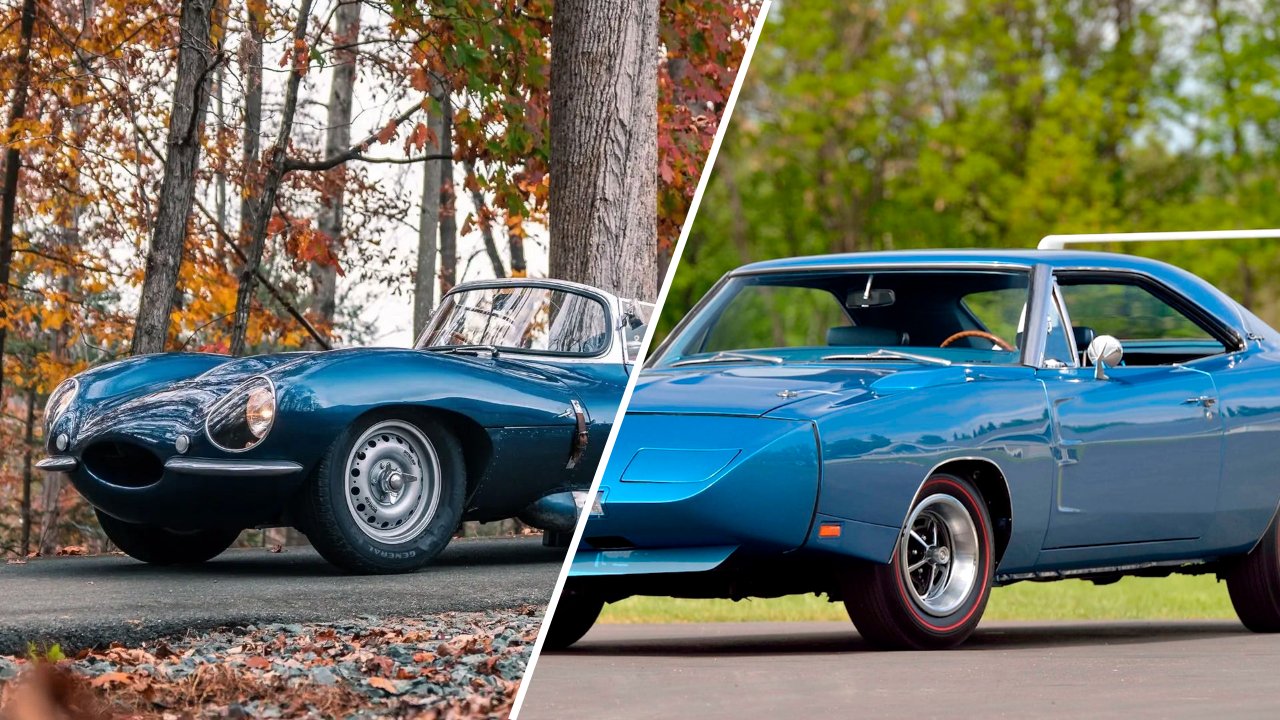
Some cars become icons because they dominate sales for years, while others achieve legendary status by disappearing almost as quickly as they arrive. Limited-run vintage automobiles often combined cutting-edge engineering, motorsport pedigree, or handcrafted production, making them highly desirable from the day they reached dealerships.
Many sold every available unit before production ended, and manufacturers never attempted a direct revival. Today, these rare machines command extraordinary values at auctions and remain prized by collectors across the United States.
Their scarcity, historical significance, and timeless design continue to prove that true automotive legends do not need long production runs to leave a lasting impression.
Also Read: Dodge Put a Viper V10 in a Pickup and Hit 154 MPH
1. Shelby Cobra 427
The Shelby Cobra 427 remains one of the clearest examples of a limited-production sports car that disappeared while demand continued to grow. Introduced in 1965, Carroll Shelby’s vision combined the lightweight British AC Ace chassis with Ford’s thunderous 427 cubic-inch V8, creating a machine that redefined American performance.
Production remained intentionally limited because the car was expensive to build and targeted serious enthusiasts rather than mass-market buyers. Every completed example quickly found an owner, and no factory continuation followed after original production concluded.
Performance figures were astonishing for the era. Contemporary road tests recorded 0 to 60 mph times in roughly four seconds, placing the Cobra among the quickest production automobiles available anywhere in the world.
Its immense power, short wheelbase, and minimal curb weight demanded skilled drivers, helping establish the Cobra’s reputation as both exhilarating and intimidating.
The Cobra also enjoyed tremendous motorsports success, strengthening its image far beyond American roads. Shelby American challenged Europe’s best manufacturers in sports car competition, earning victories that upgraded the car into automotive history.
Because relatively few genuine 427 Cobras were built, authentic examples have become some of the most valuable American performance cars ever sold. Auction prices frequently reach several million dollars depending on originality and documented history.
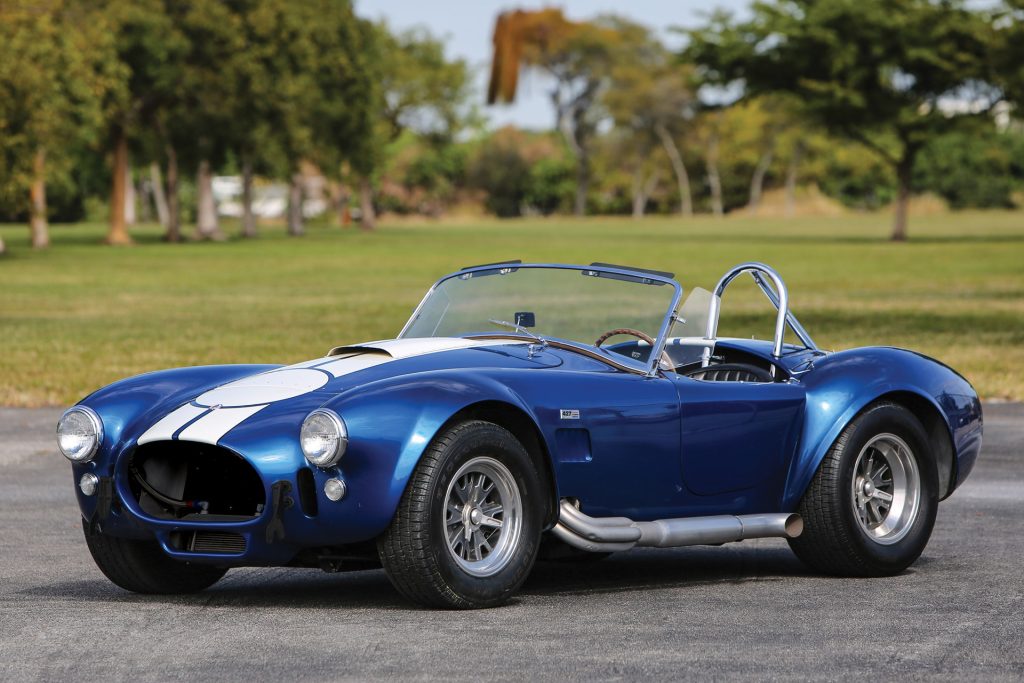
Modern continuation cars exist through licensed manufacturers, but they are distinct from original 1960s production vehicles. Collectors continue pursuing authentic factory-built Cobras because nothing truly replaced the original combination of simplicity, lightweight construction, and overwhelming V8 performance.
Specifications
- Engine: 7.0-liter (427 cubic-inch) Naturally Aspirated OHV V8
- Torque: 480 lb-ft
- Horsepower: 425 hp
- Length/Width: 156 inches / 68 inches
2. Chevrolet Corvette Grand Sport (1963)
Sometimes the rarest cars are created not for dealerships but for competition. The 1963 Chevrolet Corvette Grand Sport fits that description perfectly. Zora Arkus-Duntov envisioned the Grand Sport as a lightweight racing Corvette capable of defeating Shelby Cobras and Europe’s finest GT machines.
Chevrolet planned to build 125 examples to satisfy FIA homologation rules, but General Motors executives ended the program after only five cars were completed. Those five cars instantly became among the rarest Corvettes ever produced.
Every Grand Sport received extensive engineering changes that separated it from the standard Sting Ray. Engineers installed lightweight fiberglass body panels, aluminum components, a reinforced chassis, larger brakes, and race-developed suspension.
Power came from Chevrolet’s high-performance 377 cubic-inch V8, delivering approximately 550 horsepower in racing specification. Combined with a vehicle weight of about 1,900 pounds, the result was an extraordinarily capable race car.
Although the project was cancelled before full production could begin, all five completed Grand Sports entered competition through private teams.
They proved capable of running against internationally respected rivals despite Chevrolet’s withdrawal from factory-backed racing. Their impressive performances cemented the Grand Sport’s legendary reputation.
Because only five originals exist, each carries extraordinary historical significance. When one changes hands privately, its value reaches many millions of dollars, making it one of the most valuable American-built race cars ever created.
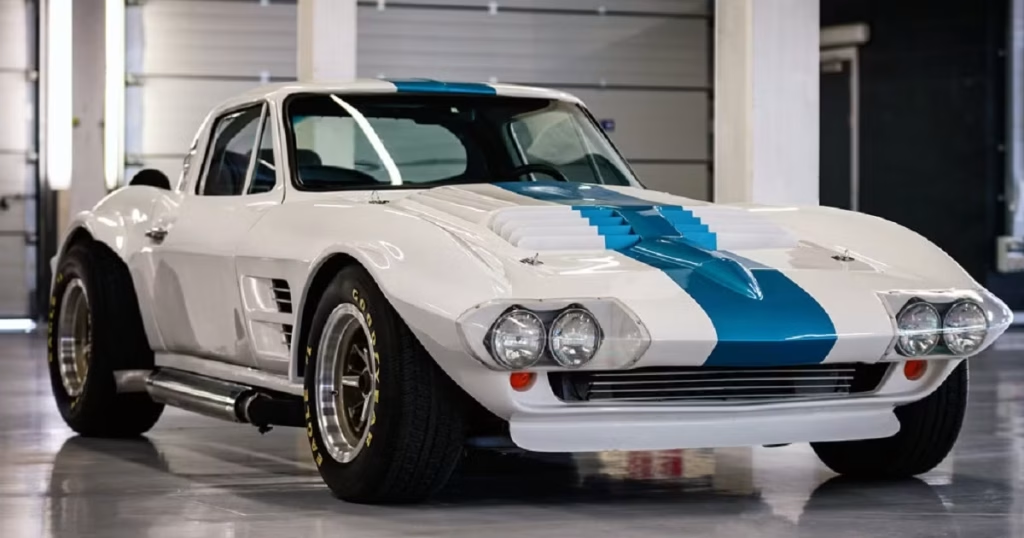
Chevrolet later revived the Grand Sport name for production Corvettes, but none of those models were direct continuations of the original 1963 lightweight racers.
The combination of microscopic production numbers, factory racing heritage, and unmatched rarity ensures the original Corvette Grand Sport remains one of the most coveted vintage automobiles ever built.
Specifications
- Engine: 6.2-liter (377 cubic-inch) Naturally Aspirated OHV V8 (race specification)
- Torque: Approximately 430 lb-ft
- Horsepower: Approximately 550 hp
- Length/Width: 175 inches / 69 inches
3. Dodge Charger Daytona (1969)
Few vintage muscle cars were developed with such a singular purpose as the 1969 Dodge Charger Daytona. Chrysler created the Daytona to dominate NASCAR’s high-speed superspeedways, where aerodynamic efficiency had become just as important as horsepower.
To satisfy racing homologation rules, Dodge built approximately 503 street-legal examples, all of which were sold before production ended. Once the NASCAR rulebook changed and newer body styles arrived, the Daytona never returned as a production model in its original form.
The most recognizable feature was the dramatic aerodynamic package. A pointed nose cone extended the front end by nearly 19 inches, while the towering rear wing stood high above the trunk to place it in clean airflow.
These unusual additions were not styling exercises. Wind tunnel testing and race development dramatically improved stability and top-speed performance compared with the standard Charger.
Under the hood, buyers could choose several powerful V8 engines, including the legendary 426 HEMI. In factory trim, the HEMI produced 425 horsepower and 490 lb-ft of torque, making the Daytona one of the fastest American muscle cars available.
On NASCAR tracks, the race-prepared versions became the first stock cars to exceed 200 mph, forever securing the Daytona’s place in motorsports history.
Collectors prize authentic Daytonas because so few survive with original drivetrains and body components. The unique nose cone, wing assembly, and factory documentation significantly influence market value, with well-preserved examples regularly selling for seven-figure sums at major auctions.
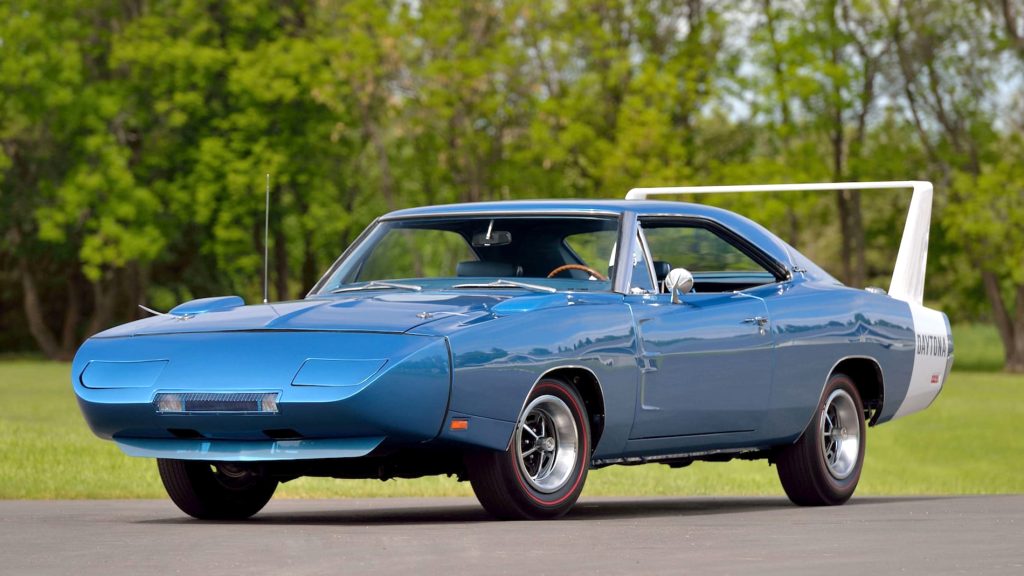
Although Dodge later revived the Daytona name on various production models, none replicated the original’s extreme aerodynamic design or limited-production status. The 1969 Charger Daytona remains an irreplaceable icon from the golden age of American muscle.
Specifications
- Engine: 7.0-liter (426 cubic-inch) Naturally Aspirated OHV V8 (HEMI)
- Torque: 490 lb-ft
- Horsepower: 425 hp
- Length/Width: 220 inches / 77 inches
4. Plymouth Superbird (1970)
The Plymouth Superbird existed for only a single model year, yet it became one of the most instantly recognizable muscle cars ever built.
Introduced for 1970 as Plymouth’s NASCAR homologation special, the Superbird shared much of its engineering philosophy with the Dodge Charger Daytona but wore its own distinctive Road Runner-based bodywork.
Plymouth produced roughly 1,920 examples, and once that production run concluded, the factory never built another original Superbird.
Its appearance remains unforgettable. The elongated aerodynamic nose, flush-mounted rear window treatment, and massive rear wing gave the Superbird a silhouette unlike anything else on American roads.
Every design element served a functional purpose by reducing aerodynamic drag and improving high-speed stability during NASCAR competition. Buyers had several engine choices, but the range-topping 426 HEMI transformed the Superbird into a genuine performance machine.
The combination of substantial horsepower and improved aerodynamics allowed the car to perform exceptionally well on both highways and race circuits. NASCAR legends such as Richard Petty further upgraded the Superbird’s reputation through successful competition.
Unlike many limited-edition vehicles that gained popularity years after production ended, the Superbird has been highly collectible for decades.
Original cars equipped with factory HEMI engines are among the most valuable Mopars in existence. Auction prices continue climbing because demand consistently exceeds the limited supply of surviving examples.
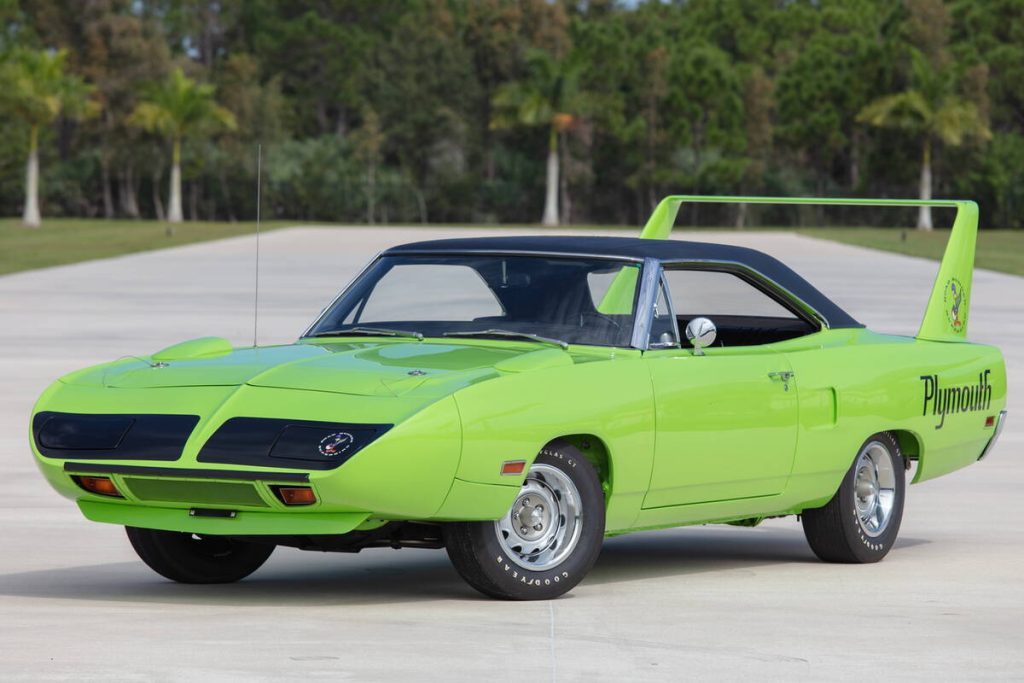
The Superbird also represents the end of an extraordinary chapter in American racing history. NASCAR eventually revised its regulations, effectively ending the era of winged production cars. That decision ensured the Superbird would remain a unique one-year creation rather than the beginning of a longer model line.
Collectors value it not simply because it is rare, but because it symbolizes an era when manufacturers built road cars specifically to win races.
Specifications
- Engine: 7.0-liter (426 cubic-inch) Naturally Aspirated OHV V8 (HEMI)
- Torque: 490 lb-ft
- Horsepower: 425 hp
- Length/Width: 216 inches / 77 inches
5. Buick GNX (1987)
By the late 1980s, most American performance cars were still recovering from stricter emissions regulations, but Buick surprised the industry with a limited-production coupe that immediately became a collector favorite.
The 1987 Buick GNX was developed in partnership with ASC and McLaren Performance Technologies as the ultimate evolution of the Grand National. Buick planned just 547 examples, every one of which found buyers quickly.
When production ended, the GNX was never recreated, making it one of the most desirable turbocharged American classics ever built.
Instead of relying on large displacement, the GNX extracted remarkable performance from a turbocharged 3.8-liter V6. Officially rated at 276 horsepower and 360 lb-ft of torque, independent testing suggested the actual output was considerably higher.
Contemporary road tests recorded 0 to 60 mph times in approximately 4.7 seconds, allowing the GNX to outperform several contemporary Corvettes and European sports cars.
The GNX received extensive mechanical upgrades beyond the standard Grand National. Engineers fitted a revised turbocharger, larger intercooler plumbing, recalibrated engine management, unique suspension components with a torque arm and Panhard rod arrangement, lightweight wheels, and distinctive fender vents.
These improvements transformed the car into a far more capable high-performance machine. Because only 547 units were built, surviving examples remain exceptionally valuable. Low-mileage, documented GNXs regularly command prices well into six figures at collector auctions.
Their rarity is matched by historical significance, representing the final and most powerful chapter of Buick’s rear-wheel-drive turbocharged performance era.
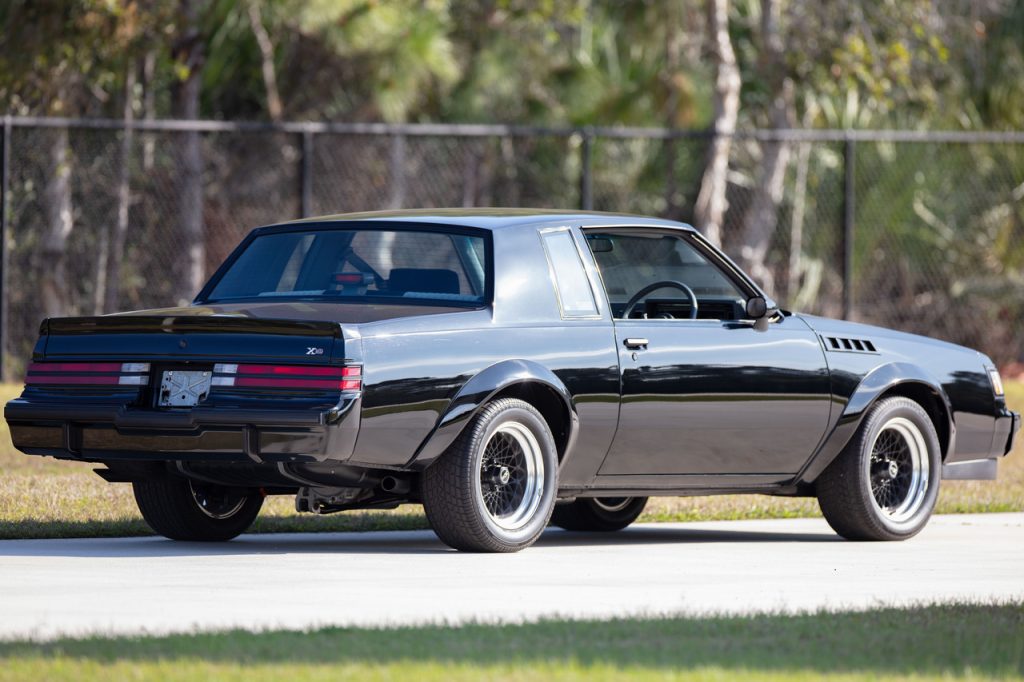
Unlike many limited editions that were followed by similar models, the GNX stood alone. Buick never produced another factory vehicle that directly continued its formula, ensuring the original remains one of the most sought-after American performance cars from the 1980s.
Specifications
- Engine: 3.8-liter Turbocharged OHV V6
- Torque: 360 lb-ft
- Horsepower: 276 hp (factory rating)
- Length/Width: 200 inches / 72 inches
6. Ferrari 288 GTO
Some limited-production cars were created simply to celebrate a milestone. The Ferrari 288 GTO existed because Ferrari intended to compete in FIA Group B racing.
Although the racing category ultimately collapsed before the car could fulfill its original mission, the road-going 288 GTO became one of the most significant Ferraris ever produced. Between 1984 and 1987, Ferrari built just 272 examples, and every allocation was spoken for long before production concluded.
The 288 GTO introduced technologies that would influence Ferrari’s future supercars. Its lightweight body combined fiberglass, aluminum, and composite materials to reduce weight while maintaining structural strength.
Behind the cabin sat a longitudinally mounted twin-turbocharged V8 that produced 400 horsepower, an extraordinary output during the mid-1980s.
Performance matched the car’s exotic engineering. Contemporary testing recorded a top speed of approximately 189 mph, making it one of the fastest production automobiles in the world. Acceleration to 60 mph required roughly five seconds, placing the 288 GTO among the elite performance cars of its generation.
Collectors value the model for more than its rarity. The 288 GTO served as the bridge between Ferrari’s classic analog sports cars and the groundbreaking F40 that followed. Its limited production, motorsport origins, and historical importance have pushed values into the multi-million-dollar range at prestigious collector auctions.
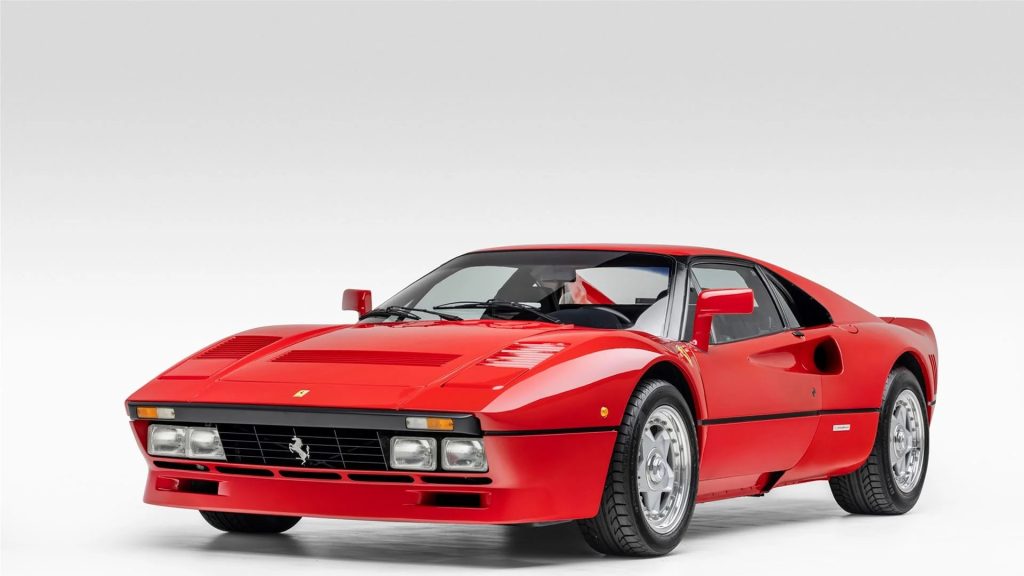
Ferrari has produced many special editions since then, but none have been direct continuations of the original 288 GTO concept. That singular identity ensures it remains one of the most celebrated limited-run vintage cars ever offered.
Specifications
- Engine: 2.9-liter Twin-Turbocharged DOHC V8
- Torque: 366 lb-ft
- Horsepower: 400 hp
- Length/Width: 168 inches / 75 inches
7. Porsche 959
The Porsche 959 arrived during the 1980s as one of the most technologically advanced production cars ever created. Originally engineered to satisfy FIA Group B homologation requirements, the project evolved into a showcase for Porsche’s engineering capabilities after the rally category collapsed.
Between 1986 and 1988, Porsche produced just 292 road cars, making the 959 an exceptionally exclusive model from the moment it reached customers. Every available example was claimed quickly, and Porsche never built a direct successor using the same philosophy.
Rather than relying solely on raw horsepower, the 959 introduced technologies that would later become commonplace in high-performance vehicles.
It featured an advanced all-wheel-drive system with electronically controlled torque distribution, adjustable suspension, lightweight composite body panels, and tire pressure monitoring years before those features appeared on mainstream automobiles.
Power came from a twin-turbocharged 2.85-liter flat-six derived from Porsche’s endurance racing program. Producing 444 horsepower, the engine propelled the 959 to a top speed of approximately 197 mph, making it the fastest production car in the world when introduced.
It also accelerated from 0 to 60 mph in under four seconds, an extraordinary performance for the late 1980s.
The car’s rarity is only part of its appeal. Because the 959 served as a rolling laboratory for future Porsche technologies, collectors view it as one of the company’s most historically significant vehicles. Values have climbed steadily as buyers recognize its influence on later generations of Porsche sports cars.
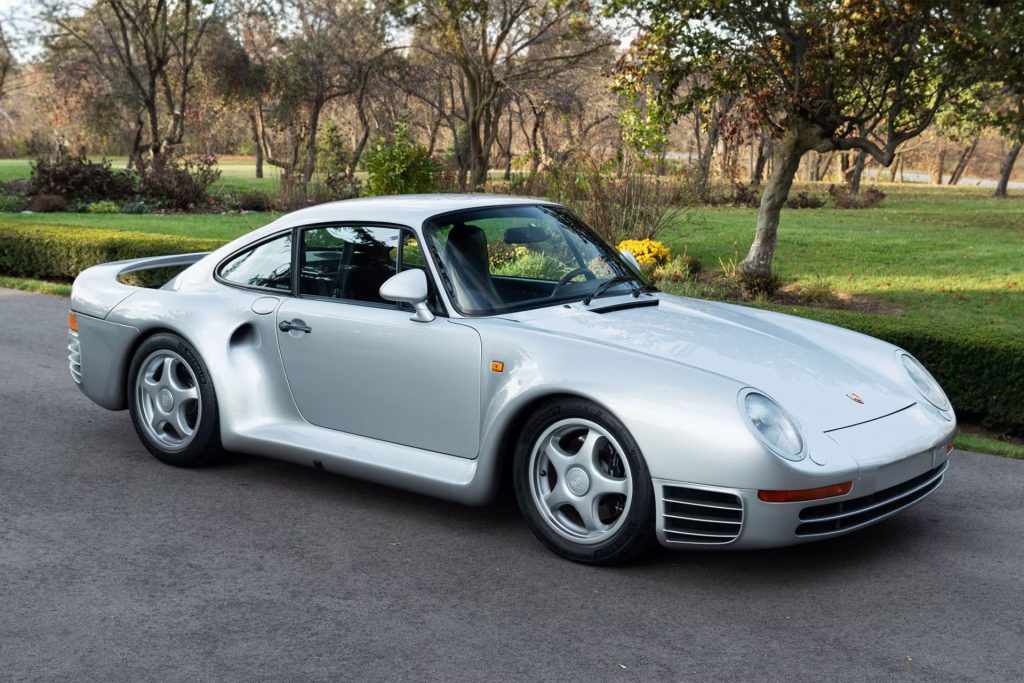
Although Porsche has produced many remarkable supercars since then, none have recreated the exact blend of groundbreaking innovation, limited production, and engineering ambition that defined the original 959. Its legacy continues to shape the brand decades after production ended.
Specifications
- Engine: 2.85-liter Twin-Turbocharged DOHC Flat-6
- Torque: 369 lb-ft
- Horsepower: 444 hp
- Length/Width: 167 inches / 72 inches
8. Jaguar XKSS
Some automobiles become valuable because they are fast. Others achieve legendary status because history ensured they could never be built again. The Jaguar XKSS belongs firmly in the second category. Introduced in 1957, the XKSS was essentially a road-going version of the Le Mans-winning D-Type race car.
Jaguar intended to build 25 examples, but disaster struck when a factory fire destroyed nine unfinished cars. As a result, only 16 original XKSS models were completed and delivered, making it one of the rarest production sports cars ever created.
The XKSS retained much of the D-Type’s racing engineering, including its lightweight construction and advanced chassis design.
To satisfy road-use requirements, Jaguar added a passenger door, windshield, modest weather protection, and minimal comfort features while preserving the car’s competition-focused character. Buyers received an automobile that felt remarkably close to a factory race car.
Power came from Jaguar’s renowned 3.4-liter inline-six equipped with triple carburetors, producing approximately 250 horsepower. Considering the vehicle’s light weight, the XKSS delivered outstanding acceleration and a top speed approaching 150 mph, exceptional figures for the 1950s.
Its rarity has made the XKSS one of the most coveted collector cars in existence. Every surviving original is documented extensively, and values regularly reach many millions of dollars when ownership changes.
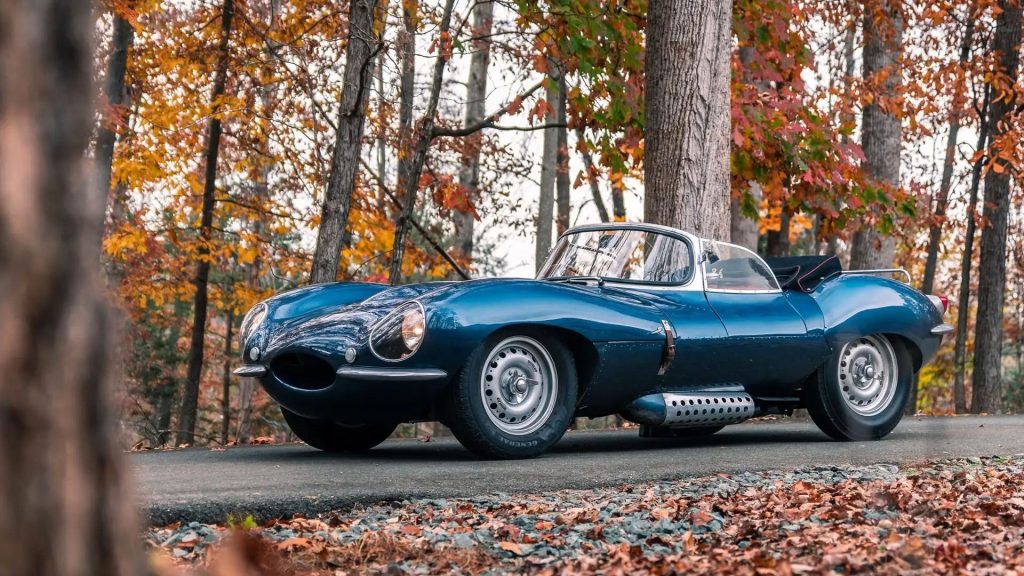
The model also gained additional fame through its association with actor Steve McQueen, whose personal XKSS remains one of the best-known examples.
Jaguar later produced officially sanctioned continuation cars, but these faithfully recreated the originals rather than extending production. The authentic 1957 XKSS remains irreplaceable, representing one of the finest examples of a limited-run vintage automobile that sold out and never truly returned.
Specifications
- Engine: 3.4-liter Naturally Aspirated DOHC Inline-6
- Torque: Approximately 240 lb-ft
- Horsepower: 250 hp
- Length/Width: 158 inches / 65 inches
Also Read: 10 Used SUV Listings That Signal a Flood Car