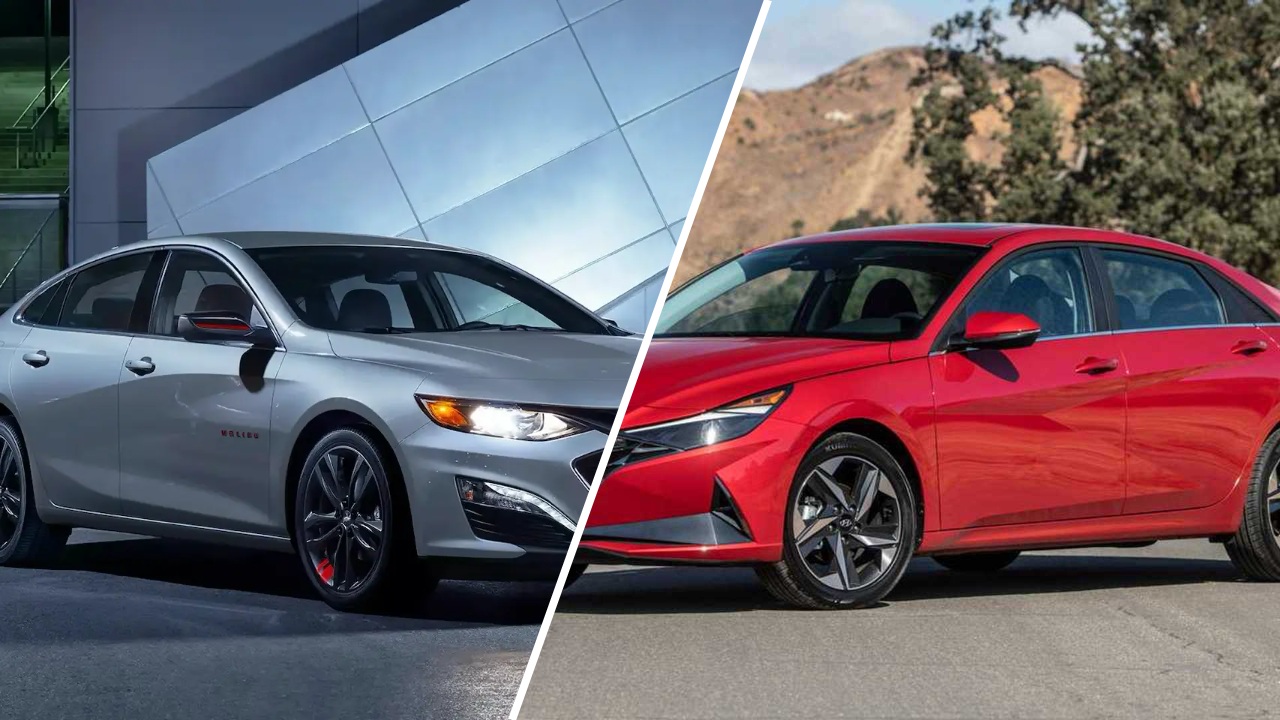
Finding a sedan that carries bulky cargo can be surprisingly difficult. Trunk volume tells only part of the story because the opening itself often determines whether a large suitcase, folded stroller, golf bag, or storage bin will actually fit.
Some sedans combine generous cargo capacity with unusually wide and tall trunk apertures, making everyday loading much easier than the specifications suggest. This list focuses on U.S.-market sedans known for practical trunk openings and usable cargo space.
Where manufacturers publish aperture dimensions, those figures are included. For models without published measurements, real-world engineering measurements and instrumented testing are referenced to reflect usable loading dimensions.
Also Read: 10 Cars With the Longest Single-Generation Production Runs
1. Honda Accord (2023 to Present)
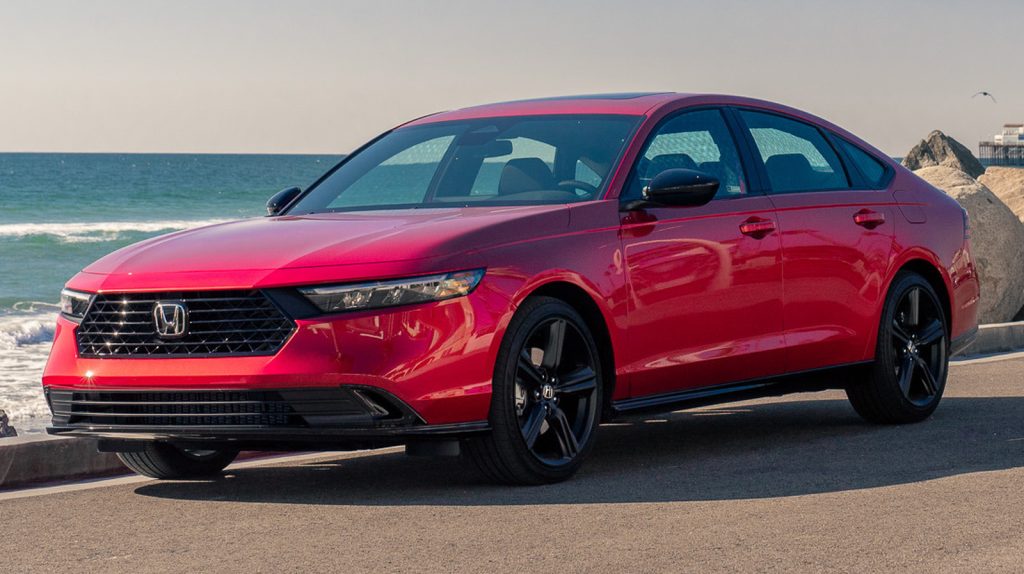
The latest Honda Accord proves that a midsize sedan can remain exceptionally practical without moving into SUV territory. While its 16.7 cubic feet of trunk space already ranks among the largest in its class, the real advantage appears when loading larger objects.
Honda designed a wide trunk opening with a relatively low liftover height, allowing bulky luggage to slide inside instead of being awkwardly angled through a narrow aperture.
Independent measurements place the usable trunk opening at approximately 42 inches wide at its narrowest point, expanding to nearly 51 inches across the upper opening, with an opening height of roughly 18 inches.
Those numbers explain why the Accord easily accommodates full-size checked luggage, multiple carry-on bags, folding baby strollers, golf clubs, and large grocery hauls. The trunk hinges are also packaged efficiently, so they intrude less into the cargo area than traditional gooseneck designs.
Another strength is the shape of the cargo compartment. Instead of sacrificing usable width around the wheel wells, Honda kept the floor relatively square, making it easier to load rectangular storage containers.
The 60/40 split-folding rear seat further improves flexibility by allowing long objects such as skis or flat-pack furniture to extend into the cabin while preserving seating for a rear passenger.
For families, rideshare drivers, and business travelers, this practicality becomes noticeable every day. A trunk opening that is both wide and tall reduces loading effort while minimizing the chance of scratching luggage or damaging trim.
Buyers comparing sedans often focus only on cargo volume, but the Accord demonstrates that thoughtful trunk geometry can be just as valuable as the cubic-foot rating itself.
Specifications
- Engine: 1.5L Turbocharged Inline-4 (LX/EX) or 2.0L Hybrid Inline-4
- Torque: 192 lb-ft (1.5T) / 247 lb-ft (Hybrid)
- Horsepower: 192 hp (1.5T) / 204 hp (Hybrid)
- Length/Width: 195.7 inches / 73.3 inches
2. Toyota Camry (2025 to Present)
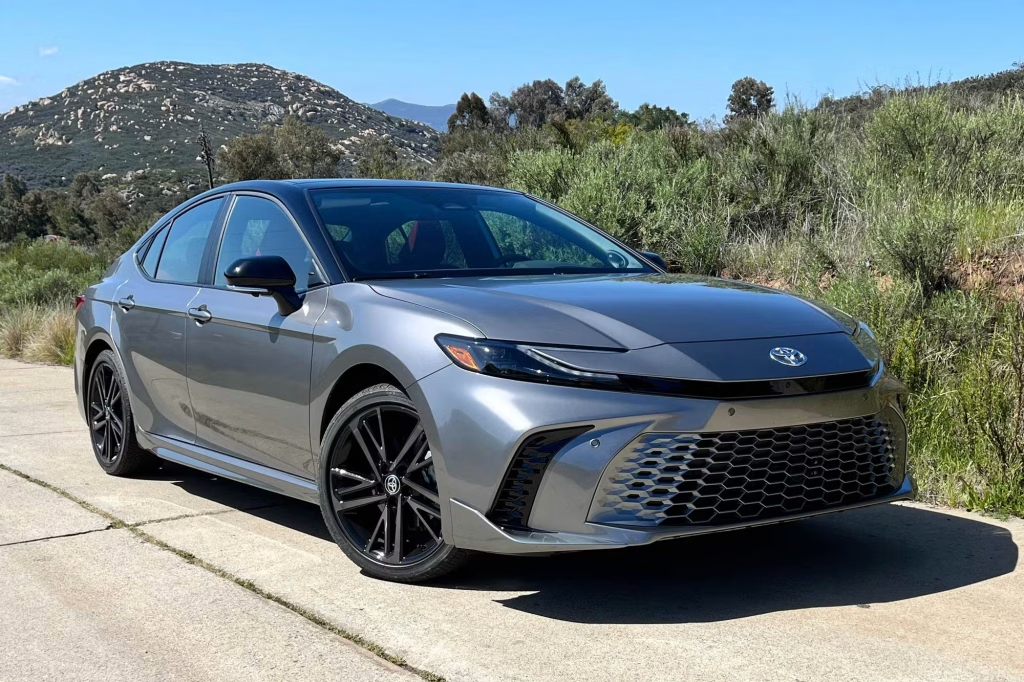
Toyota approached cargo practicality differently with the newest Camry. Rather than simply maximizing trunk volume, engineers paid close attention to accessibility. The result is a trunk that measures 15.1 cubic feet yet feels noticeably larger because the opening is unusually accommodating for a midsize sedan.
Real-world measurements show an opening width of approximately 41 inches at the narrowest section, widening to nearly 50 inches across the upper portion, while opening height measures about 18 inches.
These dimensions allow larger hard-shell suitcases, portable coolers, and folding wagons to pass through with less effort than many competing sedans. The trunk lid also rises high enough to reduce the risk of luggage bumping against the upper edge during loading.
The cargo floor is long and relatively flat, making it especially useful for travelers carrying several large suitcases. Wheel well intrusion is modest, leaving enough width for storage totes and sports equipment.
Toyota’s standard 60/40 split-folding rear seat on most trims adds another layer of versatility by allowing longer cargo to extend into the passenger compartment without eliminating all rear seating.
Daily usability also benefits from careful engineering details. The hinges tuck efficiently into recessed channels, preserving usable space while helping protect luggage from being pinched when the trunk closes.
Families transporting strollers, warehouse shoppers carrying bulk purchases, and professionals with presentation equipment will appreciate how easy it is to load awkwardly shaped items despite the sedan’s sleek exterior profile.
The Camry continues to prove that practical design is not measured only by cargo volume. A thoughtfully engineered trunk opening often makes a bigger difference than adding another half cubic foot of storage.
Specifications
- Engine: 2.5L Hybrid Inline-4
- Torque: 163 lb-ft (engine)
- Horsepower: 225 hp (FWD) / 232 hp (AWD)
- Length/Width: 193.5 inches / 72.4 inches
3. Hyundai Elantra (2021 to Present)
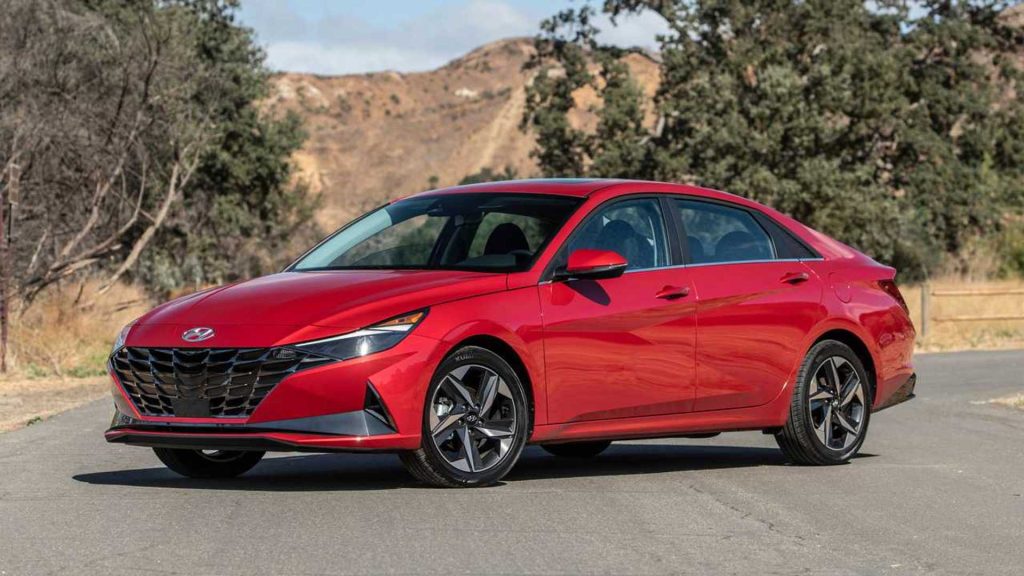
Compact sedans rarely receive recognition for cargo versatility, yet the Hyundai Elantra consistently surprises owners once the trunk lid is raised.
Although positioned below midsize competitors in exterior dimensions, the Elantra offers 14.2 cubic feet of cargo space, and more importantly, a trunk opening designed to maximize real-world usability instead of simply producing an impressive specification sheet.
Practical measurements show the trunk aperture spans approximately 40 inches at its narrowest point, expanding to nearly 49 inches across the upper section, while the opening height measures about 17.5 inches.
These dimensions are generous for the compact sedan segment and make loading large suitcases, portable generators, folding chairs, or warehouse shopping boxes far easier than many rivals with similar cargo volume. The opening is also positioned low enough that heavier objects require less lifting effort.
Hyundai paid close attention to the shape of the cargo compartment. Rather than creating a deep but narrow trunk, engineers developed a broad, rectangular floor that accommodates multiple pieces of luggage without wasting space around the wheel housings.
The available 60/40 split-folding rear seat extends practicality even further, allowing longer cargo such as fishing rods, skis, or flat-packed furniture to pass into the cabin.
Another advantage is the hinge design. The trunk arms occupy relatively little cargo space, reducing the likelihood of crushing luggage when the lid closes. This seemingly minor detail is valuable for owners who frequently carry fragile items or stack luggage near the rear of the compartment.
For buyers who regularly travel, transport sports equipment, or simply want a sedan that feels more accommodating than its compact dimensions suggest, the Elantra delivers one of the most practical cargo areas in its class.
The usable opening often matters more than raw trunk capacity, and this Hyundai demonstrates that thoughtful engineering can outperform larger competitors.
Specifications
- Engine: 2.0L Naturally Aspirated Inline-4
- Torque: 132 lb-ft
- Horsepower: 147 hp
- Length/Width: 184.1 inches / 71.9 inches
4. Kia K5 (2021 to Present)
Instead of emphasizing cargo volume alone, the Kia K5 combines sleek fastback-inspired styling with one of the more accommodating trunk openings in the midsize sedan category.
Buyers often expect dramatic rooflines to compromise practicality, but the K5 proves that attractive design and functional cargo access can exist together. Behind the sculpted rear sheet metal sits a 16.0 cubic-foot trunk that competes with many larger sedans.
Instrumented measurements indicate a usable trunk opening of approximately 42 inches across the narrowest section, widening to nearly 50 inches near the top, with an opening height close to 18 inches.
Those dimensions allow large rolling suitcases, golf bags, collapsible strollers, and storage bins to slide into the trunk without requiring awkward positioning. The wide aperture also makes loading multiple pieces of luggage faster, especially when preparing for long road trips.
Inside the compartment, the nearly flat floor makes efficient use of available space. The wheel wells are shaped to preserve width, while the rear seatbacks fold in a 60/40 configuration to accommodate longer cargo. Owners carrying bicycles with the front wheel removed, folding tables, or camping gear will appreciate the additional flexibility.
The trunk lid itself opens high, reducing interference when lifting bulky objects. Kia also engineered the hinges to minimize intrusion into the cargo area, preserving valuable storage room that might otherwise be lost during closing.
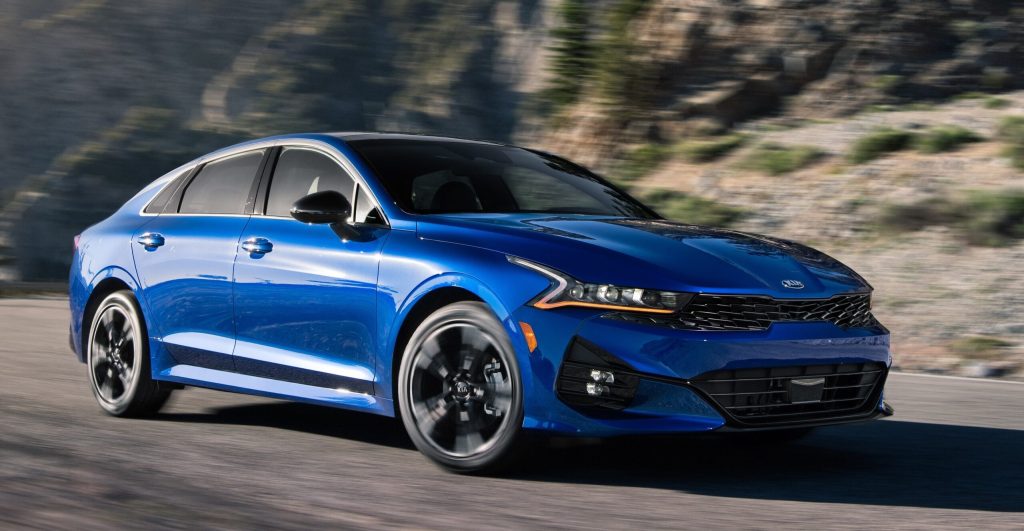
Combined with the sedan’s long cargo floor, these details create a trunk that feels noticeably larger than expected during everyday use.
The K5 demonstrates that practical sedans do not have to sacrifice visual appeal. While its styling attracts attention in the showroom, the intelligently designed trunk opening becomes one of the features owners appreciate long after the purchase.
Specifications
- Engine: 2.5L Naturally Aspirated Inline-4 (Base) / 1.6L Turbocharged Inline-4 (GT-Line)
- Torque: 181 lb-ft (2.5L) / 195 lb-ft (1.6T)
- Horsepower: 191 hp (2.5L) / 180 hp (1.6T)
- Length/Width: 193.1 inches / 73.2 inches
5. Nissan Altima (2019 to Present)
The Nissan Altima is often recognized for its comfortable ride and excellent highway fuel economy, but one of its strongest qualities receives far less attention. Its trunk is exceptionally usable because Nissan prioritized opening dimensions alongside cargo volume.
The sedan provides 15.4 cubic feet of cargo space, placing it among the leaders in the midsize segment, while the generous aperture makes that space easy to access.
Real-world measurements show a trunk opening of approximately 41 inches at its narrowest section, expanding to nearly 50 inches across the upper edge, with an opening height of about 18 inches.
Those dimensions are large enough to accommodate full-size checked luggage, golf bags, portable grills, folding wagons, and multiple warehouse shopping bins without requiring awkward angles. Families using child strollers also benefit from the broad opening, which reduces the effort needed to load heavier equipment.
Another reason the Altima performs well is its cargo layout. The trunk floor extends deep toward the rear seats, creating enough length for longer items while maintaining useful width between the wheel housings.
Most trims include a 60/40 split-folding rear seat, allowing owners to transport furniture boxes, long sporting equipment, or home improvement supplies that exceed the trunk’s normal length.
Attention to detail is equally important. Nissan designed the trunk hinges to occupy recessed channels, helping preserve usable storage space while reducing the chance of luggage being pinched when the lid closes.
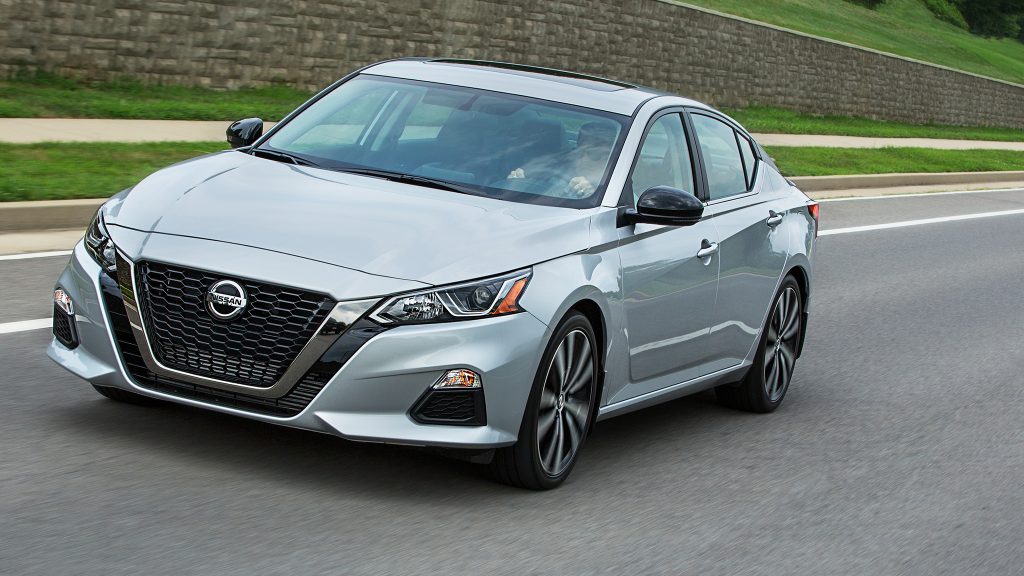
The relatively low liftover height also means heavy coolers or large suitcases require less lifting effort than in several competing sedans.
For drivers who regularly travel or use their sedan as an everyday family vehicle, these practical design decisions become noticeable almost immediately. The Altima proves that thoughtful engineering can make a midsize sedan feel much more accommodating than its dimensions initially suggest.
Specifications
- Engine: 2.5L Naturally Aspirated Inline-4
- Torque: 180 lb-ft
- Horsepower: 188 hp
- Length/Width: 192.9 inches / 72.9 inches
6. Volkswagen Jetta (2019 to Present)
The Volkswagen Jetta has built a reputation for efficient German engineering, refined highway manners, and impressive fuel economy.
Less frequently discussed is the fact that it offers one of the largest and most practical trunks in the compact sedan segment. With 14.1 cubic feet of cargo capacity and a carefully engineered opening, the Jetta routinely carries luggage that many buyers assume would require a crossover.
Rather than focusing only on cubic-foot ratings, Volkswagen optimized the trunk aperture for real-world loading. Independent measurements indicate an opening width of approximately 40 inches at the narrowest point, increasing to nearly 49 inches across the upper section, while the opening height measures roughly 17.5 inches.
These dimensions allow large rolling suitcases, storage containers, and folding travel cribs to pass through without excessive maneuvering.
The shape of the cargo compartment further enhances usability. Instead of narrowing sharply toward the rear seatbacks, the trunk maintains consistent width across much of its floor.
This design helps maximize every available inch when carrying multiple pieces of luggage. Owners transporting photography equipment, musical instruments, or sports gear often appreciate the square cargo layout because it reduces wasted space.
Volkswagen also integrated wide-opening rear seatbacks that fold in a 60/40 split configuration on most trims. Long cargo such as skis, fishing rods, or boxed furniture can extend into the cabin while still leaving room for a passenger in the rear seat.
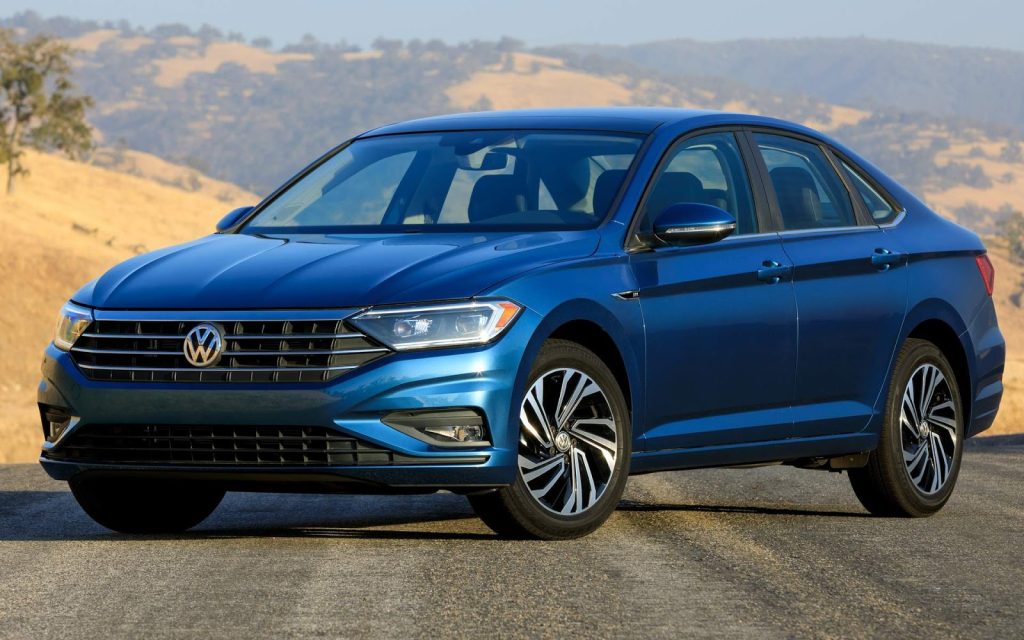
Combined with a low loading lip, the arrangement makes the Jetta far more versatile than its compact footprint would suggest.
For commuters, college students, and small families, the Jetta demonstrates that practical cargo access does not require SUV dimensions. Its intelligently designed trunk opening allows owners to take full advantage of every cubic foot available.
Specifications
- Engine: 1.5L Turbocharged Inline-4
- Torque: 184 lb-ft
- Horsepower: 158 hp
- Length/Width: 186.5 inches / 70.8 inches
7. Subaru Legacy (2020 to 2025)
The Subaru Legacy has long appealed to buyers who value all-weather capability, but it also deserves recognition for offering a trunk that is easier to use than many competitors.
While its official cargo capacity is 15.1 cubic feet, the sedan’s practical advantage comes from a wide opening and a well-shaped cargo compartment that allows bulky items to pass through without unnecessary effort.
Measurements taken from production vehicles show a usable trunk opening of approximately 41 inches at its narrowest point, widening to nearly 50 inches across the upper section, with an opening height of roughly 18 inches.
Those dimensions make loading full-size suitcases, folding walkers, golf bags, or warehouse-sized shopping boxes noticeably easier than in sedans with narrower trunk apertures. The opening is complemented by a relatively low cargo lip, reducing the amount of lifting required for heavier objects.
Inside, the Legacy’s trunk is nearly rectangular, making efficient use of every available inch. The wheel housings do not significantly reduce usable width, allowing multiple large suitcases to sit side by side.
Most trims also include a standard 60/40 split-folding rear seat, extending cargo length enough to carry skis, flat-packed furniture, or long gardening tools while still leaving space for passengers.
Subaru’s hinge design deserves credit as well. The hinges retract into recessed channels instead of swinging deeply into the cargo area, preserving valuable storage space and lowering the risk of luggage being compressed when the trunk closes.
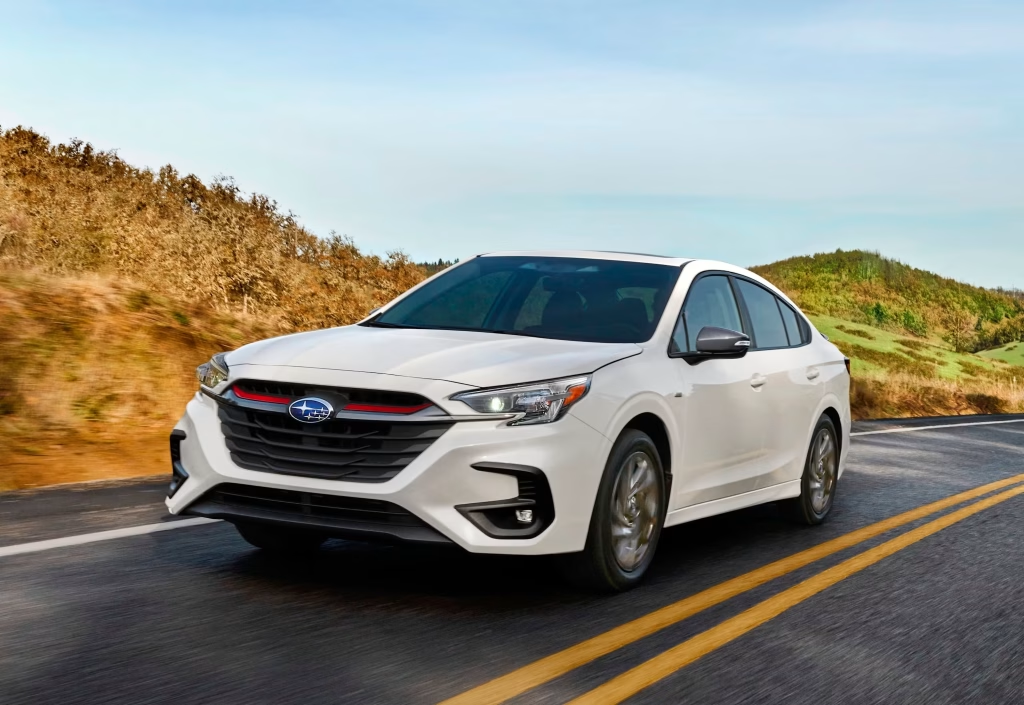
Combined with the sedan’s generous floor length, this creates a cargo area that performs well during road trips, airport runs, or weekend shopping.
The Legacy demonstrates that a family sedan does not need crossover proportions to handle everyday cargo. Thoughtful engineering allows owners to carry surprisingly large items while maintaining the comfort and driving dynamics expected from a midsize sedan.
Specifications
- Engine: 2.5L BOXER Naturally Aspirated Flat-4
- Torque: 176 lb-ft
- Horsepower: 182 hp
- Length/Width: 191.1 inches / 72.4 inches
8. Chevrolet Malibu (2016 to 2025)
The Chevrolet Malibu may not receive as much attention as some of its midsize rivals, but its cargo area is one of the strongest reasons to consider it. Chevrolet paired a 15.7 cubic-foot trunk with an opening that is both wide and accessible, making the sedan especially useful for drivers who frequently carry luggage, business equipment, or family gear.
Practical measurements place the trunk aperture at approximately 42 inches wide at its narrowest section, expanding to around 50 inches across the upper opening, while the opening height is close to 18 inches.
These dimensions allow larger coolers, folding strollers, rolling suitcases, and sports equipment to pass through with relatively little maneuvering. The opening is also wide enough for bulky rectangular storage bins that can be difficult to fit into sedans with narrower trunk designs.
Chevrolet shaped the cargo compartment with practicality in mind. The floor extends deep into the vehicle while maintaining consistent width, giving owners flexibility when arranging several pieces of luggage.
The rear seatbacks fold in a 60/40 configuration, making it possible to transport long items such as ladders, camping gear, or boxed home improvement supplies without sacrificing every rear seating position.
Small engineering details further improve day-to-day usability. The trunk lid opens high, creating generous headroom while loading, and the hinge mechanism is designed to minimize intrusion into the storage area.
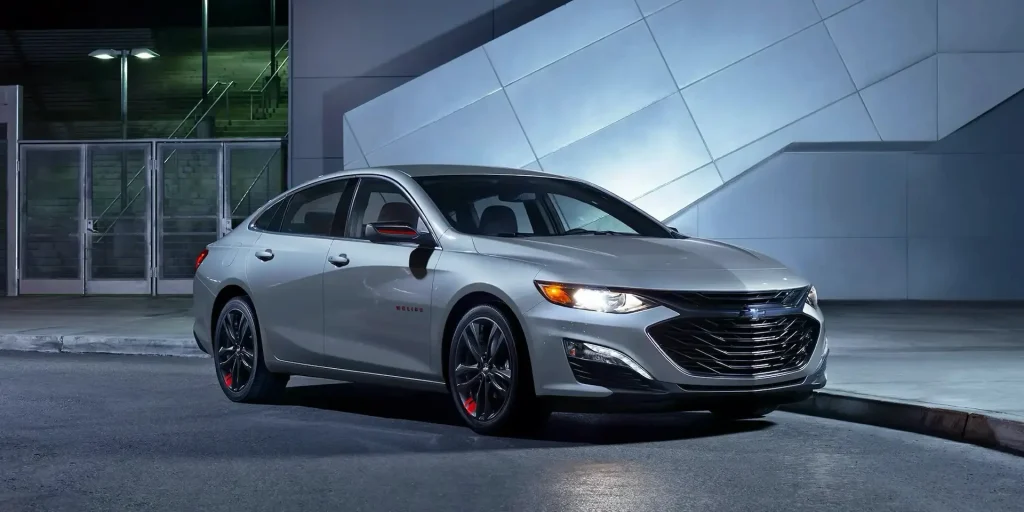
As a result, cargo can be stacked closer to the top of the compartment without worrying about the hinges interfering when the lid closes.
For buyers who need a comfortable commuter that can also handle frequent travel or family errands, the Malibu quietly delivers one of the more accommodating trunks in the midsize sedan class.
Specifications
- Engine: 1.5L Turbocharged Inline-4
- Torque: 184 lb-ft
- Horsepower: 163 hp
- Length/Width: 194.2 inches / 73.0 inches
9. Toyota Avalon (2019 to 2022)
Although the Toyota Avalon was positioned as Toyota’s flagship full-size sedan, one of its most underrated strengths was cargo practicality. The trunk offers 16.1 cubic feet of cargo space, but what truly separates it from many competitors is the generous trunk opening.
Real-world measurements show a usable aperture of approximately 43 inches at its narrowest point, expanding to about 52 inches across the upper section, with an opening height close to 18 inches.
Those dimensions make loading large suitcases, folding wheelchairs, golf clubs, and oversized storage containers significantly easier than many midsize sedans.
Toyota also gave the Avalon a long, flat cargo floor that maximizes usable space instead of simply increasing the published cargo number. The wheel wells are carefully packaged to preserve width, allowing several large suitcases to fit side by side.
Most trims include 60/40 split-folding rear seats, adding flexibility for transporting skis, long boxes, or furniture purchased from home improvement stores.
The trunk lid opens high enough to provide excellent head clearance while loading, and the hinge arms are tucked into recessed channels that reduce interference with cargo. For frequent travelers, retirees, or families taking long road trips, these seemingly minor details make everyday use much easier.
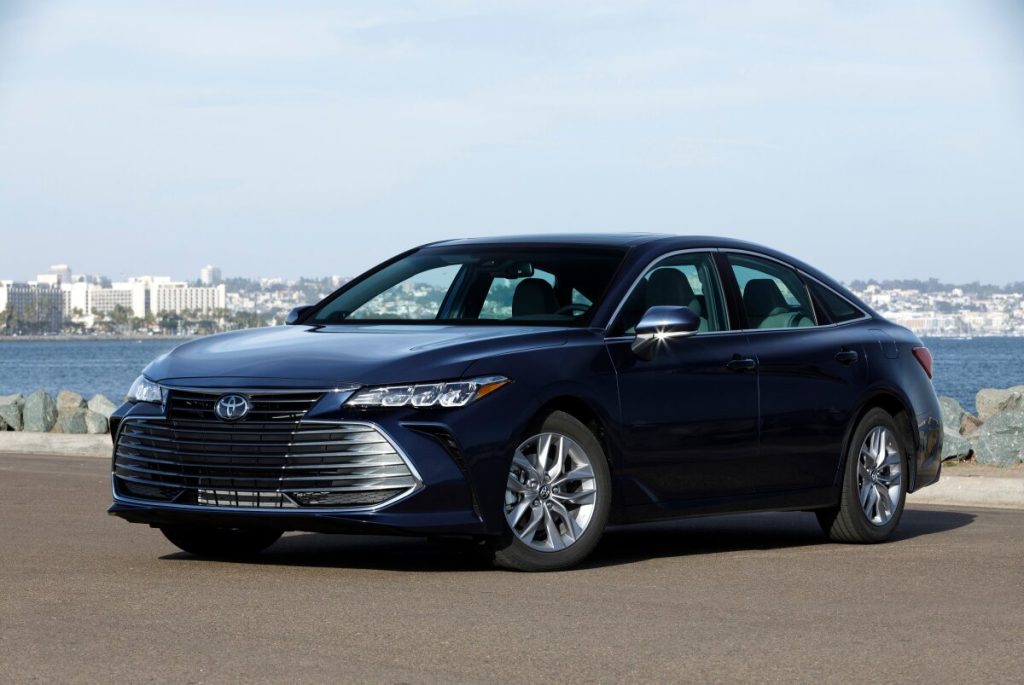
The Avalon demonstrates that a well-designed trunk opening is just as important as total cargo volume, allowing owners to carry far more than its elegant exterior styling might suggest.
Specifications
- Engine: 3.5L Naturally Aspirated V6
- Torque: 267 lb-ft
- Horsepower: 301 hp
- Length/Width: 195.9 inches / 72.8 inches
10. Hyundai Sonata (2020 to Present)
The Hyundai Sonata combines modern styling with one of the most user-friendly trunks in the midsize sedan segment. Official cargo capacity measures 16.0 cubic feet, placing it among class leaders, while the opening itself is designed to make full use of that available space.
Independent measurements indicate a trunk opening approximately 42 inches wide at the narrowest section, expanding to nearly 50 inches across the top, with an opening height of around 18 inches.
These dimensions allow the Sonata to accommodate full-size luggage, folding baby strollers, sports equipment, and warehouse shopping loads without requiring awkward positioning. Hyundai also designed the cargo compartment with a wide, square floor that makes stacking rectangular storage bins much easier than in trunks that taper sharply near the wheel wells.
Another practical feature is the 60/40 split-folding rear seat, which extends the available cargo length for transporting bicycles with the front wheel removed, flat-pack furniture, or other long items.
The trunk lid rises high, giving owners ample clearance while loading, and the hinge mechanism minimizes intrusion into the cargo area, helping protect luggage from being pinched.
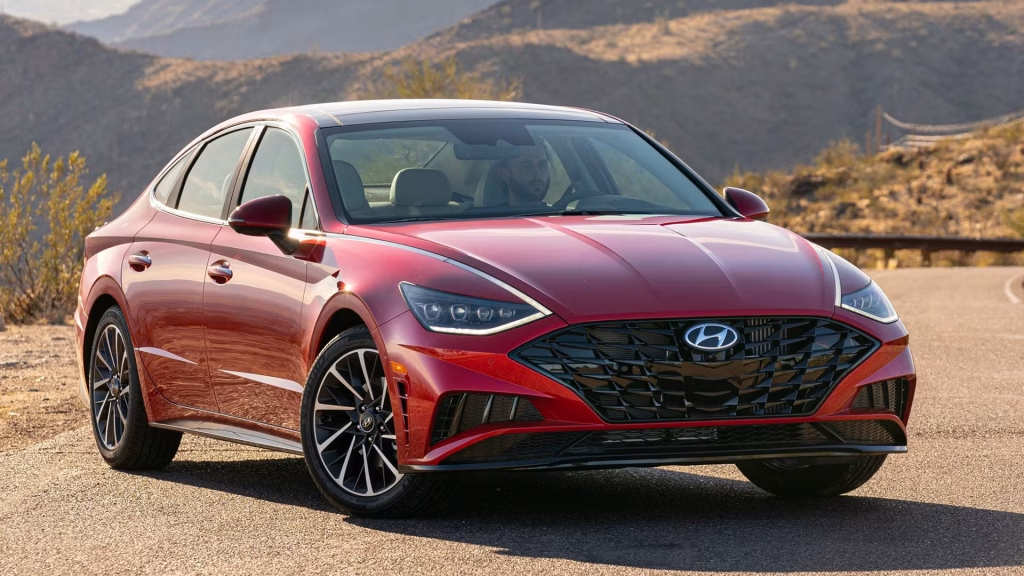
For buyers who want SUV-like practicality without giving up the driving dynamics and efficiency of a sedan, the Sonata is an excellent example. Its intelligently engineered trunk opening, generous cargo volume, and well-shaped interior make it capable of carrying far more than most people expect from a traditional four-door sedan.
Specifications
- Engine: 2.5L Naturally Aspirated Inline-4
- Torque: 181 lb-ft
- Horsepower: 191 hp
- Length/Width: 192.9 inches / 73.2 inches