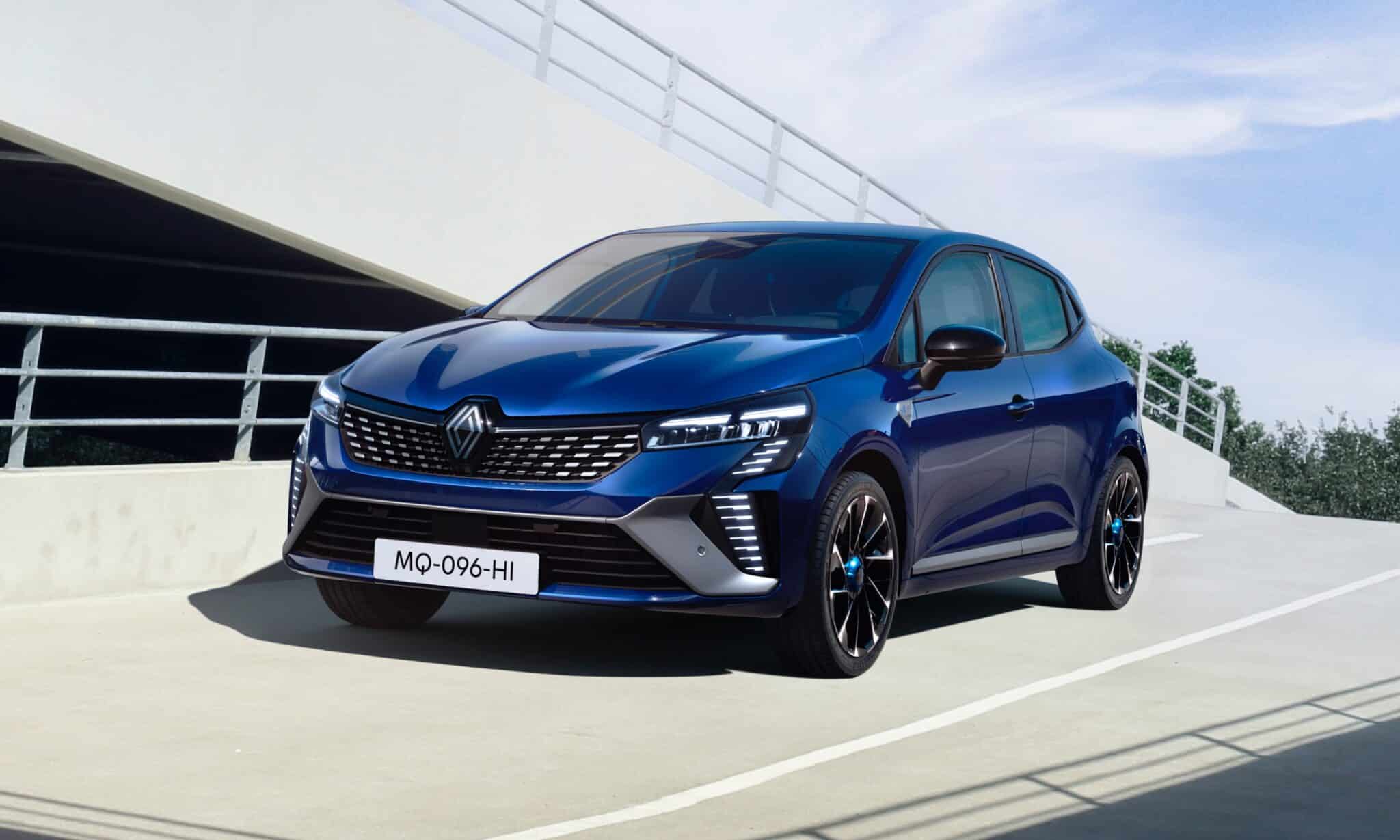
Renault has officially confirmed that the next-generation Clio will be available with both hybrid and fully electric powertrains, marking one of the most significant evolutions in the history of one of Europe’s best-selling hatchbacks.
The announcement reinforces Renault’s long-term electrification strategy while ensuring the Clio remains competitive in a rapidly changing automotive market where buyers increasingly expect multiple powertrain options.
The Clio has been a cornerstone of Renault’s lineup since its debut in 1990, selling more than 16 million units globally across five generations. It has consistently ranked among Europe’s top-selling passenger cars thanks to its balance of affordability, practicality, fuel efficiency, and compact dimensions.
Now, as emissions regulations tighten across Europe and consumer demand for electrified vehicles continues to grow, Renault is preparing the Clio for its next chapter.
According to Autocar, Renault has confirmed that the sixth-generation Clio, expected later this decade, will continue offering hybrid technology while also introducing a fully electric variant.
Rather than replacing one technology with another, Renault plans to provide customers with multiple propulsion options to suit different driving needs and regional markets. The strategy reflects a broader industry trend in which automakers are maintaining flexibility as the transition to electric mobility unfolds at different speeds around the world.
Also Read: 10 Longest-Range Motorcycles on One Tank
Renault Takes a Dual-Powertrain Approach
Unlike some manufacturers that have committed to replacing popular gasoline models entirely with battery-electric vehicles, Renault is adopting a more gradual transition.
The next-generation Clio will continue offering an advanced hybrid system for customers who want lower fuel consumption without relying on public charging infrastructure. At the same time, Renault will introduce a fully electric version for buyers ready to embrace zero-emission driving.
According to Autocar, Renault believes offering both technologies under the same model name allows the company to serve a broader range of customers while adapting to varying market conditions across Europe and other global regions.
This approach acknowledges that while electric vehicle sales continue to grow, hybrids remain an important bridge technology. Many consumers still face charging infrastructure limitations or simply prefer the familiarity of a hybrid powertrain.
By offering both options, Renault can meet stricter emissions targets while giving buyers greater flexibility.
Building on a Nameplate With More Than Three Decades of Success
Few small cars have enjoyed the sustained popularity of the Clio. Introduced in 1990 as the successor to the Renault 5, the Clio quickly became one of Europe’s defining compact hatchbacks.
Over five generations, it has won numerous industry awards, including the European Car of the Year title twice, and has consistently ranked among the continent’s highest-selling vehicles.
According to Renault, more than 16 million Clios have been sold worldwide, making it one of the brand’s most successful models.
The current fifth-generation Clio, introduced in 2019 and updated with a significant facelift in 2023, already offers Renault’s E-Tech full hybrid system. The next-generation model builds upon that foundation while preparing for an increasingly electrified automotive landscape.
Rather than abandoning a proven nameplate, Renault is evolving it to meet future customer expectations and regulatory requirements.
Hybrid Powertrains Will Continue to Play a Key Role
Although electric vehicles receive much of the industry’s attention, Renault believes hybrid technology will remain highly relevant for years to come.
The company’s E-Tech hybrid system has become one of its strongest selling points in Europe, combining a gasoline engine with electric motors to improve fuel efficiency while reducing carbon dioxide emissions.
According to Renault, hybrid models have represented a growing share of Clio sales as consumers seek lower operating costs without changing their driving habits.
Hybrid vehicles also appeal to customers who regularly travel long distances or live in regions where public charging infrastructure remains limited.
Industry analysts note that hybrids continue to experience strong demand across Europe, particularly as governments reduce incentives for battery-electric vehicles while maintaining stricter emissions regulations for conventional gasoline models.
Keeping a hybrid option available ensures the Clio remains attractive to a wide customer base during the industry’s transition toward electrification.
A Fully Electric Clio Expands Renault’s EV Portfolio
The biggest news surrounding the next-generation Clio is the confirmation that it will also be offered as a fully electric vehicle.
According to Autocar, Renault is developing the electric version alongside the hybrid model rather than treating it as a separate product.
While Renault has not yet released detailed technical specifications, the electric Clio is expected to benefit from the company’s latest battery technology, improved software architecture, and more efficient electric motors.
The company already has extensive experience in the EV market through models such as the Zoe, Megane E-Tech Electric, Scenic E-Tech Electric, and the recently introduced Renault 5 E-Tech Electric.
Lessons learned from those vehicles are expected to influence the electric Clio’s design, efficiency, charging capability, and digital features.
The addition of another electric model also strengthens Renault’s ability to compete with rivals introducing battery-powered alternatives in Europe’s highly competitive small-car segment.
One reason Renault can offer both hybrid and electric versions is its continued investment in flexible vehicle platforms.
According to company executives, modern vehicle architectures increasingly allow multiple propulsion systems to be integrated without requiring entirely separate model families.
This approach reduces engineering costs, simplifies manufacturing, and allows production to adapt more quickly as customer demand shifts between hybrid and electric vehicles.
Industry experts note that platform flexibility has become a major competitive advantage for global manufacturers facing uncertain EV adoption rates.
Rather than committing factories exclusively to one technology, companies can adjust production based on regional demand, government policies, and changing consumer preferences.
For Renault, this flexibility provides greater resilience during a period of rapid industry transformation. The next-generation Clio is expected to introduce significant improvements beyond its powertrains.
According to Autocar, Renault plans to incorporate the latest version of its OpenR infotainment system, improved digital displays, enhanced connectivity, and expanded over-the-air software update capability. Advanced driver assistance technologies are also expected to receive substantial upgrades.
Features such as adaptive cruise control, lane-centering assistance, traffic sign recognition, automatic emergency braking, blind-spot monitoring, and enhanced parking assistance are likely to become more widely available across the lineup.
Software integration is becoming increasingly important as vehicles evolve into connected digital platforms rather than purely mechanical products.
By modernizing the Clio’s technology package, Renault aims to meet rising consumer expectations while remaining competitive against newer rivals entering the compact hatchback segment.
Supporting Renault’s Broader Electrification Strategy
The new Clio forms part of Renault’s wider transformation strategy. The company has steadily expanded its electrified lineup over the past several years while investing heavily in battery technology, dedicated EV manufacturing, software development, and sustainable production methods.
According to Renault Group, electrification remains central to its long-term business plan, with multiple new electric models scheduled to reach global markets throughout the remainder of the decade.
However, Renault has repeatedly emphasized that different markets will transition toward electrification at different speeds.
Providing both hybrid and electric versions of the Clio allows the company to remain competitive across countries with varying charging infrastructure, consumer preferences, and regulatory requirements.
This balanced strategy also reduces business risk by avoiding dependence on a single propulsion technology.
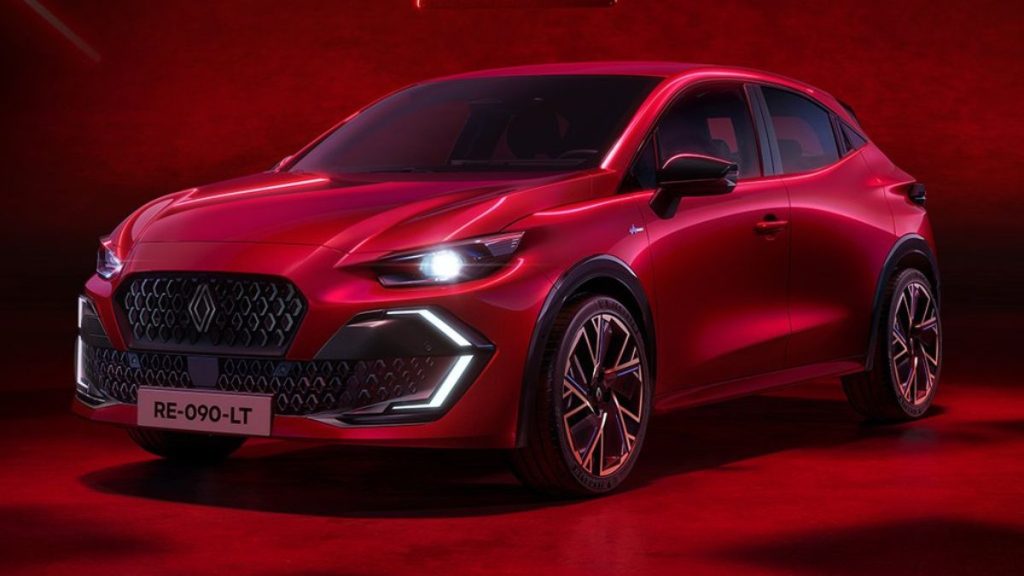
The next-generation Clio will enter one of Europe’s most competitive automotive segments. Longtime rivals such as the Volkswagen Polo, Peugeot 208, Toyota Yaris, Opel Corsa, Hyundai i20, and Skoda Fabia continue to evolve as manufacturers respond to changing emissions regulations and customer expectations.
Several competitors already offer electrified powertrains, while others are preparing new battery-electric variants over the coming years.
The Peugeot E-208 has established itself as one of Europe’s leading electric superminis, while the Fiat 500e continues attracting urban buyers seeking compact zero-emission transportation.
By introducing both hybrid and electric Clio models, Renault strengthens its ability to compete across multiple customer segments without forcing buyers into a single technology choice.
Industry analysts suggest this diversified approach may prove advantageous as EV adoption continues at different rates across European markets.
Although Renault has yet to announce a formal launch schedule, the next-generation Clio is expected to arrive before the end of the decade.
According to Autocar, the model will continue serving as one of Renault’s highest-volume vehicles and is expected to play a central role in the company’s European sales strategy.
Production is likely to remain concentrated within Renault’s established European manufacturing network, allowing the company to leverage existing expertise while incorporating new electrified production processes.
Pricing has not been announced, but industry observers expect Renault to maintain the Clio’s reputation for delivering strong value in the compact hatchback segment.
Offering both hybrid and electric variants could also allow Renault to appeal to a broader customer base without significantly altering the Clio’s market positioning.
Preparing the Clio for the Next Era of Mobility
Renault’s confirmation that the next-generation Clio will offer both hybrid and fully electric powertrains highlights the company’s pragmatic approach to the evolving automotive landscape.
Rather than choosing between electrification pathways, Renault is giving customers options while ensuring one of Europe’s most recognizable hatchbacks remains relevant in an increasingly competitive market.
According to Autocar, the dual-powertrain strategy reflects Renault’s belief that hybrids and battery-electric vehicles will coexist for years as infrastructure, regulations, and consumer preferences continue to evolve.
Combined with updated technology, improved connectivity, and a flexible vehicle platform, the next-generation Clio is positioned to build on more than three decades of success while supporting Renault’s broader vision for a lower-emission future.
As automakers navigate one of the most significant technological shifts in automotive history, the Clio’s evolution demonstrates that the future of compact cars may not depend on a single solution but on offering customers the freedom to choose the technology that best fits their everyday lives.
Also Read: 8 Limited-Run Vintage Cars That Sold Out and Never Came Back