
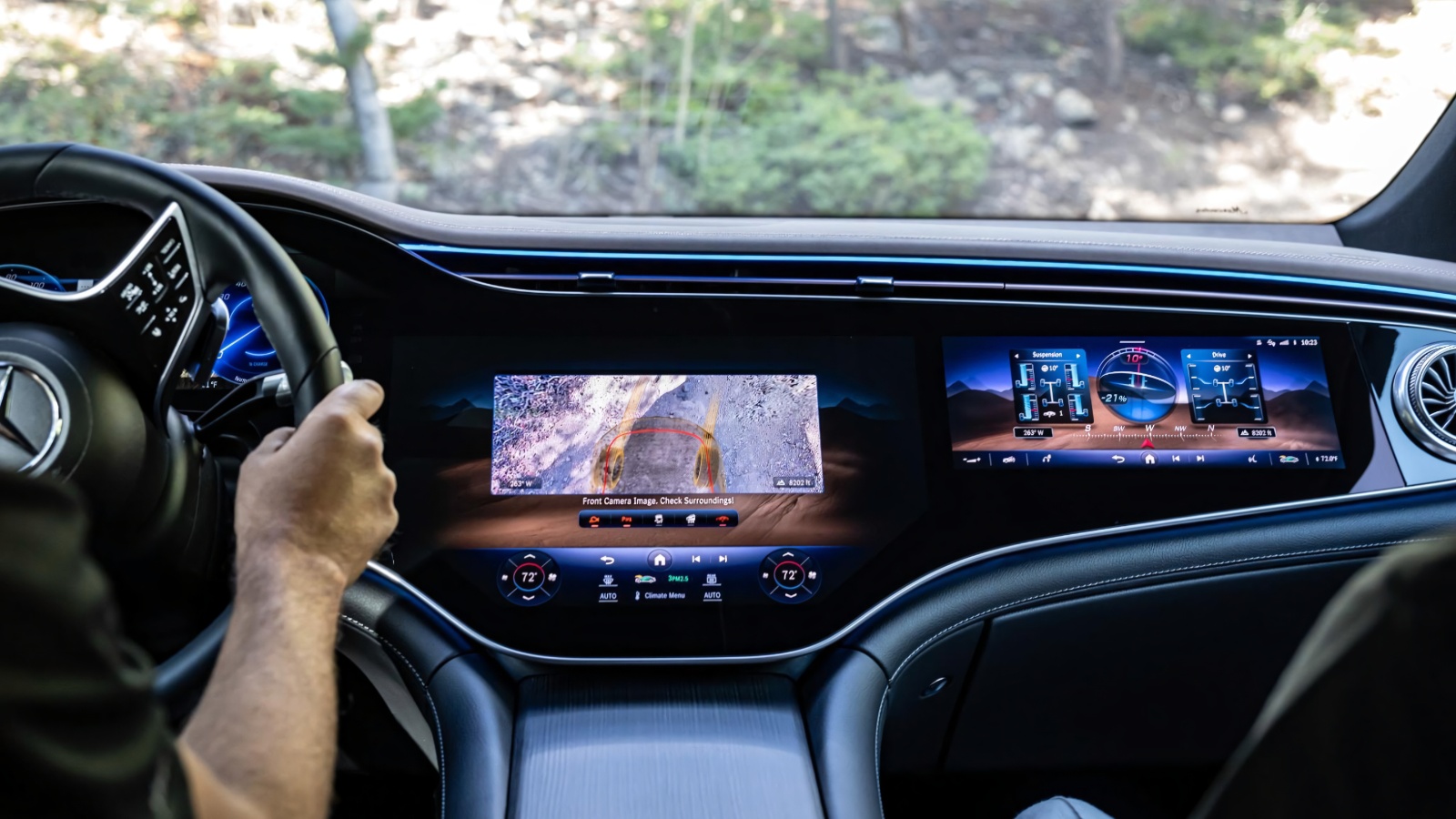
Driver monitoring is no longer a gimmick. It’s becoming the backbone of hands-free driving. Automakers now use infrared cameras to track your gaze. They want to know if you’re actually watching the road.
This shift started with GM’s Super Cruise back in 2017. Now eight brands use real eye-tracking hardware. These systems don’t just nag you. They can slow the car, alert passengers, or bring you to a safe stop.
Some use a single camera behind the steering wheel. Others use dual infrared sensors near the dashboard. The goal is the same everywhere. Keep your eyes up, or the system pulls back control.
Below are eight vehicles doing this right now. Each one uses genuine eye or gaze tracking, not just steering-wheel torque sensors. We cover the hardware behind each system. We also cover the engines, dimensions, and pricing that come with them.
This isn’t a list of generic crossovers. It’s a look at how driver-facing cameras are reshaping the modern dashboard. Some are trucks. Some are luxury SUVs. Some are electric performance machines.
1. GMC Hummer EV (SUV & Pickup)
The GMC Hummer EV represents an incredible convergence of extreme, heavy-duty off-road capability and advanced hands-free semi-autonomous driving technology.
To enable this sophisticated level of automation, the Hummer EV utilizes General Motors’ flagship Super Cruise system, which relies on a specialized infrared eye-tracking camera mounted directly on top of the steering column.
This system is backed by years of continuous refinement, originating from GM’s initial 2017 debut of Super Cruise in the Cadillac CT6 and evolving into one of the most reliable and trusted hands-free highway driving suites on the market.
For the 2026 model year, Super Cruise receives critical software enhancements, integrating advanced Google Maps lane guidance and the ability to automatically adjust adaptive cruise control speeds to match changing posted speed limits in real time.
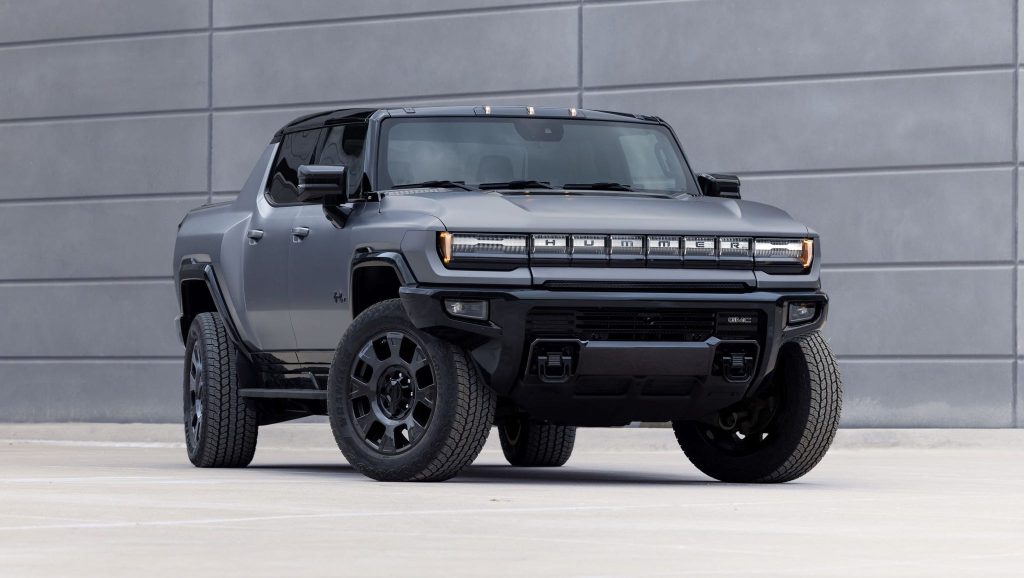
The integrated driver-monitoring camera continuously monitors head posture and eye direction to verify that the person behind the wheel remains engaged and aware of the surrounding traffic environment.
If the driver looks away from the road for too long or displays signs of distraction, the steering wheel light-bar flashes bright red to issue a warning.
If those initial alerts are ignored, the heavy-duty truck initiates a progressive deceleration sequence, ultimately capable of bringing the vehicle to a safe, controlled stop and pulling over automatically on compatible divided highways if the driver fails to respond.
Beyond its autonomous software, the Hummer EV boasts cutting-edge mechanical and electrical updates for 2026. The SUV variant gains an innovative “King Crab” steering mode, which allows the rear wheels to turn at twice the rate of the front wheels, dramatically shrinking the turning radius for tight, technical off-road trails.
Furthermore, bidirectional charging arrives as a major upgrade, providing comprehensive vehicle-to-home (V2H) and vehicle-to-vehicle (V2V) power transfer capabilities, allowing the massive battery pack to act as an emergency mobile generator.
The Hummer EV combines advanced technology with exceptional performance. It offers up to 18 exterior camera views that act as a virtual spotter, making it easier to navigate challenging terrain and tight spaces.
Tri-motor models also deliver up to 1,000 horsepower. Together with its eye-tracking hands-free driving system, the Hummer EV shows that advanced driver assistance is no longer limited to luxury sedans or everyday crossovers. The technology performs just as effectively in a large and powerful electric truck.
Specifications:
- Powertrain: Tri-motor or dual-motor electric setup
- Horsepower: Up to 1,000 hp (Edition 1 tri-motor)
- Torque: Up to 11,500 lb-ft (wheel torque, tri-motor)
- Range: Up to 316 miles (Pickup 2X trim)
- Length: 216.8 inches (Pickup)
- Width: 86.5 inches
- Driver Monitoring: Infrared eye-tracking camera, Super Cruise
- Starting Price: Approximately $97,200 (2026 Pickup 2X)
2. Cadillac Escalade IQ
The Cadillac Escalade IQ stands as a bold, fully electric reinterpretation of an American luxury icon, bringing battery-electric efficiency together with cutting-edge cabin technology.
As Cadillac’s premier all-electric flagship SUV, the Escalade IQ inherits GM’s renowned Super Cruise system as standard equipment across every single trim level, ensuring that every owner benefits from advanced eye-tracking safety regardless of which tier they purchase.
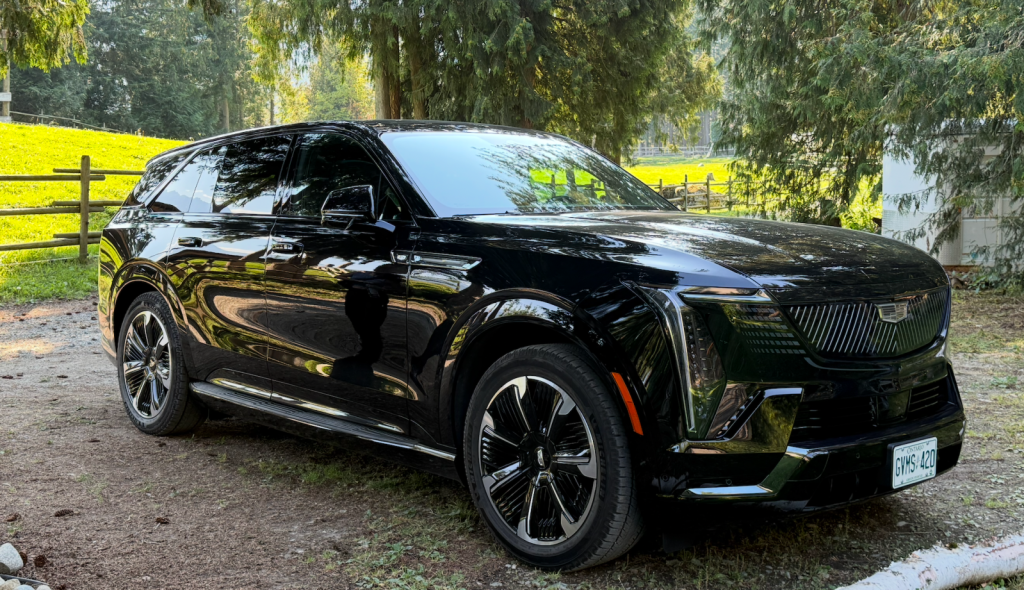
To deliver a seamless and confident hands-free driving experience on hundreds of thousands of miles of compatible mapped highways, the system relies on a sophisticated, multi-layered approach that combines high-precision GPS, an infrared Driver Attention System camera, and detailed LiDAR map data.
This robust sensory fusion drastically reduces false alerts while maintaining stringent safety protocols. Real-time exterior cameras, ultrasonic sensors, and satellite mapping work in absolute harmony to interpret upcoming road curves and elevation changes, resulting in a lane-centering experience that feels remarkably smooth and natural for a vehicle of this massive physical footprint.
Unlike basic driver-attention setups found in competing brands, Cadillac’s system intelligently integrates with turn-signal-activated automated lane changes. When the driver glances at the side mirror and taps the turn signal stalk, the vehicle independently checks blind spots and executes the lane change hands-free.
Performance and luxury match the vehicle’s high-tech posture. In its high-output Velocity Max mode, the dual-motor all-wheel-drive electric powertrain surges forward with up to 750 horsepower, making highway passing effortless.
Energy storage is equally impressive, with the Escalade IQ offering up to 465 miles of driving range on a single charge, effectively eliminating range anxiety on long-distance family road trips.
Inside, a breathtaking 55-inch pillar-to-pillar Horizon Display dominates the dashboard real estate, creating the largest and most immersive digital interface in the entire full-size luxury electric segment.
Specifications:
- Powertrain: Dual-motor electric, Ultium platform
- Horsepower: 750 hp (Velocity Max)
- Torque: 785 lb-ft
- Battery: 200 kWh
- Range: Up to 465 miles
- Cargo Volume: 119.1 cu ft
- Driver Monitoring: Infrared Super Cruise camera
- Starting Price: Approximately $130,300
3. Ford F-150
The Ford F-150 brings sophisticated eye-tracking technology directly to America’s best-selling vehicle, marking a massive operational leap compared to traditional systems restricted exclusively to expensive luxury sedans.
At the heart of this capability is Ford’s BlueCruise hands-free highway driving assistant, which relies on a discreetly integrated driver-facing infrared camera mounted near the instrument cluster to continuously monitor eye gaze direction and head position.
This specialized optical hardware ensures that the human operator remains actively engaged and ready to resume manual control whenever the truck navigates pre-mapped, divided highways designated as hands-free Blue Zones.
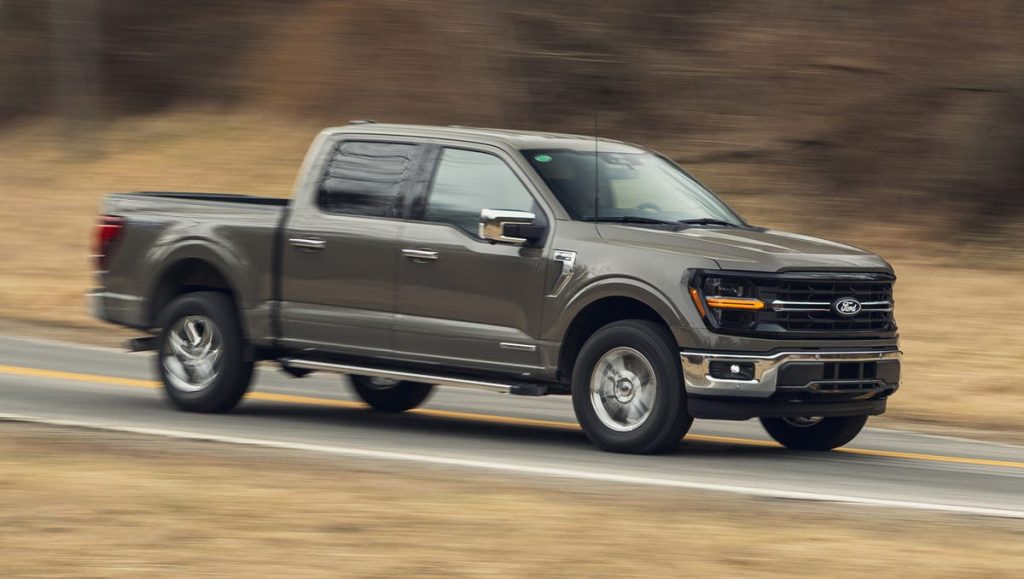
The real-world impact of this technology is expanding rapidly; recent customer data highlights that F-150 drivers alone log staggering numbers of hands-free miles annually, proving that mainstream truck owners are enthusiastically adopting automated safety infrastructure.
However, incorporating this advanced eye-tracking safety suite requires careful planning at the dealership level. On certain configurations and trim packages, if the necessary BlueCruise hardware architecture is not selected or bundled at the initial time of factory order, it cannot be retrofitted or added later through software unlocks.
This makes option sheet management critical for buyers wanting hands-free capability. Performance flexibility remains a core pillar of the F-150 lineup, offering everything from the high-volume efficiency of the EcoBoost V6 to the robust capability of the PowerBoost hybrid and the high-octane thrill of the supercharged V8 Raptor R.
Yet, regardless of whether a customer chooses a work-focused trim or a plush Platinum layout, the integration of an unblinking driver-monitoring camera ensures that high-tech oversight travels alongside massive hauling and towing power.
By democratizing this safety hardware across a commercial-grade platform, the F-150 bridges the gap between rugged utility and advanced semi-autonomous innovation.
Specifications:
- Engine: 2.7L EcoBoost V6 (base) / 5.2L Supercharged V8 (Raptor R)
- Horsepower: 325 hp (base) / 720 hp (Raptor R)
- Torque: 400 lb-ft (base) / up to 640 lb-ft (Raptor R)
- Length: Approximately 232.7 inches (SuperCrew)
- Towing: Up to 13,500 lbs
- Driver Monitoring: Infrared driver-facing camera, BlueCruise
- Starting Price: $40,085 (Regular Cab)
4. Ford Mustang Mach-E
The Ford Mustang Mach-E successfully translates the brand’s hands-free driving capabilities into an all-electric architecture, proving that continuous driver eye-tracking and monitoring are completely platform-agnostic and work just as seamlessly in a battery-powered crossover as they do in a traditional gasoline pickup truck.
As an early adopter within Ford’s expansive ecosystem, the Mach-E utilizes the same core BlueCruise framework deployed across multiple vehicle lines, demonstrating how software-defined safety features can scale effectively across diverse powertrains.
Positioned neatly atop the instrument cluster shroud, the vehicle’s driver-facing camera is meticulously calibrated to read pupil position and vector angles even when the operator wears most standard polarized sunglasses.
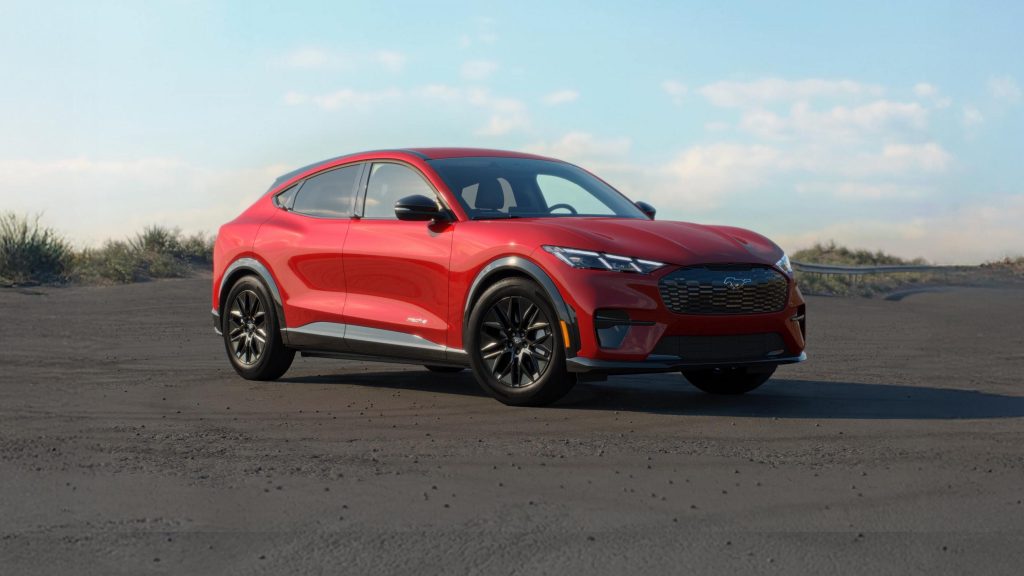
The software logic is structured with progressive safety warnings: if the system detects a driver’s gaze lingering away from the road toward the central touchscreen or side scenery for too long, a series of escalating visual indicators and audible chimes initiates immediately.
If those progressive warnings are continuously ignored, the system systematically disengages hands-free mode, safely requiring the driver to place their hands back on the steering wheel.
Ford continuously refines this hardware capability through over-the-air software updates, sharpening detection algorithms and expanding functional parameters without requiring physical sensor replacements.
Engineering teams explain that the Ford Mustang Mach E benefits from a lower passenger seating position, which gives the interior infrared camera a clearer and less obstructed view of the driver’s face. This design improves the camera’s ability to monitor driver attention and helps reduce false distraction alerts when compared with taller sport utility vehicles and pickup trucks.
The Mach-E validates that combining precise cabin camera placement with intuitive software yields a confident, relaxed driving experience for modern EV owners.
Specifications:
- Powertrain: Single or dual-motor electric
- Horsepower: 266 hp (Select) / 480 hp (GT Performance Edition)
- Torque: 317 lb-ft (Select) / 700 lb-ft (GT)
- Range: Up to 320 miles (Select RWD)
- Length: 186.7 inches
- Width: 74.1 inches
- Driver Monitoring: Infrared driver-facing camera, BlueCruise
- Starting Price: Approximately $37,000
Also Read: 4 Full-Size SUVs Worth the Sticker vs 4 That Are Not
5. Volvo EX90
Volvo built the EX90 around driver safety from day one. The interior camera setup is one of the most sensor-dense on this list. Internal passenger-monitoring cameras can detect driver drowsiness, idleness, and even possible intoxication, working alongside erratic-driving detection. Few rivals go this far.
There’s also cabin radar. An interior radar is sensitive enough to detect a sleeping baby or animal and alert the driver if left behind. That’s beyond typical eye-tracking.
Every 2026 EX90 adopts an 800-volt architecture, letting the SUV add roughly 155 miles of range in just 10 minutes of fast charging. Charging speed jumped significantly this year.
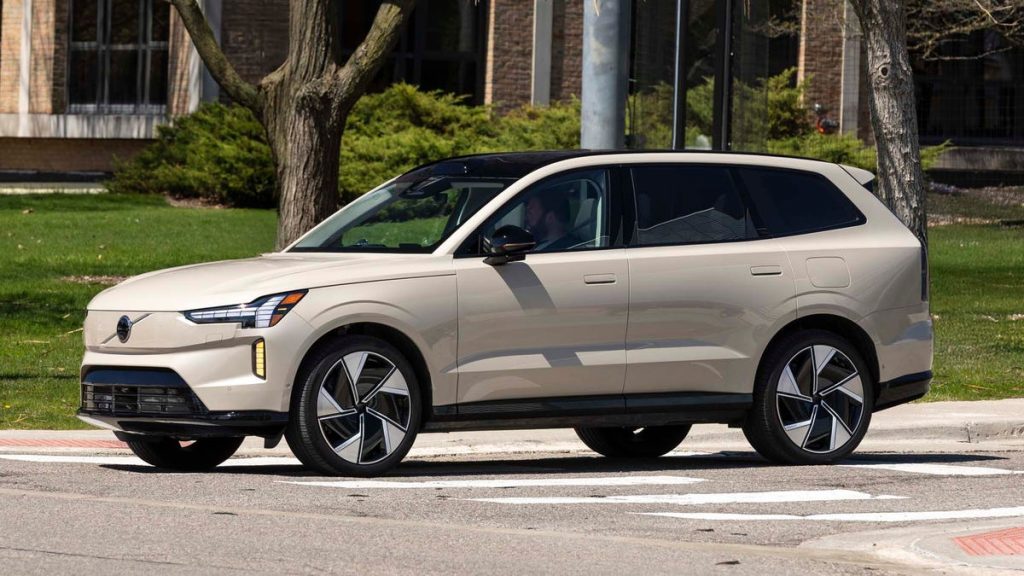
The standard single-motor drivetrain produces 329 horsepower and 354 lb-ft of torque. That’s more than Volvo’s gas-powered XC90 counterpart. The Twin Motor Performance option reaches 670 horsepower and 642 lb-ft, hitting 60 mph in 4.0 seconds.
This is a genuinely quick family SUV. A 14.5-inch portrait touchscreen runs Google’s built-in software system. Most functions route through this display. The EX90 treats eye-tracking as one layer among many. Camera, radar, and behavior analysis work together here.
Specifications:
- Powertrain: Single or Twin Motor electric, 800V architecture
- Horsepower: 329 hp (Single Motor) / 670 hp (Twin Motor Performance)
- Torque: 354 lb-ft (base) / 642 lb-ft (Performance)
- Battery: 107 kWh
- Range: Approximately 300–310 miles
- Cargo: 85.3 cu ft (seats folded)
- Driver Monitoring: Interior camera plus cabin radar
- Starting Price: Approximately $78,000
6. Subaru Outback
Subaru’s DriverFocus system pioneered facial recognition monitoring in mainstream vehicles. It’s now in its second generation for 2026. The upgraded system features a wider-angle, higher-resolution camera, improved processing, and infrared LEDs that track eye gaze through most sunglasses or eyeglasses. This fixed a common complaint about the older camera.
Unlike systems based on evaluating driving behavior, DriverFocus uses facial recognition that reads changes in eye and head movement directly. It’s watching you, not just the wheel.
For the first time in any Subaru, Emergency Stop Assist with Safe Lane Selection debuts on the 2026 Outback. If the driver becomes unresponsive, the car can pull itself over.
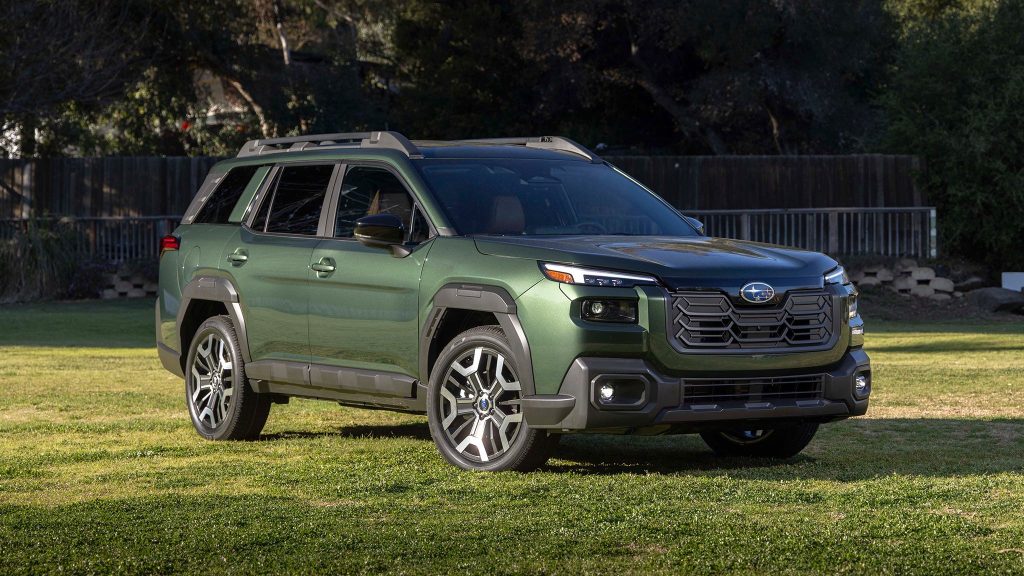
The camera also remembers up to five driver profiles. Look at the camera, and your seat and mirrors adjust automatically. Reception has been mixed among owners. Some drivers find the system’s sensitivity feels less like safety tech and more like a backseat driver.
Subaru has iterated based on that feedback. A new 12.1-inch multimedia system runs on a Qualcomm Snapdragon 8 Automotive processor with octa-core architecture.
This powers both infotainment and camera processing. The Outback shows eye-tracking reaching affordable family wagons. Subaru got here years before most rivals.
Specifications:
- Engine: 2.5L naturally aspirated flat-four / 2.4L turbocharged flat-four
- Horsepower: 182 hp (2.5L) / 260 hp (2.4L Turbo)
- Torque: 178 lb-ft / 277 lb-ft (Turbo)
- Length: Approximately 191.3 inches
- Ground Clearance: 9.5 inches (Wilderness trim)
- Driver Monitoring: Infrared facial-recognition camera, DriverFocus
- Starting Price: Approximately $30,000
7. BMW 7 Series
BMW’s Driving Assistant Professional package includes a driver-attention camera tied to its Highway Assistant feature. This enables genuinely hands-free driving.
The signature feature, Highway Assistant, allows attentive hands-free driving up to 85 mph, while the interior camera ensures continuous driver engagement. That top speed beats most rivals’ hands-free limits.
The Driver Attention Camera is only active when the vehicle allows hands-off driving. It doesn’t run constantly like some competitors’ systems. BMW integrates a driver monitoring system that observes engagement, issuing escalating alerts and disengaging assistance if attention drops. This mirrors GM and Ford’s approach closely.
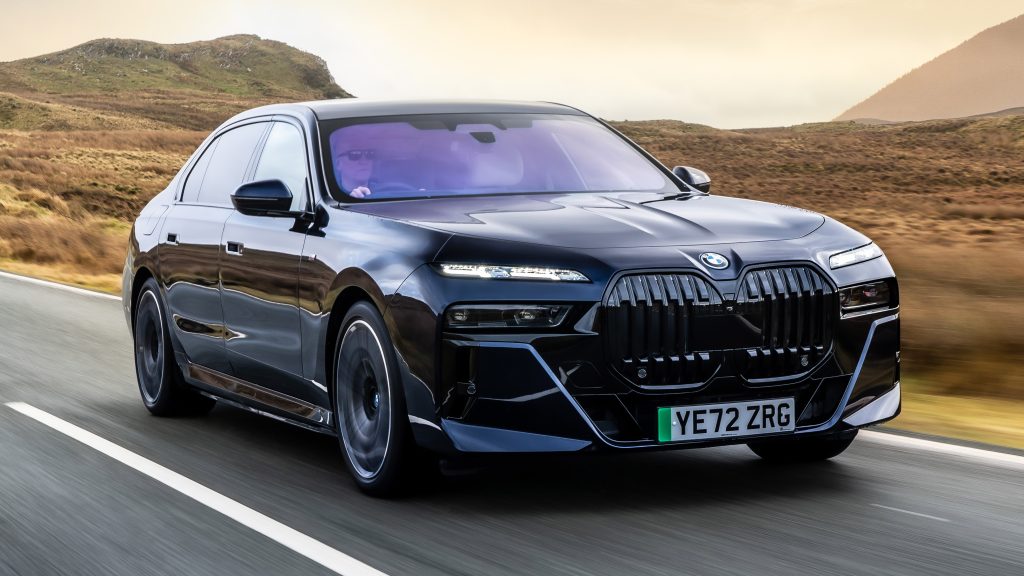
These remain SAE Level 2 systems, meaning the driver must stay attentive and ready to take control at any time. No BMW currently offers eyes-off driving. BMW pairs this with Active Lane Change. Glance at your mirror, and confirmed lane changes execute automatically.
The 7 Series wraps this in BMW’s Curved Display. Camera-based alerts appear directly in the driver’s sightline. The 7 Series confirms eye-tracking as a luxury-flagship standard. BMW ties it tightly to its fastest hands-free speed allowance.
Specifications:
- Engine: 3.0L inline-six turbo (740i) / plug-in hybrid V8 (760e)
- Horsepower: 375 hp (740i) / 536 hp (760e xDrive combined)
- Torque: 398 lb-ft (740i) / 553 lb-ft (760e)
- Length: Approximately 213.6 inches
- Width: 76.8 inches
- Driver Monitoring: Infrared attention camera, Highway Assistant
- Starting Price: Approximately $96,800
8. Genesis GV80
Genesis includes a driver attention monitor as standard equipment across every GV80 trim. No package upgrade is required for the camera. Standard equipment includes a driver attention monitor and Highway Driving Assist 2, combining adaptive cruise control and lane-centering steering. This is baseline, not an option.
Highway Driving Assist 2 helps center the vehicle within its lane while maintaining a selected distance and speed. The camera confirms you’re watching while it does this. All trims now include a large 27-inch OLED screen for gauges and navigation. Attention alerts display prominently on this panel.
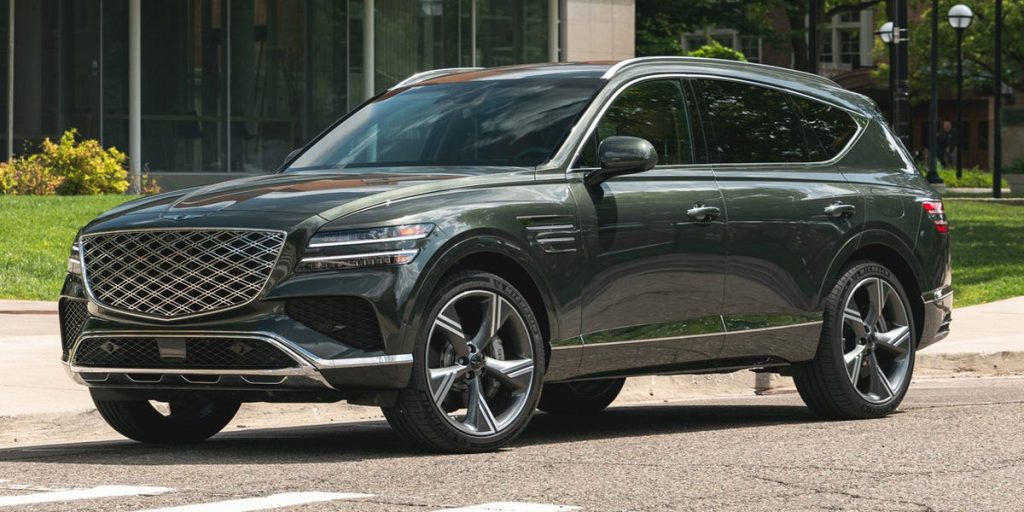
The 3.5-liter twin-turbocharged V6 generates 375 horsepower at 5,800 rpm and 391 lb-ft of torque from just 1,300 rpm. Genesis also offers a punchier four-cylinder option. The 2.5-liter turbocharged four-cylinder makes 300 horsepower and 311 lb-ft of torque. It’s the efficient starting point.
A twin-turbo V6 with a 48-volt electric supercharger reaches 409 horsepower in the GV80 Coupe. This is the range-topping engine. The GV80 proves Genesis treats eye-tracking as non-negotiable. It’s baked into every trim, not reserved for flagships.
Specifications:
- Engine: 2.5L Turbo I4 / 3.5L Twin-Turbo V6 / 3.5L Twin-Turbo V6 with e-supercharger
- Horsepower: 300 hp / 375 hp / 409 hp
- Torque: 311 lb-ft / 391 lb-ft
- Length: 194.7 inches
- Width: 77.8 inches
- Towing: Up to 6,000 lbs
- Driver Monitoring: Standard driver attention monitor camera
- Starting Price: Approximately $58,000
Also Read: 5 Compact Trucks Worth Buying vs 5 to Skip
