

Buying a vehicle is often seen as the finish line of the dealership experience, but for many dealers, it is only the beginning of a long-term revenue relationship. The profit earned on the vehicle itself is frequently smaller than buyers expect, especially on competitive new-car sales.
Instead, dealerships generate significant income through financing, service visits, warranties, accessories, and customer retention programs long after the paperwork is signed.
According to the National Automobile Dealers Association (NADA), fixed operations and finance departments account for a substantial share of dealership profitability. Here are ten legitimate ways U.S. dealerships continue earning revenue after you leave the lot.
Also Read: 10 Longest Cars Ever Sold in America
1. Finance and Insurance Chargebacks
Many buyers assume the dealership earns all of its financing profit on the day the sale is completed. In reality, the Finance and Insurance (F&I) department continues to have a financial interest in what happens after the customer leaves. One of the most important mechanisms is known as a chargeback.
When a dealership arranges an auto loan through a bank, credit union, or captive finance company, it may receive compensation from the lender. That compensation can come from reserve income or a flat payment for originating the loan.
However, those earnings are not always guaranteed permanently. If the buyer refinances the loan shortly after purchase, pays it off far earlier than expected, or defaults within a specified period, the lender may reclaim part or all of that payment from the dealership. This recovery is called an F&I chargeback.
To reduce chargebacks, dealerships focus on placing buyers in loans that are likely to remain active for several months. Finance managers also work to match customers with lenders offering terms that fit their financial profile, reducing the likelihood of early refinancing or repossession.
Extended service contracts, GAP coverage, maintenance plans, and certain protection products can also generate chargebacks if they are canceled during the refund period. Because of this, dealerships often spend considerable effort explaining the long-term value of these products instead of treating them as one-time sales.
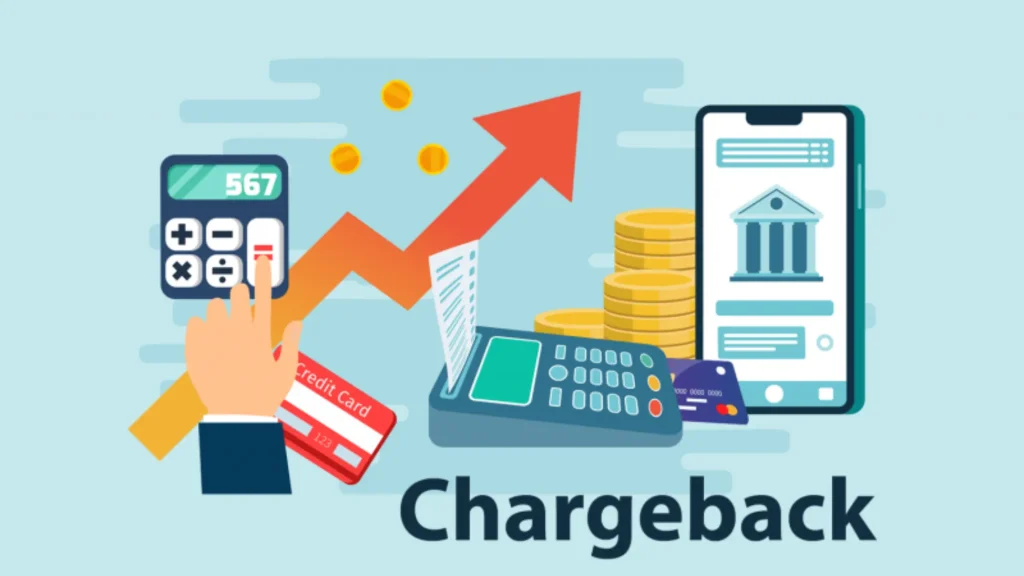
For consumers, understanding chargebacks explains why finance managers sometimes ask about refinancing plans or encourage buyers to keep the original loan for a period of time.
While buyers are free to refinance whenever it makes financial sense, dealerships recognize that their compensation may depend on how long the financing remains in force. It is one of the least visible revenue streams connected to every vehicle sale.
2. Service Department Customer Retention
Selling the vehicle opens the door to one of the dealership’s most profitable business areas: the service department. Industry financial reports from NADA consistently show that fixed operations, which include service, maintenance, and parts, generate a significant portion of dealership net profits.
In many cases, the service lane remains profitable even when new-vehicle sales fluctuate because of economic conditions or inventory shortages.
Manufacturers also encourage dealerships to build long-term relationships through scheduled maintenance. Oil changes, tire rotations, brake inspections, transmission service, coolant replacement, and warranty repairs bring customers back multiple times throughout vehicle ownership.
Every visit creates opportunities for additional maintenance recommendations based on factory service schedules or technician inspections.
Dealerships invest heavily in customer retention because repeat service customers are more likely to purchase another vehicle from the same retailer. Loyalty programs, complimentary inspections, service reminders, online scheduling, loaner vehicles, and maintenance packages are all designed to keep owners returning instead of visiting independent repair shops.
Modern vehicles have become increasingly sophisticated, making dealership service departments even more competitive.
Factory-trained technicians receive manufacturer-specific training, use specialized diagnostic equipment, and have direct access to technical service bulletins and software updates that many independent shops cannot obtain immediately.

The financial value of retaining a customer for years often exceeds the profit from the initial vehicle sale. A single owner may purchase tires, batteries, brake components, fluids, filters, and scheduled maintenance dozens of times during ownership.
That recurring business produces predictable revenue while strengthening the relationship between the customer and the dealership, making future vehicle purchases more likely.
3. Documentation and Processing Fees
Many buyers focus on the negotiated selling price of a vehicle but pay less attention to the documentation fee listed on the final purchase agreement.
Often called a doc fee, documentation fee, or processing fee, this charge compensates the dealership for preparing purchase contracts, title paperwork, registration documents, lender forms, compliance records, and other administrative requirements associated with a vehicle transaction.
The amount varies widely across the United States because state laws regulate these fees differently. Some states cap documentation fees at relatively low amounts, while others allow dealerships to determine their own pricing.
As a result, buyers may see fees ranging from less than $100 in some states to several hundred dollars in others. Regardless of the amount, the fee generally becomes part of the dealership’s revenue rather than being paid directly to a government agency.
Documentation fees help offset staffing costs for title clerks, finance personnel, compliance departments, electronic filing systems, and record retention. Modern vehicle transactions involve far more paperwork than many buyers realize.
Federal lending disclosures, identity verification, privacy notices, odometer statements, warranty acknowledgments, and state registration documents all require careful processing to comply with legal requirements.
Even after the customer drives away, dealership employees continue working on the transaction by submitting title applications, processing lender documentation, paying registration agencies, and ensuring ownership records are completed correctly. The documentation fee helps support those operations while contributing additional profit.
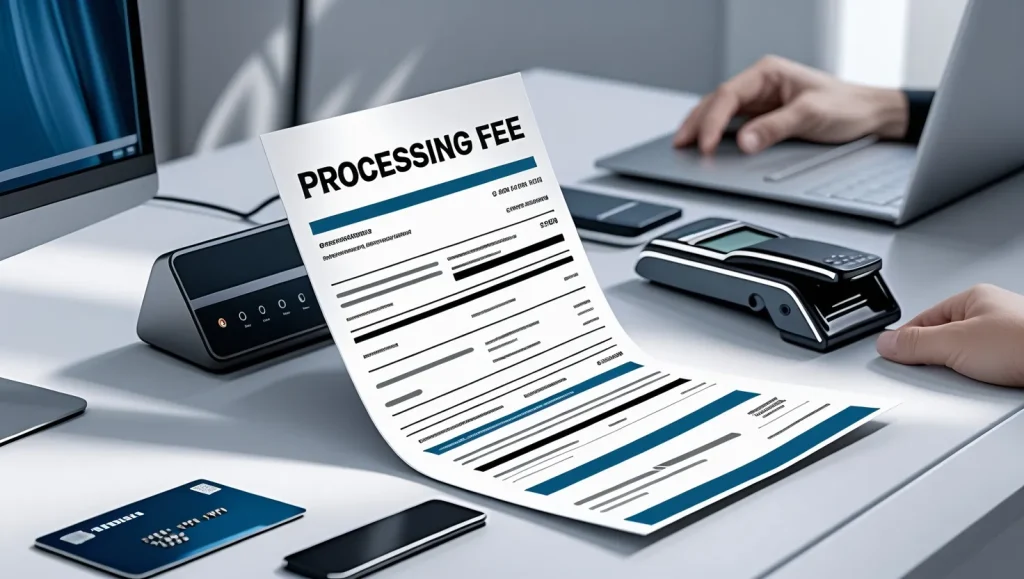
Consumers should remember that documentation fees differ from taxes, registration charges, and license fees collected on behalf of state governments.
Those government fees are generally fixed, while dealer processing fees are determined according to state regulations and dealership policies. Understanding that distinction allows buyers to better evaluate the complete purchase price before signing the contract.
4. Extended Service Contracts
One of the largest sources of post-sale income comes from extended service contracts, commonly referred to as extended warranties.
Although many buyers purchase these products during the financing process, the dealership often continues earning revenue long after delivery because service contracts generate income through commissions, repair work, and ongoing customer relationships.
Unlike the manufacturer’s factory warranty, an extended service contract begins after certain factory coverage expires or supplements existing protection.
These plans can cover expensive components such as the engine, transmission, air conditioning system, electronics, suspension, and advanced driver-assistance technology, depending on the level of coverage selected.
Dealerships typically partner with manufacturers or third-party warranty providers. When a customer purchases a service contract, the dealership receives compensation for selling the policy.
If covered repairs are later performed at that same dealership, the service department may also benefit from labor reimbursement and genuine replacement parts supplied under the agreement.
From the dealership’s perspective, these contracts encourage customers to return for repairs instead of choosing an independent repair shop. Factory-trained technicians already understand the vehicle, and warranty administrators handle claim approvals directly with the provider, making the repair process more convenient for many owners.
Not every buyer benefits equally from an extended service contract. Factors such as expected ownership length, annual mileage, manufacturer reliability, deductible amounts, and coverage exclusions all influence the value of the plan.
Buyers who intend to keep a vehicle well beyond the factory warranty may find the protection worthwhile, while others may decide that self-funding future repairs is a better financial choice.
For dealerships, however, extended service contracts remain one of the most reliable ways to generate continuing revenue while encouraging long-term customer loyalty.
5. GAP Insurance Products
A vehicle begins losing value almost immediately after it is driven off the lot. During the early years of ownership, depreciation can outpace the balance of an auto loan, especially when buyers finance for 72 or 84 months or make a small down payment.
This creates the possibility of negative equity, where the remaining loan balance exceeds the vehicle’s actual cash value. GAP, or Guaranteed Asset Protection, insurance was created to address this situation, and it has become an important post-sale revenue source for dealerships.
If a financed vehicle is declared a total loss after an accident or theft, a standard auto insurance policy typically pays only the vehicle’s market value at the time of the claim. If that amount is less than the remaining loan balance, the owner may still owe thousands of dollars to the lender.
GAP coverage pays the difference, subject to the policy’s terms and limits, helping owners avoid paying out of pocket for a vehicle they no longer possess.
Dealerships usually offer GAP coverage through finance companies or insurance providers and receive compensation when customers purchase the product. Since cancellations are relatively uncommon after the initial ownership period, GAP products often provide stable F&I revenue.
The value of GAP coverage depends largely on the financing structure. Buyers with long loan terms, minimal down payments, or vehicles that depreciate quickly often receive the greatest benefit. Conversely, customers making substantial down payments may have little or no need for the coverage.
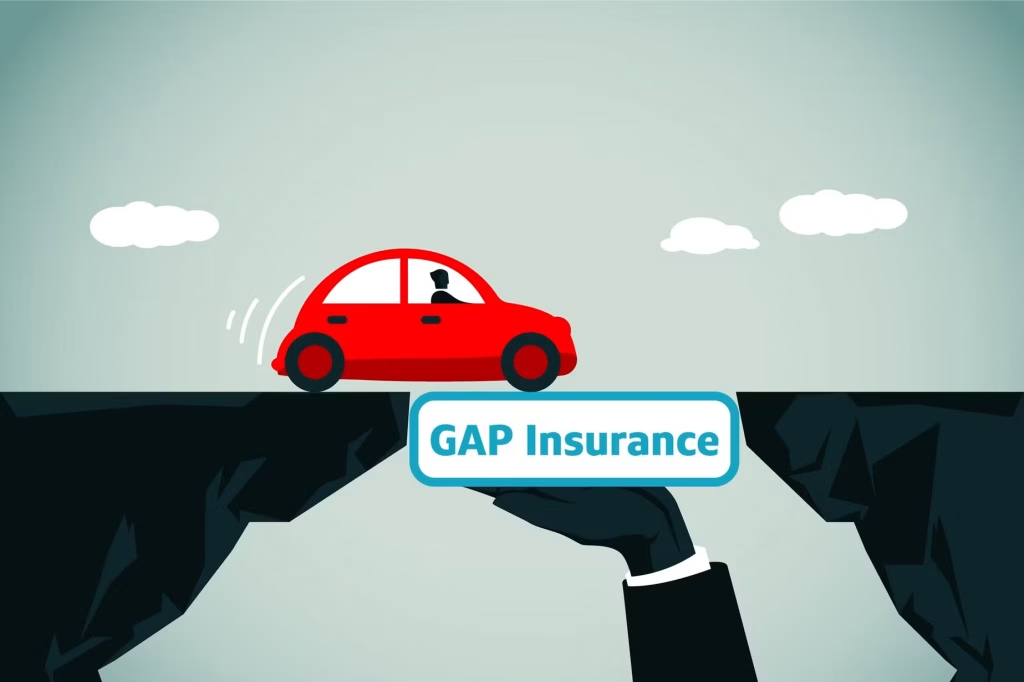
From the dealership’s perspective, GAP insurance complements the financing process while protecting customers from a financial risk that many first-time buyers overlook. Although it represents an additional purchase, it is one of the few F&I products that can potentially save an owner thousands of dollars after an unexpected total loss.
6. Manufacturer Warranty Reimbursements
Warranty repairs are often misunderstood as a financial burden for dealerships, but they actually represent a consistent source of revenue when performed efficiently. Every major automaker reimburses franchised dealerships for approved warranty repairs, covering labor and replacement parts according to manufacturer-established guidelines.
As a result, warranty work continues generating income long after the original sale has been completed.
When a customer returns with a covered mechanical or electrical problem, factory-trained technicians diagnose the issue and submit a warranty claim to the manufacturer. Once approved, the automaker pays the dealership based on predetermined labor times and authorized parts pricing.
While reimbursement rates differ among manufacturers, the process creates a dependable workflow that keeps service departments busy throughout the year.
Warranty repairs also provide another important business advantage. They bring customers back to the dealership, creating opportunities for additional maintenance that falls outside warranty coverage.
During a routine repair visit, technicians may identify worn tires, aging batteries, brake pad wear, alignment issues, or maintenance items that require customer approval. Those additional services generate direct revenue while improving vehicle safety and reliability.
Manufacturers closely monitor warranty claim accuracy, technician certification, and repair quality. Dealerships that consistently meet factory standards often benefit from smoother claim approvals and stronger relationships with the manufacturer.

This encourages investments in specialized diagnostic equipment, ongoing technician education, and dedicated warranty administrators.
For vehicle owners, factory warranty repairs provide peace of mind because covered defects are repaired without unexpected repair bills. For dealerships, they represent a continuing source of labor revenue, parts sales, and customer retention.
Even after the initial vehicle transaction is complete, warranty work helps sustain one of the dealership’s most profitable departments while reinforcing long-term customer loyalty.
7. Genuine OEM Parts Sales
Many customers associate dealership profits with vehicle sales, but the parts department is another major contributor to long-term revenue. Every time a vehicle returns for scheduled maintenance, collision repairs, or mechanical service, there is a strong chance that original equipment manufacturer (OEM) parts will be installed.
These components are supplied directly by the automaker and are designed to match the vehicle’s original specifications for fit, durability, and performance.
Dealerships purchase OEM parts from the manufacturer and resell them through their service departments, wholesale programs, and retail parts counters.
Common replacements include brake pads, rotors, filters, batteries, spark plugs, sensors, suspension components, belts, hoses, and electronic modules. Even routine maintenance creates a steady demand for these items throughout a vehicle’s ownership.
Modern vehicles have become increasingly dependent on advanced electronics and sophisticated driver-assistance systems.
Many replacement components require factory programming or calibration after installation, making dealership service departments particularly attractive for owners who want repairs completed according to manufacturer procedures.
This technological complexity has strengthened the importance of genuine replacement parts in recent years.
OEM parts generally command higher prices than aftermarket alternatives because they are manufactured to factory standards and backed by manufacturer warranties.
While some owners choose less expensive aftermarket components, many prefer original parts to preserve warranty coverage, maintain resale value, or ensure compatibility with advanced vehicle systems.
The parts department also serves independent repair shops through wholesale programs. Many local garages purchase factory components directly from dealerships when customers request OEM replacements. This creates another revenue stream that extends well beyond retail vehicle owners.
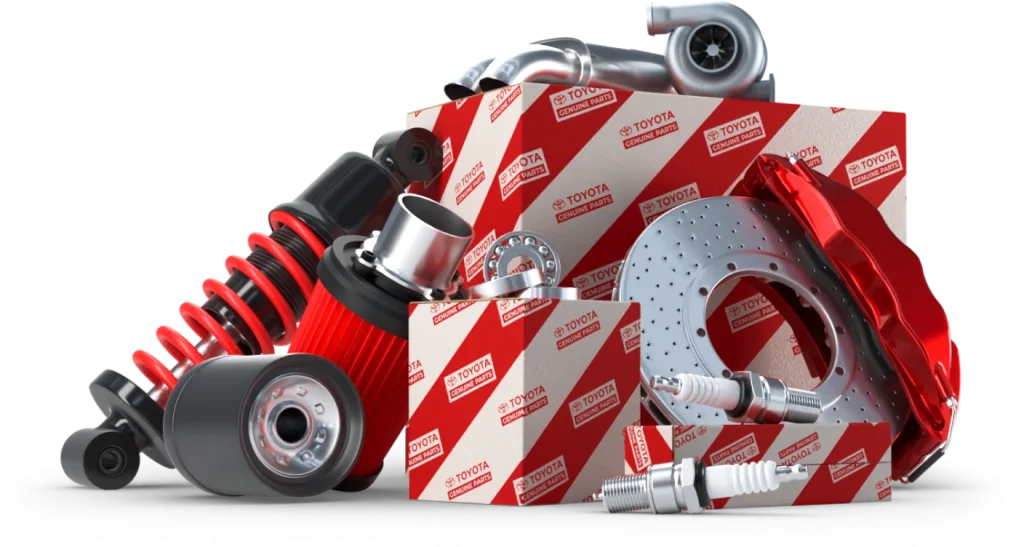
For dealerships, the combination of retail sales, wholesale distribution, and service department demand makes OEM parts one of the most reliable sources of recurring income throughout the life of a vehicle.
8. Certified Pre-Owned Trade-In Opportunities
The day a customer purchases a new vehicle often marks the beginning of another future sale. Dealerships carefully maintain relationships with owners because many eventually return to trade in their vehicles for a newer model.
Those trade-ins frequently become Certified Pre-Owned (CPO) vehicles, creating another profitable cycle that continues years after the original transaction.
Most manufacturers operate certified pre-owned programs with strict eligibility requirements. Vehicles usually must meet age and mileage limits, pass detailed multi-point inspections, receive necessary repairs using factory-approved parts, and include extended warranty protection before earning certification.
Because of these standards, certified vehicles generally command higher resale prices than comparable non-certified used vehicles.
Customer retention plays a critical role in this process. Dealerships regularly send trade-in offers, equity updates, service reminders, and loyalty incentives designed to encourage owners to return before purchasing elsewhere.
A well-maintained vehicle with complete dealership service records is especially valuable because technicians already know its maintenance history, making certification more straightforward.
The dealership benefits in several ways from this cycle. It earns revenue from the original sale, years of maintenance visits, the trade-in transaction, reconditioning work performed by the service department, financing arranged for the next buyer, and the eventual sale of the certified used vehicle.
Few business models generate multiple revenue opportunities from the same automobile over such an extended period.
For buyers, certified pre-owned vehicles offer factory-backed warranties and thorough inspections that provide additional confidence compared with many conventional used cars. For dealerships, they represent one of the most effective methods of maximizing the lifetime value of every customer relationship.
9. Dealer Maintenance and Prepaid Service Plans
Many dealerships encourage customers to purchase prepaid maintenance plans before taking delivery of a new vehicle. These plans typically bundle routine services such as oil changes, tire rotations, multi-point inspections, air filter replacements, and other factory-recommended maintenance into a single package paid for upfront or rolled into the vehicle financing.
While these plans provide convenience for owners, they also create an important source of long-term dealership revenue.
One of the biggest advantages for the dealership is customer retention. Once maintenance has already been paid for, owners are much more likely to return to the selling dealership instead of visiting an independent repair shop.
Every scheduled appointment allows service advisors to inspect the vehicle and recommend additional work that falls outside the maintenance package. Items such as brake pads, tires, batteries, wheel alignments, windshield wipers, and suspension components eventually require replacement and generate additional service revenue.
Manufacturers also benefit because vehicles maintained according to factory schedules often experience fewer warranty issues and maintain higher resale values. As a result, many automakers actively support prepaid maintenance programs through their dealer networks.
From the customer’s perspective, these plans provide predictable maintenance costs and protect against future price increases for covered services. Whether the package represents good value depends on the purchase price, the number of included services, and how long the owner intends to keep the vehicle.
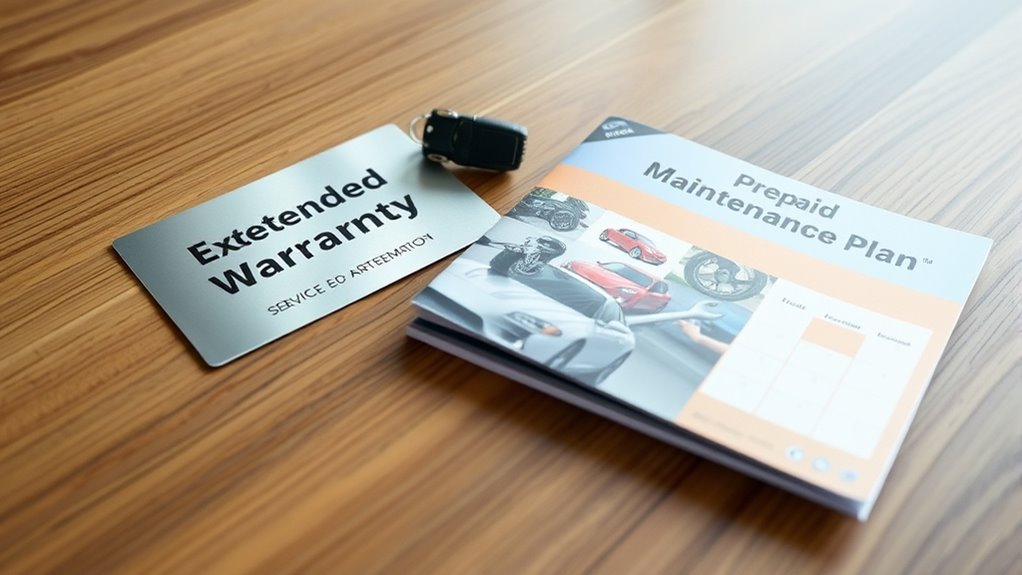
For dealerships, however, prepaid maintenance accomplishes something even more valuable than immediate profit. It helps establish a long-term relationship that can last for years.
Customers who routinely return for maintenance are statistically more likely to purchase another vehicle from the same dealership when it is time to replace their current one, creating another cycle of sales, financing, and service revenue.
10. Customer Loyalty and Repeat Vehicle Sales
The most valuable revenue opportunity after a customer drives away is not a single repair, finance product, or maintenance visit. It is earning that customer’s next vehicle purchase.
According to the National Automobile Dealers Association and manufacturer retail strategies, customer retention is one of the strongest drivers of long-term dealership profitability because acquiring a new customer generally costs significantly more than retaining an existing one.
Dealerships invest heavily in maintaining relationships throughout the ownership experience. Service reminders, warranty notifications, loyalty rewards, trade-in evaluations, manufacturer incentive offers, birthday messages, and personalized communication are all designed to keep the dealership connected with customers for years after the original sale.
Technology has made this process even more sophisticated. Customer relationship management systems track maintenance history, lease maturity dates, loan payoff timelines, and ownership patterns.
When a lease approaches its expiration, or a customer builds positive equity in a financed vehicle, the dealership may contact the owner with upgrade opportunities or attractive trade-in offers.
Repeat buyers are particularly valuable because they often require less time during the sales process, are already familiar with the dealership, and may have established trust with the sales and service teams.
In many cases, these customers also finance through the dealership again, purchase another protection plan, and continue servicing the replacement vehicle at the same location.

This creates a business cycle that can last decades. A single customer may purchase multiple vehicles, trade each one back to the dealership, finance every transaction, service each vehicle regularly, and eventually recommend friends or family members.
That long-term relationship is worth far more than the profit earned from one sale alone, making customer loyalty the most powerful way a dealership continues generating revenue long after the keys have been handed over.
Also Read: 10 Muscle Cars That Never Got a Second Generation
