
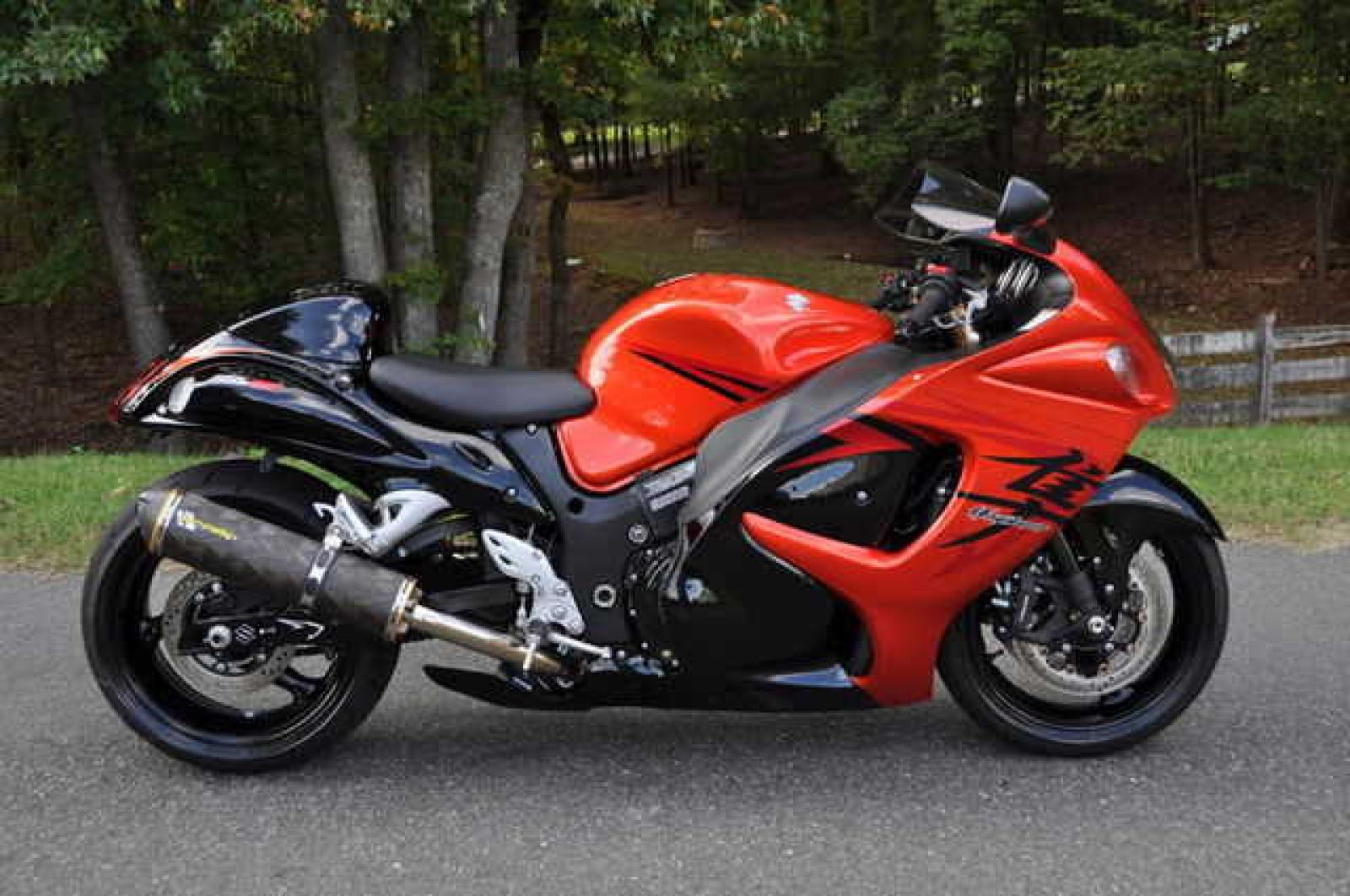
The Suzuki Hayabusa changed the motorcycle industry forever when it arrived in 1999. Before its debut, superbikes focused heavily on track performance and aggressive handling, but the Hayabusa introduced something different.
It combined astonishing top speed with long-distance comfort, stable highway manners, and a unique aerodynamic design that immediately separated it from every rival on the road. Riders quickly realized this machine was not simply another sportbike. It became a symbol of raw speed and engineering ambition.
Named after the peregrine falcon, a bird capable of hunting blackbirds at extreme speed, the Hayabusa was designed specifically to dominate Kawasaki’s ZX 11, which held the production motorcycle speed crown during the 1990s.
Suzuki succeeded dramatically. The original Hayabusa shocked the world with performance numbers that forced manufacturers into the famous gentleman’s agreement limiting motorcycle top speeds to 186 mph.
During the decades that followed, Suzuki continued refining the Hayabusa formula through multiple generations and special editions. Some versions focused on smoother electronics and rider comfort, while others delivered sharper styling and more advanced braking systems.
Certain model years became legendary among enthusiasts for their reliability and tuning potential, while others received criticism for conservative updates or increased weight.
What makes ranking Hayabusa models so interesting is how differently riders value them. Some prefer the brutal simplicity of early carbureted versions, while others appreciate the refinement and safety technology of newer generations.
A few models became icons because of their tuning capabilities, capable of producing outrageous horsepower with minimal modifications. Others earned respect for balancing speed with daily usability better than many modern superbikes.
Even the weakest Hayabusa remains an impressively capable motorcycle, but certain versions stand above the rest due to performance, styling, reliability, historical importance, or riding experience. These are ten Hayabusa models ranked from worst to best.
Also Read: 10 Forgotten Japanese Superbikes
10. 2022 Suzuki Hayabusa
The third-generation Hayabusa arrived with enormous expectations because fans waited years for Suzuki to redesign its legendary hyperbike. Many riders expected a radical horsepower increase or an entirely new platform capable of reclaiming outright performance dominance.
Instead, Suzuki delivered a heavily refined evolution of the previous generation, which disappointed enthusiasts hoping for something revolutionary.
At first glance, the motorcycle looked familiar. The silhouette still carried the unmistakable Hayabusa identity, but sharper bodywork and modern LED lighting gave it a more aggressive appearance.
While the styling updates improved aerodynamics and visual sophistication, some longtime fans believed the design lost a little of the original bike’s strange and intimidating personality.
Performance remained extremely strong, though Suzuki focused more on refinement than raw speed gains. The engine delivered smoother power, better throttle response, and improved rideability.
Advanced electronics became the biggest upgrade. Riders finally received traction control, launch control, riding modes, cruise control, and modern rider aids that competing superbikes had offered for years. Those additions made the Hayabusa more approachable and safer during aggressive riding.
Still, criticism followed the bike heavily during launch. Some enthusiasts complained that horsepower figures remained lower than expected, especially compared to modern European hyperbikes. Others disliked the increased reliance on electronic systems because earlier Hayabusas felt more mechanical and brutally simple.
Despite the criticism, the 2022 Hayabusa remains an excellent motorcycle for real-world riding. It offers incredible stability, strong acceleration, and unmatched highway comfort among high-speed sportbikes.
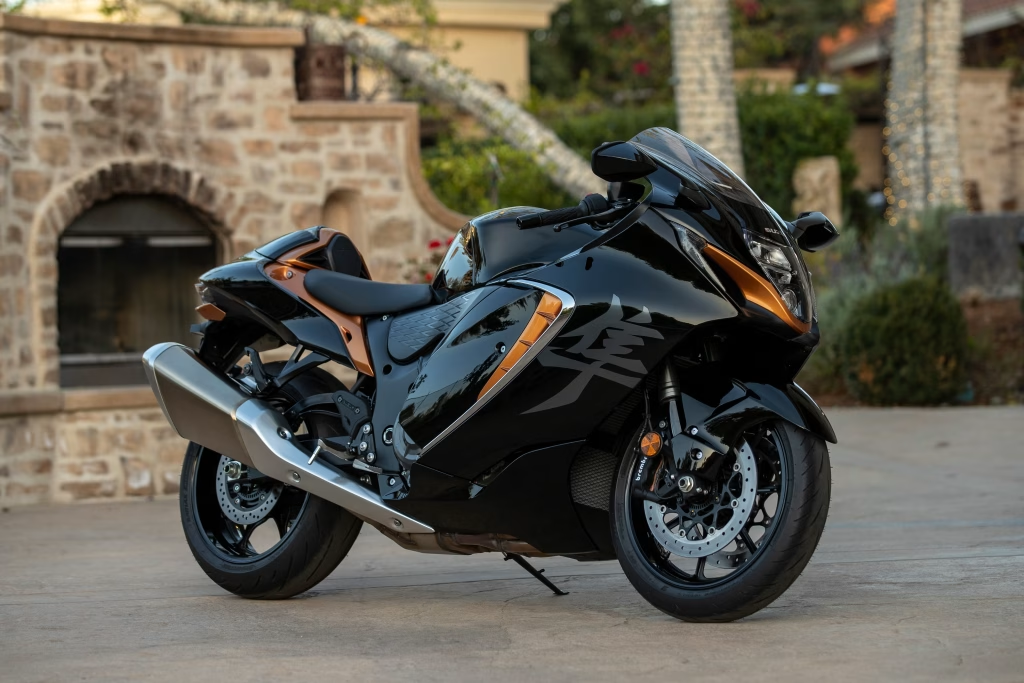
The reason it ranks lower here involves expectations rather than capability. Suzuki had the opportunity to completely reinvent the Hayabusa, but instead delivered a careful modernization of an existing formula. Riders wanting a dramatic leap forward sometimes walked away wanting more.
- Engine: 1340 cc inline four
- Torque: 110 lb ft
- Horsepower: 187 hp
- Length/Width: 85.2 in / 29.5 in
9. 2008 Suzuki Hayabusa
When Suzuki introduced the second-generation Hayabusa for 2008, the motorcycle community expected another massive leap similar to the original 1999 launch.
The redesign certainly improved performance, but it also divided enthusiasts because some believed Suzuki softened the motorcycle’s wild personality in pursuit of refinement and broader appeal.
The larger 1340 cc engine produced stronger midrange power and noticeably quicker acceleration. Suzuki improved combustion efficiency and upgraded internal components, allowing the bike to deliver relentless thrust across the rev range. Highway passing became effortless, and the motorcycle remained brutally fast even by modern standards.
Visually, the 2008 model adopted a bulkier and smoother appearance compared to the first generation. Some riders appreciated the more muscular styling, while others missed the alien-inspired curves that made the original Hayabusa instantly recognizable.
The redesign also added weight, which slightly reduced the raw and nimble sensation early Hayabusas sometimes delivered at speed.
Where the 2008 model truly succeeded was in comfort. The riding position remained surprisingly relaxed for a motorcycle capable of such extreme velocity.
Long-distance riders loved the stability, smooth engine behavior, and improved wind protection. Suzuki clearly understood that many Hayabusa owners spent more time touring highways than chasing lap times on racetracks.
Another reason the second generation became popular involved tuning potential. Builders quickly discovered the updated engine handled turbocharging and high-horsepower modifications extremely well.
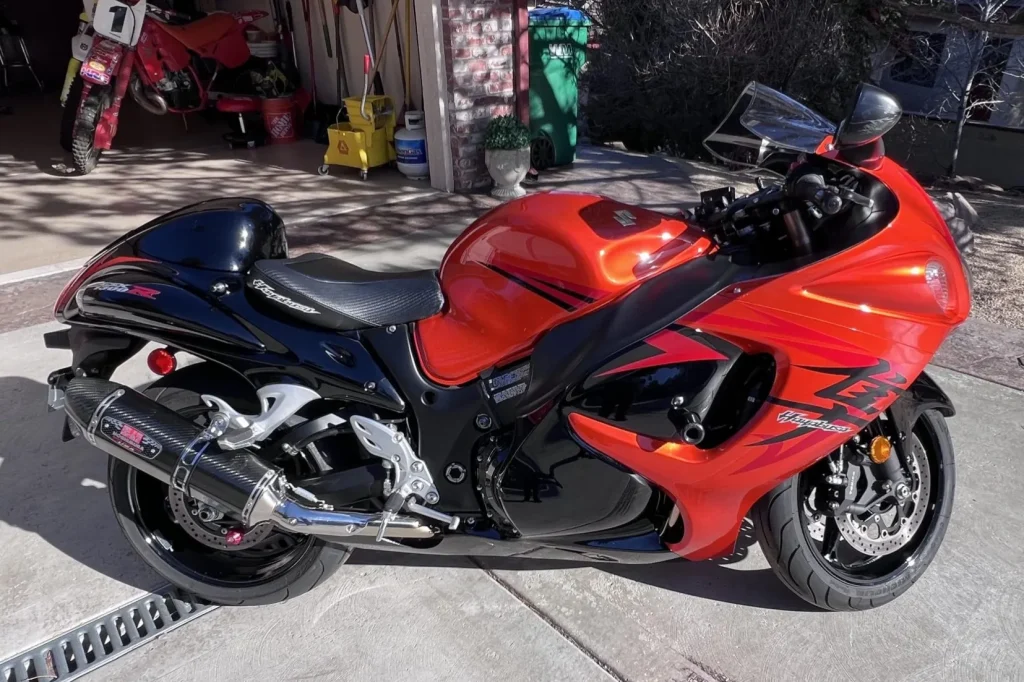
Drag racers and speed enthusiasts pushed the platform far beyond factory limits, helping the bike maintain its legendary reputation in aftermarket circles.
Its lower ranking here comes from historical impact rather than weakness. The 2008 Hayabusa improved nearly every measurable aspect of the motorcycle, but it did not shock the industry the way the original generation did. It refined the formula brilliantly without completely changing expectations for high-performance motorcycles.
- Engine: 1340 cc inline four
- Torque: 114 lb ft
- Horsepower: 194 hp
- Length/Width: 86.0 in / 29.3 in
8. 2005 Suzuki Hayabusa Limited Edition
By 2005, the Hayabusa already carried legendary status among speed enthusiasts, drag racers, and long-distance riders. Suzuki understood the motorcycle no longer needed radical reinvention because its reputation alone attracted enormous attention.
Instead of introducing major engineering changes, the company released special editions that emphasized exclusivity and visual identity. Among them, the 2005 limited edition became one of the more memorable variants from the first generation years.
What separated this model from ordinary Hayabusas was presentation. Unique paint schemes, special graphics, and polished detailing gave the motorcycle a more premium personality without altering the aggressive character riders already loved.
Certain color combinations from this era became highly recognizable among enthusiasts and still attract collectors today because they represent peak early 2000s sportbike culture.
Mechanically, the motorcycle retained the qualities that made the original Hayabusa famous. The 1299 cc engine produced immense acceleration with a smoothness few rivals could match.
Riders appreciated how easily the motorcycle handled highway miles despite its outrageous speed potential. Twist the throttle aggressively, and the bike transforms instantly into one of the fastest production motorcycles in the world.
Another reason the 2005 version earned respect involved reliability. Suzuki had already refined the platform through several years of production, meaning many earlier issues and inconsistencies were largely sorted out.
Owners often pushed these motorcycles extremely hard while still achieving impressive durability. That reliability also made the bike highly desirable among tuners chasing huge horsepower numbers through turbocharging and engine modifications.
The Limited Edition ranks above later models because it captured the raw personality of the original Hayabusa before increasing electronic complexity changed the riding experience.
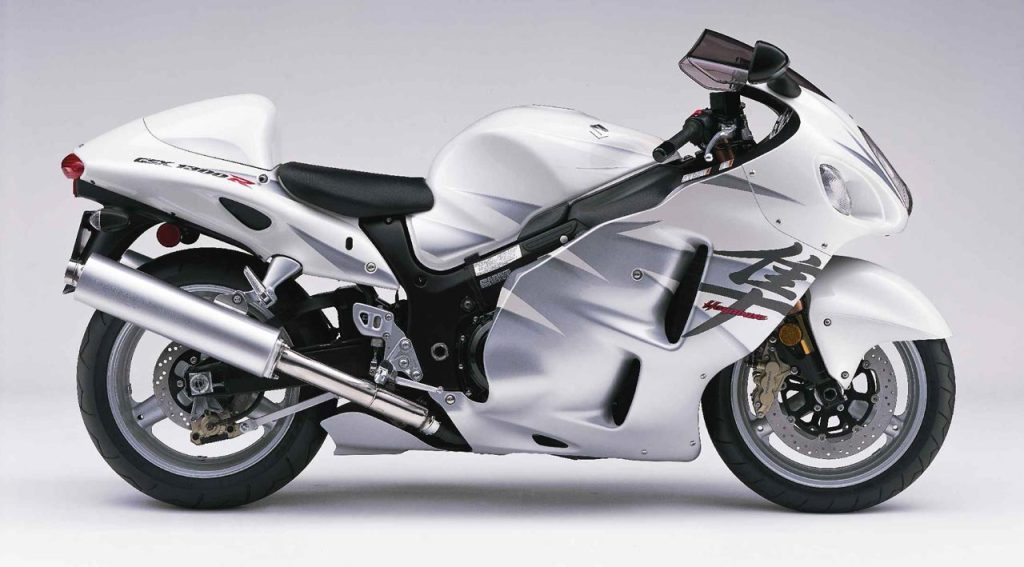
It still felt mechanical, intimidating, and slightly excessive in the best possible way. Riders controlled the power directly without layers of intervention, which gave the motorcycle a thrilling edge modern superbikes sometimes lack.
For many longtime enthusiasts, this period represented the Hayabusa at its most culturally dominant. The bike symbolized unrestricted speed and street performance before manufacturers shifted heavily toward electronic rider assistance and track-focused engineering.
- Engine: 1299 cc inline four
- Torque: 101 lb ft
- Horsepower: 175 hp
- Length/Width: 84.6 in / 28.0 in
7. 2013 Suzuki Hayabusa
The 2013 Hayabusa demonstrated how mature the second-generation platform had become after several years of refinement. Suzuki did not completely redesign the motorcycle, but careful updates improved braking, handling feel, and rider confidence.
By this stage, the Hayabusa had evolved into something more sophisticated than a simple top-speed machine. It became one of the most complete high-performance motorcycles available for real-world riding.
One major improvement involved braking performance. Suzuki equipped the motorcycle with Brembo Monobloc calipers, giving riders stronger stopping power and better control during aggressive riding.
Earlier Hayabusas sometimes received criticism for brakes that struggled to match the engine’s enormous speed capability. The upgraded system helped address those concerns significantly.
The engine remained a centerpiece of the riding experience. Massive torque arrived smoothly across the rev range, making acceleration feel effortless rather than frantic.
Riders could cruise comfortably at highway speeds or unleash brutal straight-line performance with minimal effort. Few motorcycles balanced comfort and violence as effectively as the Hayabusa during this era.
Unlike track-focused liter bikes that punished riders during long trips, the 2013 Hayabusa remained surprisingly practical. The seat provided reasonable comfort, wind protection stayed excellent, and the stretched riding position reduced fatigue compared to more aggressive supersport motorcycles.
Many owners used the bike for cross-country rides while still enjoying superbike-level acceleration whenever roads opened up.
Styling changes remained subtle, which pleased riders who already loved the second-generation appearance. Suzuki avoided unnecessary experimentation and focused instead on refining details. The result looked muscular, stable, and purposeful rather than flashy.
This model ranks highly because it perfected the second-generation formula before the third generation introduced heavier electronic influence.
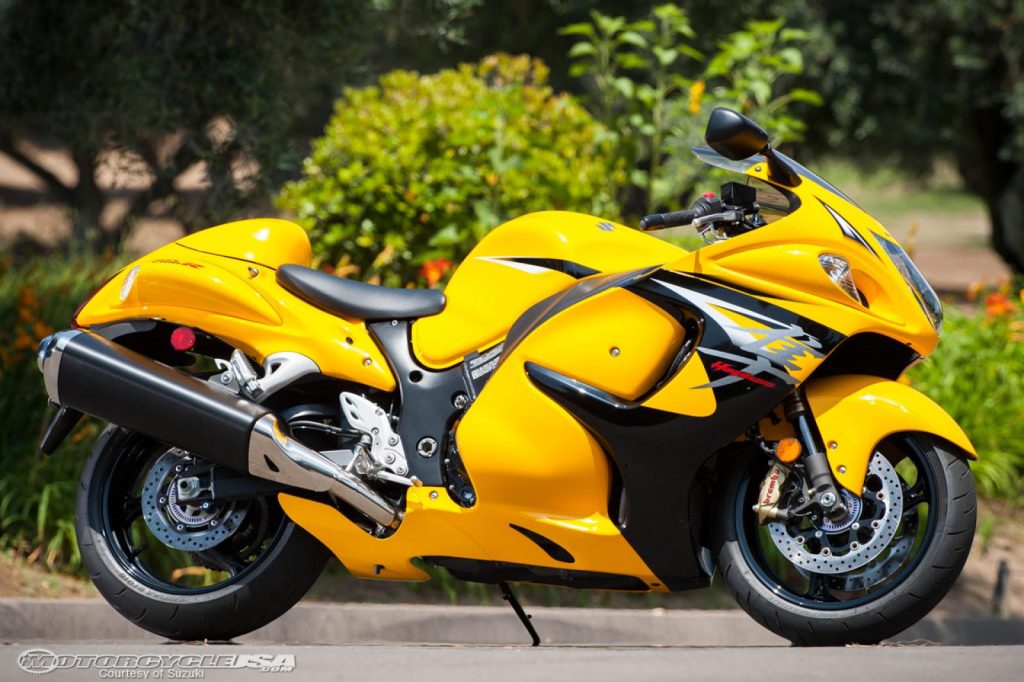
Riders received excellent reliability, improved braking, huge tuning potential, and devastating speed while still maintaining the mechanical simplicity many enthusiasts value.
The 2013 Hayabusa may not have transformed the industry, but it represented one of the most polished versions of Suzuki’s legendary hyperbike philosophy.
- Engine: 1340 cc inline four
- Torque: 114 lb ft
- Horsepower: 197 hp
- Length/Width: 86.0 in / 29.3 in
6. 2000 Suzuki Hayabusa
The 2000 Hayabusa carried enormous pressure because it had to follow one of the most shocking motorcycle launches in history. Suzuki’s original 1999 model completely changed expectations for production motorcycle performance, instantly becoming the fastest and most feared machine on public roads.
Rather than fading after the initial excitement, the 2000 version strengthened the Hayabusa’s growing reputation and helped establish the motorcycle as a long-term icon.
At the heart of the bike sat the legendary 1299 cc inline four engine that delivered brutal acceleration unlike anything most riders had previously experienced. Twist the throttle aggressively, and the motorcycle surged forward with endless force.
High-speed stability became one of its defining characteristics. While other superbikes sometimes felt nervous near top speed, the Hayabusa remained planted and confident even deep into triple-digit territory.
The styling also played a huge role in the motorcycle’s identity. Rounded bodywork, enormous fairings, and stretched proportions gave the bike an appearance that looked strange to some riders initially.
Yet those same aerodynamic shapes became iconic because they served a genuine purpose. Suzuki designed the Hayabusa specifically to cut through air at extreme velocity, and every curve reflected that mission.
Another reason the 2000 model earned lasting respect involved its simplicity. Riders controlled immense power without electronic rider aids, traction control, or complicated software systems.
The experience felt raw and mechanical in a way modern hyperbikes rarely replicate. Skilled riders loved that direct connection because the motorcycle demanded concentration and respect at all times.
The Hayabusa also gained popularity among drag racers almost immediately. Tuners realized the engine could handle huge power increases reliably, leading to outrageous turbocharged builds capable of terrifying acceleration. That tuning culture became deeply connected to the Hayabusa’s image during the early 2000s.
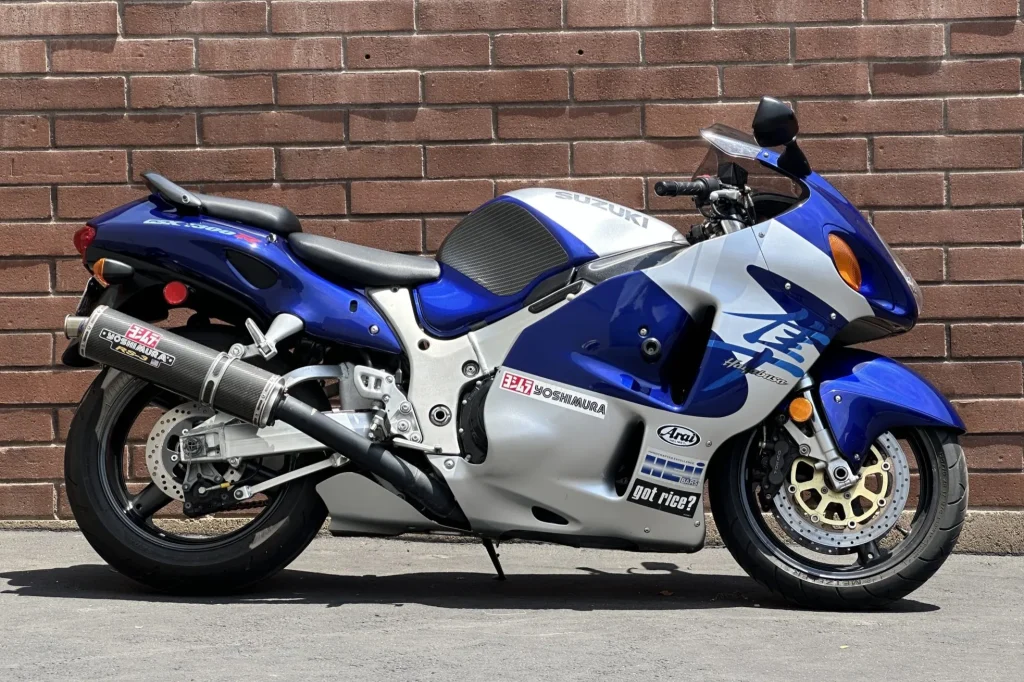
This version ranks highly because it preserved the rebellious energy of the original launch while benefiting from slight refinements after Suzuki’s first production year. It remains one of the purest representations of what made the Hayabusa legendary in the first place.
- Engine: 1299 cc inline four
- Torque: 101 lb ft
- Horsepower: 173 hp
- Length/Width: 84.6 in / 28.0 in
5. 2024 Suzuki Hayabusa 25th Anniversary Edition
Suzuki celebrated twenty-five years of Hayabusa history with a motorcycle that blended nostalgia, modern refinement, and exclusivity surprisingly well.
Anniversary editions often rely heavily on cosmetic upgrades alone, but the 2024 Hayabusa 25th Anniversary Edition carried emotional significance because it honored one of the most influential motorcycles ever created while remaining an incredibly capable modern machine.
Visually, the bike stood apart immediately through its distinctive orange and black paint scheme inspired by earlier Hayabusa generations. Gold accents, commemorative badging, and special detailing gave the motorcycle a premium appearance without making it feel excessive.
Longtime enthusiasts appreciated the historical references because Suzuki acknowledged the importance of the Hayabusa’s heritage rather than abandoning it completely.
The riding experience reflected years of development and refinement. The 1340 cc engine delivered smooth yet relentless acceleration with far better throttle precision than older models.
Advanced electronics such as traction control, launch control, cornering ABS, and multiple ride modes made the motorcycle more approachable without removing its intimidating personality entirely.
Unlike earlier Hayabusas that prioritized raw aggression, the Anniversary Edition balanced speed with sophistication. Highway comfort remained excellent thanks to the relaxed ergonomics and strong wind protection. Riders could spend hours on the motorcycle without the exhaustion commonly associated with modern superbikes.
Another reason this edition ranks highly involves emotional connection. Many riders grew up dreaming about Hayabusas during the late 1990s and early 2000s.
The Anniversary Edition successfully captured pieces of that legendary aura while modernizing the motorcycle for contemporary expectations. It respected the past without becoming trapped by nostalgia.
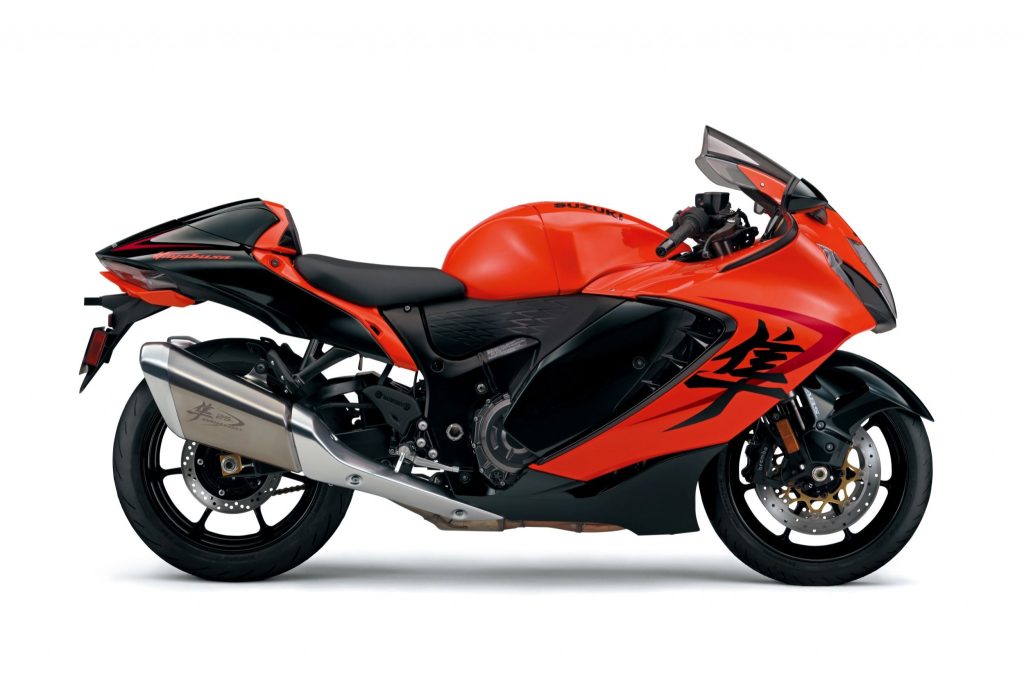
Purists may still prefer the brutal simplicity of earlier models, but the 2024 Anniversary Edition demonstrates how successfully Suzuki evolved the Hayabusa into a mature hyperbike capable of competing in the modern era.
It serves as both a celebration of history and proof that the Hayabusa name still carries enormous significance in motorcycle culture.
- Engine: 1340 cc inline four
- Torque: 110 lb ft
- Horsepower: 187 hp
- Length/Width: 85.2 in / 29.5 in
4. 2002 Suzuki Hayabusa
By 2002, the Hayabusa had already become a global phenomenon. Riders respected it, governments worried about it, and competitors struggled to match its combination of speed and stability.
Suzuki used those early years wisely, refining the motorcycle carefully while preserving the aggressive personality that made it legendary in the first place. Many enthusiasts still consider the 2002 version one of the finest early Hayabusas ever produced because it balanced raw performance with improved reliability.
The engine remained absolutely savage for its era. Massive torque arrived instantly, allowing the motorcycle to launch forward with unbelievable force. Highway riding became effortless because the bike barely felt stressed at speeds that would challenge smaller sportbikes.
The Hayabusa was not simply fast in a straight line. It delivered speed with calm confidence, which made the experience even more intimidating.
Suzuki also improved fuel injection mapping and mechanical refinement compared to earlier production years. Riders noticed smoother throttle response and better day-to-day usability without losing the bike’s aggressive edge.
That mattered because many owners actually used Hayabusas regularly rather than treating them like occasional weekend machines.
The 2002 model became especially important in tuning culture. Drag racers and performance builders discovered the platform handled massive horsepower upgrades incredibly well.
Turbocharged Hayabusas producing outrageous acceleration figures became common at racing events worldwide. Few motorcycles earned a reputation for durability under extreme modification, as the Hayabusa did during this period.
Styling still looked radical and futuristic. The bulbous aerodynamic bodywork remained controversial among some riders, yet it became impossible to mistake for anything else on the road. Suzuki built the motorcycle around speed first, and the shape reflected that engineering philosophy perfectly.
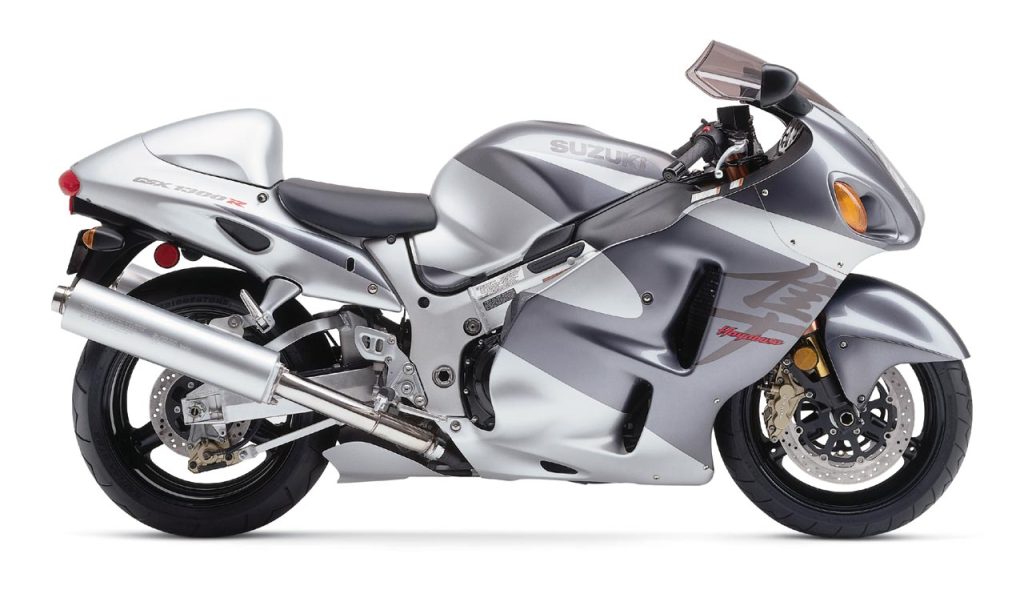
This version ranks near the top because it captured the Hayabusa before electronic rider aids and increasing refinement softened the experience.
It still felt dangerous, mechanical, and completely excessive in ways riders deeply respected. The 2002 Hayabusa represents the motorcycle during the height of its cultural dominance, when owning one instantly made a statement about speed and fearlessness.
- Engine: 1299 cc inline four
- Torque: 101 lb ft
- Horsepower: 175 hp
- Length/Width: 84.6 in / 28.0 in
3. 2011 Suzuki Hayabusa
The 2011 Hayabusa arrived during a period when many superbikes focused almost entirely on racetrack performance. Manufacturers chased lighter weights, sharper handling, and extreme riding positions that often sacrificed comfort completely.
Suzuki took a different path with the Hayabusa. Instead of turning it into another track-obsessed machine, the company refined its identity as the ultimate high-speed grand touring superbike.
That approach worked brilliantly. The 1340 cc engine delivered monstrous acceleration with a smoothness few motorcycles could match. Riders could roll onto the throttle at almost any speed and feel the motorcycle surge forward effortlessly.
Unlike peaky supersport engines requiring constant high-rpm riding, the Hayabusa produced huge torque everywhere in the rev range, making real-world riding exceptionally satisfying.
Long-distance comfort remained one of the bike’s biggest strengths. The riding position reduced strain on wrists and shoulders compared to aggressive liter bikes, while the large fairing provided excellent wind protection. Riders frequently crossed entire states or countries on Hayabusas without the fatigue associated with many superbikes.
The 2011 version also benefited from years of second-generation refinement. Reliability became excellent, and Suzuki addressed many smaller issues found in earlier models. Owners appreciated how durable the motorcycle felt, even under hard use.
Tuning potential remained massive as well, which kept the Hayabusa deeply connected to drag racing culture and high-horsepower street builds.
Visually, the bike carried a muscular and mature presence. The second-generation styling looked heavier than the original, but it also appeared more planted and powerful. Wide bodywork and stretched proportions reinforced the motorcycle’s reputation as a machine built for devastating speed.
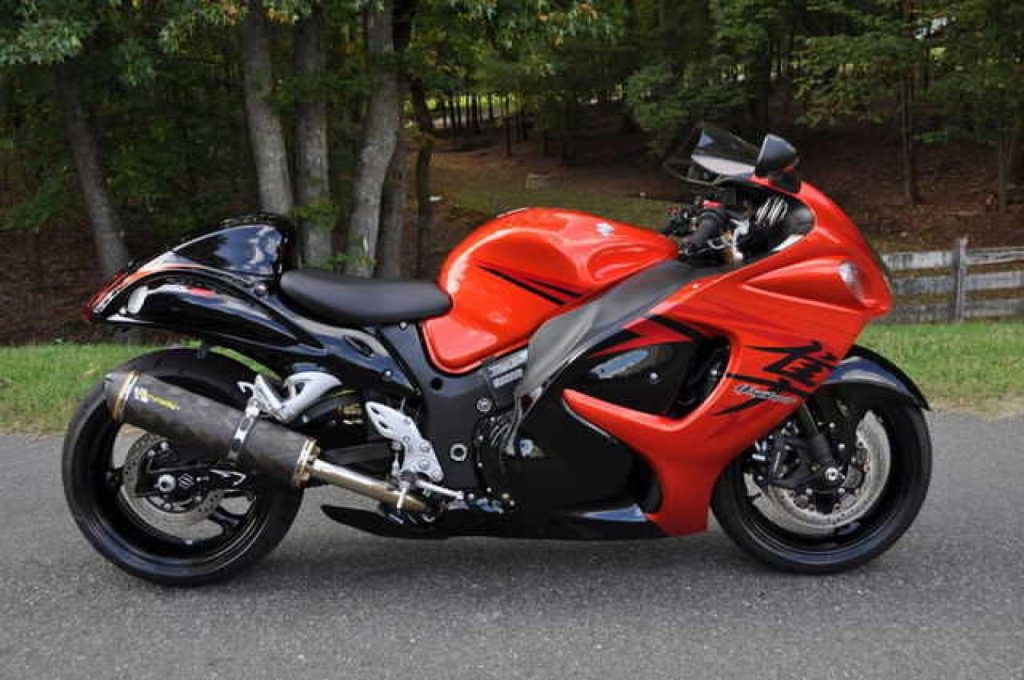
This model ranks so highly because it perfected the second-generation formula before heavy electronic integration changed the riding experience.
It combined terrifying acceleration, comfort, reliability, and tuning capability into one motorcycle better than almost anything else from its era. For many riders, the 2011 Hayabusa represented the perfect balance between old-school brutality and modern refinement.
- Engine: 1340 cc inline four
- Torque: 114 lb ft
- Horsepower: 194 hp
- Length/Width: 86.0 in / 29.3 in
2. 1999 Suzuki Hayabusa
The original 1999 Suzuki Hayabusa did more than introduce a new motorcycle. It completely shocked the performance world and forced every major manufacturer to rethink what a production sportbike could achieve.
Before the Hayabusa arrived, Kawasaki’s ZX-11 dominated the high-speed category. Suzuki responded with a machine so fast and so advanced that it instantly changed motorcycle history.
Its 1299 cc inline four-engine produced unbelievable acceleration for the era. Riders experienced relentless power that continued building deep into speeds most motorcycles struggled to approach.
More importantly, the Hayabusa delivered that speed with incredible stability. The aerodynamic bodywork was designed specifically for extreme velocity, giving the motorcycle a planted feeling even near its top speed.
The styling divided opinions immediately. Rounded panels and oversized proportions looked unusual compared to sharp supersport motorcycles from the late 1990s. Yet those shapes became legendary because they served genuine aerodynamic purposes.
Within a few years, the Hayabusa’s silhouette became one of the most recognizable designs in motorcycle history.
Another reason the 1999 model remains special involves its cultural impact. It triggered the famous speed limitation agreement between manufacturers after proving production motorcycles were reaching dangerous territory beyond 186 mph. Few motorcycles have influenced the entire industry so dramatically.
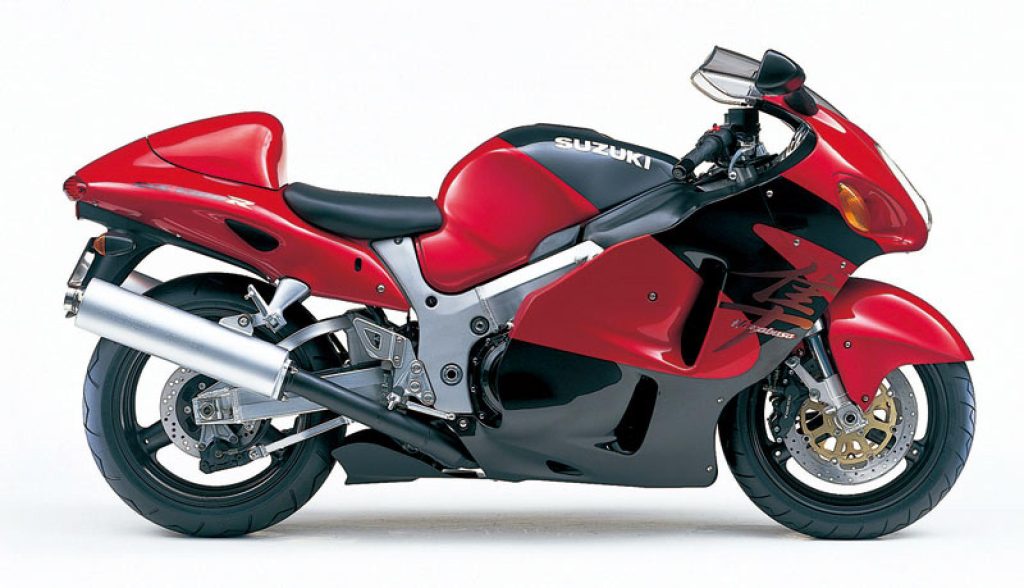
Rawness also defined the experience. No traction control, no ride modes, and no electronic safety systems separated the rider from the engine. The motorcycle demanded skill and respect every second it moved.
- Engine: 1299 cc inline four
- Torque: 101 lb ft
- Horsepower: 173 hp
- Length/Width: 84.6 in / 28.0 in
1. 2007 Suzuki Hayabusa
The 2007 Suzuki Hayabusa represents the peak of the first generation and remains the greatest Hayabusa ever built for many enthusiasts.
By this stage, Suzuki had refined the platform for years while preserving the raw aggression and intimidating personality that made the motorcycle famous. It combined brutal speed, reliability, and simplicity better than any other Hayabusa generation.
Its engine felt unstoppable on the open road. Acceleration arrived instantly with massive torque available across the rev range. Riders did not need to chase high RPMs constantly because the motorcycle pulled hard almost everywhere. Highway performance felt effortless, and few bikes from the era could keep pace once the Hayabusa unleashed its full power.
What truly upgraded the 2007 version was maturity. Suzuki solved many early production issues while keeping the motorcycle mechanically pure.
Riders still experienced direct throttle response and unrestricted power delivery without electronic rider aids constantly interfering. That connection between machine and rider created a thrilling experience modern hyperbikes sometimes struggle to replicate.
The motorcycle also became legendary in tuning circles. Turbocharged builds based on the 2007 platform produced extraordinary horsepower numbers while maintaining impressive durability. Drag racers especially loved the first-generation Hayabusa because the long wheelbase and stable chassis handled huge power remarkably well.
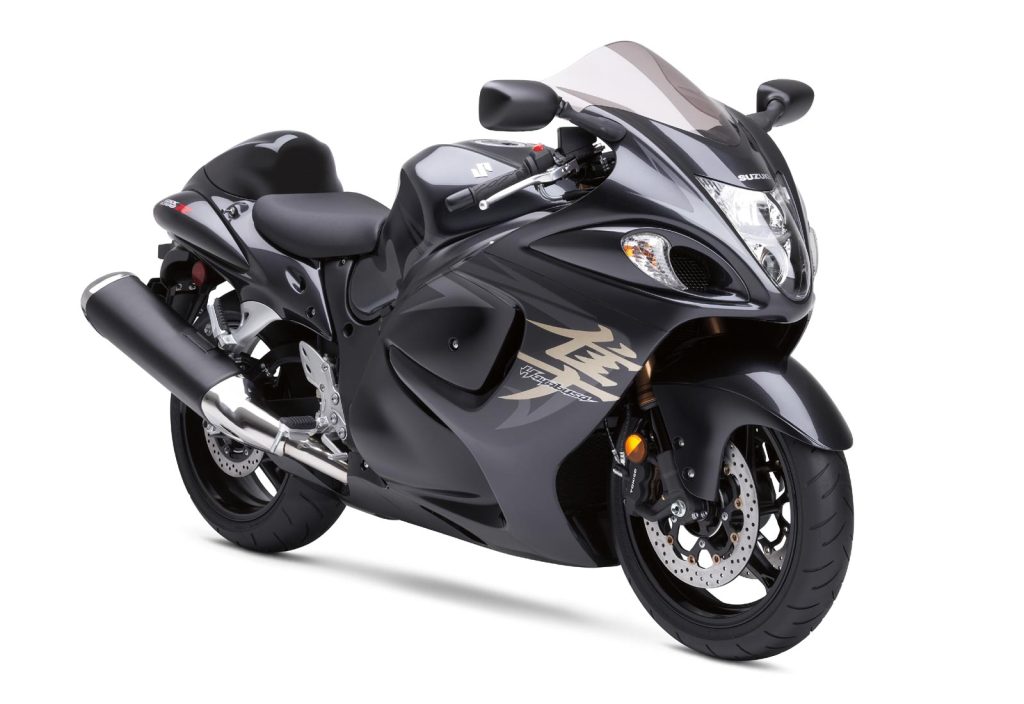
Styling remained iconic, too. The aerodynamic curves looked purposeful, intimidating, and instantly recognizable. Even years later, the design still carries enormous road presence.
The 2007 Hayabusa earned the top position because it captured everything enthusiasts loved about the name. It was fast, raw, reliable, comfortable, and culturally important all at once. Few motorcycles have ever balanced those qualities so successfully.
- Engine: 1299 cc inline four
- Torque: 102 lb ft
- Horsepower: 175 hp
- Length/Width: 84.6 in / 28.0 in
Also Read: 10 Mid-Engine Supercars Cheaper Than a New Hellcat
