

Motorcycles offer a unique combination of freedom, efficiency, affordability, and excitement that few other forms of transportation can match. Across cities, highways, and rural roads, millions of riders rely on motorcycles for daily commuting, recreation, and long distance travel.
Despite their many advantages, motorcycles also present greater safety challenges than passenger cars. Riders are more exposed to road hazards, weather conditions, and the consequences of collisions. Because motorcycles lack the protective structure found in automobiles, even minor accidents can result in severe injuries.
For this reason, advances in motorcycle safety technology deserve serious attention from manufacturers, regulators, and consumers alike. Among all modern motorcycle safety innovations, Anti Lock Braking Systems, commonly known as ABS, stand out as one of the most effective and proven technologies available.
ABS is designed to prevent wheel lock during emergency braking. When a rider brakes suddenly, especially on wet, slippery, or uneven surfaces, the wheels can lock up, causing the motorcycle to skid and potentially crash. ABS automatically adjusts braking pressure multiple times per second to maintain traction and control.
This allows riders to stop more effectively while retaining steering ability. Over the years, extensive testing and real world experience have demonstrated that ABS significantly reduces the likelihood of serious crashes caused by braking errors or loss of traction.
Although ABS is now available on many motorcycles, it is still not standard equipment on every model sold around the world. Some manufacturers reserve it for premium motorcycles, while others offer it only as an optional upgrade.
This creates a situation where riders may choose or be forced to purchase motorcycles without a feature that could potentially save their lives. As motorcycle ownership continues to grow globally, the debate surrounding mandatory ABS has become increasingly important.
Safety advocates argue that the technology has matured, become more affordable, and proven its value beyond doubt. Opponents sometimes cite cost concerns or rider preference, but these arguments are becoming less convincing as technology advances and production costs decline.
Making ABS standard on every motorcycle sold would represent a significant step forward in road safety. The evidence supporting its effectiveness is substantial, and the benefits extend to riders of all experience levels.
Whether someone is a new commuter, a weekend enthusiast, or a seasoned touring rider, ABS provides an additional layer of protection when unexpected situations arise. The case for universal ABS adoption is strong, and examining its safety benefits, economic impact, technological advantages, and societal implications reveals why it should become a standard feature on every motorcycle.
Also Read: What a 10-Year-Old Tacoma Sells For Today?
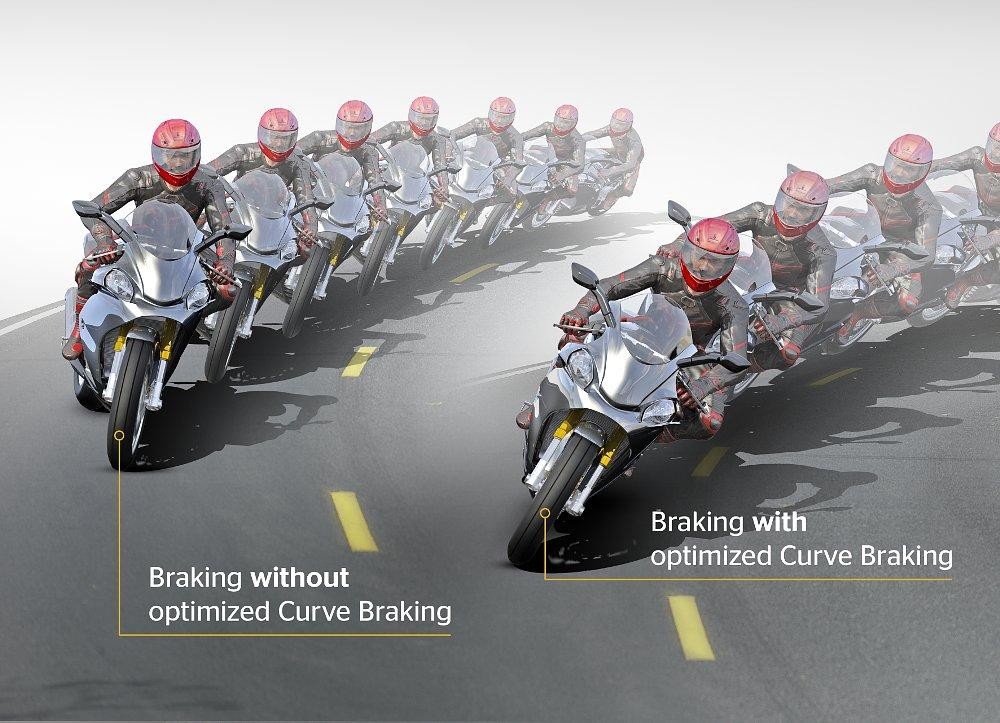
ABS Significantly Improves Rider Safety
The primary reason ABS should be standard on every motorcycle is its proven ability to improve rider safety. Emergency braking situations occur unexpectedly, and even highly skilled riders can make mistakes when reacting under pressure.
ABS helps compensate for these human limitations by automatically managing brake force to prevent wheel lock. This allows riders to maintain greater control during critical moments when fractions of a second can determine the outcome of a situation.
One of the most common causes of motorcycle accidents involves loss of control during sudden braking. Riders may instinctively apply excessive pressure to the brakes when confronted with an obstacle, vehicle, or hazardous road condition.
Without ABS, this can cause one or both wheels to lock, leading to skidding and instability. ABS reduces this risk by continuously monitoring wheel speed and adjusting brake pressure to maintain traction.
Weather conditions further highlight the value of ABS. Rain, loose gravel, oil spills, and uneven pavement can dramatically reduce available grip. In such conditions, riders often struggle to judge exactly how much braking force can be safely applied.
ABS provides an important safety net by helping prevent wheel lock even when road surfaces change unexpectedly. This capability can make the difference between a controlled stop and a serious accident.
The benefits of ABS are not limited to inexperienced riders. Professional riders and advanced motorcyclists also encounter situations where reaction times and environmental factors create challenges.
Human reflexes have limits, and ABS supplements rider skill rather than replacing it. Even experienced riders can benefit from technology that enhances stability and control during emergency maneuvers.
Many safety studies and crash analyses have consistently shown that motorcycles equipped with ABS experience fewer severe braking related accidents. These findings support the theory that widespread ABS adoption could reduce injuries and fatalities. When a technology demonstrates such clear safety advantages, making it standard equipment becomes a logical and responsible decision.
ABS Benefits Riders of All Skill Levels
A common misconception is that ABS primarily benefits novice riders. While beginners certainly gain significant advantages from the technology, ABS provides valuable protection for riders at every level of experience. Road conditions, traffic behavior, and unexpected hazards affect everyone, regardless of how many years they have spent riding.
New riders often struggle with emergency braking techniques. Learning how to apply maximum braking force without causing wheel lock requires practice and experience. ABS helps bridge this learning gap by providing a margin of safety while riders continue developing their skills.
Rather than punishing minor mistakes with potentially catastrophic consequences, ABS allows riders to maintain greater control during unexpected situations.
Intermediate riders frequently develop confidence as they gain experience, but confidence does not eliminate risk. In some cases, riders may overestimate their abilities or encounter situations that exceed their expectations.
ABS serves as a safeguard when circumstances become more challenging than anticipated. It can help prevent accidents caused by misjudged braking distances or changing road conditions.
Advanced riders often possess exceptional motorcycle control skills, yet even experts are vulnerable to unpredictable hazards. Animals crossing the road, sudden traffic stops, debris, and adverse weather conditions can force split second decisions. ABS provides an additional layer of protection that complements rather than diminishes rider expertise.
Motorcycle training programs increasingly recognize the value of ABS. Many instructors now teach riders how to effectively use ABS equipped motorcycles while still emphasizing proper braking techniques. This approach combines rider education with technological support, creating a more comprehensive safety strategy.
The goal of motorcycle safety should not be to determine who deserves protection based on skill level. Instead, it should focus on reducing preventable accidents whenever possible. ABS benefits virtually every rider, making universal adoption both practical and equitable.
The Cost Argument Against ABS Is Becoming Obsolete
One of the most frequently cited objections to mandatory ABS involves cost. Critics argue that requiring ABS on all motorcycles would increase purchase prices and make entry level motorcycles less affordable. While this concern may have carried more weight in the early years of ABS development, it has become significantly less persuasive as technology has matured.
Manufacturing costs typically decrease as production volumes increase. ABS systems are now produced on a large scale for motorcycles around the world.
As a result, the cost of integrating ABS into new motorcycles has declined substantially compared to earlier generations of the technology. What was once considered a premium feature is increasingly becoming a standard component.
When evaluating cost, it is important to consider the broader economic picture. Motorcycle accidents generate significant expenses, including medical treatment, rehabilitation, lost productivity, insurance claims, and property damage. Even a modest reduction in accident rates can produce substantial savings for individuals, insurers, healthcare systems, and society as a whole.
Insurance companies often recognize the safety benefits of ABS by offering incentives or favorable rates for motorcycles equipped with the technology. Over time, these financial advantages can offset part of the initial purchase cost. Riders may ultimately spend less because of the reduced risk associated with ABS equipped motorcycles.
Consumers have also demonstrated a growing willingness to prioritize safety features when purchasing vehicles. Features once considered optional luxuries have gradually become expected standards. Seat belts, airbags, and electronic stability systems followed similar paths in the automotive industry. ABS is undergoing a comparable transition within the motorcycle market.
As manufacturing efficiencies continue to improve, the cost difference between ABS equipped and non ABS motorcycles is likely to shrink even further. At that point, the argument against standardization based on affordability becomes increasingly difficult to justify, especially when weighed against the potential to save lives.
Also Read: How Much It Really Costs to Own a Truck for 5 Years
Standardized ABS Would Create a Safer Motorcycle Industry
Making ABS standard on every motorcycle would help establish a more consistent safety baseline across the industry. Currently, safety levels can vary significantly depending on motorcycle type, manufacturer, model year, and market segment. This inconsistency creates confusion for consumers and leaves some riders without access to potentially life saving technology.
A standardized approach would ensure that every rider receives a minimum level of braking safety regardless of the motorcycle they choose.
This would be especially beneficial for first-time buyers who may not have the expertise needed to assess technical safety features. Rather than sorting through complicated option packages, consumers could confidently assume that ABS is included as a standard feature.
Industry wide standards often encourage innovation rather than hinder it. Once manufacturers adopt a common safety requirement, they frequently compete by developing more advanced and effective versions of the technology.
Standard ABS could serve as a foundation for further advancements in motorcycle safety systems, including cornering ABS, traction control, and integrated rider assistance technologies.
Uniform ABS adoption would also simplify rider education and training. Instructors could develop curricula around motorcycles equipped with modern braking systems, ensuring that riders understand both the capabilities and limitations of the technology. Consistency across motorcycles would make training more effective and predictable.
Regulatory agencies often face challenges when balancing consumer choice with public safety. However, the purpose of safety regulations is to establish reasonable minimum protections where evidence demonstrates clear benefits. ABS fits this category because its effectiveness has been demonstrated repeatedly in both controlled testing and real world conditions.
A safer motorcycle industry benefits everyone involved. Riders gain protection, manufacturers enhance their reputations, insurers face fewer claims, and healthcare systems experience reduced accident related burdens. Standard ABS represents a practical way to achieve these outcomes.

The Future of Motorcycle Safety Depends on Universal ABS Adoption
The future of motorcycling should be defined by innovation that enhances both enjoyment and safety. ABS represents a mature technology that aligns perfectly with this vision. It allows riders to retain the excitement and freedom of motorcycling while reducing one of the most common causes of serious accidents.
As motorcycle technology continues to evolve, ABS increasingly serves as the foundation for more advanced safety systems. Features such as cornering ABS, electronic stability assistance, and adaptive braking systems often rely on the same sensors and control mechanisms. Standardizing ABS would accelerate the adoption of these next generation technologies.
Public attitudes toward vehicle safety have also changed considerably over time. Consumers increasingly expect manufacturers to incorporate proven safety features rather than offering them only as optional upgrades.
This expectation reflects a broader understanding that safety innovations should be widely accessible rather than limited to premium products.
Governments and transportation authorities have a responsibility to promote evidence based safety measures. When a technology consistently demonstrates its ability to reduce injuries and fatalities, policymakers should consider strategies that encourage or require its adoption. Universal ABS requirements would align with broader efforts to improve road safety outcomes.
Motorcycle manufacturers likewise have an ethical responsibility to prioritize rider welfare. While performance, styling, and affordability remain important considerations, safety should never be treated as an optional luxury. Providing ABS as standard equipment demonstrates a commitment to protecting customers and supporting responsible motorcycling.
Ultimately, the argument for standard ABS is simple. It saves lives, reduces accidents, improves control, supports riders of all skill levels, and has become increasingly affordable. The evidence supporting its effectiveness is compelling, and the barriers to universal adoption continue to diminish. If the goal is to create safer roads and protect motorcycle riders, ABS should no longer be optional. It should be standard on every motorcycle sold.
