
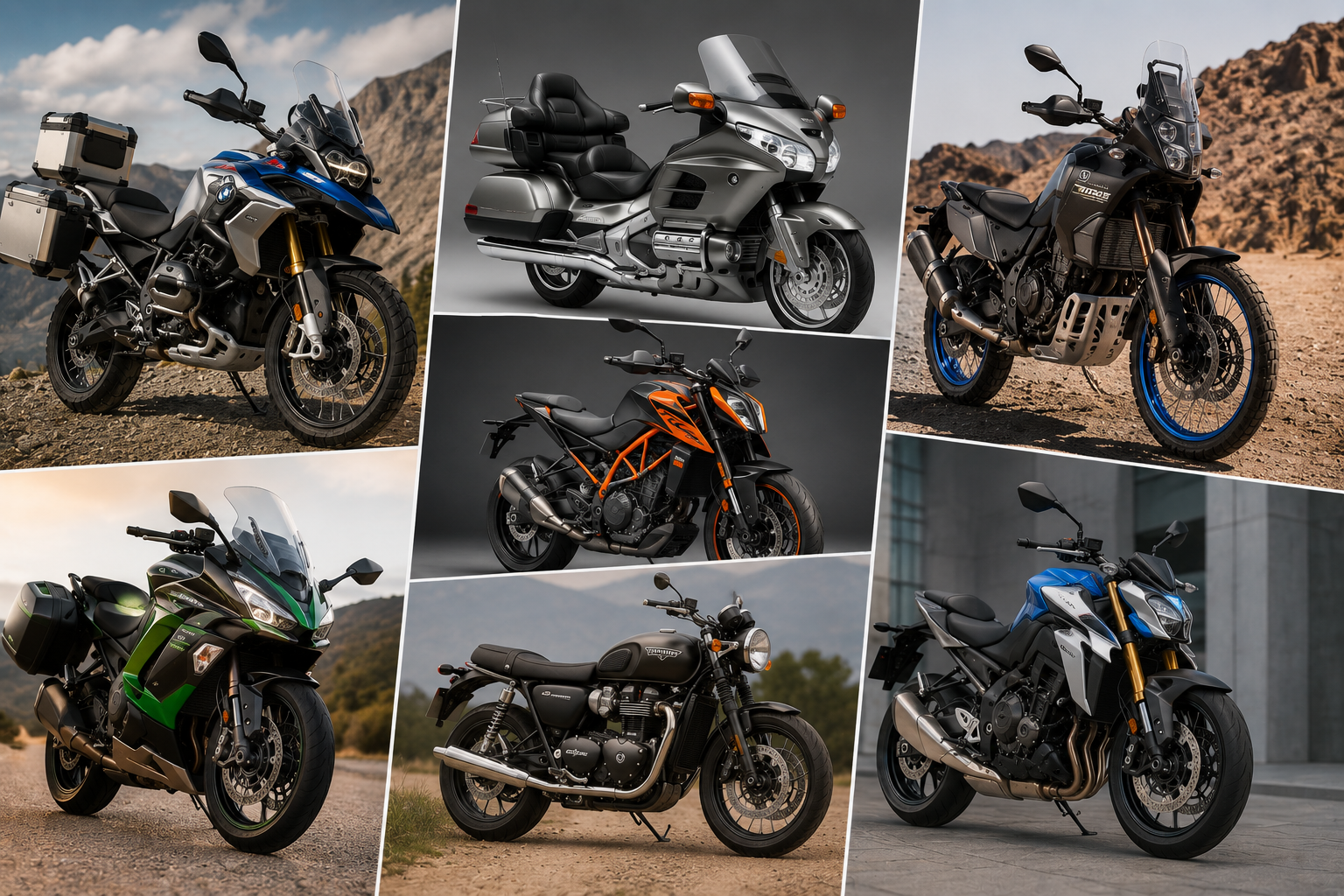
For every motorcycle owner, maintenance eventually becomes an important part of the ownership experience. Routine tasks such as oil changes, valve inspections, chain cleaning, and scheduled dealer servicing can quickly increase both costs and downtime. For daily commuters and long-distance riders, these ongoing maintenance requirements often determine whether a motorcycle remains enjoyable to own or gradually becomes an expensive inconvenience.
The motorcycles on this list were engineered with a completely different ownership philosophy in mind. Rather than prioritizing outright performance at the expense of maintenance frequency, these machines use under-stressed engines, proven long-life components, shaft drive systems, and automotive-grade engineering to stretch service intervals to distances that would seem impossible on a typical sportbike. Some go 12,000 kilometers between oil changes. One goes 60,000 kilometers between valve adjustments.
Whether you are planning a cross-country touring trip, looking for a low-cost daily commuter, or simply want to spend more time riding and less time booking service appointments, these seven motorcycles represent the best the industry offers in terms of long-interval, low-hassle ownership. Here is the full breakdown with factory specifications and exactly why each one earns its place on this list.
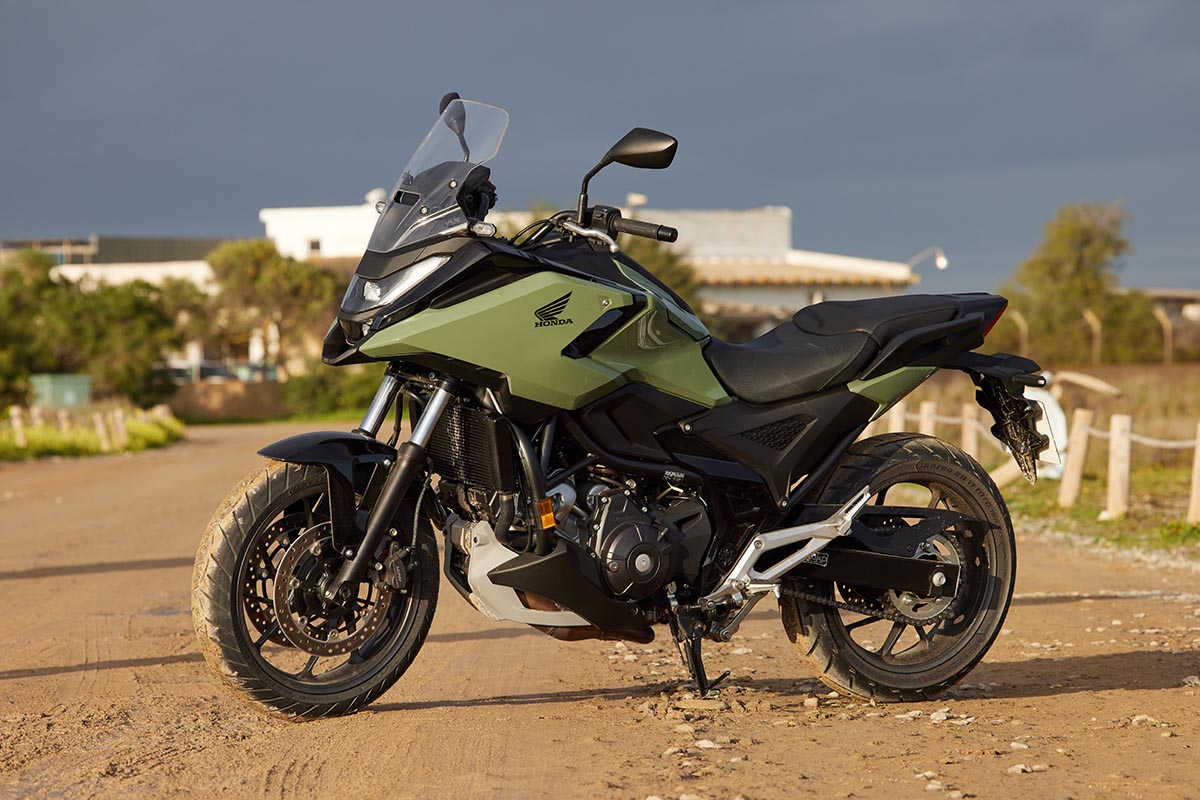
1. Honda NC750X
Oil Change Interval: 12,000 km (7,500 miles)
Valve Check Interval: 24,000 km (15,000 miles)
- Engine: 745cc Liquid-Cooled Parallel-Twin
- Horsepower: 58 hp
- Torque: 69 Nm (51 lb-ft)
- Seat Height: 800 mm (31.5 inches)
Honda built the NC750X around an engine concept that no other motorcycle manufacturer has applied in quite the same way: the parallel-twin derives its architecture directly from half of a Honda Civic car engine. That automotive origin is not a marketing talking point. It is the engineering explanation behind why this motorcycle’s maintenance intervals are so dramatically longer than most comparable-displacement bikes on the market.
Car engines are designed to operate reliably at low stress levels across hundreds of thousands of kilometers without requiring frequent servicing. They run at modest RPMs, they manage heat through robust liquid cooling systems, and they are built with component tolerances that favor longevity over outright performance.
When Honda translated that architecture into a motorcycle engine, those same characteristics carried over. At 58 horsepower and 69 Nm of torque, the NC750X’s engine is genuinely under-stressed relative to its displacement, which means oil degradation is slow and internal component wear is minimal compared to a high-revving sportbike engine of similar size.
The practical result is a 12,000-kilometer oil change interval that nearly doubles what most motorcycles in the middleweight commuter category require. Valve adjustments are pushed to 24,000 kilometers, meaning many owners will complete two full years of regular riding without needing to touch the valvetrain.
Owners who choose the optional Dual Clutch Transmission version gain one additional benefit: the elimination of clutch cable adjustment as a maintenance task entirely, since the DCT manages clutch engagement electronically rather than through a mechanical cable.
For daily commuters, urban riders, and anyone building a cost-per-kilometer ownership budget, the NC750X represents one of the most financially rational motorcycle choices available at any price point, particularly for riders who log consistent annual mileage and value predictable, infrequent service scheduling.
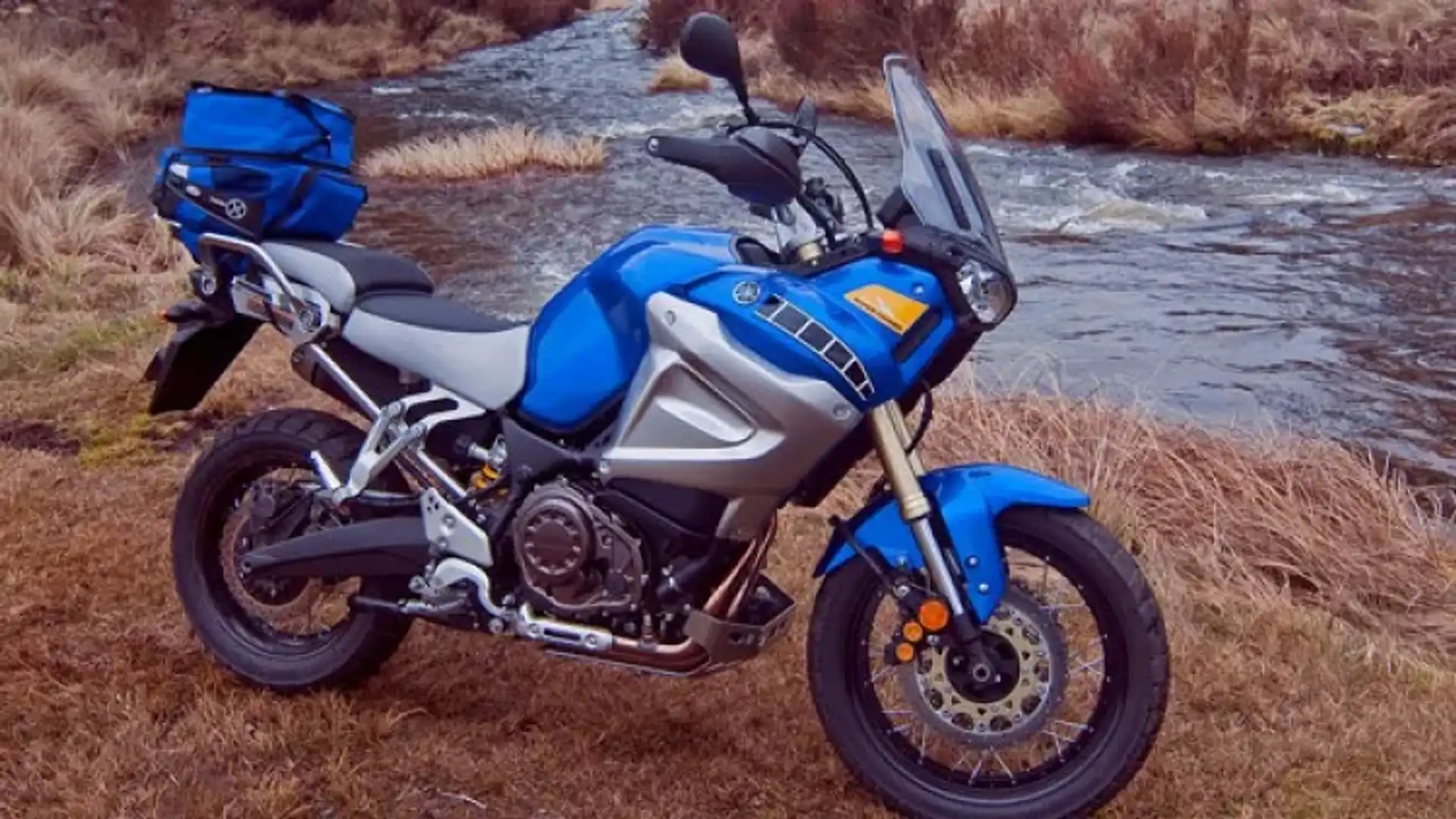
2. Yamaha Super Ténéré 1200
Oil Change Interval: 10,000 km (6,000 miles)
Valve Check Interval: 40,000 km (24,000 miles)
- Engine: 1,199cc Liquid-Cooled Parallel-Twin
- Horsepower: 110 hp
- Torque: 117 Nm (86 lb-ft)
- Seat Height: 845 mm to 870 mm adjustable (33.3 to 34.3 inches)
Long-distance touring motorcycles are judged by a different set of priorities than city bikes or track machines. Raw power matters, but so does what happens when you are two weeks into a transcontinental ride and the nearest authorized dealer is several hundred kilometers away. Yamaha built the Super Ténéré 1200 around the kind of engineering that makes those moments non-events rather than crises, and the valve check interval on this machine is the single most dramatic example of that philosophy.
Forty thousand kilometers between valve adjustments is not a figure that appears on many motorcycles at any price point. At a realistic touring pace of 10,000 to 15,000 kilometers per year, a Super Ténéré 1200 owner could ride for three to four years without requiring a valve adjustment service visit.
The financial and scheduling implications of that interval are enormous compared to motorcycles that require the same service every 12,000 to 16,000 kilometers. Shop labor rates for valve adjustment on a twin-cylinder touring engine typically run into several hundred dollars per visit, and extending that interval to 40,000 kilometers effectively removes that cost line from the ownership budget for years at a time.
Yamaha complemented the extended valve interval with a shaft drive system that eliminates chain maintenance entirely. No cleaning every 500 to 800 kilometers, no chain tension checks, no sprocket replacement kits to budget for. Shaft drive maintenance is reduced to a simple gear oil swap every 20,000 to 40,000 kilometers, a fast and inexpensive procedure that requires no specialist equipment.
At 110 horsepower and 117 Nm of torque from a 1,199cc liquid-cooled parallel-twin, the Super Ténéré delivers genuine touring performance alongside its exceptional service economics, making it one of the most thoughtfully engineered long-haul motorcycles available.
Also Read: 8 Best Motorcycles For Two-Up Riding With A Passenger
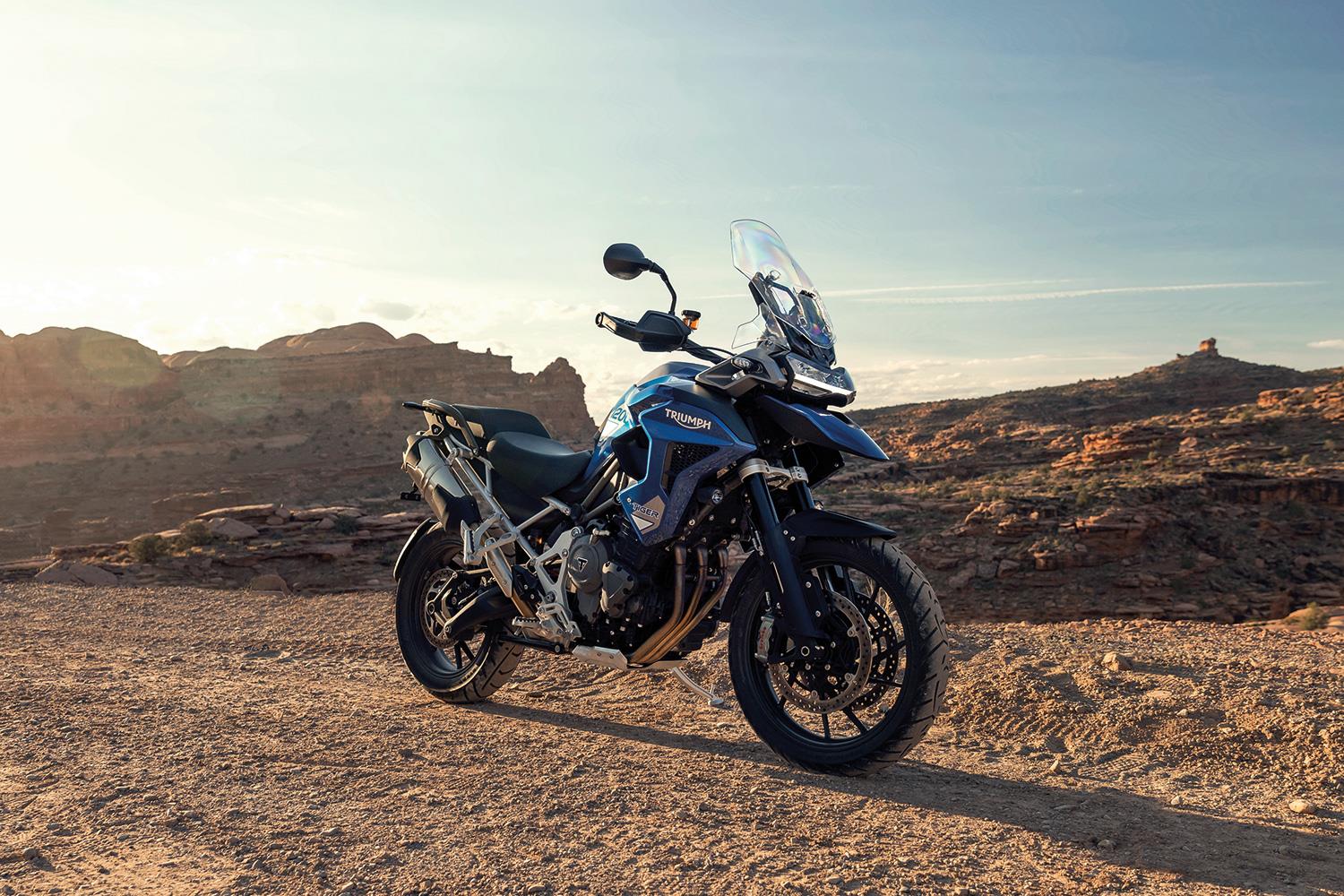
3. Triumph Tiger 1200
Oil Change Interval: 16,000 km (10,000 miles)
Valve Check Interval: 32,000 km (20,000 miles)
- Engine: 1,160cc Liquid-Cooled Inline-3
- Horsepower: 147 hp
- Torque: 130 Nm (96 lb-ft)
- Seat Height: 850 mm to 870 mm adjustable (33.5 to 34.2 inches)
Many riders once believed large European adventure motorcycles delivered strong performance but demanded frequent and costly servicing. That idea began to change when Triumph redesigned the Tiger 1200 from the ground up. The updated machine delivers 147 horsepower from a three-cylinder engine while keeping maintenance intervals longer than most rivals.
By improving oil service spacing and reducing how often internal checks are needed, the platform challenges long-held assumptions about ownership expense within this class. Service timing sets the motorcycle apart. Oil changes are scheduled every sixteen thousand kilometers or once each year, which is higher than the figures posted by BMW and Yamaha in the same category. Both the R 1300 GS and the Super Tenere call for ten-thousand-kilometer oil services. Fewer workshop visits translate to lower bills and more days spent riding rather than waiting.
Long-distance ownership also benefits from extended valve inspections at thirty-two thousand kilometers. For riders covering normal annual mileage, that usually means attention every few years. Triumph adds a shaft drive, removing chain care from routine chores, matching the convenience offered by Moto Guzzi. With 1160 cc capacity and 130 Nm of torque, the Tiger 1200 delivers steady mid-range strength for touring while keeping scheduled upkeep lower than earlier versions.
Riders who once avoided the brand due to servicing worries may now reconsider. The current design proves that careful engineering can support reliability, comfort, and cost control without sacrificing the enjoyable character expected from a premium adventure tourer.
4. Moto Guzzi V85 TT
Oil Change Interval: 10,000 km (6,000 miles)
Valve System: Simple Screw-and-Locknut Adjusters
- Engine: 853cc Air/Oil-Cooled Transverse 90-Degree V-Twin
- Horsepower: 80 hp
- Torque: 83 Nm (61 lb-ft)
- Seat Height: 830 mm (32.7 inches)
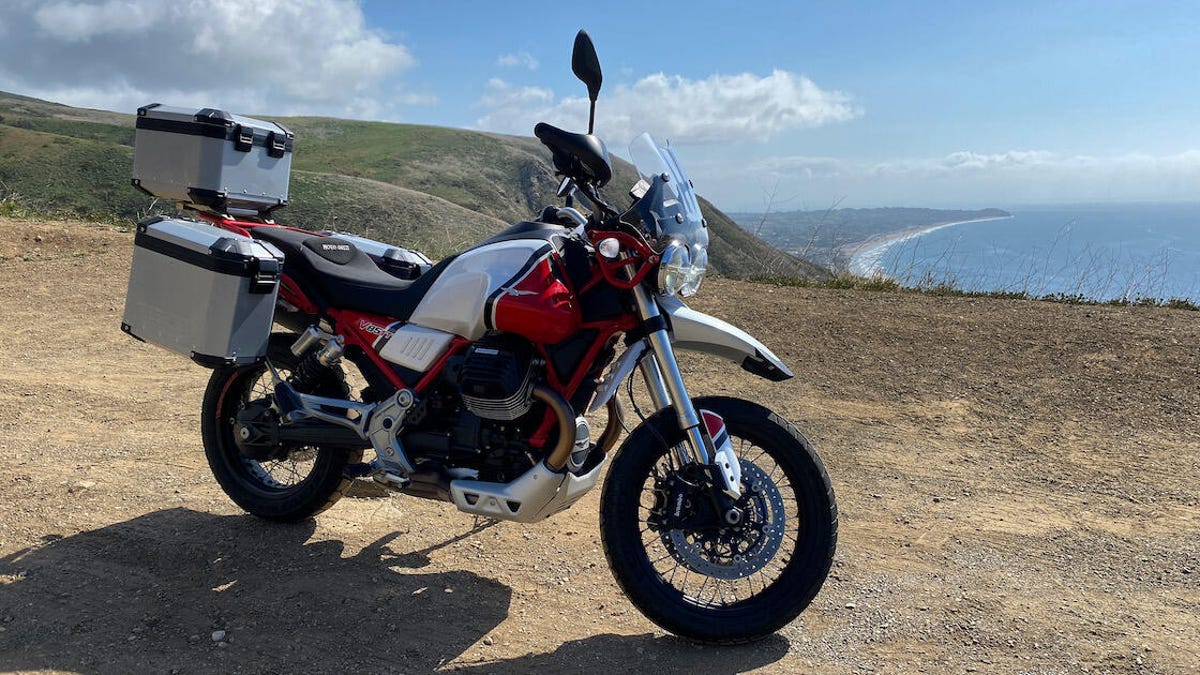
What makes the Moto Guzzi V85 TT stand out on a list focused on service intervals is not just its 10,000-kilometer oil change schedule but the philosophy behind how Moto Guzzi approached valve maintenance on this engine. Where most modern motorcycles require tank removal, radiator access, and several hours of workshop time to reach the valve clearances for inspection and adjustment, the V85 TT’s cylinder heads point straight out to the sides of the engine into open air.
That transverse V-twin layout means the cylinder heads are visible and fully accessible without removing any bodywork, tanks, or cooling system components. Combined with a valve adjustment mechanism that uses a screw-and-locknut system rather than the shim-and-bucket or Desmodromic systems found on more performance-oriented machines, a full valve clearance check and adjustment on the V85 TT takes an experienced mechanic or a competent DIY owner approximately 30 minutes of actual work time. Most other touring bikes require several hours of labor plus shim kits to achieve the same result.
For owners who prefer to manage their own basic maintenance, this accessibility makes the V85 TT uniquely suitable for self-servicing in a garage environment without specialized tools or a hydraulic lift. At 80 horsepower and 83 Nm of torque from its characterful air and oil-cooled 853cc engine, the V85 TT delivers the torque-rich, relaxed power delivery that suits long-distance touring without demanding the premium operating costs that typically accompany Italian motorcycles.
Shaft drive completes the low-maintenance profile by removing chain servicing entirely. The V85 TT proves that elegant engineering sometimes means making complicated things genuinely simple.
5. BMW R 1300 GS
Oil Change Interval: 10,000 km (6,000 miles)
Valve Check Interval: 20,000 km (12,000 miles)
- Engine: 1,300cc Liquid-Cooled Boxer Twin
- Horsepower: 145 hp
- Torque: 149 Nm (110 lb-ft)
- Seat Height: 850 mm (33.5 inches)
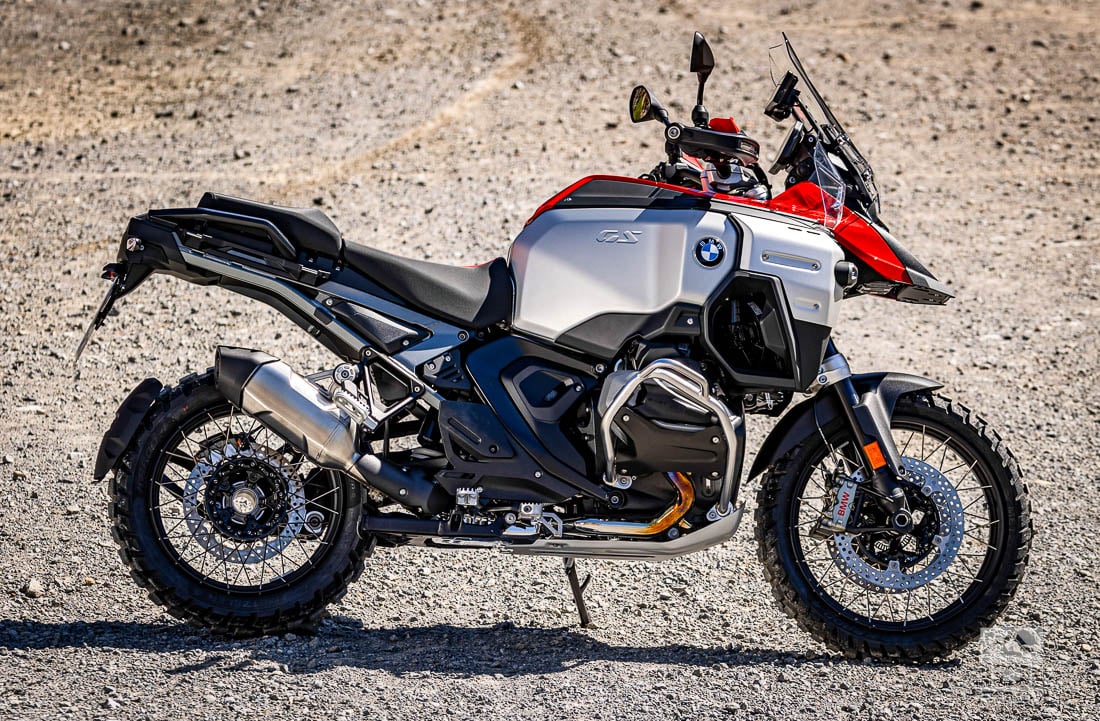
Ask a group of experienced long-distance touring riders which single motorcycle they would choose for a year-long global expedition, and the BMW R 1300 GS appears on more lists than any other answer. Its position as the benchmark touring machine is supported by decades of real-world validation across conditions that would expose weaknesses in less thoroughly developed platforms. Part of why it maintains that status is its ownership profile, which makes extended trips financially and logistically manageable in ways that high-maintenance alternatives cannot match.
At 145 horsepower and 149 Nm of torque from its 1,300cc liquid-cooled Boxer twin, the R 1300 GS delivers more than adequate performance for any real-world touring scenario while maintaining the relaxed, low-RPM character that keeps internal components operating well below their stress limits during sustained long-distance riding. The horizontally opposed cylinder layout that defines the Boxer configuration places both cylinder heads directly in the airflow at the sides of the engine, keeping thermal management effective even under sustained full-load conditions.
BMW’s Paralever shaft drive system handles thousands of kilometers of loaded cargo touring without requiring adjustment, providing the same chain-free maintenance advantage found on the Yamaha and Moto Guzzi entries above. What separates the R 1300 GS from all other motorcycles on this list is its engine management system’s ability to log precise operating condition data and alert the rider if actual service needs are developing ahead of the standard interval schedule.
Rather than servicing purely by mileage, the bike communicates when components genuinely need attention, which prevents unnecessary service visits while also preventing missed maintenance from causing damage. At 20,000 kilometers between valve checks and 10,000 kilometers between oil changes, the R 1300 GS provides a touring platform whose service economics match its performance credentials.
6. Suzuki V-Strom 650
Oil Change Interval: 6,000 km (4,000 miles)
Valve Check Interval: 24,000 km (15,000 miles)
- Engine: 645cc Liquid-Cooled 90-Degree V-Twin
- Horsepower: 70 hp
- Torque: 62 Nm (46 lb-ft)
- Seat Height: 835 mm (32.9 inches)
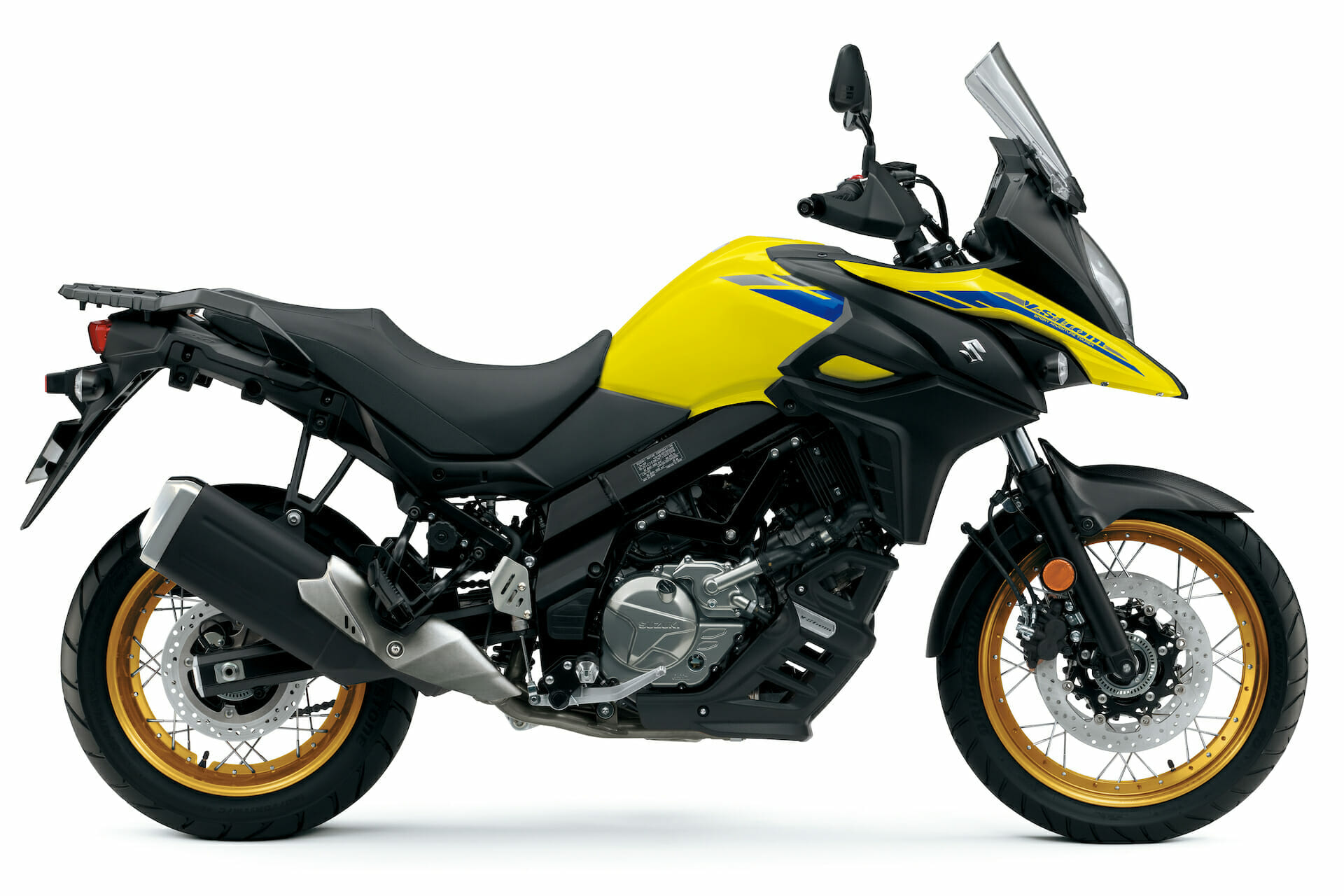
Measured service intervals sometimes tell only part of a motorcycle’s ownership story, and that is true for the Suzuki V-Strom 650. Its six-thousand-kilometer oil change schedule appears short beside some European rivals, yet this figure needs perspective. The real strength of this model comes from decades of daily use by riders who depend on consistency. Couriers and commuters have pushed this motorcycle through extreme mileage levels that demonstrate durability beyond brochure promises.
Professional delivery riders play a major role in shaping this reputation. These riders cover far more kilometers each year than casual owners and cannot afford mechanical trouble. Across different regions and riding conditions, the ninety-degree V-twin engine has earned trust because it starts every morning and keeps running. Many of these professionals choose the V-Strom 650 repeatedly because it protects their income through reliability.
Reports from long-term owners often mention crossing one hundred fifty thousand kilometers with basic fluid servicing. Such results are common within the community and shared without exaggeration. While the motorcycle delivers seventy horsepower and sixty-two newton-meters of torque, its performance suits real riding needs. Highway travel feels steady, city riding remains easy, and ownership stress stays low.
Maintenance planning also supports sensible ownership. Valve inspections are set at twenty-four thousand kilometers, fitting expectations for this category. Riders watching expenses prefer proven history over claims. For anyone seeking a dependable middleweight adventure bike, Suzuki offers reassurance through use rather than promises earned across many riding communities.
Also Read: 7 Most Reliable Motorcycles You Can Buy Today
7. Ducati Multistrada V4
Oil Change Interval: 15,000 km (9,000 miles)
Valve Check Interval: 60,000 km (36,000 miles)
- Engine: 1,158cc Liquid-Cooled V4 Granturismo
- Horsepower: 170 hp
- Torque: 125 Nm (92 lb-ft)
- Seat Height: 840 mm to 860 mm adjustable (33.1 to 33.9 inches)
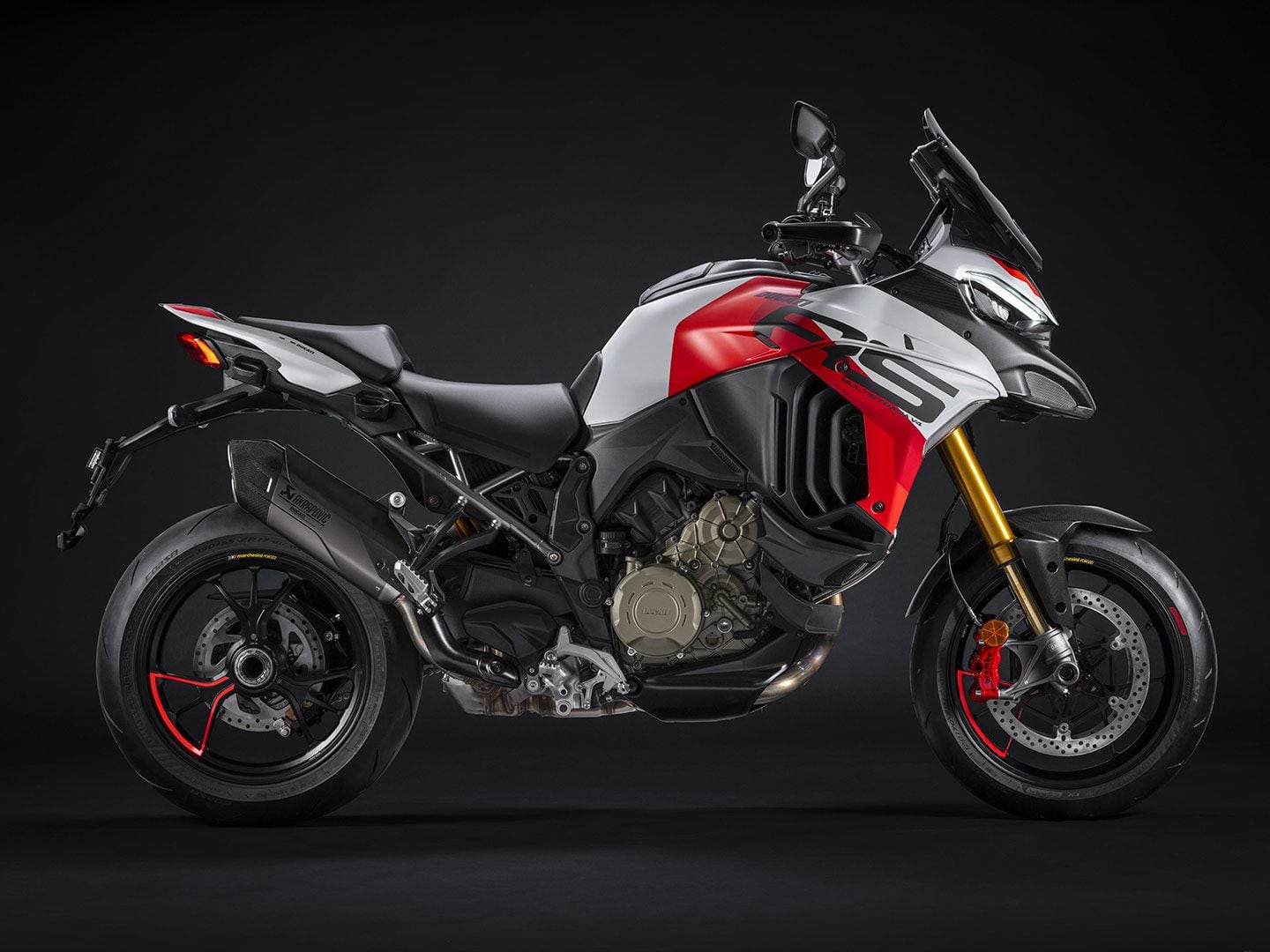
For decades, the phrase “Ducati ownership costs” was shorthand in the motorcycle community for expensive and frequent valve service driven by the brand’s Desmodromic valve actuation system. Desmodromic valves use a mechanical closing rocker arm rather than valve springs to close each valve, producing precise valve control at high RPM but requiring regular clearance checks and adjustments that contribute to dealer service bills that made some buyers choose other brands regardless of how much they admired Ducati’s performance. The Multistrada V4 Granturismo engine changed that conversation completely.
Ducati abandoned the Desmodromic system on the V4 Granturismo engine and switched to conventional valve springs. That decision, driven by Ducati’s determination to make the Multistrada V4 competitive on long-term ownership costs, enabled the single most remarkable service specification on this list: a 60,000-kilometer valve check interval. No other premium performance motorcycle available today comes close to this figure.
At 170 horsepower and 125 Nm of torque from a 1,158cc liquid-cooled V4, the Multistrada V4 is the most powerful motorcycle on this list by a meaningful margin. It delivers genuine sport-touring performance, capable of keeping pace with dedicated sportbikes on sweeping mountain roads while carrying luggage and maintaining the ergonomic comfort that long-distance riding demands.
The 15,000-kilometer oil change interval already places it above most competitors on scheduled maintenance frequency, but the 60,000-kilometer valve interval is what makes its total operating cost profile genuinely competitive with motorcycles producing less than half its power output.
Riders who previously ruled out Ducati on cost-of-ownership grounds now have a legitimate reason to recalculate. The Multistrada V4 delivers Italian performance with a maintenance schedule that finally matches its touring ambitions.
