
Beauty is a strange concept when it comes to vehicles. While many people chase after sleek curves, aerodynamic lines, and shining paint jobs, there’s an entire world of automobiles, bikes, and other rides that push against conventional aesthetics.
These vehicles are often called ugly, bizarre, or even downright confusing. But what makes a vehicle truly “ugly”? Sometimes it’s a distorted body shape, sometimes it’s a design that looks like it came from another era, or another planet.
Yet, in this supposed ugliness lies a certain charm. There’s something strangely satisfying about a machine that doesn’t look the way it’s “supposed” to. It’s the rebellion against uniformity, the boldness to stand out even if that means people might laugh or scratch their heads.
Function often beats form in many of these cases. A design might appear awkward or bulky, but it usually serves a unique purpose. That can make it strangely attractive. There’s also a certain honesty in weird vehicles. They don’t pretend to be something they’re not.
They exist as functional art pieces, unapologetically odd, and often built with innovation and intention. If nothing else, they grab attention; onlookers might stare in confusion or amusement, but they stare nonetheless. That alone is a kind of success. After all, how many perfectly attractive sedans pass by unnoticed?
Some of these vehicles were ahead of their time. Others were so behind that they looped around to become fascinating. A few are still on the roads, baffling modern drivers with their odd forms. There’s a kind of underdog spirit to these machines. While beauty might not be their first impression, they gain respect over time.
They remind us that perfection isn’t always the most interesting path. Often, it’s the quirks that give something its soul. So let’s take a closer look at ten vehicles that might make you blink twice. They’re odd, awkward, and anything but pretty. But maybe, just maybe, that’s what makes them beautiful.
1. Fiat Multipla
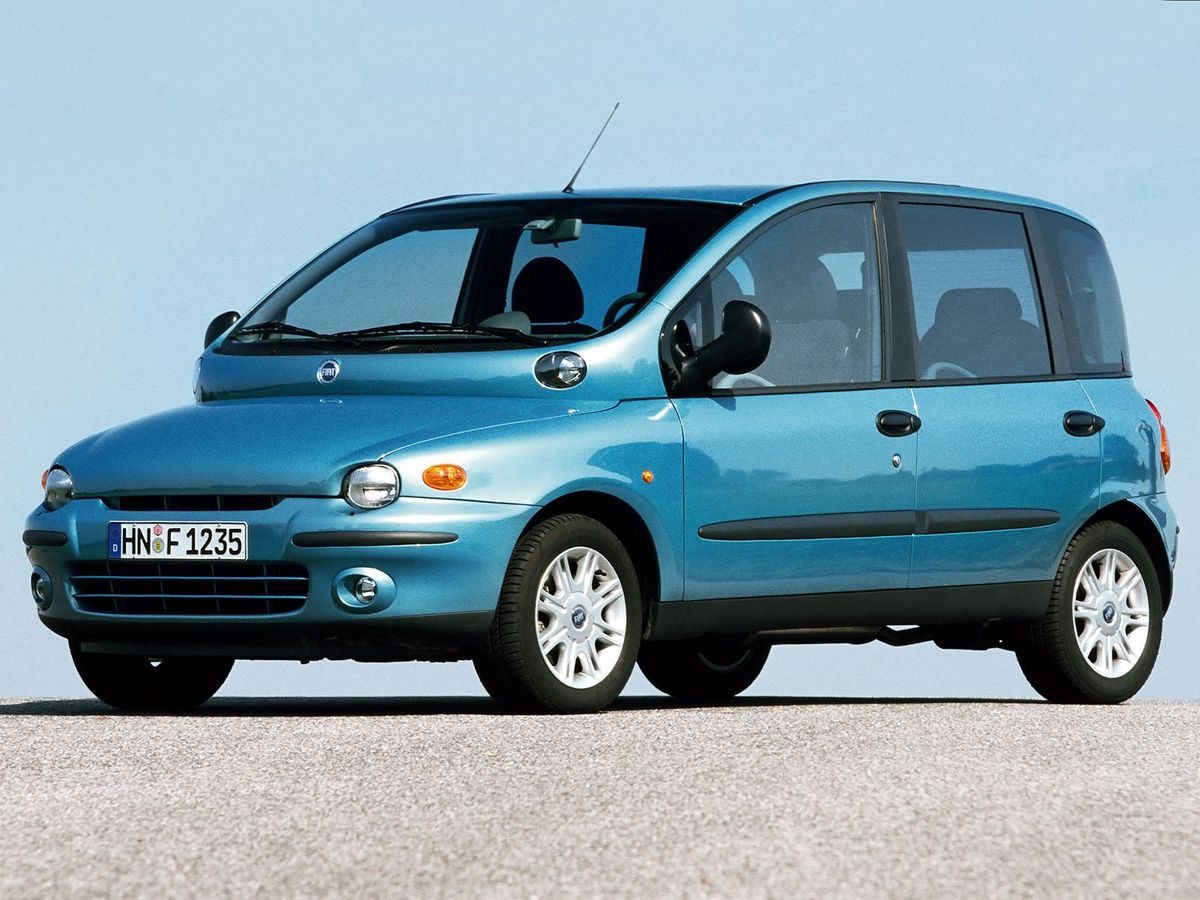
The Fiat Multipla has often been at the top of lists for the “ugliest cars ever made.” But it also has one of the most practical interiors of any compact family vehicle. From the outside, it looks like two different cars stacked on top of each other.
The high, rounded front end and bug-like headlights make it look almost amphibious. Its wide stance and short length add to the strange proportions. It doesn’t fit the mold of sleek Italian car design. In fact, it appears to go out of its way to break every styling rule.
Despite its appearance, the Multipla was a hit with families. The interior layout featured six seats in two rows of three, which is highly unusual for a car of its size. This configuration made it incredibly spacious and practical. Parents loved the visibility and the ease of getting kids in and out. The upright seating also contributed to comfort on longer drives. While the design got laughs, it also got the job done better than many “better-looking” competitors.
Over time, some drivers began to appreciate the Multipla’s boldness. It stood out, not just visually, but as a symbol of thoughtful design hidden behind an awkward exterior.
It was a car that had personality. It didn’t rely on surface-level charm. Once people got inside and used it, they began to see it differently. For many, the quirkiness turned from embarrassing to endearing. It became one of those vehicles people miss once it’s gone.
Fiat eventually redesigned the Multipla to make it more “normal-looking,” but by then, it had already made its mark. In a world full of cookie-cutter crossovers, the original Multipla remains a reminder that weird can work. It may have made people laugh at first, but it left a lasting impression that still sparks debate. And in a sense, that’s a form of beauty all its own.
2. Reliant Robin
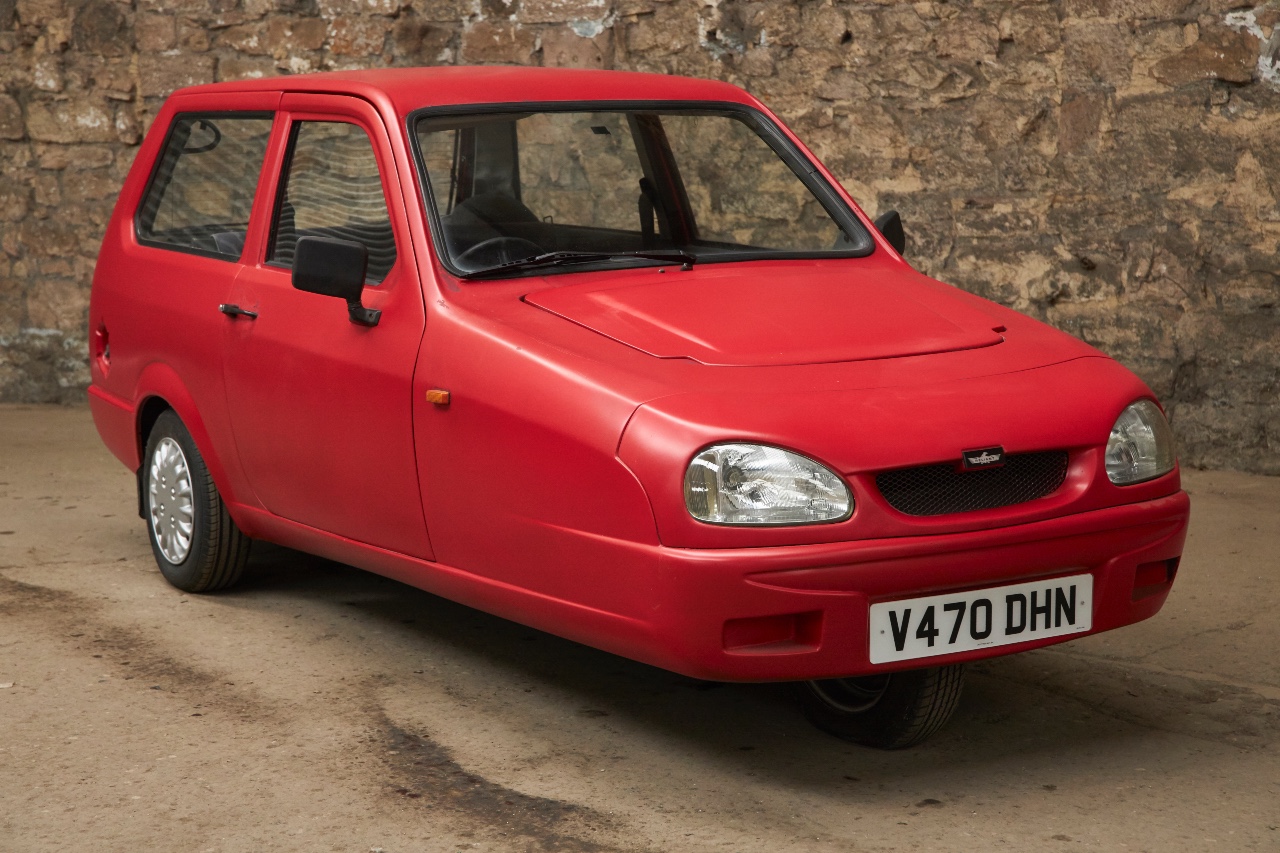
Three wheels, a narrow front, and a body that seems too tall for its own good, the Reliant Robin is a textbook example of mechanical oddity. At first glance, most people can’t believe it’s a real car. It looks more like a prop from a sketch comedy show.
And to be fair, it became exactly that in shows like Top Gear. But beneath the jokes lies a fascinating story about practicality, efficiency, and a very specific type of British charm.
The Robin was designed to be an affordable, lightweight vehicle that anyone could drive. In the UK, it could be driven with a motorcycle license, which made it more accessible than a full-sized car.
It was cheap to run, easy to park, and surprisingly fuel-efficient. For many working-class families, it wasn’t a joke; it was a lifeline. The three-wheel layout was unusual, but it worked in its own way. The single front wheel steered the car, and while it made handling a bit tricky, it allowed for a tighter turning radius.
The vehicle’s looks became part of its identity. People grew attached to its quirky shape. It looked friendly, almost like a cartoon character. In towns across Britain, you could see these little three-wheelers buzzing around, defying the idea that cars had to be flashy or fast to be loved.
Despite the jokes, Robin had its defenders. It did what it was meant to do, and it did it with a unique flair. Its popularity lasted for decades, with updated models continuing the legacy. There’s a reason it still gets referenced and remembered. The design may be laughable to some, but to others, it’s a cherished part of the past. It shows that something doesn’t have to be conventionally pretty to be unforgettable.
3. Pontiac Aztek
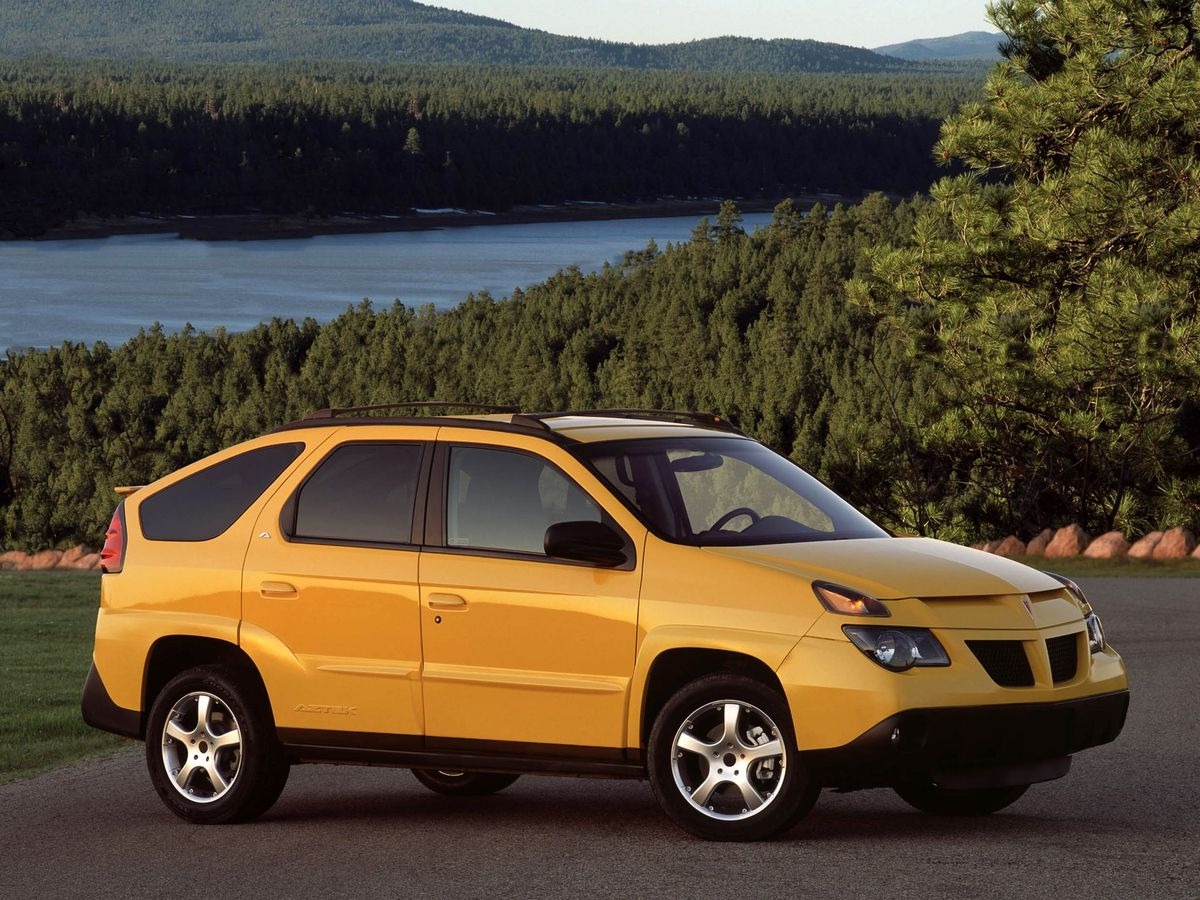
When the Pontiac Aztek first appeared, it faced harsh criticism. The combination of sharp lines, odd proportions, and clashing design elements made it a common target for ridicule. Yet today, many people look back at the Aztek with a kind of nostalgic affection. Part of that comes from its association with pop culture, but much of it is earned by the car itself. It was flawed, yes, but it also took risks.
The Aztek was built as an early crossover SUV, blending aspects of a car and a utility vehicle. That was a fresh idea at the time, even if the execution was a bit off. It had features that were ahead of its time, including a removable cooler, a tent attachment, and a highly configurable interior.
These elements made it appealing to a younger, adventurous audience, even if its appearance caused second thoughts. In hindsight, its feature set was far more innovative than it was ever given credit for.
Part of what hurt the Aztek was timing. It was launched during a period of internal confusion at GM, and the design process went through multiple revisions.
What came out the other end was a vehicle that tried to please everyone and instead looked like it was made by committee. But now, people appreciate it for exactly what it was, a bold attempt at something different. Its visual clumsiness is also part of what makes it interesting today. It doesn’t look like anything else on the road, and that’s not a bad thing.
After Breaking Bad made the Aztek part of its visual storytelling, its reputation shifted. Suddenly, it wasn’t just an ugly car, it was a symbol of character and depth. More people began buying old Azteks, giving them second lives. What was once mocked became iconic. And that transformation, from punchline to cult favorite, shows how perceptions can change when we take a second look.
4. Messerschmitt KR200
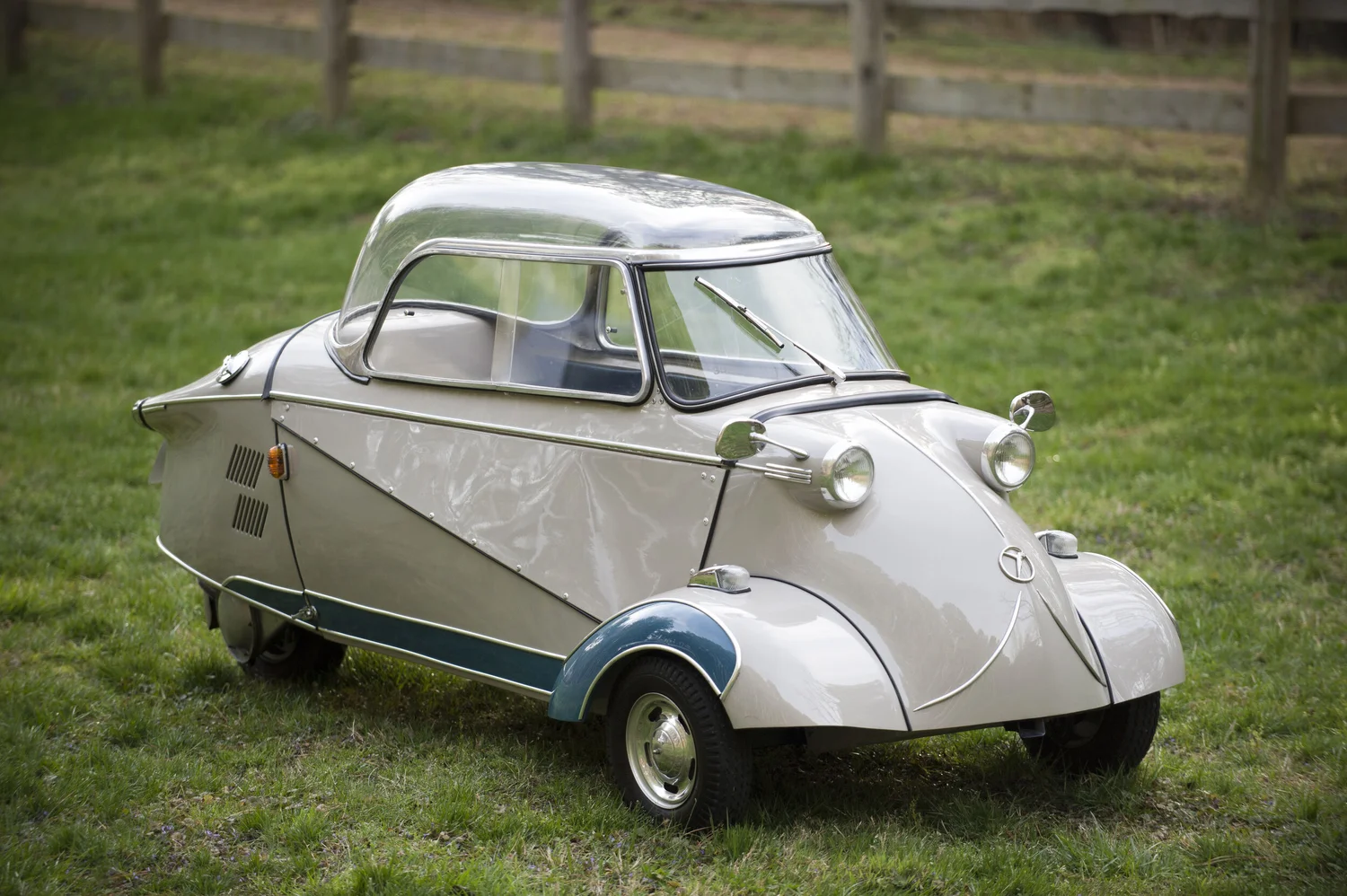
The Messerschmitt KR200 is less a car and more a capsule with wheels. Originally manufactured by an aircraft company, it carries that aviation DNA proudly. With its bubble canopy, tiny footprint, and tandem seating, it’s easy to mistake it for a jet cockpit that accidentally got wheels. It looks fragile and unusual, but it has a charm that makes people stop and smile.
Designed in the aftermath of World War II, the KR200 was part of a generation of microcars that offered an affordable alternative to full-sized vehicles. Its size made it perfect for narrow European streets and postwar economies.
Despite its strange appearance, it was surprisingly functional. The tandem seating allowed for a narrower body, improving aerodynamics and fuel efficiency. The lightweight design also helped performance, given the modest engine size.
The KR200 didn’t try to hide its quirks. Entry was through a canopy that lifted upward, much like a fighter plane. The controls were similarly aviation-inspired, which made it feel more like a novelty than a serious commuter.
But for many, that novelty was the appeal. It turned a boring drive into something memorable. While most cars strive to fade into the background of daily life, the KR200 refused to be ignored.
Collectors have embraced the KR200 for its uniqueness. It’s not just a car; it’s a conversation starter. You don’t forget seeing one, and if you drive one, you become part of a very niche community. It’s the kind of vehicle that breaks every mold yet still earns admiration for its bravery. Strange as it is, the KR200 makes you smile. And in a way, that’s a more lasting kind of beauty than polish or shine.
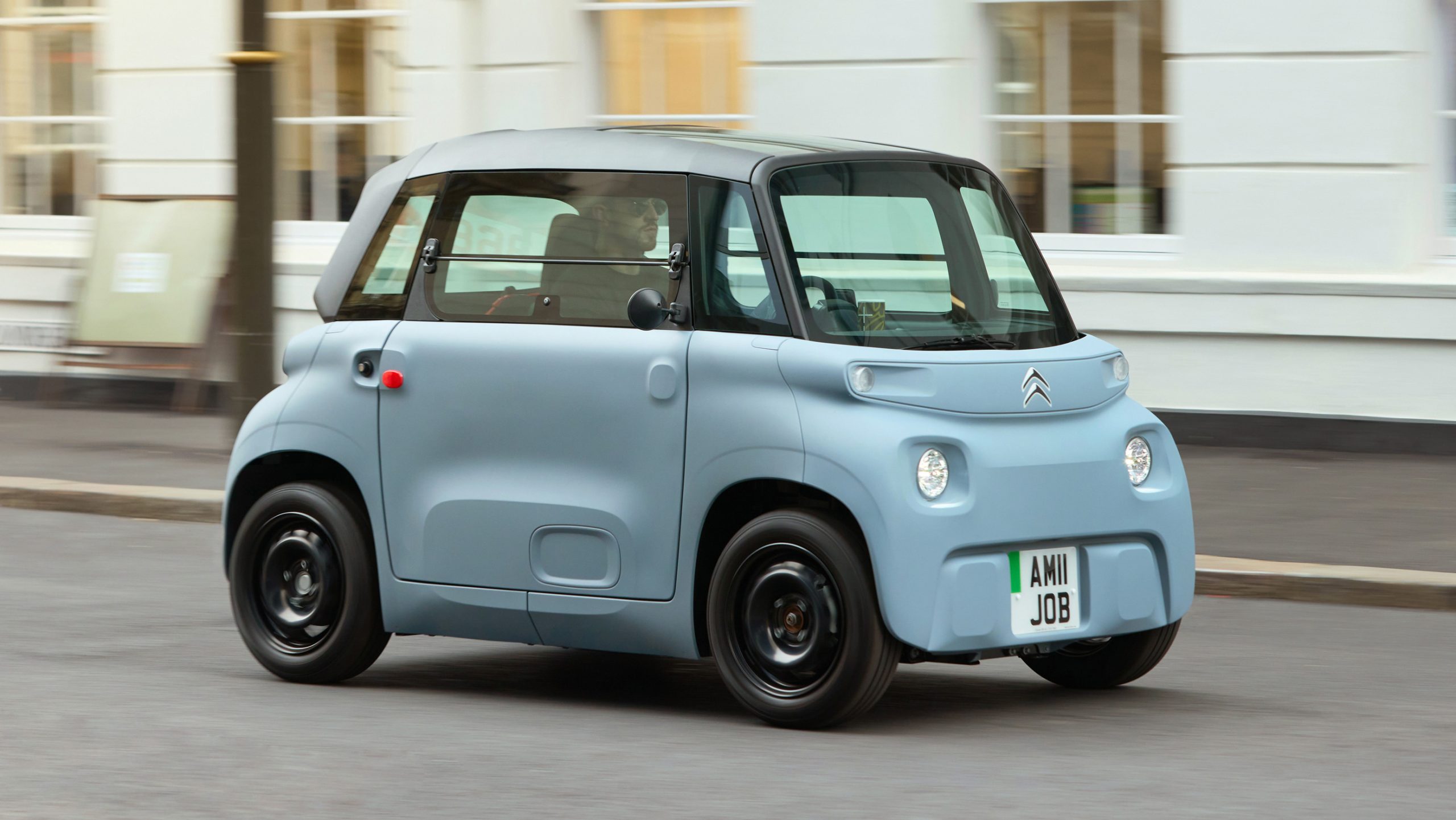
5. Citroën Ami
The Citroën Ami is a vehicle that looked odd even by French standards, and that’s saying something. Its body lines seem to contradict themselves, with a reverse-raked rear window and a front end that looks like it might have been melted slightly. The headlights are slightly sunken, giving the face an expression of sleepy confusion.
From almost any angle, the Ami looks like it was built from leftover parts. And yet, there’s something undeniably likable about it. It’s compact, it’s approachable, and it has a style that’s hard to pin down but easy to recognize once you’ve seen it.
Citroën was never shy about taking chances with design, and the Ami was no exception. It was built as a more practical alternative to the 2CV, and while it shared many components, it aimed to offer more interior space and comfort.
The reverse rear window wasn’t just there for shock value, it helped reduce glare and increase headroom for rear passengers. The flat panels and strange angles were also partly a result of cost-saving decisions, as well as an effort to make the car more functional than beautiful. Functionality came first, and form just had to fall in line, however awkwardly.
What makes the Ami intriguing is how honest it is. It doesn’t pretend to be sleek or fast. It’s a car for getting people from one place to another with minimal fuss, and its design is completely unpretentious. And yet, because of its oddness, it ends up being memorable in a way most compact cars aren’t.
Where many other vehicles of the era blend together into a sea of chrome and boxy panels, the Ami still stands out. It may not have turned heads for the usual reasons, but it certainly turned them, and that’s often more valuable in the long run.
Today, classic car enthusiasts often look at the Ami with fresh eyes. Its quirks, once a source of embarrassment or mockery, are now what make it collectible. The very things that once disqualified it from being considered “beautiful” have become reasons to appreciate it.
In an era obsessed with symmetry and polish, the Ami reminds us that charm doesn’t always follow the rules. Sometimes the most endearing things are the ones that never even tried to be pretty in the first place.
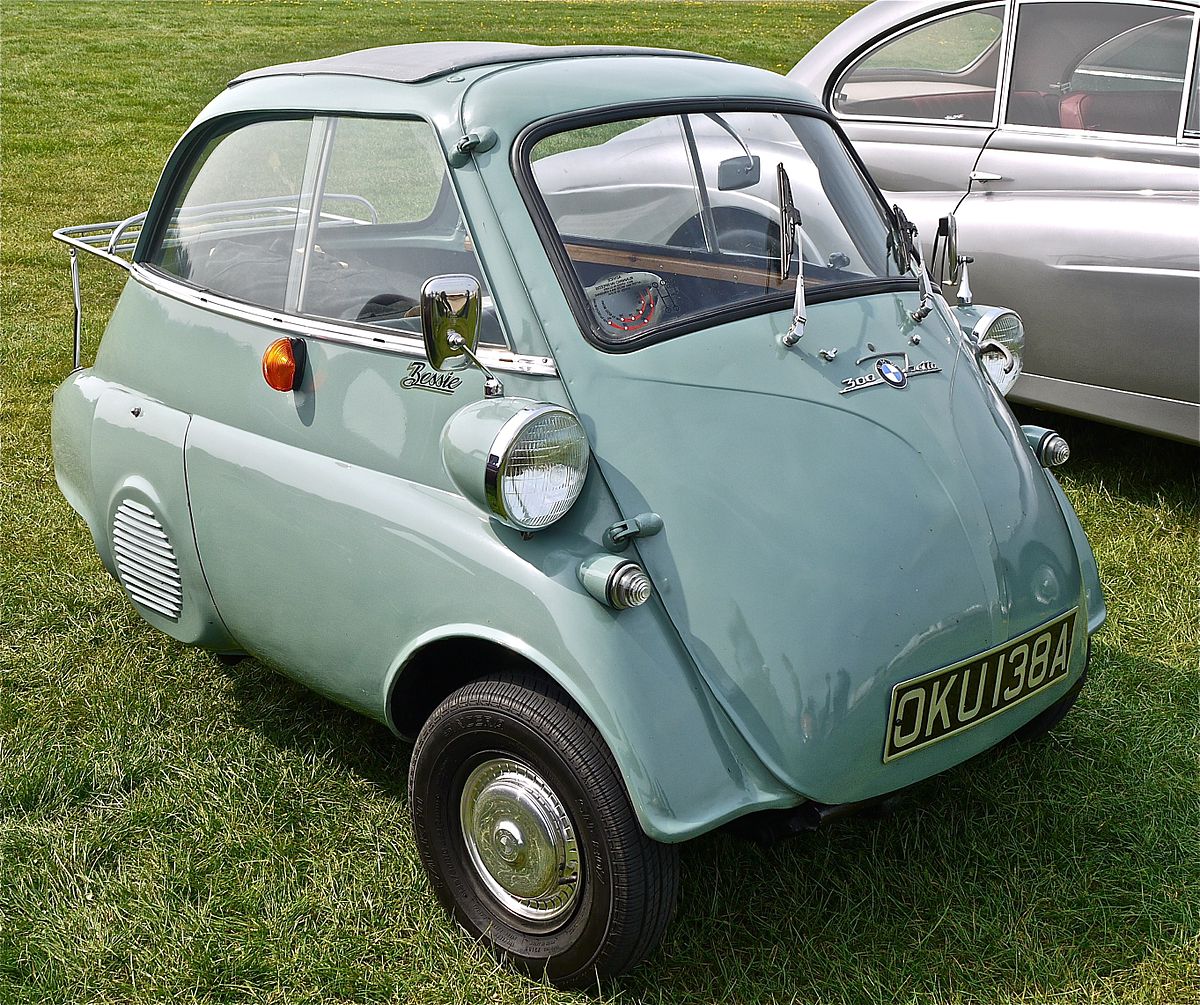
6. BMW Isetta
The BMW Isetta looks like a jellybean with wheels. It’s impossibly narrow from the back, strangely bulbous at the front, and it has one of the most unusual features in automotive history, a front-opening door.
That’s right, the entire front panel of the car swings open like a refrigerator, steering wheel and all. It’s such a wild concept that even people familiar with vintage cars often have to double-take when they see it. And yet, despite its egg-like profile and toy-like dimensions, the Isetta is a beloved classic that has earned its place in automotive lore.
The Isetta was originally an Italian design, but BMW licensed and re-engineered it for the postwar German market. Germany in the 1950s needed affordable, efficient transportation, and the Isetta filled that niche almost perfectly. Its tiny engine, small footprint, and excellent fuel economy made it ideal for urban environments and short trips.
It wasn’t fast, and it certainly wasn’t luxurious, but it was dependable and simple. Its looks, while far from conventional, also played a part in its success, it was hard to be intimidated by something that looked more like a wind-up toy than a car.
It’s almost like a puppy in a field of wolves. Sure, it’s not going to win any races or be taken seriously in a lineup of sports cars, but it doesn’t have to. The Isetta succeeds by being unique, by doing its job without pretense, and by standing out in a world that often rewards conformity.
Collectors today view the Isetta with affection. Restored versions can fetch high prices at auction, not because they’re powerful or luxurious, but because they’re full of character. They represent a time when practicality ruled and style was sometimes an accidental byproduct. The Isetta may not be beautiful in the traditional sense, but it has the kind of charm that doesn’t fade. It’s proof that personality, even in a vehicle, can outweigh appearance.
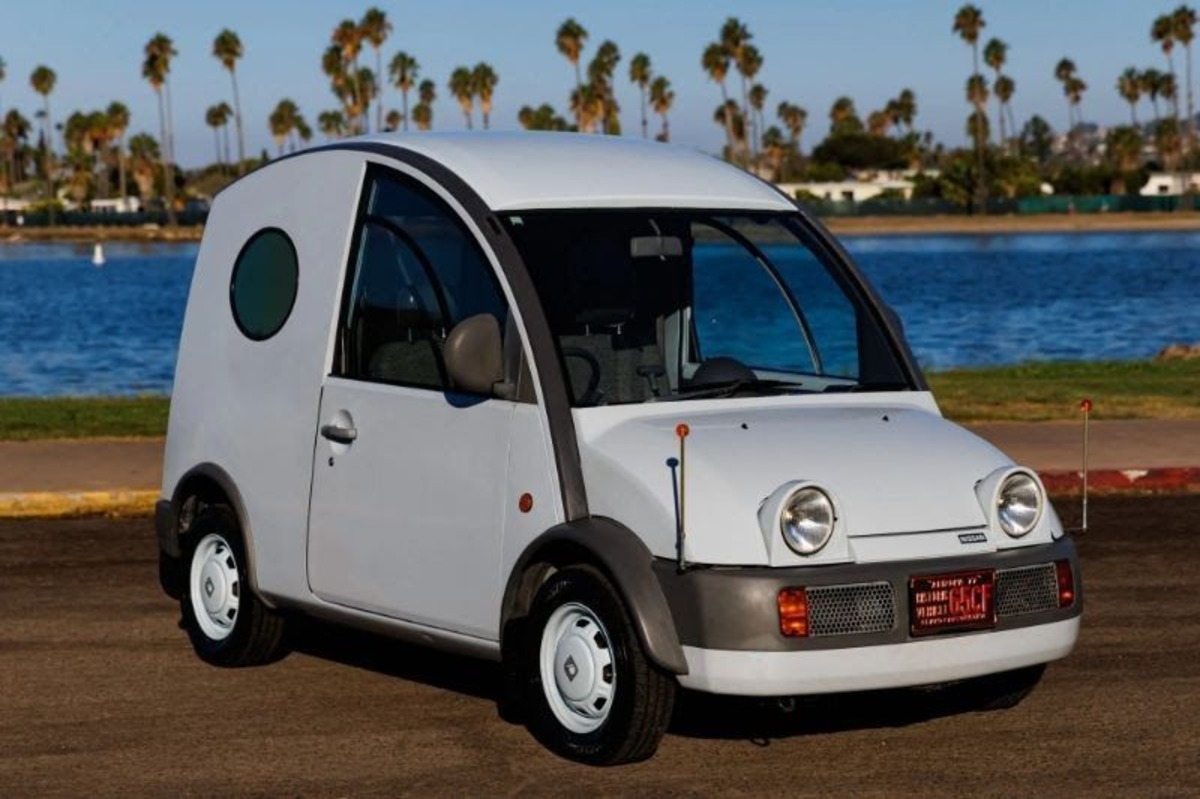
7. Nissan S-Cargo
The Nissan S-Cargo is a vehicle that looks like it was designed in a moment of whimsy. With a rounded shape that resembles a snail’s shell (hence the pun in its name: S-Cargo = “small cargo” + “escargot”), it’s one of the most deliberately odd commercial vehicles ever made.
The asymmetrical detailing, cartoonish headlamps, and narrow stance make it look like it wandered out of an animated film rather than a factory floor. It’s not the kind of vehicle that tries to blend in, and that’s exactly what gives it its strange appeal.
Built in the late 1980s as part of Nissan’s Pike Factory line, the S-Cargo was never meant to be mass-produced. It was part of a series of retro-styled concept cars that made it into limited production runs.
While other Pike models like the Figaro gained more fame for their cuteness, the S-Cargo went in a different direction. It was created as a delivery van, but with flair. The rear cargo space was functional, but everything else about the design seemed to prioritize fun over efficiency. That balance gave it a kind of quiet cult status among enthusiasts of oddball cars.
What makes the S-Cargo interesting is how it turns utility into something whimsical. Most delivery vans are designed to be invisible, to get the job done and then disappear into the background. But the S-Cargo draws attention even when it’s standing still. It invites questions.
It invites laughter. And underneath that novelty lies a surprisingly practical machine. The engine was modest but reliable, the interior was roomy enough for light commercial tasks, and the suspension was designed for city use. So while it looked like a toy, it wasn’t playing around.
Today, seeing an S-Cargo on the road is a rare treat. Collectors have begun to appreciate its boldness, and some even modify it into mobile cafés or boutique delivery services. In an age where vehicles are often judged by their horsepower or polish, the S-Cargo offers something refreshingly different.
It does not attempt to be sleek or elegant. It just is what it is, odd, cheerful, and surprisingly useful. That combination, though unconventional, gives it a kind of beauty few vehicles ever achieve.
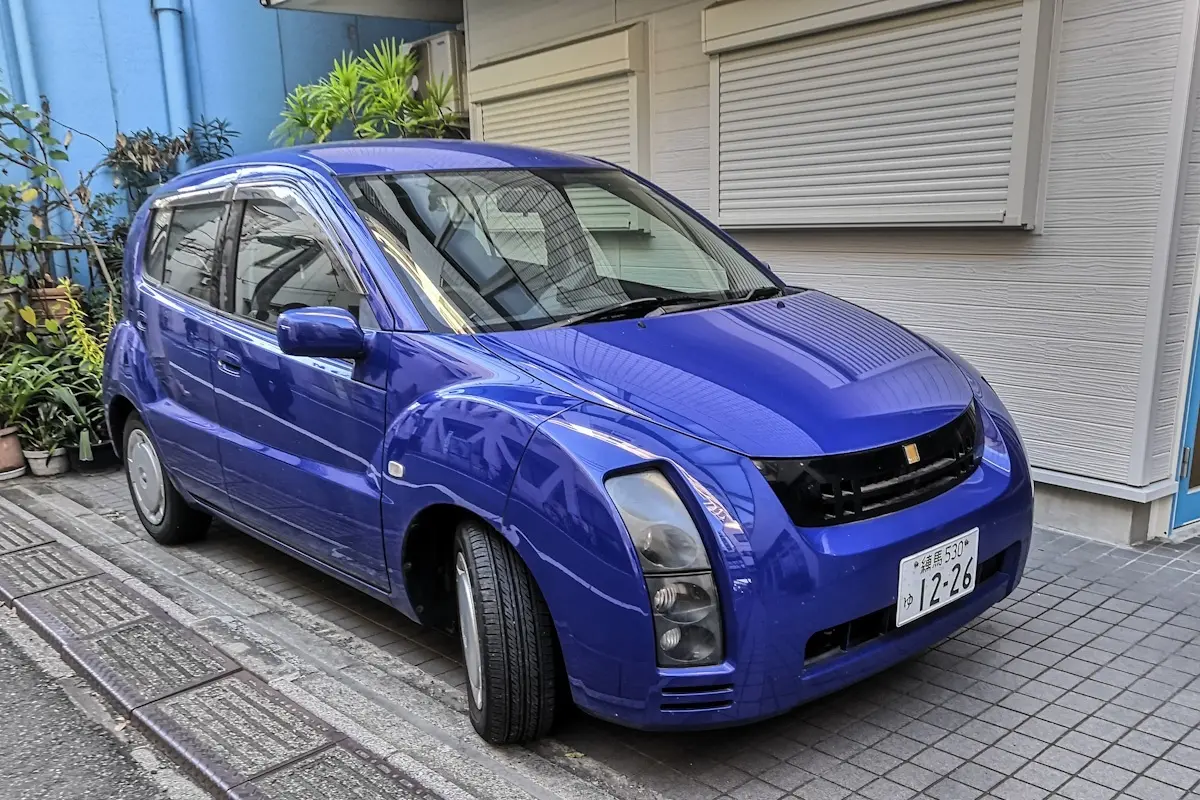
8. Toyota Will Cypha
If you’ve never heard of the Toyota Will Cypha, you’re not alone. It was one of Toyota’s more obscure experiments in automotive design, mostly sold in Japan and known for its peculiar proportions.
The body looks like a cube that someone tried to round out halfway through. Its windows are exaggerated in size, the rear tapers in an almost playful manner, and the front end looks like it’s permanently wearing an inquisitive expression. It’s the kind of car that raises eyebrows, not in admiration, but in confusion.
The Will Cypha was part of Toyota’s “Will” brand, a sub-label created in collaboration with other Japanese companies to appeal to younger buyers. These cars were supposed to be trendy, stylish, and forward-thinking. In practice, the Cypha ended up looking like a science-fiction prop from a low-budget TV show.
But underneath the quirky exterior was a solid, fuel-efficient urban vehicle. It wasn’t meant to be fast or luxurious. It was designed to appeal to a generation raised on individuality and gadgets. Whether it succeeded in that goal is up for debate, but it certainly stood out.
One of the Cypha’s defining traits is how unapologetically awkward it is. Most cars with “futuristic” designs try to look sleek and aerodynamic. The Cypha, in contrast, looks more like a futuristic toaster. But that weirdness gave it personality.
People who bought the Cypha often did so because they wanted something different, not just different from competitors, but different from everything else on the road. It was a rolling conversation starter, a four-wheeled statement that the driver wasn’t interested in blending in.
Over time, like many of the cars on this list, the Cypha has found a second life among enthusiasts who celebrate its uniqueness. Some now view it as a piece of automotive art, oddly shaped, perhaps, but no less worthy of admiration.
It’s a reminder that beauty can come from confidence, even when the result isn’t polished. The Cypha might not have been beautiful in its own era, but with time and perspective, it has become something more interesting than beautiful: it has become iconic in its own strange way.
9. Subaru Brat
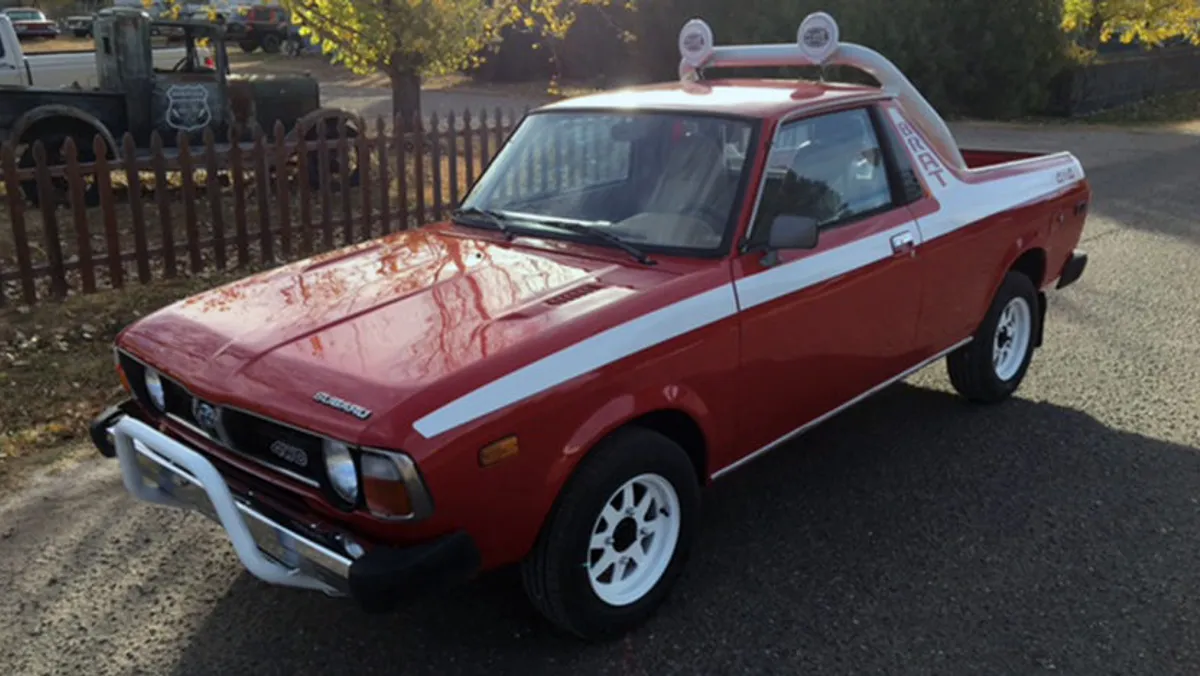
The Subaru Brat is one of those vehicles that defy easy classification. It’s not quite a truck, not quite a car, and it looks like it was designed by someone who couldn’t make up their mind.
The front is clearly a standard compact car, but the back opens up into a small pickup bed, complete with two rear-facing plastic jump seats that were bolted in to classify it as a passenger vehicle and avoid import taxes in the U.S.
The result was a Frankenstein-like mashup that looked confusing at best and awkward at worst. Still, its oddness made it endearing to a certain type of buyer, those who valued function and originality over polish.
The Brat, which stands for “Bi-drive Recreational All-terrain Transporter,” was Subaru’s answer to a question most people weren’t asking. But what it offered was surprisingly useful. It combined the comfort and drivability of a compact car with the utility of a small truck.
For people who needed light cargo space but didn’t want to give up fuel economy or maneuverability, the Brat was a perfect fit. It was affordable, practical, and handled rough terrain better than its size might suggest, thanks to Subaru’s all-wheel-drive system. The plastic seats in the truck bed may have looked silly, but they worked, and they gave the Brat a weird sense of fun.
Visually, it’s easy to mock the Brat. It looks like two different cars glued together at the middle. But that unusual shape is part of what gives it character. Modern pickup trucks all follow a similar template, but the Brat broke away from that decades ago. It didn’t follow trends, it ignored them.
And in doing so, it became a kind of cultural artifact, a physical reminder of the experimental spirit that sometimes creeps into the automotive world. It wasn’t trying to be attractive. It was trying to solve a problem in an unexpected way, and that alone sets it apart.
Today, the Subaru Brat has developed a cult following. Restored models pop up at car shows, off-road events, and enthusiast forums, where their unique appearance is celebrated rather than mocked. People admire it not in spite of its flaws, but because of them. Its awkwardness is part of its identity.
It stood out in a sea of safe, forgettable designs, and it still does. In a world obsessed with polished perfection, the Brat is a reminder that being a little weird can go a long way, especially when that weirdness is backed by real-world usefulness and a touch of rebellious charm.
10. Peel P50
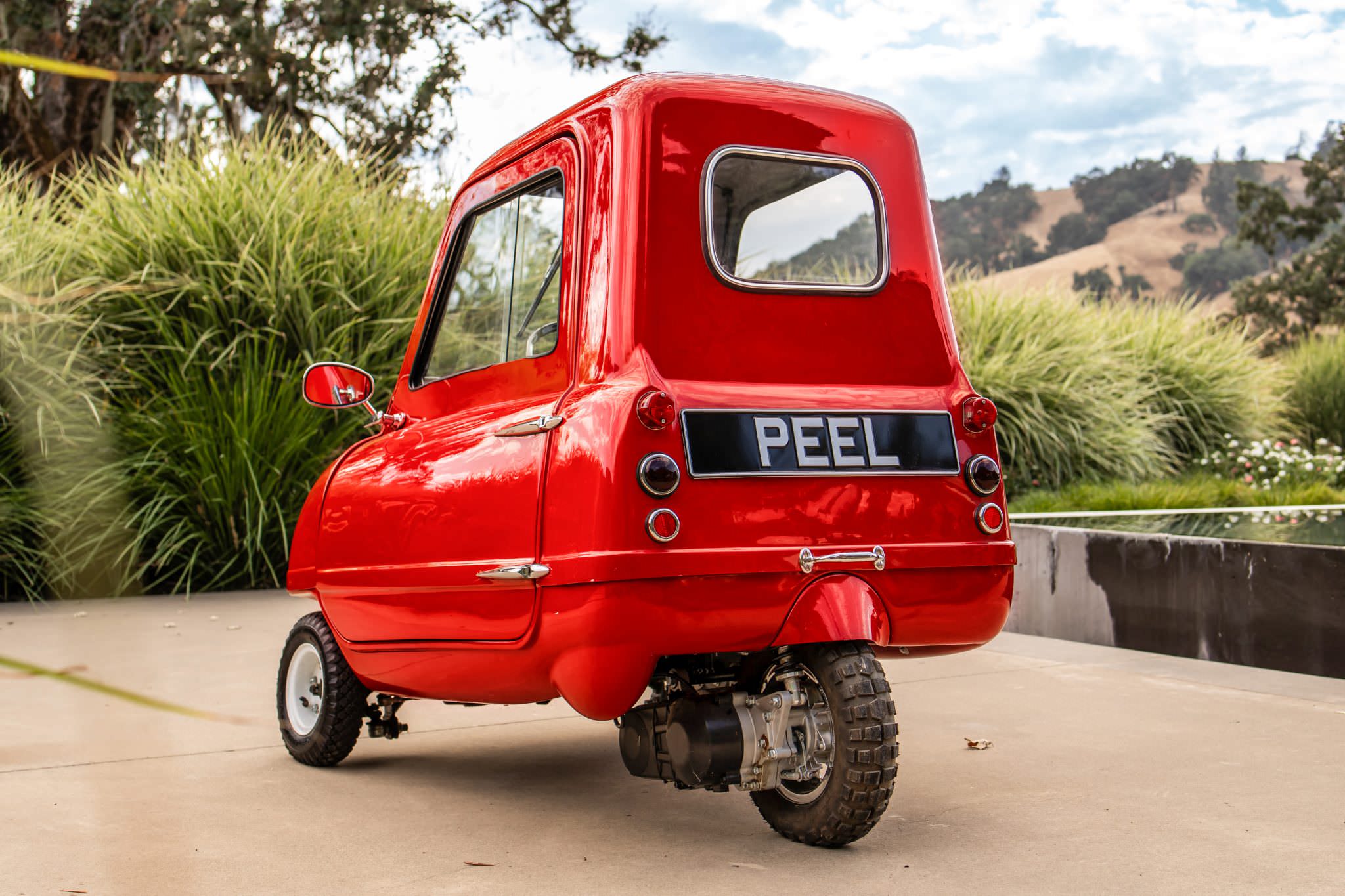
The Peel P50 is officially the smallest production car in the world, and it looks like something out of a child’s sketchbook. With just one door, three wheels, one headlight, and barely enough room for a single adult, it’s more like a motorized phone booth than an actual car.
Measuring just over four feet long and about three feet wide, it’s so tiny that you could theoretically park it in your living room if you didn’t mind the smell of gasoline. Yet despite, or because of, its miniature proportions, the Peel P50 has become a beloved oddity in automotive circles.
Built in the 1960s on the Isle of Man, the P50 was designed as a commuter car for one person and a small bag of groceries. That’s it. There’s no reverse gear; if you want to back it up, you simply get out and drag it by the handle on the rear.
The engine is a tiny two-stroke that can push it to around 40 mph, which feels much faster when your knees are practically touching your chin and the entire vehicle weighs less than a large man. It was never meant to be practical in the broad sense, it was meant to offer a mobility solution for the bare minimum of human transport.
Its looks are so strange they become almost cute. The body is an upright box with rounded corners, topped with tiny wheels and a single windshield wiper that looks like it belongs on a toy. But that absurdity is what gives it appeal. In a world where cars are increasingly complex, computerized, and bloated with features, the P50 is stunningly simple.
It strips the driving experience down to its raw core: a seat, a steering wheel, an engine, and the road. There’s something refreshingly honest about that. It’s not trying to impress, it’s just trying to exist.
The Peel P50 has become a collector’s treasure and pop culture icon. Whether it’s being squeezed through office hallways on television or displayed at microcar exhibitions, it brings a smile to nearly everyone who sees it. Its existence challenges our assumptions about what a car needs to be.
