
The idea of an engine that can travel one million miles between major overhauls sounds like engineering mythology, but for a select group of diesel powerplants, it is a documented engineering reality backed by decades of field data from the most demanding commercial applications in the world.
Diesel engines occupy a unique position in the mechanical universe because their fundamental operating characteristics favor longevity in ways that gasoline engines cannot replicate. Higher compression ratios create more self-sufficient combustion that reduces the thermal cycling stress associated with ignition timing management.
The diesel fuel itself provides better boundary lubrication to fuel system components than gasoline. Diesel engines operate at lower revolutions per minute than comparable gasoline units, reducing the frequency of the stress cycles that accumulate wear over time.
And diesel engines are typically operated under sustained moderate loads rather than the peak-demand, variable-load profile of passenger car gasoline engines, which means their components experience more consistent stress levels that are easier to design for than the variable extremes of gasoline engine operation.
The engines on this list have been proven in contexts where failure is not merely inconvenient but economically catastrophic.
Ocean-going vessels, long-haul freight operations, industrial power generation, and military applications have subjected these engines to the most demanding possible operational profiles, and the best of them have responded by delivering millions of miles of service before requiring internal attention.
Understanding why these engines achieve this extraordinary durability requires looking at the engineering details that separate them from ordinary diesel designs, and the following profiles provide exactly that analysis.
Whether you are a fleet manager, an engineer, or simply a person fascinated by the outer limits of mechanical endurance, these ten diesel engines represent the summit of what sustained engineering excellence can achieve.
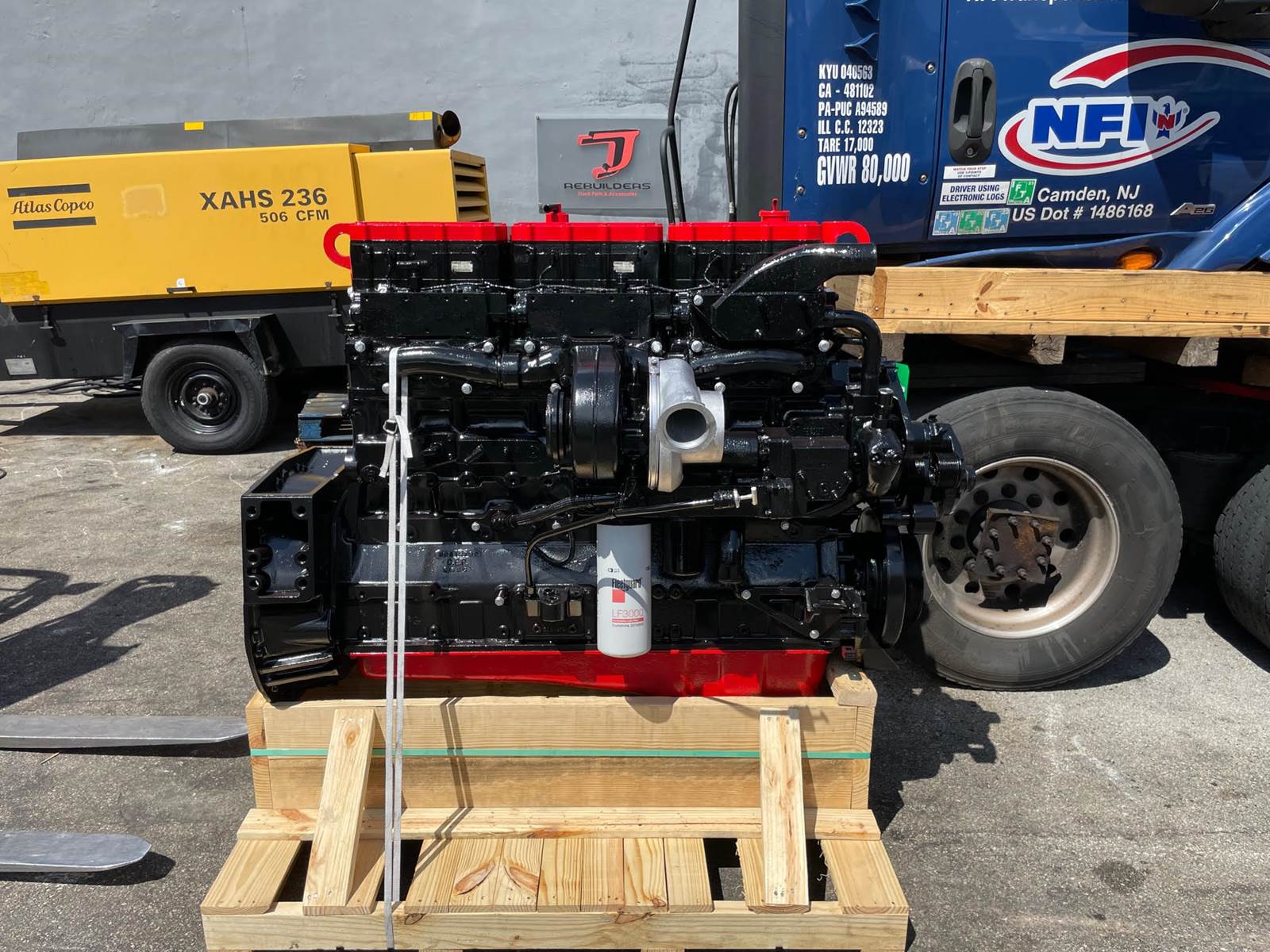
1. Cummins N14 and ISX Series
The Cummins N14 and its successor the ISX represent the pinnacle of heavy-duty diesel engine design for North American on-highway trucking, with documented service lives that routinely reach or exceed one million miles between major overhauls in professionally maintained fleets.
Cummins designed these engines with the understanding that the total cost of ownership calculation for a Class 8 truck over its working life is dominated by fuel and maintenance costs, not initial purchase price, and that extending the interval between overhauls dramatically improves the economics of truck ownership.
The N14’s cast iron block is a masterpiece of structural engineering, with wall thicknesses and rib placement calculated to provide maximum rigidity at minimum weight, and main bearing housings bored to tolerances that ensure consistent crankshaft alignment throughout a million-mile service life.
The ISX’s Signature Series specification, introduced to meet emissions requirements while maintaining the durability customers demanded, uses a Variable Geometry Turbocharger that allows precise control of intake manifold pressure across the entire operating range.
This VGT design eliminates the wastegate that simpler turbo designs require and allows the engine management system to optimize boost pressure for every combination of engine speed and load. The elimination of the wastegate removes a component that is subject to heat fatigue in conventional turbocharger designs and reduces the complexity of the exhaust plumbing.
More precise boost control also benefits combustion quality, reducing the formation of soot deposits in the combustion chamber and exhaust ports that can affect valve function over time.
Cummins’ oil system specification for the ISX reflects decades of operating experience with these engines in conditions ranging from Arctic cold starts to desert long-grade climbs. The high-capacity oil pump delivers flow rates that maintain positive oil pressure under all operating conditions including maximum load on long grades at high ambient temperatures.
The oil cooler is sized to maintain oil temperature within the optimal range for viscosity and oxidation resistance, preventing the oil degradation that shortens bearing life and turbocharger durability. Cummins provides detailed oil analysis guidelines to fleet operators, and the data from millions of oil samples over decades of commercial operation has allowed the company to optimize both oil specifications and change intervals with high confidence.
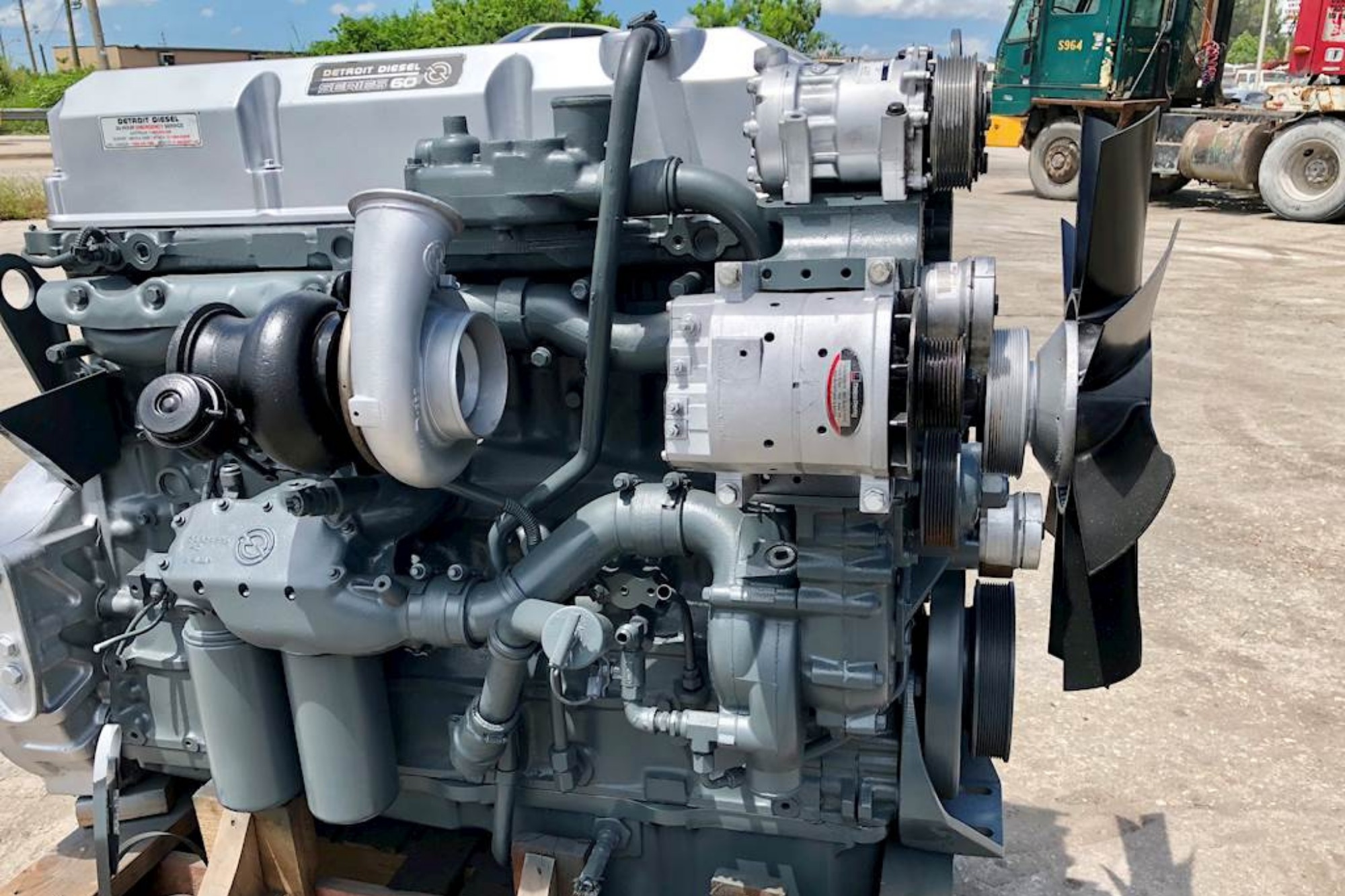
2. Detroit Diesel Series 60
The Detroit Diesel Series 60 is one of the most significant heavy-duty diesel engines ever produced, combining the mechanical durability of a traditional cast-iron diesel architecture with electronic engine management systems that dramatically improved fuel efficiency and reliability.
Introduced in 1987, the Series 60 was the first fully electronically controlled heavy-duty diesel engine offered for on-highway use in North America, and the DDEC electronic management system allowed precise injection timing and fuel metering that was impossible with purely mechanical systems.
The precision of electronic injection control produced more complete combustion, reduced thermal stress on engine components, and allowed the engine management system to protect the engine by limiting power under conditions of excessive heat or low oil pressure.
The Series 60’s 12.7-liter displacement places it in the ideal range for long-haul freight work, providing enough torque to handle heavy loads without the weight and friction penalties of larger displacement engines.
The bore and stroke dimensions are chosen to provide a stroke that promotes complete combustion without generating excessive combustion chamber surface temperatures, and the piston design uses a re-entrant bowl shape that creates the turbulence needed for fuel-air mixing without generating excessive heat at the bowl rim.
The combustion process in the Series 60 produces lower peak temperatures relative to its power output than many competing designs, which directly reduces the thermal stress on pistons, rings, and cylinder liners.
Detroit Diesel designed the Series 60’s cylinder liners as replaceable units that can be installed without machining the block, allowing overhaul at the first time of service to restore the engine to original bore dimensions without the expense of a line bore.
This design choice reflects the company’s understanding that the first overhaul is an investment in a second service life, and making that overhaul cost-effective encourages fleet operators to maintain their engines through their complete economic lives rather than replacing them prematurely.
The replaceable liner design also means that individual cylinder problems can be addressed without tearing down the entire engine, reducing maintenance costs for isolated liner wear issues.
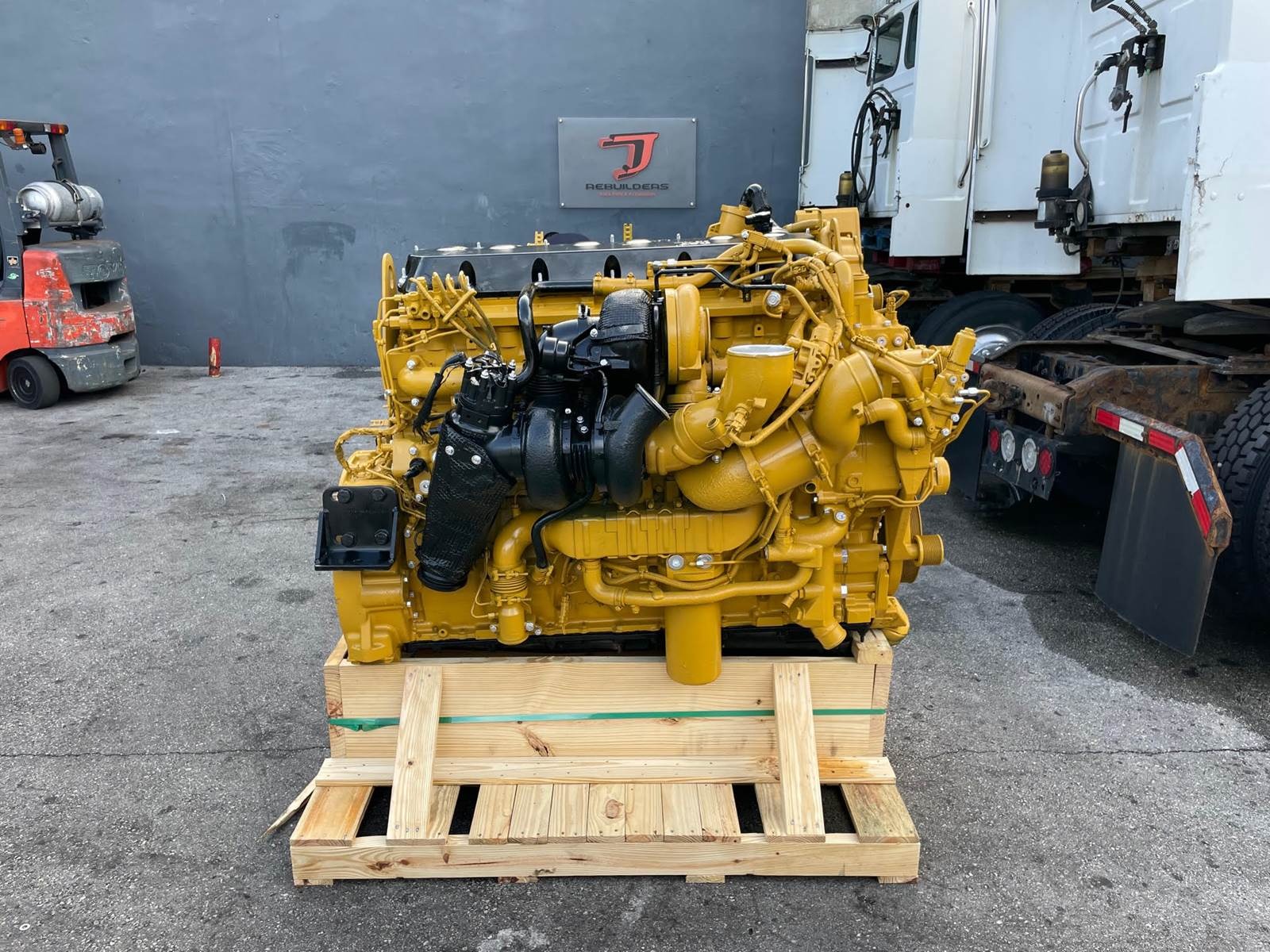
3. Caterpillar C15 and 3406E
The Caterpillar C15 and its predecessor the 3406E occupy a special place in the North American trucking industry as the engines most associated with genuinely extraordinary mileage. Caterpillar built these engines for the mining, construction, and long-haul trucking industries, each of which imposes different but equally demanding requirements on engine durability.
The heavy-duty construction of the C15’s block, with thick cylinder walls and massive main bearing caps secured by four bolts per cap, reflects the industrial heritage of the Caterpillar brand. This engine was not designed to be the lightest or most fuel-efficient option on the market. It was designed to work without stopping for as long as physically possible.
The 3406E’s fuel system uses Caterpillar’s Hydraulically Actuated Electronic Unit Injection system, known as HEUI, which uses high-pressure engine oil rather than a separate high-pressure fuel pump to actuate the injectors. This system allows very precise control of injection timing and fuel quantity at all engine speeds and loads, enabling the combustion optimization that reduces thermal stress and soot formation.
The use of engine oil as the actuating fluid means that the injector actuation system is lubricated by the same oil that lubricates the rest of the engine, simplifying the hydraulic circuit and ensuring that the injectors receive consistent actuation pressure whenever the engine oil system is healthy. The HEUI system is also designed to perform a limited diagnostic self-test on each firing cycle.
Caterpillar’s metallurgical expertise, developed over decades of producing mining and construction equipment that must operate in the most abrasive and thermally extreme environments on earth, is applied directly to the C15’s internal component specifications.
The camshaft is manufactured from a high-alloy steel with a surface hardness treatment that resists the contact fatigue that eventually wears conventional camshaft lobes. The lifters use a precision-ground hardened face that matches the camshaft lobe profile exactly, ensuring consistent contact geometry throughout the engine’s life. T
he precision of this lobe-lifter interface is critical for maintaining correct valve timing, which in turn is critical for the combustion quality that the engine’s durability depends on.
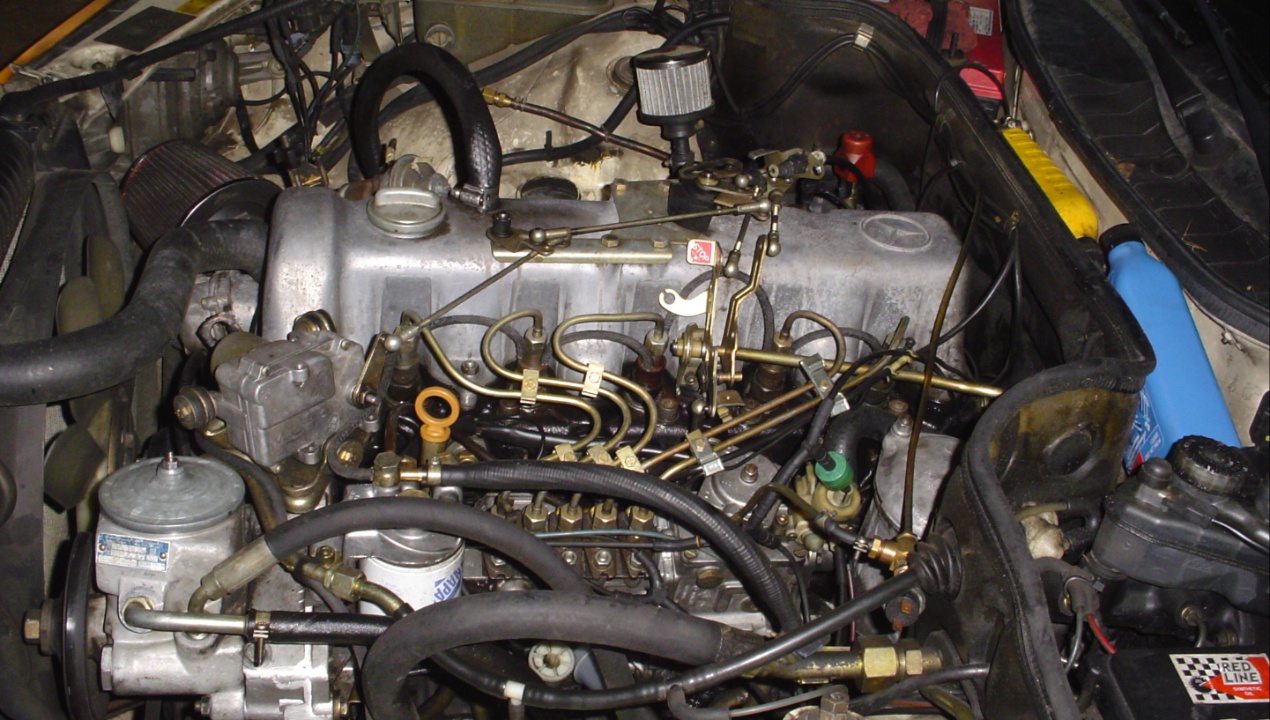
4. Mercedes-Benz OM617 Turbodiesel
The Mercedes-Benz OM617 five-cylinder turbodiesel is the diesel engine that established the template for high-mileage passenger car diesel performance in the minds of a generation of mechanics, fleet operators, and car buyers.
Produced from 1974 to 1991 in various turbocharged and naturally aspirated configurations, the OM617 powered the Mercedes W123 and W126 series sedans to documented mileage figures that were considered impossible for a passenger car engine at the time.
The engine’s cast iron construction, conservative power output, and meticulous manufacturing tolerances created a powerplant that seemed to improve with age, developing a characteristic smoothness as the internal tolerances bedded in that owners described as increasingly refined over time.
The pre-chamber combustion system used in the OM617 is often cited as a key contributor to its longevity. Pre-chamber diesel engines use a small antechamber connected to the main combustion chamber where the injector delivers fuel. Combustion initiates in the pre-chamber and then propagates into the main chamber in a controlled manner that reduces the rate of pressure rise compared to direct injection systems.
This gentler pressure rise reduces the mechanical shock loads on the piston crown, connecting rod, and crankshaft that occur with each combustion event. Over millions of firing cycles, the cumulative reduction in mechanical shock stress translates into significantly lower fatigue accumulation in these components.
5. Isuzu 4BD1 and 4BD2 Diesel Engines
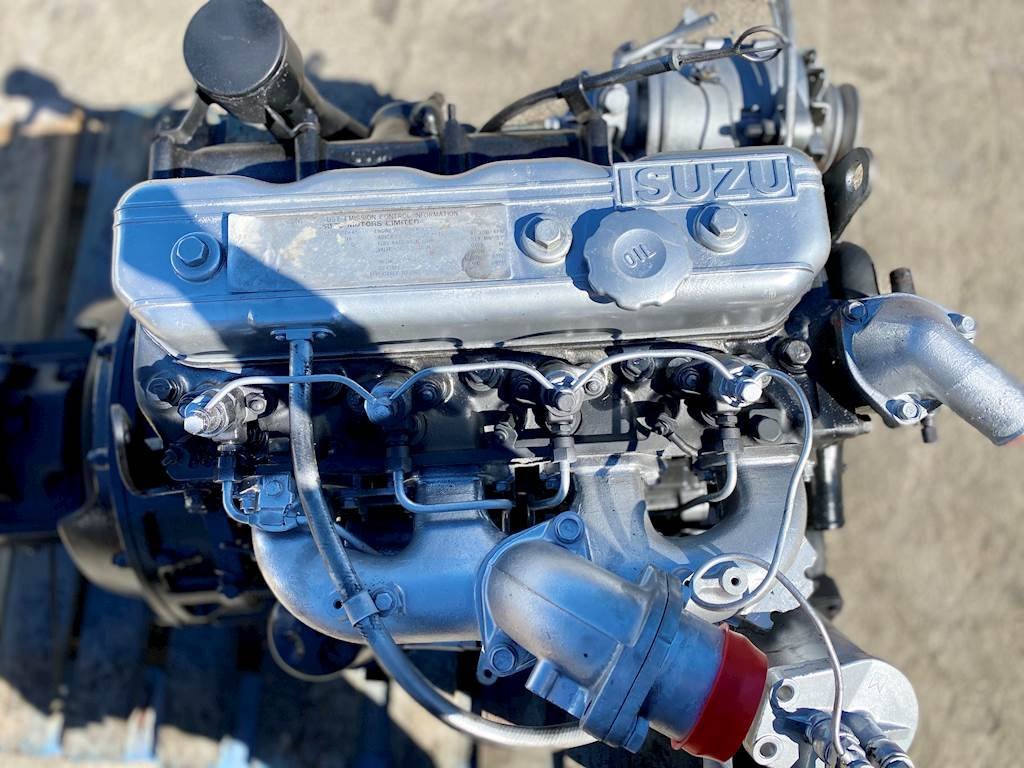
The Isuzu 4BD1 and 4BD2 diesel engines have earned a global reputation for extraordinary reliability in light commercial vehicle applications ranging from forward-control trucks to generators and agricultural equipment. These engines represent Isuzu’s design philosophy of building to commercial standards regardless of application, applying the same manufacturing precision and materials quality to a light commercial diesel that other manufacturers reserve for their heavy-duty products.
The 4BD series’ cast iron block construction provides dimensional stability across the wide temperature range of commercial operation, and the deep main bearing webs resist the crankshaft flex that shortens bearing life in less robustly designed blocks.
The 4BD2’s direct injection system uses mechanical injection pump technology that is inherently durable and requires less infrastructure for maintenance than modern common rail systems. Mechanics in any country with basic diesel experience can service the injection pump and injectors using standard tools and widely available rebuild kits. This serviceability is not just a maintenance convenience.
It is a durability enabler, because engines that are difficult or expensive to service are often serviced less frequently, and infrequent service is the primary cause of premature wear in engines that are otherwise capable of very long service lives. The 4BD series’ service simplicity encourages the regular maintenance that its longevity potential requires.
The Isuzu 4BD series is used extensively in markets where vehicles must operate for extremely long service lives with minimal access to dealer support or specialized parts. Sub-Saharan Africa, Southeast Asia, and Central and South America are regions where 4BD-powered trucks accumulate mileage that would be considered extraordinary in developed markets, and where the lack of infrastructure for complex repairs makes mechanical simplicity a survival requirement.
The 4BD series’ performance in these markets is the most demanding real-world durability test imaginable, and the engine’s prevalence in high-mileage commercial applications in these regions provides strong evidence that its durability credentials are genuine and not dependent on ideal operating conditions.
6. Perkins 4.236 and 6.354 Diesel Engines
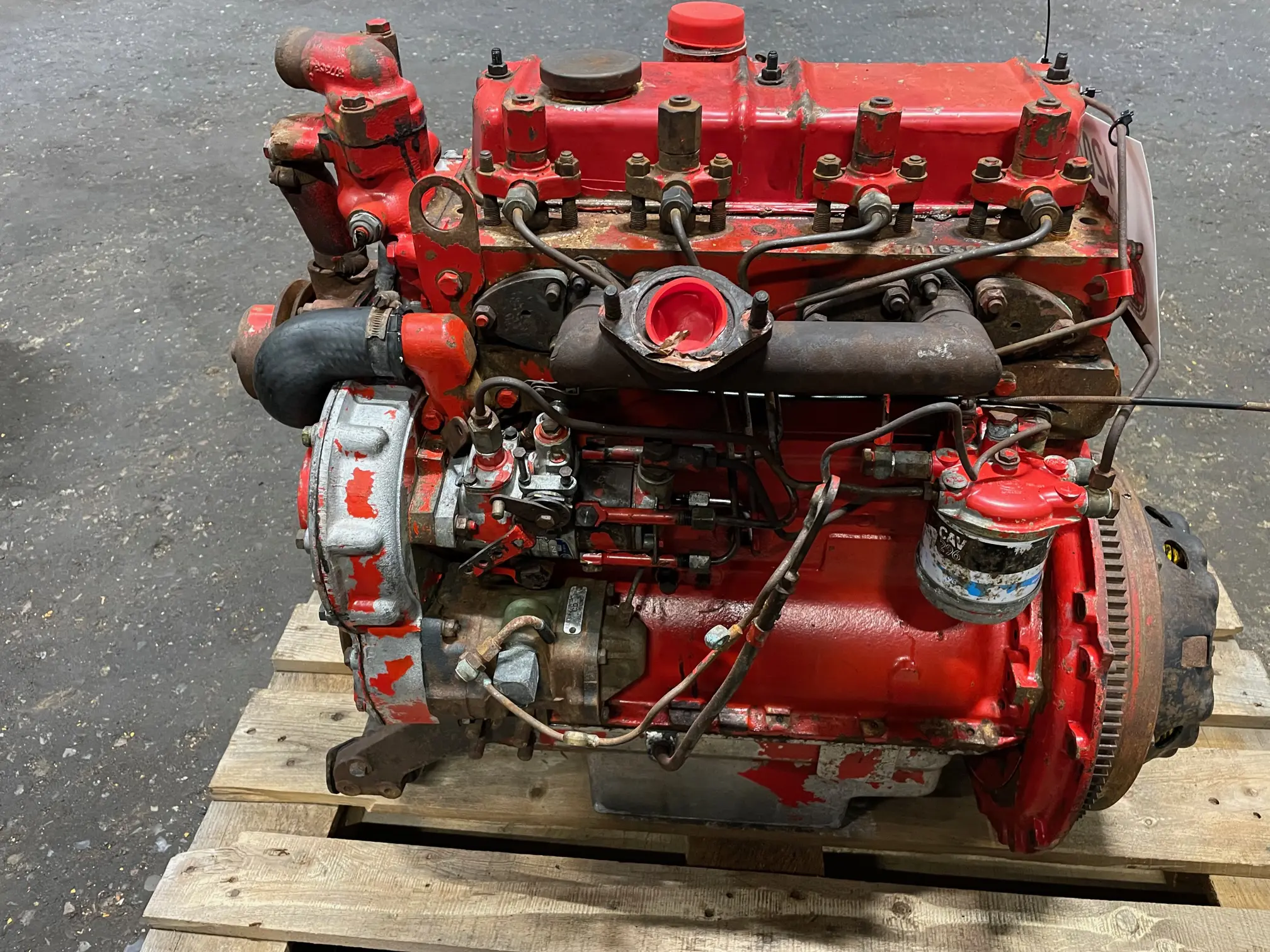
Perkins Engines, founded in Peterborough, England, built a global reputation through the mid-20th century on the strength of diesel engines that combined simplicity, durability, and wide application compatibility. The 4.236 four-cylinder and 6.354 six-cylinder engines represent the mature expression of Perkins’ design philosophy, combining the company’s accumulated experience with the metallurgical and manufacturing advances of their production era.
These engines powered everything from agricultural tractors and construction equipment to marine vessels and railway maintenance vehicles, accumulating real-world operating hours across a diversity of applications that provides an unparalleled body of durability evidence.
The 4.236’s cast iron block is for its wall thickness and rib placement, which provide rigidity that was exceptional for a commercial diesel of its displacement. Perkins engineers understood that the block must resist deformation under the cylinder pressure loads of diesel combustion without adding unnecessary weight that would compromise the vehicles it powered.
The main bearing saddles are machined to precise bore geometry with deep webs that transfer bearing loads directly to the block’s structural elements, preventing the micro-flex that causes bearing-to-saddle fretting over time. This structural precision was built into the design at a time when many competitors were content with less exacting standards.
The Perkins injection system on the 4.236 and 6.354 uses CAV or Bosch rotary injection pumps that are among the most thoroughly documented mechanical diesel injection systems in history. The large service network built around these pumps, the widespread availability of spare parts, and the existence of detailed rebuild specifications mean that maintaining injection system accuracy over a long service life is straightforward and inexpensive relative to the total cost of engine ownership.
Injection timing accuracy is critical for diesel combustion quality and therefore for long-term engine health, and the ease of maintaining this accuracy on Perkins engines is a meaningful durability advantage.
7. Volvo D13 Truck Diesel Engine
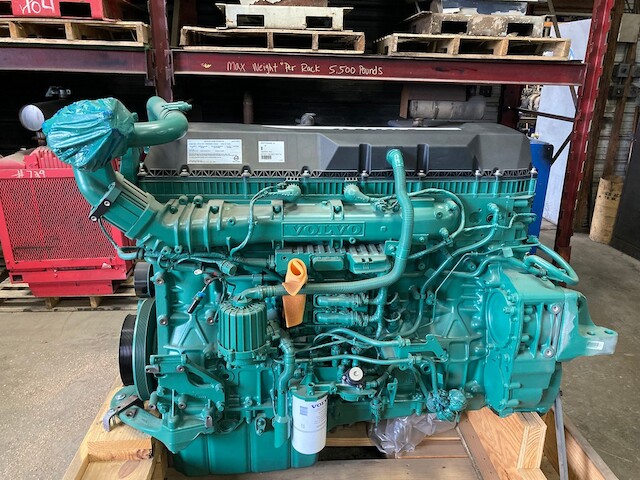
The Volvo D13 13-liter inline six-cylinder diesel engine has established itself as one of the most durable heavy-duty truck engines in the modern emissions-compliant era, demonstrating that meeting stringent exhaust regulations does not necessarily compromise the engine longevity that commercial operators require.
Volvo’s engineering team approached the challenge of modern emissions compliance with the understanding that the solutions must be durable enough to last the full service life of a commercial truck, and the D13’s performance in long-haul fleets confirms that they succeeded. The engine regularly achieves 700,000 to 1,000,000 miles between overhauls in properly maintained European long-haul fleets, with some examples exceeding these figures.
The D13’s common rail injection system operates at injection pressures that allow very fine atomization of the diesel fuel, producing complete combustion that generates less soot and lower peak combustion temperatures than older injection technologies at equivalent power outputs.
Lower combustion temperatures reduce thermal stress on pistons, rings, and cylinder liners, and cleaner combustion reduces the soot contamination of engine oil that shortens bearing life and accelerates wear in less efficient combustion systems.
The precision of common rail injection also allows the engine management system to implement multi-pulse injection strategies that shape the heat release curve for each combustion event, further reducing the peak pressure and temperature that the engine structure must withstand.
The D13’s waste heat recovery system, available in certain specifications, captures energy from the exhaust gases that would otherwise be lost and uses it to reduce the mechanical power demand on the engine. By recovering this waste heat, the engine can deliver the same effective power output to the wheels with reduced fuel consumption and reduced thermal load on the combustion system.
The thermal load reduction directly benefits engine longevity by reducing the average temperature of the cylinder walls, piston crowns, and exhaust valves throughout the engine’s operating life. The waste heat recovery system adds mechanical complexity but Volvo engineers these systems to match or exceed the service life of the engine itself.
8. Mack MP8 Diesel Engine
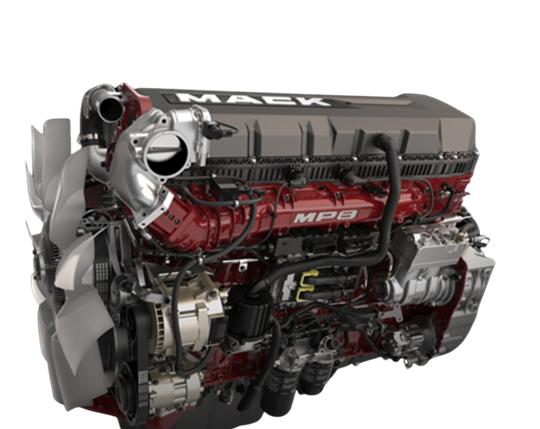
The Mack MP8 is the modern expression of Mack Trucks’ century-long tradition of building the most durable commercial vehicles in the North American market. The MP8’s 13-liter inline six-cylinder architecture continues the tradition of building every component to the highest standard regardless of cost, and the resulting engine has developed a particularly strong following among owner-operators who stake their business on the engine’s ability to run reliably for very high mileage.
Mack positions the MP8 as the choice for the most demanding applications in the North American market, including severe-service regional haul, refuse collection, and highway long-haul, and the engine’s specification reflects the variety of these demanding applications.
The MP8’s one-piece cast iron block is machined from iron with a very high tensile strength specification, providing a structural foundation that resists flex under the extreme cylinder pressures of diesel combustion. The main bearing caps use a four-bolt design that prevents any movement relative to the block under load, maintaining the precise bore geometry that bearing durability requires.
The cylinder liners are replaceable units with a specific surface finish that promotes oil film retention and controlled break-in wear, allowing the liners to be replaced during overhaul without requiring block machining. This replaceable liner design is a hallmark of engines designed for extended service life with economical overhaul costs.
Mack’s Electronic Controlled Engine system on the MP8 provides precise injection timing and fuel delivery control that optimizes combustion for both performance and longevity. The system incorporates intelligent protection features that reduce engine power or initiate shutdown if critical parameters such as oil pressure, coolant temperature, or coolant level go outside safe ranges.
These protection systems prevent the catastrophic failures that can result from momentary inattention to engine condition, such as continuing to operate after a coolant leak develops or after the oil level drops dangerously low. The prevention of catastrophic failures is as important to achieving high mileage as the gradual wear management provided by good design and maintenance.
9. Kenworth PACCAR MX-13 Diesel Engine
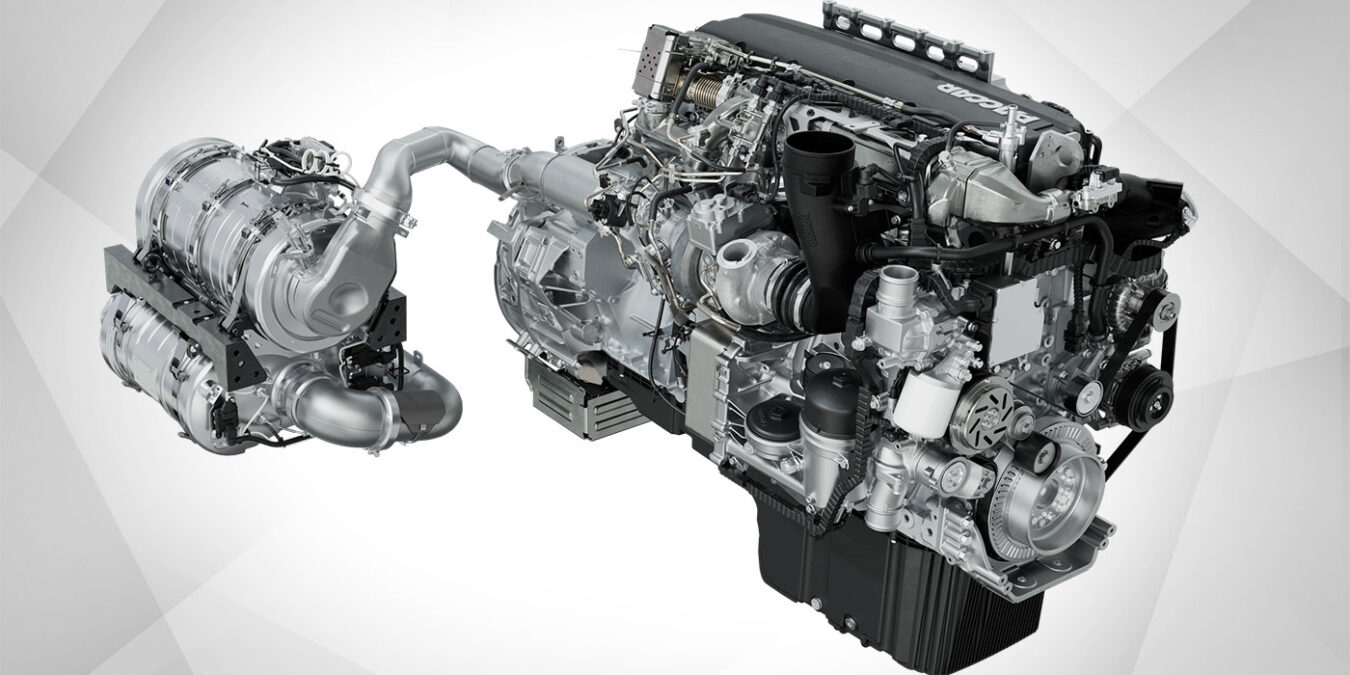
The PACCAR MX-13, used in Kenworth and Peterbilt trucks, is a European-derived diesel architecture that PACCAR adapted and refined for the demanding conditions of North American commercial trucking. Originally developed by DAF Trucks in the Netherlands, the MX-13 benefits from decades of European long-haul durability development that focused on achieving very high mileage between overhauls in the cost-conscious European transport market.
PACCAR’s adaptation of this engine for North American conditions involved strengthening specific components to handle the higher payload and longer route distances typical of American interstate trucking while preserving the fundamental architecture that made the European version so durable.
The MX-13’s compacted graphite iron block material represents a significant advance over conventional gray cast iron in terms of strength-to-weight ratio and fatigue resistance. Compacted graphite iron provides approximately 75 percent higher tensile strength than gray iron while maintaining the thermal properties that make cast iron ideal for diesel engine blocks.
This strength increase allows the block to be designed with reduced wall thickness while maintaining or exceeding the rigidity of a thicker gray iron block, reducing engine weight without compromising structural integrity. The material’s superior fatigue resistance means the block can survive more thermal and pressure cycles before developing fatigue cracks, contributing directly to extended service life.
The MX-13’s common rail injection system operates at pressures up to 2,500 bar, enabling fuel atomization that is fine enough to promote near-complete combustion with minimal soot formation. The high injection pressure also allows very short injection events with precise timing control, enabling multi-stage injection strategies that reduce combustion noise and thermal stress while maintaining the full power output of the engine.
The precision of the injection system is maintained throughout the engine’s life by the engine management system’s adaptive calibration, which continuously adjusts injection parameters to compensate for wear-induced changes in injector characteristics, maintaining combustion quality without requiring manual recalibration.
10. John Deere PowerTech 6.8L and 8.1L Diesel Engines
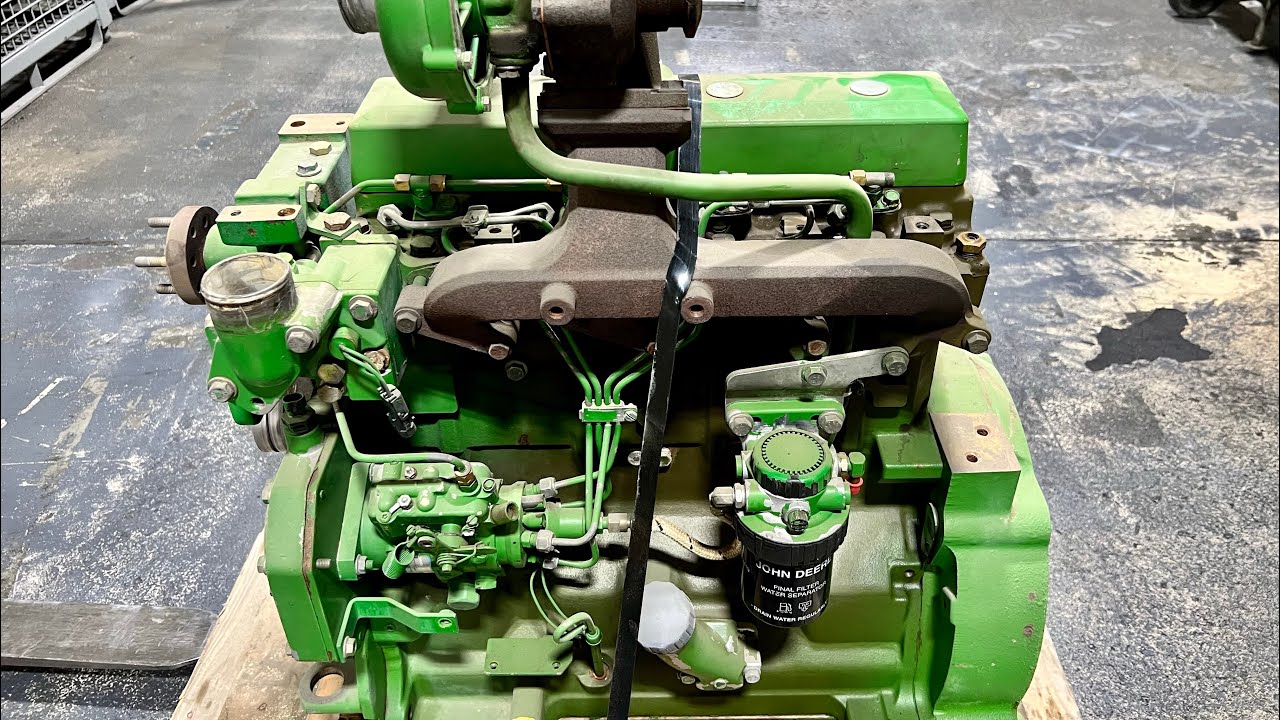
John Deere’s PowerTech diesel engine family represents the agricultural equipment manufacturer’s application of industrial diesel engineering principles to the requirements of farming machinery, where reliability and repairability in remote field locations are equally important to raw longevity.
The PowerTech 6.8-liter and 8.1-liter engines power John Deere tractors, combines, and construction equipment in applications where an engine failure means costly downtime during a harvest or construction deadline, and the pressure to maximize reliability in these applications has produced engines with extraordinary durability characteristics.
The PowerTech family’s architecture draws on John Deere’s decades of diesel development experience and its close relationship with farm operators who provided feedback on real-world reliability needs.
The PowerTech’s wet cylinder liner design allows individual liners to be replaced during overhaul without requiring block machining, making overhaul both more economical and more thorough than designs with fixed bores. The liner-to-block interface uses precision o-ring sealing that is designed to remain leak-free through multiple thermal cycles and for the entire service life of the liner.
When the liner is replaced at overhaul, a new sealing surface is created, essentially giving the engine a new coolant-sealing interface that is as fresh as original. This design philosophy, which treats the overhaul as an opportunity to restore the engine to original specification rather than merely addressing the most urgent wear, is characteristic of John Deere’s commitment to extended service life.
The PowerTech’s fuel injection system in naturally aspirated and turbocharged configurations uses Bosch or John Deere-designed mechanical injection pumps with individual cylinder injectors that are independently serviceable. The ability to remove and recondition individual injectors without disturbing the rest of the fuel system reduces the cost and complexity of injection system maintenance throughout the engine’s life.
Injector condition directly affects combustion quality and therefore the thermal stress on pistons and cylinder liners, so maintaining injector precision is one of the highest-value maintenance activities for any diesel engine. The accessibility of the PowerTech’s injectors makes this maintenance practical rather than onerous.
