
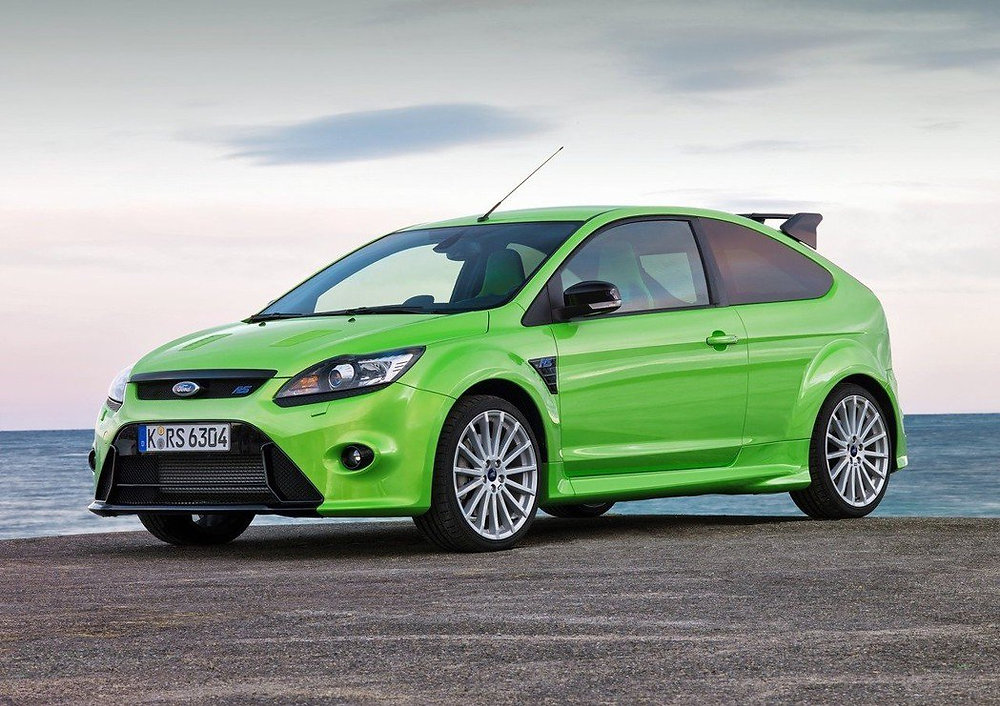
The hot hatch has always been the working-class hero of the performance car world. It carries your groceries, fits the kids in the back, and then absolutely humiliates a sports car at the traffic lights. That combination of practicality and performance is something no two-seater roadster can ever truly replicate.
For decades, manufacturers have been quietly stuffing enormous engines and razor-sharp suspension into humble family hatchbacks. The results have been nothing short of extraordinary. These cars don’t just keep up with sports cars they often leave them behind entirely.
Real-world performance is a very different beast from track-day lap times. It’s about acceleration out of tight corners, confidence in the wet, and the ability to carry speed through everyday traffic. Hot hatches, with their front-wheel or all-wheel drive systems, low centre of gravity, and sophisticated electronics, are brutally effective in these conditions.
A Porsche Cayman looks stunning parked outside a restaurant. But a Golf R will beat it to the next roundabout, park in a tighter space, and cost half as much to insure. That is the magic of the hot hatch formula.
This list celebrates ten machines that have proven, beyond any reasonable doubt, that a practical five-door hatchback can be a genuine performance weapon. These are the cars that make sports car owners nervous.
1. Volkswagen Golf R (Mk8)
The Volkswagen Golf R has always been the sensible lunatic of the hot hatch world. It looks like something your accountant drives to work. Then you press the accelerator and the entire world rearranges itself around you.
The Mk8 Golf R produces 320 horsepower from its 2.0-litre turbocharged four-cylinder engine. That figure might not sound earth-shattering on paper, but the way it delivers that power is absolutely savage. Torque arrives instantly and completely, punching you back into your seat with zero drama.
The 4MOTION all-wheel drive system is genuinely brilliant. It doesn’t just send power to all four wheels it actively manages torque vectoring between the rear wheels for scalpel-sharp cornering. You can adjust this behaviour through multiple driving modes, including a dedicated Drift mode that even rear-wheel drive purists secretly respect.
The Golf R will cover 0–100 km/h in just 4.7 seconds. That puts it comfortably ahead of a Porsche Boxster 718 in a straight-line drag race from a standing start. The Golf does this while being quieter, more comfortable, and offering a back seat that a human being can actually occupy.
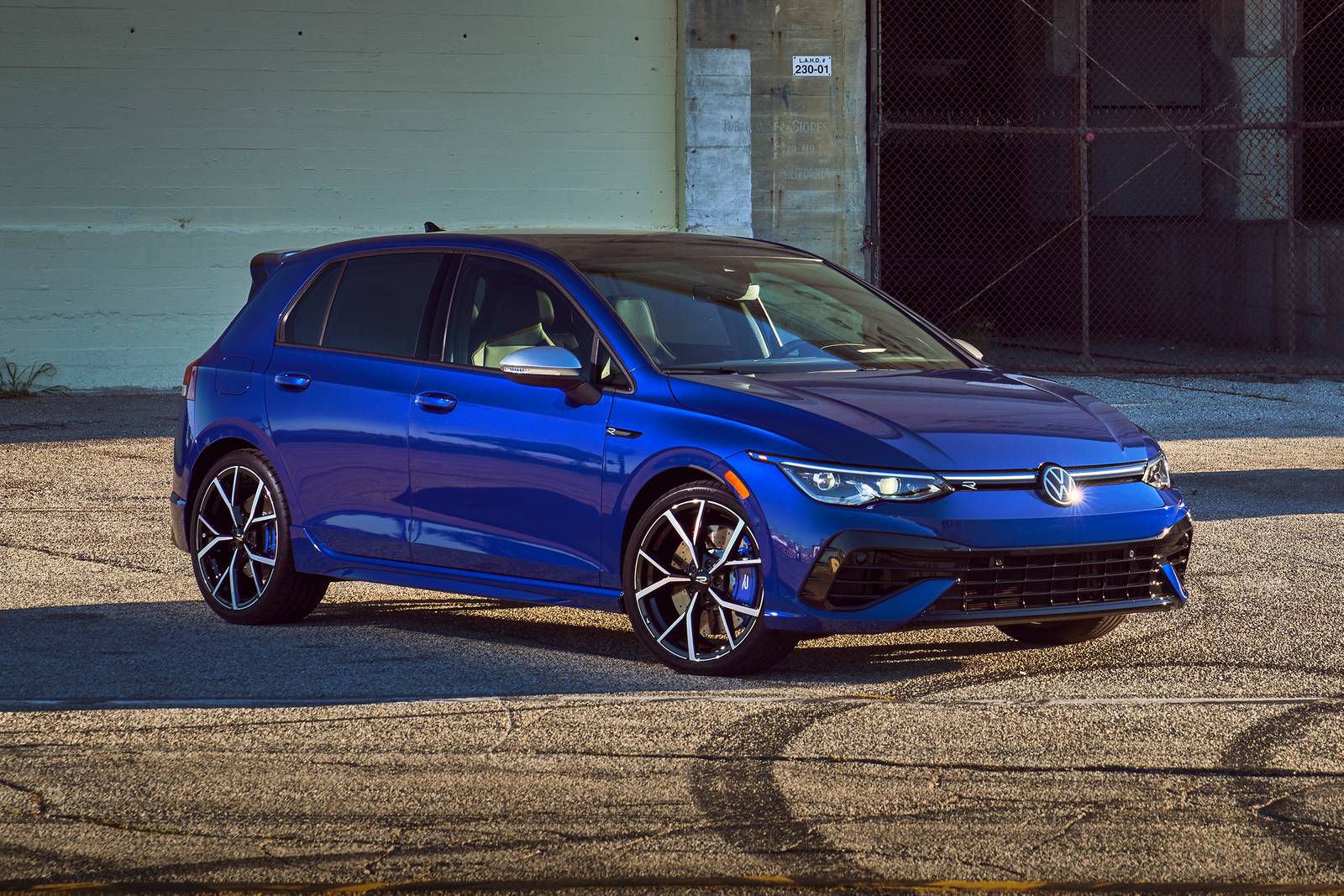
In real-world driving, the Golf R’s all-wheel drive gives it a massive advantage over traditional sports cars. When roads are damp, when there’s a mid-corner bump, when you exit a roundabout at stupid speed the Golf R simply grips and goes. A rear-wheel drive sports car in the same situation requires considerably more skill and considerably more bravery.
The ride quality on normal roads is remarkably forgiving. Volkswagen’s DCC adaptive dampers smooth out the bumps without making the car feel soft or unpredictable. You can drive this car to the supermarket on a Wednesday morning and feel completely comfortable doing so.
The interior is where the Golf R truly exposes its competition. While sports cars force you into cramped cockpits with poor visibility and awkward entry, the Golf R offers a beautifully finished, ergonomically sensible cabin. The digital cockpit is crisp, the seats are supportive, and there are actual cup holders positioned in a logical location.
Fuel economy, while not exactly frugal under hard driving, is entirely reasonable during everyday commuting. The engine management system is clever enough to soften its thirst when you’re not asking it to perform. A sports car of equivalent performance would cost you significantly more at every fuel stop.
The Golf R is the car that best illustrates why hot hatches terrify sports car manufacturers. It’s a precision instrument disguised as ordinary transport. It makes performance accessible, affordable, and genuinely usable every single day of the week.
2. Honda Civic Type R (FL5)
Honda engineers have never done anything quietly. When they build a performance car, they build it with a ferocity that borders on obsessive. The latest Civic Type R, codenamed FL5, is the most extreme expression of that obsession yet.
The FL5 produces 329 horsepower from its 2.0-litre VTEC turbocharged engine. Unlike the Golf R, this power drives only the front wheels. That front-wheel drive limitation should, in theory, hold it back. In practice, Honda’s engineering brilliance turns that limitation into a different kind of performance experience entirely.
The mechanical limited-slip differential on the front axle is the key to everything. It distributes torque intelligently between the front wheels, eliminating the torque steer and wheelspin that plague lesser front-wheel drive performance cars. You can apply full power mid-corner, and the car simply hunts for the exit with almost frightening precision.
The FL5 lapped the Nürburgring Nordschleife in 7 minutes and 44.881 seconds. That is faster than a Ferrari 458 Italia, a car that costs three times more and has twice the engine. Think carefully about what that number means in real terms. The Civic Type R is a practical five-door hatchback that is quicker around one of the world’s most challenging circuits than a Ferrari.
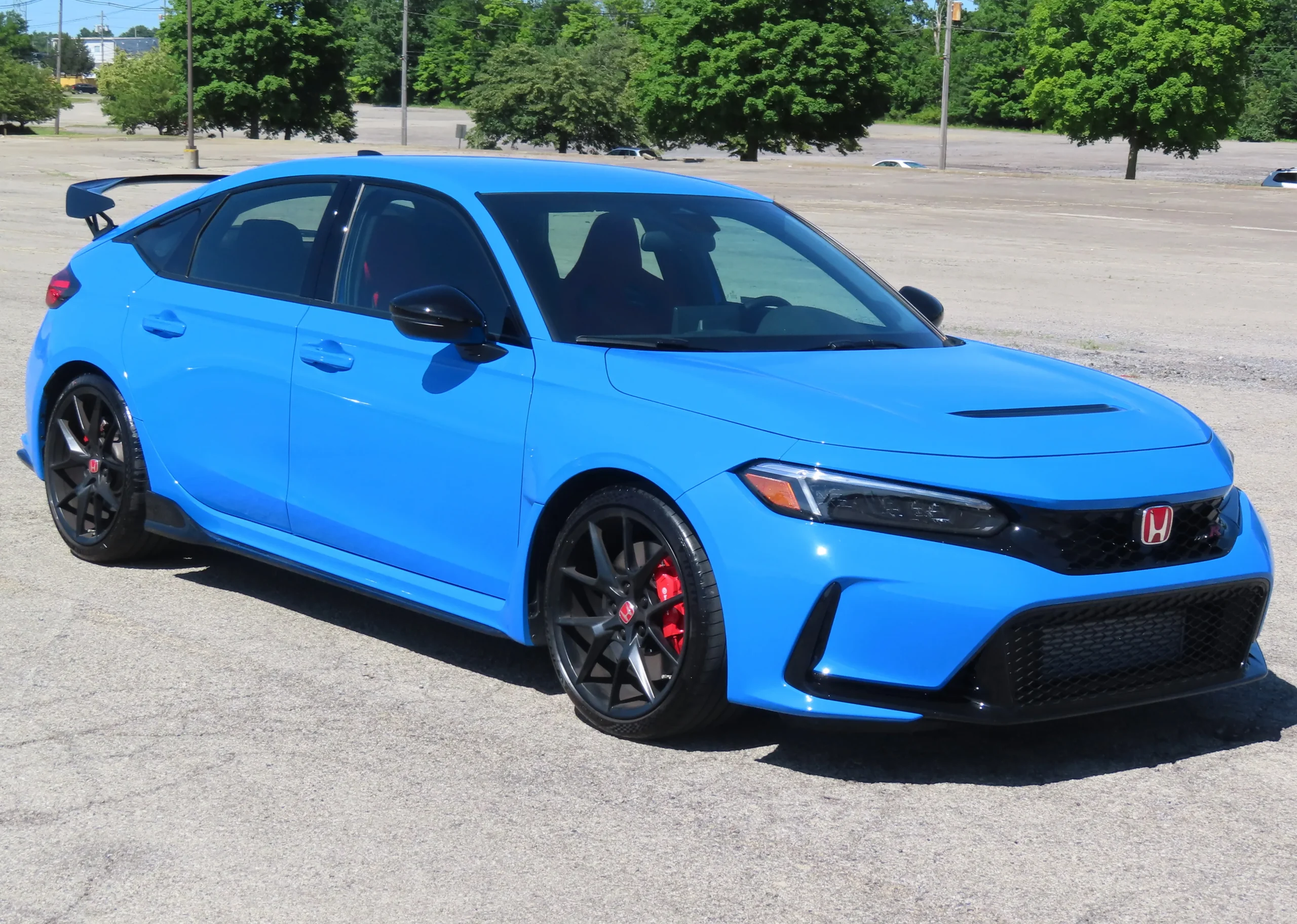
The adaptive suspension system offers three modes Comfort, Sport, and +R. In Comfort mode, the ride is genuinely liveable on broken British and Indian roads. In +R mode, the car transforms into something that communicates every surface texture directly through the steering wheel with telepathic clarity.
The steering deserves its own paragraph of praise. It is extraordinary. Modern cars increasingly use electric steering that filters out feel and replaces communication with numbness. Honda has gone in the opposite direction. The Type R’s steering is weighted perfectly, quick, and full of honest feedback about what the front tyres are doing at every moment.
The interior is functional and driver-focused rather than luxurious. There are bolstered Alcantara sports seats that grip you firmly during cornering. The driving position is excellent, with the wheel, pedals, and gear lever all perfectly aligned for heel-and-toe downshifts. This car rewards skilled drivers in a way that few cars costing double the money manage.
The engine note through the triple exhaust outlets is a particular joy. Under hard acceleration, it produces a mechanical howl that makes passengers grip their seats instinctively. It sounds properly purposeful without being antisocially loud around town.
The FL5 Civic Type R is proof that front-wheel drive, when executed brilliantly, can be genuinely faster and more rewarding than sports cars costing far more. Honda built a machine that embarrasses the establishment while carrying four passengers and their luggage.
3. Ford Focus RS (Mk3)
Ford created something genuinely remarkable with the Mk3 Focus RS. They took a family hatchback, gave it a 350-horsepower five-cylinder turbocharged engine, and then added a Drift mode that encouraged you to point the back end at the horizon. This was Ford’s magnificent madness in its purest form.
The RS used Ford’s sophisticated RevoKnuckle front suspension combined with a twin-clutch rear drive unit. This system could send up to 70% of torque to the rear wheels independently. The result was a car that could rotate with the enthusiasm of a rear-wheel drive sports car while retaining the everyday usability of a family hatchback.
That Drift mode was genuinely controversial when the car launched. Ford was essentially building a system that intentionally caused oversteer. Insurance companies were not amused. Driving enthusiasts were absolutely delighted. When activated on a track or closed road, the Focus RS would hang its tail out with a controllability that was accessible even to moderately skilled drivers.
The ride quality in Normal mode was surprisingly composed. Ford had worked hard to ensure the RS could function as a daily driver without pulverising its occupants on normal roads. The suspension tuning was firm but not brutal, offering a compromise that worked well in both spirited driving and mundane commuting.
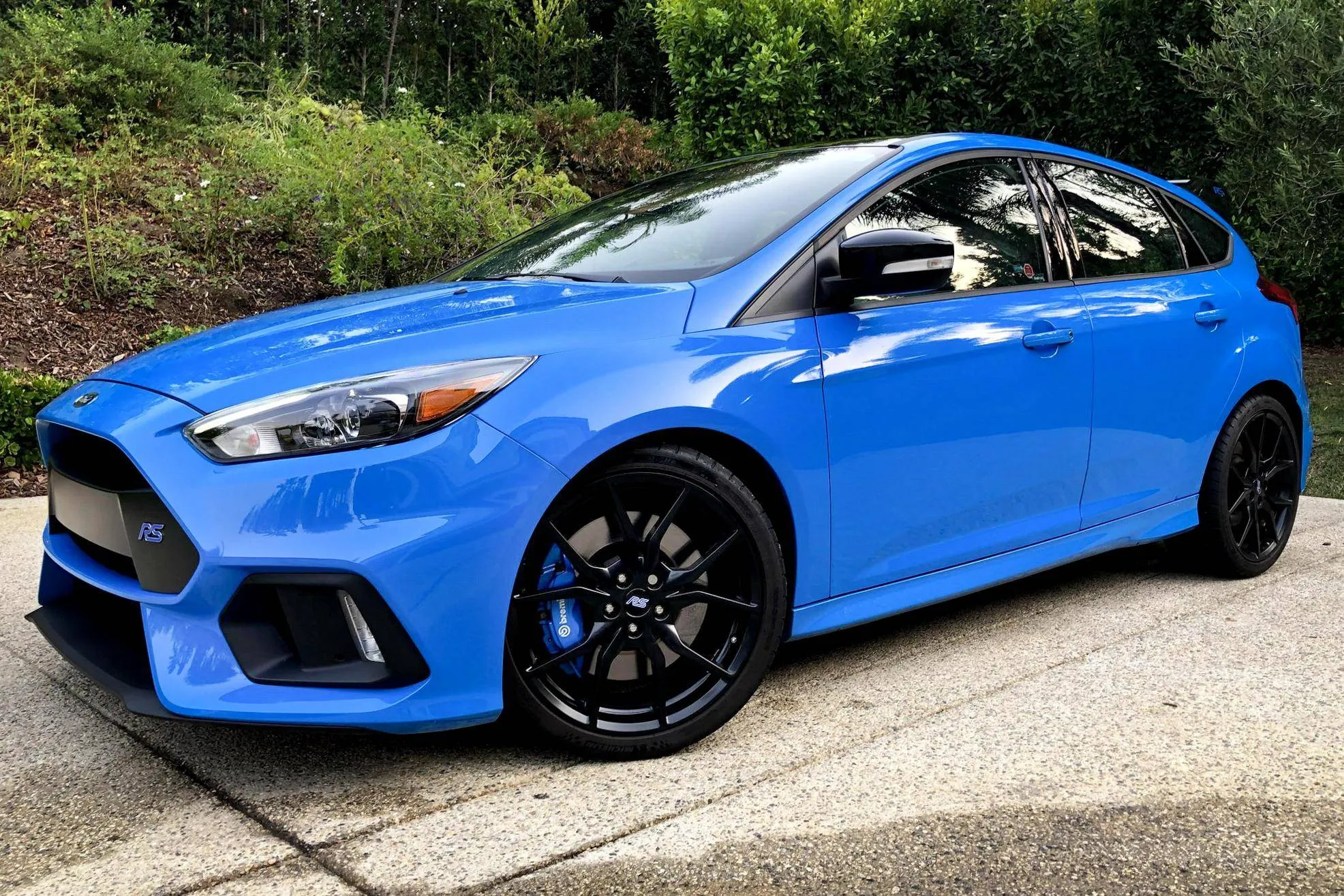
The engine produced a soundtrack that remains one of the greatest in hot hatch history. The five-cylinder motor had a distinctive burbling, uneven cadence that no four-cylinder engine can replicate. At full throttle, it produced an intake roar that made the car feel considerably more exotic than its Ford badge suggested.
Performance figures were extraordinary for the price. The Focus RS would reach 100 km/h in under 4.7 seconds. It had a top speed limited to 266 km/h. Those numbers matched or exceeded dedicated sports coupes from Porsche and BMW that cost significantly more to purchase and dramatically more to insure and maintain.
The practicality was a genuine shock to anyone coming from a sports car background. The boot was usable, the rear seats accommodated adults, and the running costs were entirely reasonable for everyday use. You could drive this car to work, take the family on holiday, and then attack a mountain road with genuine sports car aggression all in the same week.
The Mk3 Focus RS was discontinued in 2018, making it immediately collectable. Used prices have held remarkably well, which tells you everything about the impression it left on the people who drove it. It remains one of the most exciting, characterful, and capable hot hatches ever built.
4. Audi RS3 Sportback
Audi occupies an interesting space in the hot hatch world. They make cars that look like sensible German premium hatchbacks. Then they hide monstrous performance underneath that restrained exterior with absolute German efficiency. The RS3 Sportback is perhaps the most extreme example of this philosophy.
The latest RS3 uses a 2.5-litre five-cylinder turbocharged engine producing 400 horsepower. That figure alone demands respect. A 400-horsepower hatchback is genuinely extraordinary by any measure. But Audi didn’t stop at straight-line performance they added a torque-splitting rear differential that transforms the RS3’s dynamic character entirely.
The RS Torque Rear system can distribute up to 100% of rear axle torque to a single rear wheel. Combined with the legendary quattro all-wheel drive system, this creates a car that can rotate at the driver’s command or grip the road with supercar-level tenacity depending on the mode selected. It is both accessible and deeply sophisticated.
The 0–100 km/h time of 3.8 seconds is simply shocking for a family hatchback. That figure places the RS3 in the territory of Porsche 911 Carrera models and Ferrari entry-level sports cars. Unlike those cars, the RS3 will do this in the rain, in the cold, with four passengers aboard, and without requiring any particular skill from the driver.
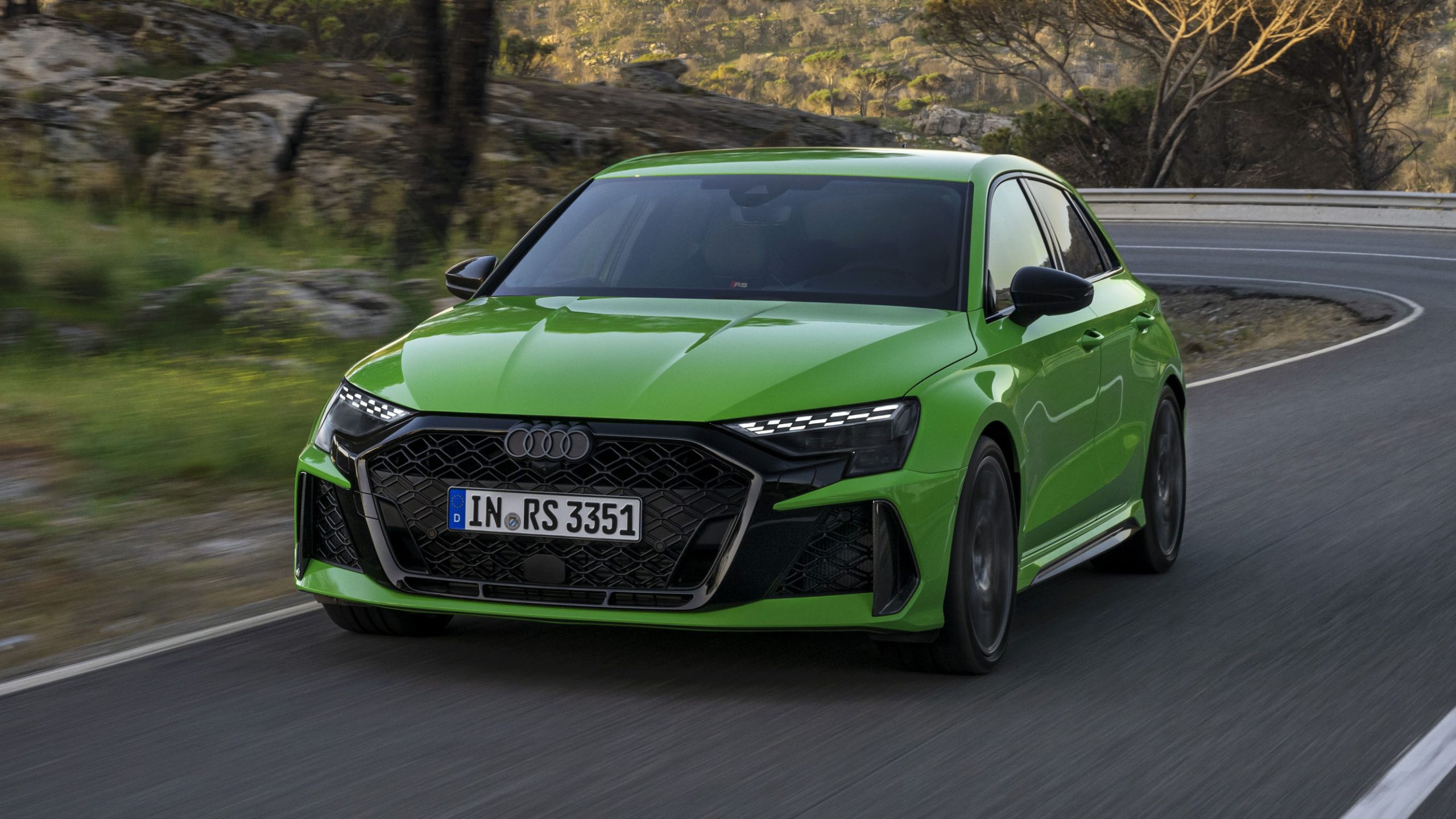
The interior quality is pure Audi, which means it is genuinely excellent. The virtual cockpit displays are crisp and customisable. The materials throughout the cabin feel expensive and well-assembled. The seats provide excellent support without being uncomfortably tight. This is a car you can drive for six hours without feeling exhausted.
The five-cylinder engine note is intoxicating. Audi has carefully cultivated this sound across multiple generations of the RS3, and the latest version is the best yet. There is a distinctive warble at idle, a mechanical urgency at medium revs, and an outright howl at the top of the rev range that sends your brain directly to pure pleasure.
The braking performance is equally impressive. Audi fitted substantial brake discs with large callipers that provide immense stopping power. The brake pedal has a firm, progressive feel that inspires confidence. Coming from sports cars where braking feel is often a priority, RS3 owners are rarely disappointed.
Running costs are surprisingly reasonable for a car of this performance level. The turbocharged five-cylinder returns acceptable fuel economy during normal driving. Servicing costs are higher than a standard A3, but far lower than maintaining equivalent-performance sports cars. Insurance, while not cheap, is manageable for experienced drivers.
The RS3 Sportback is the car you buy when you want supercar performance but refuse to compromise on practicality, weather capability, or interior quality. It is the stealth bomber of the performance car world devastatingly fast and completely unassuming.
Also Read: 10 Japanese Engines Tuners Swap Into Everything Else
5. Hyundai i30 N
Nobody expected Hyundai to build a genuinely great hot hatch. The Korean manufacturer had spent decades building reliable, affordable, slightly anonymous cars. Then they hired Albert Biermann from BMW’s M division, gave him a budget and complete freedom, and the i30 N emerged. The hot hatch world was caught completely off guard.
The i30 N produces 280 horsepower in its Performance Pack specification. That figure is modest compared to some rivals, but the way the car delivers its performance is exceptional. The engine responds with an immediacy that feels more analogue and raw than many of its more powerful competitors.
The N Performance Package includes an electronically controlled limited-slip differential that transforms the car’s cornering ability. Without it, the i30 N is very good. With it, the car becomes something genuinely special. The front wheels dig into corners with an aggression that makes enthusiast drivers grin instinctively and involuntarily.
Hyundai’s N Corner Carving Differential adjusts its locking rate up to 100 times per second based on steering input, throttle position, and vehicle speed. This technology was previously found only in significantly more expensive sports cars. Hyundai brought it to a car that competes on price with the Ford Fiesta ST. That democratisation of technology is remarkable.
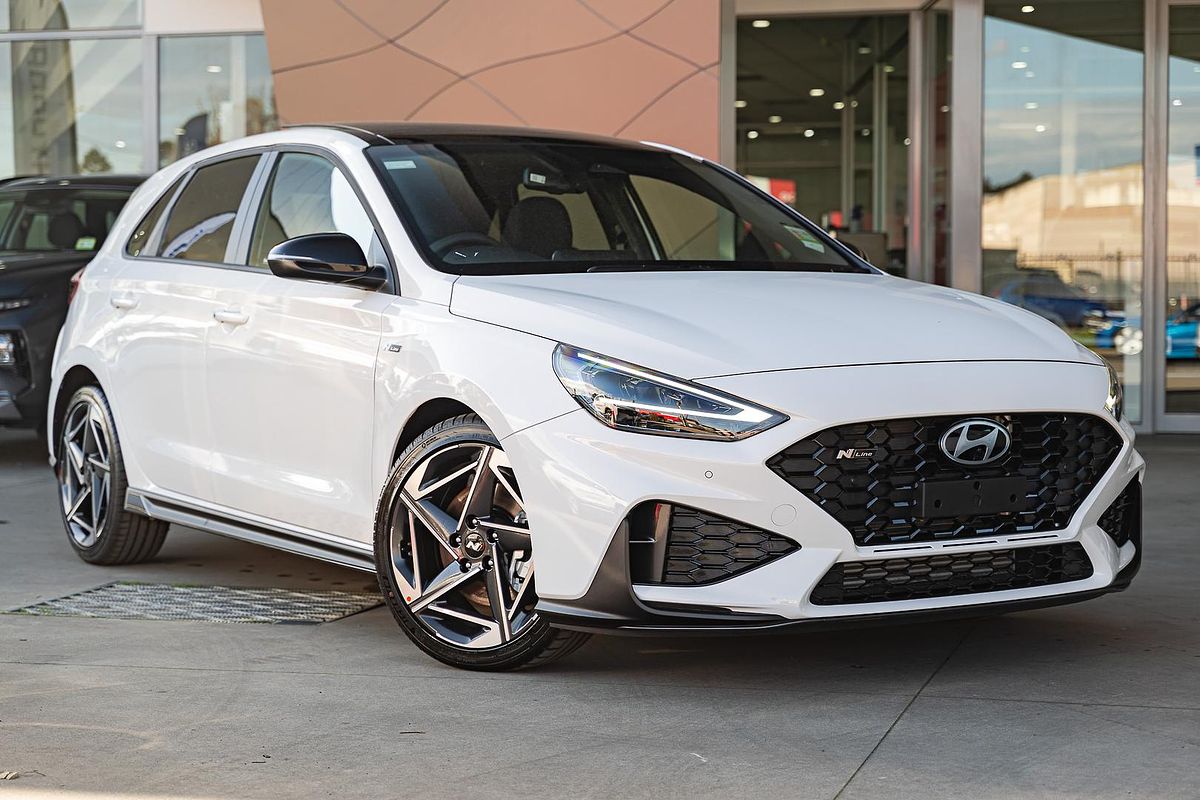
The ride quality was a genuine surprise when reviewers first drove the car. Hyundai had tuned the suspension with German precision, offering a firm but never harsh character on normal roads. The car feels connected and alive without beating its occupants into submission on every speed bump and pothole.
The engine sound is enhanced artificially through the car’s speaker system, which purists find objectionable. In practice, the enhancement is subtle enough that most drivers simply enjoy the result rather than analysing its origin. The car sounds energetic and purposeful, which is ultimately what matters during enthusiastic driving.
The interior quality took a significant leap forward with the i30 N. Previous Hyundai interiors were functional but uninspiring. The i30 N features bucket seats with good lateral support, a leather-wrapped steering wheel, and digital displays that present information clearly. It doesn’t match the Golf R’s interior quality, but the gap is narrower than the price difference suggests.
The value proposition of the i30 N is genuinely extraordinary. It costs substantially less than German rivals while delivering performance that humbles many of them on track. Car journalists have repeatedly tested the i30 N against established champions and found it winning or matching results that the price tag does not predict.
The i30 N is proof that passion and engineering talent matter more than heritage and badge prestige. Hyundai built a car that changed how the automotive world views Korean performance vehicles permanently and decisively.
6. Renault Megane RS Trophy-R
Renault has been building hot Meganes since the mid-1990s, and each generation has pushed the concept further and harder than the last. The Megane RS Trophy-R represents the absolute extreme of the hot hatch concept a car so focused on performance that it barely qualifies as practical transport anymore. And it is extraordinary.
The Trophy-R uses a 300-horsepower 1.8-litre turbocharged engine developed in partnership with Alpine. The engine is a jewel rev-hungry, responsive, and producing a sound that is genuinely musical at high rpm. It rewards drivers who work the gearbox and keep the revs in the upper portion of the range.
The four-wheel steering system is central to the Trophy-R’s performance. At low speeds, the rear wheels turn in the opposite direction to the front wheels, reducing the turning circle and making the car feel smaller and more agile. At higher speeds, the rear wheels turn in the same direction, adding stability during fast cornering. The effect is genuinely remarkable.
The Trophy-R lapped the Nürburgring Nordschleife in 7 minutes and 40.1 seconds in front-wheel drive configuration. That record placed it ahead of the then-current Porsche 911 GT3 around one of the world’s most demanding circuits. A front-wheel drive family hatchback outran a track-focused 911. That sentence still seems impossible to believe.
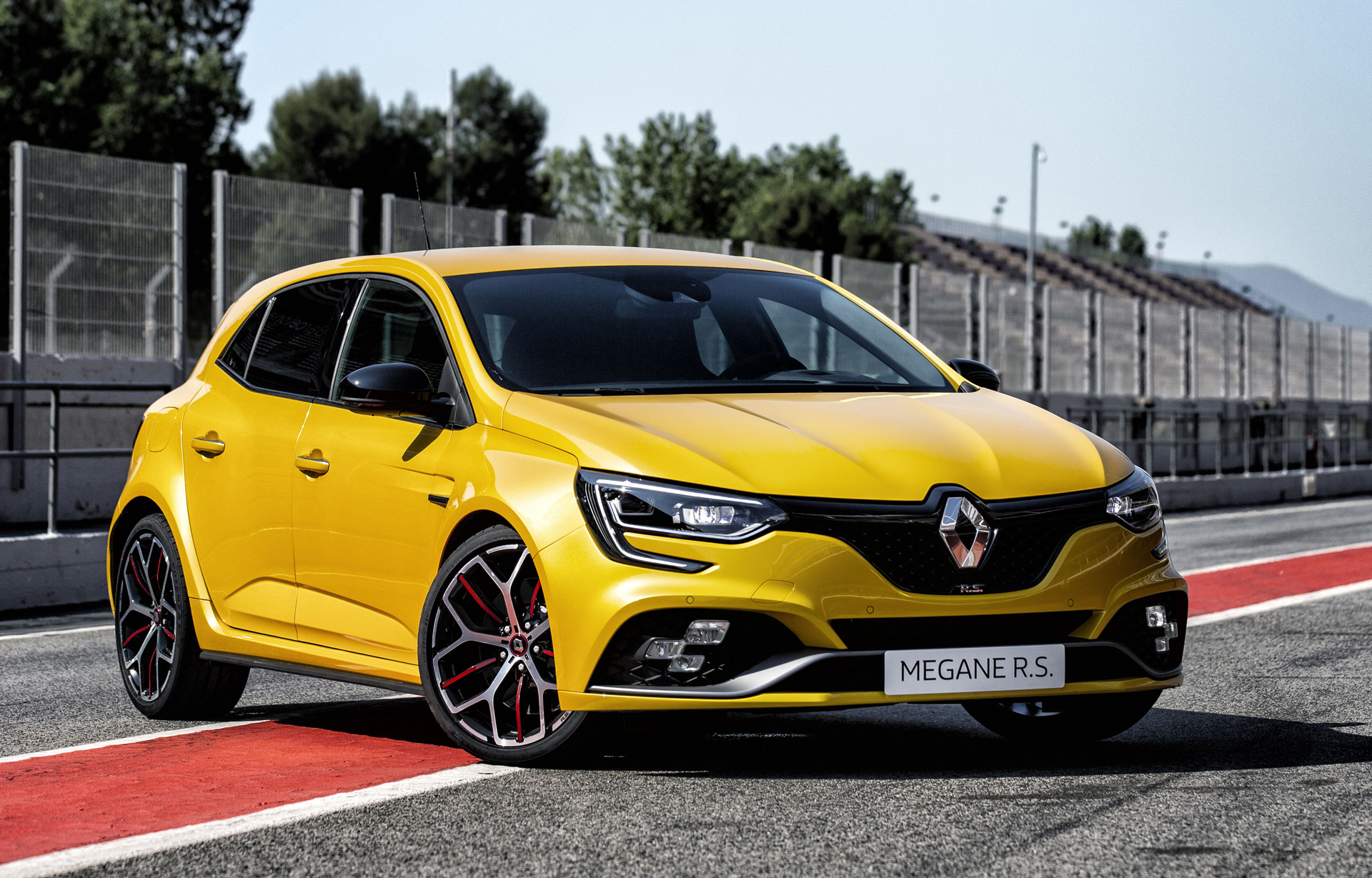
To achieve that time, Renault stripped the car significantly. Carbon fibre wheels, Michelin Cup 2 R tyres, a stripped interior, and the deletion of air conditioning all contributed to a massive weight reduction. The standard Trophy-R is more practical, but the record-breaking specification demonstrates the car’s fundamental performance capability.
The chassis tuning is obsessively precise. Renault Sport’s engineers spent enormous time and resources developing the suspension geometry specifically for the Nordschleife. Every component was optimised with a single purpose in mind absolute cornering speed. The result feels almost otherworldly for a production hatchback.
The manual gearbox is exceptional. In an era when many manufacturers are abandoning manual transmissions in favour of faster automatics, Renault chose to prioritise the mechanical connection between driver and machine. The shifter is precise, the throws are short, and the clutch pedal weight is perfectly judged for heel-and-toe technique.
The Trophy-R is not a comfortable daily driver. It is loud, firm, and demanding. But that is entirely the point. It is a car designed for people who are serious about driving performance above all other considerations. For those people, it offers a level of capability and driver engagement that genuinely challenges purpose-built sports cars.
The Megane RS Trophy-R is the most extreme proof that the hot hatch concept, when pushed to its absolute limit, can produce a machine that embarrasses the sports car establishment.
7. BMW M135i xDrive
BMW’s M division has always understood that performance and everyday usability can coexist. The M135i xDrive takes this philosophy and applies it to the practical 1 Series hatchback body. The result is a car that is simultaneously luxurious, practical, and devastatingly fast in real-world conditions.
The M135i uses a 306-horsepower 2.0-litre turbocharged engine shared with several other BMW models. The engine is smooth, refined, and deceptively potent. It doesn’t have the drama of the Civic Type R’s VTEC or the Audi RS3’s five-cylinder, but it compensates with a breadth of performance that makes it brilliant in everyday driving conditions.
The xDrive all-wheel drive system provides traction that seems to defy the laws of physics. In wet or cold conditions where rear-wheel drive sports cars would require extreme caution, the M135i simply finds grip and accelerates with complete confidence. The all-weather capability transforms how you can use the car throughout the entire year.
The 0–100 km/h time of 4.8 seconds is achieved with such smoothness that passengers struggle to believe the number when told. There is no drama, no wheelspin, no sudden surge just relentless, composed acceleration that builds and builds until the speed is genuinely alarming. This refinement is distinctly BMW in its character.
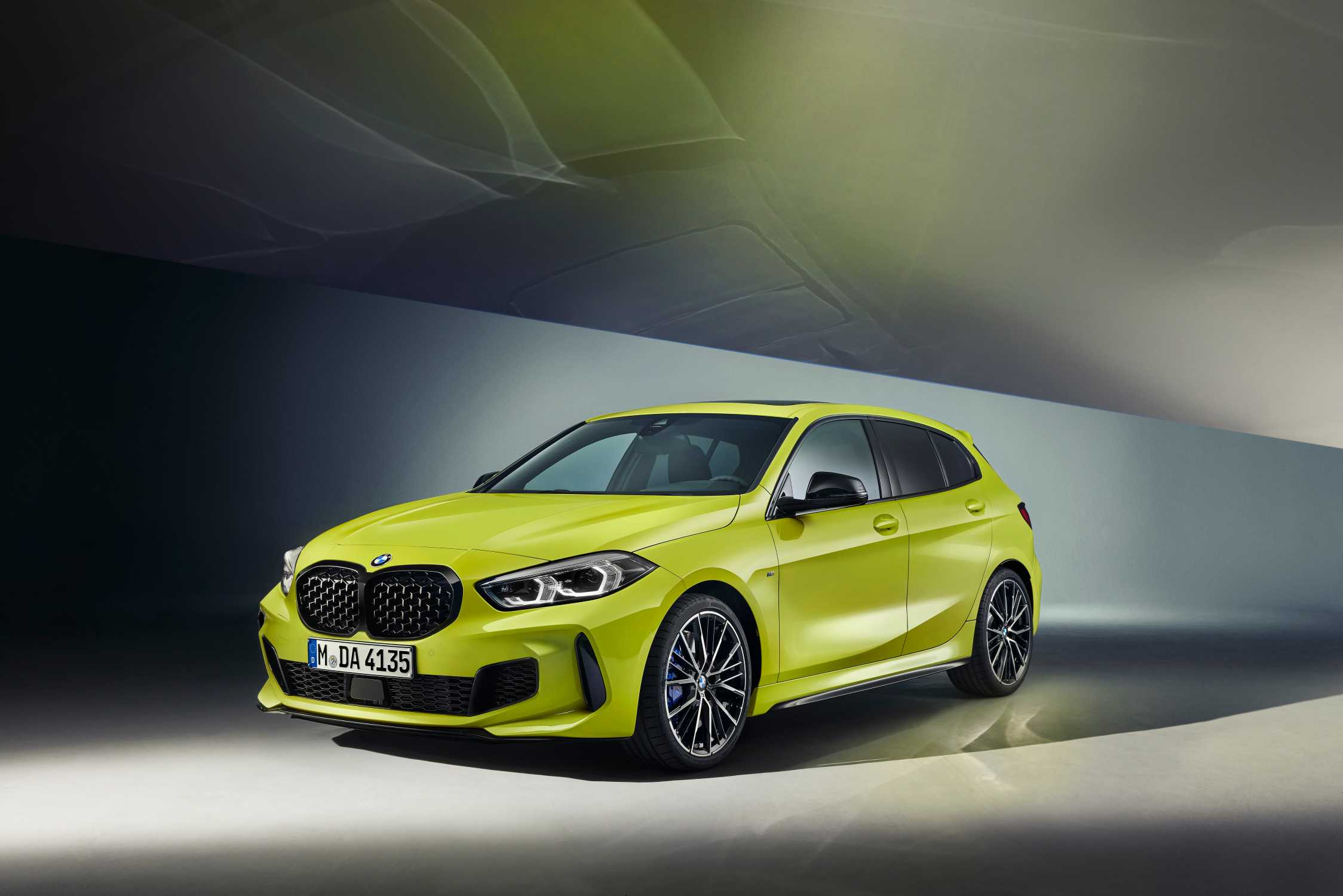
The interior of the M135i sets a standard that other hot hatches struggle to match. BMW’s materials quality is exceptional throughout. The seats are supportive without being aggressive. The infotainment system is intuitive and responsive. The driving position is easily adjustable to suit any physique. This is a genuinely premium environment.
The suspension tuning manages the difficult balance between comfort and performance with typical BMW competence. The adaptive dampers offer a genuine range between genuinely comfortable and genuinely sharp. Neither setting feels like a compromise both feel like intentional, well-executed choices.
The steering, while electric, maintains enough feedback to feel connected and honest. BMW has calibrated the weighting and response carefully to replicate the feel of hydraulic systems as closely as modern electric architecture allows. The result is better than most competitors manage, though purists will always prefer older hydraulic setups.
Running costs are higher than Korean or French alternatives. BMW’s servicing costs are significant, and the premium badge adds to insurance premiums. However, the quality of materials and the refinement of the package justify the premium for buyers who prioritise those qualities.
The M135i xDrive occupies a unique position it is the hot hatch for drivers who want sports car performance delivered with genuine luxury car manners. It is the most grown-up car on this list, and for certain buyers, that is precisely the point.
8. Volkswagen Polo GTI
Not every driver needs a full-size hatchback to humiliate sports cars. Sometimes the smallest package conceals the most concentrated performance. The Volkswagen Polo GTI has always delivered more than its compact dimensions and modest badge suggest, and the latest generation has pushed that formula further than ever before.
The current Polo GTI produces 207 horsepower from a 2.0-litre turbocharged four-cylinder engine. That figure seems modest until you consider the weight it has to propel. The Polo weighs just over 1,200 kilograms. The power-to-weight ratio that results puts it in genuinely interesting performance territory.
The seven-speed DSG automatic gearbox is extraordinarily well-suited to this car’s character. The shifts are instantaneous, the software is intelligent about predicting what gear the driver needs, and the paddle shifters allow manual control when the mood dictates. In full automatic mode during commuting, the transmission is smooth and unobtrusive. In Sport mode, it holds gears longer and responds to throttle inputs with sharper urgency.
The Polo GTI will cover 0–100 km/h in 6.5 seconds. That sounds unremarkable until you compare it to sports cars from the early 2000s. It is quicker than original Mazda MX-5s, classic Lotus Elises, and numerous dedicated sports coupes that are still idolised as pure driving machines. Progress is a remarkable thing.
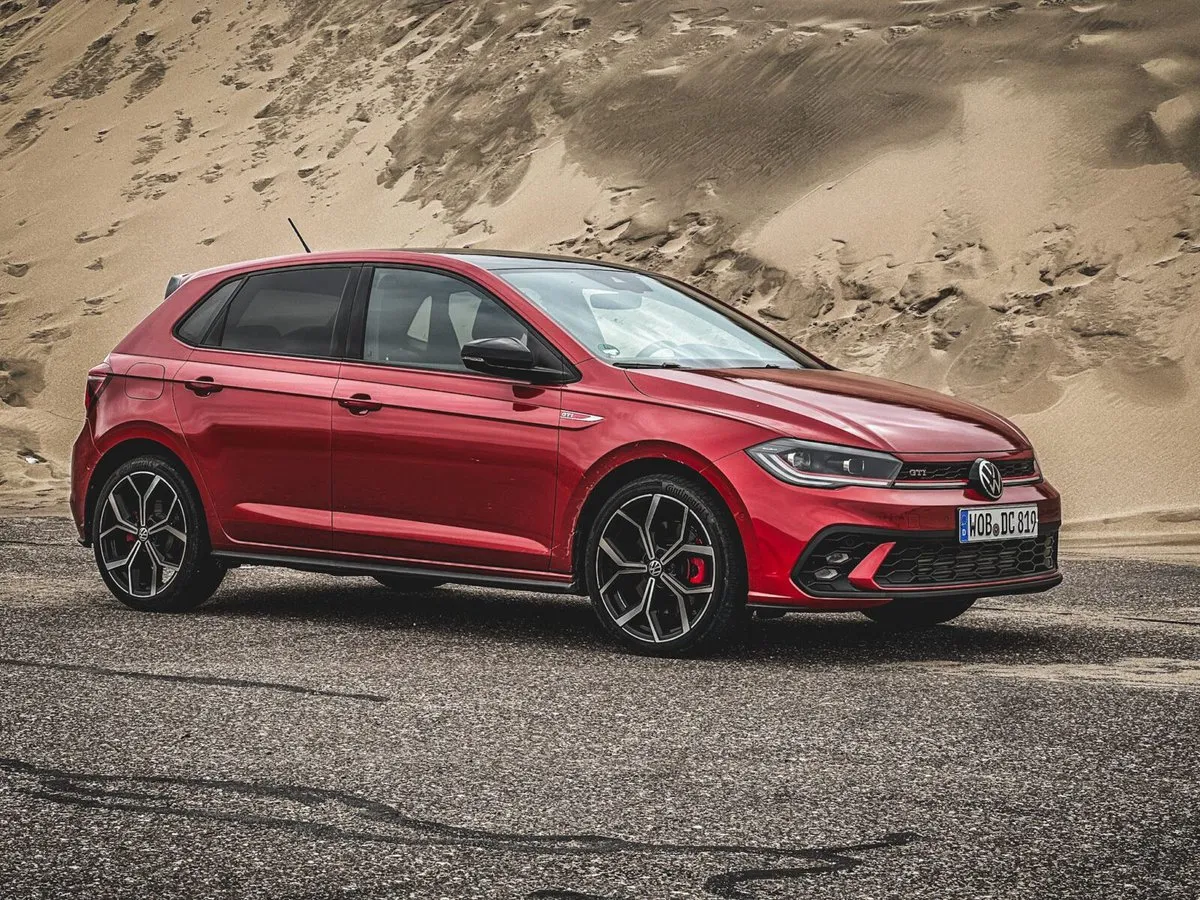
The chassis balance is exceptional for a front-wheel drive car. Volkswagen’s engineers tuned the Polo GTI’s suspension with the same care applied to its larger siblings. The car responds to steering inputs with a precision and agility that makes the Golf GTI feel somewhat large and heavy by comparison. Tight urban roads are where the Polo GTI truly comes alive.
The interior quality punches well above its price point. Volkswagen’s material quality is genuinely impressive in this segment. The seats are well-shaped, the infotainment system is clear and responsive, and the fit and finish would embarrass several more expensive hot hatches from rival manufacturers.
The fuel economy during normal driving is genuinely impressive. The small-capacity turbocharged engine returns real-world fuel consumption figures that approach those of far less exciting cars. For drivers covering significant daily mileage, this efficiency is meaningful and financially significant over time.
Running costs are the Polo GTI’s secret weapon against the sports car argument. Insurance is reasonable, servicing is affordable, and parts availability is excellent throughout the VW Group network. Compare this to the ownership experience of a sports car of equivalent performance, and the financial argument for the Polo becomes overwhelming.
The Polo GTI is the reminder that great hot hatches don’t need to be large, powerful, or expensive. Sometimes the perfect performance car is the smallest, most focused one in the range.
9. SEAT Leon Cupra R
SEAT has spent years sitting in the shadow of its Volkswagen Group siblings. The Leon Cupra R has always offered Golf R-level performance at a significantly lower price point, and automotive journalists who drove it were uniformly impressed. The wider public largely ignored it, which is their considerable loss.
The Cupra R produced 310 horsepower from its 2.0-litre turbocharged engine in its most potent specification. The power delivery was linear and strong throughout the rev range, building in a manner that rewarded committed driving. There was no sudden surge, no unexpected peak — just consistent, serious performance available on demand.
The front axle handling was the Leon Cupra R’s most impressive characteristic. Despite being a front-wheel drive car in standard specification, the chassis balance and front differential tuning made it extraordinarily capable through fast corners. The car had a natural neutrality that encouraged progressive driving rather than demanding conservative inputs.
The Cupra R’s suspension tuning was more aggressive than the standard Leon Cupra, with stiffer springs, firmer dampers, and more aggressive alignment settings. The result was a car that felt more focused and direct than the regular model. On smooth roads, the handling was genuinely remarkable. On rough surfaces, the firmness was occasionally punishing.
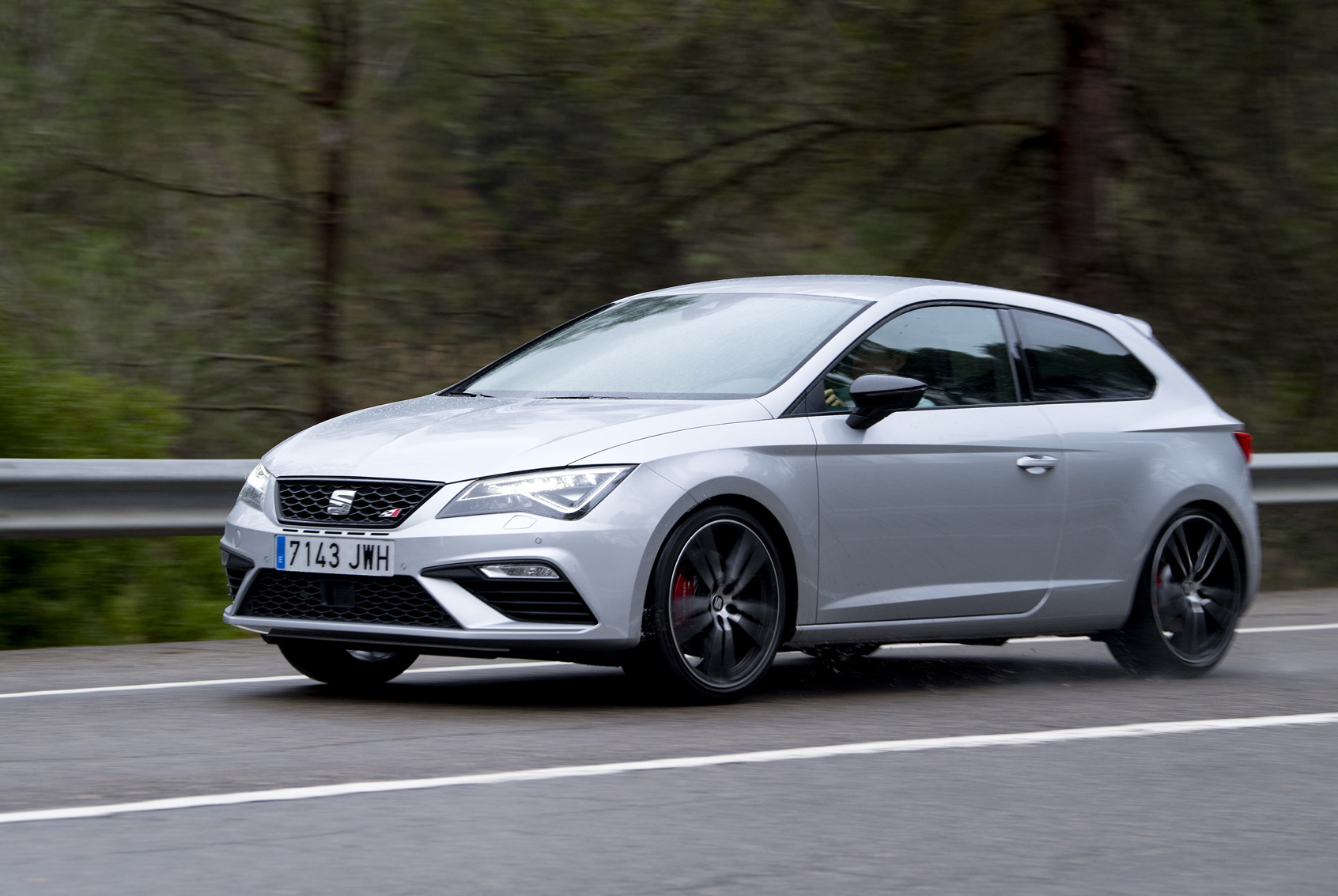
The Nürburgring lap time achieved by the Leon Cupra R placed it among the fastest front-wheel drive production cars ever built. Cupra’s engineers had worked the car relentlessly around the circuit to develop the chassis settings. That dedication to performance is evident every time you push the car toward its limits.
The braking system deserved specific mention. The Brembo callipers provided stopping power that matched the car’s acceleration performance. The brake pedal had an excellent feel progressive, consistent, and confidence-inspiring. This was not an area where SEAT chose to save money, and the result justified that decision.
Interior quality had improved significantly from earlier SEAT models. The Cupra R featured specific interior treatments that differentiated it from standard Leons. Carbon fibre accents, bucket seats with Alcantara trim, and Cupra-specific instruments created an environment that felt genuinely sporting rather than merely decorated.
The value case for the Cupra R was overwhelming. It delivered performance that matched or exceeded German hot hatches costing significantly more. The running costs were reasonable, the reliability was strong, and the ownership experience was broadly positive. The only thing missing was the prestige of a VW, Audi, or BMW badge.
The SEAT Leon Cupra R deserves far more recognition than it has received. It is a genuinely excellent performance car that has been overlooked largely due to brand perception rather than any deficiency in its actual capabilities.
10. Ford Fiesta ST
The Ford Fiesta ST occupies a unique position in the hot hatch world. While competitors chase power figures and lap records, the Fiesta ST has consistently prioritised something more fundamental and more satisfying the pure pleasure of driving. The result is a car that skilled drivers consistently prefer over faster, more powerful alternatives.
The Fiesta ST produces just 200 horsepower from its 1.5-litre three-cylinder turbocharged engine. Against the power figures on this list, that number seems almost humble. But put this car on a challenging road, and the number becomes completely irrelevant. The Fiesta ST is faster in the real world than its specification suggests in ways that purely statistical analysis cannot capture.
The chassis is the car’s greatest achievement. Ford’s engineers tuned the Fiesta ST’s suspension to provide a level of feedback and communication that is genuinely exceptional at any price. The car tells you exactly what all four tyres are doing at every moment through the steering wheel, the seat, and the pedals. This information flow allows drivers to push closer to the car’s limits with confidence.
The steering is outstanding. In a world of increasingly numb electric power steering systems, the Fiesta ST’s setup stands apart. The weighting is perfect, the response is immediate, and the feedback is rich and honest. Drivers who value communication between car and human consistently rank the Fiesta ST’s steering among the best currently available.
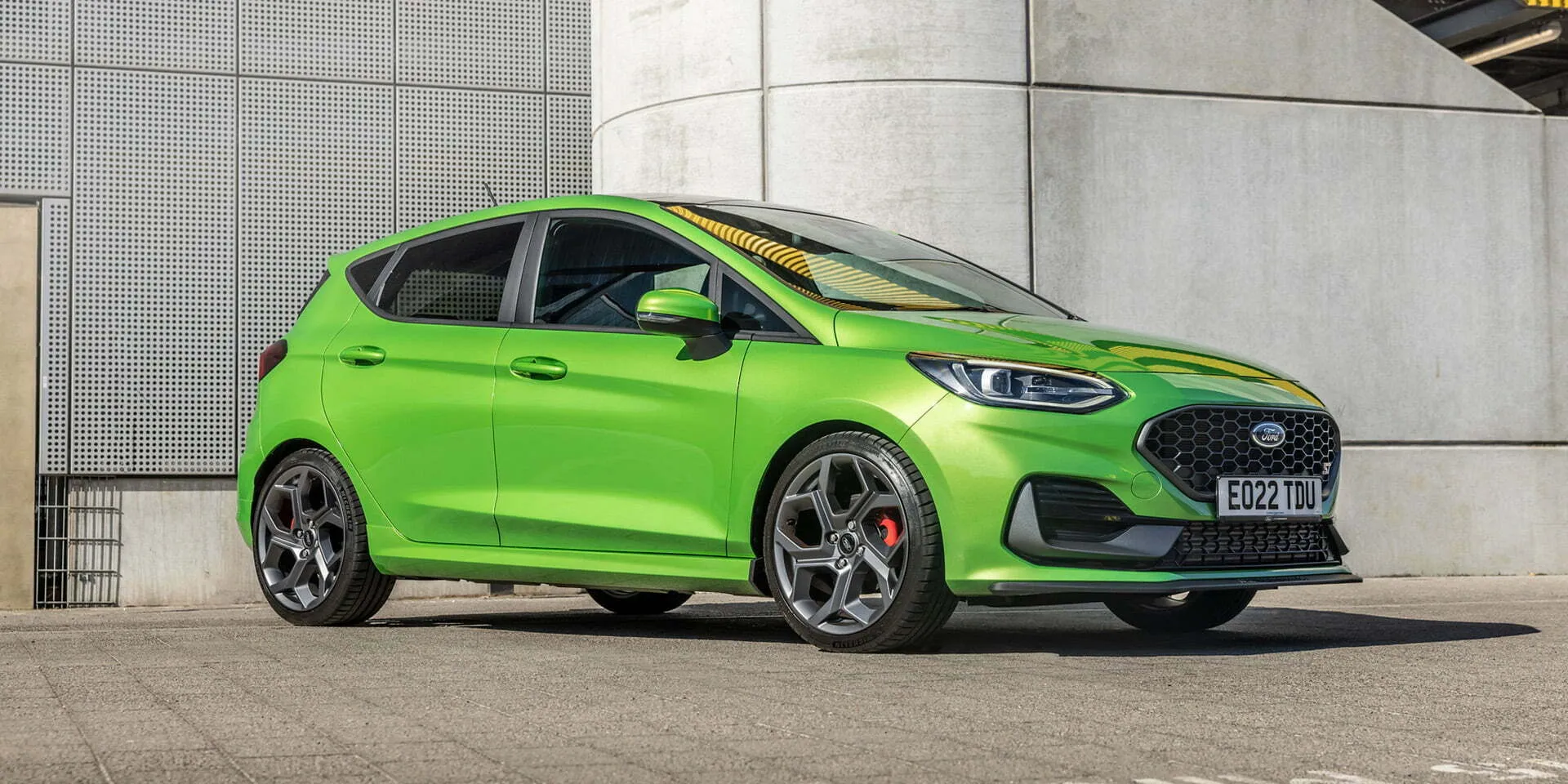
The front limited-slip differential transforms the car’s cornering ability beyond what the power figure predicts. The front wheels grip and pull through corners with genuine tenacity, eliminating the understeer that afflicts lesser front-wheel drive performance cars. The result is a car that can be steered with the throttle as well as the steering wheel a quality usually reserved for much more expensive machines.
The three-cylinder engine is an unexpected joy. Its character is completely different from four-cylinder alternatives, with a lighter, more eager feel to the way it revs. It sounds distinctive and mechanical, producing a note that enthusiasts quickly come to love. The lack of a fourth cylinder is never felt as a deficit only as a personality trait.
The ride quality on normal roads is firm but absorbable. Ford tuned the springs and dampers carefully to provide compliance without compromising the handling precision. The car bounces over sharp bumps rather than crashing through them. It communicates the road surface without brutalising its occupants.
The Fiesta ST is affordable to purchase, economical to run, and cheap to insure relative to its performance class. The three-cylinder engine returns genuine, real-world fuel economy figures that make ownership financially accessible to a wide range of drivers. This accessibility is central to the hot hatch formula at its purest.
The Ford Fiesta ST is the ultimate proof that horsepower and lap times are not the whole story. The best hot hatch is not always the fastest one; sometimes it is simply the most rewarding to drive. The Fiesta ST achieves something rare and precious: it makes every journey feel like a reason to celebrate owning a car. And in the age of autonomous vehicles and disconnected electric transport, that feeling is more valuable than ever.
Also Read: 6 Best Panoramic Views In American Cars vs 6 Blind-Spot Nightmares
