
Planning a road trip is one of life’s genuinely pleasurable activities. You pick the destination, map the route, figure out the overnight stops, and then comes the moment that separates the prepared from the optimistic: packing the vehicle. That is when the reality of cargo space either works with you or against you in ways that no amount of trip planning enthusiasm can compensate for.
Anyone who has tried to pack a week’s worth of luggage, road trip snacks, a portable cooler, hiking gear, kids’ entertainment bags, and a dog crate into an SUV with 30 cubic feet behind the second row knows exactly what vehicle-induced packing misery feels like.
It is the moment you realize that the car looked enormous in the showroom, and yet somehow your family’s reasonable travel requirements exceed its actual volume by an amount that forces uncomfortable negotiations about what gets left behind.
Road trip cargo space is not the same specification as grocery run cargo space. A road trip demands room for bags of irregular shapes, hard-sided luggage that does not compress to fill awkward corners, sleeping bags and camping equipment that expand from their stored configurations, and the inevitable accumulation of items that appear between home and destination when you stop at a roadside attraction with an unexpectedly well-stocked gift shop.
Maximum cargo volume behind the first row, with all additional seats folded, is the number that matters most for serious road trip packing. This number tells you the real maximum of what the vehicle holds when everyone else takes the train, and you load it to the ceiling. But cargo volume behind the third row with all seats occupied is the number that matters for families who need to carry all seven passengers and still have room for the trip’s actual stuff.
Seven SUVs follow, selected specifically because they deliver genuinely impressive cargo capacity across both metrics, with load floor dimensions and access design that turns road trip packing from a stressful puzzle into a manageable task.
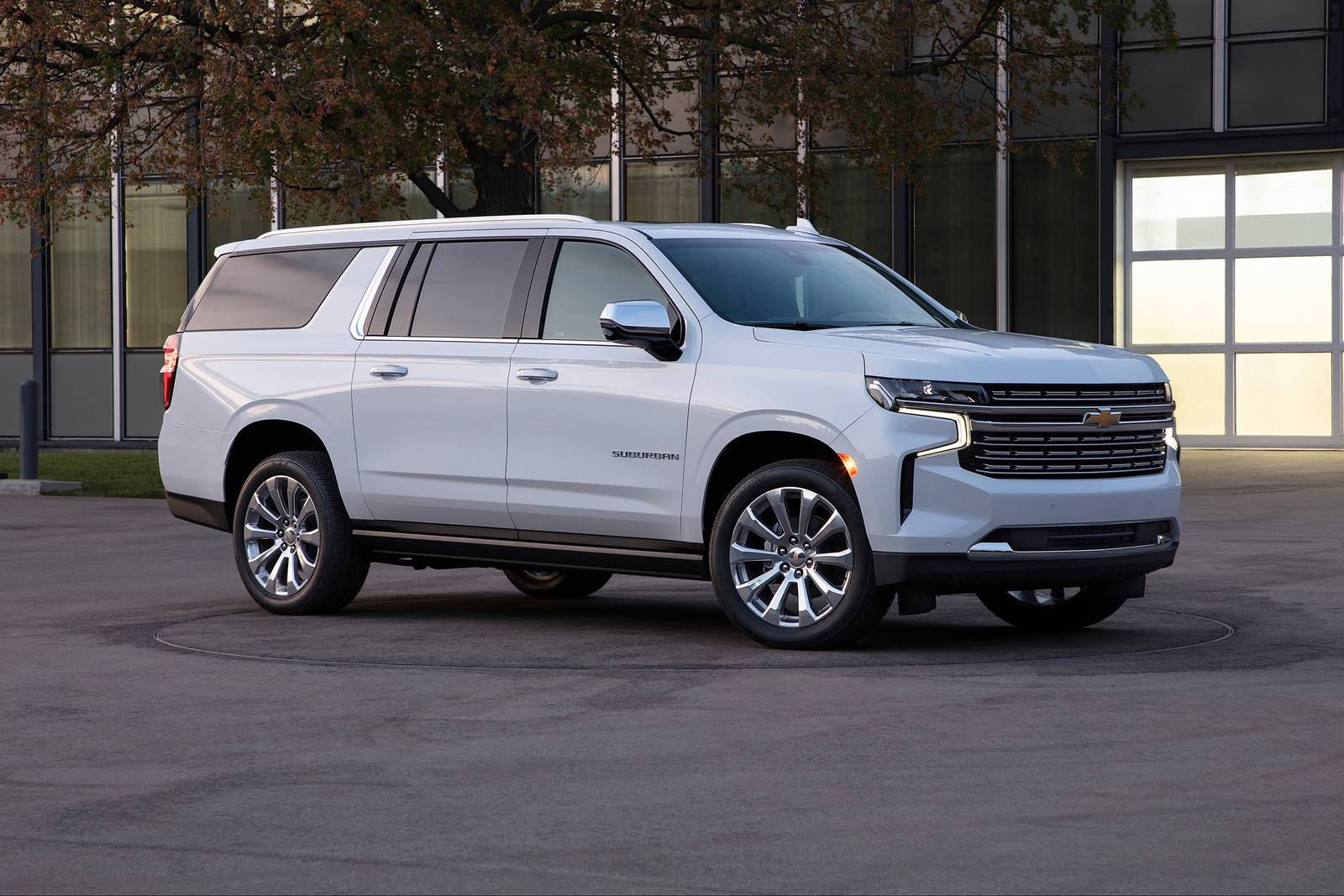
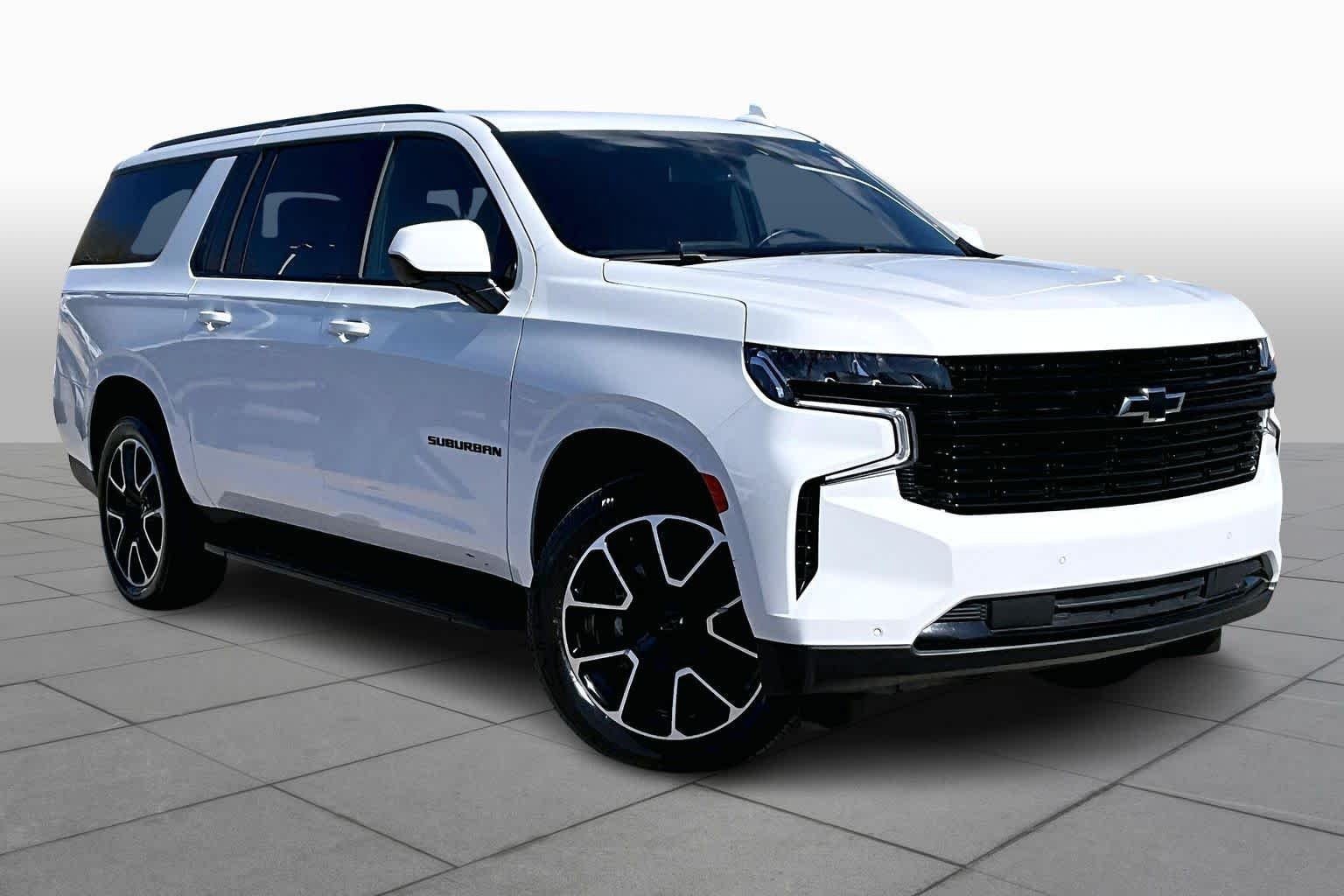
1. Chevrolet Suburban Premier 4WD 6.2L V8 (2024)
Nothing in the American new vehicle market delivers more cargo volume in a passenger vehicle than the Chevrolet Suburban, and the Premier 4WD specification provides the cargo capacity argument with the comfort and technology content that road trip families need for the hours they spend inside the vehicle, alongside the space they need for their gear.
Cargo volume behind the third row in the 2024 Chevrolet Suburban Premier measures 41.5 cubic feet, which is a number that requires a moment to process because it exceeds the total cargo volume of many compact SUVs with all seats removed.
Behind the second row with the third row folded, that volume grows to 76.4 cubic feet, and with all rear seats folded, the Suburban provides 144.7 cubic feet of total cargo space, which is enough volume for road trip gear from a large family, camping equipment for a week, or frankly the contents of a studio apartment.
Load floor access through the Suburban’s rear liftgate includes a split design where the upper glass opens independently of the lower lift gate, which allows access to cargo without fully raising the gate when headroom is limited in a garage or under a low awning. This access flexibility is a practical convenience that road trippers loading and unloading multiple times across a multi-day trip will use consistently.
6.2-liter V8 producing 420 horsepower with the 10-speed automatic provides power delivery that a fully loaded Suburban manages with confidence, which matters on mountain passes and long grades where cargo and passenger weight combines to challenge powertrains that lack adequate reserve capacity. Max Trailering Package availability extends towing capacity to 8,300 pounds, which means road trippers who tow a small trailer or boat have that option without purchasing a separate towing vehicle.
Power-folding third row seats retract into the floor automatically at the touch of a button, which eliminates the manual wrestling with heavy seat mechanisms that older Suburban generations required and that represented the primary inconvenience of third-row seat management during cargo loading.
Automated folding brings the Suburban’s full cargo mode accessible without physical exertion, which matters when the third row is used for passengers on the drive to a destination and then needed as cargo space for the return home.
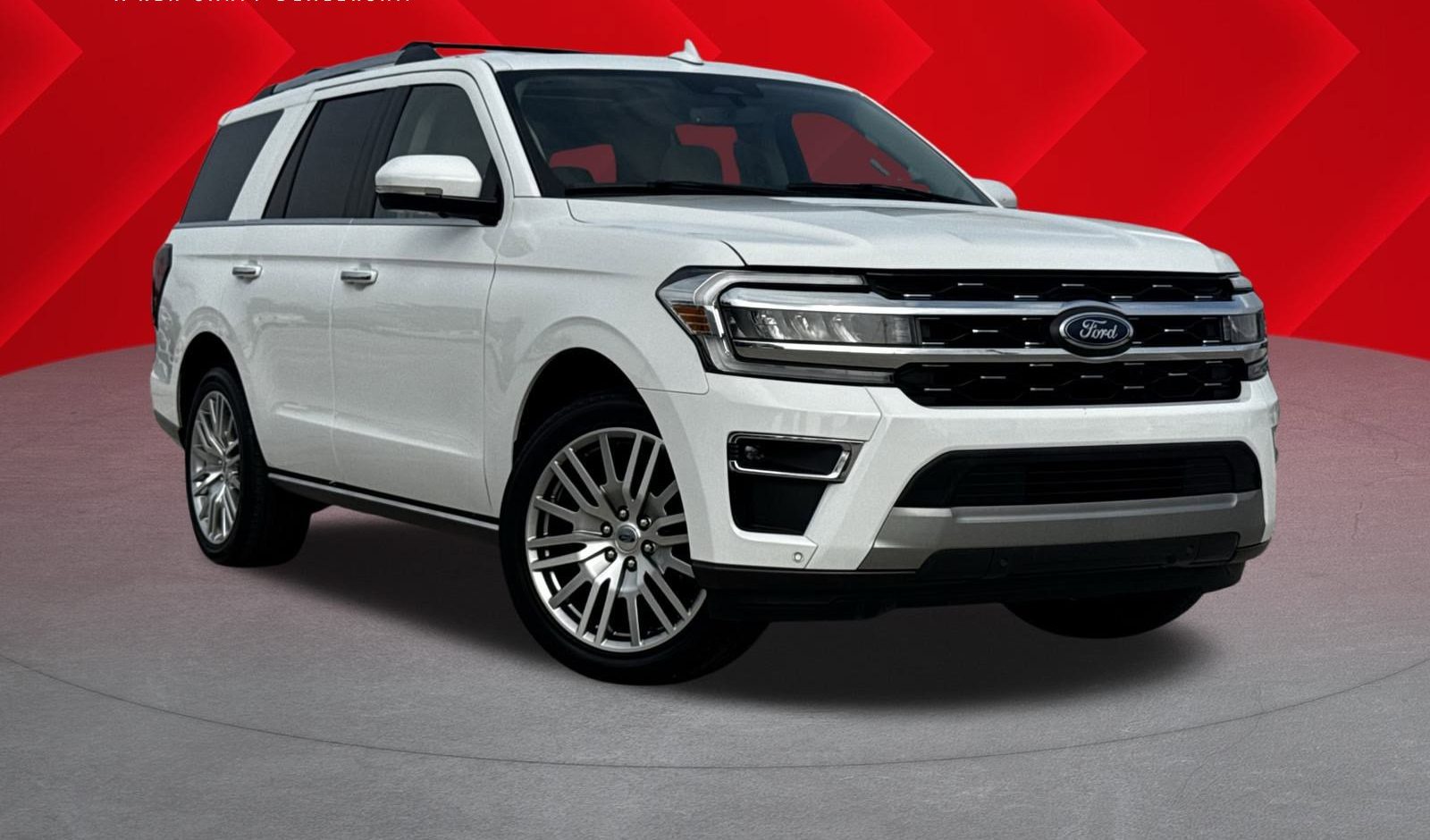
2. Ford Expedition MAX Platinum 4WD 3.5L EcoBoost (2024)
Ford’s extended-body Expedition MAX provides the volume advantage that specifically makes it the choice for families who need maximum cargo capacity without making the step up to a commercial van, and the Platinum specification surrounds that volume with luxury content that keeps the road trip interior experience pleasant across long driving days.
Cargo volume behind the third row in the 2024 Ford Expedition MAX Platinum measures 36.0 cubic feet, which accommodates full-sized luggage for the seven or eight passengers that the vehicle can carry without requiring any seat reconfiguration.
Behind the second row with the third row flat, that volume grows to 87.4 cubic feet, and with all rear seats folded, the Expedition MAX provides 104.6 cubic feet of total interior volume that is accessible through a wide, tall liftgate opening with a low load floor sill that reduces the lifting height required for heavy bags.
PowerFold third and second-row seats in the Expedition MAX fold flat from buttons in the cargo area or from the Ford Pass smartphone app, which allows cargo configuration changes without manual seat handling. Road trippers who pick up and drop off passengers across a multi-day trip cycle through different seating and cargo configurations multiple times, and power-folding eliminates the time and effort that manual reconfiguration requires at each transition.
3.5-liter twin-turbocharged EcoBoost V6 producing 440 horsepower and 510 pound-feet of torque delivers full-load performance that the Expedition MAX’s substantial dimensions demand when all passenger and cargo capacity is being used simultaneously.
Road trips that combine full passenger loads with maximum cargo packing challenge powertrains that lack adequate torque reserve, and the EcoBoost V6’s torque delivery from low RPM provides the immediate response that highway on-ramps and mountain grades require, regardless of how fully the vehicle is loaded.
Interior content on Platinum specification includes a 15.5-inch SYNC 4A touchscreen with wireless Apple CarPlay and Android Auto, a B&O sound system, captain’s chair second-row seating, and active noise cancellation that makes the Expedition MAX’s interior a comfortable environment for multi-hour driving days.
Rear seat passengers who travel in the MAX’s third row have dedicated entertainment options and climate control that make the experience of being in the back of a full-size SUV genuinely pleasant rather than simply tolerable.
Also Read: 10 SUVs You Can Wash At A Drive-Through Car Wash Without Folding The Mirrors
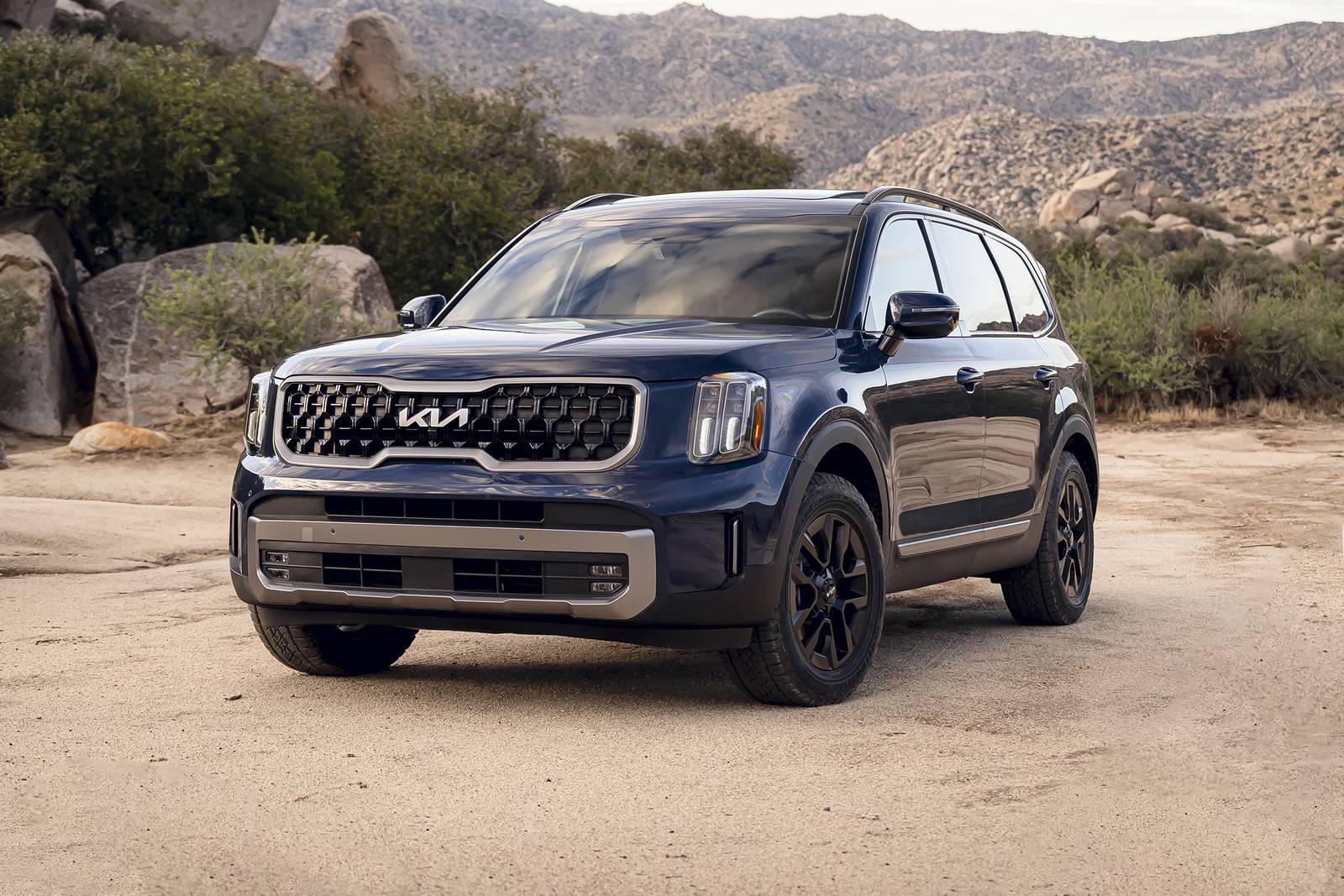
3. Kia Telluride EX AWD 3.8L V6 (2024)
Careful engineering and disciplined packaging define the 2024 Kia Telluride EX AWD 3.8L V6, particularly in its approach to cargo capacity within a mid-size three-row sport utility vehicle. While many vehicles in this category struggle to balance passenger comfort with usable storage space, this model achieves a refined equilibrium that supports both family transport and extended travel requirements without unnecessary compromise.
Measured cargo capacity behind the third row stands at approximately 21.0 cubic feet. This space accommodates carry-on luggage for all occupants seated in the third row, along with additional personal items. When the third-row seats are folded flat, capacity expands to about 46.0 cubic feet, creating a versatile area suitable for larger travel gear, grocery loads, or recreational equipment.
With both rear rows folded, maximum cargo volume reaches 87.0 cubic feet, placing this vehicle in direct competition with larger sport utility vehicles despite its more manageable external dimensions. Practical usability of this cargo space receives equal attention.
The load floor height is deliberately set at a level that reduces lifting effort, allowing heavy items to be placed into the vehicle with minimal strain. Liftgate opening width supports the loading of wider objects without requiring repositioning or awkward angling. These design decisions ensure that available space is not only measured accurately but also accessible in everyday use.
Power delivery from the 3.8-litre naturally aspirated V6 engine provides consistent performance across varied driving conditions. Producing approximately 291 horsepower, the engine delivers steady acceleration without reliance on forced induction systems. This configuration supports reliability and predictable operation, particularly during long-distance travel where temperature and altitude variations may affect engine behaviour.
Interior features within the EX specification enhance passenger comfort during extended journeys. Dual-zone rear climate control ensures that occupants in both second and third rows experience balanced airflow and temperature regulation. A central infotainment system with navigation and a large display screen supports route planning and entertainment needs, while wireless charging adds convenience for modern device usage.
Safety systems form an integral part of the driving experience. Kia’s driver assistance technologies provide features such as adaptive cruise control and collision avoidance systems, which support driver awareness during long highway trips. These systems contribute to a more controlled and confident driving environment.
Attention to interior layout ensures that passenger space is preserved even when cargo demands increase. Seat folding mechanisms operate smoothly, allowing quick reconfiguration based on travel needs. This flexibility makes the vehicle suitable for both daily commuting and extended road travel.
Kia Telluride EX AWD demonstrates that a mid-size vehicle can deliver cargo capability and comfort at a level often associated with larger models. Through thoughtful engineering and practical design, it provides a balanced solution for drivers seeking versatility without unnecessary bulk.
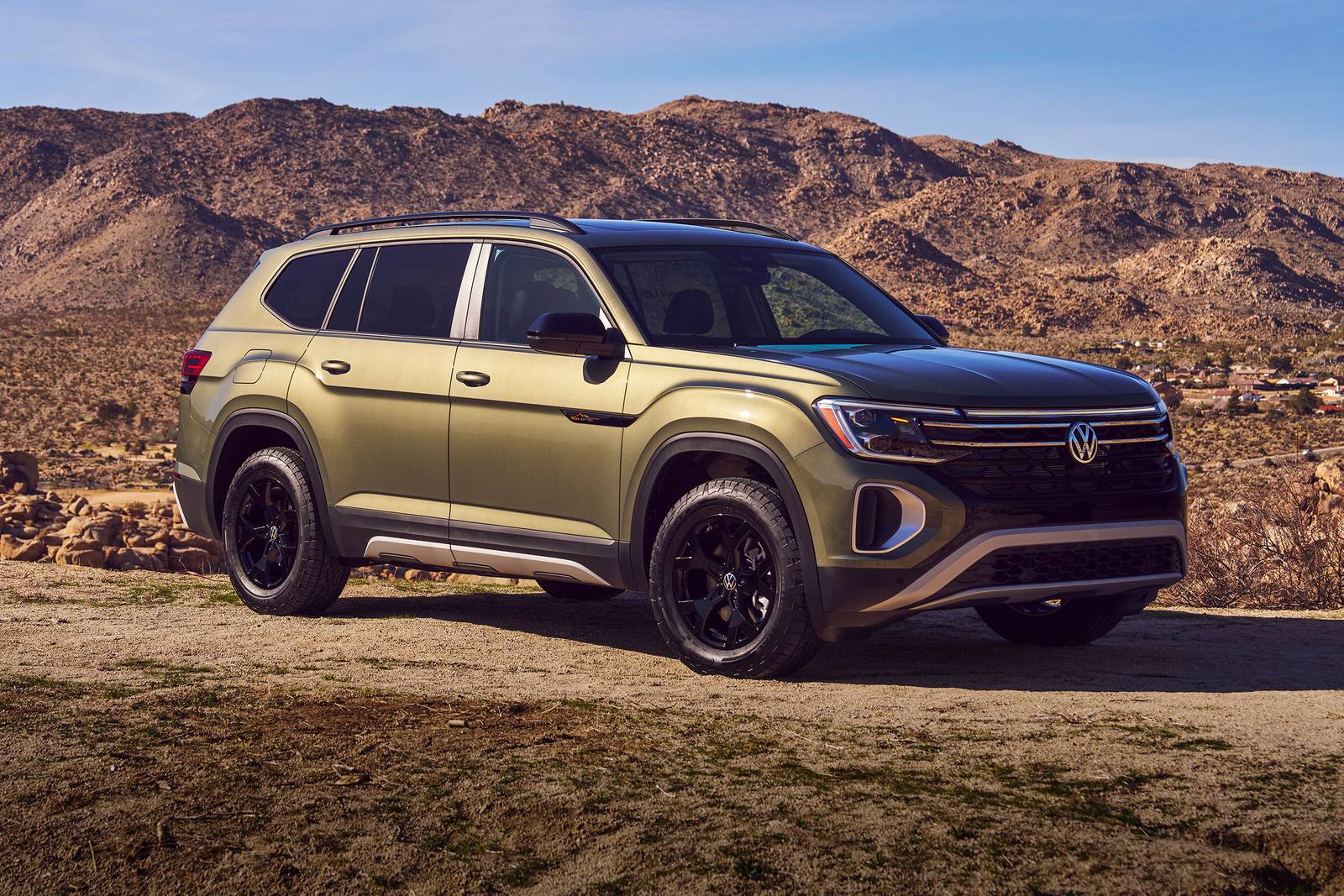
4. Volkswagen Atlas SEL Premium R-Line 4Motion V6 (2024)
A strong emphasis on functionality defines the 2024 Volkswagen Atlas SEL Premium R-Line 4Motion V6, particularly in its approach to interior space and cargo usability. Designed with family travel and long-distance journeys in mind, this vehicle prioritises accessible storage and passenger comfort in a manner that reflects disciplined engineering rather than stylistic excess.
Cargo capacity begins with approximately 20.6 cubic feet of space behind the third row. This area supports the luggage needs of a fully occupied vehicle without forcing passengers to sacrifice comfort. When the third-row seats are folded, capacity increases to about 55.5 cubic feet, creating a large and flexible loading area. With both rear rows folded flat, maximum cargo volume reaches approximately 96.8 cubic feet, placing this model among the highest in its class.
Usability of this space is enhanced through a flat load floor design. Rather than relying on irregular shapes or recessed compartments, the cargo area presents a consistent surface that simplifies packing and organisation. This approach allows luggage and equipment to be arranged efficiently, reducing wasted space and improving access during travel.
Loading access reflects the same practical focus. The liftgate opens wide, providing sufficient clearance for bulky items, while the load floor height remains manageable for lifting heavier objects. These features support ease of use during routine tasks such as grocery shopping or preparing for extended trips.
Power is provided by a 3.6-litre VR6 engine producing approximately 276 horsepower. This naturally aspirated configuration delivers smooth and predictable performance, particularly during highway driving where steady power delivery is essential. The eight-speed automatic transmission operates with consistency, supporting both fuel efficiency and driving comfort.
All-wheel drive capability through Volkswagen’s 4Motion system enhances traction across varying road conditions. This feature supports confident driving during adverse weather, extending the vehicle’s usability throughout the year. Drivers benefit from stable handling whether travelling on wet roads, light snow, or uneven surfaces.
Interior features within the SEL Premium R-Line specification contribute to passenger comfort. A premium audio system, large touchscreen interface, and panoramic sunroof create an environment suited for long journeys. Rear passengers benefit from dedicated charging ports, ensuring that electronic devices remain powered throughout extended travel periods.
Driver assistance technologies provide additional support. Adaptive cruise control and lane-keeping systems assist during long highway drives, reducing fatigue and supporting consistent vehicle positioning. These features enhance safety while improving the ease of driving.
Passenger space remains generous across all seating rows. Legroom and headroom are maintained even when cargo capacity is fully utilised, ensuring that comfort is not compromised. Seating materials and layout contribute to a refined cabin environment that supports both short trips and extended travel.
Volkswagen Atlas SEL Premium R-Line 4Motion V6 presents a practical and well-considered solution for drivers who prioritise usable space and dependable performance. Its approach to cargo design and interior layout ensures that every aspect of the vehicle serves a clear functional purpose.
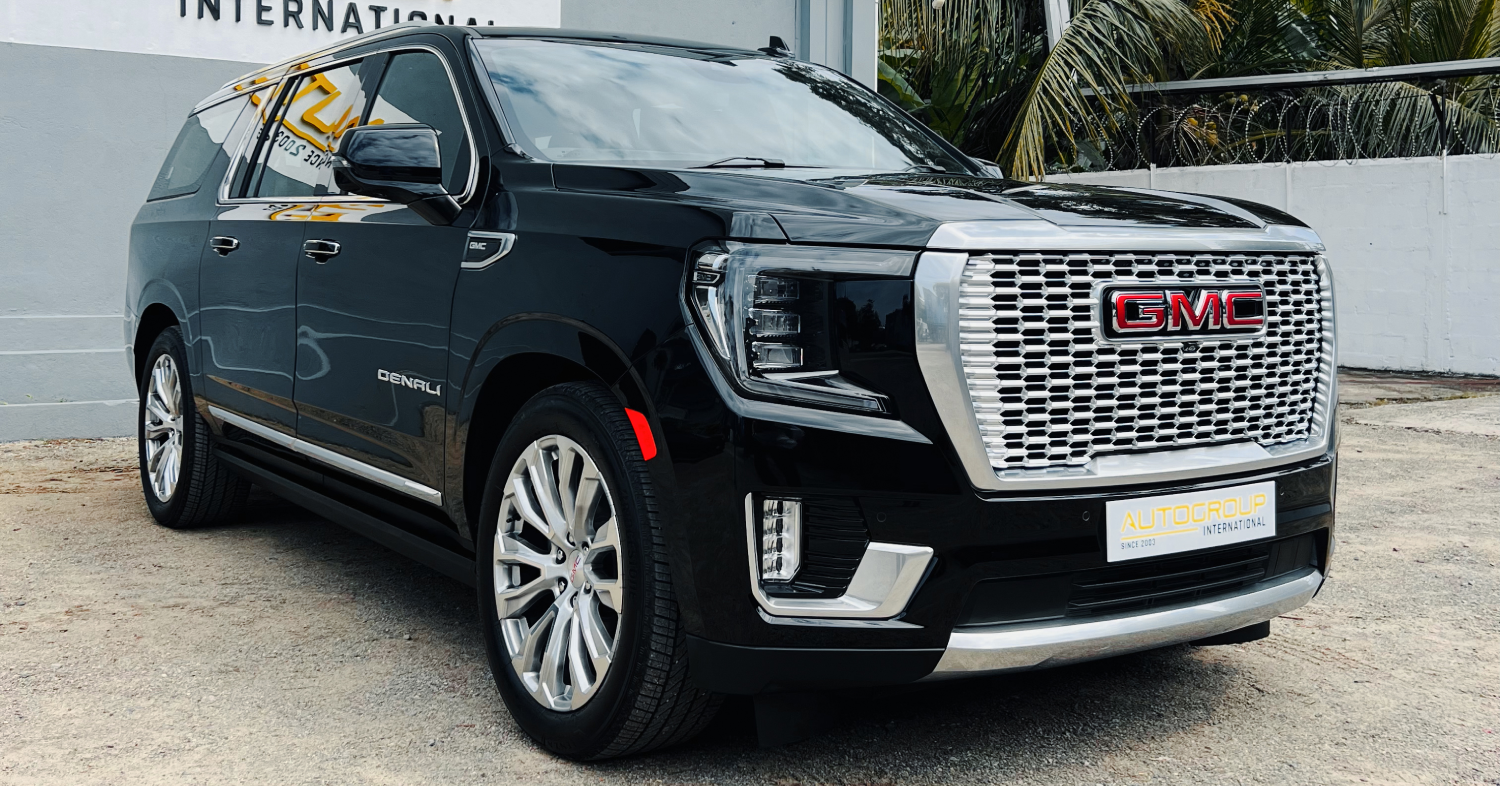
5. GMC Yukon XL Denali 4WD 6.2L V8 (2024)
GMC’s Yukon XL Denali occupies a specific market position where buyers want the volume of the full-size SUV platform with interior appointments that approach luxury vehicle standards, and the Denali specification delivers both without requiring the complete step to Cadillac Escalade ESV pricing. For road trip families who will spend multiple days inside their vehicle and who need maximum cargo space for extended trip gear, the Yukon XL Denali represents a genuinely compelling combination of interior quality and cargo practicality.
Cargo volume behind the third row in the 2024 GMC Yukon XL Denali measures 41.5 cubic feet, matching the Suburban platform’s third-row cargo provision in the extended body that the Yukon XL shares with its Chevy sibling. Behind the second row with the third row flat, that volume grows to 76.4 cubic feet, and maximum cargo capacity with all rear seats folded reaches 144.7 cubic feet.
These are the same fundamental numbers as the Suburban because both vehicles share the T1 platform architecture, but the Yukon XL Denali delivers them with GMC’s Denali-specific interior treatments and exterior styling that differentiate the vehicle within the full-size SUV category.
Denali interior quality raises the road trip comfort standard beyond what the Chevrolet equivalent provides, with full-grain leather seating, genuine aluminum and wood trim, a 15-inch head-up display, an optional Super Cruise hands-free highway driving system, and a Bose premium audio system that makes the extended highway driving hours of road trip travel genuinely enjoyable rather than merely tolerable.
Super Cruise availability specifically addresses the fatigue that sustained attention during long interstate drives creates, providing real hands-free operation on compatible mapped roads that allows the driver to rest their alertness while maintaining appropriate speed and following distance.
6.2-liter V8 producing 420 horsepower with Dynamic Fuel Management that deactivates cylinders during light-load cruising delivers full-size SUV power with improved highway fuel economy that partially offsets the platform’s size penalty. Road trips that include extended highway segments at consistent speeds benefit most from the cylinder deactivation system, where the V8 effectively operates as a V4 during steady-speed cruising and reduces fuel consumption proportionally to the active cylinder count.
Power-folding third-row seats and available power-folding second-row seats create full cargo access through button activation from the cargo area or the key fob, which the Denali specification makes standard rather than optional. This automation is specifically valuable during road trips when packing and unpacking happen multiple times across a multi-day trip, where the convenience of power seat management compounds across each loading cycle into a measurable time and effort saving.
Rear-seat entertainment with dual 12.6-inch screens behind each front headrest provides passenger entertainment that long road trip driving days require for all passengers, reducing the interaction demand on the driver during the hours when navigation and traffic management require sustained attention without the additional burden of managing rear passenger boredom.
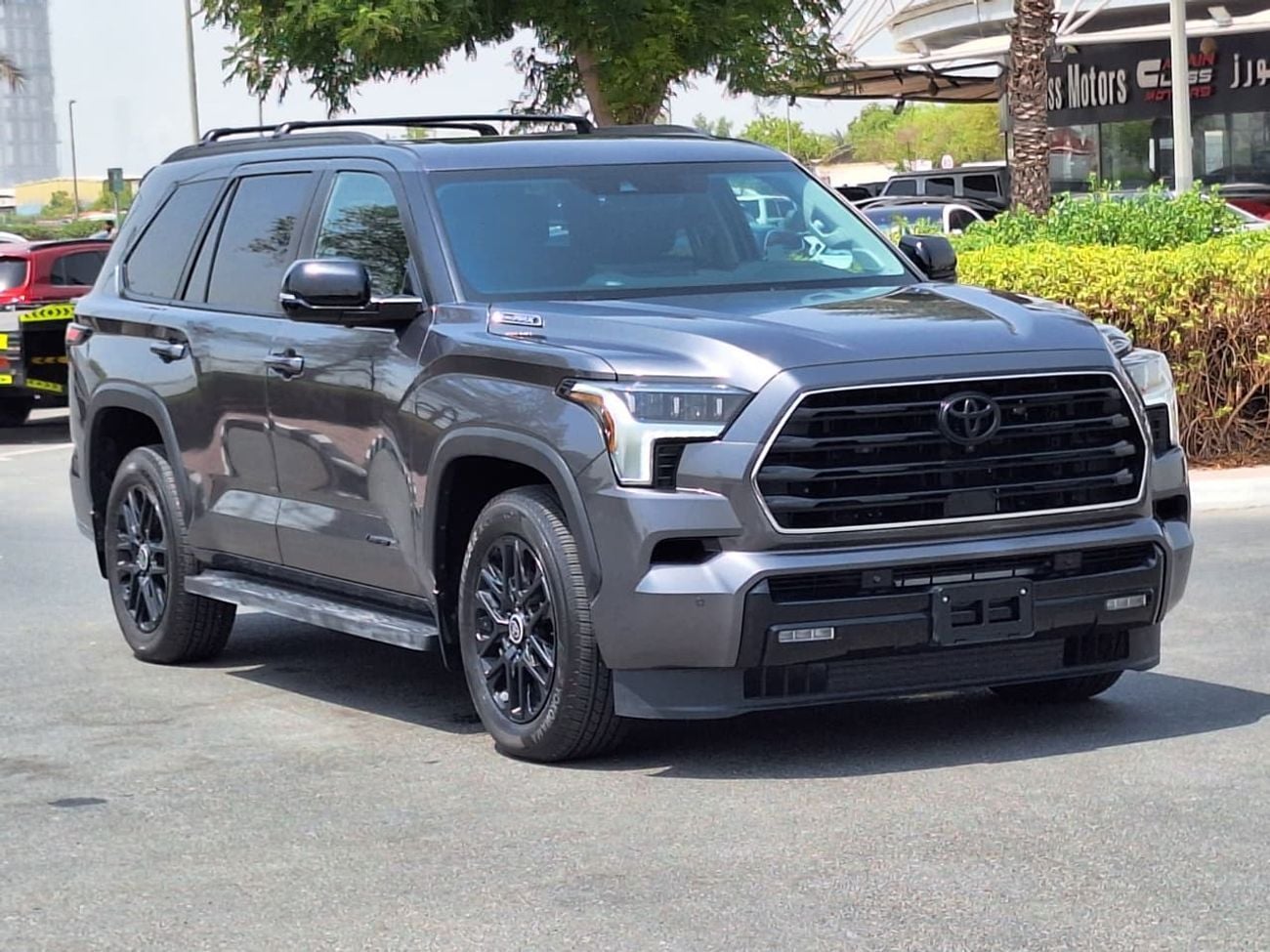
6. Toyota Sequoia Platinum 4WD 3.5L Twin-Turbo Hybrid (2024)
Toyota’s redesigned Sequoia introduced a hybrid powertrain to the full-size SUV segment without compromising the cargo volume that full-size buyers require, and the Platinum specification provides the cargo credentials alongside luxury interior content and Toyota’s documented long-term reliability advantage that makes the Sequoia a road trip tool buyers trust for high-mileage use.
Cargo volume behind the third row in the 2024 Toyota Sequoia Platinum measures 22.2 cubic feet, which is smaller than the GM-platform full-size alternatives but respectable for a vehicle that prioritizes hybrid system integration without sacrificing third-row passenger accommodation.
Behind the second row, volume grows to 69.7 cubic feet, and maximum cargo with all seats folded provides 86.9 cubic feet. These numbers are competitive within the full-size SUV category and substantially exceed every midsize three-row alternative, giving the Sequoia genuine cargo credentials despite the hybrid system space requirements that full-size alternatives without hybrid systems avoid.
The hybrid powertrain producing 437 horsepower combined system output and 583 pound-feet of torque from the twin-turbocharged V6 with electric motor assistance delivers performance that exceeds V8 competitors in acceleration while achieving fuel economy of approximately 24 to 26 miles per gallon combined, which represents a 30 to 40 percent improvement over the 5.7-liter V8 that previous Sequoia generations used.
For road trips that cover 500 to 1,000 miles, this fuel economy improvement translates to fewer fuel stops, lower total fuel cost, and less time spent at highway stations managing fuel logistics rather than driving toward the destination. Power-folding second and third-row seats in the Platinum specification fold flat via button controls, and Toyota’s specific innovation is a flat cargo floor when all seats are folded that previous Sequoia generations did not achieve due to the wheel well and structural intrusions that prevented complete floor flatness.
Flat floor cargo loading increases packing efficiency by allowing items to slide in from the rear opening rather than requiring precise placement around floor irregularities, which is a practical loading advantage that the specification number does not capture. Platinum interior content includes a 14-inch touchscreen with wireless connectivity, a JBL 14-speaker audio system, a panoramic moonroof, heated and ventilated second-row captain seats, and available rear-seat entertainment.
Toyota’s comprehensive active safety suite provides the highway driving assistance features that reduce long driving day fatigue and that provide the safety technology layer that families with children specifically value during extended road trip operation, where attention lapses and traffic variability both increase.
Toyota’s reliability record across the Sequoia nameplate’s full production history gives road trip buyers confidence in using the vehicle for the high-mileage conditions that long road trips impose, where consistent performance across varying temperatures, altitudes, and drive cycle lengths is essential, and where breakdown risk creates consequences that are more disruptive than the same breakdown experienced locally.
Also Read: 10 SUVs With Cup Holders That Actually Fit Big Drinks
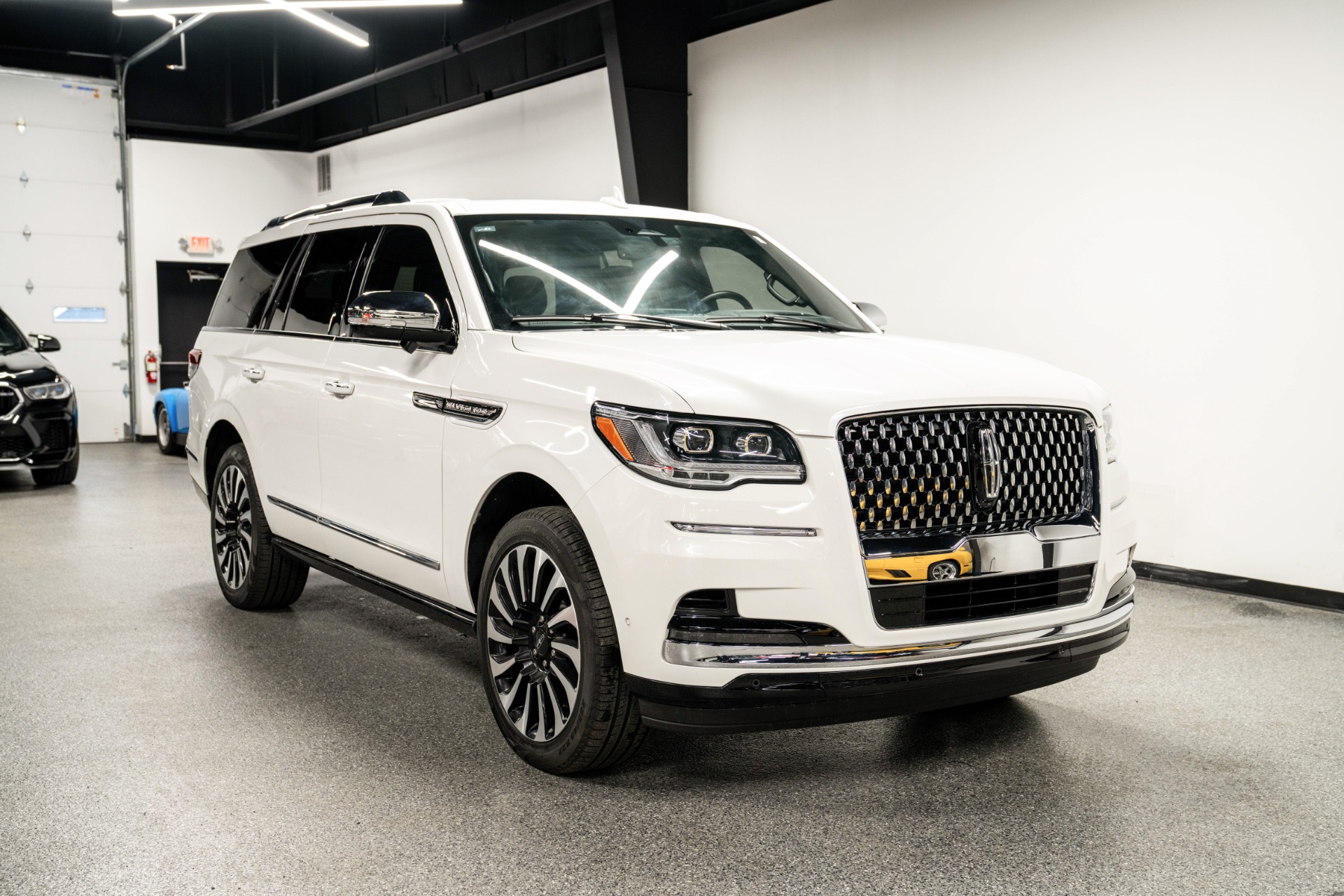
7. Lincoln Navigator Reserve L 4WD 3.5L EcoBoost (2024)
Lincoln’s extended-body 2024 Lincoln Navigator Reserve L presents a clear statement of what a full-size sport utility vehicle can achieve when cargo space, comfort, and advanced features are given equal attention during development. Designed for long-distance travel with multiple passengers, this vehicle combines large-scale practicality with a refined interior environment that supports both driver and occupants across extended journeys.
Cargo capacity stands as one of its strongest attributes. Space behind the third row measures approximately 44.6 cubic feet, which allows a fully occupied vehicle to carry a substantial amount of luggage without forcing compromises. This volume supports family travel where every seat is in use, ensuring that bags, supplies, and personal items fit comfortably within the rear compartment.
When the third row is folded, cargo space expands to about 79.3 cubic feet, creating additional flexibility for larger items. With both rear rows folded flat, maximum capacity reaches approximately 103.3 cubic feet, placing the vehicle among the most capable options in its category.
Interior comfort receives equal attention, particularly in the front seating area. Lincoln’s Perfect Position seats offer extensive adjustability, allowing drivers to find a precise and supportive seating posture. Integrated Active Motion massage functionality reduces muscle tension during long drives, helping to limit fatigue that typically builds over several hours on the road. This feature contributes directly to driver comfort, especially during multi-day travel.
Cabin quietness is enhanced through an active noise control system. Microphones and speakers work together to reduce unwanted road noise, creating a calm interior environment during highway driving. This controlled acoustic setting allows conversations, music, and spoken content to be heard clearly without interference from external sounds.
Audio performance is supported by a high-quality sound system designed to deliver clarity across a wide range of listening conditions. Whether playing music or spoken content, the system maintains consistent output that enhances the entire travel experience.
Passenger accommodations extend beyond the front row. Rear seating includes heating and cooling functions, while available entertainment features support long journeys for occupants. Storage solutions throughout the cabin provide convenient access to personal items, ensuring that both comfort and practicality are maintained.
The 2024 Lincoln Navigator Reserve L demonstrates how a full-size vehicle can combine generous cargo capacity with a carefully refined interior, creating an environment suited for extended travel without sacrificing convenience or comfort.
