
Family sedans were never supposed to be drag strip heroes. For decades, they were built with comfort, practicality, and efficiency as top priorities. Quick acceleration was a bonus at best, not a defining trait. That idea has changed dramatically in recent years, especially with the rise of twin-turbo V6 engines that combine efficiency with explosive performance.
Manufacturers have realized that buyers no longer want to compromise. A car needs to handle daily commuting, long highway drives, and family duties while still delivering excitement when the road opens up.
This shift has led to the development of sedans that hide serious performance beneath understated styling. From the outside, they look like responsible choices. From behind the wheel, they can shock even seasoned enthusiasts.
Twin turbo V6 engines play a major role in this transformation. They provide strong low end torque and sustained high end power, making them incredibly effective in real world acceleration.
Unlike naturally aspirated engines that need to be pushed hard, these turbocharged units deliver instant response and relentless pull. When paired with modern transmissions and advanced traction systems, the result is brutally efficient launches and rapid acceleration.
Another factor is weight distribution and drivetrain technology. Many of these sedans feature All Wheel Drive systems that maximize grip during launches.
This gives them a major advantage against traditional Rear Wheel Drive sports cars like Mustangs, especially in short-distance sprints. While a Mustang may have the image, these sedans often have the traction and consistency needed to win.
What makes this category even more interesting is how subtle these cars are. They do not rely on aggressive styling or loud exhaust notes to announce their capabilities. Instead, they deliver performance quietly, catching competitors off guard. It is this element of surprise that makes them so compelling.
Below are eight family sedans equipped with twin turbo V6 engines that can genuinely outdrag Mustangs in 2026. Each one approaches performance differently, offering a unique blend of speed, technology, and everyday usability.
Also Read: 8 Toyota-Built Lexus Models Costing Half the Price to Own
1. Audi S6 (C8)
The Audi S6 C8 takes a refined approach to speed, blending executive comfort with performance that feels deceptively strong. At first glance, it does not appear aggressive. The design is clean, restrained, and mature. That subtlety becomes its biggest advantage when lined up against a car that expects an easy win.
Power comes from a 2.9-liter twin-turbo V6, producing a deep well of torque available almost instantly. What stands out is how early the engine delivers its strength. Instead of building slowly, it responds the moment the throttle is pressed, creating a surge that feels effortless yet forceful.
The real magic lies in how the power reaches the ground. Audi’s quattro All Wheel Drive system ensures that very little traction is lost during launch. While a Mustang may struggle to put down its power cleanly, the S6 grips and goes. This difference becomes obvious in short-distance acceleration, where consistency matters more than raw horsepower.
Another element that contributes to its drag performance is the transmission. The automatic gearbox shifts quickly and smoothly, keeping the engine within its optimal power range. There is no hesitation, no wasted movement, just continuous acceleration. This precision allows the car to maintain momentum in a way that feels almost clinical.
Inside, the experience contrasts sharply with its performance. The cabin is quiet, comfortable, and filled with technology. This dual nature makes it even more impressive. It can deliver intense acceleration one moment and settle into a relaxed cruise the next without any compromise.
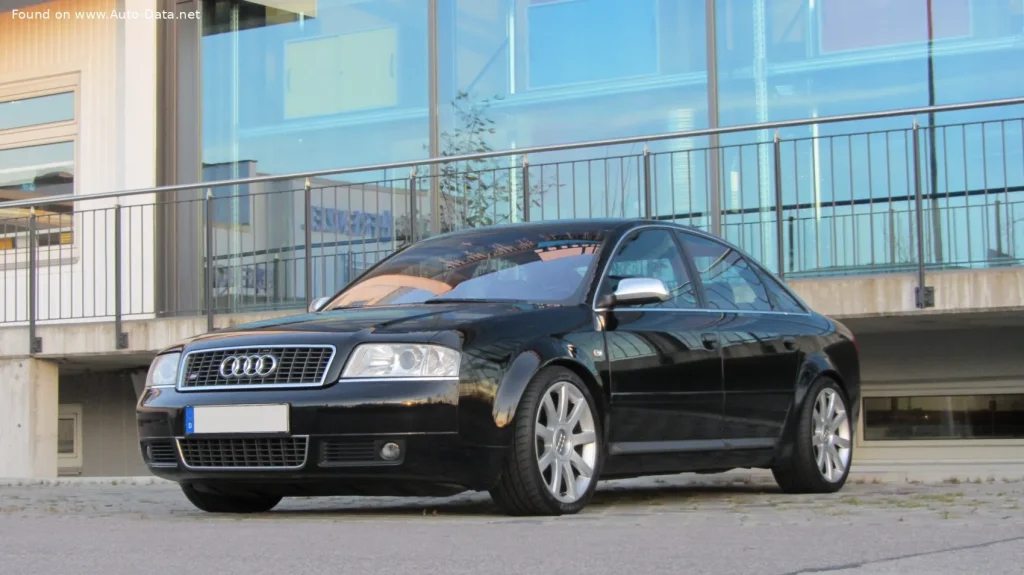
In real-world drag scenarios, the S6 often surprises drivers who underestimate it. Its ability to launch cleanly, maintain traction, and deliver consistent power gives it an edge that is difficult to overcome. It does not rely on drama or noise. It simply performs with efficiency and precision.
This sedan proves that performance does not need to be loud or aggressive to be effective. Sometimes, the most unexpected cars are the ones that deliver the biggest surprises.
2. BMW M340i xDrive
The BMW M340i xDrive approaches performance with a different mindset. Instead of hiding its capabilities completely, it hints at them through subtle design cues and a slightly more aggressive stance. Still, it remains far from the typical image of a drag racing machine.
Its twin-turbocharged inline six engine delivers a strong and flexible powerband. While technically not a V6, it competes directly with twin-turbo V6 rivals and deserves a place in this discussion due to its performance characteristics. The engine feels smooth yet powerful, building speed in a way that feels controlled but relentless.
What sets the M340i apart is how it balances power delivery with traction. The xDrive All Wheel Drive system continuously adjusts torque distribution, ensuring that grip is maintained even under hard acceleration. This allows the car to launch with confidence, minimizing wheel spin and maximizing forward motion.
The driving experience feels more dynamic compared to some competitors. There is a sense of involvement that encourages the driver to stay engaged. Acceleration is not just quick, it feels alive, with the engine responding instantly to throttle inputs.
Another strength is its adaptability. In everyday driving, the car feels composed and refined. Switch to a more aggressive mode, and it transforms into something far more focused. The throttle sharpens, the transmission becomes more responsive, and the car feels ready to perform.
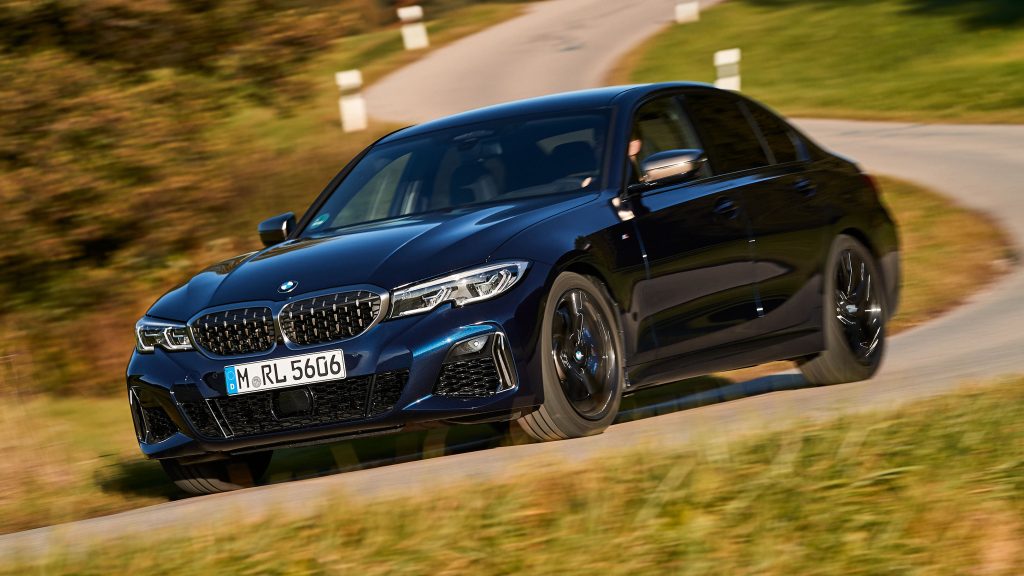
In a drag race scenario, the M340i benefits from its consistency. Each launch feels predictable, allowing drivers to repeat strong starts without excessive effort. This reliability becomes a major advantage against cars that require more precise control to achieve their best performance.
There is also a certain efficiency in how the car accelerates. It does not waste energy through unnecessary wheel spin or delayed shifts. Everything works together seamlessly, creating a smooth yet rapid increase in speed.
When lined up against a Mustang, the outcome often comes down to traction and execution. The M340i excels in both areas, giving it the ability to outpace competitors that may have more aggressive reputations.
3. Mercedes-AMG E43 4MATIC
The Mercedes-AMG E43 4MATIC does not shout about its capabilities, yet it carries a sense of authority that becomes obvious the moment it moves. It belongs to a category where refinement meets controlled aggression, and that balance plays a major role in how it performs against traditional sports cars.
Its 3.0 liter twin turbo V6 delivers a wide spread of torque that feels instantly accessible. Instead of building toward a dramatic peak, the engine provides a constant wave of power that keeps pushing without interruption.
This characteristic makes it extremely effective in drag scenarios where consistency and immediate response matter more than theatrics.
The 4MATIC All Wheel Drive system is tuned with a rear bias, which adds an interesting dynamic. It allows the car to feel slightly more playful while still maintaining the grip needed for strong launches. When accelerating from a standstill, the system distributes power intelligently, ensuring that traction is maximized without sacrificing stability.
Acceleration in the E43 feels composed rather than violent. The car surges forward with confidence, maintaining balance even under heavy throttle.
This composure can be misleading to those expecting dramatic behavior, but it translates into real performance advantages. Smooth power delivery reduces wasted energy, allowing the car to build speed efficiently.
Inside the cabin, the experience remains calm and controlled. The isolation from external noise contrasts sharply with the intensity of the acceleration. This dual personality enhances the element of surprise when competing against more obviously aggressive vehicles.
Another aspect that strengthens its drag performance is the transmission calibration. Gear changes happen quickly and with minimal interruption to power flow. The engine remains within its strongest range, allowing continuous acceleration without noticeable drops in momentum.
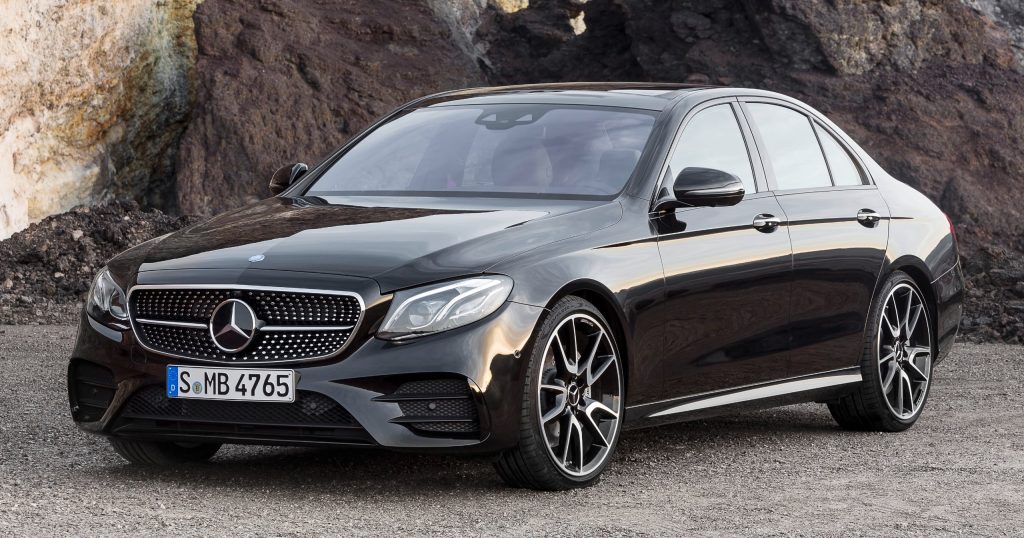
In direct comparisons, the E43 often gains an advantage during the initial launch phase. While a Mustang may struggle to manage its Rear Wheel Drive layout, the Mercedes uses its traction to pull ahead early. Maintaining that lead becomes easier due to the steady power delivery and precise shifting.
This sedan demonstrates how controlled engineering can outperform raw aggression. It does not rely on loud signals or dramatic visuals. Instead, it focuses on delivering consistent, repeatable performance that translates into real-world speed.
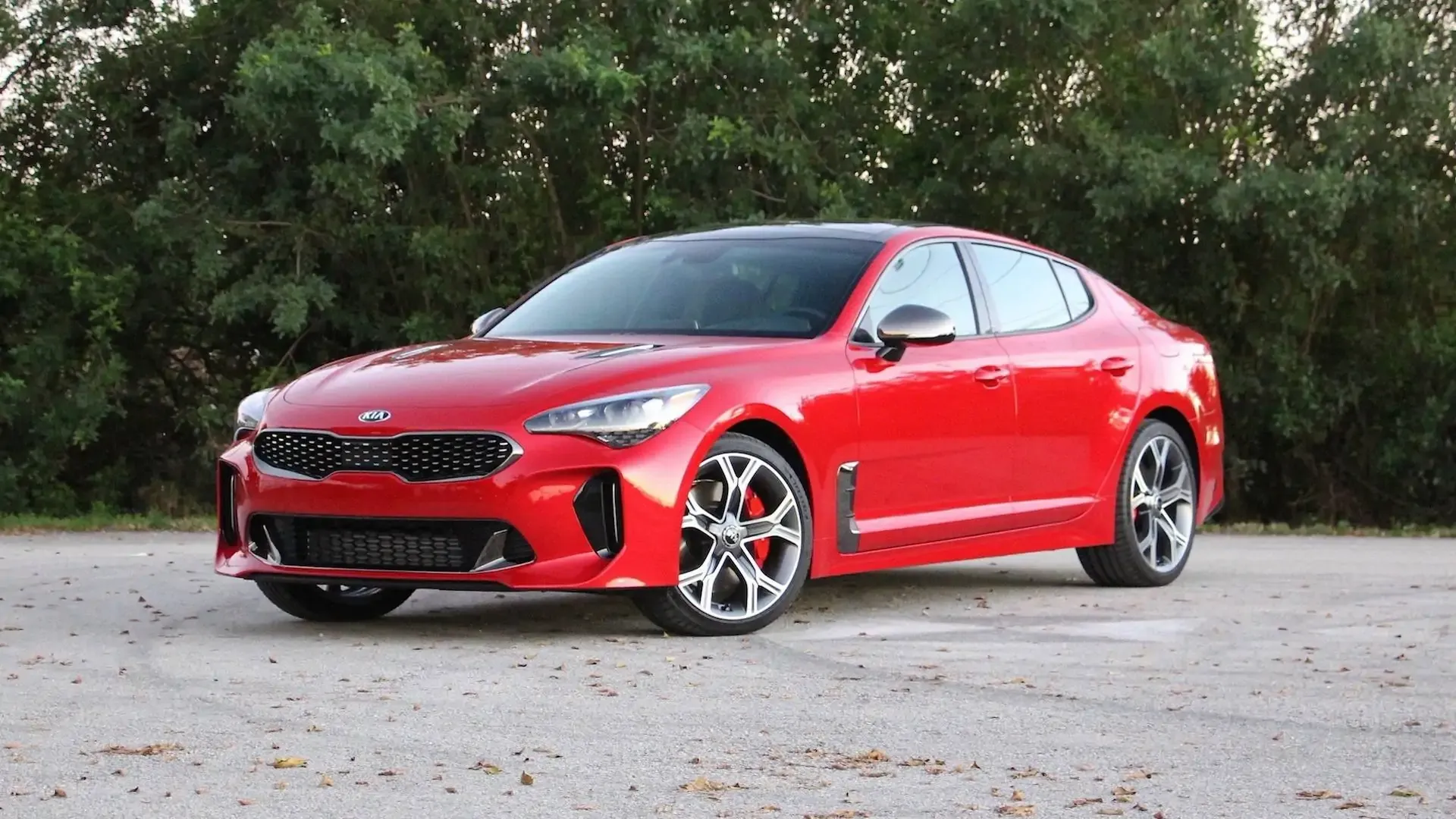
4. Kia Stinger GT
The Kia Stinger GT approaches performance with a bold and confident personality. Unlike more reserved competitors, it makes a clear statement that it is built to challenge expectations. Yet beneath that confidence lies a level of engineering that allows it to compete seriously with established performance sedans.
At its core is a 3.3-liter twin-turbo V6 that produces strong acceleration across the rev range. The engine delivers power with a noticeable surge, especially in the mid-range, where it feels particularly aggressive. This characteristic makes it highly effective in rolling starts and quick bursts of acceleration.
The Stinger GT offers both Rear Wheel Drive and All Wheel Drive configurations, each bringing a different advantage.
The All Wheel Drive version provides superior traction during launches, allowing the car to accelerate cleanly without excessive wheel spin. This becomes crucial in drag races, where the first few seconds often determine the outcome.
What makes the Stinger stand out is its sense of urgency. The car feels eager to accelerate, responding quickly to throttle inputs. There is a liveliness to its character that keeps the driver engaged, making each run feel energetic and direct.
Handling also plays a supporting role in its performance. While drag racing focuses on straight-line speed, stability remains important. The Stinger maintains composure under hard acceleration, ensuring that power is applied efficiently. This stability allows drivers to focus on maintaining momentum rather than correcting unwanted movement.
The interior adds another layer to its appeal. It combines practicality with a touch of sportiness, making it suitable for daily use without sacrificing excitement. This versatility is part of what makes it such a compelling choice.
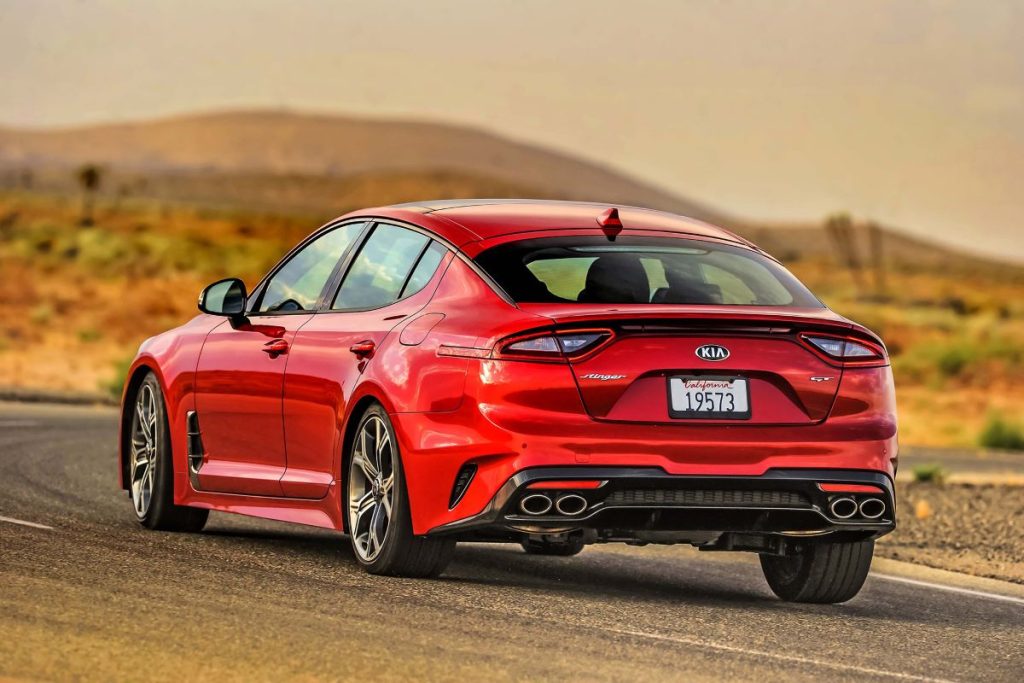
In a head-to-head drag scenario, the Stinger GT often surprises opponents who underestimate it. Its combination of strong mid-range power and effective traction gives it the ability to compete closely with more established performance cars.
There is a sense of confidence in how it delivers speed. It does not feel hesitant or restrained. Instead, it embraces its role as a performance sedan, proving that it belongs in conversations typically dominated by more traditional names.
5. Genesis G70 3.3T AWD
There is a certain quiet confidence in the Genesis G70 3.3T AWD. It does not rely on aggressive styling to signal intent, yet it carries the kind of engineering that becomes obvious the moment the accelerator is pressed. This sedan feels purpose-built to deliver strong, repeatable performance without demanding constant attention.
The 3.3 liter twin turbo V6 produces a deep reserve of torque that arrives early and stays consistent. Instead of waiting for the engine to wake up, the response is immediate. This gives the G70 a decisive edge during launches, where hesitation can cost valuable distance.
Its All Wheel Drive system plays a defining role. Power is distributed in a way that prioritizes grip, allowing the car to leave the line cleanly and efficiently. While some competitors struggle to control their output, the G70 channels it with precision. That clean initial burst often creates a gap that becomes difficult to close.
Step into a rolling acceleration scenario, and the character changes slightly. The engine continues to pull strongly, but it does so in a refined manner. There is no chaotic surge. Instead, the speed builds in a controlled wave that keeps the car stable and composed.
One detail that stands out is how the chassis supports this performance. The suspension manages weight transfer effectively, preventing excessive squat or instability. This helps maintain traction and keeps the car pointed straight, which is critical when pushing hard.
Drivers who value consistency will appreciate how predictable the G70 feels. Each run delivers similar results, making it easier to extract maximum performance without constant adjustment. This reliability becomes a major advantage when compared to cars that require perfect conditions to perform at their best.
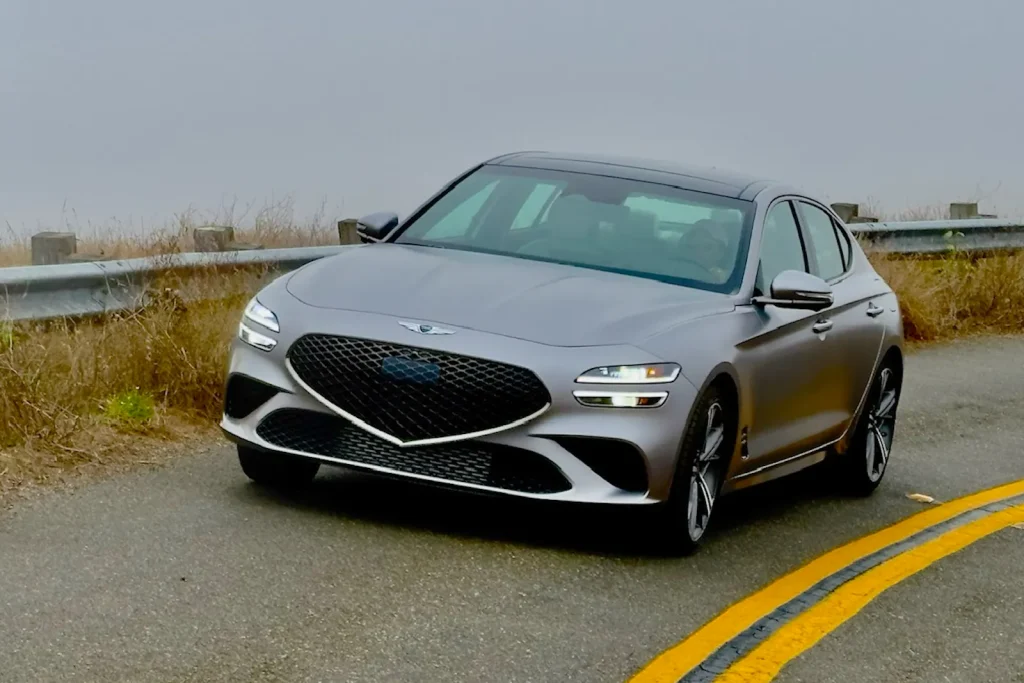
Inside, the environment remains focused yet comfortable. It does not distract from the driving experience, nor does it feel disconnected. Everything works in harmony, allowing the driver to concentrate fully on acceleration.
Against a Mustang, the G70 often gains ground early and holds it through efficient power delivery. It may not create dramatic moments, but it executes its performance with precision. That approach proves highly effective in real-world drag scenarios.
6. Infiniti Q50 Red Sport 400
The Infiniti Q50 Red Sport 400 takes a more aggressive stance in how it delivers performance. It feels like a sedan that has been tuned to push harder, respond quicker, and leave a stronger impression during acceleration. There is a noticeable intensity to how it builds speed.
Equipped with a 3.0-liter twin-turbo V6, this car produces substantial power that becomes immediately apparent under throttle. The engine delivers a sharp response, with torque arriving quickly and continuing to build. This creates a sense of urgency that is hard to ignore.
Rather than easing into acceleration, the Q50 Red Sport 400 launches with intent. The initial surge is strong, and when paired with All Wheel Drive, it translates into effective forward motion. Traction remains controlled, allowing the car to use its power without excessive wheel spin.
Mid acceleration is where the car truly asserts itself. The engine does not lose momentum. It continues to push, maintaining a steady climb in speed that keeps competitors under pressure. This sustained pull becomes particularly useful in longer drag runs.
The driving experience feels more assertive compared to some of its rivals. Inputs are met with immediate reactions, and the car encourages a more direct approach. It rewards drivers who are willing to push, delivering performance that feels energetic and engaging.
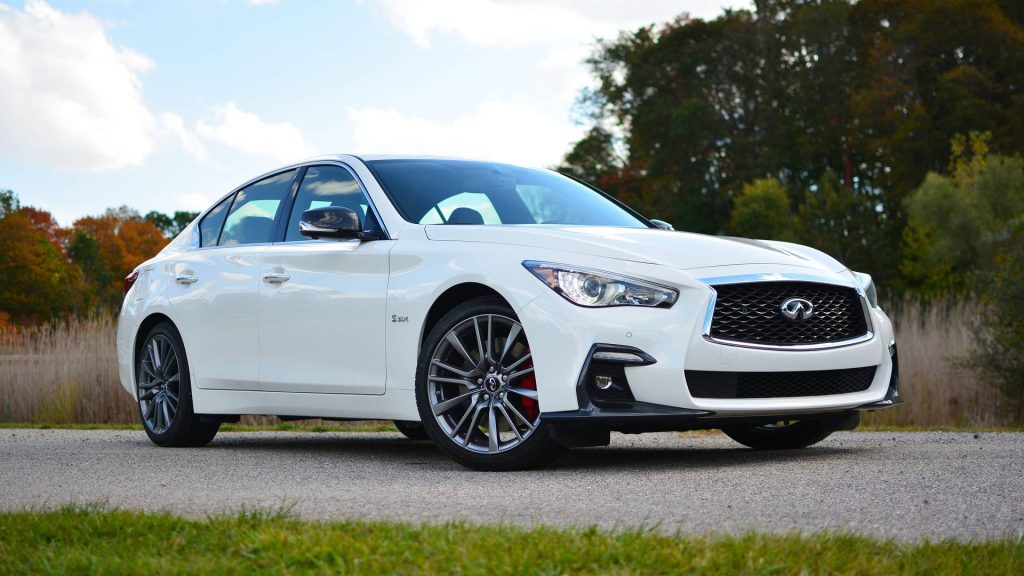
Another aspect worth noting is how the transmission complements the engine. Gear changes occur with purpose, keeping the engine within its strongest range. There is little delay, which helps maintain acceleration without interruption.
Despite its performance focus, the sedan retains its practicality. It remains comfortable enough for daily use while still delivering the kind of speed that can challenge traditional sports cars.
When lined up against a Mustang, the Q50 Red Sport 400 uses its combination of power and traction to create a strong launch and maintain pressure throughout the run. It does not rely on a single burst of speed. Instead, it delivers a continuous push that can carry it ahead.
7. Cadillac CT5-V (Twin-Turbo V6)
Start this one from the perspective of restraint. The Cadillac CT5-V does not try to imitate track-focused aggression in its appearance, yet beneath that composed exterior sits a powertrain that responds with surprising urgency the moment it is provoked.
Its 3.0 liter twin turbo V6 delivers a broad torque curve that feels instantly available. Instead of waiting for revs to climb, the engine responds early and pulls with a steady, confident force. This makes the initial launch particularly effective, especially when paired with its quick-shifting automatic transmission.
Rear wheel drive is standard, but the available All Wheel Drive configuration changes how the car behaves under hard acceleration.
With all four wheels working together, the CT5-V reduces wheel spin and translates power into forward motion more efficiently. This becomes critical in short-distance drag runs where traction defines the outcome.
There is a certain smoothness in how the Cadillac builds speed. It does not feel frantic or unpredictable. The acceleration is controlled, almost measured, yet undeniably quick. This characteristic can be misleading to competitors who expect a more dramatic delivery.
The chassis contributes to this composed nature. Weight transfer is managed well, allowing the car to stay balanced even when accelerating aggressively. This stability helps maintain traction and keeps the car aligned, reducing the need for constant corrections.
Another interesting element is how quiet the experience can feel from inside the cabin. The isolation creates a contrast between perception and reality. While it may not feel explosive from the driver’s seat, the speed it generates tells a different story.
In a drag race against a Mustang, the CT5-V relies on execution rather than theatrics. A clean launch, consistent power delivery, and efficient gear changes allow it to build an early advantage. Once ahead, maintaining that lead becomes easier due to its stability and control.
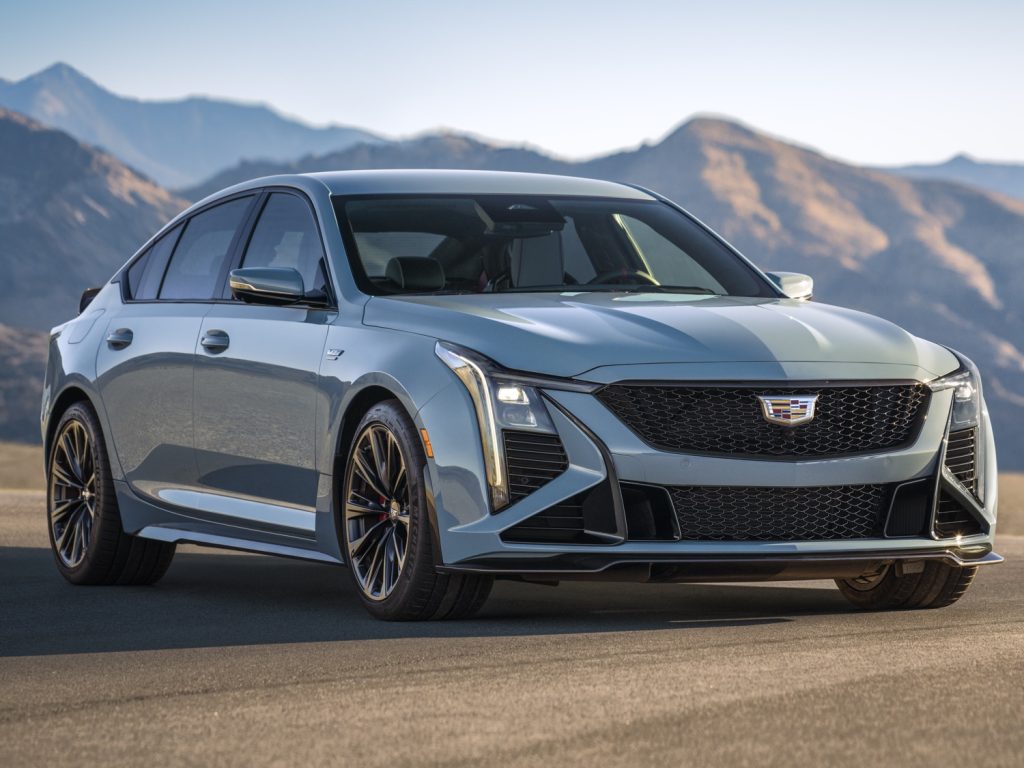
This sedan highlights how refinement and performance can coexist without compromise. It does not rely on exaggerated behavior to prove its capability. Instead, it delivers speed in a composed and effective manner.
8. Acura TLX Type S
Shift the focus toward precision and engineering detail, and the Acura TLX Type S enters the conversation with a distinct identity. It approaches performance with a sense of control that feels calculated rather than aggressive, yet that very approach makes it highly effective in acceleration battles.
Its 3.0-liter twin-turbo V6 produces strong and immediate torque, giving the car a decisive response when the throttle is applied. The engine does not hesitate. It delivers power in a direct and confident manner, which becomes crucial during launches.
The Super Handling All Wheel Drive system transforms how the TLX Type S applies that power. Instead of simply distributing torque evenly, it actively manages it across the wheels to maximize grip. This results in a launch that feels planted and controlled, minimizing wasted energy.
Acceleration builds in a progressive yet forceful way. There is no sudden spike followed by a drop. The engine maintains its push, allowing the car to continue gaining speed without interruption. This consistency plays a key role in drag performance.
Unlike some competitors that rely purely on straight-line strength, the TLX integrates stability into its acceleration. The chassis remains composed, and the car tracks straight even under heavy throttle. This reduces the need for corrections and helps maintain momentum.
From a driver’s perspective, the experience feels deliberate. Every input produces a clear and predictable response. This clarity makes it easier to extract maximum performance, even for those who are not experienced in drag racing techniques.
The interior reinforces this sense of control. It surrounds the driver with a focused environment that supports performance without becoming distracting. Everything feels aligned with the goal of delivering a confident driving experience.
Against a Mustang, the TLX Type S leverages its traction and consistency to gain an early lead. While the Mustang may rely on raw power, the Acura uses precision to convert its output into effective acceleration.
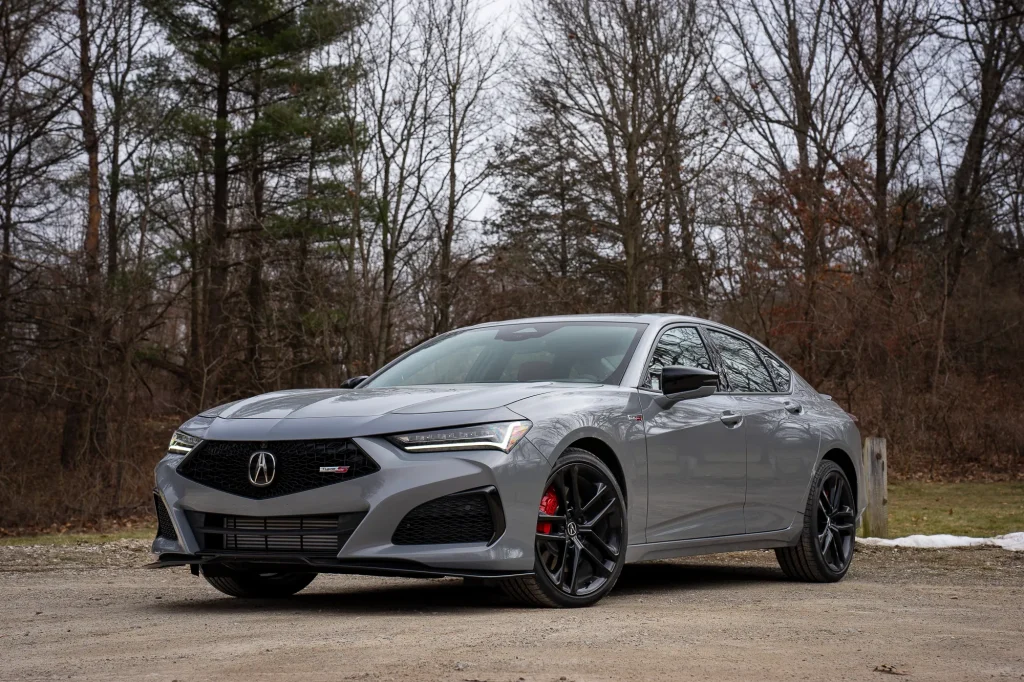
This final entry demonstrates that modern engineering can redefine expectations. A family sedan can be both composed and incredibly quick, capable of challenging cars that were once considered untouchable in straight-line performance.
The idea of a family sedan outperforming a Mustang in a drag race would have sounded unrealistic not long ago. In 2026, that assumption no longer holds true.
Advances in twin turbo V6 technology, paired with intelligent drivetrain systems, have transformed everyday sedans into serious performance machines. These cars combine practicality with acceleration capabilities that can genuinely surprise traditional sports car drivers.
A key factor behind this shift is how modern twin-turbo V6 engines deliver power. Unlike older naturally aspirated setups, these engines provide strong torque almost instantly.
That immediate response gives sedans a major advantage during launches, where the first few seconds often decide the outcome. Instead of building power gradually, they surge forward with controlled force right from the start.
Traction plays an equally important role. Many of these sedans use advanced All Wheel Drive systems that distribute power efficiently across all four wheels. This allows them to accelerate cleanly without excessive wheel spin.
In contrast, Rear Wheel Drive sports cars like Mustangs often struggle to put their power down effectively, especially in less-than-perfect conditions.
Another aspect that stands out is consistency. These sedans are engineered to deliver repeatable performance with minimal effort.
Drivers do not need perfect technique to achieve strong results. The combination of refined transmissions, stable chassis tuning, and intelligent power delivery ensures that each run feels predictable and efficient.
Each car in this list approaches performance differently. Some focus on smooth and controlled acceleration, using precision to build speed without drama.
Others adopt a more aggressive character, delivering sharp responses and a stronger sense of urgency. This variety shows that there is no single formula for outperforming a sports car. Different engineering philosophies can lead to the same result.
The balance between comfort and performance also adds to their appeal. These are not stripped-down machines built solely for speed.
They remain practical, comfortable, and suitable for daily use. This dual nature makes their performance even more impressive, as they can switch from relaxed cruising to rapid acceleration without compromise.
Another important observation is how these sedans hide their capabilities. Unlike traditional performance cars that rely on bold styling, many of these models maintain a subtle appearance. This understated design creates an element of surprise, making their acceleration feel even more impactful when revealed.
In real-world scenarios, factors like traction, torque delivery, and stability often matter more than peak horsepower figures. These sedans excel in those areas, allowing them to compete with and even outperform cars that may appear more powerful on paper. The result is a new kind of performance vehicle that challenges long-standing expectations.
This shift highlights a broader trend in the automotive world. Performance is no longer limited to dedicated sports cars. It can exist within practical, everyday vehicles that deliver speed without sacrificing usability.
These twin-turbo V6 sedans represent that evolution, proving that capability and convenience can coexist in a way that reshapes what drivers expect from a family car.
Also Read: 8 Pickup Engines That Set Longevity Records in Fleet Service
